CAMERA Centro Italiano per la Fotografia

Member from 2018. Located in Turin, Italy

CAMERA Centro Italiano per la Fotografia

Member from 2018.Located in Turin, Italy

CAMERA is a private foundation, an exhibition venue for both Italian and international photography, a centre for image education, staging meetings, ateliers, and workshops. A research centre for the valorization of photographic heritage.

Located in the city centre, a stone’s throw away from the Mole Antonelliana, Museo Egizio, and many other museums and galleries, CAMERA is a unique hub dedicated to photography, capable of strengthening the link between Piedmont and Italy with the worldwide main centers, promoting photography through an open and creative dialogue with artists and institutions.

The goal of promoting photography is addressed to a broad and diversified audience. Through exhibitions and workshops, meetings and talks, CAMERA aims to become a place of meeting and exchange for citizens, with a diverse cultural offer for each target category: photo lovers, amateur photographers, professionals, and scholars.

CAMERA is a platform for study, display, producing, archiving, training, meeting, and debate all around photography: a place rooted in the territory yet with an international outlook.

Nominations

2026

At a time in history when images are overproduced and overconsumed, these artists share the ability to slow down the gaze, construct complex narratives, and redefine the relationship between document and imagination.

‍

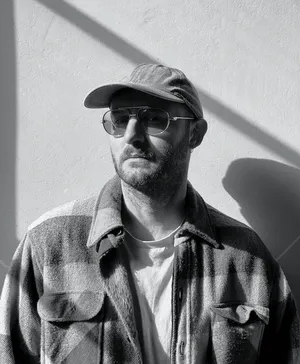
Filippo Barbero's practice is part of a tradition of investigating subjectivity using photography as a device for knowledge. His attention to detail in bodies and the environment highlights a constant emotional tension where the everyday becomes political and the smallest gesture acquires collective resonance.

‍

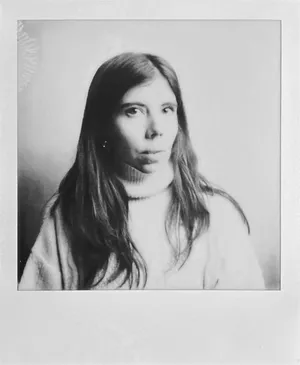
Davide Degano offers a radical reflection on the representation of Italian identity: his photographs deconstruct the environmental, social, and cultural heritage—as well as the colonial legacy—and, through the filter of the younger generations, convey the complexity of the evolution of the boot-shaped country.

‍

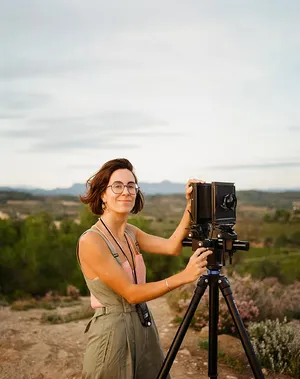
Giulia Gatti's work explores the theme of femininity in the communities inhabiting the Isthmus of Tehuantepec in Mexico, a place known through stereotypical depictions in travel literature from the last century. The narrative of everyday life as a symbolic experience shows an alliance between human and non-human bodies, spaces, and customs, thus deconstructing the invention of tradition.

‍

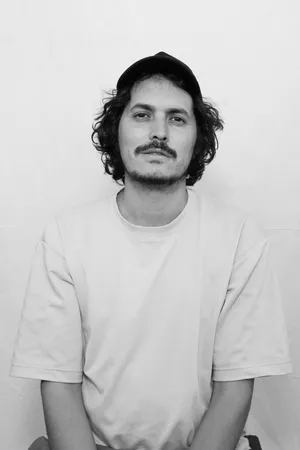
Sofia Gastaldo's sociological view of customs and traditions in urban centers goes beyond the logic of traditional documentary, transforming the image into a space for collaboration and conscious staging. Her subjects emerge from the darkness, while the strong visual impact of color contrasts reveals the sculptural character of bodies and objects in the definition of forms.

‍

Federica Sasso's visual research addresses a narrative dimension that intertwines documentary photography with algorithmic recognition programs, video, and installation. Her investigation of social dynamics in the technological age enhances the quality of photography as a tool for research, critical revelation, and public activation.

‍

Together, these artists construct a landscape in which photography is no longer just representation, but process, research, relationship, and responsibility. Their selection does not respond to generational or geographical criteria, but to a common tension towards linguistic innovation and ethical commitment.

‍

List of curators:

Giangavino Pazzola – Curator of contemporary and research programs at CAMERA

François Hebel – Director at CAMERA

‍

Nominators:

Daniele De Luigi – curator Fondazione AGO Modena

Giuseppe Oliverio – director PHMuseum Bologna

2025

The five artists selected for FUTURES are Claudia Amatruda (Foggia, 1995), Matteo Buonomo (Milan, 1991), Benedetta Casagrande (Milan, 1993), Alessio Pellicoro (Taranto, 1994) and Martina Zanin (San Daniele del Friuli, 1994). This selection consolidates the nature of this program as an observatory of the medium, developing a broad perspective of its practices today in the Italian context and examining the ways in which the digital and new aesthetics are changing its fruition. It includes refined operations that present both research with a return to its function as a document, as well as experiments that question the medium's ideas of form, truth, and identity. The aim is to show how photography is a medium in perpetual transformation and expansion, which brings together experiences of a documentary nature on social and cultural themes, and others that emphasize formal and conceptual research.

‍

Amatruda reflects on the transformations of his own body due to a rare degenerative disease. Looking at Donna Haraway's theories on the union between cyborgs and humans, she transforms her body into a theatre of reception for external elements, highlighting possible contaminations and metamorphoses through self-portraiture.

‍Bonomo's work focuses on long-term projects focusing on the social context trying to read the dynamics of loneliness and sharing that run through contemporary society. His photographic stories are enriched by textual and investigative insights.

‍Casagrande uses the medium of photography to be in relationship with the surrounding environment and its elements. She analyses ecological coexistence with the non-human living world and explores the ways in which we relate to them: intraspecific coexistence and the possibility of constructing new forms of kinship and intimacy between species in a context of unprecedented loss of variety of living organisms.

The elements that characterize Pellicoro's research are the ambiguous relationship with reality, the role of immobility and movement, the post photographic inclination and the testimonial approach. A result that, on the one hand, is due to the subjects filmed; on the other, to the interest in representing unconscious drives or autobiographical issues.

‍Zanin's research is intertwined with his personal experiences and draws on references from literature and psychoanalysis to interrogate the notions of absence, memory, aggression, repetition, patriarchy, and heritage. She invites the viewer to reflect on the ambiguity of power dynamics, focusing on the fine line between protection and control and turning her attention to vulnerable positions.

‍

List of curators

Giangavino Pazzola – Curator of contemporary and research programs at CAMERA

Walter Guadagnini – Director at CAMERA

‍

Nominators

Arianna Catania | Director of Gibellina Photoroad / Open Air & Site-specific Festival

Matteo Balduzzi | Curator of MUFOCO – Museum of Contemporary Photography of Milano-Cinisello Balsamo
Marco Delogu | Photographer and President of Azienda Speciale Palaexpo - Rome

2024

Anna Adamo (b. 1991) develops new imagery with projects rooted in the underground scene, with reference to punk/hardcore music and the DIY ethos, ethnographic observations of the subcultures that inhabit it, the presence of human beings, group dynamics and the intimate relationships that ensue.

‍

Giorgio Di Noto (b. 1990) investigates the relationship between visual languages ​​and printing processes which he also strengthens through discussions with experts from various knowledge sectors. In this way, his projects not only emphasise visual experimentation but also contextualise the visual in the analysis of contemporary life.

‍

Giulia Vanelli (b. 1996) explores ideas of memory and identity in photography, developing imagery guided by an evocative approach. He uses symbols as a causal link between the visible and the invisible, capturing the most enigmatic and hidden aspects of reality.

‍

Ivo Sekulovski (b. 1992) questions notions like culture and identity, often altering the function of objects and their purpose. His work lies between the realms of documentary and staged photography, the real and the virtual, mixing photography and installation-based work and practices of recombination with the appropriation of 3D images.

‍

Lucrezia Zanardi (b.1994) investigates individual and collective perception and mnemonic practices in archival research and materials. The corporeality of photography and the tactile sensations that derive from it are essential for the elaboration of his practice, which takes shape in works presented as installations.

2019

Domenico Camarda (La Spezia, 1990) is an Italian artist.

http://www.domenicocamarda.com

Born in La Spezia in 1990, after his bachelor’s degree in Communication at the University of Bologna, he attended an MA in Photography and Visual Design at NABA/Forma in Milan. In the autumn of 2014 he worked at Pierre Von Kleist Editions, and Pedro Alfacinha Gallery, both based in Lisbon. During this experience he learned and deepen his interest in author photography and art publishing.
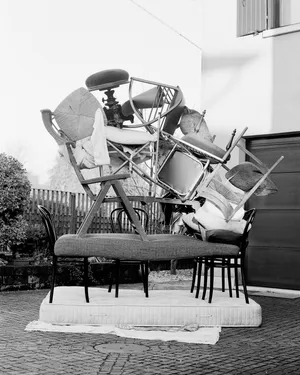
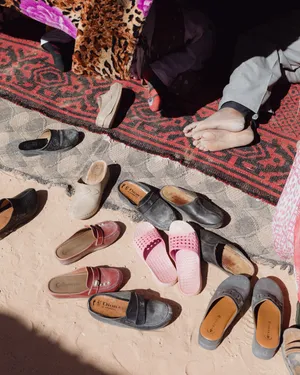
In 2015, he lived and worked in London for Amelia Troubridge, as assistant photographer, curating the editing and the layout of her last publications. He currently lives in Turin where, after having collaborated for MeMo Mag, he works as freelancer.

Camarda’s artistic practice focuses on and explores themes such as the construction of identity, and collective phenomena that affect and define the lives of each single individual. Creating a series of dreamlike and suggestive images, he wants to ask questions and trigger reflections, rather than giving simple answers.

‍

Francesca Catastini (Lucca,1982) is an Italian artist.

http://francescacatastini.it/

She holds an MA in Photography and Visual Design from the New Academy for Fine Arts in Milan.
Her work is mainly about combining: images with images, texts, or other objects, in a no-ladder like interaction, aiming at transcending the idea of separation, in order to experience different levels of analogies. People are generally attracted by the challenge of interpreting the evidence, but our understanding of the pure origin of images is often vague exactly as ambiguous is the knowledge we have about the derivation of many words. What fascinates Catastini the most is exactly this exercise of the mind, which aims at “filling a gap”, drawing from our culture, knowledge, and past experiences. She is attracted by the connection between optical and apical perception. Unlike touch, vision often implies a sort of distance and it represents the sense which is more suitable for abstracting things. In 2016 her book "The Modern Spirit Is Vivisective” won the ViennaPhotoBookAward. Her work has been exhibited internationally, including Plat(t)form 2017, Fotomuseum Winterthur; Fotografia Europea, Reggio Emilia and other institutions.

‍

Paolo Ciregia (1987, Italy) is an Italian artist.

http://www.paolociregia.eu/

After experience as a reporter at the forefront of the Russian-Ukrainian conflict, in the last five years his artistic research has been focused on Ukraine context, manipulating and reworking his personal archive in a new way. Investigating and deconstructing both archives symbols and language, Ciregia aims to reveal the atrocities behind the war, destroying the propaganda patina through installations and sculptures. His work has been exhibited internationally in solo and group exhibitions. Among the major prizes are Winner of Talent FOAM Amsterdam 2016, Winner of “LOOP, Giovane Fotografia Italiana”, Festival Fotografia Europea 2017, “Honorable jury Mention” at Premio Francesco Fabbri 2016, TU35 at the Museo Pecci in Prato 2017, Winner of Leica Talent 2012

‍

Irene Fenara (Bologna, 1990) is an Italian artist.

https://irenefenara.squarespace.com/

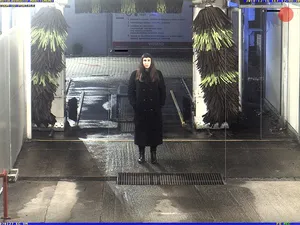
Her research focuses on the way of seeing and practicing observation on images. She reflects on linguistic devices and she uses optical and electronic instruments of various kinds, from Polaroid to surveillance cameras, often in an improper manner and transgressing their basic function. It becomes an instrument for observing the world, in the search for a slight poetic sense. The act of vision is the central element of her work that declines in her latest research on optical devices, often used as instruments of control, bringing attention to the always reversible overturning between who observes and who is observed. Her work has been exhibited in art galleries and public institutions, such as Fondazione Prada Osservatorio (2016), Fondazione Fotografia Modena (2017), P420 (2017), MAMbo - Museo d'Arte Moderna di Bologna (2018), Palazzo delle Esposizioni (2018), Fondazione Francesco Fabbri (2018) e Kunst Merano Arte (2019).

‍

Giaime Meloni (Cagliari, 1984) is an Italian artist.

http://www.giaimemeloni.com/

He is a visual researcher with a PhD in Architecture, currently living between two islands: Ile-de-France and Sardinia.  The aim of his work is to explore the role of photography as a sensible instrument to narrate the space complexity. His research has been published in various publications (MAM Saint Etienne, INTRU). Giaime Meloni takes part in several International Conferences (CCA, FAUP), and also participate in national and international exhibition (Ritmo Indipendente, Pavillon de l'Arsenal). In 2017 he was shortlisted for Premio Graziadei with his long-term project Das Unheimiliche. He teaches photography as an instrument of the making of the architectural design between France and Italy. Her practice conceives an act capable of questioning the complex nature of places.
‍‍

Giangavino Pazzola (Sassari, 1981) is Associate Curator at CAMERA - Italian Center for Photography