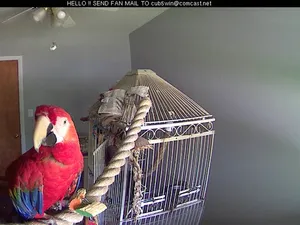
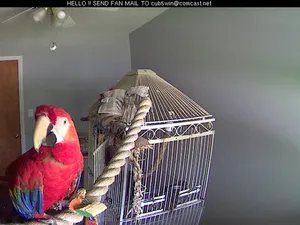
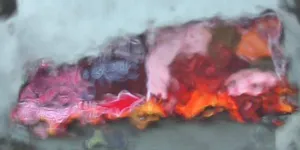
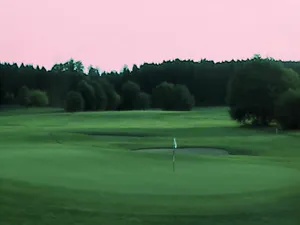
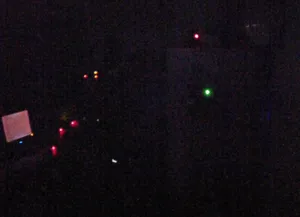
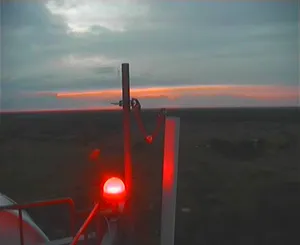
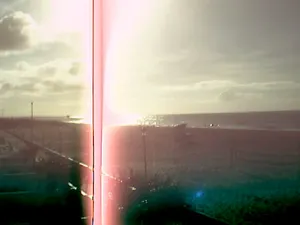
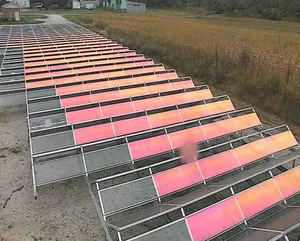
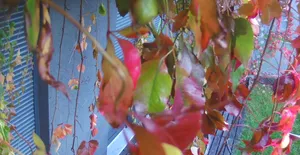
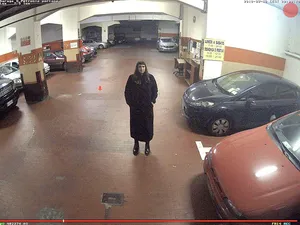
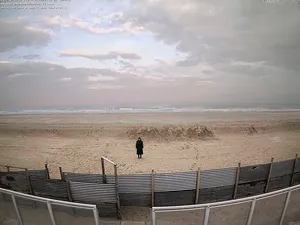
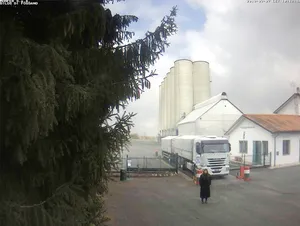
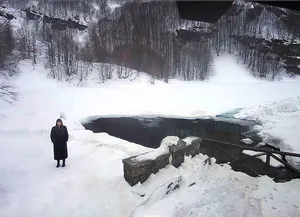
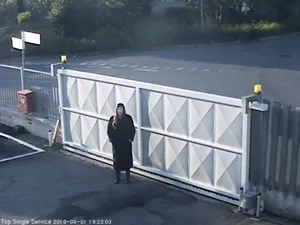
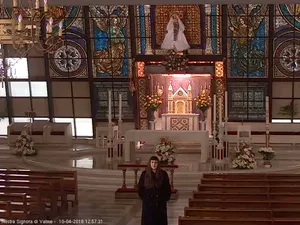
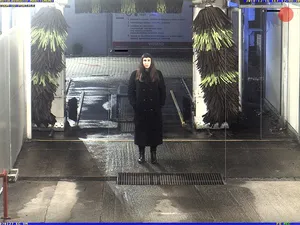
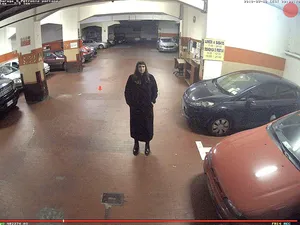
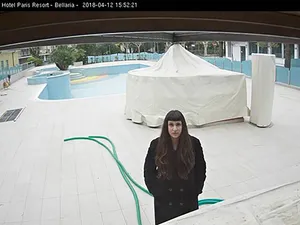
With Supervision Irene Fenara presents a selection of images from surveillance cameras, and saved by the continuous flow that erases them every 24 hours, underlining the contrast between a highly functional activity and an equally powerful aesthetic. The aesthetics of surveillance, supervision and control are realized thanks to devices that frame the amplified vision. In this imagery, seductive and dystopian at the same time, forms of plant or animal life interact with the machine. The visions, like oxymorons frozen in photographs of warm and acid colors, introduce into a space, apparently without human beings, where the development of technology is related to the growth of its potential through the web. The relationship between observer and observed is marked by the entry into a world of post-privacy through the use and dissemination of protected data, extrapolated from the context of origin. The sharing of protected data, extracted through a hack, in a space where many observe few, makes the user involved, and therefore complicit, in a process of normalization of surveillance.
Irene Fenara's interest in theories of visual culture and the need to appropriate the tools of contemporaneity, which determine our way of seeing, become an opportunity to practice observation and reflection on images. Using an instrument usually foreign to art: that of surveillance cameras that acquire images for the sole purpose of environmental control, with Self Portrait from Surveillance Camera Fenara relates power and vision. The work bears the traces of a movement, that of the artist who goes from the studio to the surveillance camera and then saves the image that portrays her before the continuous flow cancels it 24 hours later. The artist's gaze, turned towards the lens, becomes an act of resistance to impose her own identity on the controlled world, a reversed point of view that makes us reflect on the always reversible relationship between the observer and the one being observed.
Irene Fenara
Irene Fenara (b.1990) is an Italian artist. Her research focuses on the way of seeing and practicing observation on images. She reflects on linguistic devices and she use optical and electronic instruments of various kinds, from Polaroid to surveillance cameras, often in an improper manner and transgressing their basic function. It becomes an instrument for observing the world, in the search for a slight poetic sense. The act of vision is the central element of her work that declines in her latest research on optical devices, often used as instruments of control, bringing attention to the always reversible overturning between who observes and who is observed. Her work has been exhibited in art galleries and public institutions, such as Fondazione Prada Osservatorio (2016), Fondazione Fotografia Modena (2017), P420 (2017), MAMbo - Museo d'Arte Moderna di Bologna (2018), Palazzo delle Esposizioni (2018), Fondazione Francesco Fabbri (2018) e Kunst Merano Arte (2019). She is one of the fifth finalists in ING Unseen Talent Award 2019.
https://www.irenefenara.com/