

Bees Above Our Heads
Camilla Ferrari
Bees Above Our Heads
Nominated by CAMERA Centro Italiano per la Fotografia, 2020
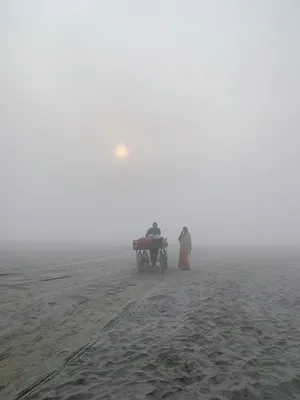
In November 2018, photographer John Stanmeyer and I traveled in northern India, following the rivers and experiencing life around them. Jumping from concrete highways to bumpy dirt roads, we crossed the inner countryside of Madhya Pradesh and Uttar Pradesh, discovering villages behind every tree. We encountered families who hosted us in their homes without asking for anything, only giving. We crossed paths with farmers guiding their cows through the wild land. One day, at the end of the road, an immense valley unfolded before our eyes. Huge columns jutted out of the sand like arms reaching to the sky, melding with the brown leaves of bushes growing inside them. There was something alien about that landscape, almost post-apocalyptic. But also magical, transformed by the golden sparkles of sunlight glinting off cars, buses, and motorcycles as they kicked up sand on the road. We continued to ancient city of Allahabad (renamed Prayagraj in October 2018). It was early morning. We were walking on the Shastri Bridge, a wall of fog obscuring what was going on below us and around us. I felt like a bird suspended in the sky. When we wen down to the riverbank, we were again immersed in the mist. Each site was a leap into the void, and each person encountered, a floating soul. Men were bathing in the cold morning waters or cleaning dishes. It was eerily silent. Time to move on. But first, chai. Chai stops were perfect synecdoches for the variety of Indian life. You could hear the folk music playing on the radio and smell the masala aroma emanating from the small clay cups. You could take in the natural sounds: the wind whispering though the leaves, the mooing of cows passing by, punctuated by a discordantorchestral vehicle horns on the highway. Traveling through northern India made me realize that I was searching for familiar things in an unfamiliar world. But I couldn’t find them. I had to question my perception of knowledge. That’s how I realized I was walking on the edge of a bubble of discovery, a bubble so delicate it could pop at any moment. And so strong, it contained a universe.
A Constellation on Earth
Camilla Ferrari
A Constellation on Earth
Nominated by CAMERA Centro Italiano per la Fotografia, 2020
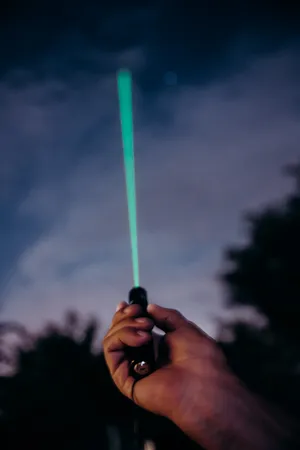
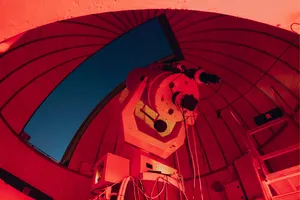
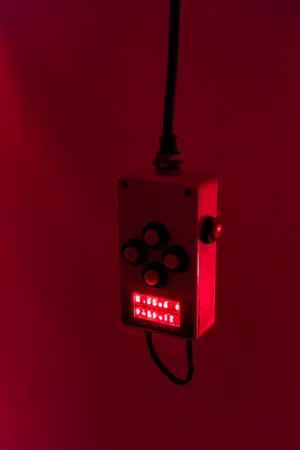
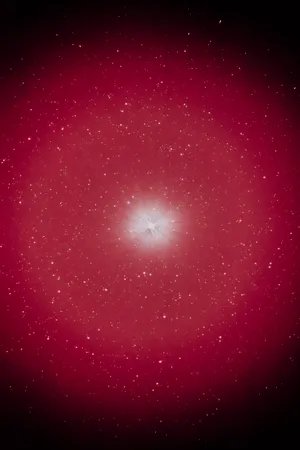
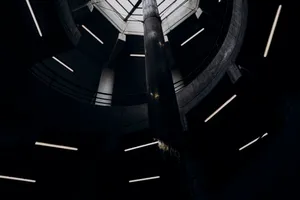
Starting from an event that happened in 2009, namely the discovery of an asteroid later renamed “331011 Peccioli” made by researchers at the Astronomical Observatory of Libbiano, the project analyses the landscape of Peccioli and its hamlets - Libbiano, Legoli, Ghizzano, Cedri, Montelopio, Fabbrica, Montecchio - recomposing it into a single fictional narrative where references to settings, symbols, and metaphors unite the terrestrial and celestial planes in a single tale that links the small village reality and the infinity of the cosmos.
Moving between reality and fiction, this project plays with photographic representation to restore a small Tuscan village's uniqueness in a poetic key: environmental development combined with cultural development generate a new narration of Peccioli and its territory.
Four fires and six souls
Camilla Ferrari
Four fires and six souls
Nominated by CAMERA Centro Italiano per la Fotografia, 2020
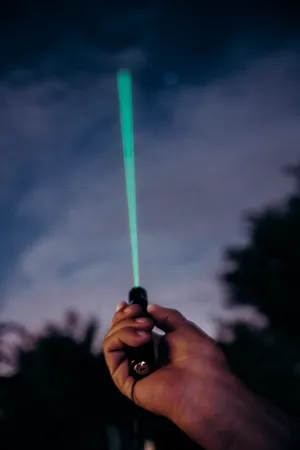
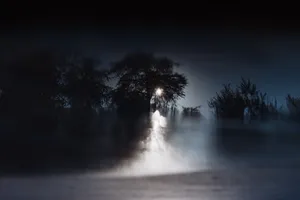
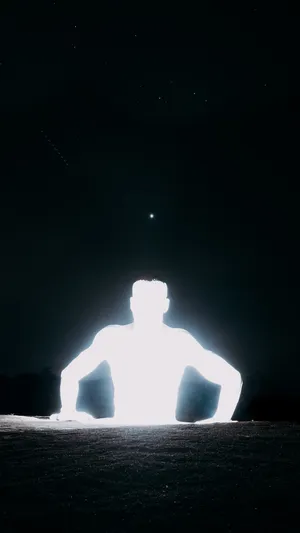
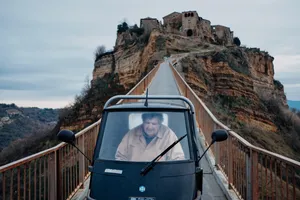
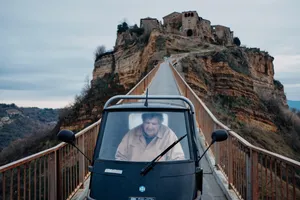
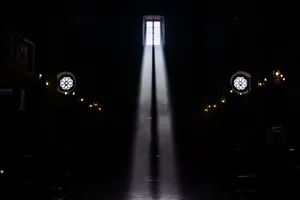
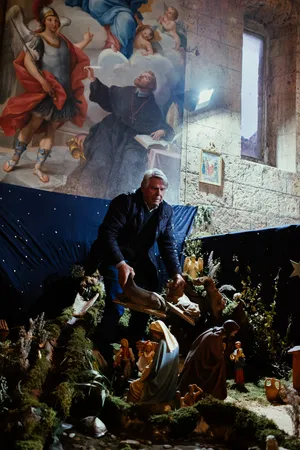
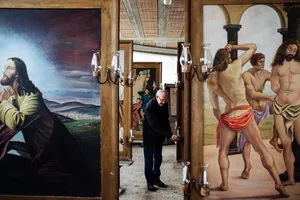
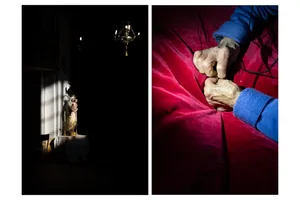
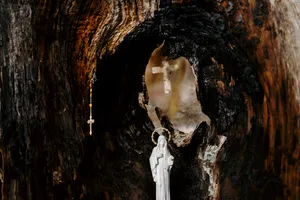
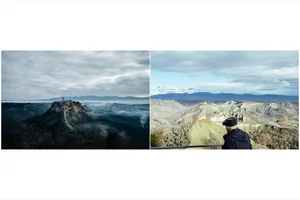
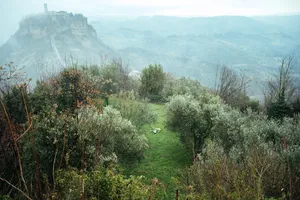
Civita di Bagnoregio lies in the middle of the Calanchi Valley, in the centre of the Italian peninsula. Surrounded by a sea of mist, the village is currently populated by six people and it is connected to the mainland by a narrow bridge. It was built 2500 years ago by the Etruscans on a hill of tufa rock, which is now crumbling 7 cm per year due to the erosion. This fragile condition transformed the town into a touristic attraction and more than 1 million tourists have walked the Civita bridge in the last four years. This phenomenon had an impact on the life of the town: Ivana, Mario, Tony, Rossana, Antonio, Felice and Realino, the poet of the valley, are still living there in a sense of precariousness between the solid past of a farming village and the unknown future of a collapsing ground.

Aquarium
Camilla Ferrari
Aquarium
Nominated by CAMERA Centro Italiano per la Fotografia, 2020
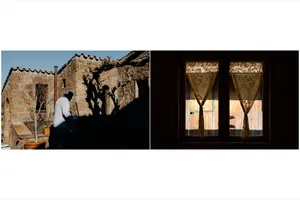
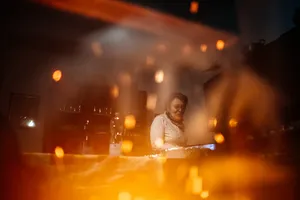
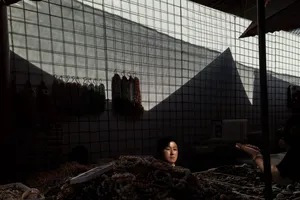
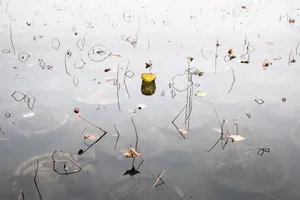
Aquarium is an exploration of the unfolding consequences of a panic attack.
It is a visual research on shattered perception – when sight is blurred, hearing is muffled, the body is frozen, and the heartbeat is racing.
I landed in Beijing on the 23rd of August 2017.
For the first time, I faced a severe panic attack.
Sometimes you observe and sometimes you're being observed.
It's almost like seeing through a glass that distorts what your eyes see,
that makes the light flicker in front of you second after second
and inserts you in a completely different world.
And suddenly you are on the other side of that glass.
You cannot hear what others say
but you can feel the sweet cuddle of the water that surrounds you.
Aquarium is the result of a quiet abandonment to self discovery.


Camilla Ferrari
Camilla Ferrari (b. 1992) is a visual artist working with images and video based in Milan, Italy.
Her work blends still and moving images to explore the ambiguity
of perception, the coexistence of dream and reality, the eloquence of silence, and the poetry found in everyday life.
Her portfolio includes features in prominent publications such as National Geographic, The New York Times, Essenziale, NPR, Artsy, and Domus. She is a Canon Ambassador.
In addition to her personal projects and editorial contributions, Camilla has collaborated with commercial clients for special commissions, including names like Apple, Lamborghini, Marcolin, and Sony Music.
In 2021 she was one of the five finalists of the ING Talent Award and in 2020 she was nominated by Camera Torino for Futures Photography, a European Platform focused on amplifying emerging artists in contemporary photography.
In 2019 she was selected by PDN as one of PDN’s 30: New and Emerging Photographers to Watch worldwide and by Artsy as one of the “20 Rising Female Photojournalists”.
ProfessionPhotographer, Visual Artist, Educator
IdentityWoman, White
LocationSouthern Europe
PracticeDocumentary, Video
TopicsIdentity, Post-memory
CityMilan, Italy
Nominated byCAMERA Centro Italiano per la Fotografia
Year2020
Close

Address
Isaac Titsinghkade 6A-B
1018 CA Amsterdam
The Netherlands
Address
Isaac Titsinghkade 6A-B
1018 CA Amsterdam
The Netherlands
© 2026 FUTURES Foundation
© 2026 FUTURES Foundation
Close