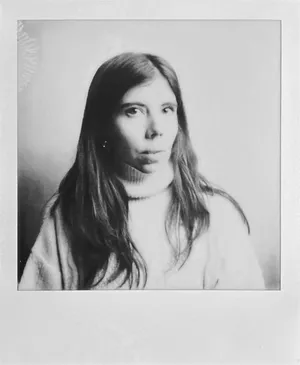
Marisol Mendez


CAMERA is a private foundation, an exhibition venue for both Italian and international photography, a centre for image education, staging meetings, ateliers, and workshops. A research centre for the valorization of photographic heritage.
Located in the city centre, a stone’s throw away from the Mole Antonelliana, Museo Egizio, and many other museums and galleries, CAMERA is a unique hub dedicated to photography, capable of strengthening the link between Piedmont and Italy with the worldwide main centers, promoting photography through an open and creative dialogue with artists and institutions.
The goal of promoting photography is addressed to a broad and diversified audience. Through exhibitions and workshops, meetings and talks, CAMERA aims to become a place of meeting and exchange for citizens, with a diverse cultural offer for each target category: photo lovers, amateur photographers, professionals, and scholars.
CAMERA is a platform for study, display, producing, archiving, training, meeting, and debate all around photography: a place rooted in the territory yet with an international outlook.
Marisol Mendez
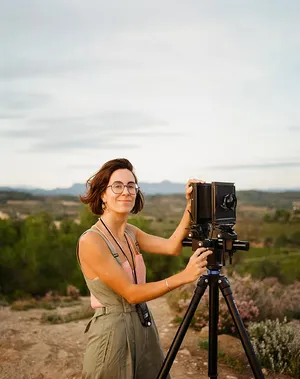
Paula Artés
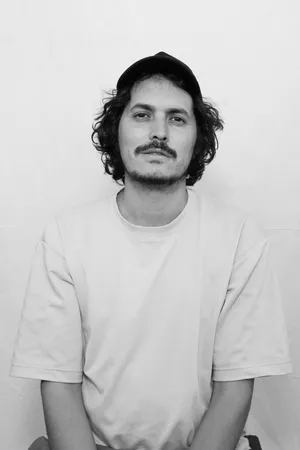
Cristóbal Ascencio
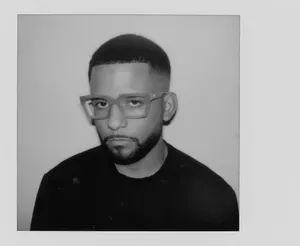
Sergio Pontier
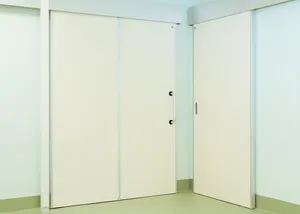
Alessio Pellicoro, Me, the black-box
The diagnosis of an advanced stage IV Hodgkin’s lymphoma offered me the opportunity to see firsthand the vi- tal importance of photography which has now also become a tool of treatment for me. The course of the disease and therapy I face in these years have been an inescapable invitation to think about the forced and necessary inversion my practice has undergone: for the first time I have forced my gaze toward myself, or rather, within myself.
Referring back to Flusser’s theories, I am transformed into input savored and reprocessed by an endless series of algorithms constituting the “meta-bolism” of black-boxes to which I am thrown, devices and diagnostic instrumentation of all kinds (ultrasound, X-ray, CT, PET) with which I interface daily. I become raw material chewed up by a digital mind whose synapses are complex electronic processing that I imagine to be, absurdly, the developmental mechanism of an almost free interpretation of the aforementioned devices.
Through various software I scrutinized and explored diagnoses, pure and unresolved technical images if not subject to human interpretation. I become voyeur, observer, explorer and above all manipulator of a body immersed in intangible matter that fills the infinity of a fictional virtual world of which the virtual fetish of myself is the protagonist.
Such an operation over time has led me to realize that I myself am a black box capable of producing anomalies, masses, incongruities, results that are the consequential response, elaborated by means of “biological algorithms,” to a series of inputs sent by an external world that every day alters and contaminates intimate human nature. Mine.
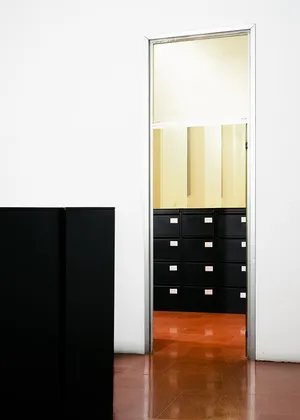
Alessio Pellicoro, Nel quasi invisibile
The archive is a useful medium for defending and consolidating our knowledge systems, as it offers us the possibility of generating new knowledge through the activation of other as yet unidentified connections between its constituent elements. Connections that can be unveiled thanks to an archaeological practice, which interprets the archive as a real archaeological site in which the act of “digging,” traversing the dense stratification of its contents, can bring out previously distant (or concealed) realities but which have always coexisted in the same space. An operation, this, of re-writing memory, well regulated and systematized through its first real mediator, the archive itself. Further extreme attempt to succeed in embracing the totality of existence in order to gain full control over it.
“Nel quasi invisibile” is a project that aims to represent, through photography, the complex archival system embodied by the Istituto Centrale per il Catalogo e la Documentazione di Roma (ICCD). The opportunity offered me to enter its interior gave me a way to experience its spaces, to note the volume of memory it contains, to become fully aware of the way materials are managed and their vulnerability, and to understand the cause-and-effect relationship produced by the preservation and protection of our identity.
To look at the archive as a cosmos from which to extrapolate every little detail in an almost disposophobic way, further accumulating and fragmenting the representation of a place naturally instead predisposed to the systematic, and highly stratigraphic, management of the archival material it preserves. Thinking of my presence as a performative act triggered by a kind of “material turn” in which the recovery and appropriation of objects, traces, documents, materials, residues of the everyday, became the “causal” for the possible recovery of a reality hidden in space, gradually building over time my own personal archive that relates elements without pre-existing connections. Creating within a census place an additional “junk space”, as Rem Koolhaas would say, in which the politics of accumulation replaces hierarchy and composition with addition: “more is more.” Working on the seriality of gesture and gaze, as well as archival practices in its various forms and facets, extracitng contents from their “crates” as Walter Benjamin would do, to discover and rediscover them by dragging them into a present of which I myself become a trace.
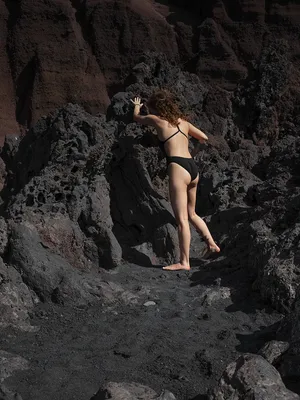
Claudia Amatruda , Good Use Of My Bad Health
Recent scientific discoveries indicate that one of the earliest ancestors of whales was an animal with a mouse-like snout and a build between a fox and a deer, called Indohyus, which lived in water to hide from predators, despite being a land mammal. Through evolution, Indohyus underwent numerous anatomical modifications until they became whales forty million years ago.This project is the third chapter of a larger research project that has as its starting point the transformations over time that a rare degenerative disease makes on my body. If in the first and second chapters I represent and deal with my disability as something to be discovered and made aware of, in this work between self-portrait and video-installation I focus on and question how a disabled body relates to nature, being outside the canons of performance and athleticism, examining the connection between bodies in constant movement, technology and the environment.I am inspired by the concepts of Donna Haraway - for whom the union of cyborg and human challenges traditional, binary categories such as man/woman, organic/inorganic, natural/artificial - and the concept of Astrida Neimanis Human as a Body of Water: as aquatic bodies, we experience ourselves less as isolated entities and more as oceanic whirlpools, in which water is a continuous gestation of differences, con-fusing and suggesting that we look further afield, complicating any supposed opposition between ‘we are all the same’ and ‘we are all different’.The posthuman approach transforms my body into a theatre of reception for foreign elements, highlighting infections, contaminations and possible metamorphoses. I find the cyborg in the tools of help that, as the body deteriorates, become part of my everyday life, and I consider water not only as a physical element, but as a metaphor for relationship and care.
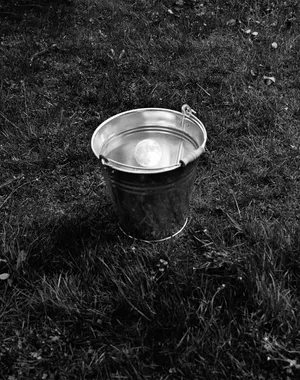
Benedetta Casagrande, All things laid dormant
All things laid dormant questions our relationship to more-than-human life in times of extinction. Relying on the ambiguous qualities of the photographic medium that simultaneously hinders and facilitates interactions with the lived environment, Casagrande invites the viewers into a world suspended between presence and absence, proximity and distance, life and death, carving a space for ecological grief within a world in ruins. The body of work brings together photographs, texts and sculptures that speak not only of the loss of our fellow earth-roamers, but also of photography’s own role in environmental ruination, particularly through the mining of silver for the analogue photographic industry. Reclaiming silver from used darkroom fixer and using it to coat handmade sculptures, Casagrande’s ceramic creatures emerge from the spoils of photographic waste.
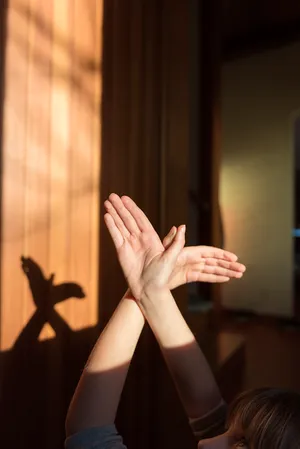
Martina Zanin, Please, don't ever come down
“There are human beings, such as my father, who are as untamable as hawks. And, just as hawks, see others as prey to attack, without being able to form relationships. Loners. Individuals who hurt other people who are more like rabbits or hares.” In "Please, don’t ever come down", Zanin draws from a complex personal experience to explore the father-daughter relationship, using the metaphor of the hawk and its prey. The artist puts into question the ambiguity of power dynamics, psychological violence, and patriarchal structures within the family sphere, while also exploring the intersections between human and animal. Evocative photographs of objects, gestures, animals, actions, and body parts intertwine with family archive images and texts from “avvistamenti”, a diary where Zanin records the date and time of falcon sightings, communicating with F (Father and Falcon), a hybrid human-animal creature. The falcon, a creature that instills both terror and fascination, appears and disappears at its own will, impossible to tame. The artist reflects on how abandonment can also be a form of asserting power, leaving the prey as a victim of this presence-absence that haunts it, much like the familial baggage we carry, the patterns and dynamics that are difficult to break free from. Please, don’t ever come down is a poetic reflection on legacies, evolution, and metamorphosis, that delves into blood, familial bonds, and dreamlike, imaginary connections. It is an invitation to enter vulnerable spaces in search of new perspectives.
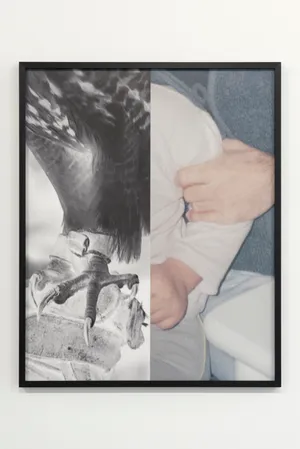
Martina Zanin, Older Than Love
"Intra-specific aggression is much older (millions of years) than personal friendship and love. There is intra-specific aggression without its opposite, love. But, on the contrary, there is no love without aggression.” (Konrad Lorenz, On Aggression) "Older Than Love" is a multimedia installation consisting of photographs, archive material, video, and sound. It starts with the artist’s personal relationship with her father and develops it using the metaphor of a hawk with its prey, creating a parallel between animal and human aggression. The work tackles the theme of violence and the sub-themes associated with it, such as fear, anger, and love, emphasizing the fact that in every relationship that involves a bond of attachment, there is still an inherent element of aggression. The work blends photographs taken by the artist with the photos found in family albums that represent family and personal memory, superimposing the male figure over that of the falcon. With this, the video loop is edited in such a way that it is loaded with tension, alternating the falcon’s point of view with that of the prey, up to its capture. On the other hand, the soundtrack is a collage of recordings of different male voices, which repeats sentences from everyday life in a violent, cold, and detached tone. "Older Than Love" highlights how seemingly normal behaviors can be interpreted negatively and, vice versa, how negative behaviors can be normalized within relationships, prompting the spectator to reflect on the nature of aggression and how it might be forged by the social, environmental, and family context. The details and fragments of images, sounds, and videos created by the artist, somewhere between the poetic and scientific, the personal and public, strive to involve the viewers on a sensory level, urging them to reflect on the underlying question: what is aggression, an instinct or a learned behavior?
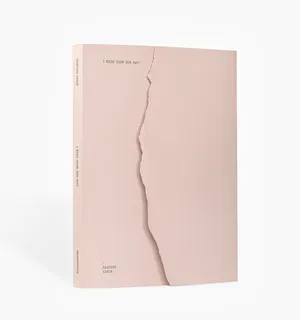
Martina Zanin, I Made Them Run Away
‘It was summer and as many children did, I spent my days in a summer camp. One night I was very excited when I came home and after having had dinner with my grandmother I went upstairs, where my mother and I lived, with the intention of going to sleep. As I entered, I saw my mother and a man sitting on the couch watching television. My mother asked me how my day had been and I couldn’t stop myself from showing both of them what I had learned. I started dancing and singing in front of the television for about 10 minutes, until the man interrupted my performance by saying “It’s late, I’d better go.”, followed by my mother’s glare towards me. Having said goodbye to the man, my mother came back in the house yelling at me: “How is it possible that you make them all run away?”.’ I Made Them Run Away is a multi-layered story weaving together archival family photographs and contemporary imagery with texts written by the artist’s mother. Shifting between the different points of view, Zanin retraces the recurring complicated triangle relationship between her, her mother, and the “man”, a not-constant multiple figure, mostly invisible in the work. Fantasizing about a man she was never able to have, the artist’s mother wrote her thoughts and desires to an imaginary man in a diary entitled Letters to a Man I Have Never Had. The poetical and wistful writing clash with the torn family images, of which her mother has preserved only her figure, or that of her daughter, tearing off all her ex-boyfriends, and creating objects saturated with anger and loneliness. Captured by the artist are objects, gestures, animals, body parts, and idyllic visions, symbolic images reconstructing feelings and sensations that emerged from the past. The interplay of perspectives created a dialogue between mother and daughter in two different moments in time, a reflection on the role of the past in the present, and an exploration of the coexistence and transition of opposite feelings within family ties and love relationships, such as compassion and anger, attraction and repulsion.
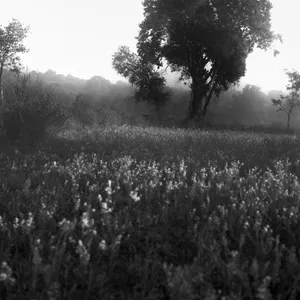
Matteo Buonomo, All these goodbyes
I’m pruning the lavender outside my home door. It’s late September. I planted this lavender with my girlfriend and my father 5 years ago.We moved here 5 years ago, my girlfriend and I.Here it’s a tiny countryside village in Southern Sicily.I saw a personal hope in this lavender.I’m horrible as a gardener.I never know where to cut.To grow without needing much.To be simple.To develop strong and deep and firm roots.That’s the hope I had.I came here to exile myself.I came here to find a spark of grace in my solitude.I came here to be comforted by the shimmering of the light on a wet leaf after the rain.The lavender has grown big.I have the feeling that something is coming to an end.I often find myself chasing any sort of end.On some windy days I can smell the lavender presence the moment I open the door.I came here to calm my turmoil.This place left me restless.The huge vastness around me gave me a sense of claustrophobia.It’s starting to rain.This is probably the last time I’m pruning my lavender.She made it.I failed.
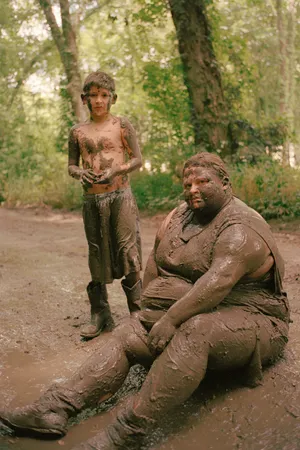
Matteo Buonomo, LOVE MOM
I can’t say exactly what made me understand they were special.Maybe it was the way she looked at her son when I put my face inside the car.Maybe it was the way her son immediately moved between his mother and me, as if to protect her.It was a matter of seconds, and I felt that something special was in that car.I met Kristal two weeks after her last overdose.We met by accident.I was hitchhiking across the US with no set destination.She was driving along Highway 412 in Arkansas.I was looking for humanity.She was with Skyler, her son.I was inspired by Steinbeck’s pages.She was headed home.It was midday.All the shadows fell harshly to the ground.My thumb was up on the side of the road.Kristal drove her shabby white jeep closer and stopped a few meters ahead of me.She gave me a ride.I was immediately impressed by them.I felt that Kristal and Skyler had a special connection.I saw a bold relationship between a mother and a son—a relationship I never had.I felt that everything I was looking for was in that car.I was headed nowhere.I stayed with them.I experienced the opposite side of the American Dream.I felt the loneliness and melancholy of when people stop dreaming.What follows is the chronicle of the time we spent together.Doing things and doing nothing.Being happy and being sad.Being excited and being frustrated.
Isaac Titsinghkade 6A-B
1018 CA Amsterdam
The Netherlands
Isaac Titsinghkade 6A-B
1018 CA Amsterdam
The Netherlands
© 2026 FUTURES Foundation
© 2026 FUTURES Foundation
Close
