I am drawn to an image of a clearing bordered by dark fir trees. A soft cloud hangs between the trunks. ‘The mist is beautiful’ I say awkwardly, sensing that beauty is not the point here.
‘It isn’t mist’ Michaela replies. ‘It’s dust. The truck transporting the felled trees had only just driven through the scene. By the time I took the photograph it had disappeared from the frame, but the dust remained suspended in the air.’
The word ‘suspended’ lingers. I look again at the image and the landscape, the space we are in, changes. The haze no longer feels atmospheric or romantic; it becomes residue, evidence. Something has happened here.
Michaela describes the sensation of waking up in her grandparent’s house, where she spent her childhood summers, in a village surrounded by forests. Michaela: ‘Waking up, the first thing I smelled was the forest. The specific smell of a forest in summertime, when it is still a little bit cold outside in the morning. You can smell morning dew and the sun warming up tree bark.’
I begin to notice how often absence appears in the work. Not empty space exactly, but traces: disturbed earth, cut surfaces, displaced objects, lost histories and gestures that are evoked. The forest is never presented as untouched wilderness. Instead, it feels layered with human presence, even in moments where no people are visible.
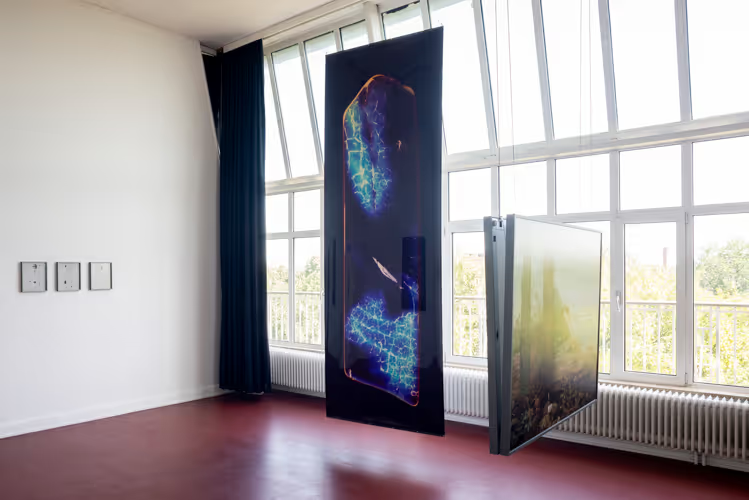
Michaela explains that the project, tentatively titled Red Hills, emerged from an ongoing reflection on forest landscapes in Slovakia as layered spaces where ecological, historical and political processes converge. Driven by a desire to collaborate with the forest, Michaela preserves what remains when legislation is constructed that prioritises the economy over the environment.
‘Forests are a form of environmental heritage that should be protected, but they aren’t: the forests are shrinking’ she explains. As she hiked through her homeland for this project, she was stunned by the enormous amount of tree logging. And how messy places were left. In capitalism, as Michaela puts it, the forest becomes a mere instrument, rather than a place that inspires folk tales, nourishes with seasonal harvest and teaches children how to live.
Despite the destructive political situation in Slovakia - with corruption, cutting cultural funds and state propaganda - NGOs, journalists and activists stand up for the survival of forests. Michaela speaks full of praise of them and included a photograph shot by an activist in her installation. ‘During nightly missions the activists track logged trees, to find out where they will end up. The nocturnal image – rendered in red and black due to the red lamp worn by the activist to remain out of sight – presents an intriguing tension between visibility (the image as evidence) and the photographer’s need to stay unseen.
.jpg)
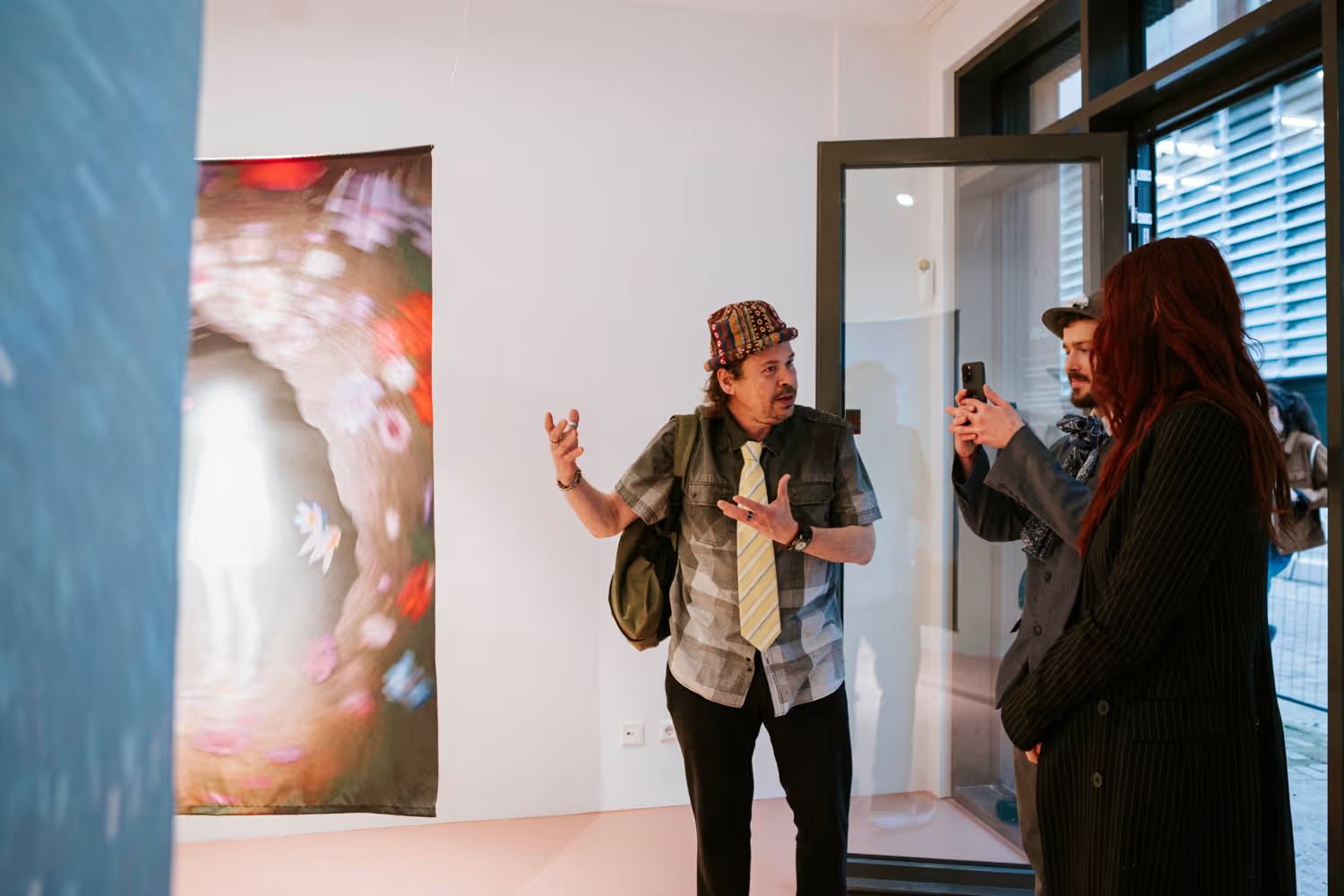
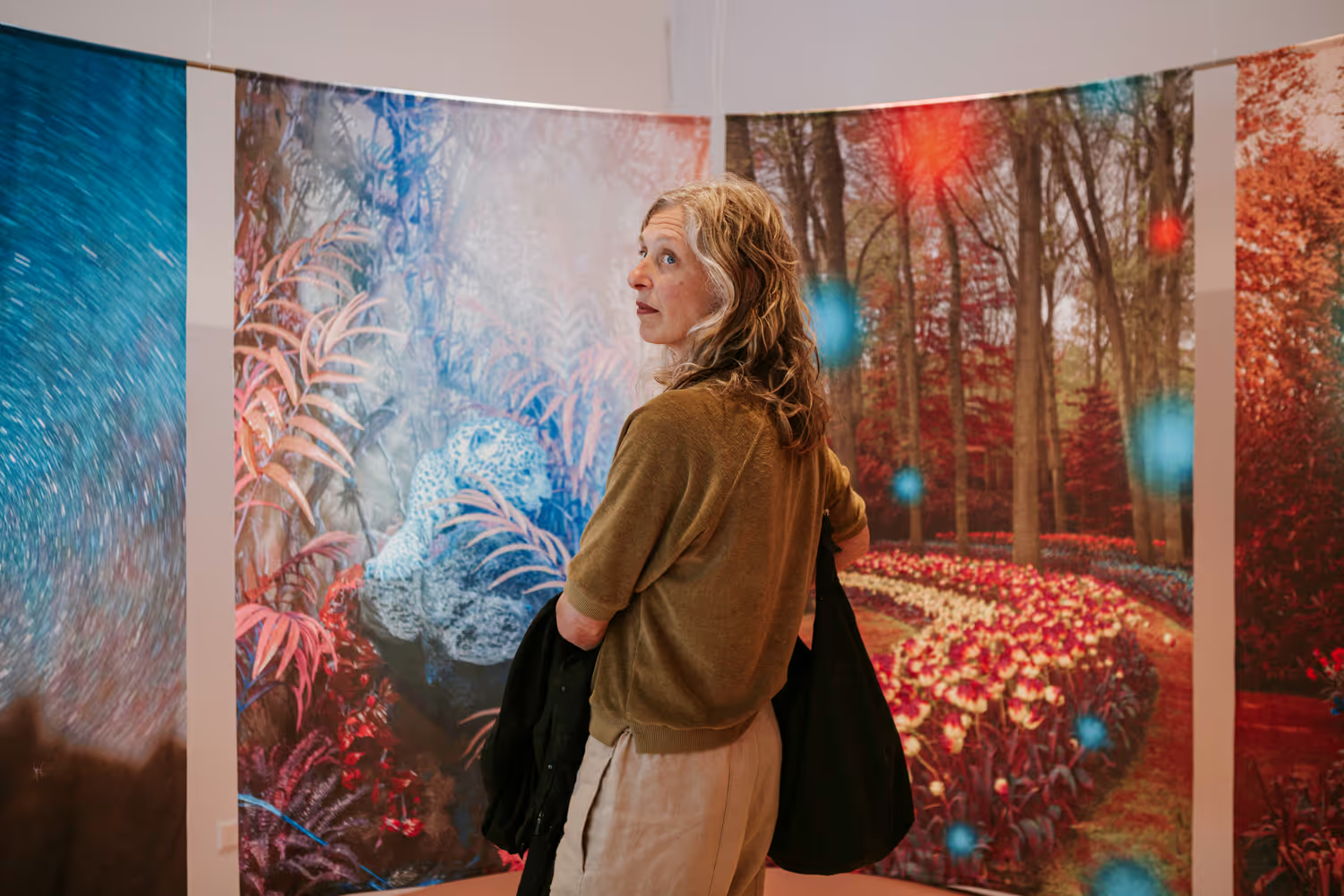
One of the images on textile shows a small wooden church standing alone in a clearing. The structure is modest, nearly fragile, with a sharply pitched roof. Its timber walls seem almost absorbed by the surrounding trees, as though it has grown there rather than been built. The forest seems to continue inside the architecture.
I move closer to the textile surface. The grain of the printed image mingles with the texture of the fabric itself, making the church appear less solid, more temporary.
Another photograph shows a hand, gripping a large antler.
‘In the forest, everything leaves traces’ Michaela says.
A snake lies motionless across dirt, its body twisted slightly as though interrupted mid-movement.
‘I found it close to the road, not long after logging vehicles had passed through.’
Neither of us says much afterwards. The snake becomes connected to the suspended dust: another consequence lingering after movement has disappeared from sight. The truck itself never appears within the work, yet its effects ripple quietly through the images — disturbed air, altered ground, fragile bodies left behind.
At a table near the door, Michaela opens several small glass vials and asks me to smell them. ‘I’m developing scents connected to the project, with the Slovak based scent-making duo Michaela Cagáňová and Kamila Valešová’, she says.
I lift one strip of paper to my nose. It smells resinous and damp, almost cold. Another carries the freshness of pine needles crushed underfoot. One is unexpectedly earthy, like wet bark after rain mixed with smoke.
‘It’s impossible to recreate a forest’ Michaela says. ‘But smell is deeply connected to memory. Sometimes more than images.’
‘The next time I show these images, they will probably be in black and white.’
This remark makes me aware of the colours with an intensity I had not noticed before: the darkness of soil, the greens darkening towards blue, the pale silver of dust.
Walking through the installation is like walking through a forest fearing it may not be here forever, with warmer winters, thinning canopies, roads extending deeper into wooded land, in absences we only notice too late.
The colours around us intensify because they might vanish. The green becomes greener, the earth redder, the dust more luminous in the filtered light. Before leaving, I turn once more toward the drifting cloud between the trees. What first appeared atmospheric now feels profoundly tactile: the material of something already disappearing.

.jpg)
.jpg)
.avif)




.avif)


%2520Unseen-campaign-2024-square-forweb.jpeg)

.avif)


.avif)






.avif)





.jpeg)




.jpg)
.jpg)










%252C%25202015.jpeg)