Robert Capa Contemporary Photography Center

Member from 2018. Located in Budapest, Hungary

Robert Capa Contemporary Photography Center

Member from 2018.Located in Budapest, Hungary

A new and modern visual arts institute, the Robert Capa Contemporary Photography Center was opened in Budapest in December 2013. Among the tasks of the new visual institute are the organization of national and international exhibitions; the foundation of a prestigious photography award; the presentation of national and international photographers and photography workshops. Activities of the institution also include foreign study tours, public discussions, lectures, thematic film screenings, and performances, along with events of other art disciplines. Established in the centennial year of Robert Capa’s birth, the Center supports its operational, functional, and program costs from state subsidies, grants, and its own income.

Nominations

2026

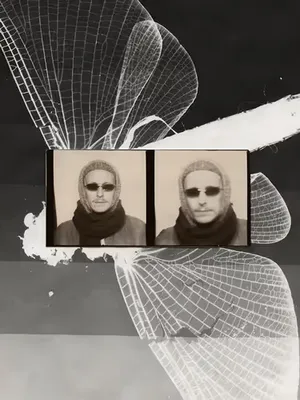
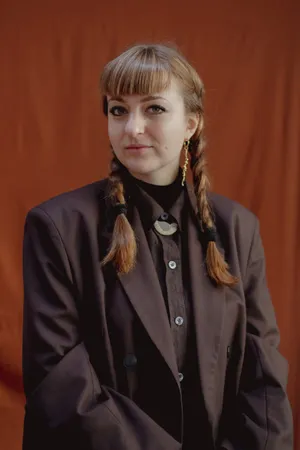
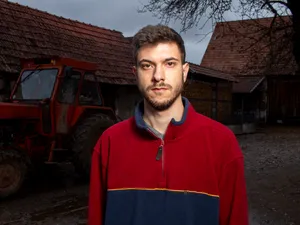
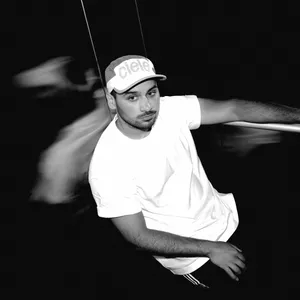
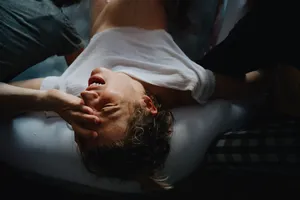
Ákos Levente’s practice repositions analog photography within the 21st-century media environment, examining archives, authentication, AI-generated imagery, and ethical questions of sustainability.

‍

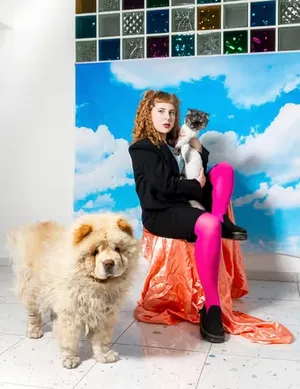
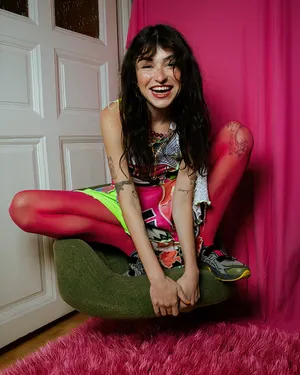
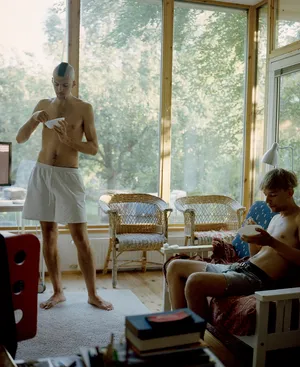
In Emese Tóthová’s work, childhood appears not as a closed past but as a continuously reinterpreted foundation of becoming an adult; using her own living space as a performative site, she explores liminality and presence through the honesty of awkwardness and fragile moments.

‍

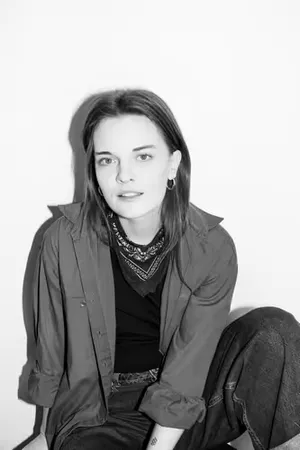
‍Emma Szabó’s intimate and analytical visual language goes beyond mere documentation, capturing the isolation and identity formation of Generations Z and Alpha while articulating universal generational experiences through local contexts.

‍

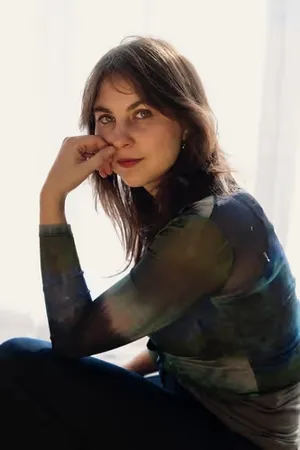
‍Anna Kereszty’s research-based, narrative projects unfold at the boundaries of reality and fiction, where observation, memory, and storytelling mechanisms intersect.

‍

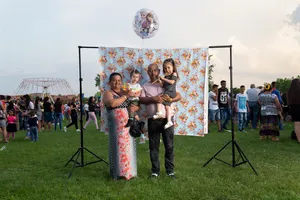
‍Vanessa Lucrezia Francia employs a reflective, sensitive, and playful photographic approach to address questions of identity, female roles, and intergenerational and intercultural relationships, portraying her subjects with dignity, affection, and sharp critical awareness.

‍

Through this selection, Capa Center highlights the original, complex, and internationally relevant voices of contemporary Hungarian photography within the FUTURES platform.

‍

Members of the jury:

Katalin Kopin, curator of the Capa Center

Emese Mucsi, curator of the Capa Center

Zsófia Rechnitzer, artistic director of TORULA, owner of the Rechnitzer Gallery

Dániel Szalai, photographer, visual artist, doctoral student at MOME, FUTURES Talent2020

István Virágvölgyi, artistic director of the Capa Center

2025

Gajewszky Anna // Vékony Dorottya

Anna Gajewszky explores the mysteries of life through a series of sensitively made photographs. Alongside the paradox of life and death, she examines different layers of existence, clearly reflecting an honest and curious female perspective. In her work, she playfully incorporates experiences from both individual and collective lives, creating a universe that feels like an invitation to shared adventures. These adventures often begin with self-exploration—as in Anna's case—and continue with a deeper investigation of our roots, origins, and family. Through her own presence, the artist grants insight into the themes that captivate her while simultaneously becoming an organic part of them: in reality, her work is about us, even as we see her in the images. Her photographs combine the classical elements of staged photography with experimental techniques, including collage and archival materials, making her artistic approach even more dynamic and diverse.

Dorottya Vékony visual artist, university lecturer (Institute of Media and Design, Eger), former FUTURES Talent

‍

Hevesi-Szabó Lujza // Virágvölgyi István

Lujza Hevesi-Szabó is an exciting personality on the emerging photographers' scene of Hungary, who explores a wide range of current and relevant issues in her dynamic, experimental and fresh photo series, also in search of her own authentic voice. Her often bold and unconventional perspectives and visual conceptualisation usually result in an ironic, curved mirror viewpoint, but one can always sense that she uses these tools not for their own sake, but with a good sense of proportion, to elevate the situations faced by her subjects. Already at such a young age, she has found her place on the team of one of the country's leading news portals, but she is also building her private life's work, and is concerned with themes independent of the press. As an agent of two worlds, embracing both autonomous and applied photographic attitudes, she reflects experimentally on the social problems that surround her, an approach that is part of a long tradition of photography and promises a bright future for the author.

István Virágvölgyi artistic director, Capa Center, Budapest

‍

Lantos Olivér // Csizek Gabriella

The starting point of Olivér Lantos' long-lasting photo series are always questions that affect him personally and to which he responds with his own photographic tools. His researcher's attitude provides the basis for this, and he expresses his opinions and questions in the photographs that emerge from the process of observational image-making. His imagery is varied: nature and the urban environment, personal and public spaces, staged and found images, portraits, still lifes can all be interpreted as interacting parts of a flow of images, but they also carry meaning in their own right. He uses an associative method to construct his series, in which he interprets and organises, thus creating an open system.

Gabriella Csizek curator of the permanent Robert Capa exhibition, Capa Center, Budapest

Kölcsey-Gyurkó Sára // Kopin Katalin

In the works of Sára Kölcsey-Gyurkó, the personal dimension is the most important. It was during her studies at university that she was introduced to feminist readings and viewpoints, which had a great influence on her. Besides her personal attachment, this also contributes to her focus on the themes of femininity, the female body and motherhood. She is a curious and sensitive observer of people and herself. The projects she works on are mainly related to her own life events: defining home, living with cancer. She likes to use metaphorical images in combination with documentary photography, giving her series an exciting rhythm. An important element in her work is that she is not an outside observer in the situations she photographs, but an active participant, shaping events and influencing the course of events. Her use of symbolic motifs is a departure from the classical documentary tradition, placing her on the border between conceptual imagery and documentary photography.

Katalin Kopin curator, Capa Center, Budapest

‍

Tóth Hunor // Mucsi Emese

Hunor Tóth, Hungarian artist from Bikafalva, Romania, was born in 2000, more than ten years after the 1989 revolution. His work is set in the village of Tăureni, the main location of his childhood and where he currently lives, and commute to Budapest. After the Romanian regime change, cities were transformed faster than rural settlements, the latter being more slowly affected by the processes of globalization, which is why in many cases folk, domestic traditions are still preserved there. Hunor Tóth's commuting lifestyle and intergenerational situation between two or three settlements create a kind of dual perspective in his photographs, allowing him to present the peculiarities of rural life in Romania in a loving, yet ironic, and self-reflexive way. Beyond the authentic, unique problem-solving strategies that emerge in relative isolation, and the Eastern European bricolage aesthetic of traditional buildings, spaces and objects, Hunor Tóth's work creates a contemporary image of a village that moves away from romantic stereotypes and offers insights into the new challenges of disintegrating communities, slowly changing rural landscapes, transformation of family life and uncertain futures. He graduated from Sapientia EMTE Cluj-Napoca with a BA in Film, Photography and Media and from Moholy-Nagy University of Art and Design in Budapest with an MA in Photography, and his visual solutions, which subversively blend traditionalism with contemporary aesthetics, and the cinematic references of his photobook show the influence of these institutions on his oeuvre.

Emese Mucsi curator, Capa Center, Budapest

2024

In her long-term works, Zsuzsa Darab explores personal themes often combining conceptual and experimental solutions. Deeply engaged with the subject of observation, she presents her questions and experience as a visual story. Often, she takes her own life as a starting point in dealing with the ‘first-life panic’ of her generation and the psychological processes of coming to terms with lived experience.

‍

Balázs Fromm’s projects unfold against the backdrop of Middle and Eastern European countries where democracies are under pressure from the threat of impending war, rising nationalism and migration. He demonstrates an interest in the human condition, which is revealed through a mix of tender portraits and impressions of direct surroundings, resulting in a palette of atmospheric images expressing the challenges of a region faced with an uncertain future.
‍

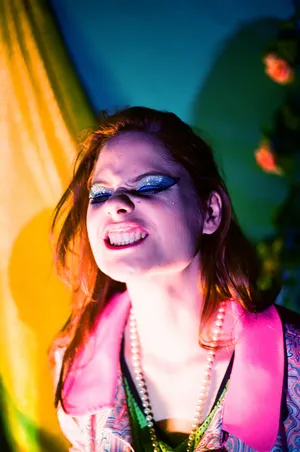
As an active photojournalist, Noémi Napsugár Melegh is able to step away from the ‘fly on the wall’ role of an impartial author we most often expect from press photography. The atmosphere of trust that she is able to create is palpable in her images, and although she is at the beginning of her photographic career, her images show a freshness of creativity that has the potential to be seeking new experimental paths.
‍

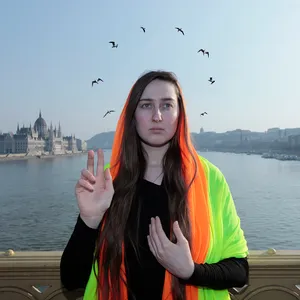
The exceptional characteristics of Róbert Nunkovics’ work were evident from the very beginning of his praxis: he uses the tools of documentary photography to present topics related to his interest in authentic artistic expressions, typically outsider or vernacular and rooted in street art, graffiti culture and everyday life. The focus of his sensitive multimedia projects is usually a remarkable figure or a special place with a little-known story.

‍

Boglárka Zellei combines the spiritual journey with the creative process and her artistic practice is guided by the experience and projection of spiritual processes. With her photographic-based installation works, she invites the viewer into an intense dialogue, drawing attention to fundamental questions of faith, while also bringing to the surface themes of spiritual resilience, as well as notions of judgement and acceptance.

2023

Nominated by Gabriella Csizek, curator of the permanent Capa exhibition at Capa Center, Balázs Turós’ work explores themes that emerge from his personal development and his life's journey, and the sensitive expression of these themes in series’ of photographs. We have chosen him as a FUTURES Talent for his high-quality work and consistently performed projects. A graduate of the Moholy-Nagy University of Art and Design, Turós has been awarded the József Pécsi Photography Scholarship three times.

‍

Tamás Don, chief curator at MODEM Center for Modern and Contemporary Art, nominates Zsuzsanna Simon, a graduate of the Hungarian University of Fine Arts. Since university, Simon’s series have focused on feminism and the social issues affecting women, and she has continued to work with a strong emphasis on the female body and societal expectations in her post-graduate projects too. There are few artists in the Hungarian photography scene who have been so focused on an important social issue for as long as Simon.

‍Nominated by Emese Mucsi, curator at Capa Center, Balázs Szigligeti brings into play the explosive, overdriven, shiny-glazed visual characteristics of camp aesthetics, where he 'cools down’ the loudness of camp, exploiting the possibilities of black-and-white image creation. Having worked in the fashion industry since the age of 16, Szigligeti makes autonomous projects which create a special tension between the topic and the way it is displayed.

‍

Nominated by Borbála Szalai, director of Trafó Gallery, Mari Ornella makes photographs in which control and loss of control appear with equal emphasis. Her latest series, Wanna Be My Lover, deals with the search for female identity and the issues when women's self-definition is shaped by men. The project originates from personal traumas, and sees the artist focus on her own relationship with men such as her father, the characteristics of borderline personality disorder, and the consequences of uncontrollable emotional states.

‍

Nominated by István Virágvölgyi, artistic director at Capa Center, Richárd Kiss approaches the world and the photographs that seek to represent it with a highly analytical vision, sifting through millions of images on the internet and then appropriating them for his work. Asking questions such as ‘does it make sense to take the two-millionth photo of the Eiffel Tower?’, Kiss pulls the rug out from under the online photo services we use on a daily basis.

2021

The five artists selected:

‍

Márton Mónus is a freelance photojournalist who explores socially sensitive topics from the classic documentary perspective of the silent observer. In his images, he demonstrates patience, authenticity, and empathy for those he is photographing. It is his intention to show what is happening first-hand on the ground and leave room for interpretation.

‍

Enikő Hodosy has previously revealed human sensibilities through the careful observation of external signs, but in her recent series, she focuses primarily inward and tries to transform the inner images of self-healing and meditation into poetic still lifes. A sensitive, talented, young artist facing a promising future experiences extreme impulses.

‍

Zsófia Sivák was born in the village of Kerecsenden, Heves County, in the northeastern part of Hungary. She knows rural life as her own, and looks at it with thatknowledge, rather than with the wandering gaze of a stranger. She never crosses the boundaries of authentic documentarism: while her strong opinions offer an intimateinsight, she does not interfere with reality in her pictures. She earns the trust of her subjects with good reason, and she never wavers from it.

‍

Kincső Bede has everything that the word ‘futures’ implies. Despite the unpredictability of the future, it is strength and enthusiasm that she brings to her projects with incredible determination. Self-critical, she recognizes her own limitations, yet she is also extremely trusting of her intuition, which makes her work highly emotional. The future is indeed uncertain, but Kincső Bede always approaches her chosen subjects with courage, authenticity, and substance.

‍

Anyone who chooses to work with an analog technique, compose in a viewfinder or work with a given number of images must have a high level of professional knowledge, concentration, and a clearly defined idea. András Zoltai works with analog technology. As a documentary photojournalist, he is constantly looking for socially sensitive topics, human stories. During the post-Soviet period, he produced the series The Chance - Post-Soviet Sports Heritage in Armenia, which shows the fate of athletes in the margins of society. The dilapidated facilities and old-fashioned training methods take us back to the past. His photographs demonstrate a high level of social sensitivity and a deep sense of communal responsibility. As an artist, he believes in the power of images, in his duty to show the photographs to the public.

2019

Anna Ádám has a rich practice, merging her various interests into an aesthetically driven installation, somewhere between the kitsch and the contemporary. I believe the jury was attracted to her unique performative practice and its potential beyond the photographic.‍

Set in the studio, the work of Krystyna Bilak is carefully constructed, its presence controlled, the location measured; she builds stories where only selected elements are added as contributors to the narration. Everything is precise, and the results are astonishing. I was particularly glad to discover her practice, that I hope to present in Ireland soon.‍

Kata Geibl‘s practice exudes visual sophistication, with well-researched and carefully constructed bodies of work such as Sisyphus. Here, a pseudo-scientific vocabulary makes the images intriguing, while the project itself questions our almost religious admiration for Science. It would not be hard to see this work exhibited widely.‍

Olga Kocsi‘s practice based research is hyper-playful, demonstrating the modus operandi of an artist whose everyday is questioned oftentimes with amusing results. I enjoyed her video works specifically, with her witty humour and conceptual approach.‍

Adél Koleszár has focused her practice on bringing us closer into Mexican crime-related violence and their religious views, in New Routes of Faith. Closer, not to see the fresh wounds bleeding, but the human side; to see the misery and the sublime in the everyday life, with a personal approach that evidences what she is capable of. It would be interesting to see where she puts her ambition next, she is certainly one to follow.

‍

Angel Luis Gonzalez, CEO PhotoIreland Foundation

2018

Éva Szombat | „Pure positivity! Eva is a person who looks at the world with a smile and wants to translate that uplifting outlook on life into her work. If this is the mission of her work, then she absolutely achieves in doing so. Eva presented coherent projects that document herself and people in her surroundings in a captivating, confident and unexpected manner.”

‍

Emilia van Lynden artistic director of Unseen Amsterdam

‍

Márton Kállai | „Solotvyno, Kallai’s project that focuses on a former salt mining town in the Ukraine, explores two communities who have contrasting relationships to their shared local environment. His project explores the different manners in which these communities live alongside each other and the distinctive emotions, or lack of emotions, that they feel towards their natural surroundings. Kállai presents a cohesive body of work that looks at how opposing communities live together and their disparate approaches to the environment, heritage and commerce.”

‍

Emilia van Lynden artistic director of Unseen Amsterdam

‍

„Szilvia Bolla is a young artist with a very professional approach to art, that combines photography in relation to sculpture, resulting in some very interesting installations. Her work is a combination of senses, mixing colors, shapes and light in order to catch the viewer’s eye. She has a good understanding of the present and future trends and I am certain that her installations will pleasantly surprise the audience.”

‍

Sebastian Vaida photographer, director of Photo Romania Festival

‍

„Dávid Bíró works with abstract shapes, creating new and exciting concepts. He combines geons and colors into new forms and installations, drawing attention to his point of view. Presented well his work will stand out in any exhibition.”

‍

Sebastian Vaida photographer, director of Photo Romania Festival

‍

„Máté Dobokay works at the border between clear and unclear, both with color and shades of grey. He has a unique technique of using analogue techniques in expressing his work, sometimes in huge prints. I will certainly love to see his work printed and exhibited, just as I saw it in a portfolio review presentation.”

‍

Sebastian Vaida photographer, director of Photo Romania Festival