


Echo in Delirium
Éva Szombat
Echo in Delirium
Nominated by Robert Capa Contemporary Photography Center, 2018
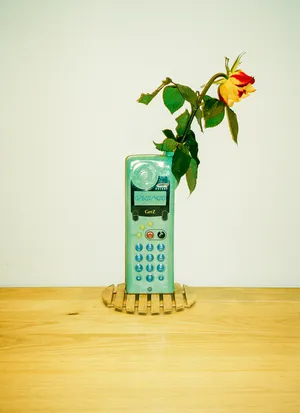
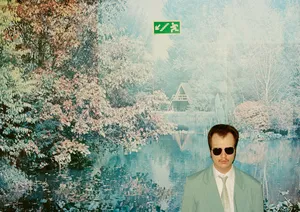
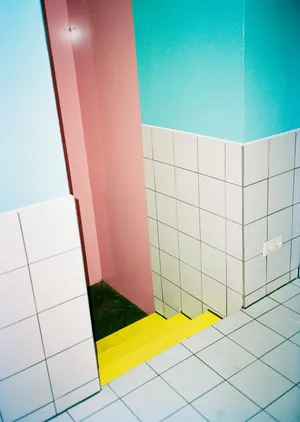
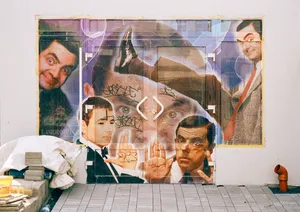
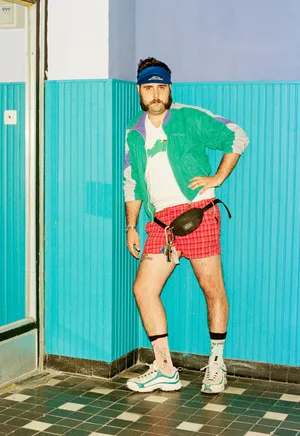
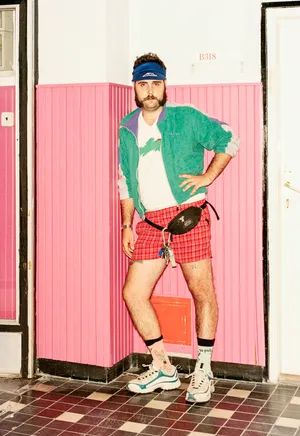
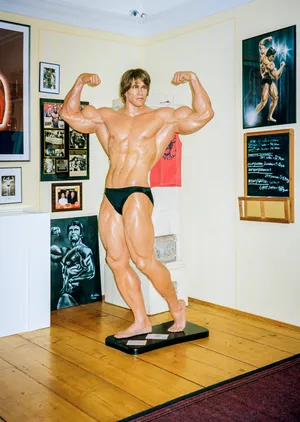
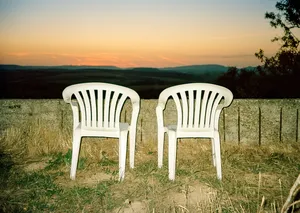
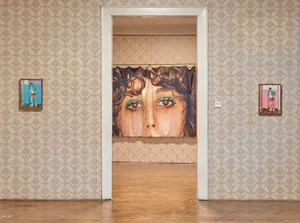
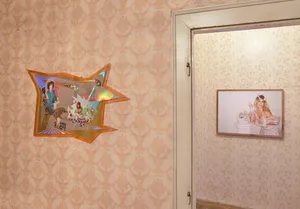
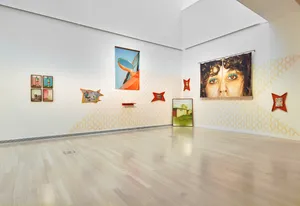
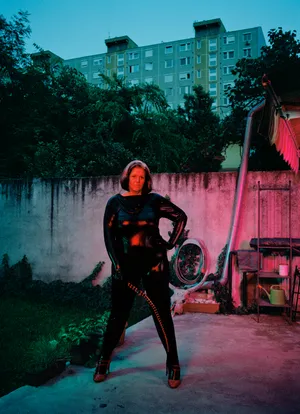
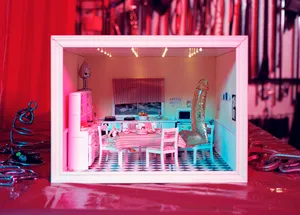
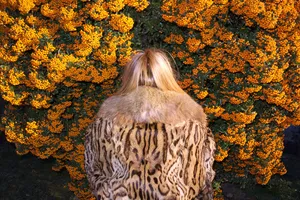
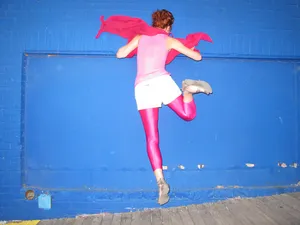
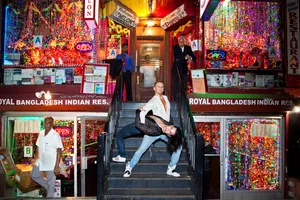
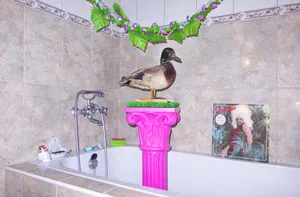
Have you ever felt like the past is here to stay? That the present is just an endless loop of everything that happened before, repeating over and over and over? Have you ever felt that there is no way to break out of that loop? Welcome to ECHO IN DELIRIUM. In recent years, society has been rocked by crises: pandemics, wars in our neighbourhood, skyrocketing inflation. To cope with existential insecurity and depression, many people have turned to music, films and objects they loved as children. What seemed outdated or ironic not so long ago, either in decoration or in clothing style, could now become a symbol of serenity, a familiar anchor in an estranged world. Passing away, the passing of time might be the most dreadful things in the world. At the same time, the cyclic nature of life, the reinterpretation of thing of the past, and the fact that nothing vanishes without a trace, might be some source of comfort.But maybe permanence is not a blessing, but a sign of things never changing: politics, fashion, pop culture staying the same, mining the same depths that ran dry decades ago. Maybe imagining a future is impossible, maybe we are just incapable of that. This series is a sign of things that already came, and came and came again. In my series, I explore items stuck here from the 1980s and 1990s. I was looking for people in their twenties who are not riding the latest fashion wave but who are obsessed with a particular style and material culture which was in vogue when they had not even been born. I photographed people in their thirties who fondly remember their childhood, some of them still preserving their treasured possessions–including Barbie dolls, trolls, Nintendo relics and Polly Pocket figurines–locked up or in a display case. I visited a retro game fair, where pinball machines and arcade games were not items of utility but museum objects, or relics, which are taken out of their hiding places on exceptional occasions. I went to see the Schwarzenegger museum as well, which is not even a collection but a sanctuary raised for a living man. And I've photographed places and situations that seem to have spent the last few decades locked in amber. The point of the project is repetition, the idea that everything that surrounds us has already been experienced once, that what others treasure has already been our object of use, and that what once meant a lot is devoured by the institution of nostalgia and reproduced in its copy. Echo In Delirium deals mainly with the object culture and design of the eighties and nineties, when the region went from one ism to another. After socialism came capitalism, and from the second half of the twenties everything was put in brackets. Then, just like our fashion and our objects, our history was repeated.



Drain Me, And I'll Burn The Bridges Between Us
Éva Szombat
Drain Me, And I'll Burn The Bridges Between Us
Nominated by Robert Capa Contemporary Photography Center, 2018
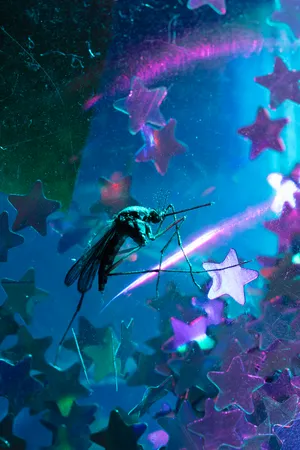
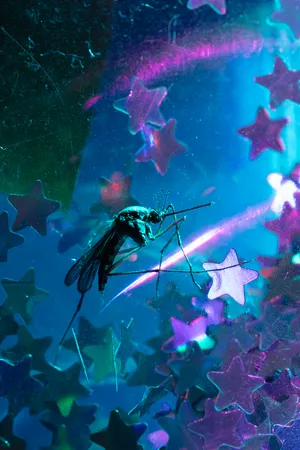
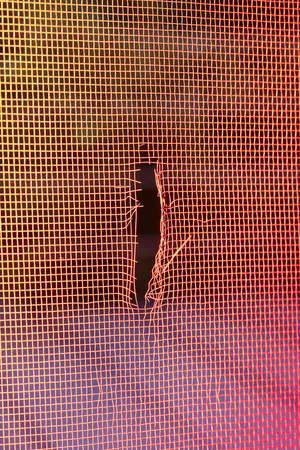
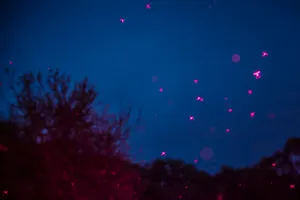
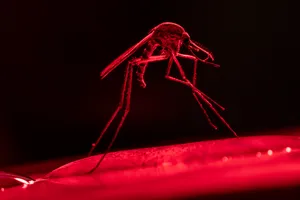
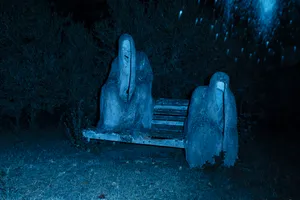
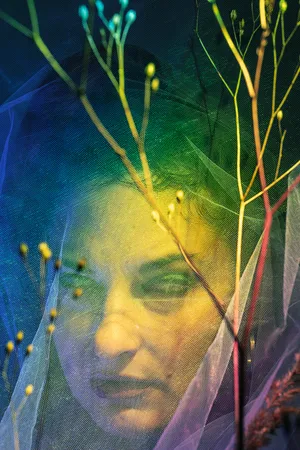
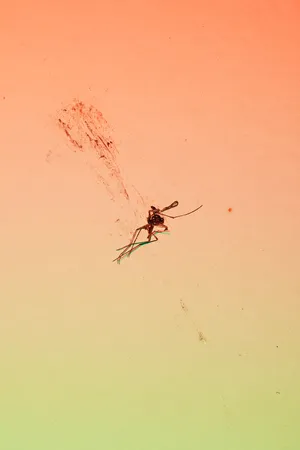
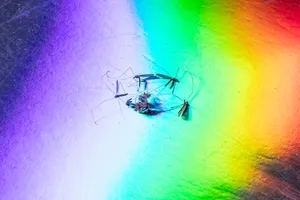
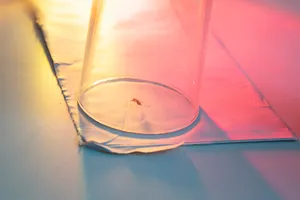
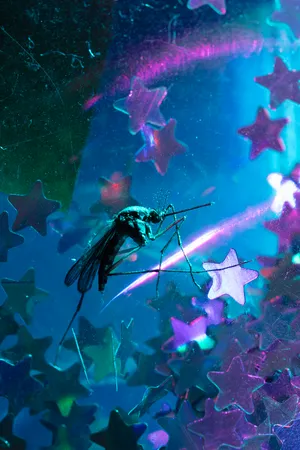
The moral norms and societal conventions paint an image about how women should act. They should be humble, nice, proper, patient, and pretty. I have also tried to match these requirements. But they also carry side effects: it is hard to say no, and make it difficult to recognise limits. Without a healthy net of self-defense, we open ourselves up to be gored. There are people who are able to notice these weaknesses, and keep sucking their resources, until they run dry or until fits of rage burn every bridge. I found a wonderful metaphor for these instances. Driven by recent global warming, mosquito populations in my country have surged, ranging from common native species to unprecedented tropical variants. In 2023, during an artist residency within a nature reserve, I experienced this firsthand, as the insects were left to breed freely without eradication efforts. As I was walking in the grass, they rose at my feet as clouds of dust, they waited at the doors as a buzzing mass, they bit through my clothes when I stepped outside. They made life almost impossible. Every moment of being outside was a conflict. Until I learned how to defend myself, how to shut them out of my private space, how to avoid their sly bloodsucking and how to stop their unpleasantness. As if these mosquitoes and other flying intruders were the embodiment of the external forces of my life, as if they were the reason to erect transparent nets around myself, not quite walls. Transparence was needed, because I needed to see outside, I wasn’t supposed to shut the world out. But I needed every weapon I could gather against what was waiting for me there: conflicts, violence, creative nuisances, constant buzzing, unstoppable swarming. I couldn’t let them keep sucking my blood.

I Want Orgasms, Not Roses
Éva Szombat
I Want Orgasms, Not Roses
Nominated by Robert Capa Contemporary Photography Center, 2018
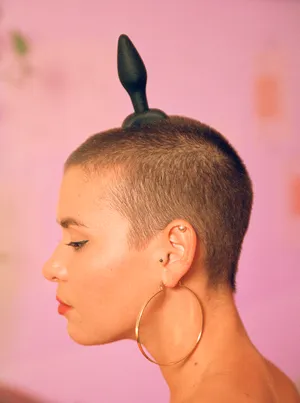
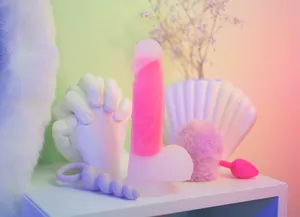
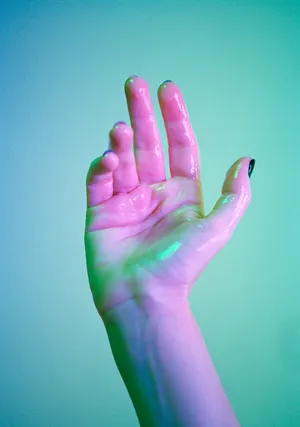
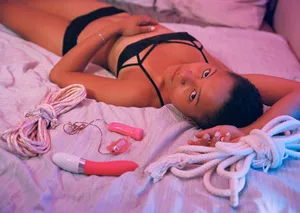
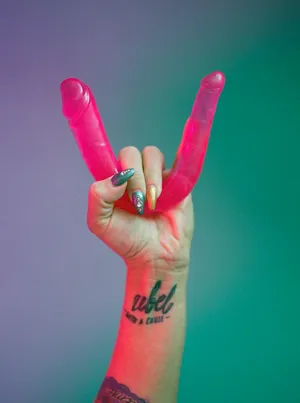
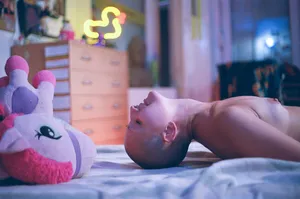
"I got bored of the shame. [...] Now I can access my shame. I can revert to being that little girl who is ashamed by the sexual abuse she suffered. Somehow, I still feel that my sexuality is dangerous and puts everyone at risk. [...] Shame must be removed from sexuality." This is what Barbara told me when I asked her why she had responded to my open call. Back in 2017, I put out a call for participants, looking for people who were willing to be photographed with their sex toys, openly showing their faces and using their real names. Thirty women have let me in their intimate space and decided to talk about their innermost personal matters. The contributors came from various walks of life: students, hairdressers, artists, dominatrixes, entrepreneurs, employees, single people, mothers, and even a grandmother. They had different physiques and sexualities—thin, curvy, disabled, tattooed, asexual, or bisexual—but they all shared one thing: they were on a road of sexual self-discovery. While working on the project, I found my grandmother’s WWII-era memory book. In Hungary, these scrapbooks are a centuries-old tradition, filled with life advice from loved ones. The messages often mirrored my participants' inhibitions. These lines from past generations implied that a woman should be modest, obedient, and endure suffering—patterns that the participants, and I, had internalized. The aesthetics of these memory books served as inspiration for the design of the book. Over the years, my relationship to sexuality shifted, and the project evolved. The objects became less important than the owners and their stories. I sought to shed sexual shame, overcome societal conventions, and break free from inherited behaviors. The toys became keys to honest communication. The book is not just a linear collection of portraits. The photos form a distinct narrative arc: from oppression, through recognition, to liberation. I wanted to show how these women turned their lives around—how they were oppressed by society or inherited thoughts, how they recognized this, and how they ultimately chose to break free, living their lives as they pleased.



Beyond The Curve
Éva Szombat
Beyond The Curve
Nominated by Robert Capa Contemporary Photography Center, 2018
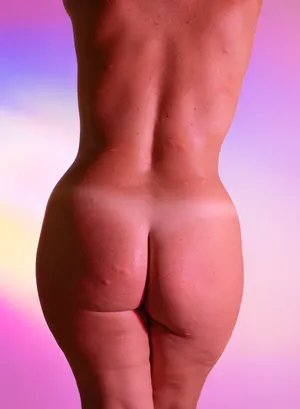
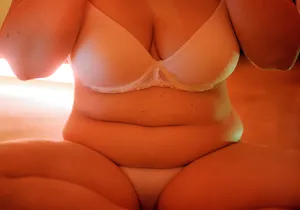
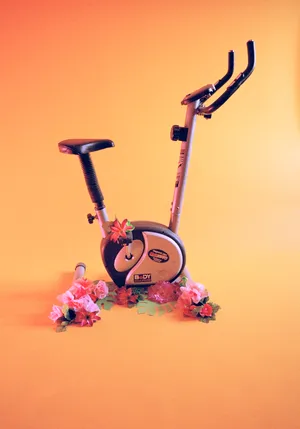
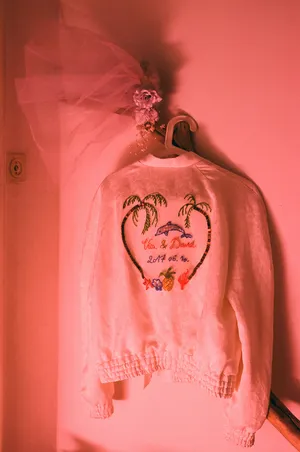
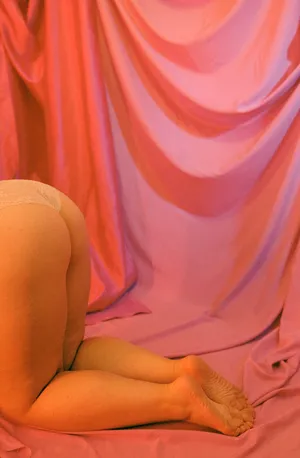
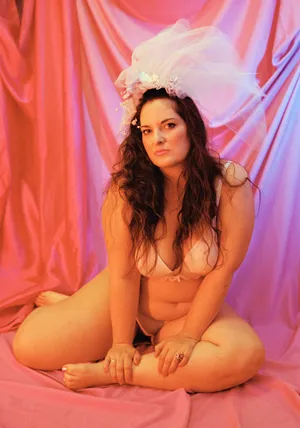
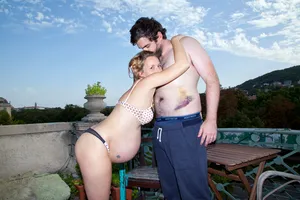
Two significant events happened in my life in 2017. I turned 30 and I got married. Before the wedding I noticed I was curvier than usual. I have decided to try something I never had the patience for: slowly, gradually changing my lifestyle. I promised myself I won’t be impatient, I won’t force myself to lose 20 kilos in two months, and I’ll leave time for myself. All my life I have tried to feel good in my skin, because this is how I always was, this was my figure. But there were always people around, who made accepting myself difficult. They were usually people close to me. I had a boyfriend who forced me to stand on the scale, to check if I gained weight. He wanted to see if I should start dieting. Years later, before my wedding I was asked if I really needed bridesmaids, because of how I will look on the photos, standing next to my slim girlfriends. All these people meant well.My campaigns in dieting were successful temporarily, but I always gave up after a while. But this time, it worked.I am lucky, because I have found a true partner. He won’t force me on the scale, he will never insult me, while only meaning well and giving me courage. My self-confidence grew greatly since I’m with him. But I have started changing my lifestyle for myself, and learned not to compare myself to others. I have changed a lot. I’m happy about improving my health, and I don’t feel guilty when I sometimes go off-diet. I haven’t become a top model. I’ll never be one, but I’m fine with it. I like my big behind and my belly. I hope my new series will help other to accept themselves as well.

Practitioners
Éva Szombat
Practitioners
Nominated by Robert Capa Contemporary Photography Center, 2018
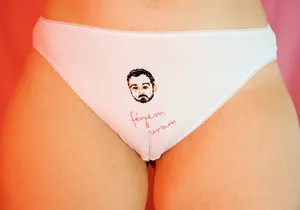
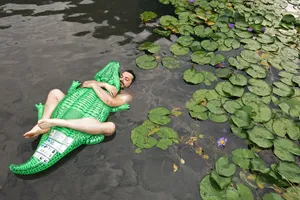
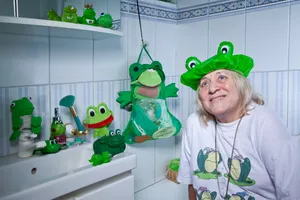
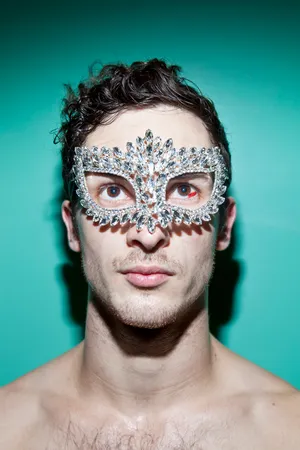
I’ve been interested in happiness for a long time. How do we reach it, how do we maintain it? Can anyone be happy? What are the chances for those, who aren’t predestined for happiness? With my photobook Practitioners, I was looking for people, who take an active role in increasing their feeling of happiness. Erika lost her child, but found help in balloon twisting. Maria claims her passion for collecting frogs helped cure her cancer. Some people find happiness after gender reassignment surgery, some find it when keeping pets, but even a rubber crocodile can be its source. Constantly practicing is the key. The book has five chapters: Togetherness, Hobbies, Pets, Self-realization and Home.Special thanks: Dávid Klág, Linda Lendvai, Vera Vida and all who participated



Éva Szombat
Éva Szombat is a photographer based in Budapest, Hungary. Her works explore themes of happiness, mental well-being, desire, memory, self-acceptance, and sexuality by using colorful visuals with a subtle political edge. The projects combine documentary methodology with an emphasis on presentation and installation, mixing spontaneous and staged elements, complemented by interviews and texts by the subjects or experts. The final form of the projects is often a photobook.
She previously self-published two books on themes of well-being: Happiness, and Practitioners. The series I Want Orgasms, Not Roses won the Robert Capa Grand Prize in 2021, later published by Kehrer Verlag in collaboration with Everybody Needs Art in 2022. In 2023 the book was a joint winner at Belfast Photo Festival Photo-Book Award. Her project about nostalgia, titled Echo in Delirium, was completed late in 2024, and was released also in book form in cooperation with Symposion and Everybody Needs Art. Then, in 2025, Echo In Delirium was shortlisted for the Rencontres d'Arles Book Awards and Paris Photo - Aperture PhotoBook Awards.
Her works were displayed in numerous festivals and exhibitions such as Unseen Amsterdam, 212 Photography Istanbul, Belfast Photo Festival, White Box (New York), Jerusalem Biennale, Imago Lisboa, Foto Wien, Krinzinger Schottenfeld (Vienna), Galleri Image (Aarhus), Fotografica Bogota, National Museum Warsaw, Robert Capa Center, Ludwig Museum.
She was selected for the FUTURES Photography talent programme in 2018. Since 2020, she has been a member of the Secondary Archive Central and Eastern European Women's Art Platform.
Szombat earned her MA in Photography from the Moholy-Nagy University of Art and Design (MOME), and studied Visual Communication at ESAG Penninghen in Paris on an Erasmus scholarship. Currently, she is a doctoral candidate and teaching photography at MOME.
She is represented by Longtermhandstand.
ProfessionPhotographer, Visual Artist, Academic
IdentityWoman
LocationHungary, Eastern Europe
PracticeConceptual, Portrait, Still Life, Documentary
TopicsIdentity, Politics, Intimacy, Post-memory, Body
CityBudapest
Nominated byRobert Capa Contemporary Photography Center
Year2018
Close

Address
Isaac Titsinghkade 6A-B
1018 CA Amsterdam
The Netherlands
Address
Isaac Titsinghkade 6A-B
1018 CA Amsterdam
The Netherlands
© 2026 FUTURES Foundation
© 2026 FUTURES Foundation
Close