

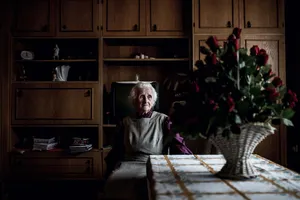
The Last Story Tellers
István Bielik
The Last Story Tellers
Nominated by Robert Capa Contemporary Photography Center, 2020
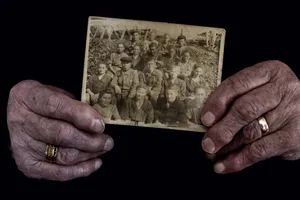
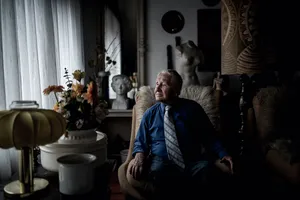
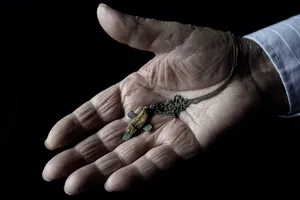
The expression Gulag refers to the forced-labor camp-system covering the whole Stalinist Soviet Union. In the camps, domestic and foreign opponents of the political system, prisoners of war, and other civilians deported randomly or based on false allegations had to face forced hard labor they worked 10-12 hours a day, while provided with a less than a minimum level of food and healthcare. At the end of World War II, as collective retaliation, 250,000 men and women of German origin, including Hungarian citizens, were dragged away from Hungary to the GULAG and GUPVI forced-labor camps as prisoners of the military and domestic authorities of the triumphant Soviet Union. The people collected in Hungary were first put into assembly centers and were told by the Soviet officers that they are only taken for "a little work" (malenkaya rabota), although they were to face years of starvation and hard physical labor, or death. The main objective of the camps was to satisfy the need for human workforce. An immense number ofworking-age women and men had to leave their countries to work in the Soviet forced-labor camps. Their average age was below 20. Following their return, these physically — and often also mentally — broken people were forced to keep silent about all what happened. Only a few survivors of the forced-labor camps are still alive, so one consider it a huge responsibility to present them, showing our respect for them this way. We must ensure that their stories will not vanish into historical obscurity but will stay with us as a memento so that similar monstrosities could never happen again.
The Darkest Hour
István Bielik
The Darkest Hour
Nominated by Robert Capa Contemporary Photography Center, 2020
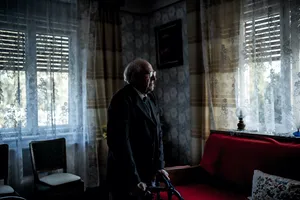
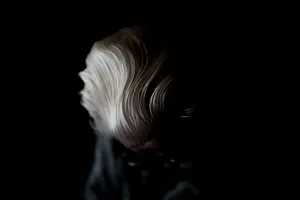
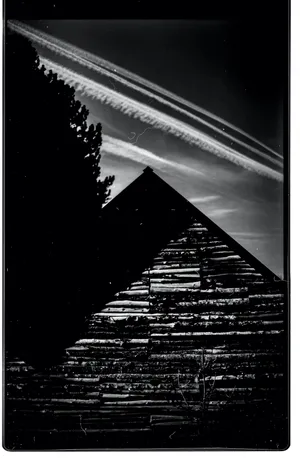
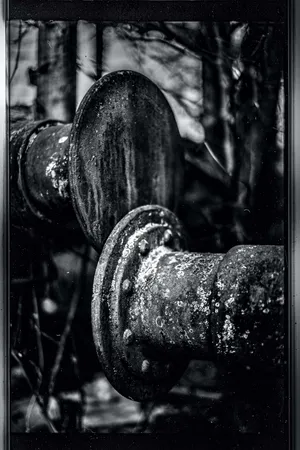
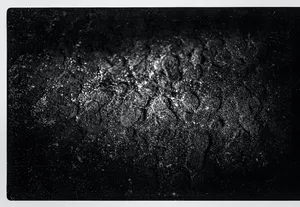
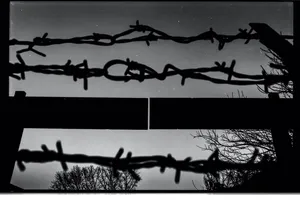
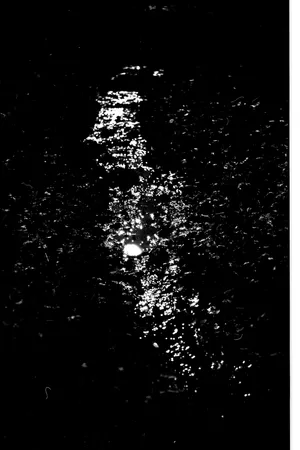
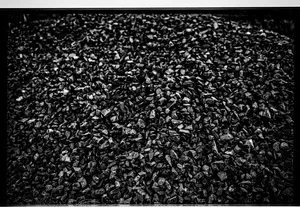
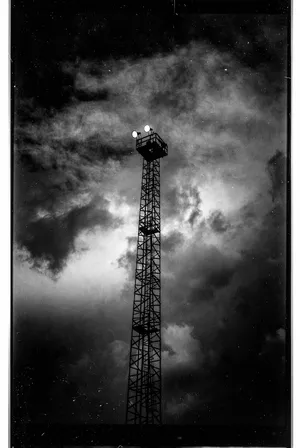
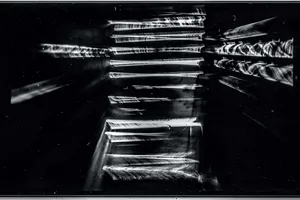
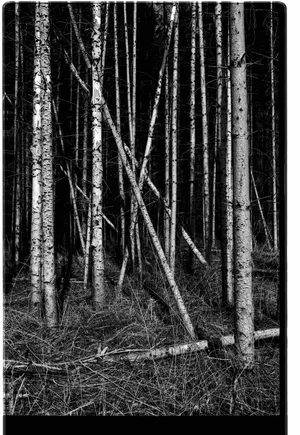
As a form of collective punishment at the end of World War II, 250,000 men and women of German origin, including Hungarian citizens, were dragged away from Hungary to the GULAG and the GUPVI forced-labor camps, as prisoners of the military and the domestic authorities of the triumphant Soviet Union. The main objective of the camps was to satisfy the demand for human labor. An immense number of working-age women and men had to leave the country to work in the Soviet forced-labor camps. Their average age was below 20. Following their return, these physically – and often also mentally – broken people would be forced to keep silent about all this. As the events left their scars on the survivors, who have been carrying these marks ever since, so did the forced-labor camps and mines leave the landscape and the collective consciousness of humanity scarred forever. The stories they shared had a profound impact on me; I became close with the story-tellers, and already knowing their stories, I started to feel an urge to record the associated places, objects, memories, and feelings with my camera. I capture still remaining fragments of their memories and history, both in Hungary and in the post-Soviet region, salvaging their stories for posterity. As such, none of this is consigned to the past but stays with us as a reminder, preventing such monstrosities from occurring ever again. “I still have nightmares of Russia. It is a dream, but I always know that I am there. It is so terrible that I always wake up. We were starving, we didn’t have any clothes or anything,” as Mrs. János Lampert née Ilona Sulcz told me at the end of our conversation.
István Bielik
István Bielik (b. 1985) is a freelance photographer based in Budapest. He works with various Hungarian newspapers and online magazines. As a photographer, he sees it as his mission to use the instruments of visual storytelling to present the situation of the downtrodden and those who live as minorities on the margins of society, who cannot make themselves heard by the majority. In so doing, he shines a light on injustices in the world.
His work has been recognized through a variety of prestigious professional awards and achievements: In 2014 he was awarded the Grand Prize of the 32nd Hungarian Press Photo Competition for a photo series about the civil war in Syria. In 2015 he covered the conflict in eastern Ukraine and the impact of the refugee crisis across Europe. In the same year he was selected to participate in the Joop Swart Masterclass organized by the World Press Photo Organization. In 2017 he took part in the workshop of Magnum Photos as a recipient of the Robert Capa Centre’s scholarship. In 2018 he was the recipient of the Károly Hemző prize, one of the leading Hungarian photography awards, in recognition of his photo series which drew on a sophisticated form language to capture social phenomena in a way that reflects the photographer’s deep social sensitivity. In the same year, he was also selected to join the Nikon-NOOR Academy Masterclass.
He was awarded the Pécsi József Photography Grant in 2015, 2018 and 2019 for his project entitled The Last Storytellers. In his work thus far, he has tended to focus on the presentation of contemporary societal problems and conflicts, as well as their ramifications. But presenting the victims of long-gone repressive regimes, his The Last Storytellers diverges from this focus. Pursuing a similar theme, his The Darkest Hour series shows that in the same way that the wounds carried by the survivors of labor camps continue to mark the victims to this very day, the underlying experiences have also left an enduring imprint on the physical landscape and the collective memory of humanity.
ProfessionPhotographer
IdentityMan
LocationEastern Europe, Hungary
PracticeDocumentary
TopicsPolitics
Nominated byRobert Capa Contemporary Photography Center
Year2020
Contactistvanbielik@gmail.com
Close

Address
Isaac Titsinghkade 6A-B
1018 CA Amsterdam
The Netherlands
Address
Isaac Titsinghkade 6A-B
1018 CA Amsterdam
The Netherlands
© 2026 FUTURES Foundation
© 2026 FUTURES Foundation
Close