
Organ Vida

Member from 2022. Located in Zagreb, Croatia

Organ Vida

Member from 2022.Located in Zagreb, Croatia

Organ Vida has been a leading Croatian institution promoting and researching contemporary expanded photography practices in Croatia and internationally since its establishment in 2008. As an independent, non-profit, non-governmental organization, it is dedicated to showcasing the works of emerging and established artists and creating platforms for knowledge exchange, education, and research. Organ Vida also hosts a biannual international festival held at the Museum of Contemporary Art in Zagreb, Croatia. The festival brings together international young contemporary artists who share a common goal of advancing contemporary image- based practices. Our programs include exhibitions, lectures, performances, and workshops that reflect on contemporary image production in relation to popular and digital culture. We focus on producing and distributing new artworks and other cultural programs, as well as developing research in the fields of contemporary art, photography, and theory. Organ Vida is led by a curatorial team consisting of Barbara Gregov, Lovro Japundžić and Lea Vene.

Nominations

2026

Rooted in intimate vantage points, the works move between diaristic gestures and close observations of the wider social fabric.

‍

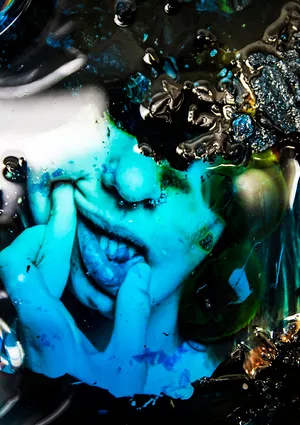
Glorija Lizde’s I Swallowed My Dream revisits nineteenth-century psychiatric photography, exposing the power relations embedded in medical archives of hysteria. By re-enacting historical images and positioning herself as both photographer and subject, Lizde disrupts the authority of the clinical gaze reclaiming suppressed female histories.

‍

If Lizde interrogates the institutional archive, Hana Selena Sokolović turns to the fragile, familial one. In Dear Orchid, she departs from a family diary written during the Bosnian War, the only remaining record of her sisters’ displacement. Returning to the places traced in the diary, Sokolović treats the archive as something embodied and transmitted across generations.

‍

Nik Erik Neubauer’s White Smoke, Brown Glare observes New York City as a site of aspiration and inequality. Through street photography and diaristic wall texts, the work captures everyday life shaped by gentrification and hyper-capitalism, while foregrounding small communities as spaces of resistance, warmth, and survival.

‍

Tjaša Kalkan is equally interested in different urban dynamics visible in the orchestrated environment of a construction site. Her focus remains on a single case study - voyeuristic observation of construction of a new residential building in her area. In the work DUET she juxtaposes the construction of a new residential building with the decay of her own modernist high-rise. Through this parallel documentation, the work reflects on impermanence, labor, and time, resisting linear narratives of progress.

‍

Kalkan's poetic tale of impermanence resembles the conceptual framework of Pavle Nikolić's project Knots. His work observes creation and decay from a more abstract and material register. Knots appear here not as metaphors but as operations - sites where tension, dependency, and collapse are staged in miniature. Refusing ideals of integrity or permanence, the knot exposes its own conditions of undoing. It binds and incubates, accumulating residue, memory, and excess.

‍

The members of the jury:

Barbara Gregov

Lovro Japundžić

Lea Vene

Tia Čiček, curator

Natalija Paunić, curator
2025

Five nominated artists navigate personal and collective histories through photography, sculpture, installation and moving image. Across their works, the past become a space of active construction — where childhood, lineage, relationships, and technology collide in a process of re-imagination. In 'Familiar characters' Igor Schiller revisits his childhood memories, both as a host and a visitor, balancing nostalgia with the uncanny. As he reimagines the past, his playful photographic series triggers deeper explorations of identity and belonging. Similarly, Marija Mandić in 'White Bee' excavates lost histories, tracing a matrilineal presence that has been systematically erased. With her project she delves into themes of memory, female identity, and family connections, shaped through lingering intergenerational bonds. The intimate structures of relationships are further questioned in 'TWO', a project by Sara Perović which dismantles conventional notions of love, partnership, and permanence. Through a personal photographic archive, the artist redefines "two" as a shifting, fluid equation. Fluidity and notion of transformation extend into material itself in Sara Rman's body of work titled 'In process'. By intervening in photographic surfaces with fire, light, and decay, the artist exposes the unseen textures of image-making, embracing imperfection and change. Finally, in 'Terminal Tears / The Feminine Urge to…' by Laureta Hajrullahu, identity is not only remembered but actively reconstructed through interaction with technological devices. Screenshots, digital artifacts, and cast objects become tools for dismantling archetypes, questioning how the internet and media shape our perception of selfhood.

‍

Organ Vida's 2025 nominations were curated by:Organ Vida (curatorial collective)

Barbara Gregov

Lovro Japundžić

Lea Vene

‍

Tena Starčević, curator

Vanja Žunić, curator

‍Hana Čeferin, curator and publisher

2024

Organ Vida’s FUTURES selection for 2024 is based on a group of photographers and visual artists working in the broader regional context of former Yugoslavia. Their artistic practices cover a variety of visual approaches which document, but also speculate about, everyday life and the different possibilities of intimate storytelling. For Eva Bevec, everyday is captured in the homely setting full of absurdity and curiosity. David Bakarić Mihaljević documents his personal, everyday life narrated as a generational perspective on growing up in the imaginary space where digital and fictional worlds collide. In Lucija Rosc’s practice, everyday family life is fictionalised, further questioning the role of memory through the playful staging of reality. Petra Slobodnjak is a participant-observer of the communal living experience which translates the spontaneity of shared everyday life situations. And Pavle Banović offers a diary format of everyday life spent in New York, where their camera gaze intertwines with other protagonists they encounter along the way.

2023

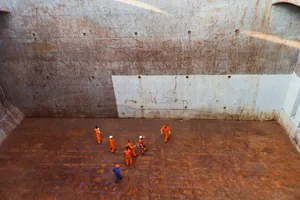
This year, we selected a group of artists working in the broader regional context whose artistic practices cover a variety of visual approaches we’d like to support through Organ Vida programs. Sanja Bistričić Srića experiments with different techniques of deconstruction and decontextualisation of archived images. The work of Filip Bojović and Pavo Marinović reflects on the visual language and heritage found in the context of the Balkans. Dea Botica revisits family maritime tradition through a speculative documentary depiction of everyday life on a cargo ship. And Fred Mungo captures the mundane experience of serving and eating food as means of understanding social, economical and cultural implications of food consumption.

2022

Ivan Buvinić’s work addresses topics related to memory politics, speculating on contested family histories and personal archives, whilst Matej Jurčević focuses on a critical approach to the representation of youth culture - and to the destigmatization of mental illnesses. Lara Varat’s work deals with sexuality, gender identity and spatial manifestations of queer culture. Finally, Lucija Bogunović’s projects revisit the role of photography medium, exploring its possible translations and materializations in textile and installation formats.