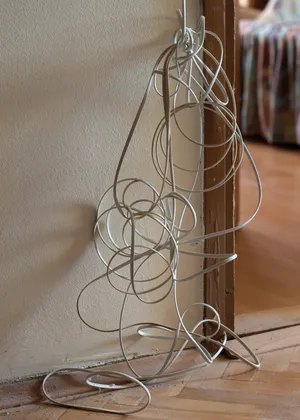
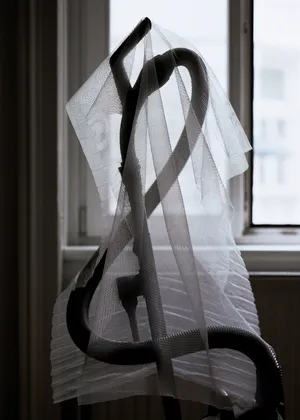
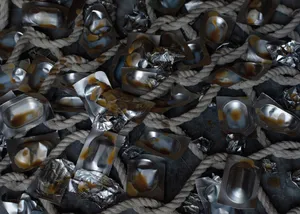
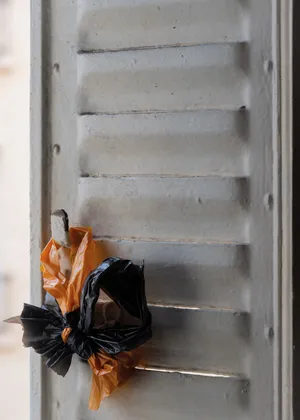
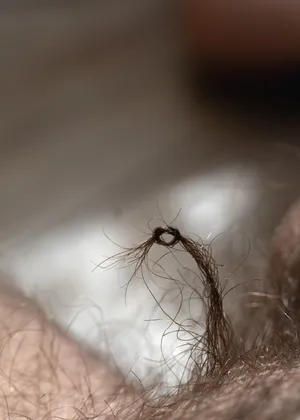
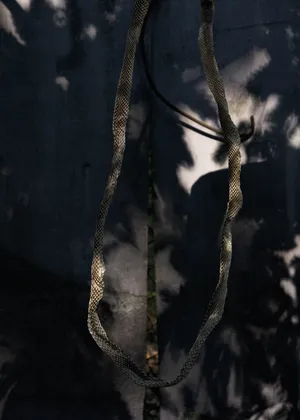
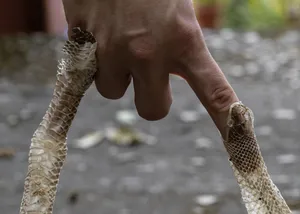
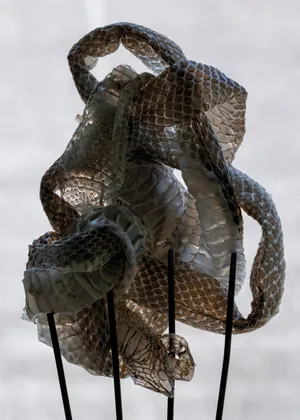
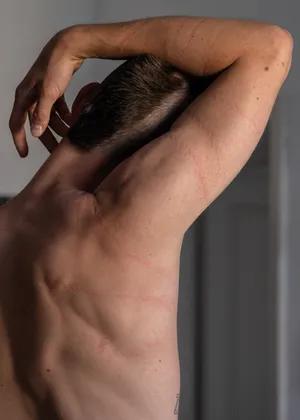
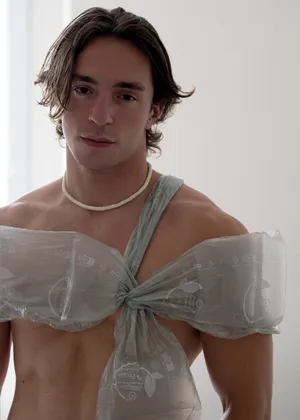
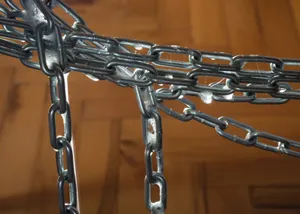
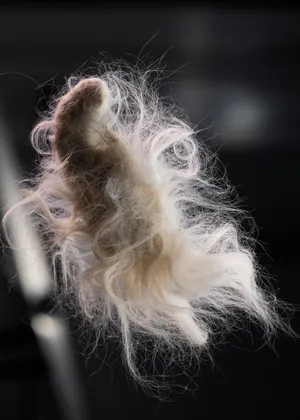
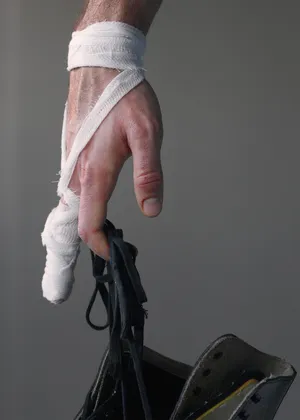
Compared to other life forms, knots display a concerning lack of interest in disguising the conditions of their undoing. Disaster is their trajectory. A totalizing and worldly allergy to integrity and permanence in time (without ulterior, otherworldly motives) that always leads to a series of asymmetrical exchanges: rewind and destination, discipline and supervision, precariousness and security, explicit and prudish, letting loose and holding together. Their bodily counterparts can be easily spotted: fabrics, subjection and subjectification, tangled hair, lapsus, crossed fingers, the folding of protein, DNA, crossroads, intercourses, crossed eyes, a barely choreographed eternal return (you know that image of the snake channeling the dog inside of itself and biting its own tail? something similar to that).
The “true” knot is a topology without allegiance to its host, a machinic hermeticism that treats matter as an interchangeable substrate. Rope, the hair, the chain — only the soft tissue of its embodiment. Its loops are not “forms” but encrypted instructions. The knot does not so much exist as it executes itself, performing a series of operations whose end-state is already written into their inception.
Each (knot) stages a micro-extinction event, where the end is not a catastrophe but a banal unbinding into other forms. Considered under this half-gnostic, half-winterly light, the knot is not the solution but a fleeting condensation of a problem that is older than life and will outlast it — the problem of how to hold together what will inevitably come apart.
Edited extracts of a text by Davide Andreatta
Pavle Nikolić
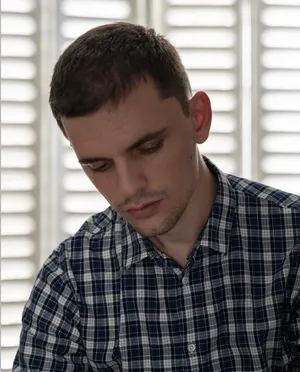
Pavle Nikolić (b. 2001, Niš, Serbia) works with photography and video, examining fundamental human tensions — authority and powerlessness, dominance and submission, aggression and passivity. He investigates how these opposing forces interact, using the constructive and transformative capacities of his chosen mediums to find the threshold at which they begin to turn into one another. Pavle studied applied photography at the University of Applied Arts in Vienna and fine art at the Beaux-Arts de Paris. He now lives and works in Paris.
ProfessionPhotographer, Visual Artist
IdentityMan
LocationSerbia, Eastern Europe, France, Western Europe, Austria, Germany