FOTODOK

Member from 2022. Located in Utrecht, The Netherlands

FOTODOK

Member from 2022.Located in Utrecht, The Netherlands

FOTODOK explores how visual stories have a potential for offering fresh, new perspectives on the pressing matters of today that often remain underexposed. Artists act as the antennae of society, a notion that consistently resonates in FOTODOK’s programmes. FOTODOK’s artistic program rests on four pillars: exhibitions, a dialogue and research program, talent development for emerging and mid-career photographers from both the Netherlands and abroad, and educational programs. Each pillar, with its own unique setup, contributes to reflections on the overarching themes and the corresponding programs we develop. FOTODOK, together with visual creators, seeks to reflect on how we can actively contribute to addressing these questions. The cultural sector, in particular, can offer a free and neutral space—a “soft space”—to reflect on these issues from various perspectives. FOTODOK aspires to be that very place: the space to co-create these stories and the platform to show, discuss, and understand them.

Nominations

2026

We congratulate the selected artists on their nominations.

We carefully reviewed all submitted materials from the shortlisted artists. Our evaluation considered both the artists’ overall practice—its urgency, innovation, uniqueness, and trajectory of development—and a recent project highlighted in their application.

We assessed the social and cultural relevance of the work, its political dimensions as embedded in everyday relations and infrastructures, the articulation of artistic language and voice, research-based and conceptual approaches, and a critical awareness of the photographic medium. We also considered the potential of the work to expand into installation or spatial presentation.

Additionally, we reflected on the momentum of each practice and what joining the FUTURES platform at this particular moment in 2026 could bring. For some artists, this aligned with a newly released project that could be shared with the community of artists and members; for others, with a clearly articulated motivation or proposal.

While not decisive, we also noted the relevance of combined practices, such as curatorial or educational work, and considered how each artist would contribute to the FUTURES community. Finally, we sought a balance of perspectives and stories, and the conversations these practices would bring forward. We want to highlight additionally that the selection includes artists with both formal art education backgrounds and self-taught paths.

In total, we discussed 18 applications, all of which were very strong. The selection process offered an opportunity to engage deeply with the practices of many remarkable artists. Artists who were not nominated this year will automatically remain on the shortlist for FOTODOK’s next nomination cycle. We wish them continued success in their work and in future nominations.”

‍

FOTODOK’s nomination followed a two-step process, beginning with internal nominations by FOTODOK team members, who compiled a shortlist of artists. The final selection was then made by an external jury consisting of Astrid Hulsmann, curator at BredaPhoto (Breda), Guinevere Ras, curator at the Nederlands Fotomuseum (Rotterdam), and Tom Viaene, coordinator of the Trigger - a publication for reflection on photography (FOMU - Museum of Photography, Antwerp), with Daria Tuminas, artistic advisor and curator at FOTODOK, being the secretary of the process.
2025

Bones of Graphene, Skin of Kevlar is the second chapter in Julius Thissen’s visual research project, Watch it Collapse. Its primary focus is to visualise the impact of global far-right politics and sentiments, contrasted with the fighting spirit of trans individuals across generations. Vulnerable images are combined with symbols of masculinity and postures of resistance. Graphene, Skin of Kevlar expresses a need for resilience without losing the ability to be soft and true.

‍

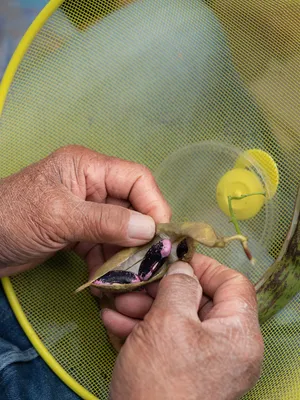
Tashiya de Mel’s Bittersweet History reflects on Dutch-Sri Lankan colonial history and its absence from mainstream discussions of the Dutch empire. The VOC’s cinnamon trade violently transformed the landscape and culture of Sri Lanka, leaving traces that remain visible today. De Mel’s archival collages criticise this history, whilst images of the artists’ mother preparing sago pudding infused with cinnamon convey a more personal connection to this contested spice. De Mel uses a variety of media to subvert and reclaim colonial narratives, suggesting alternative ways of looking at a shared history.

‍

In 1935, Nazi Germany initiated a so-called “fertility programme” to provide the Third Reich with a new generation of leaders and SS officers. Angeniet Berker’s Lebensborn reveals both its broad scale and its human consequences: children born under this programme often lived a life of shame. The project serves as a timely warning of what our societies are capable of.

‍

Parisa Aminolahi's deeply personal work presents a generation of middle class Iranian parents – living alone, often continents apart from their children. Tehran Diary follows the artist’s mother’s life in Tehran, as well as while visiting her three children overseas. Applying black and white paint over her photographs, Aminolahi’s images connect love, family rituals and the concept of home, pondering what it means to lose these.

‍

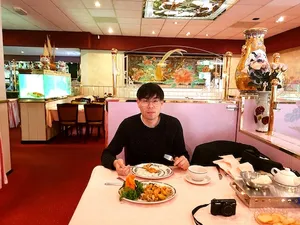
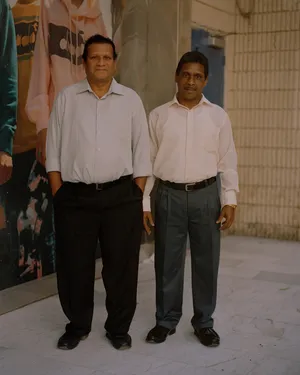
Benjamin Li’s In Search of Perfect Orange is an archive that spans menus, pieces of tableware and written memories of his encounters while visiting over 1200 Chinese-Indonesian restaurants. His self-published Chin. Ind. Rest. Stickeralbum is a direct outcome of 10 years of travel between these restaurants. Benjamin’s resourceful, meticulous work results in a project that both confronts and honours a distinct cultural phenomena in the Netherlands.

‍

FOTODOK's 2025 nominations were curated by:

Femke Rotteveel

Daria Tuminas

Yusser Salih

Olga Victorie

Eleonora Schianchi

Iliana Michali

2024

Hanane El Ouardani's powerful imagery confronts notions of memory and cultural erasure, prompting viewers to reflect on identity and belonging in a transnational world. Orbiting the subject of home, her project The Skies are Blue, The Walls are Red (2018) serves as a visual diary of diasporic identity, whilst her more recent series The Grass is Greener on the Other Side (2023 – ongoing) offers a revealing glimpse into Kuwait's socio-political landscape.

‍

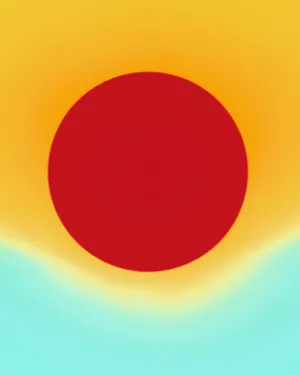
Gilleam Trapenberg’s project Currents (2022 – ongoing) also studies identity, revealing a complex and personal relationship with his island homeland of Curaçao. Throughout all his projects, Trapenberg delves beneath the alluring surfaces of Caribbean life, examining how mass tourism and colonial legacies have shaped distorted images of the region. Meanwhile, with New Suns (2018 – 2023) his approach is increasingly abstract, dissecting the evocative Caribbean sunset with almost scientific precision.

‍

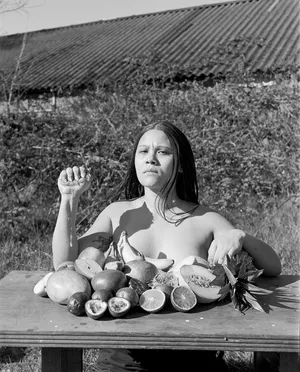
In Farren van Wyk's series Die lewe is nie reg vir my nie (2016 – ongoing), her focus turns to gang culture in Port Elizabeth’s Schauderville district, offering a nuanced portrayal that transcends common stereotypes. The project underlines how resilience and humanity remain a constant within the community, offering a means of survival and brotherhood.

‍

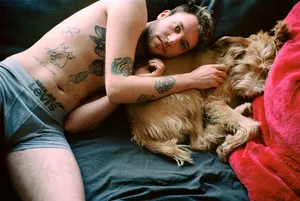
Elsewhere, Prins de Vos' BOYS DO CRY (2014 – 2021) centres on the queer community, dismantling various taboos surrounding male vulnerability and transgender identity. With each intimate portrait of Levi, an artist and trans man, de Vos captures raw emotions and celebrates the power of self-expression.

‍

Finally, Suzette Bousema's work takes the environment as its starting point. Her project Super Organism (2020 – 2022) studies mycorrhizal fungal networks that are crucial for our ecosystems, but threatened by human activity. Supported by scientific insight, the project highlights the valuable symbiosis of plants and fungi – inviting viewers into a multisensory connection with these hidden networks.

2023

What attracts FOTODOK to the works of Sheng-Wen Lo and Tanja Engelberts is their absolute freedom of working with media: both employ not only photography, but also video, sound, words, and sculpture. In her latest work We exhale (2022-2023), Engelberts translates her images into sculptural planes made out of clay and finished with a glaze sourced from The Rhône river, while Lo , in her project Watch Out! (2022-2023) initiates a sort of jewellery treasure hunt game, based on the documentation of roadkills in the Camargue area. Both residents of The Rijksakademie, Amsterdam from 2019-2021, Lo and Engelberts have worked independently on subjects including ecology and non-human perspectives, while also often collaborating.

‍

Yana Kononova started working on the project Radiations of War (2022) immediately after the Russian Federation began a full-scale military invasion of Ukraine on the 24th February 2022 – a new turn in a war that first broke out in 2014. Using a medium format camera, she captures pictures of war crimes, destroyed infrastructure, the activities of various Ukrainian services, the bodies of fallen warriors, and the victims among the civilian population. Once you have seen her images you can’t un-see them – monumental and powerful, they stay with the viewer.

‍

Michelle Piergoelam and Sebastian Koudijzer both have roots in Surinam and investigate the traditions and rituals of their families and cultures. Piergoelam works with myths and tales and in her latest project Songs in a strange land (2022), she works with songs, and the colonial history they keep traces of. Koudijzer is interested in rituals and the search for community and belonging. In Kampong Tori (2021-ongoing), together with his brother, the artist spends time with their retired grandparents in the garden community of Beukhoeve, Rotterdam, cooking Javanese-Surinamese dishes together, and in time, the food becomes a starting point for conversation, evoking memories, and piecing familial narratives together.

2022

Peggy Van Mosselaar’s practice circulates around the subjects of identity, mental health and care of the elderly people. She is a participating artist in FOTODOK's most recent exhibition Part of Me… Shaping Mental Spaces. The Tali Pusat project is a vulnerable and multilayered story about her mother, revealing how migration and colonial histories can influence one's personal life.

‍

Pablo Lerma participated in an earlier exhibition at FOTODOK: Pass It On. Private Stories, Public Histories. Since then, we've collaborated on many levels. Often using archives at his starting point, Lerma's practice researches the concept of masculinity, investigating the lack of representation of gay men and the queer community throughout photographic history.

‍

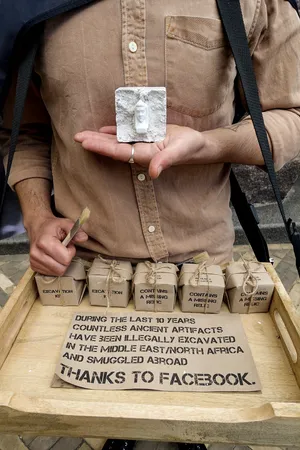
Walter Costa took part in FOTODOK’s Lighthouse talent program as a graduate from one of the Netherlands's many art academies. Trained as a pilot, the artist later landed in the field of photography; Costa's Autolykos Collection project is a visual investigation of 'the looting and online trafficking of archeological artefacts - a growing transnational crime'.

‍

Giya Makondo-Wills is a British-South African documentary photographer based in Utrecht, where she moved a few years ago. Her oeuvre explores race, colonialism and systems of power. With Boarderliners, Makondo-Wills employed portraiture to consider what it means to be mixed race in the UK, collecting the stories of people she photographed.

‍

Thana Faroe's project, How Shall We Greet The Sun, charts the personal stories of young women living in the Netherlands. Many of these women, including the artist, must (re)construct their identities, bringing their heritage and memories to new cultural and political contexts. Faroq is also nominated by Der Greif.

‍

FOTODOK values projects that are rooted in the living experiences of their makers. The works we highlight reflect photography's ability to reveal what might otherwise be invisible: be it the representation of queer families in (historical) archives; the emotional landscape of refugee women; the illegal antique art market; or the impact of enduring colonial power structures.