

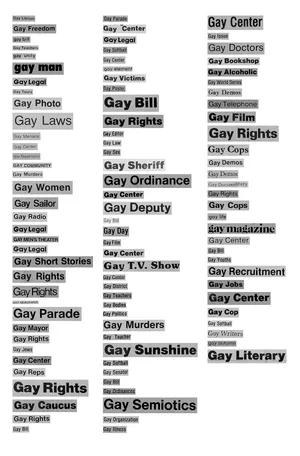
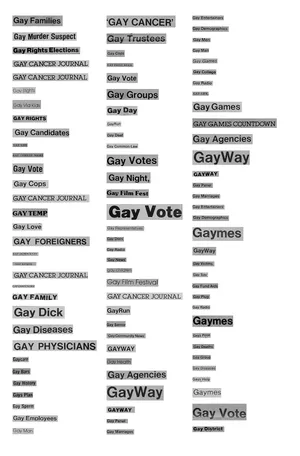
It Doesn't Stop at Images
Pablo Lerma
It Doesn't Stop at Images
Nominated by FOTODOK, 2022
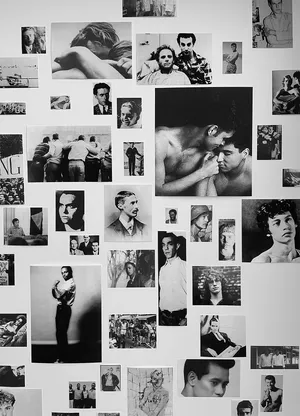
Pablo Lerma researches the concept of masculinity, and investigates the lack of representation of gay men and queer community throughout the history of photography. He often focuses on vernacular, archival, and amateur imagery of the twentieth century, such as family pictures and snapshots. Thus, for It Doesn't Stop at Images (2020-ongoing) the artist explores the ILHIA LGBTI Heritage, Amsterdam collection’s magazines from between the 70s and the 90s. He looks for printed matter that is connected to the places and times that shaped his own biography. Pablo was born in the 80s in Spain, has lived in the USA for almost seven years, and in 2019 moved to the Netherlands. He realised his identity in the 90’s, and grew up surrounded by visually stereotypical representations of gay men in mass culture. Time has passed, but those stereotypes live on. Even the archives that are dedicated to queer legacy often lack alternatives. Take family pictures for example: the genre that bridges generations, creates a sense of belonging, and shapes collective memory; gay community cannot find itself there. Lerma dedicates his practice to constructing a counter-history of gay men and masculinity. He recontextualises, re-edits, reframes ‘cliché’ images to propose new narratives. From going outwards with archival research and larger historical context to going inwards observing intimate routines of the family of his own… Pablo Lerma throughout his practice asks questions: how and by whom have gay men been represented so far? Why do certain patterns reoccur? Is it possible to break through the heteronormative gaze? He contributes to the very much needed shift of the representation of queerness and queer family.
The Impossibility of Looking Outside
Pablo Lerma
The Impossibility of Looking Outside
Nominated by FOTODOK, 2022
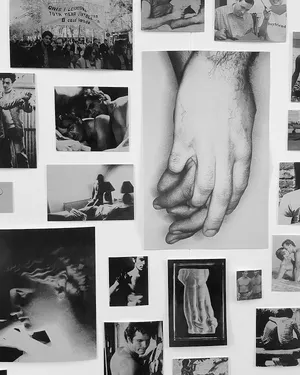
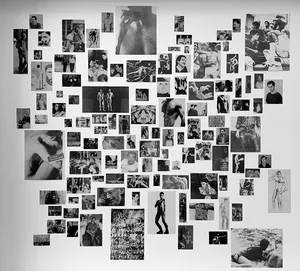
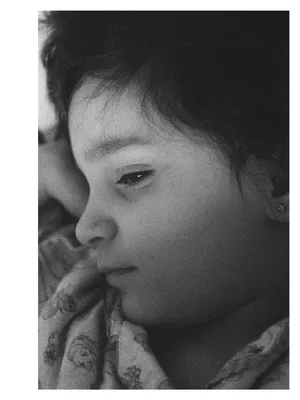
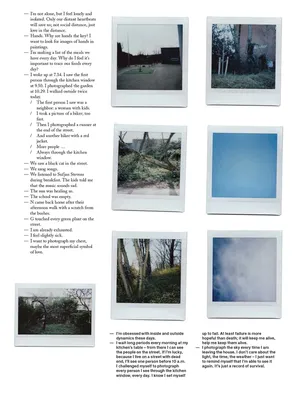
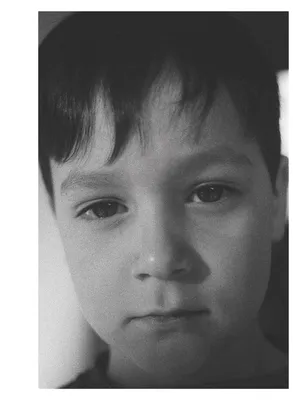
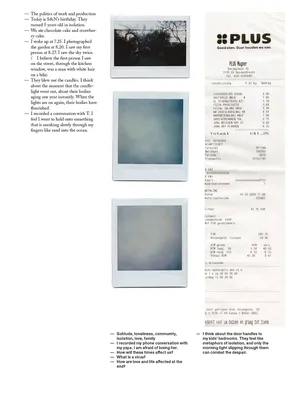
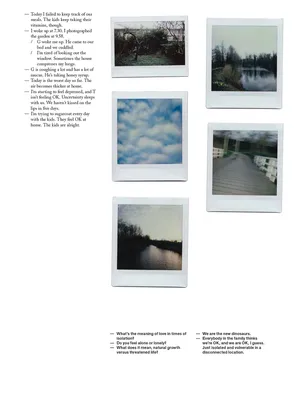
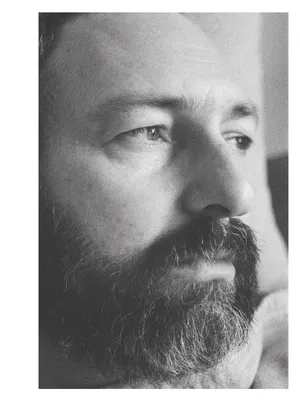
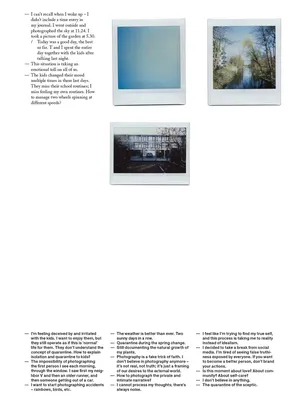
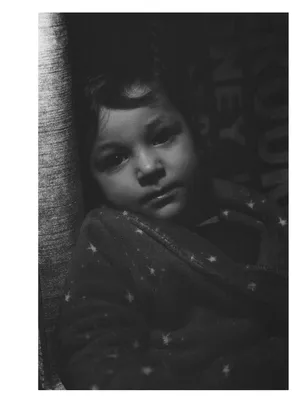
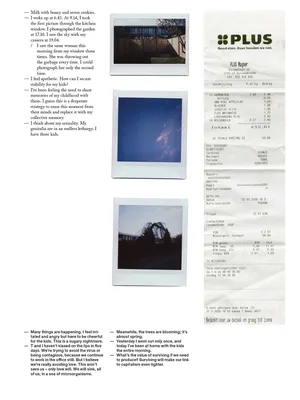
For the latest project The Impossibility of Looking Outside (2020-ongoing), Pablo Lerma spent several months, discontinuously, in isolation and lockdown with his three kids and husband. He documented the family’s interactions, and reflected through images and text on ideas of care through a queer masculine perspective of parenthood: “I’ve been investigating the ideas of private and public, the possible and impossible in moments when the outside felt threatening and the inside was safe. I set up routines to combine my parental tasks and my personal/artistic tasks in order to allow and create an interior space of care. These routines generated different groups of materials that can tackle into different emotional and physical levels. From instant images of the sky, every time I stepped out of the house, to lists of edibles we consumed every day, or BW photographs of emotional outbursts of any member of the family, among other materials.” From going outwards with archival research and larger historical context to going inwards observing intimate routines of the family of his own… Pablo Lerma throughout his practice asks questions: how and by whom have gay men been represented so far? Why do certain patterns reoccur? Is it possible to break through the heteronormative gaze? He contributes to the very much needed shift of the representation of queerness and queer family.
Pablo Lerma
Pablo Lerma is a Spanish research-based artist, educator and publisher based in Amsterdam (The Netherlands).His work has been exhibited at Photoforum Pasquart (CH), Copeland Gallery (UK), IHLIA Heritage (NL), Deli Gallery (US), FOTODOK (NL), PhotoEspaña (ES), The Finnish Museum of Photography (FI), Flowers Gallery (US), Konstanet (EE), Centro Huarte (ES), New York University (US), Fotoweek D.C. (US), SCAN International Festival of Photography (ES), La Fábrica (ES), and Fundació Foto Colectania (ES) among others. His publications are in collections including the Guggenheim Museum (US), Museum of Modern Art – MoMA (US), San Francisco Museum of Modern Art - SFMoMA (US), Aeromoto (MX), Centro de la Imagen (MX), School of the Art Institute of Chicago (US), and the International Center of Photography in New York (US), among others. He has been awarded with the Cherryhurst House Fellowship MFA Houston (US), Grand Prize of Curators Award PDN (US), Fundació Guasch-Coranty (ES) and Sala d’Art Jove (ES). He has been selected for Pla(t)form FotoMuseum Winterthur (CH) and nominated for the First Book Award MACK Editions (UK), Critical Mass (US), and PDN 30’s (US). His work has been featured on Trigger FOMU (BE), Lens Culture (US), Photomonitor (UK), Unseen Platform (NL), British Journal for Photography (UK), Ain’t Bad Magazine (US), New York Foundation for the Arts (US), PDN Online (US) and PhotoInter China (CH).
ProfessionResearcher, Educator, Visual Artist
IdentityMan
LocationWestern Europe, The Netherlands
PracticeBlack and White, Archives
TopicsIdentity, LGBTQIA+
Nominated byFOTODOK
Year2022
Contactpablolerma.studio@gmail.com
Close

Address
Isaac Titsinghkade 6A-B
1018 CA Amsterdam
The Netherlands
Address
Isaac Titsinghkade 6A-B
1018 CA Amsterdam
The Netherlands
© 2026 FUTURES Foundation
© 2026 FUTURES Foundation
Close