

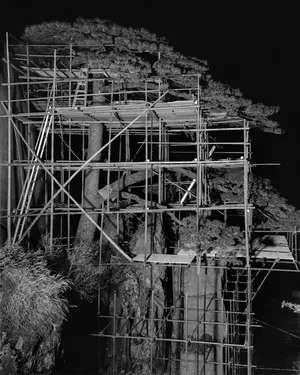
How to (Un)Name a Tree
Andong Zheng
How to (Un)Name a Tree
Nominated by FOTODOK, 2026
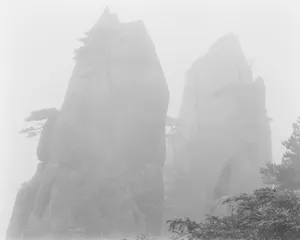
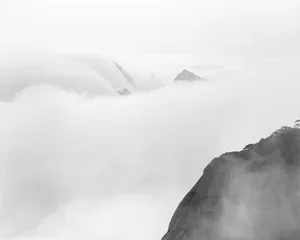
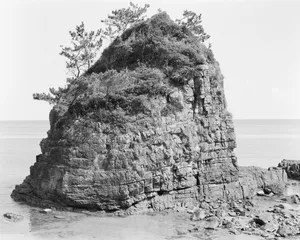
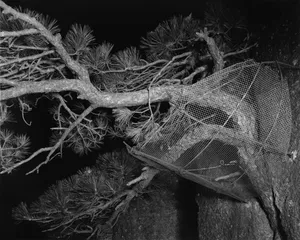
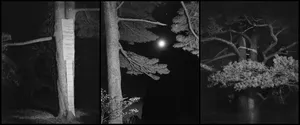
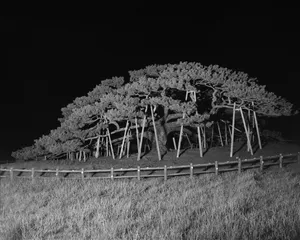
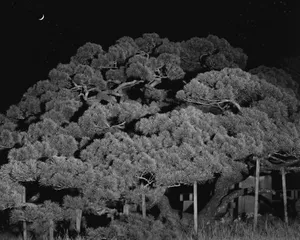
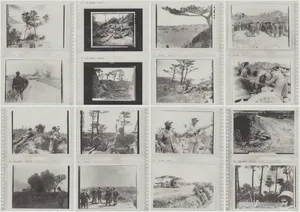
Andong Zheng’s long-term project "How to (Un)Name a Tree” (2022 - ongoing, China/Taiwan/Japan/the Netherlands) investigates the relationship between naming, seeing, and knowledge formation through three closely related and morphologically similar pine species in East Asia: Pinus luchuensis, Pinus taiwanensis, and Pinus hwangshanensis.
During the era of international competition in species discovery, these three pines were successively named by an German botanist upon his return from an expedition to Imperial Japan, a Japanese botanist stationed in colonial Taiwan, and a Chinese botanist of the Republican period. Decades later, their classifications became a subject of dispute during the Cold War, as botanists debated whether they should be regarded as regional variants of a single species or remain distinct.
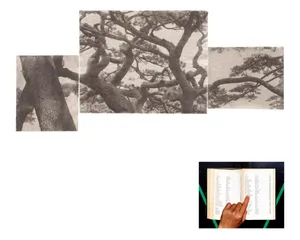
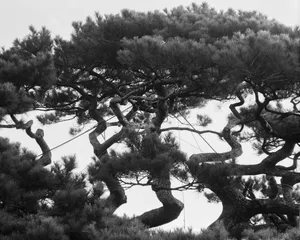
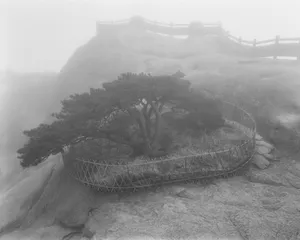
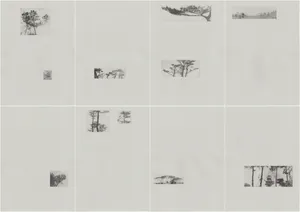
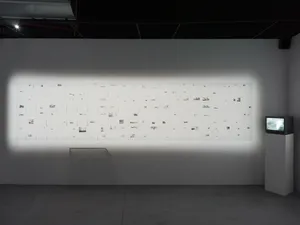
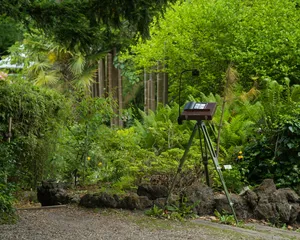
The act of naming presumes difference. The act of photographing presumes evidence. Yet when confronted with highly similar morphs, both systems of order begin to falter within their own logic. Working under fog and nightfall, using artificial light and often tightly framed compositions, he isolates these trees from their identifiable backdrop, and later re-configures them through collage and masking, to push the promise of the index to its threshold.
These images of pine trees echo one another, triggering the sensation of “it might be,” without ever arriving at the certainty of “it is.” In this unresolved zone between language and vision, they instead draw our attention to the man-made notion of boundaries we inherit: between species, nations, and selves.

Andong Zheng
Andong Zheng (b. 1992, Hefei, China) lives and works in Rotterdam, the Netherlands.
Zheng's works begin from the friction between being translated and translating oneself. Through gaps in history and chance encounters, his curiosity takes shape through lens-based media and their expanded forms. In his practice, the image is a vessel in which contradiction and ambiguity remain unresolved, and a site where asymmetrical power structures surface. By connecting different contexts, he traces how meaning is shaped and translated across geographies and histories, and how it shifts through acts of intervention.
He received a B.Eng. in Automotive Engineering from Tongji University in 2016, an MFA from the Rhode Island School of Design in 2019, and an MA in Photography & Society from the Royal Academy of Art, The Hague, in 2025. In 2026, Zheng was selected for British Journal of Photography's Ones to Watch. In the same year, he received the Jury Prize of the Harry Pennings Award. He was previously shortlisted for Jimei x Arles Discovery Award (2024).
His work has been exhibited at numerous international institutions and galleries, including Photo Elysée, Center régional de la photographie Hauts-De-France, Guangdong Times Museum, He Xiangning Art Museum, Fotografiska Shanghai, Ames Yavuz, and ClampArt. His work has also appeared in publications such as The Routledge Companion to Photography, Representation and Social Justice, British Journal of Photography, and Chinese Photography.
ProfessionPhotographer, Visual Artist
IdentityMan, Asian
LocationWestern Europe, Eastern Asia
PracticeLandscape, Multidisciplinary
TopicsAnthropocene, Identity
CityRotterdam
Nominated byFOTODOK
Year2026
Close

Address
Isaac Titsinghkade 6A-B
1018 CA Amsterdam
The Netherlands
Address
Isaac Titsinghkade 6A-B
1018 CA Amsterdam
The Netherlands
© 2026 FUTURES Foundation
© 2026 FUTURES Foundation
Close