
FOMU

Member from 2018. Located in Antwerp, Belgium

FOMU

Member from 2018.Located in Antwerp, Belgium

FOMU believes there is more to a photograph than meets the eye. Just like magic, it’s not necessarily about what you see, but about what you don’t see. About what is purposely framed, and what is left to the imagination. What is in focus, and what is lost in a blur. About what catches the light, and what fades into obscurity. Tilting our view and re-aligning our focus challenges us to allow for different perspectives, and to openly seek out our own blind spots. We strive for radical vulnerability, we listen when faced with criticism. FOMU aims to be a place where people feel welcome to broaden their horizon through photography. A place to slow down, to reflect, to engage and to share different perspectives. FOMU wants to be a brave space, a curious curator. Looking into the past helps us understand societal changes in the present: today's experiments are tomorrow’s heritage. FOMU offers perspectives on photography, while putting photography in perspective. FOMU houses one of the most significant photo collections in Europe, featuring both equipment and photo documents. Each year, FOMU presents several temporary exhibitions by nationally and internationally renowned photographers, showcasing photography as a medium that is part of a broader social and cultural context. Visitors can also attend lectures and workshops, visit the museum shop and the museumcafé. FOMU can be found in an old warehouse in the neighbourhood ‘t Zuid (South quarter of Antwerp), close to the museum of contemporary art M HKA and the Museum of Fine Arts.

Nominations

2026

FOMU invites three external jurors to help select the artists. This year’s jury consisted of Youqine Léfevre (artist and .tiff 2021 participant), Magali Elali (founding artistic director of The Constant Now) and Cale Garrido (curator of the Triennial of Photography Hamburg).

‍

The jury made the selection based on the Fomu criteria:

‍

1. Contemporary relevanceEverything we do is topical and relevant to modern society. We deliberately choose historical and contemporary subjects and projects that are interesting and relatable to a modern audience. We encourage reflection on societal issues and contribute to the prevailing social discourse.

2. MultivocalityWe opt for subjects and projects that offer a multifaceted perspective on photographic imagery and the world. We also actively seek out and hold space for different views and perspectives and encourage the representation and involvement of creators from underrepresented communities and backgrounds.

3. Critical reflection on the medium and its evolutionPhotography and reality have a multifaceted relationship. We are interested in the mechanisms of photography and deliberately work with photographers who critically engage with the medium or its history and are aware of artistic-conceptual positions and visual language.

4. Ethical positionDue to its complex relationship with reality, photography inevitably raises ethical questions. We are keenly aware of the context in which images emerge and exist. As a result, we always consider the intention and impact of images. We approach all images with the necessary caution and contextualise them within their historical context.

‍

Fomu invited fellow Futures members to be part of the jury that would pick four artists from ten to join the Futures program. The jury consisted of Caroline von Courten & Simon Lovermann of Der Greif and Katalin Kopin & Emese Mucsi of Robert Capa Contemporary Photography Center.
2025

FOMU invites three external jurors to help select the artists. This year’s jury consisted of Laure Cottin Stefanelli (artist and .tiff 2019 participant), Bindi Vora (curator, Autograph in London) and Koi Persyn (curator and artistic director at Jester in Genk).

‍

The jury made the selection based on the Fomu criteria:

‍

1. Contemporary relevanceEverything we do is topical and relevant to modern society. We deliberately choose historical and contemporary subjects and projects that are interesting and relatable to a modern audience. We encourage reflection on societal issues and contribute to the prevailing social discourse.

2. MultivocalityWe opt for subjects and projects that offer a multifaceted perspective on photographic imagery and the world. We also actively seek out and hold space for different views and perspectives and encourage the representation and involvement of creators from underrepresented communities and backgrounds.

3. Critical reflection on the medium and its evolutionPhotography and reality have a multifaceted relationship. We are interested in the mechanisms of photography and deliberately work with photographers who critically engage with the medium or its history and are aware of artistic-conceptual positions and visual language.

4. Ethical positionDue to its complex relationship with reality, photography inevitably raises ethical questions. We are keenly aware of the context in which images emerge and exist. As a result, we always consider the intention and impact of images. We approach all images with the necessary caution and contextualise them within their historical context.

‍

Fomu invited fellow Futures members to be part of the jury that would pick four artists from ten to join the Futures program. The jury consisted of Angel Luis Gonzales & Julia Gelezova of Photo Ireland and Daria Tuminas & Yusser al Obaidi of Fotodok.

2024

This years selected artists are Romain Cavallin, Lina Wielant and Elise Dervichian, Romane Iskaria, Ksenia Kuleshova, Catherine Lemblé, Nathan Mbouebe, Angyvir Padilla, Marcel Top, Marens van Leunen and Laure Winants.

2023

The format hasn’t changed since the magazine’s inception in 2012. However, the project's scope has expanded significantly – .tiff has evolved into a platform, offering a year-long trajectory of presentations, conversations with experts, and exhibitions. FOMU leverages its extensive network, expertise and resources to stimulate the artists' artistic practices and personal visions.

‍

The selection process involves reaching out to professionals in the Belgian photography scene, as well as to previous participants. This results in a long-list encompassing a diverse range of backgrounds. For this edition, FOMU departed from its usual practice and solicited the expertise of 3 external jurors: Sorana Munsya, independent curator; Anna Planas, artistic director of Paris Photo; and Max Pinckers, .tiff alumnus and artist. Together, we carefully curated a diverse group of artists, always mindful of whether the participants would benefit from our support at this particular juncture in their careers.

‍

This 11th edition of .tiff marks a new beginning with a fresh design, while it also safeguards its strengths. Throughout the years, .tiff has fostered a thriving Belgian photography community that transcends language barriers, enabling rich exchanges of ideas between artists, curators and critics. The current selection exemplifies the continued growth of this community, and Belgian photography’s ability to reinvent itself year after year.

2022

The 10th edition of .tiff reflects a diversity of voices, positions, and subject matter. It is a passionate group of artists and photographers, who each try to give personal answers to today’s questions. Gülsah Ayla Bayrak and Rami Hara take their personal histories of migration and stereotypes as a starting point to explore identification, mythification, and the idea of belonging. Lived experience also guides the work of Seppe Van Craywinkel and his celebration of freedom, friendship, and spontaneity. Where Arian Christiaens explores her family’s archive, searching for her own position as photographer, daughter, mother, lover, and woman, Lars Duchateau invites viewers to link possible narratives with cryptic large format photographs, each one inspired by newspaper articles.
‍

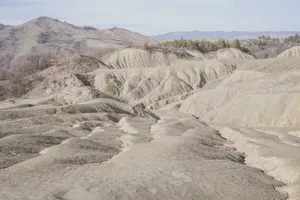
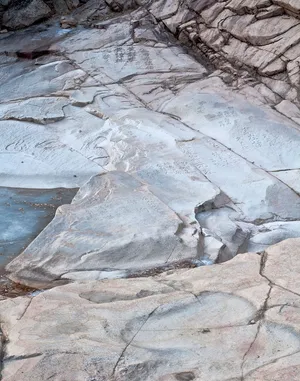
Elsewhere, Barbara Debeuckelaere treads a thin line between fiction and reality, delving into the Romanian fanbase of the American television series Dallas; Ligia Poplawska considers emotions, solastalgia, and climate anxiety in a changing world; and Alice Pallot shines her light on the Lommel Sahara in Belgium, rendering it alien without any post-production.

‍

These artists work across a variety of media, encompassing books, video and installations. Their stories are as diverse as their approach: documentary, analytical, poetic, conceptual, humorous, intimate and most of all fresh and thought-provoking.

Over the years, .tiff has succeeded in building a Belgian photography community that allows for an exchange of ideas and insights between artists, curators, critics, and researchers. The current selection shows that this community is ever growing - and that Belgian photography will continue to reinvent itself for many years to come.

2021

The 9th edition of .tiff reflects a diversity of voices, positions and subject matter. It is a passionate group of artists and photographers who each try to give personal answers to today’s questions. Youqine Lefèvre (1993, CN) and Joud Toamah (1992, SY) take their personal histories of migration and family archivesas a starting point to explore relationships and the idea of belonging. Lived experience also guides the work of Ugo Woatzi (1991, FR) and his celebration of queer masculinities. Erien Withouck (1994, BE) and Josephina van de Water (1985, NL) use myths and fables to comment on today’s society, whereas Sébastien Cuvelier (1975, BE) creates a visualfictional paradise. Kamel Moussa (1981, BE) captures the devastating condition of refugees and human resilience. Aurélie Bayad (1994, FR) expresses desires and anxieties in a networked world, whereas Michiel De Cleene (1988, BE) invites viewers to construct their own narrative based on a web of images and information. Lastly, Lucas Leffler (1993, BE) explores the materiality of the photographic medium and its rich history. The ten photographers work in a variety of media, including books, video, performance and installations. Their stories are as diverse as their approach: documentary, analytical, poetic, conceptual, humorous, intimate and most of all fresh and thought-provoking.
‍

Over the years, .tiff has succeeded in building a Belgian photography community that breaches language barriers and allows for an exchange of ideas and insights between artists, curators, critics and researchers. The current selection shows that this community is ever growing and that Belgian photography will continue to reinvent itself for many years to come.