

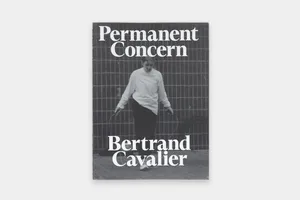
Permanent Concern
Bertrand Cavalier
Permanent Concern
Nominated by FOMU, 2019
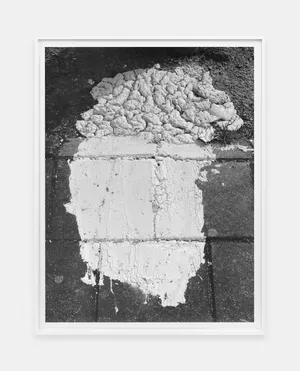
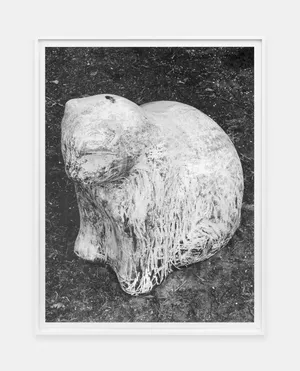
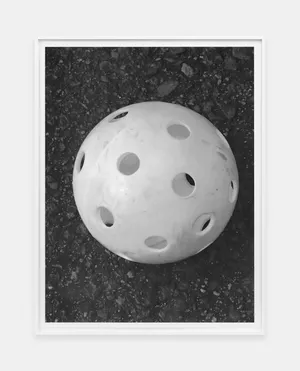
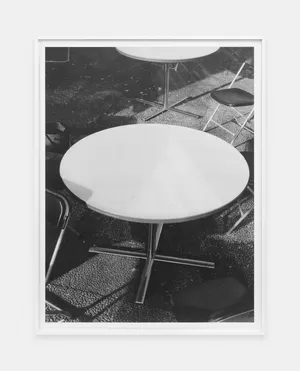
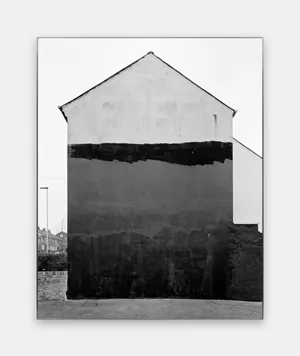
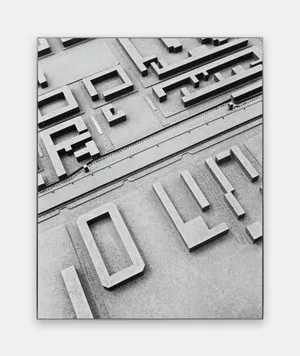
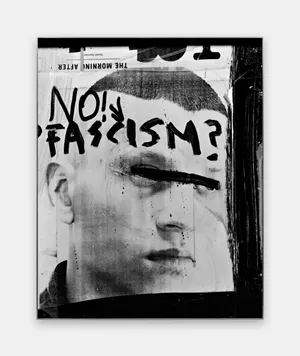
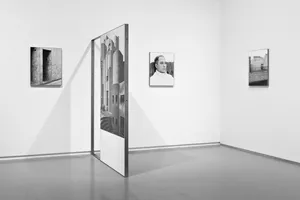
Rather than pursuing the classical tradition of photography, which sublimates the fleeting encounter between time, subject and light, Bertrand Cavalier’s practice is characterized by images from which tangible sensations emerge over time: mass, solidity and immobility. Previously, his work included black-and-white views of urban environments and brutalist architecture, taken in cities scarred by the wars and violence of recent decades. These images, imbued with poetry and melancholy, could evoke the cinematic wanderings of a Wim Wenders, but above all described a relationship to the city affected by authority, control, rigor and silence. More recently, turning to his immediate surroundings, Bertrand Cavalier has worked with tight framing and close-ups of fragments inherited from urban planning. These ordinary elements, artifacts extracted from their context, appear static and familiar, yet paradoxically “foreign”. Monumental and close to human scale, they stand up to us, occupying the entire visual field and engaging our sense of presence.
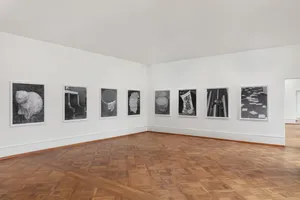
To give his images their characteristic presence, Bertrand Cavalier opts to work exclusively in black and white, using a smartphone. The laser prints, deliberately low-resolution and large format, amplify the drawing, mass effect and sculptural quality of these forms extracted from the urban landscape.
There’s no doubt that Bertrand Cavalier’s work takes a socio-political approach to our relationship with the world and the Anthropocene. But his approach is now more introspective, focusing on evoking the inherent structure of his subjects, and eschewing narrative and critical documents.
Printed in large format, his photographs depict a minimalist alphabet of signs and shapes. Their side-by-side presentation encourages the reading of formal correspondences. But viewed in relation to space, they call for a spatiality more akin to installation than traditional exhibition. In this way, Bertrand Cavalier frees himself from the traditional challenges of photography, such as the single point of view or the indexical nature of the image, to explore visual perspectives that open onto space, volume and even sculpture.
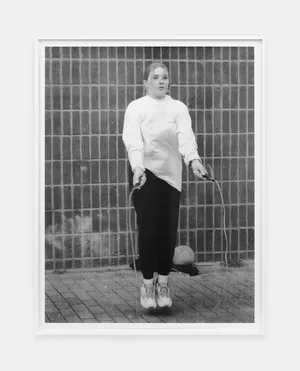
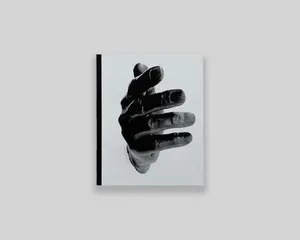
Among his recent works, one series stands out: a film sequence depicting a young girl jumping rope in front of a brick wall. In ten images, the series captures the complete rotation of the rope around the body and the moments of suspension in space, including a moment of stumbling. This is the only human presence in Bertrand Cavalier’s work, a sensitive and necessary breath of air as a counterpoint to an angular, minimalist universe. His latest book, Permanent Concern, could thus evoke both the transience of this movement, the constant risk of failure, and more broadly, the fragility of the human condition in the contemporary Western environment. Structured by the page-by-page scrolling of his alphabet of visual signs, the book reveals snapshots of skipping rope at regular intervals, punctuated by sequences of blank pages that introduce a breath, a temporal silence and a meditative pause into the reading experience.
Olivier Grasser
Director of Contretype / Contemporary Art Center for Image and Photography, Brussels
Concrete Doesn’t Burn
Bertrand Cavalier
Concrete Doesn’t Burn
Nominated by FOMU, 2019
The twentieth century saw many old European cities riddled with bullets and reduced to rubble by bombs. In the case of Belfast and Sarajevo, the wounds caused by armed conflict and war are still fairly fresh. Traumatic ruptures to the urban fabric of cities levelled during the Second World War can be felt to this day, for example between pre-war architectural styles within towns that had grown slowly and organically over time on the one hand, and post-war, modernist urban planning and hastily rebuilt city centers on the other.
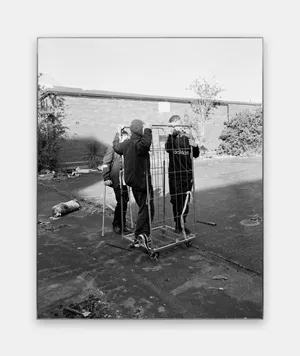
Bertrand Cavalier, who sensed a strong social separation between the cheap housing districts and the older parts of his hometown of Montpellier (France), wondered to what extent the built environment exercises influence on the lives of its inhabitants and their views of the future. Starting in Cologne, he photographed cities including Berlin, London, Le Havre, Rotterdam, Budapest, Warsaw, Belfast, Mostar and Sarajevo. But while Cavalier initially focused on rough, functional buildings and districts, he went on to portray the people who live there and who testify to a city with a different—and perhaps more intense—soul than it would appear from mere assemblies of building materials. Cavalier shows that they have a character at once vulnerable and reflective of the obstinacy of the seemingly indestructible buildings in and among which they live.
The fact that concrete does not burn may create an impression of safety, but it could also mean this post-war heritage is here to stay for a long time to come. — Taco Hidde Bakker
Bertrand Cavalier
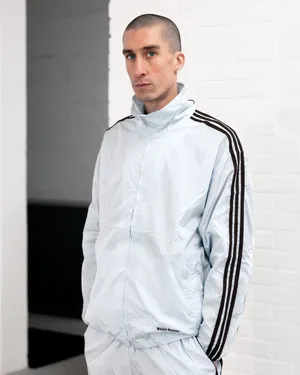
Bertrand Cavalier unfolds his artistic thinking across photography, sculpture, drawing, and video, each medium enriching the others. His work shifts from a politics of the gaze to a logic of sensation, where art becomes a bodily experience rather than mere representation. In this way, his work is part of a contemporaneity that echoes the ideas of Gilles Deleuze, offering a reflection on our ability to communicate and share ideas beyond words, through sensations that resonate with our bodies and our spaces. — Olivier Grasser
Bertrand Cavalier has published with Fw:Books (NL, 2020) and Spector Books (DE, 2024). He is the laureate of the Prix Ville de Bruxelles – Centrale for Contemporary Art (BE, 2025) and has exhibited at FOMU Antwerp (BE), Photoforum Pasquart Biel (CH), BIP – Biennale de l’Image Possible, Liège (BE), and FRAC Orléans (FR). He received the Sébastien van der Straten Fund Award (2019) and was a resident at Artwell Amsterdam (NL, 2021) and Cité internationale des arts, Paris (FR, 2023). His work has been published in Artpress, Mouvement (both FR), Camera Austria (AT) and l’art même (BE).
ProfessionPhotographer, Visual Artist
IdentityMan, White
LocationWestern Europe
PracticeConceptual
TopicsPost-photography
CityBrussels
Nominated byFOMU
Year2019
Close

Address
Isaac Titsinghkade 6A-B
1018 CA Amsterdam
The Netherlands
Address
Isaac Titsinghkade 6A-B
1018 CA Amsterdam
The Netherlands
© 2026 FUTURES Foundation
© 2026 FUTURES Foundation
Close