Bienal Fotografia do Porto

Member from 2022. Located in Porto, Portugal

Bienal Fotografia do Porto

Member from 2022.Located in Porto, Portugal

The Bienal Fotografia do Porto is a platform for artistic research, exhibition-making and public engagement dedicated to photography and its expanded relationships with contemporary culture, ecology, society and other fields of knowledge. Organised and produced by Ci.CLO, the Bienal brings together national and international artists through exhibitions, residencies, research laboratories, conversations and public programmes presented across museums, cultural institutions and public spaces in Porto. Each edition explores photography as a critical and relational practice, capable of questioning the visible and invisible structures that shape how we see, feel, inhabit and act in the world. Many of the projects presented emerge from long-term processes of artistic research, developed in dialogue with territories, communities, institutions and interdisciplinary partners. Through its programmes, the Bienal Fotografia do Porto seeks to foster alternative perspectives, ethical imagination and regenerative cultural transformation, creating spaces for reflection, experimentation and encounter. The Bienal is supported by a network of public, institutional and strategic partners, including national and international organisations committed to contemporary photography, artistic research and cultural change.

Nominations

2026

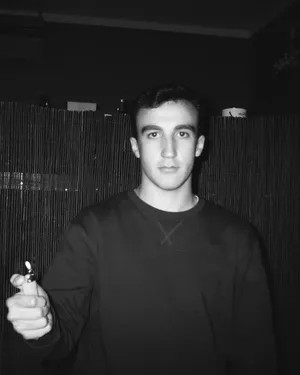
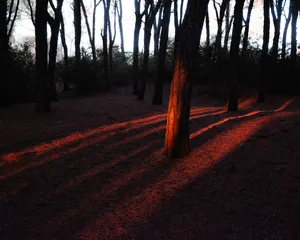
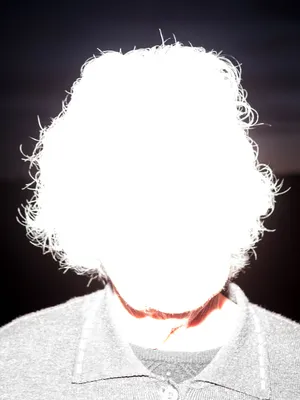
Coming from distinct cultural backgrounds and artistic trajectories, the selected artists develop independent practices within the expanded field of photography and moving image. Their work engages critically with contemporary conditions shaped by visibility, displacement, materiality and power, addressing social, political and affective dimensions of the present. Through diverse methodologies, including documentary and archival strategies, performative gestures and image appropriation, these practices question how reality is constructed, mediated and inhabited, forming a constellation that foregrounds ethical positions of looking and reflects on the role of images in shaping our relationship with the contemporary world.

‍

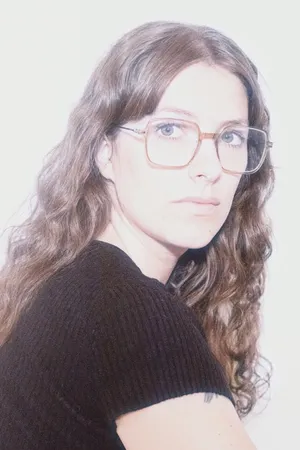
Eunice Pais develops a practice that brings together photography, video, sound and material processes as forms of listening and relation, operating in contexts where ecology, memory and labour intersect. Working across liminal spaces between archive and lived experience, her work resists closed narratives and extractive modes of representation, proposing an ethics of care through gestures of containment, opacity and material transformation.

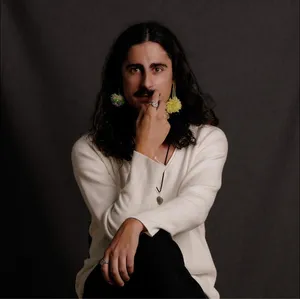
‍Francisco Menezes works across photography, installation and sculpture to question the role of objects in the material and symbolic organization of the contemporary world. Situated between representation and presence, his practice exposes mechanisms of accumulation and fixation, using minimal formal operations to reveal the invisible infrastructures that shape everyday life.

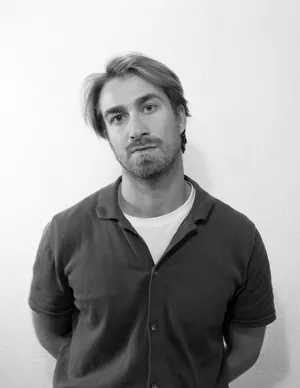
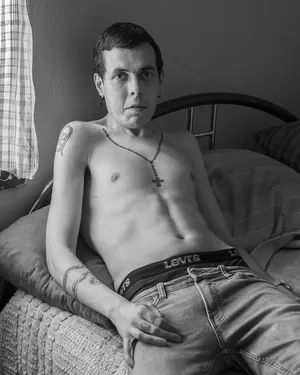
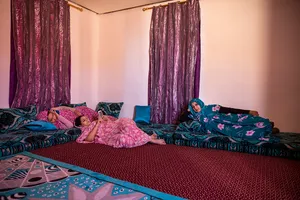
‍Guillermo Vidal develops a photographic practice rooted in experiences of social invisibility, working in close relation with contexts marked by precarity and structural absence. Rejecting both spectacle and distance, his images operate at the threshold of visibility, proposing a sustained ethics of looking grounded in proximity, presence and continuity.

‍

Jungeun Lee explores experiences of displacement, care and unstable belonging, using photography in dialogue with performance and gesture. Her work brings together intimate and structural dimensions, family, domestic labour, migration and cultural inheritance, to trace processes of transformation and silent resistance, where the body becomes a site of memory and care.

‍Maria Peixoto Martins interrogates surveillance as a defining condition of contemporary life, working with appropriated and degraded images captured in contexts of control. Through irony and discomfort, her practice exposes the normalization of the vigilant gaze and places the viewer in an ambivalent position, revealing systems in which continuous exposure has become the norm.

‍

Members of the jury:

Jayne Dyer - co-artistic director of the Bienal Fotografia do Porto

Virgílio Ferreira - founder and art director of the Photography Platform Ci.CLO and of the Bienal Fotografia do Porto

Vera Carmo - independent curator, lecturer and researcher
2025

Inês Quente’s They Dream Not is a research project, initiated through an ArtsIceland international artistic residency and expanded in Aveiro, Portugal. The work, incorporating alternative and historical photography, analog film, drawing and collage, investigates places rich in nature, with diverse geography and weather conditions, to understand the profound relationship between the Earth and all its inhabitants (Animal/Plant/Fungus). Quente lives in Lisbon and has an MA in Documentary Filmmaking from the University for the Creative Arts, UK, and a BA from the Faculty of Fine Arts, University of Porto, Portugal.

‍

Emanuel Constantino is interested in the practical process of photography in analog format and the unpredictability of the results it offers. His project (…) se elas houverem, a gente vai tirá-las (if there are any, we'll take them out) examines the universe of documentary and fiction in their various intersections and interactions. This curious, inventive body of work was activated by Constantino’s discovery of an online archive – the 1995 Radio and Television Portugal broadcast titled ‘Rumour about Piranhas in the River Ave’. Constantino lives in Porto and has a BA in Photography from the School of Media Arts and Design in Porto, Portugal where he is currently undertaking a MA in Cinema and Photography.

‍

Drawing inspiration from Walter Benjamin’s ideas on mechanical reproduction, Jessica Gaspar’s project Cells investigates how digital apparatuses can expand our sensory capabilities. The camera becomes an extension of vision, unveiling layers of reality beyond what the naked eye perceives. Just as microscopy reveals hidden worlds, Cells proffers an alternative lens to the everyday, an intersection between the organic and the artificial. Gaspar lives in Porto and holds a PhD in Science and Technology of the Arts from Universidade Católica Portuguesa, Porto, Portugal and a BVA from the Universidade Lusófona, Lisbon, Portugal.

‍

To João Bragança Gil João The Origin (On&On) is a type of ‘origin’ that approaches and retreats, meets and diverges. The project utilizes pre-digital media of carousel and photo slides to project a circular notion of time. The tangibility of the process slows time and creates a reflective viewer engagement, with time, as we know it, transformed. Based in Lisbon, Bragança Gil has a BA in Industrial Design from the School of Arts and Design, Caldas da Rainha, Portugal; an MA in Industrial Design from Central Saint Martins, UK, and a BA from the Faculty of Fine Arts, Universidade Lisboa, Portugal where he is currently pursuing a PhD in Media Arts.

‍

Patrícia Assis's project terceira pálpebra (third eyelid) brings together a photographic series taken in urban spaces. The monochromatic images appear as a collection of apparently opaque, inert gestures, as if paralysed in an uncertain time, but which simultaneously reveal a city in movement and transformation. Lisbon based, Assis has a an MA in Culture Studies from the Universidade Católica Portuguesa, Lisbon, Portugal, and is a Post-Graduate in Contemporary Photography Discourses, Faculty of Fine Arts, Universidade de Lisboa, Portugal.

‍

Selection committee

Virgílio Ferreira and Jayne Dyer | Co-Artistic Directors, Bienal Fotografia do Porto 2025

Vera Carmo | independent curator

‍

2024

Teresa Freitas' work explores the potentiality of colour in photography influenced by painting and cinematic language. For FUTURES, she presents two long-term projects. The first, The Flower Chronicles: Rosa damascena, was developed in small communities around the world who work with traditions based on flower production. In this series, Freitas’ images depict the historical, cultural and socioeconomic dimensions of this activity, while the second project, Cinematica, is a work-in-progress that documents subjects around the world, focusing on the visual impact of colour in composition.

‍

Rui Costa's work explores the poetic and subjective dimension of documentary photography. The project UMA AZEITONA BORDADA EM AZUL is an emotional manifestation about his grandmother, where signs of rupture and restlessness are the matrix of a dense photographic narrative. By interconnecting images from different sources – captured directly by the artist and taken from family albums – Costa creates multiple meanings.

‍

Maria Beatriz de Vilhena's practice examines human nature through systems of belief and collective identity. Her portfolio includes three different bodies of work: Irene is an ongoing project that probes the emotional side of memory through personal photographs and family archives; OMNIS, generated as a collective collaboration, depicts a young religious community during World Youth Day in Lisbon; and Fractal represents the diverse practices of faith and worship present in religious communities in Lisbon.

‍

Katya Bogachevskaia embraces photography as a therapeutic process, expressing her feelings about Russia's invasion of Ukraine while also questioning her own identity. Through the rituals of her daily life, Bogachevskaia documents her emotional state, probing themes of war, emigration, a loss of home, the uncertainty of the future, guilt and death.

‍

João Ramilo's work metaphorically appraises different socio- and economic perspectives around his own village, Louriceira, in the Portugal interior. His ongoing project From rock to bone is an ontological reflection based on his concerns about the disappearance, resignation and preservation of place.

2023

Maria Cabrita’s work investigates issues and subjects related to history, science and other non-artistic practices to question the nature of photography and its aspirations for objectivity. Referring to the illusionary and fragile aspects of the medium, her projects explore the interconnectivity between optical mirages, images and the act of seeing. Cabrita is currently studying towards a PhD at Belas-Artes, Art and Multimedia, Faculty of Fine Arts in Lisbon.

‍

Joana Dionisio’s narratives are deeply rooted in autobiographical and personal memories, while also presenting intersubjective realities between human and non-human worlds through photographs that touch the very basic nature of our existence, the fragility of life, and our mortality. Her ongoing work entitled A world that speaks in your ear is a multi- layered visual, sensual and philosophical experience. Dionisio lives in Porto, and holds an MA in Artistic and Documentary Photography.

‍

Marta Machado’s work examines the ambiguities of history, focusing on themes of colonialism, identity and territory. Her recent series Nos Txôn explores, through an autobiographical context, the photographic image as a tool of signification. Machado holds an MA in Photography from the School of Arts of the Catholic University of Porto, and is a part of the research project TRACTS at St. Andrew’s University.

‍

Gonçalo C. Silva’s practice often focuses on themes related to the representation of the landscape and the relationship between humans and nature. His project What is left is a photographic investigation exploring ideas of belonging, and the possibility of finding the feeling of ‘home’. Silva is currently undertaking an MA in the Faculty of Social Sciences and Humanities from NOVA University of Lisbon.

‍

Carolina Tardin studied at the Faculty of Fine Arts of the University of Lisbon. Working with both images and text, her practice explores the possibilities of the medium of photography. Her project entitled me, you and the spaces between (eu, você e os espaços entre) touches on the notions of presence, recognition, and memory. It is a very intimate attempt at instant observation; a meta-language embodied by the author and full of poetic, fragile narratives.

2022

Since 2015, young Portuguese photographer and storyteller Maria João Salgado has focused primarily on documentary photography, developing projects on human rights and alternative living communities. Recently, her work has taken on an increasingly artistic approach, incorporating personal themes for the first time.

‍

Carlos Trancoso lives and works in Porto. His work uses photography as a means to explore the way humans relate to technology, combining fictional and documentary approaches in a compelling photographic language.

‍

Born on the island of Madeira, Nuno Serrão is a photographer and filmmaker whose work is informed by dialogues between science and contemporary art. We hope that his participation in FUTURES will further strengthen his aesthetic approach and critical outlook across future projects.

‍

Sviatlana Stankevich is a Belarusian photographer working with documentary and conceptual photography. Her work focuses on cultures of remembrance and history, with projects covering everything from mass shootings by Soviet authorities to the Chernobyl disaster.

‍

Emergent Ukrainian photographer Xenia Petrovska is based in Kyiv. Her works are rooted in the mysterious and surreal realities, however there are some indirect social contexts. Through FUTURES, we believe Petrovska can build upon the conceptual bases of her projects.