

Anticline
João Bragança Gil
Anticline
Nominated by Bienal Fotografia do Porto, 2025
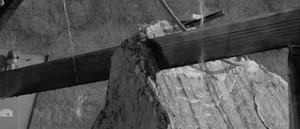
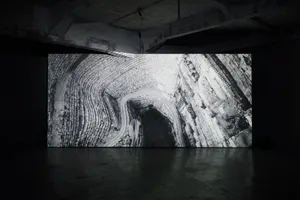
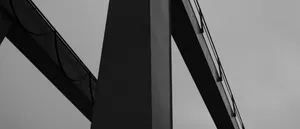
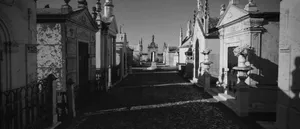
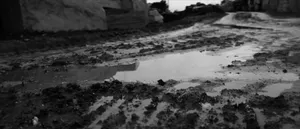
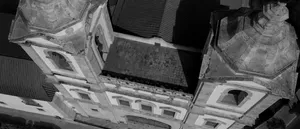
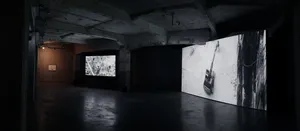
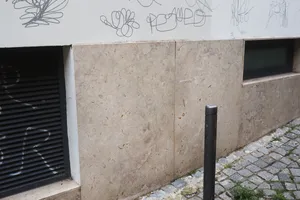
In the anticline of Estremoz-Borba-Vila Viçosa in Alentejo, is located one of the oldest and most productive marble extraction industries in Portugal and the Iberian Peninsula that has deeply marked this region.
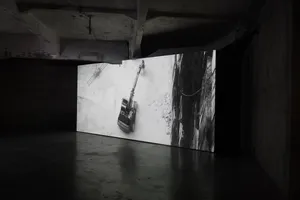
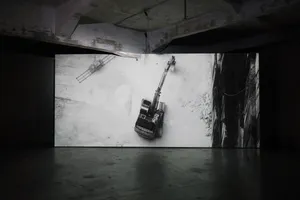
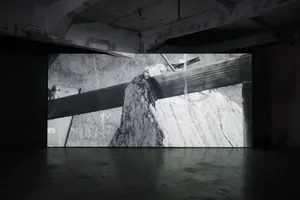
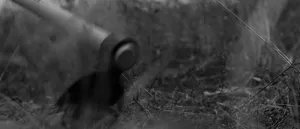
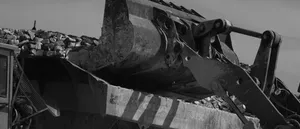
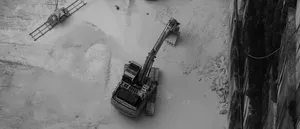
The movie approaches the problematic of the transformation of the environment into commodities, from a point of view that intends to be that of the stone itself, in which we can find the huge quarries, some more than a hundred meters deep, thus exposing these monumental scars. The testimony falters between the stone, the machines and the landscape, where humanity seemingly ceased to exist.
The narrative documents fragments of this exploration, where we find habitats dominated by cranes and disfigured by heavy machinery, functioning almost as an industrial archeology, in which we are placed as witnesses at the center of a scar that extends for over 40 kilometres and whose epicentre is a tragic landslide of a 100-meter stretch of road, in November 2018, which claimed a number of fatal victims. Observing the ecology of the different players, Anticline brings to the surface traces and artefacts composed of micro-narratives that document and witness the profound and continuous subjugation of the landscape.

(in)Visible
João Bragança Gil
(in)Visible
Nominated by Bienal Fotografia do Porto, 2025
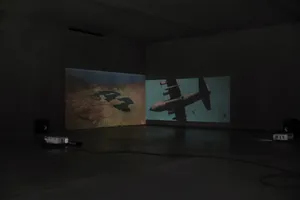
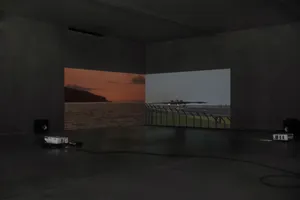
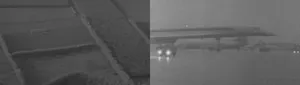
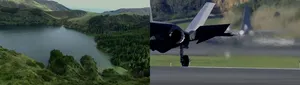
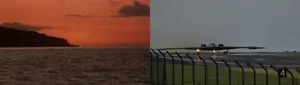
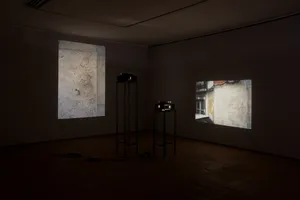
“I try to let the film think. “— Harun Farocki The Azores are an archipelago in the ‘middle’ of the Atlantic. Due to their privileged geographical position, these islands have been a place of enormous importance throughout history. This video essay aims to explore the visibilities and invisibilities inherent to the political agendas behind this geographical position through a two-channel video work that juxtaposes images of the magnificent landscapes often portrayed in Tourism advertisements, with media images of Lajes Airport, an important transnational military complex from the First World War to the present day.The contrast of these two visual sequences composed of ‘found-image’ seeks to reflect on the politics of landscape and its representation, through the simultaneous, although paradoxical, discourses in these locations.The film is accompanied by the soundtrack “Conquest of Paradise” (1992), by Vangelis, transformed and edited by me, slowing it down more than ten times, transforming it into an almost unrecognizable environment, with about forty-five minutes of duration. Each of these three elements — two videos and a soundtrack — has a different duration, creating asynchronous ‘loops’ and generating endless interactions, combinations and readings, in time.
The Origin (On&On)
João Bragança Gil
The Origin (On&On)
Nominated by Bienal Fotografia do Porto, 2025
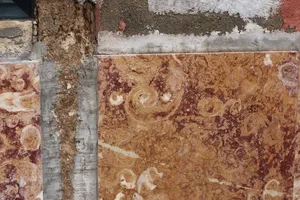
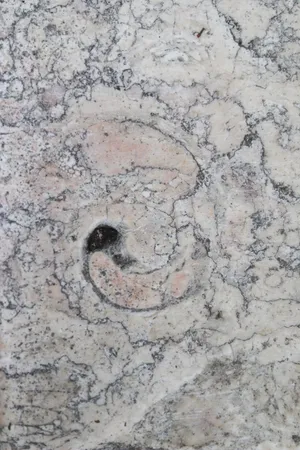
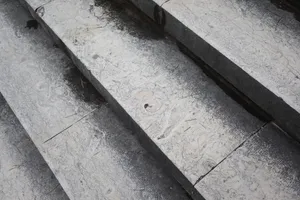
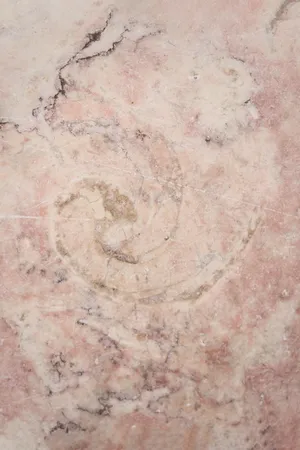
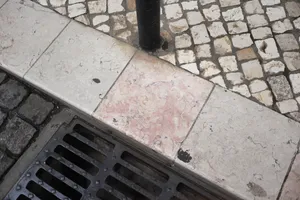
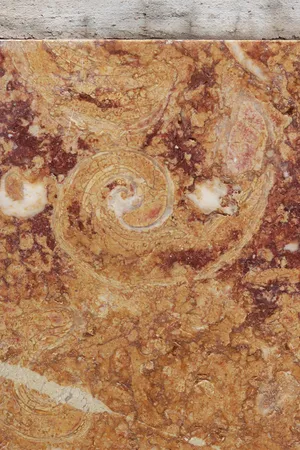
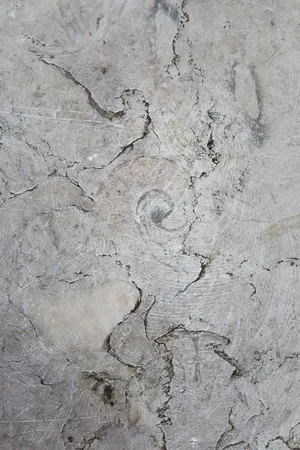
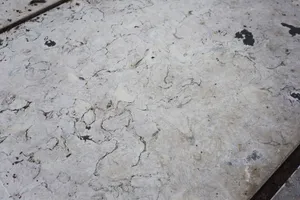
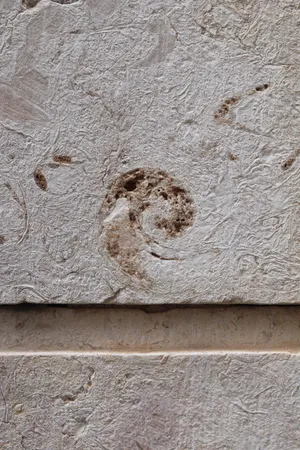
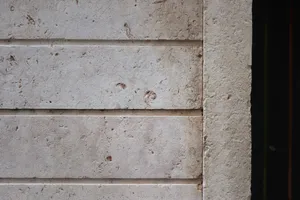
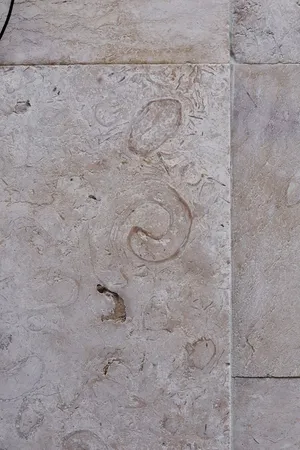
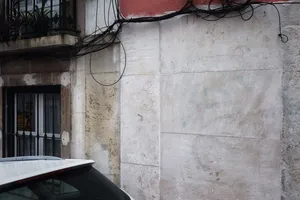
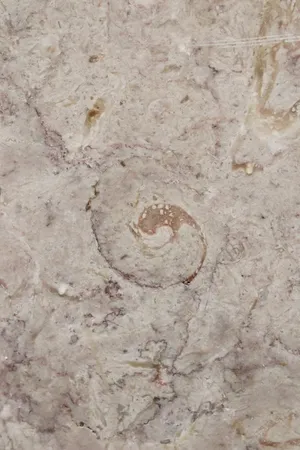
A kind of origin that comes closer and closer and finds and diverges, as João Bragança Gil makes a point of expressing. ⌢’s state had completely changed since the arrival of ↩. I was on a completely different journey. They were travelling at this time to other times. Moments beyond the shadows, or the first representations of them. The ammonites made the representation something else, a chance like the previous blurs, but still, an unplanned representation, an image-journey to a past so distant that we cannot imagine. This process of millions and millions of years ended up being brutally cut in half, or even more than half, after being extracted from the ground. The origin (on and on) brought with it another notion of time in these images. The process identify > shoot > reveal > project > observe brought to their memories the apparatus of the first images they saw projected, but reminded them of how in this circle they always reappeared, reinvented themselves. Time after meeting, so long that the Sun had appeared, ⌢ and ↩︎, embracing the paths they had travelled until then, stopped. Pedro Huet, 2021 (Excerpt)
João Bragança Gil
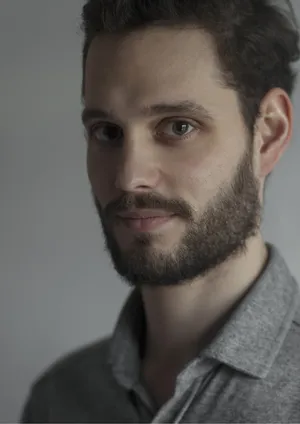
João Bragança Gil (Lisbon, 1989) is an artist, based in Lisbon, Portugal. Attended the Painting course at the Faculty of Fine Arts of Lisbon between 2008 and 2010; Graduated in Industrial Design in 2013 from Escola Superior de Artes e Design. In 2014, Bragança Gil moved to London, graduating in MA Industrial Design at Central Saint Martins UAL in 2016. In 2019 Bragança Gil, moved to Lisbon, and started practicing fine arts full-time. Currently he’s pursuing a Media Arts PhD at Faculty of Fine Arts of Lisbon.Recent exhibitions include “Drop me in the river, Dip me in the water!” (2021) at Galeria Pedro Cera; “The sun, the oldest, the sheep, as the origin (on and on) and the klecks klecks” (2021), by Sismógrafo at Casa das Artes, Porto; “CODA” (2022) at Buraco, Lisbon, “Uncertain Strata” at EGEU; “Estudo do Meio”, Carpintarias de S. Lázaro; “Midnight Sun”, Mono. Recidency at Arquipélago — Centro de Artes Contemporâneas, São Miguel, with FetArt (France) and CiCLO (Portugal). In 2023, Bragança Gil presented “Artificial Paradises” (2023) a solo exhibition at the National Museum of Science and Natural History, resulting from more than two years of research.In 2024, participated in the group exhibition “Entre Margens” curated by João Pinharanda and the group show “Passages” at Galeria Encounter; and the solo exhibition “Trouble in Paradise” at (Projectspace) at the Encounter and Jahn und Jahn Gallery, in Lisbon.
ProfessionVisual Artist, Researcher, Filmmaker
IdentityMan
LocationPortugal, Southern Europe
PracticeDocumentary, Archives
TopicsPolitics, Technology, Anthropocene
CityLisbon
Nominated byBienal Fotografia do Porto
Year2025
Close

Address
Isaac Titsinghkade 6A-B
1018 CA Amsterdam
The Netherlands
Address
Isaac Titsinghkade 6A-B
1018 CA Amsterdam
The Netherlands
© 2026 FUTURES Foundation
© 2026 FUTURES Foundation
Close