

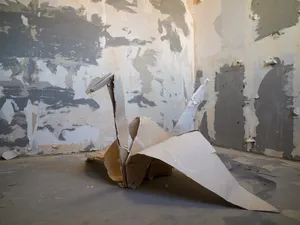
Folded Bird
Jungeun Lee
Folded Bird
Nominated by Bienal Fotografia do Porto, 2026
Folded Bird (2025) emerges from the artist’s forced departure from a long-term family home following familial rupture, economic precarity, and Seoul’s rapidly rising housing costs. Confronted with sudden displacement and the loss of both domestic space and familial support, the project documents emotional residues left behind and examines the family as a contested site of memory, labor, and power.Returning to the family structure after prolonged absence revealed how affects and roles are socially coded within the spatial framework of the home. Through performative actions and material elements such as folded paper cranes, rice, and kimchi, the project reflects on gendered domestic labor, intergenerational care, and embodied memory.These gestures operate as attempts to detach the body from inherited structures of kinship and normative expectations, while seeking moments of deterritorialization from familiar social orders.Moving beyond autobiographical documentation, Folded Bird situates personal experience within broader social and emotional systems, questioning what constitutes “family” and how its invisible structures continue to shape the body and everyday life.
Step Back Closer
Jungeun Lee
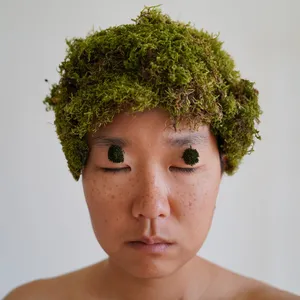
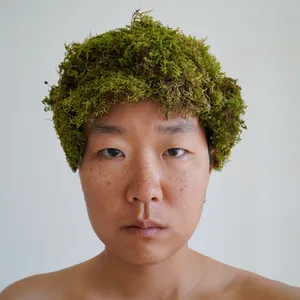
Step Back Closer
Nominated by Bienal Fotografia do Porto, 2026
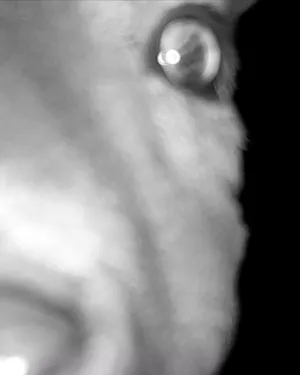
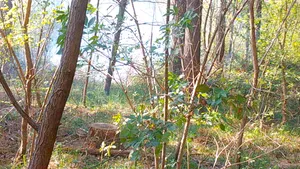
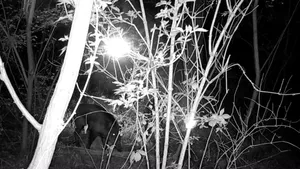
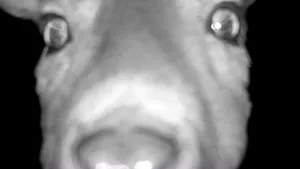
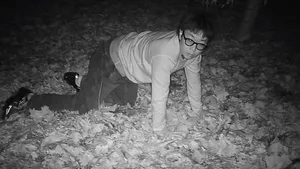
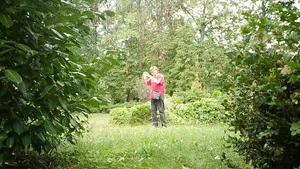
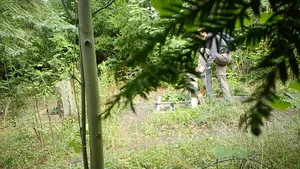
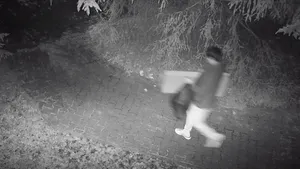
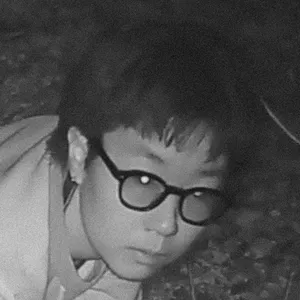
Trail camera used in Step Back Closer is an unmanned sensor device, originally designed to track wildlife movement. This machine does not choose its subjects or moments; it autonomously captures images in response to motion. What emerges from these random recordings are glimpses into fragmented layers of reality.
Framing begins with the simple act of deciding where to place the camera—but what it records remains entirely unpredictable. The trail camera has no moral compass, no narrative intention. It interprets nothing. It merely reacts—to light, to movement. A flash in the dark, the rustling of leaves, smoke drifting through an empty forest—each is captured with the same neutrality. No moment takes precedence; all are treated with equal detachment.
Yet within these recordings, an unfamiliar rhythm pulses through familiar surroundings: the daily ritual of tying shoelaces in the same place, clandestine meetings repeated in a cemetery, the shadow of a fox rummaging in a trash bin, a deer pausing to meet the camera’s lens. Each moment leaves a trace, marking quiet rituals of survival and fleeting presence.
These are all moments that would not have been captured had a human operator been present. The machine was there, but the gaze was absent; the frame existed, but the filmmaker did not. In this gaze that “gets closer by stepping back,” what normally escapes attention—what is hidden behind other gazes or simply overlooked—is revealed.
image is a medium that evokes the unattainable: an attempt to grasp the invisible, to document what has already vanished. It is residue—a record of what was once there. Step Back Closer unfolds like a phantasmagoria, fragmenting and reweaving reality in the space between the visible and the unseen, between intention and accident. It captures what has passed but still lingers—a trace that disappears, yet somehow remains.
Jungeun Lee
Jungeun Lee (b. 1993) is currently based in Lisbon and Seoul. Her practice explores how experiences of identity and belonging can be translated into visual and performative forms through photography, video, performance, and sound.
After relocating to Germany in 2019, Lee initiated Belonging Nowhere (2020–2022), a project shaped by the lived condition of a fluid and provisional identity as a Korean woman, immigrant, and queer subject. The work focused on developing artistic strategies for sharing narratives that emerge from displacement and social precarity.
In Becoming One, Being Plural (2021–2022), Lee expanded this inquiry toward ecological contexts by collecting traces from spaces where different forms of life and material intersect. Through the construction of ecospheres, the project examined layered and relational forms of identity beyond a human-centered perspective.
This research into perception and presence continued in Step Back Closer (2022–2025), which addressed invisible yet persistent phenomena embedded in everyday life through sensory-based approaches.
Lee’s current project, Folded Bird (2025), originates from the forced departure from a long-term family home caused by familial rupture, economic instability, and rising housing costs in Seoul. The project documents the emotional residues left behind through displacement and examines the family as a site shaped by memory, labor, and power relations. Through performative actions and material elements such as folded paper cranes, rice, and kimchi, Lee reflects on gendered domestic labor, intergenerational care, and embodied memory, seeking alternative ways to reimagine inherited structures of belonging.
ProfessionPhotographer, Visual Artist, Art Director
IdentityWoman
LocationPortugal, Southern Europe, South Korea, Eastern Asia, Germany, Western Europe
PracticeMixed Media, Video
TopicsIdentity, Migration, LGBTQIA+, Anthropocene, Family, Security, Labour, Post-memory
Nominated byBienal Fotografia do Porto
Year2026
Close

Address
Isaac Titsinghkade 6A-B
1018 CA Amsterdam
The Netherlands
Address
Isaac Titsinghkade 6A-B
1018 CA Amsterdam
The Netherlands
© 2026 FUTURES Foundation
© 2026 FUTURES Foundation
Close