Photo Romania Festival

Member from 2018. Located in Cluj-Napoca, Romania

Photo Romania Festival

Member from 2018.Located in Cluj-Napoca, Romania

Photo Romania is an immersive and captivating photography festival that celebrates the art of visual storytelling through the lens. Founded by Cătălin Balog-Bellu and Sebastian Vaida, the festival brings together photographers, artists, and enthusiasts from around the world to showcase their work, exchange ideas, and inspire creativity. Spanning multiple days, Photo Romania takes place every year in the city of Cluj-Napoca and offers a diverse program of exhibitions, workshops, masterclasses, and interactive experiences designed to engage and educate attendees of all ages and skill levels. Visitors can explore thought-provoking collections of contemporary and historical photography, gaining insight into different techniques, styles, and perspectives. The festival also serves as a platform for emerging talents to connect with industry professionals, fostering a supportive environment for networking and collaboration.

Nominations

2026

Together, these artists challenge the boundaries of the photographic medium, moving beyond simple documentation to explore the complex layers of identity, trauma, and the human condition in a modern European context.

‍

Katarina Radović: The Performative Anthropologist

Katarina Radović is selected for her unique ability to blend documentary photography with a sharp, performative, and often witty anthropological lens. Her work investigates the "theatre of the everyday", focusing on social rituals, gender roles, and the construction of identity within specific cultural frameworks.

Why she fits Futures: Radović’s practice is essential for the platform because it critiques contemporary social structures through a sense of irony and deep empathy. Whether exploring the kitsch of wedding rituals or the performative nature of the "selfie" culture, her work invites viewers to question the authenticity of the roles we play in society. Her established yet evolving voice provides a bridge between traditional social commentary and contemporary conceptual practice.

‍

Vera Hadzhiyska: The Guardian of Memory

Vera Hadzhiyska is a multidisciplinary photographer whose work is deeply rooted in research, archival intervention, and the politics of identity. Her projects, most notably those dealing with the "Names Process" in Bulgaria and the forced displacement of minority groups, demonstrate a profound commitment to uncovering silenced histories.

Why she fits Futures: Hadzhiyska represents the "research-as-art" movement that is vital to the future of photography. Her ability to weave personal family narratives with broader geopolitical traumas makes her work both deeply moving and politically urgent. By selecting Vera, the project highlights the importance of photography as a tool for reconciliation, historical preservation, and the exploration of "belonging" in a post-migration Europe.

‍

Alexis Anaci: The Poetic Documentarian

Alexis Anaci is chosen for her sensitive, tactile, and highly psychological approach to the image. Her work moves away from the grand narrative to focus on the "micro-moments", the fragility of human connection, the emotional residue of domestic spaces, and the quiet tension between presence and absence.

Why she fits Futures: Alexis brings a cinematic and lyrical quality to the selection. Her projects display a sophisticated understanding of light, texture, and the "unspoken" aspects of photography. She represents a generation of artists who use the camera not just to see the world, but to feel it. Her inclusion ensures the project encompasses the interior, psychological landscapes that define the contemporary human experience.

The synergy between these three artists creates a powerful narrative arc for the Futures Photography project. From Radović’s extroverted social critiques and Hadzhiyska’s archival depth to Anaci's introverted psychological portraits, this selection offers a comprehensive look at the state of contemporary photography: an art form that is simultaneously a witness to history, a mirror to society, and a map of the human soul.

‍

The members of the jury:

Andrei Budescu, photographer and university professor, former dean of UAD (University of Art and Design), Cluj-Napoca, Romania

Panagiotis Papoutsis, photographer and former artistic director of Ioannina Photo Festival, Greece

Dorel Găină, photographer and university professor, former dean of UAD (University of Art and Design), Cluj-Napoca, Romania

Sebastian Vaida, photographer and artistic director of Photo Romania Festival, Cluj-Napoca, Romania

2025

Adrian Tudose’s work is deeply rooted in empathy and the human experience. His ability to capture fleeting, transient moments in urban spaces transforms everyday encounters into meaningful, structured compositions. By engaging with themes of emotional vulnerability and social representation, his photography offers an introspective look at the human condition. His contribution to the European emerging photography scene lies in his capacity to bridge documentary and artistic photography, presenting images that are both aesthetically rich and emotionally profound. Tudose's approach challenges viewers to reconsider the role of photography as a medium for storytelling and human connection.

‍

Natalia Ciobanu, with her long-standing dedication to portraiture and travel photography, contributes a vibrant and emotionally charged perspective to contemporary discourse. Her project "Between Color and Expression" explores the depth of human emotion through striking use of color and composition. By focusing on the authenticity of her subjects, Ciobanu offers a visually poetic reflection on inner states and identity. Her work resonates with a broader European audience by celebrating diversity, introspection, and the universal language of color. She reinforces the significance of portraiture in contemporary photography, emphasizing its power to evoke personal and collective narratives.

‍

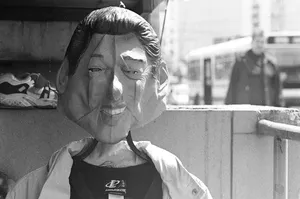
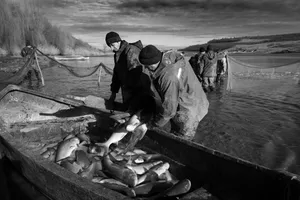
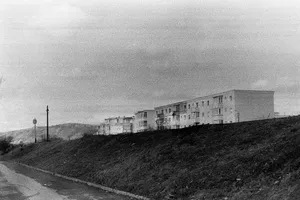
Toma Hurduc’s documentary approach provides a critical, thought-provoking examination of the socio-political landscape in the Balkans. His project "Two Suns" delves into the region’s post-communist struggles, exploring the tensions between inherited ideologies and the rapid expansion of consumerist culture. By blending factual and imaginative elements, Hurduc crafts a layered narrative that questions the construction of memory and the perception of reality. His use of black-and-white 35mm film adds a timeless and surreal quality to his imagery, reinforcing the stark contrasts present in Balkan societies. His work contributes to contemporary European photography by documenting underrepresented histories and offering a raw, unfiltered perspective on socio-political change.

‍

Together, these three photographers redefine contemporary photography through their commitment to emotion, identity, and societal reflection. Their selection for Futures Photography 2025 highlights the evolving landscape of European photography, where personal narratives and critical discourses merge to shape a more inclusive, thoughtful, and visually compelling future.

‍

Photo Romania Festival's 2025 nominations were curated by:

Andrei Budescu | Photographer and university professor, former Dean of UAD (University of Art and Design), Cluj-Napoca, Romania

Panagiotis Papoutsis | Photographer and former Artistic Director of Ioannina Photo Festival, Greece

Dorel Găină | Photographer and university professor, former Dean of UAD (University of Art and Design), Cluj-Napoca, Romania

Sebastian Vaida | Photographer and Artistic Director of Photo Romania Festival, Cluj-Napoca, Romania
2024

Anca Punct – the artist behind the project Raw Photography and Other Magical Territories: A Focused Journey – has been selected for FUTURES due to her innovative and boundary-pushing approach to visual expression. By combining traditional raw photography with AI technology and mixed media techniques, the artist demonstrates a deep understanding of the intersection between nature and digital innovation.

‍

Cosmin Gârleșteanu, the photographer behind the project Prismagination, has been selected due to the innovative and thought-provoking nature of his work. By skillfully using prisms to capture captivating real-life moments, he demonstrates a unique and imaginative approach to photography that challenges conventional perceptions. The photographer's ability to blend technical skill with artistic vision demonstrates a mastery of his craft.

‍

Cristina Irian has been selected due to her unique and innovative approach to visual storytelling. By exploring the use of fragile personal objects like doilies and photographs to communicate and preserve memories, she brings a fresh perspective to the art of photography. Her focus on intertwining the female and male gazes adds depth to the work, offering a thought-provoking exploration of gender dynamics and intergenerational connections.

‍

Elena Corbu has been selected as one of the FUTURES artists due to her unique ability to capture the essence of the inner journey and innate gifts through photography. Her portfolio demonstrates a deep understanding of the metamorphic nature of the creative process, going beyond mere aesthetics and technicalities to convey profound meaning and emotion through her work.

‍

Georgiana Feidi has been selected due to her profound exploration of the theme of meditation through visual art. Her work delves into the concepts of meditation, self-discovery and the transformative nature of artistic creation. By intentionally depersonalising the human presence in photographs and using wide frames to emphasise the relationship between the individual and the universe, the photographer creates a visually striking and thought-provoking representation of the human experience.

2023

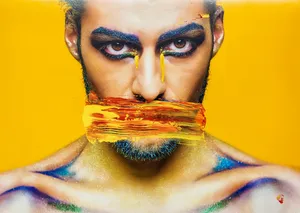
In alphabetical order, the five Photo Romania artists for the Futures project this year are: Claudiu Guraliuc, Cristina Gârleșteanu, Hajdu Tamas, Luiza Marinaș and Luciana Vulea.
2022

The selected artists are: Andreea Harabagiu, Martyna Benedyka, Patricia Morosan, Sakis Dazanis and Spiros Zervoudakis.

2021

Within this project, we have been selecting every year a number of 5 artists to represent what we believed to be interesting and worthy in photography at that moment. This year, we have decided upon new names from different countries: Dirk Hardy, John Robokos, Pascual Rosales, Sara Meinz, and Younes Mohammad. Their work has been carefully analysed and selected during an online portfolio review judged by international curators, to represent Photo Romania in Futures 2021.
‍

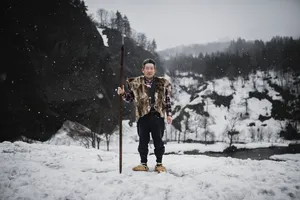
Dirk Hardy is a photographer that shows a strong understanding of how to develop and present projects. Although a young artist, he understands how to build aproject and to visually present it to the audience. We particularly liked his Void project, which has been featured several times in international events, including an exhibition in Romania.
‍

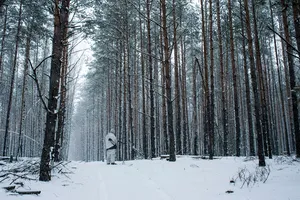
John Robokos is a Greek artist specialised in instant street photography. We chose his work because he attempts and succeeds in capturing beauty in dark anddepressing urban landscapes.

‍

Pascual Rosales is a Spanish photographer focused on using visual storytelling about the stories that each of us can carry inside. His project Salt eats stone is a story about the people and the places consumed by time, where salt is the substitute for the passage of time.

‍

Sara Meinz is another Spanish photographer whose work strives for documentary and portraiture. Through her work, she seeks the hidden messages of ordinary life, often exploring society, the human-made landscape, and nature’s resilience.

‍

Younes Mohammad is a Kurdish freelance photographer working and telling the stories of the people that live in his country. Younes hopes that, through this work of exploring conflict and post-conflict humanitarian issues, the world may better understand what these people and their families have given for the Kurdish people, the region, and, in fact, for the world.