

OFF THE MAP - Transnistria
Hanna Jarzabek
OFF THE MAP - Transnistria
Nominated by Photo Romania Festival, 2020
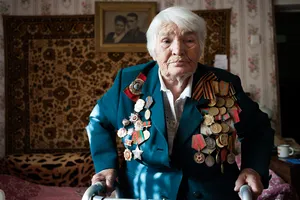
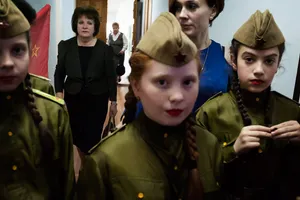
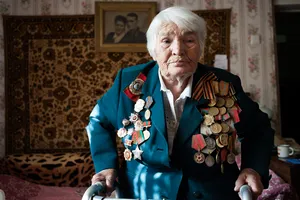
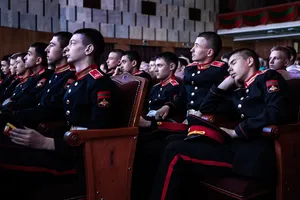
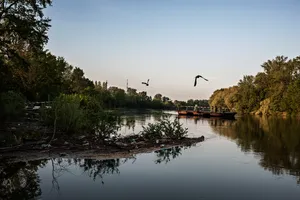
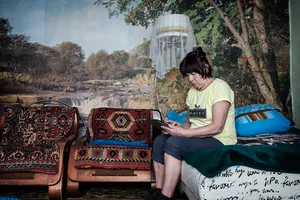
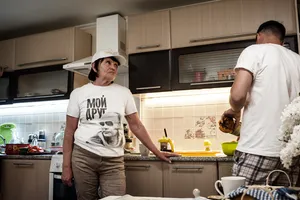
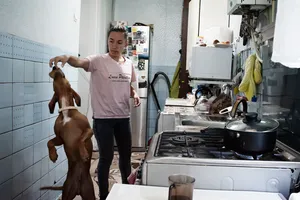
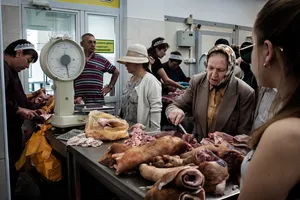
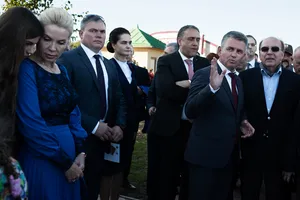
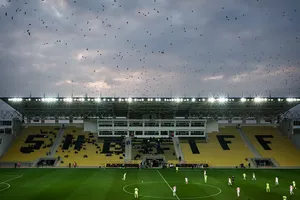
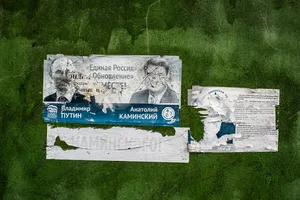
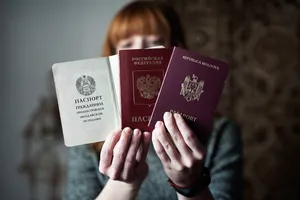
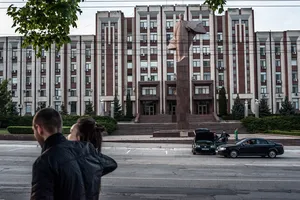
To preserve their Russian language and identity, the inhabitants of the narrow region sandwiched between the Dniester River and the Ukraine declared in 1990 their independence. Two years later, they had to defend with weapons what they now consider their country. From the inside, Transnistria has all the characteristics of a state: government, currency, passport, borders and armed forces. However for the outside world they do not exist as the International Community do not recognize their independence. How do you live in a place that does not exist on any map of the world? What is really the price of being a pariah within the International Community? These questions served as a starting point for my project. The unilateral separation from Moldova, created a kind of bubble, where non-recognition and legal limbo allow opaque and doubtful business, opening the way to poverty and inequality. Today the economic and political life of the region is practically governed by the oligarchs. The lack of recognition marks everyday life down to the smallest details and if until now Transnistria has been able to maintain itself it is thanks to the Russian economic support. Transnistrians in general consider themselves as patriots and claim to love their country. However, the lack of work, isolation and the difficult economic situation push many to emigrate. Little by little the region is depopulating, leaving behind children and grandparents. For those who stay, the identity problem begins to take a back seat. In the words of some of the interviewees: “Identity does not fill your stomach”. More: https://transnistria.visura.co/
Hanna Jarzabek
Hanna Jarzabek is a Spanish-Polish documentary photographer, based in Madrid. After completing her Master’s degree in Political Science in Geneva and working as a political analyst for several UN agencies, she decided to pursue photography professionally.
Her projects explore themes of discrimination and social challenges in Europe, with a strong focus on gender identity and sexual diversity. Additionally, she has investigated and documented the radicalization of youth, the rise of far-right movements in Poland, and the construction of national identities in post-Soviet regions. Recently, her work has focused on migratory flows along the EU's eastern borders, emphasizing a safe and respectful visual approach to individuals in vulnerable conditions.
In her work, she places special emphasis on building trust with the individuals whose stories she captures. Beyond photography, she integrates other formats, creating audiovisual pieces with the narrative depth and perspective of documentary storytelling. In these pieces, she combines still images with the authentic voices of her subjects and ambient sounds, encouraging a more contemplative, intimate experience for the viewer, fostering a deeper connection to the story.
Recently, she has begun producing podcasts that allow subjects to share contextual and historical insights, enriching each project. She believes that blending formats enables a more nuanced exploration of increasingly complex topics.
Her work has been published in prominent outlets such as El País, Newsweek Japan, and L'Obs, and exhibited internationally in Spain, Poland, Switzerland, Germany, Georgia, and Brazil. She has received multiple recognitions, including a nomination for the IJ4EU Impact Award 2024, the Leica Oskar Barnack Award (2023), Third Prize at POY Latam 2015 (Mexico), and selection for Futures Photography EU’s 2020 Futures Talents program.
ProfessionEducator, Writer, Photographer
IdentityWoman, White
LocationSouthern Europe, Eastern Europe, Spain, Poland
PracticeDocumentary
TopicsIdentity, Politics, LGBTQIA+, Migration
CityMadrid
Nominated byPhoto Romania Festival
Year2020
Close

Address
Isaac Titsinghkade 6A-B
1018 CA Amsterdam
The Netherlands
Address
Isaac Titsinghkade 6A-B
1018 CA Amsterdam
The Netherlands
© 2026 FUTURES Foundation
© 2026 FUTURES Foundation
Close