Fotofestiwal Lodz

Member from 2018. Located in Lodz, Poland

Fotofestiwal Lodz

Member from 2018.Located in Lodz, Poland

Fotofestiwal is one of the first photography festivals in Central and Eastern Europe. This small, spontaneous initiative today, it's an international event with more than 20,000 visitors each year. The festival takes place in Lodz - a city with a remarkable industrial history, which has inspired the organizers from the beginning. Exhibitions are presented in the main festival center - the post-industrial buildings of former textile factories. More than 30 exhibitions can be seen throughout the city, organized in cooperation with local galleries, museums and universities. The program includes: exhibitions (curated Main Program, Open Program, book exhibitions), author meetings, slide shows, film screenings and educational activities. We are interested in photography that tells about the world, intervenes, engages, makes you think and take action. The festival draws audiences from all over Europe every year, with 30 exhibitions and more than 50 events over the 10 days of the festival, in at least 20 locations across the city of Lodz. The festival was covered by: New York Times, The Washington Post, British Journal of Photography, Der Greif and many more.

Nominations

2026

When searching artists for Futures Talents, we focus on artists living and creating in the region, of Polish origin, or based in Poland, who are at a pivotal moment in their careers—ready to benefit from and contribute to the international Futures community. We look for artists with a strong, distinctive visual language and a clear artistic vision. And all artists joining the platform in 2026 demonstrates a highly individual and recognizable approach to the medium.

‍

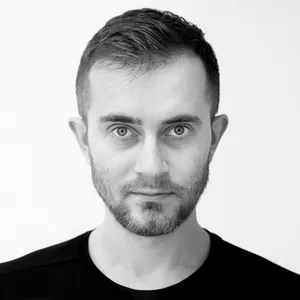
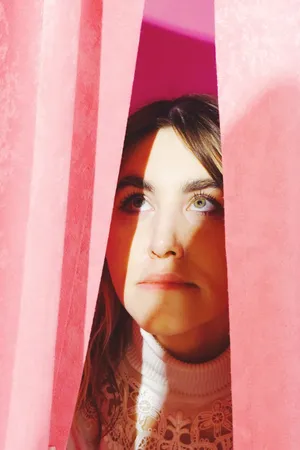
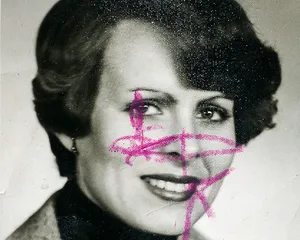
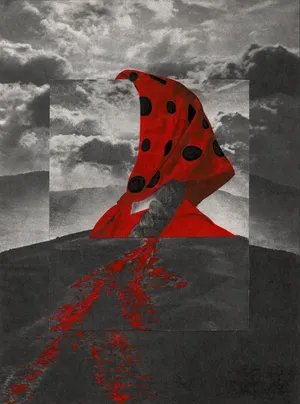
Sasha Velichko, a Belarusian artist living and working in Poland, grounds her practice in the socio-political realities of her country of origin. Working across photography, analogue and digital archives, artificial intelligence, and textile, she constructs layered narratives that interrogate memory and power. She is also the recipient of the first Fotofestiwal Grant, with her exhibition scheduled for Fotofestiwal 2026.

‍

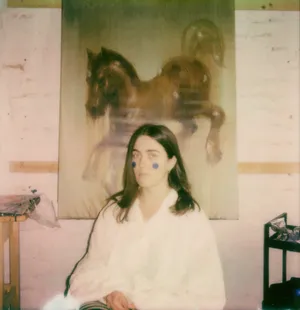
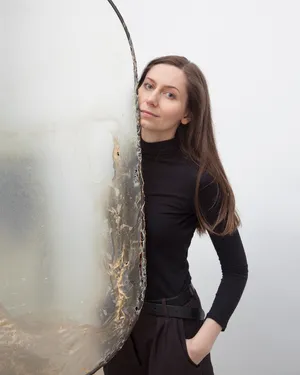
Anna Kieblesz works at the intersection of media. Photography, performance, light, installation, and textiles are all tools for her experiments. The body in her works is both a subject and a material presence.

‍

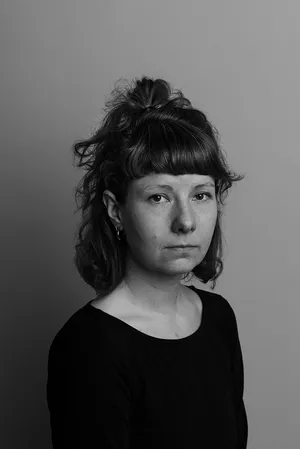
Irena Kalicka has long been active within the Polish photography scene, developing a consistent and unmistakable visual language rooted in grotesque aesthetics, self-made scenography, and performative elements.

‍

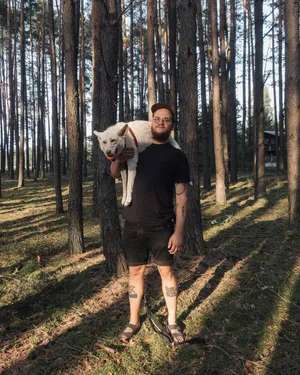
Artur Pławski, a self-described late debut artist, constructs nuanced narratives around masculinity, marked by sensitivity and a distinctive perspective.

‍

Mateusz Pecyna creates multi-layered, often multisensory installations that combine found footage, documents, AI-generated imagery, and objects, addressing contemporary questions surrounding image credibility and perception.

‍

The members of the jury:

Julia Klewaniec - photographer, visual artists, curator, member of Picterdoc Foundation, FUTURES Talent 2022

Grażyna Siedlecka - independent curator, Poland

Marta Szymańska - curator of Fotofestiwal Lodz, Poland

2025

Michał Sita combines elements of photography and anthropology in his work – he looks at people, places and architecture in terms of how we collectively imagine and use the past. His latest long-term project is entitled Historia Polski (The History of Poland) and documents historical outdoor performances organised by volunteers and amateurs to commemorate important events in the country's history. Michał not only documented the events, but also took an active part in them. The project is characterised by anthropological attentiveness, inquisitiveness and curiosity. Thanks to them, Sita created a multidimensional project analysing not only the phenomenon of historical reconstructions, but also prompting reflection on contemporary Polish identity.

‍

Paweł Starzec, like Sita, focuses on long-term research projects in which he uses his experience as a sociologist. His latest project, entitled Anew, has been running since 2013 and documents the transformation of Lower Silesia, a region in Poland with an extremely complex and distinctive heritage. In his work, Paweł is consistent, approaching his chosen topics in a comprehensive manner and combining all this with the excellent skills of a documentary photographer.

‍

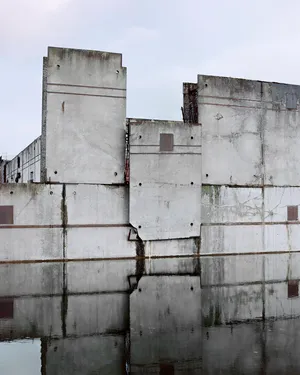
Karol Szymkowiak is a self-taught photographer fascinated by the surrealism that can be found in the reality he photographs. His work deals with environmental protection, military and civil defence, and physical and mental immobilisation. The artist's interests are evident in her latest project entitled 0169-8629 5223-01750. It is a story about Lake Powidz and the neighbouring largest military airport in Poland, where a substantial expansion of the US military base is underway. It is a multidimensional project in which the author addresses both socio-political and ecological issues.

‍

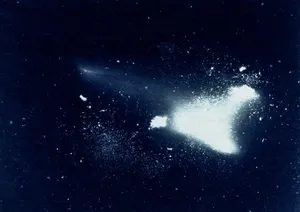
Emilia Martin's work clearly shows the influence of her childhood, which she divided between the natural, rural landscapes of eastern Poland and the heavily industrialised Silesia. In her work, she often draws on the language of myths, fairy tales and stories. It was this fascination that led her to undertake an in-depth analysis of the subject of meteorites in the project, I saw a tree bearing stones in the place of apples and pears. It was this project – based on her own photographs, archival work and sound – that caught our attention. It presents Emilia's unique visual style, exceptional sensitivity and multidisciplinary approach to the subject.

‍

Paulina Mirowska, like Martin, uses photography as one of her media. She works with installations, video, sound and sculpture. She presents herself as a visual artist, burnt-out climate activist and educator – and she uses all these experiences in her artistic work. In her latest project, entitled The Trophy, she tells the story of the beginnings of life on Earth, when photosynthesis appeared in the oceans, enabling the development of living organisms. Mirowska presents this difficult-to-depict process in a way that is extremely evocative and captures the imagination of the audience.

‍

FOTOFESTIWAL :: SELECTING PROCES 2025

‍

STAGE 1

We created the short list of authors based on:

selected works submitted to annual Fotofestiwal Open Programme nomination of Polish experts; we sent request to 20 experts; 11 answered with the nomination; their names: Łukasz Rusznica, Dorota Łuczak, Adam Mazur, Michał Adamski, Adrian Wykrota, Krzysztof Candrowicz, Małgorzata Słomska, Joanna Kinowska, Nina Giba, Witold Kanicki, Jakub Dziewit

The shortlist of nominees: 32 people

‍

STAGE 2

Meeting of jury who selected 5 artists out of the shortlistJury members:

Agnieszka Olszewska [curator; Head of Communications, Exhibitions and Visitor Experience, communication accessibility coordinator in Museum of Photography in Krakow]

Jan Brykczyński [photographer, academic teacher, member of Sputnik Photos]

Marta Szymańska [curator; Fotofestiwal Lodz]

2024

Mykhaylo Palinchak has dedicated himself to documenting the daily lives of the Ukrainian people since the beginning of Russia's full-scale invasion of Ukraine in February 2022. In his two photo series’ Sirens’ whisper and Highlight, Mykhaylo documents places of Russian war crimes all over Ukraine, destroyed civilian objects and houses, but also the extraordinary courage and solidarity of Ukrainian society. Both series demonstrate this documentary photographer’s unique style, extraordinary sensitivity to detail and excellent editing skills.

‍

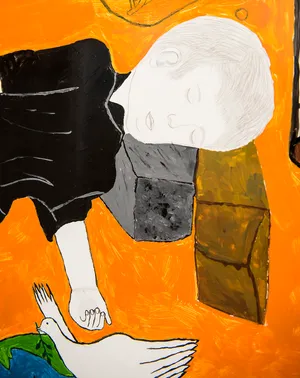
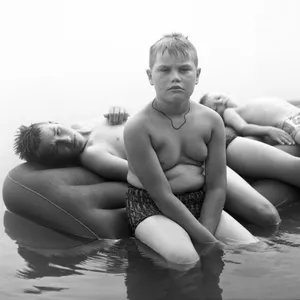
Maria Gutu drew our attention with the classical form of her photography. Maria photographs young people, often at the moment of transition from childhood to adolescence. Each of the gazes Gutu photographs is authentic, not only because she approaches her characters with great visual sensitivity, but also because she looks at them with understanding.

‍

Childhood is also one of the key subjects of Michalina Kacperak's project. Soft Spot is the artist's personal story about her own family experience of alcoholism. Michalina is the eldest of four sisters – the offspring of an alcoholic father who is currently on the path to sobriety. “Among us, only Zosia clings to her childhood,” Kacperak says, and as a result, it was Zosia who became the inspiration for the project.

‍

In nominating Grzegorz Wełnicki for FUTURES Talent, we wanted, above all, to recognise his consistent, long-term work on his project No'am. Since the beginning of his creative path, Wełnicki has been interested in themes of transience, corporeality and spirituality. In the project No’am he approached the theme of transhumanism in a multithreaded story about death.

‍

Karolina Gembara is a photographer, researcher and activist who uses photography both as a tool and a pretext for collaboration, often involving people with a migratory experience. Gembara uniquely manages to combine extraordinary empathy and sensitivity with an excellent academic background and this makes her one of the most interesting artists in the Polish visual arts landscape.

2023

Marcin Kruk is a Polish photographer who has been documenting his life between Poland and Ukraine since the beginning of the full-scale war in Ukraine on February 24, 2022. Kruk is also a member of The Archive of Public Protests, created by a group of Polish photographers as a project of visual activism. The topics that Marcin explores prove that taking pictures is a socially important mission for him.

‍

Lisa Bukreyeva comes from Kiev. Before the Russian invasion of Ukraine, she had been documenting the lives of Ukrainian teenagers, but then the lives of these young people changed dramatically, and two of her more recent projects – Scars of Humanity and 2042 War Diary – document this change. So different from the images we are accustomed to seeing in the media, these two projects reveal the devastating experience of war.

‍

Marysia Myanovska presents the pre-war experiences of Ukrainian youth. Recreating the story of his older brother through photographs, memories and stories, he takes us on a journey back in time to the 1990s – the first years after the collapse of the USSR. When talking about the past, Marysia avoids using archival materials or direct references to historical events and in this way, the project also becomes a poetic story about being lost, young and searching for one's place.

‍

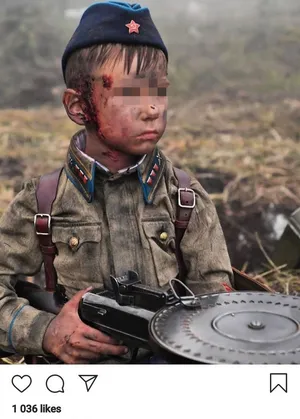
Ihar Hancharuk is a post-documentary photographer and visual artist from Belarus. Raised in an authoritarian country, Hancharuk is critical of phenomena and tools such as propaganda or upbringing in the cult of fighting and sacrifice for the homeland. He uses photography, video and digital archives to analyse the media message and its effects upon society.

‍

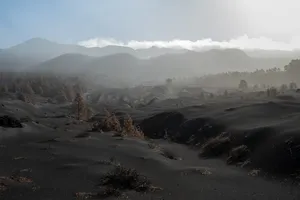
Kinga Wrona is a documentary photographer from Poland. In his project 85 he shows the effects of the eruption of the Cumbre Vieja volcano on the island of La Palma, Spain. The strength of this cycle is primarily its precision: there are just ten near-abstract photographs showing what can happen when ‘nature entered people's lives suddenly and unexpectedly’.

2021

Yulia Krivich is a visual artist and activist. She comes from Ukraine, but currently lives in Warsaw. In her works, she refers to her own experiences and touches upon the issues that are important to the identity of Central and Eastern Europe. Photography is one of her forms of artistic activity. Her performative actions, in which she draws attention to the presence of migrants in Poland as well as the historical dependencies and the resulting attitude of the Poles to migrants from the East are also hot-button issues in the Polish media. Through her artistic work, Yulia makes consistent efforts to bring the migrant community into the public debate in Poland and supports their integration.

‍

It’s hard to describe the work of Bartłomiej Talaga in just a few words – he is a multimedia artist, musician, photography book designer and a Film School teacher. He is also an exploratory artist. His projects are interdisciplinary – they combine photography, music, multimedia, site-specific actions. Some of his works are also purely visual adventures based on intuition, but all of them are characterized by deep thought, mindful focus and exceptional artistic sensitivity.

‍

“I will be mindful of the here and now” – this phrase repeats like a mantra on the pages of Karolina Ćwik’s album, which is a part of the Let’s build the virus series. Being here and now is probably the only way to survive a lockdown with two toddlers at home. Among the hundreds of “pandemic” projects, Karolina’s photos have a unique dose of emotion in them. There is chaos, fatigue, but most of all tenderness bordering on madness, just like in her previous motherhood project.

‍

Maxim Sarychau is a visual artist and photojournalist from Belarus. In his long-term projects and his work as a reporter, he portrays the violence prevailing in authoritarian systems. He returns to hidden stories and gives voice to the victims. He refers to the history of Eastern Europe, but also documents contemporary events in Belarus, including the peaceful protests that took place in the summer and autumn of 2020 in Minsk after the fraudulent presidential election.

‍

Milena Soporowska works in the field of visual arts and art history. In her artistic and research work, she deals with the interpenetration of esotericism with everyday life and the borders between the sacred and the profane. Each of her subsequent projects is a new chapter in this consistently constructed narrative. Based on detailed research, the author refers to the history of spiritualist movements, but at the same time takes up threads of contemporary spirituality.