

Anew
Anew
Nominated by Fotofestiwal Lodz, 2025
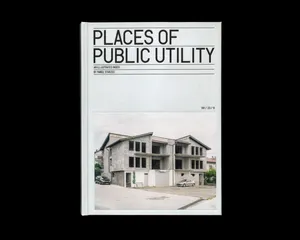
Places of Public Utility
Places of Public Utility
Nominated by Fotofestiwal Lodz, 2025
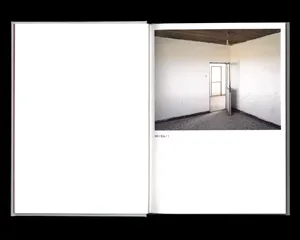
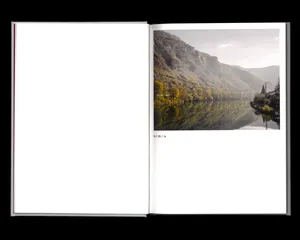
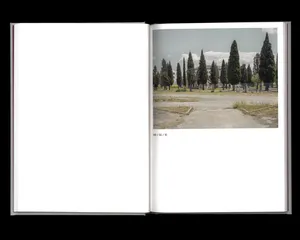
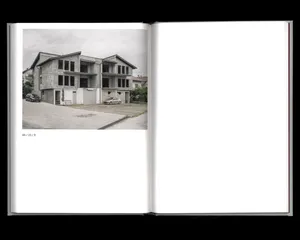
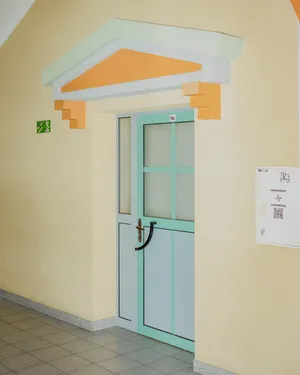
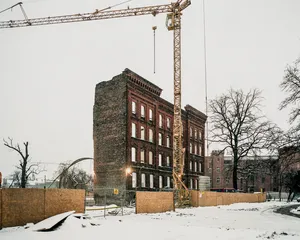
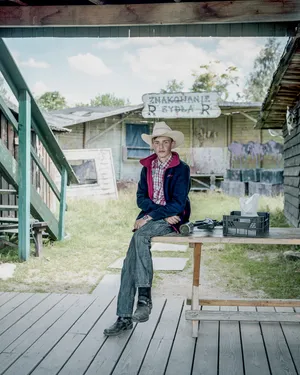
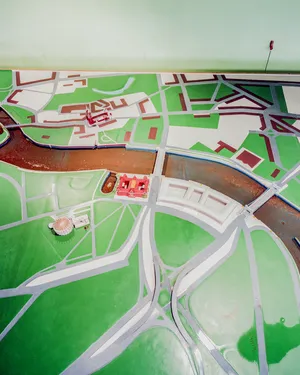
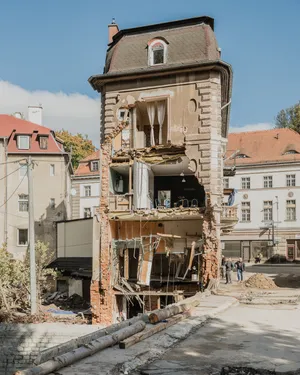
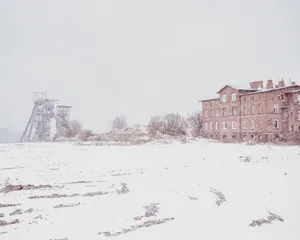
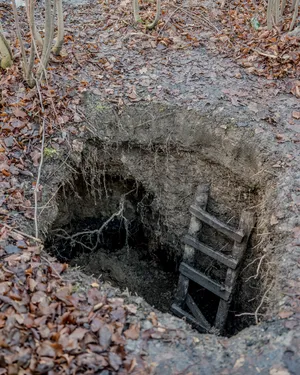
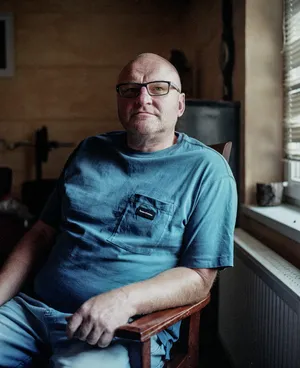
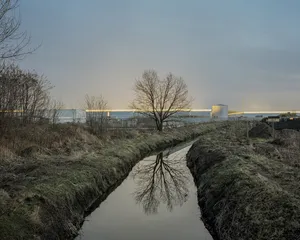
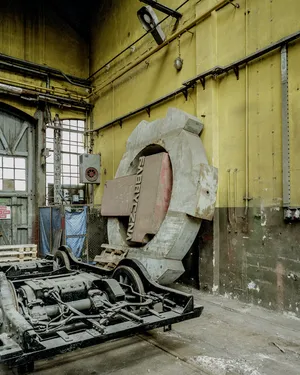
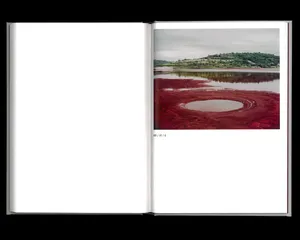
The entire landscape bears contamination that part of newly written history wants to erase. The “Final Report of the United Nations Commission of Experts Established Pursuant to Security Council Resolution 780 (1992), Annex VIII: Prison Camps” – a central document summarising the events of Bosnian War of 1992-1995 for judiciary purposes – lists more than six hundred places of detention in today’s Bosnia and Herzegovina. Most of them were organised quickly, in a repeated pattern, in schools, warehouses, hotels, army barracks, sport stadiums, correctional facilities, clinics, factories, agriculture plants, housing estate cellars. The witness recalls that his school year ended earlier, so his school could become a detention camp. Next year started with all the classrooms painted over, but he wasn't there to see it, as he was already in another camp. The observation by the Hague Tribunal (established as the International Criminal Tribunal for the former Yugoslavia, or ICTY), that locating many of these sites might prove impossible due to their temporary nature, served as the starting point for the project’s earlier title: "Makeshift."
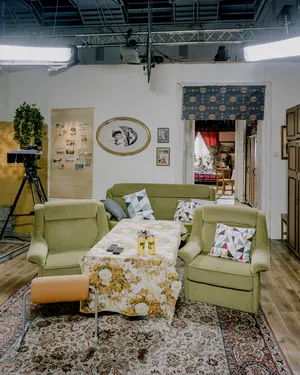
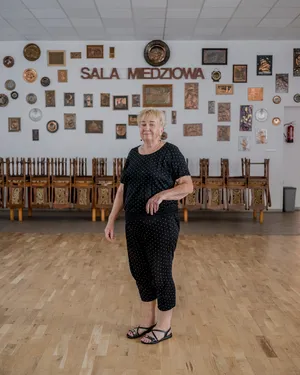
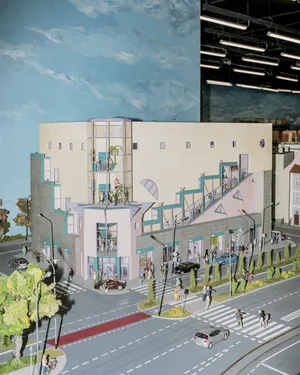
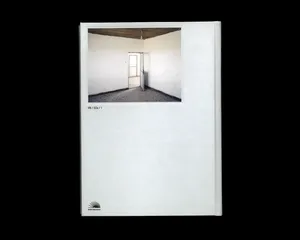
Those held captive, often residents of the immediate vicinity, encountered acts of cruelty, frequently at the hands of former acquaintances, neighbors, or people they recognized by sight. The degree of this cruelty varied depending on the place and time. After the war, in most cases, places used to keep, torture, rape and murder civilians were renovated, and thus restored to their former purpose of buildings of public utility. A very small number of them bear any form of acknowledgement about what happened.
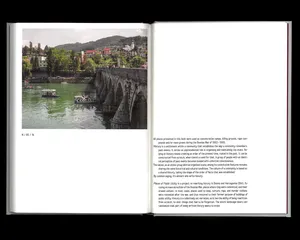
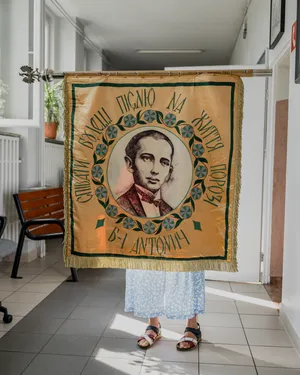
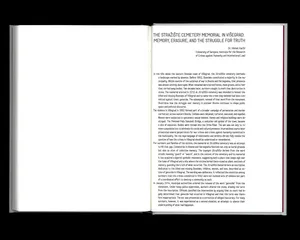
History is a settlement within a community that establishes the way a community remembers past events. It serves an unprecedented role in organising and maintaining the state. Relying on history means creating an order of the present time, rooted in the past. A group of people with an identical perception of past events becomes bonded with collective consciousness. History is a collectively set narration, so it has the ability of being rewritten from scratch, to omit things that had to be forgotten. As it is written by Dr. Hikmet Karčić in his essay accompanying the book: “In January 2014, municipal authorities ordered the removal of the word “genocide” from the monument. Under heavy police supervision, workers altered the stone, erasing the term from the inscription. Officials justified the intervention by arguing that no court had legally determined that genocide had occurred in Višegrad and that the term was therefore inappropriate.”
The discussion about suffering becomes a discussion about technicalities. A vital part of events of Bosnian War of 1992-1995 is now concealed by new historical narrations to maintain the integrity of the newly founded society of divided ethnic groups. Although three decades have passed since those events, an analysis of this conflict – the processes behind it, its causes, and its aftermath – reveals that many of its elements are universal, beyond specific times and places. Consequently, they have the potential to recur, and indeed, since then, they have been repeated, continue to be repeated, and will likely be repeated again, only within different dates and in different locations.
Places of Public Utility
Photographs: Paweł Starzec
Sequencing: Martyna Wyrzykowska, Paweł Starzec, Łukasz Rusznica
Design: Martyna Wyrzykowska
Curator: Łukasz Rusznica
Essay: Hikmet Karčić
Preparation of photographs for printing: Karol Bagiński
Managing editor: Joanna Osiewicz-Lorenzutti
Proofreading: Elaine Bingham
Texts are redacted quotations from Final Report of the Commission of Experts Established Pursuant to Security Council Resolution 780 (1992) – Annex VIII: Camps and ICTY indictments and other adjacent sources.
Printing and binding: Argraf
Printed on Garda Pat 13 Kiara and Munken Pure Rough distributed by Europapier
Typeset in Tor Grotesk by threedotstype
Copyright © for the photographs by Paweł Starzec
Copyright © for the edition by Sun Archive, Wrocław 2026
Published by Sun Archive (Archiwum Słońca)
First edition
500 copies
ISBN: 978-83-971436-5-4

Isaac Titsinghkade 6A-B
1018 CA Amsterdam
The Netherlands
Isaac Titsinghkade 6A-B
1018 CA Amsterdam
The Netherlands
© 2026 FUTURES Foundation
© 2026 FUTURES Foundation