

Trophia
Paulina Mirowska
Trophia
Nominated by Fotofestiwal Lodz, 2025
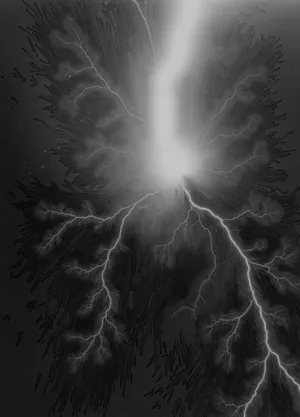
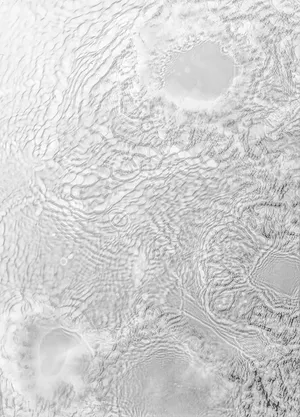
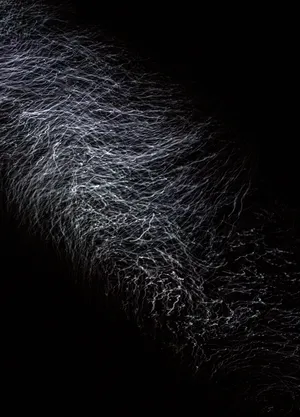
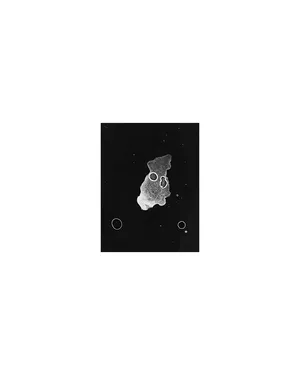
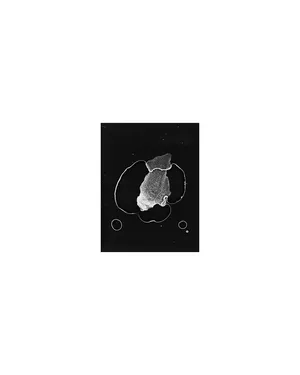
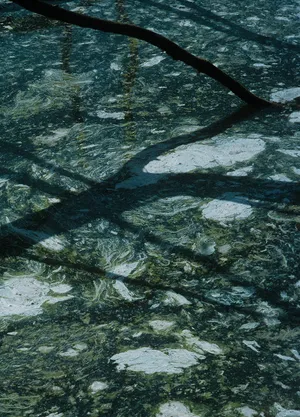
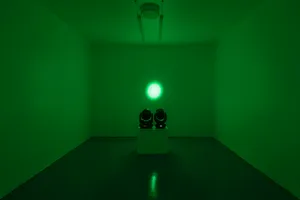
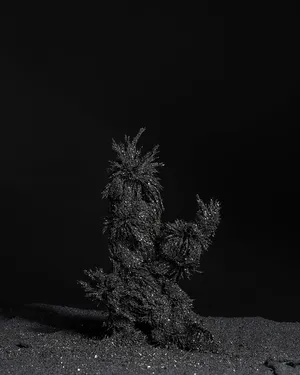
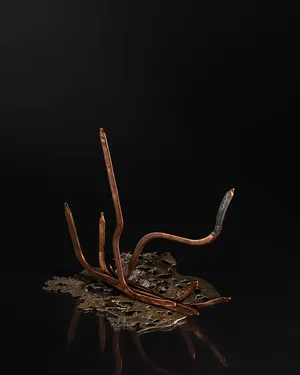
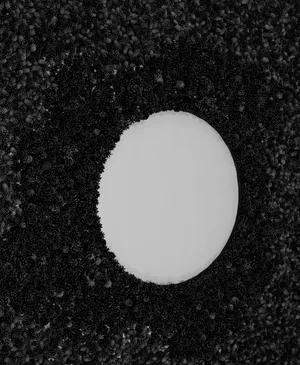
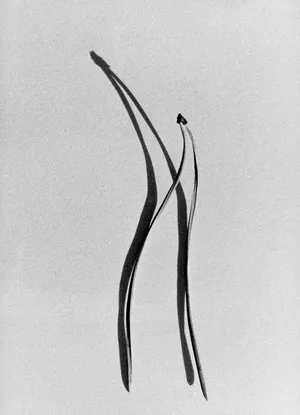
The "Trophia" project takes us back to the Precambrian era, when photosynthesis first occurred in the oceans. The central theme of the piece is chlorophyll, its sensitivity to light and the visualisation of the energy that gave rise to the first living cell and ultimately to everything that surrounds us.
The project was born out of a desire to understand what life is, in order to understand and confront the meaning of extinction. I started looking for the oldest mechanisms that determined the evolution of life on Earth. I was interested in the moment when the sun, a destructive force, became a life-giving resource through the evolution of photosensitivity. As a photographer, I was fascinated by the ability of plants to perform photosynthesis – to absorb, retain and create new value from solar energy.
The works attempt to capture, through visual language, the conditions on Earth that set the stage for the emergence of the life-giving primordial soup. For about 500 million years after the Earth formed as a planetary body, it was a lifeless period. I deconstructed the conditions that prevailed at that time – cosmic matter, water, electrical discharges, magnetic forces and solar energy photons. Photography was a pretext for imagining and experiencing these conditions, with my workshop, photography studio and theatre hall becoming my laboratory.
Everything to a greater or lesser degree is sensitive to sunlight. We feel it directly, but also indirectly through its effect on the living and non-living parts of the Earth. Through its energy, all organisms are connected by a trophic network.
Trophia tells the story of the sensitivity of materials, organisms, phenomena, but also the sensitivity of ourselves - to ourselves, others and more broadly to everything around us.
The title of the project refers to the content of matter in the ecosystem. This system, consisting of living and non-living elements in relationship with each other, drives abundance and sustains life on earth.




Reduced
Paulina Mirowska
Reduced
Nominated by Fotofestiwal Lodz, 2025
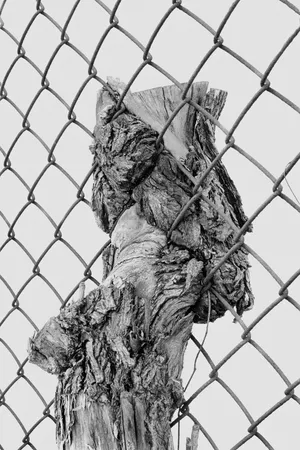
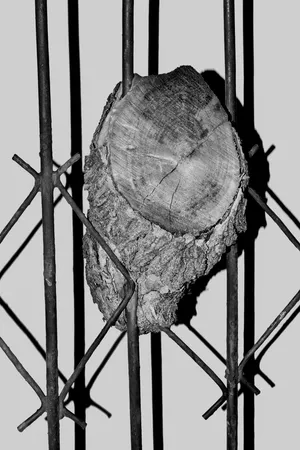
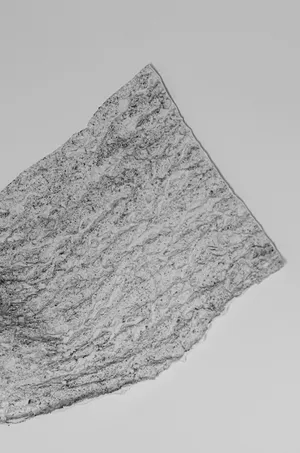
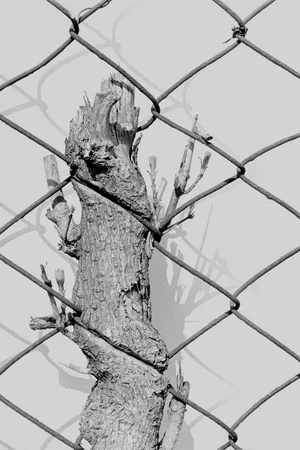
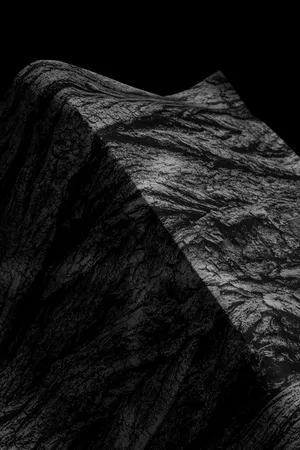
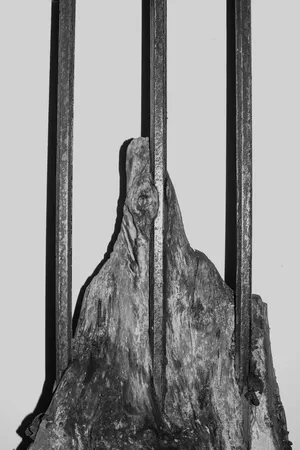
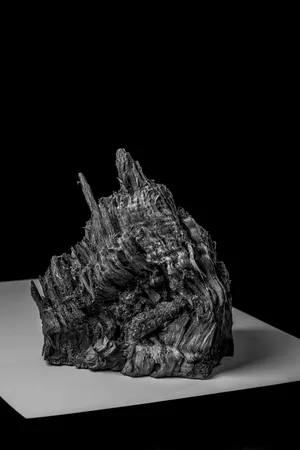
The growing density of infrastructure is displacing trees from other areas, and the space in which they exist is often limited to a small niche among buildings, concrete and glass. The work is a collection of visual impressions about trees found in urban space. Each of the elements of the work is the result of searches, associations and refections on them. The collection was created using various techniques (photography, installation, sculpture), and the individual images illustrate different aspects of the problem. They are united by a monochromatic style, reducing real objects to a symbolic role. „ I pass fenced trees, pressed in, covered with concrete. Leaning on facades, embedded in metal. Branches hugging the glass, roots pushing up the sidewalks. Some trees grow wild on the roofs of apartment blocks, in recesses of protruding cornices, on tombstones. Others will find themselves on the fence in a few years and will join those who grow there for years. There are many trees in the park decorated with reflective symbols - I check the internet to understand the meaning. Branches closed in metal stocks on the street. I wonder what will happen when their diameter exceeds the size provided by the locksmith. In some places they hang dry on fences, resembling hunter's trophies. Small, big, fat, old, young. Truncated big branches for safety. Artificially straightened branches. Designated places "grow here", "reach no larger than", "look nice", "do not shed leaves.

Paulina Mirowska
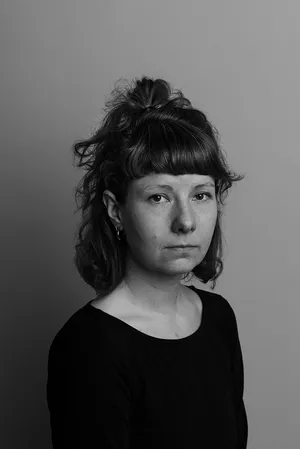
Visual artist, burned-out climate activist, educator. Born in 1987 in Warsaw, Poland. Graduate of the University of Arts in Poznań , majoring in Photography. She heads the Second Studio of Photography (together with Dr. Mariusz Filipowicz) and the Studio of Photography Basics at the Faculty of Graphics of the Academy of Fine Arts in Warsaw. A member of the Pracownia Wschodnia Association, the Program Council of the Pracownia Wschodnia Gallery, and the P.H.U. Sitex collective. She is interested in grassroots practices of self-organisation and resistance. She navigates the conceptual realm that exists both within and beyond the binary oppositions foundational to the construction of Western civilization (‘culture versus nature’ and ‘art versus science’). She employs various strategies – visual art, academic research, activist experience – to transcend, deconstruct and rethink these binaries, bringing seemingly heterogeneous fi elds of knowledge to life. Although her practice is based on abstract ideas, the artist always remains close to material reality, focusing on ways of understanding (and feeling) how parts of the ecosystem live and die and how they affect each other.
ProfessionPhotographer, Visual Artist, Educator, Activist, Academic
IdentityWoman
LocationPoland, Eastern Europe
PracticeMultidisciplinary
TopicsPolitics, Climate crisis
CityWarsaw
Nominated byFotofestiwal Lodz
Year2025
Close

Address
Isaac Titsinghkade 6A-B
1018 CA Amsterdam
The Netherlands
Address
Isaac Titsinghkade 6A-B
1018 CA Amsterdam
The Netherlands
© 2026 FUTURES Foundation
© 2026 FUTURES Foundation
Close