Artist
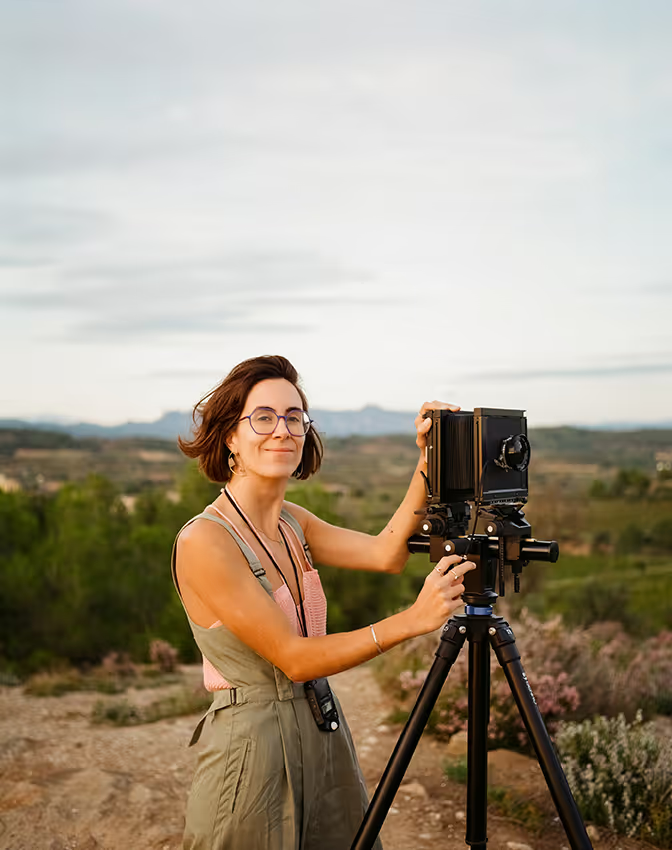
Paula Artés
El cabal del riu [The River’s Course]
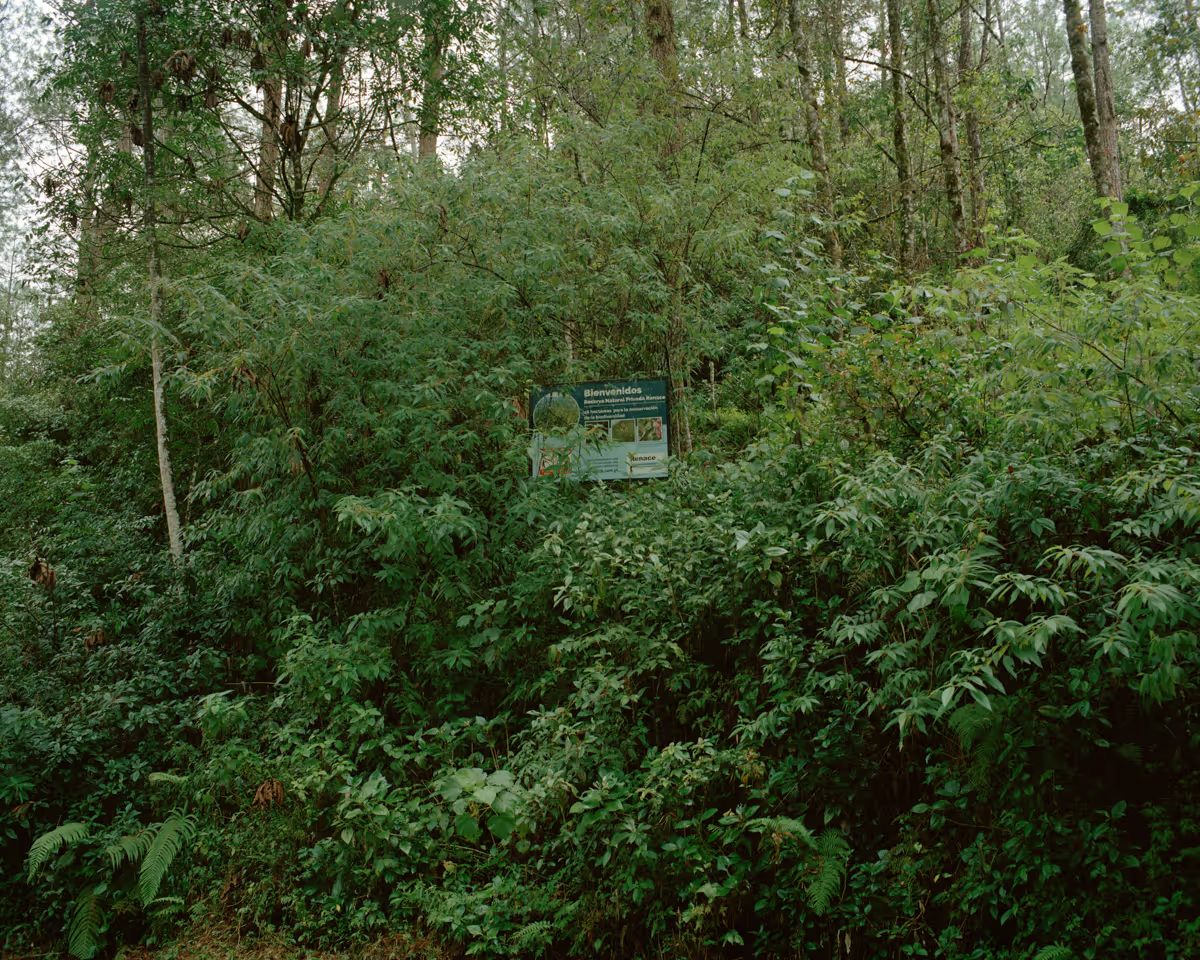
El cabal del riu [The River’s Course] continues Paula Artés’s long research into hidden histories and power structures, developed through collaborative work with communities whose testimonies are absent from institutional archives. The project examines the RENACE hydroelectric plant on Guatemala’s Cahabón River. For more than two decades, it has restricted access to drinking water for Q’eqchi’ Maya communities along more than thirty kilometres of river. This must be understood within a long history of expropriation and territorial reordering. From the decline of indigo and cochineal to the imposition of coffee plantations and the coercive policies of the Liberal Reform, Guatemala has developed a model that subordinates land and resources to external interests. This pattern, inherited from colonial logics, persists today.
The RENACE complex is a paradigmatic example. Neoliberal reforms in the late 1990s and early 2000s enabled privatization and large-scale concessions. Corporación Multi Inversiones (CMI) and Cobra (ACS) shaped a legal framework to their advantage. Opaque agreements and the absence of consultation created dependence and systematic rights violations.
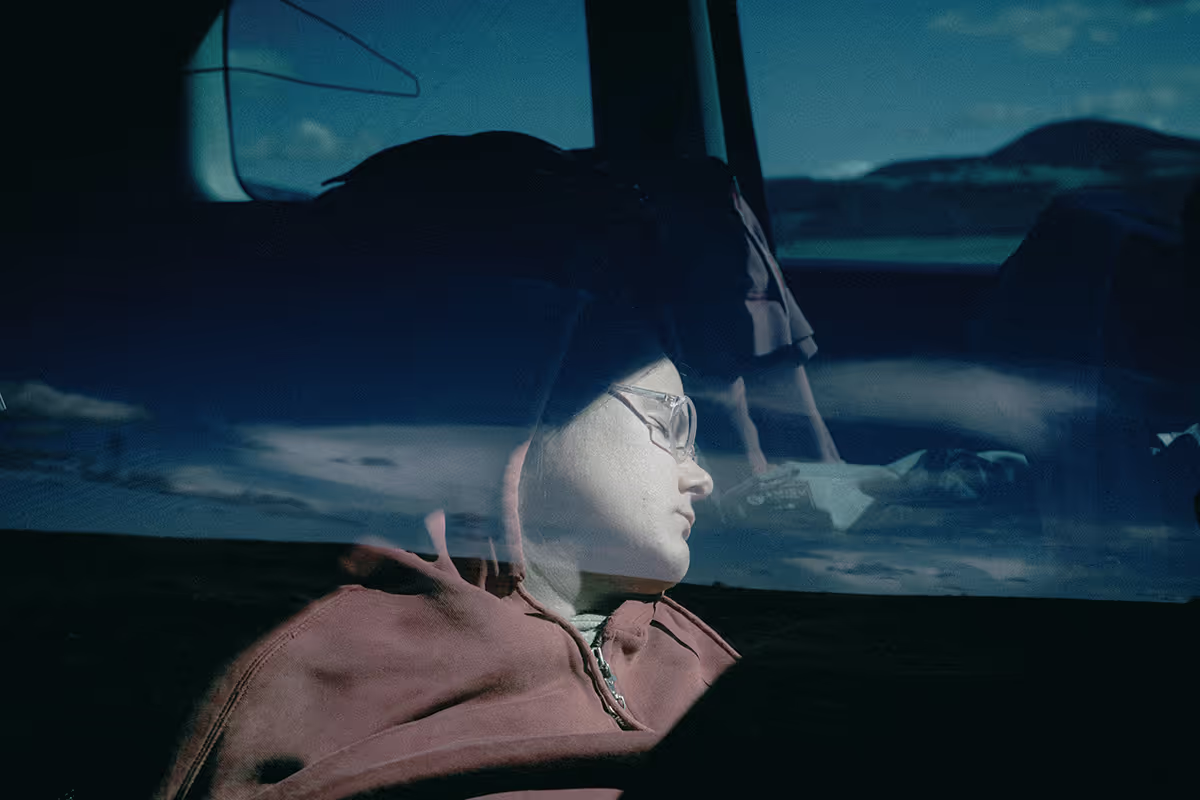
Water—understood by Maya peoples as a living being—becomes the project’s symbolic axis. Artés’s analogue photographs depict pipeline routes, retaining walls, eroded embankments, and abandoned machinery. These traces reveal irreversible
transformation and industrial control while exposing propaganda narratives of progress.
Developed with Q’eqchi’ leader Bernardo Caal Xol and local communities, the project continues Artés’s inquiry into how power operates through mechanisms that appear neutral but produce profoundly unequal effects. Her work functions as a device of visibility, revealing historical continuities of dispossession and resistance.
Carolina Ciuti
The five projects proposed articulate distinct positions and visual approaches, yet converge in their attention to how images operate within systems of memory, power, identity, and historical narration. Together, they reflect photography’s capacity to function not only as representation, but as a critical device through which lived experience, structural violence, and affective memory are negotiated and reconfigured.
Cristóbal Ascencio’s Las Flores mueren dos veces engages photography as a space for technological, emotional, and mnemonic intervention. Revisiting his family archive and his father’s last garden following the delayed revelation of his father’s suicide, Ascencio employs glitch, photogrammetry, and virtual environments to deconstruct and recompose inherited images and narratives. By manipulating the structural data of photographs, he produces visual metaphors for corrupted memory, while the three-dimensional reconstruction of the garden addresses memory’s plasticity and persistence. The project unfolds across code-altered analogue images, digitally generated plants, and an immersive VR environment, establishing a dialogue between absence and continuity, and between personal loss and technological mediation.
In Padre, Marisol Mendez undertakes a personal and political excavation of masculinity through a feminist lens. Rooted in family correspondence and generational memory, the project traces how patriarchal identity is inherited, performed, and contested. Through staged portraits, archival interventions, and symbolic gestures, Mendez exposes the contradictions embedded within machismo: tenderness and domination, care and violence, presence and absence. Motifs such as hunting operate both literally and metaphorically, articulating structures of control while images of fragility and decay unsettle hegemonic ideals. Padre opens a reflective space in which masculinity is not only critiqued, but can be reimagined.
Paula Artés’s El cabal del riu (The River’s Course) continues her long-term investigation into hidden histories and extractive power structures through collaborative, community-based methodologies. Focusing on the RENACE hydroelectric complex on Guatemala’s Cahabón River, the project reveals how neoliberal reforms and colonial continuities have enabled systematic dispossession of Q’eqchi’ Maya communities. Artés’s analogue photographs trace infrastructural scars, such as pipelines, retaining walls, abandoned machinery, while centering water as both a living entity and a site of conflict. Developed in dialogue with Bernardo Caal Xol and local communities, the work functions as a device of visibility, exposing mechanisms that appear neutral yet produce profound inequality.
With Esto es España, Sergio Pontier reimagines Spanish identity by placing Black presence at the centre of the national narrative. Combining documentary, fashion, and intimate portraiture, the book reframes cultural symbols like flamenco, religious iconography, or football, through Afro-descendant lived experience. Shot primarily on film, the work builds a visual archive that is both personal and political, embracing multiplicity and asserting visibility, belonging, and pride as foundational to contemporary Spanish identity.
Yunping Li’s ongoing Self-Portraiture Performances, initiated with 回家 (huí jiā), expands photography into a performative, site-specific practice. Through repeated live self-portrait actions activated within exhibition contexts, Li collapses distinctions between image and performance, documentation, and gesture, private and public. By inviting audience participation, the project foregrounds the role of the external gaze in the construction of self, addressing transitioning as a collective, relational experience. Photography here becomes both the site and the trace of negotiation, embodying identity as process rather than fixed representation.
Through these nominations, Foto Colectania affirms its commitment to supporting practices, particularly within the Iberian and Latin(x) ecosystems, that mobilize photography as a critical, situated, and imaginative field, one capable of holding complexity, contradiction, and long-term inquiry.
The members of the jury:
Elisa Medde - Foto Colectania Director
Irene de Mendoza - Foto Colectania Artistic Director