
Professional
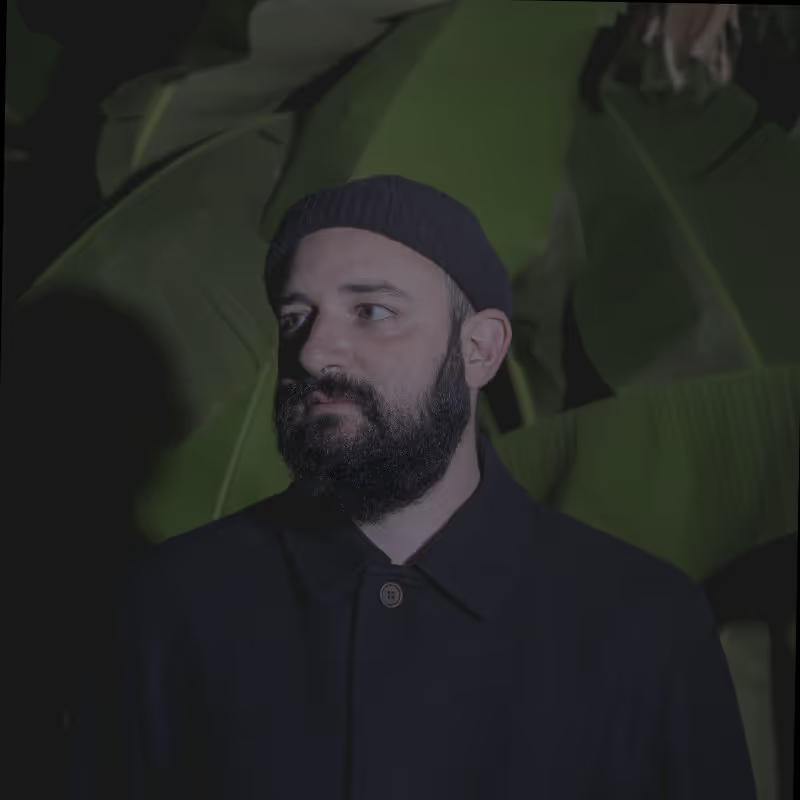
Salvatore Vitale
like to explore

However, the themes in my artistic practice today are still characterised by a tightly structured childhood, youth and apprenticeship: in my work, I have been exploring the concepts of collectivity and intimacy for several years. I am always looking for liberating and solidary acts in performative moments and arts production. My image- and sound-based practice reveals my great affinity for technology, the exploration of boundaries and needs in dialogue and the creation of trusting connections and learning spaces in my collaborations.
As a child of the working class, I am concerned with my own role as an artist in society and what (political) room for manoeuvre this opens up for me. The problem of self-exploitation, especially - but not only - with a body read as female, is a recurring theme in my artistic practice.
Since 2019, the Salon Vert has been a network of artists, a laboratory for sound research and a place for interdisciplinary dialogue. The Salon Vert has found a new home in my studio in Lichtensteig in 2023. I am also co-founder of the audiovisual Glitch Festival in St.Gallen and music editor at the community radio station Stadtfilter in Winterthur.
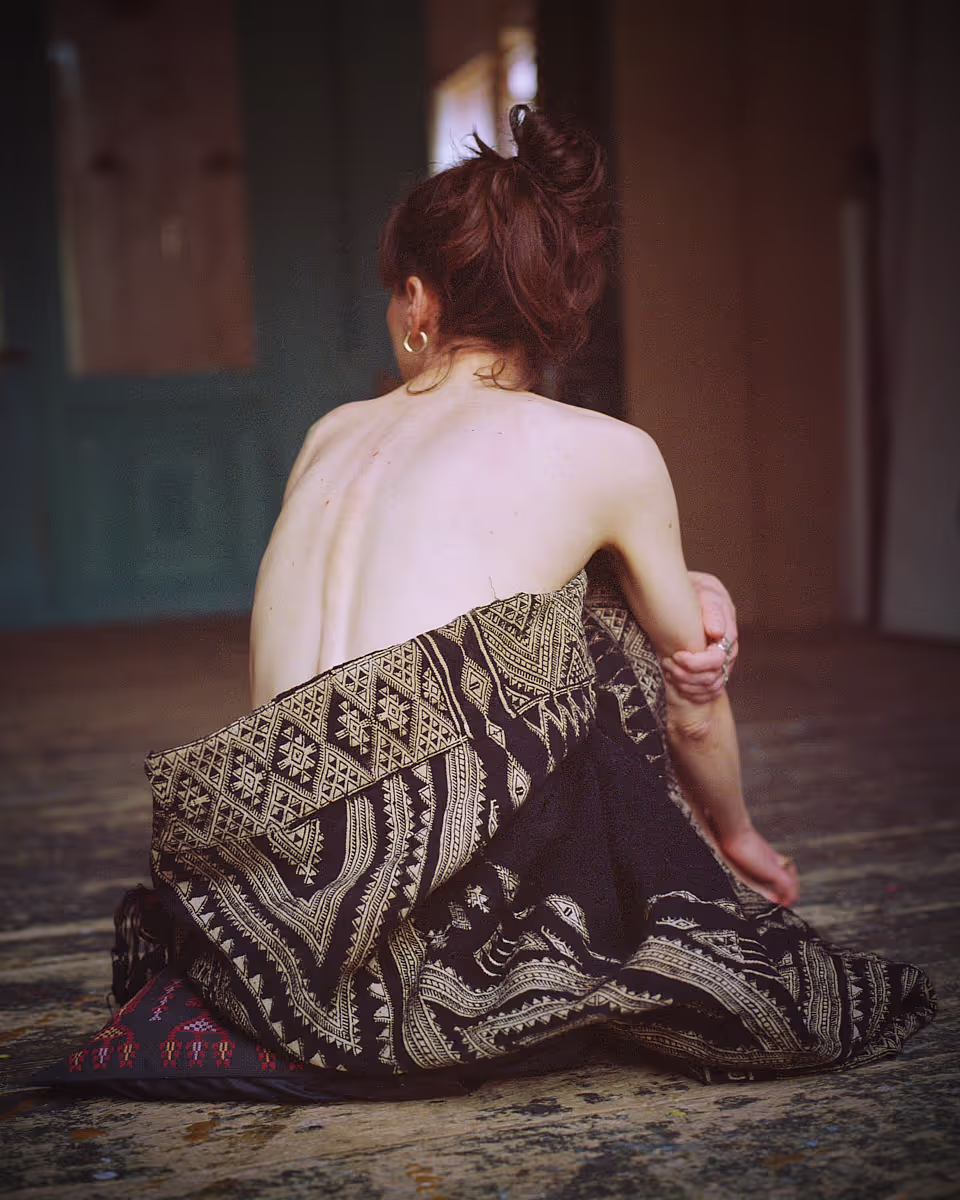
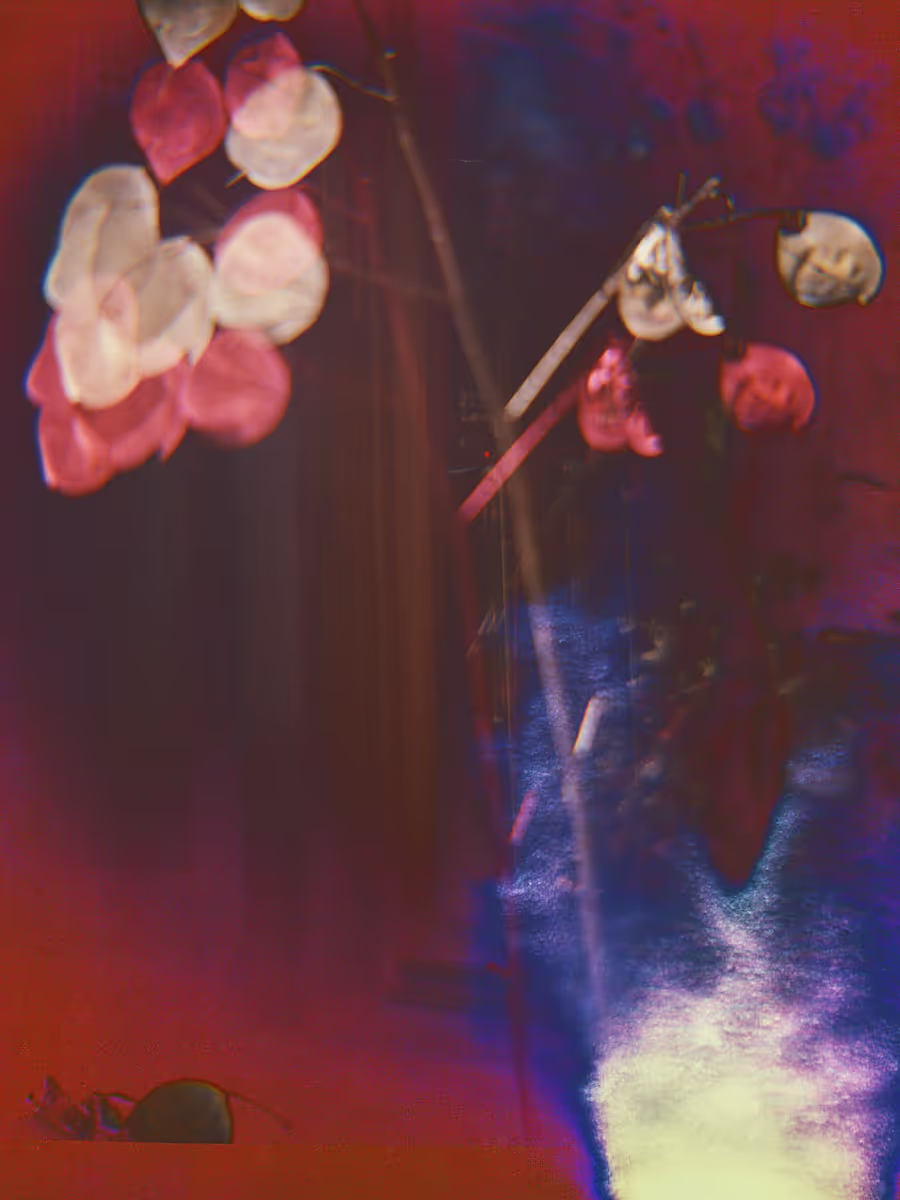
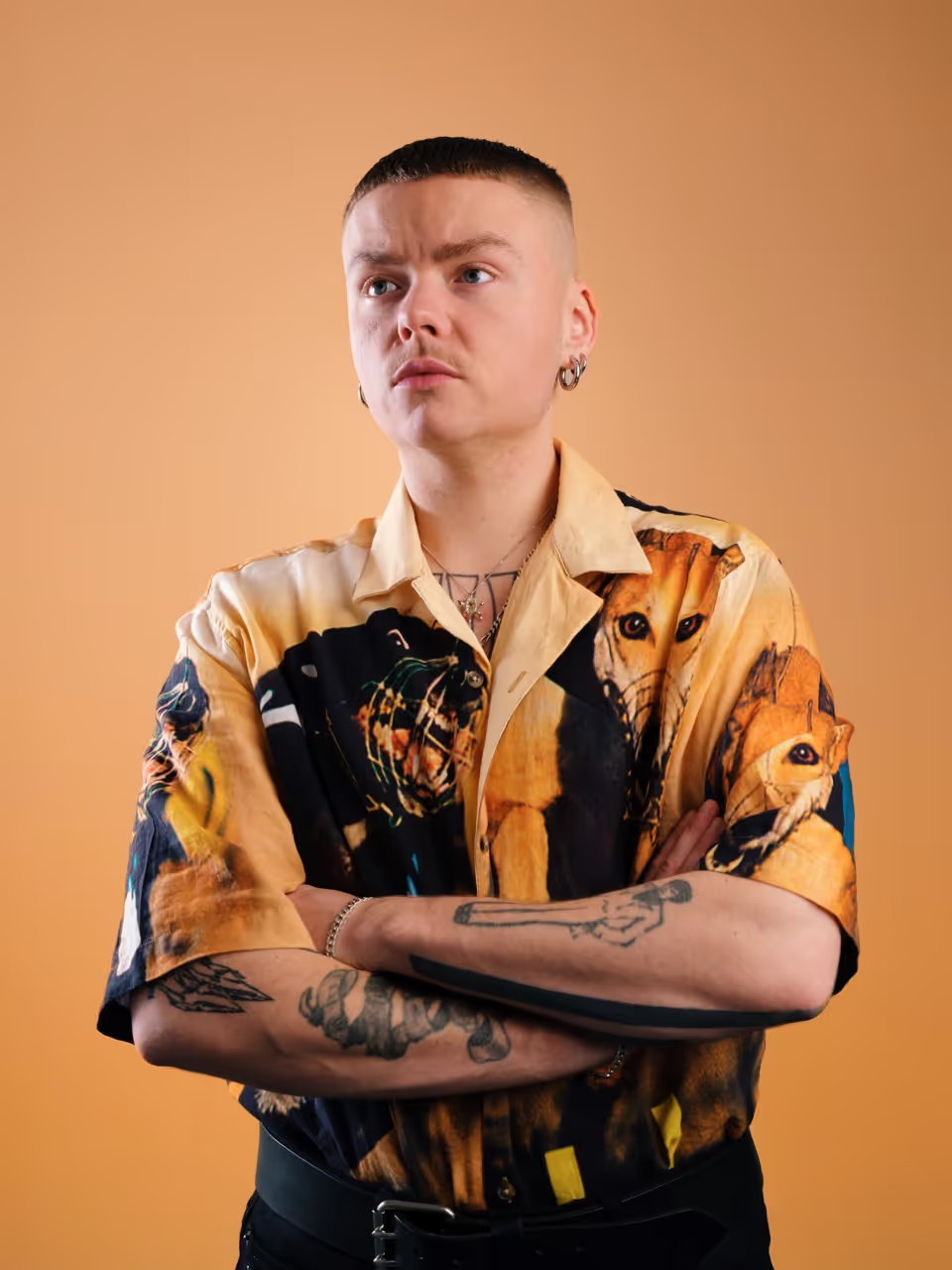
Julius Thissen (1993, the Netherlands) lives and works in Arnhem, NL. Their work investigates themes of community and representation, masculinity, sports, and competition. Originating from their background as a performance artist, Thissen's photographic practice aims to create narratives that explore the fine line between performing and failing. These themes are closely tied to contemporary performance-driven culture and the influence of societal expectations on behavior. Their work is deeply rooted in personal experiences as a genderqueer and transmasculine individual. Thissen strongly opposes the restrictive and often binary narratives imposed on transgender and queer individuals.
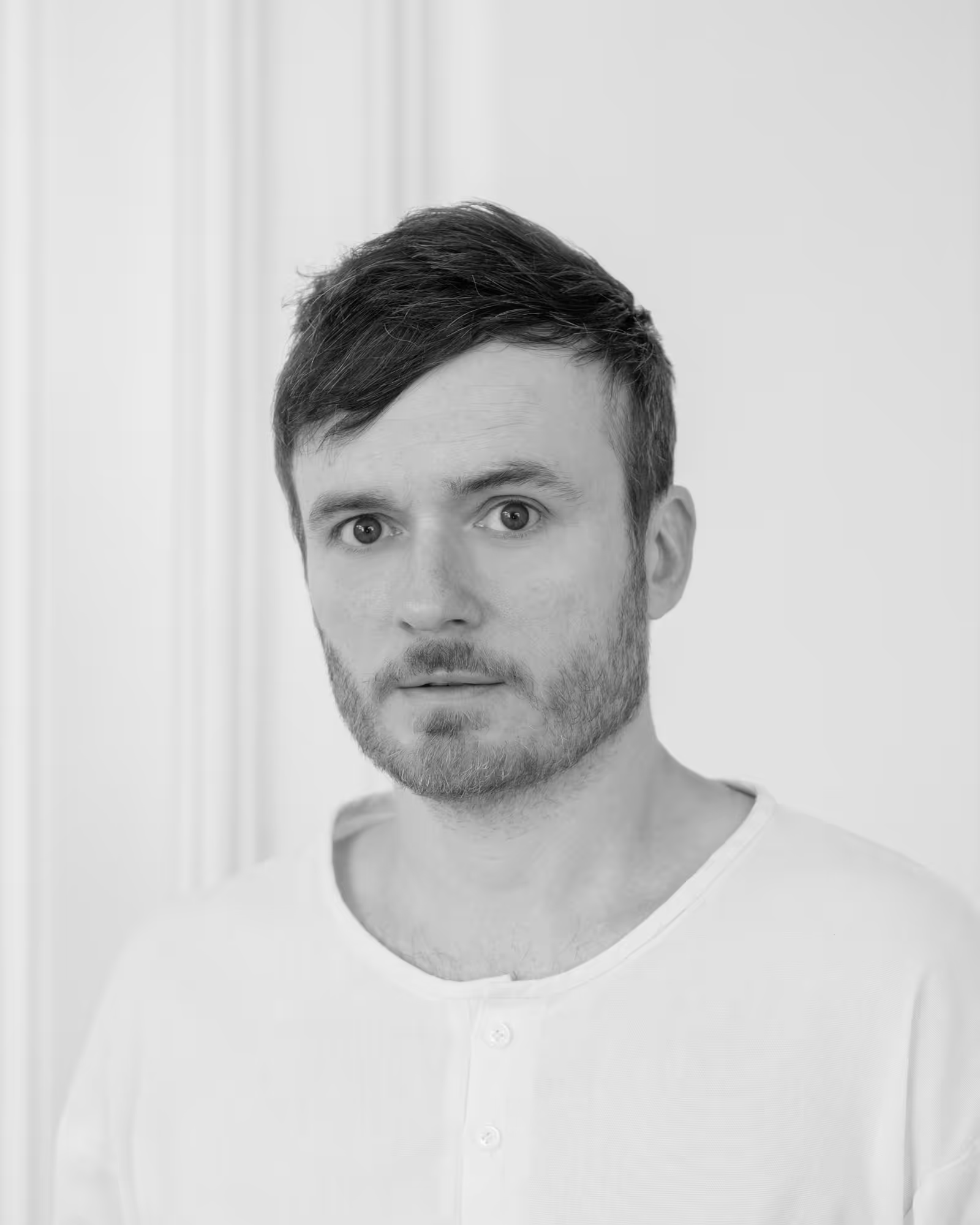
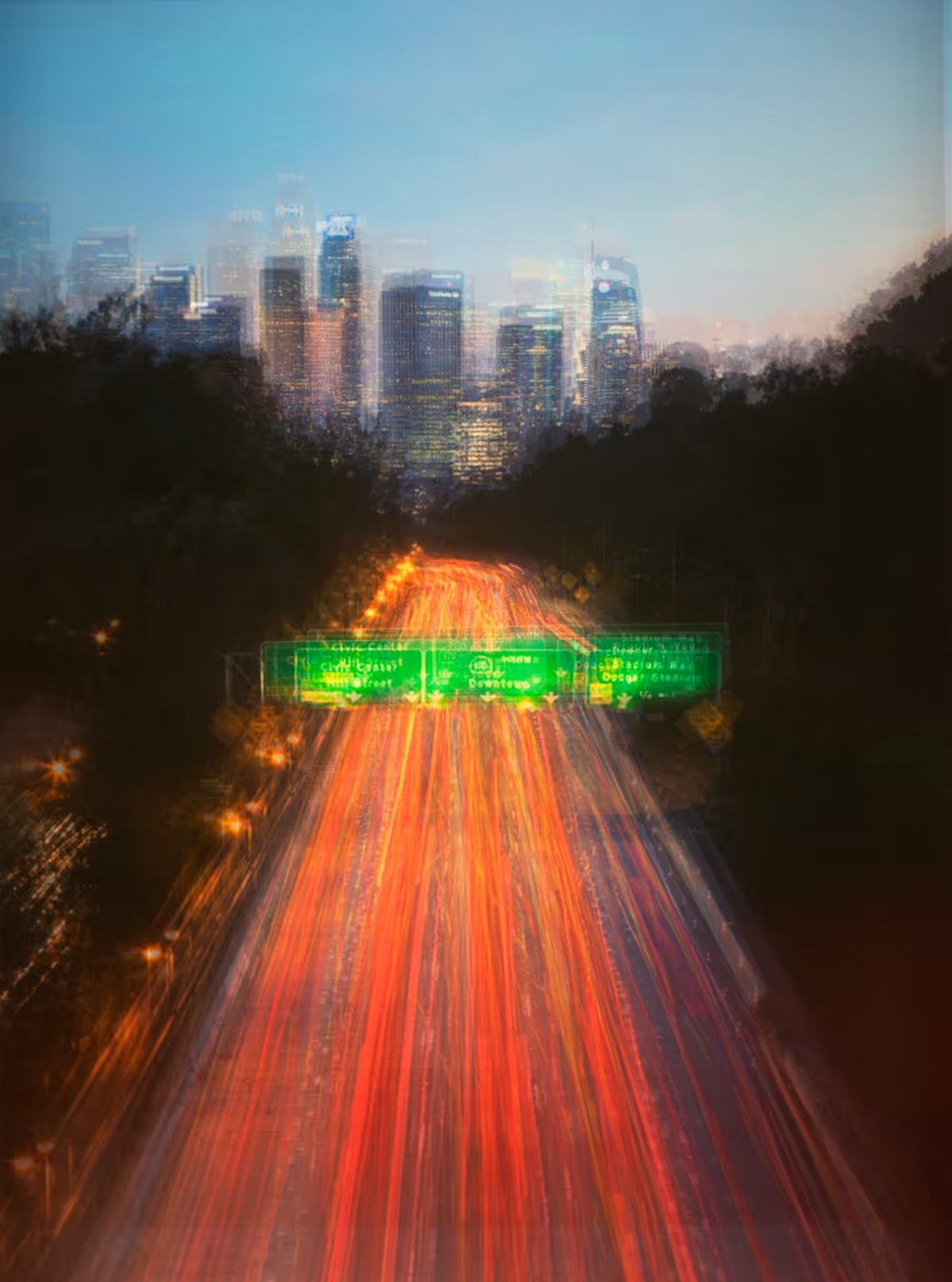
Thissen has been nominated for the Hendrik Valk Prize, Arnhemse Nieuwe, and the Warsteiner Blooom Awards. In 2023, they received the Artist Basis Fund and, more recently, a Mondriaan Fund Artist Project Grant for their new project Bones of Graphene, Skin of Kevlar.

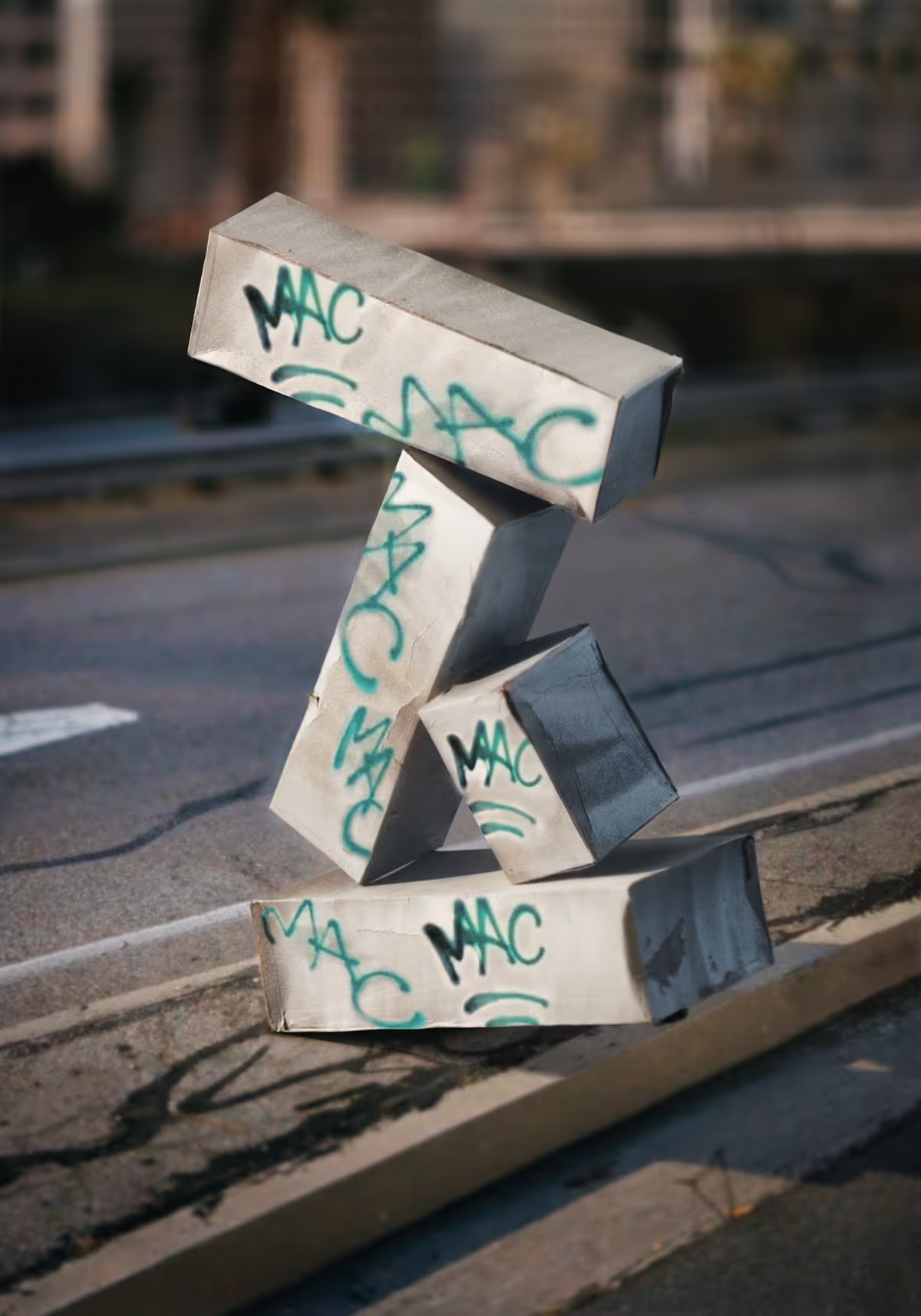
Adi Tudose (b. 1987, Bucharest) is an artist-photographer based in Budapest. After completing his studies at The National University of Theatre and Film, he further expanded his artistic vision through experiences in Milano. He is pursuing an MA in Photography at Moholy-Nagy University of Art and Design, where his practice continues evolving. For him, the camera is far more than a tool—it is a medium through which he connects with the world around him. The streets become dynamic, ever-changing spaces where unpredictable encounters unfold. Immersing himself fully in these environments, Tudose approaches his subjects with empathy and sensitivity, capturing their lives with care and revealing emotional depth and vulnerability.
Tudose can transform fleeting, transient moments into cohesive compositions, bringing order and harmony to the everyday. Through this process, he taps into the subconscious, offering viewers a sense of unity within the chaos. His seamless blending of form and content sets him apart, creating simple yet mysterious representations. His work is characterized by cohesive framing, a rich interplay of diverse elements, and tuned figure-to-ground relationships. Tudose’s work offers an invitation to reflect on what photography can reveal about the human condition. Each frame carries layers of emotional and sociological insight, capturing the essence of his subjects while creating space for the viewer to connect with them on a personal level. Each photograph becomes more than a visual representation; it transforms into a deeply felt emotional experience.
Empathy and vulnerability lie at the core of Tudose’s creative process, enabling him to form deeper connections with his subjects and uncover meaningful relationships that might otherwise remain hidden. His work seeks to evoke genuine emotions, delving into themes of social and gender representation while fostering a sense of belonging. In doing so, he transforms emotional disconnection into moments of peace and truth.
As an artist, Tudose is committed to long-term projects that tell meaningful stories, ones that challenge him to confront fear, embrace vulnerability, and transform his personal experiences into shared human truths. His photography doesn’t just document—it transcends, offering symbols of connection and hope in a chaotic world.
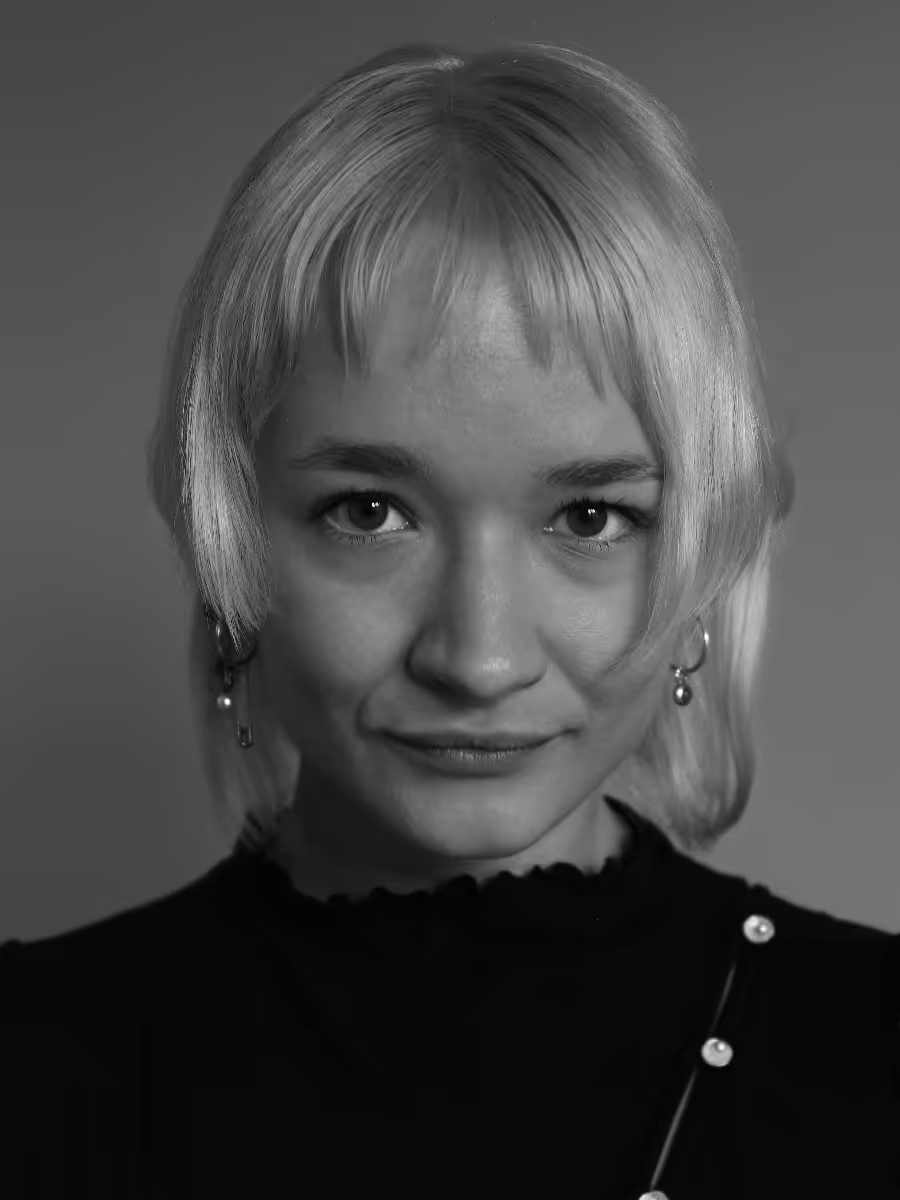

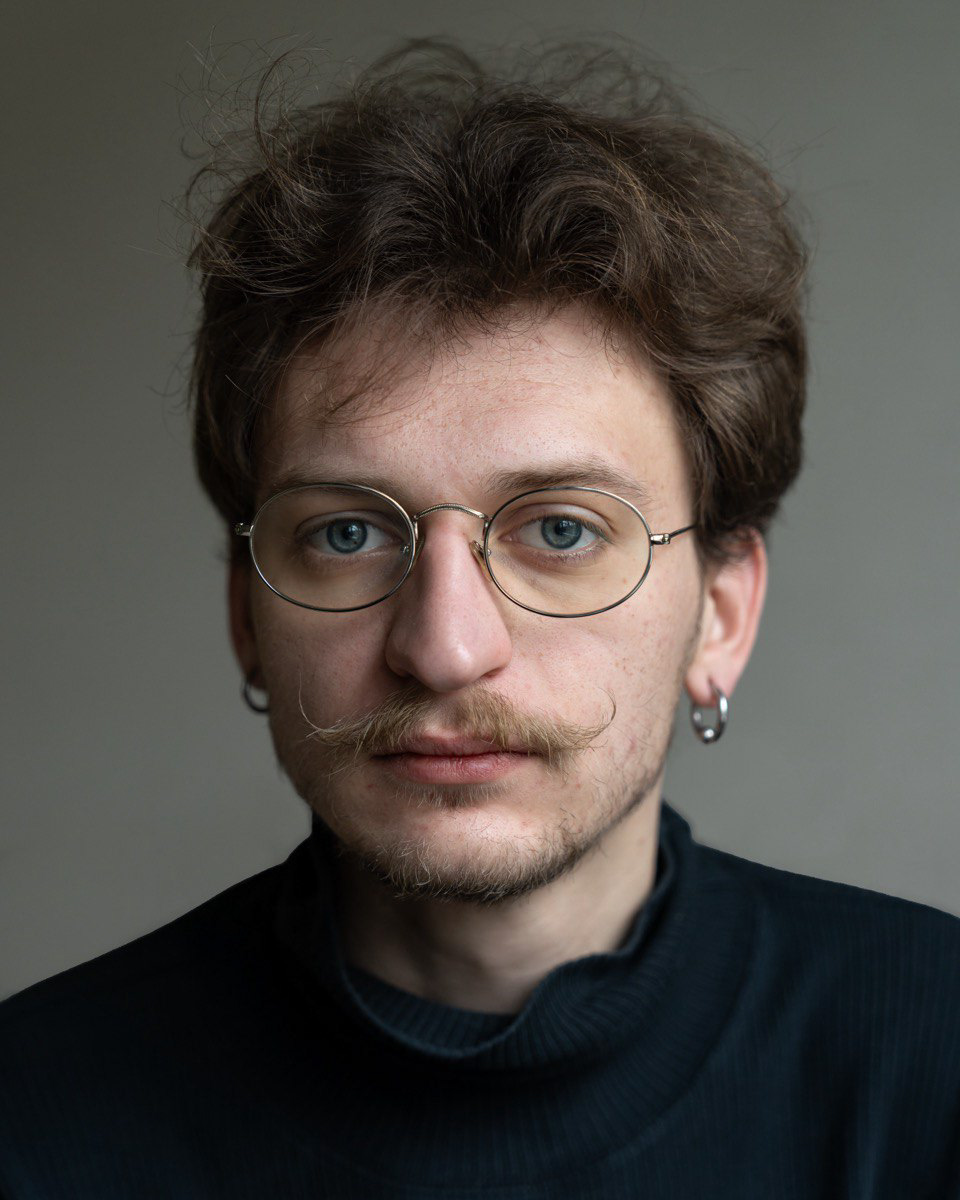


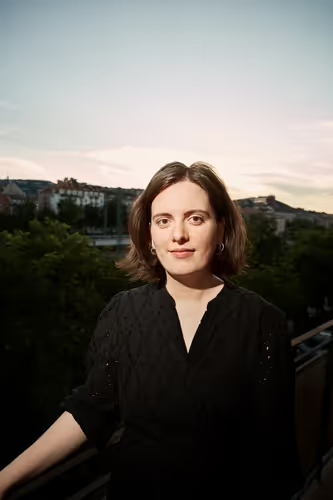
Emese Bíborka Szakács studied at the Institute of Communication and Media Studies at Pázmány Péter Catholic University. She is currently pursuing a degree in Art History at the University of Pécs.
Her interests focus on the past and present of experimental photography, as well as the cultural role of new media. As a staff member of the Robert Capa Contemporary Photography Center, she is involved in organizing international exhibitions and professional programs. She also works as a curator and writer within the frameworks of the Studio of Young Photographers (FFS) and the Studio of Young Artists’ Association (FKSE), contributing to the professional development and realization of several exhibitions in recent years.
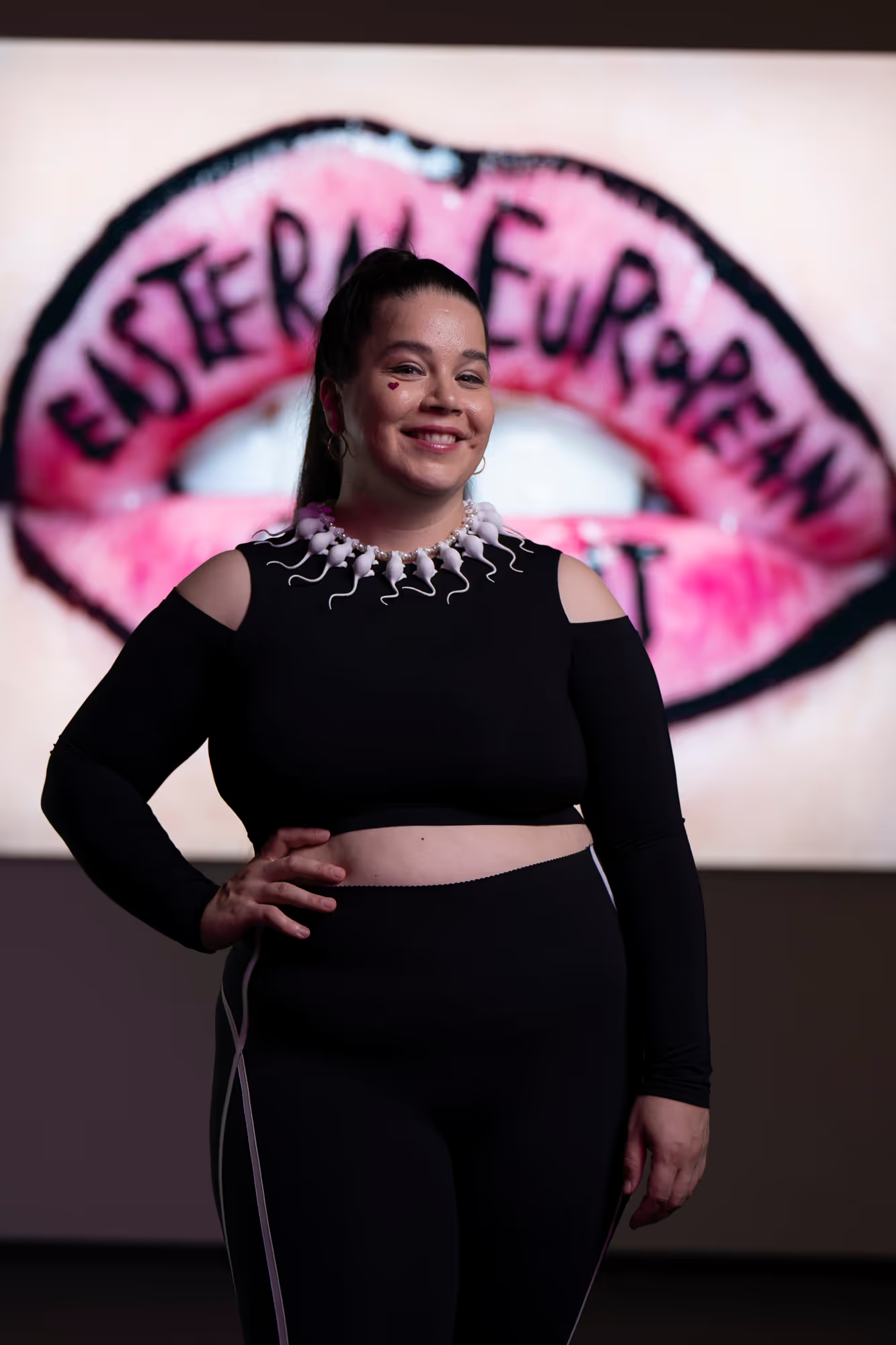
Emese Mucsi is a Hungarian-born curator, and art critic. Emese curates exhibitions where photography is interpreted in the context of contemporary art and works with artists who have an expanded idea of photography and produce photo-based works. Her projects bring together artists and photographers with photojournalists, writers, editors, and other thinkers to experiment with new approaches to photography. She graduated from the Faculty of Contemporary Art Theory and Curatorial Studies at the Hungarian University of Fine Arts in 2013, and from the Faculty of Hungarian Literature and Linguistics at the University of Szeged in 2017. She is a member of the curators’ collective BÜRO imaginaire since 2012. Since 2013, she ran projects as a freelance curator. From 2014 to 2018, she was the Editor-in-Chief of Artmagazin Online. Emese is a curator of the Robert Capa Contemporary Photography Center, Budapest since 2018. She is the member of Global Photographies Network since 2020. She founded DOXA exhibition space and editorial den in 2022. She is doing her PhD in the Film, Media, and Contemporary Culture PhD program at Eötvös Loránd University. Emese is a guest lecturer at the Moholy-Nagy University of Art and Design (2023) and the University of Szeged (2024).
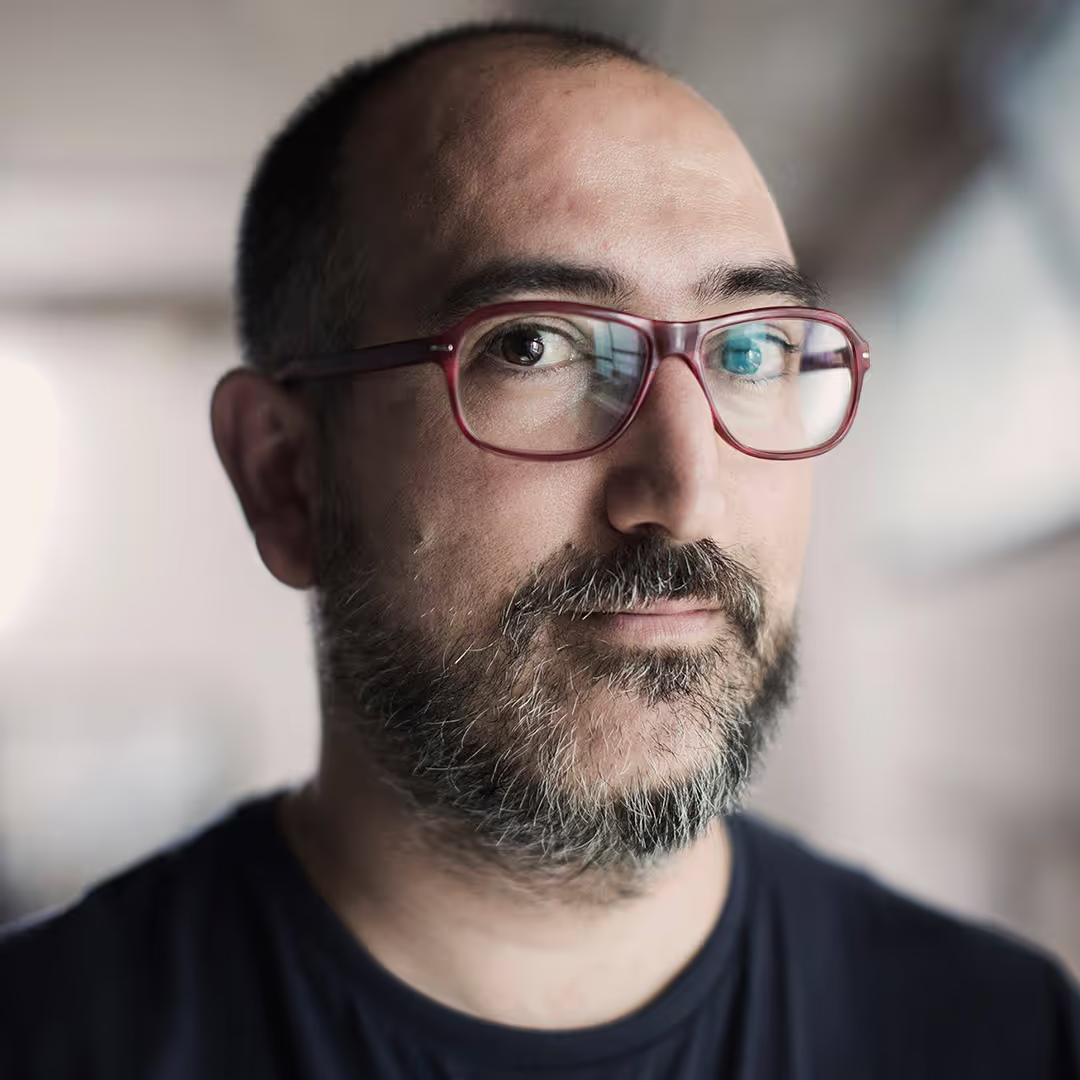
Ángel Luis González Fernández is a designer, artist, and curator supporting engaging visual arts practices, winner of Business to Arts David Manley Emerging Entrepreneur Awards 2011.
His work manifests through PhotoIreland, which he founded in 2010 to stimulate a critical dialogue on Photography. He devises curatorial projects placing conversations in the public realm around visual culture, critical thinking. These include events (PhotoIreland Festival, Halftone Print Fair, arts residency How to Flatten a Mountain, and New Irish Works), a cultural hub (The Library Project: Ireland’s Art bookshop, host to a unique resource library of photobooks and a productive arts programme), publishing projects that distribute inexpensive access to local practices, research projects (Critical Academy: examining contemporary art practices). He works collaboratively with a growing network of organisations, noticeably through ambitious Creative Europe partnerships.
During the Summer 2020 lockdown he launched the critical publication OVER Journal, now distributed globally. He received the Arts Council of Ireland’s Visual Arts Bursary to deepen research on the broad historical and specific artistic context of Photography in Ireland, to curate an ambitious survey exhibition in PhotoIreland Festival 2022 and to publish a series of publications on the matter. He regularly contributes to publications such as the forthcoming The Routledge Companion to Global Photographies, edited by Lucy Soutter, Duncan Wooldridge.
See some of his Graphic and Web Design work in the 100 Design Archive.
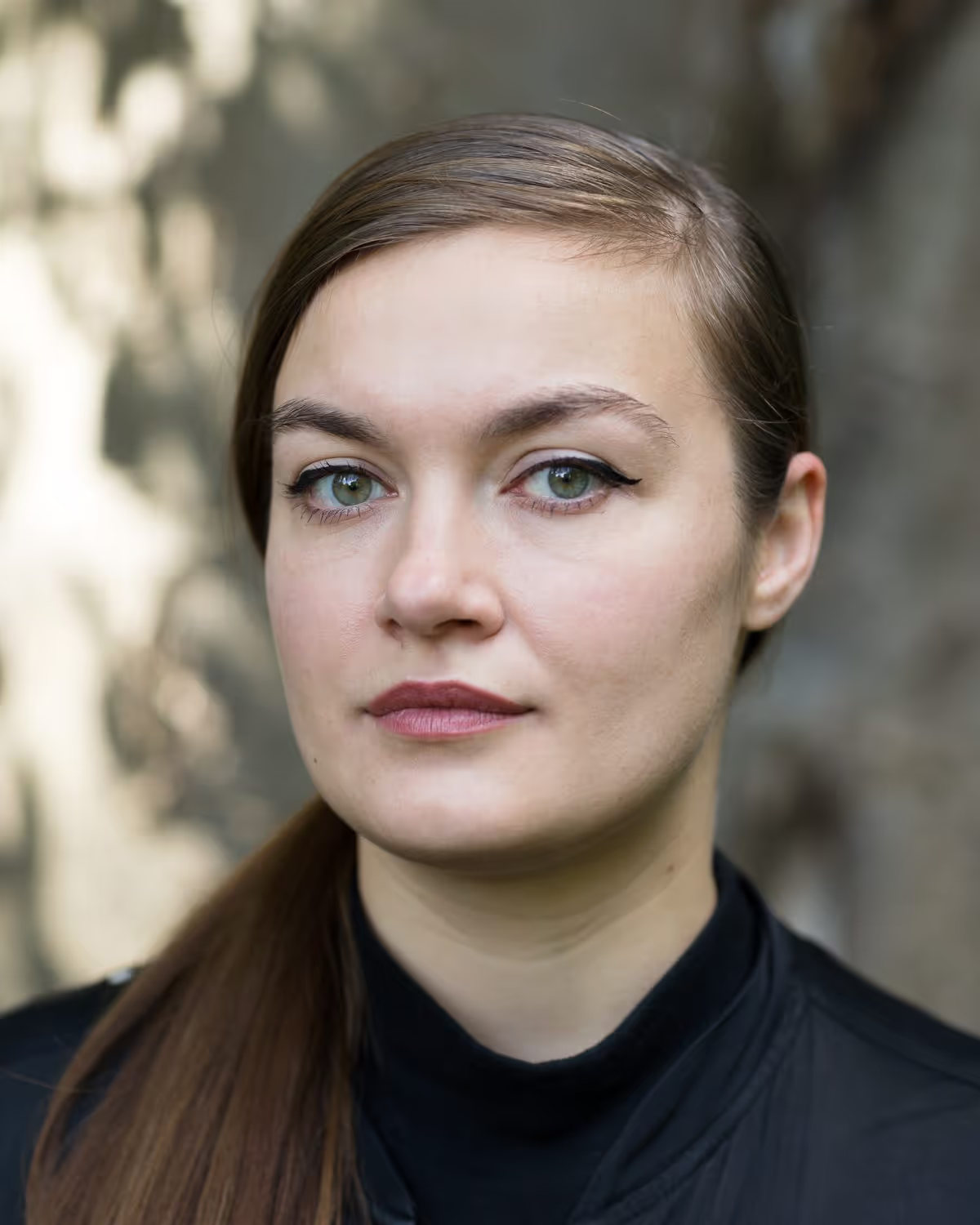
Julia Gelezova is a Cultural Producer and Curator, specialising in contemporary lens-based practices. She is General and Project Manager for PhotoIreland, producing events throughout the year like the annual PhotoIreland Festival and Critical Academy, while collaborating on ambitious projects like Creative Europe Photography Platforms—Parallel and Futures. Julia is co-editor of OVER Journal: The Critical Journal of Photography and Visual Culture for the 21st Century. In 2024, she has founded vicinities.network - a peer network for Visual Arts curators and professionals based in Ireland.
She has ample experience in producing exhibitions and events, including curatorial work and project management, has vast and successful experience in personal and collective application writing for bodies like the Arts Council of Ireland and local councils. She has participated in portfolio reviews, acted as visiting lecturer, and also worked in an editorial capacity and translation for artists and other arts professionals, including work for The Routledge Guide to Photography and Visual Culture. Most recently, she curated the 2021 edition of PhotoIreland Festival and was the Centre Culturel Irlandais cultural producer resident 2022. She is a member of the AICA International Association of Art Critics.

Danaé Panchaud is a Swiss exhibition curator, museologist and lecturer specialising in photography. She has been the director of the Centre de la photographie Genève since 2022, after serving from 2018 to 2021 as director and curator of the Photoforum Pasquart in Biel, Switzerland. She trained in photography at the Vevey School of Photography before completing a bachelor’s degree in visual arts with a specialisation in curatorial practices at Geneva University of Art and Design. She later studied museology at Birkbeck, University of London, earning a master’s degree in 2017. She has held positions in several Swiss institutions in the fields of contemporary art, design and science, including the Centre d’Art Contemporain Genève, where she was a research associate from 2007 to 2012, the Gallery SAKS in Geneva in 2012-2013, the Fondation Verdan in Lausanne as scientific collaborator, and the mudac in Lausanne, where she was in charge of the public relations from 2012 to 2017. As a free-lance curator, she has curated exhibitions for several Swiss and international museums, independent spaces and galleries since 2012. She regularly writes texts for monographs of contemporary artists, exhibition catalogues, and thematic publications such as Flora Photographica, co-authored with William Ewing and published by Thames & Hudson in 2022. She was a lecturer at the Vevey School of Photography from 2014 to 2018, and regularly lectures at art and photography schools in Switzerland. In 2023, she joined the teaching faculty of the CAS in Theory and History of Photography at University of Zurich.
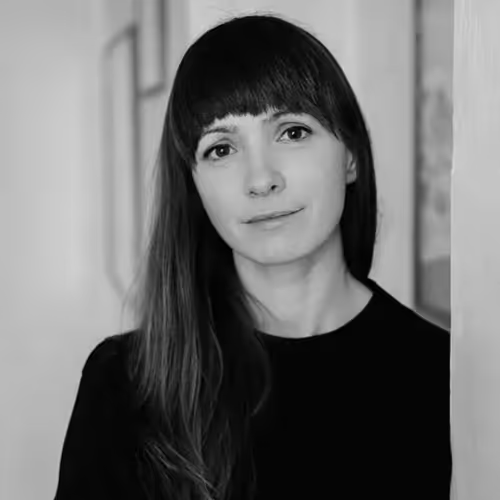
Iveta Gabaliņa (1979) is a curator, artist and educator. She has studied photography at the studio of Andrejs Grants, at Bournemouth Art Institute, and in the MA programme at Alto University in Helsinki. Her work has been exhibited in Latvia and internationally, including at C/O (Berlin, Germany), GESTE (Paris), and Williams Tower Gallery (Houston, USA). Gabaliņa has participated in photography festivals in Singapore, Hanover, and elsewhere. Her work is included in the collections of the Victoria & Albert Museum, Geste Paris, and the Deutsche Börse Art Collection.
Since 2008 she has been part of ISSP team, responsible for numerous educational and curatorial projects. In 2018 she founded ISSP Gallery - an exhibition space dedicated to contemporary photography.
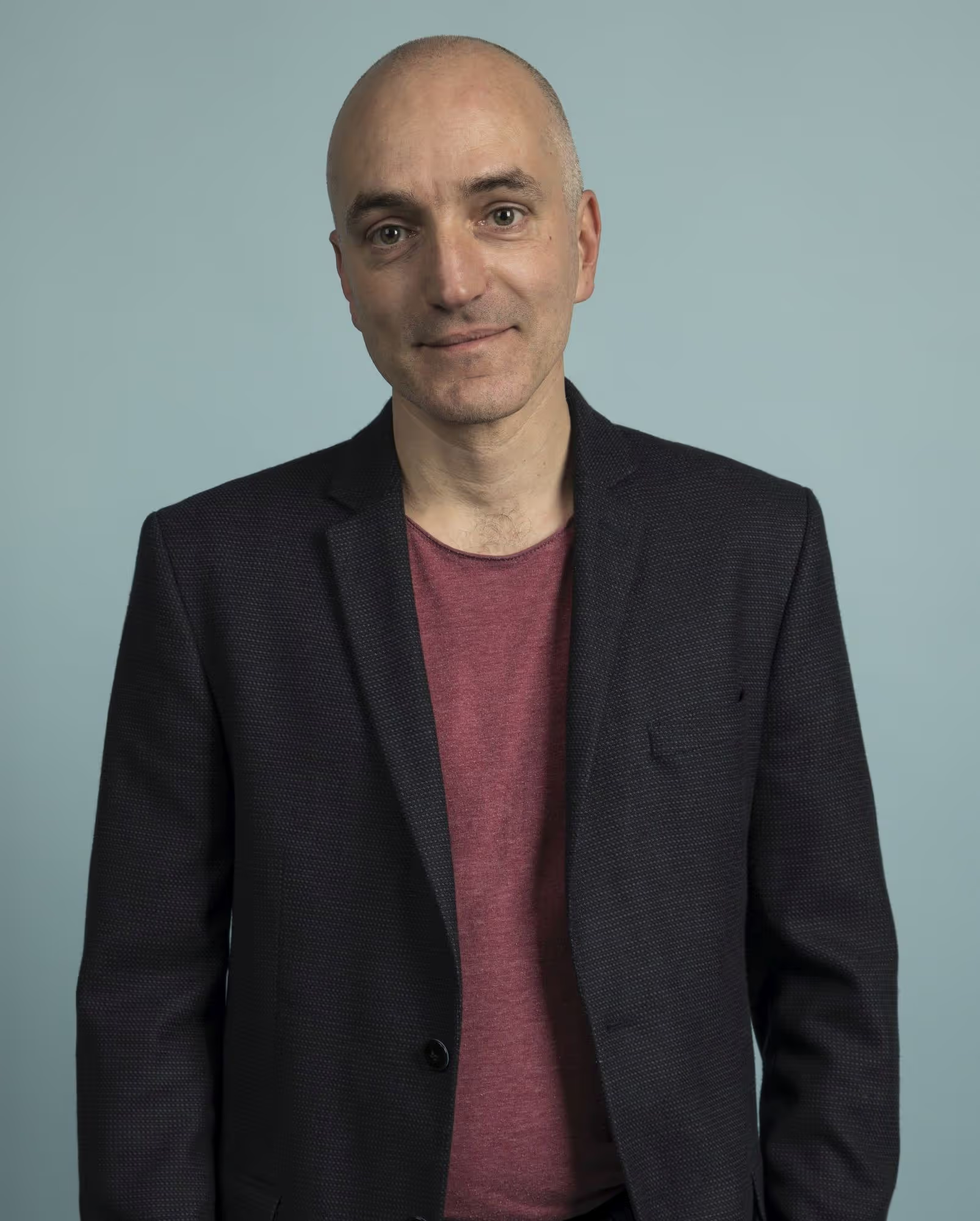
I’ve always loved photography, even if it sounds like a cliche. The first photos I took, I did without knowing how to do that, without paying any attention to framing, subject or composition. After a while, I began to understand what is happening in the space between me as a photographer and the subject I was photographing. And many years later, I also understood why I love to photograph. To communicate. A message, a concept, an emotion.
By signing up, you'll join our community of artists and professionals committed to contemporary photography.