
Professional
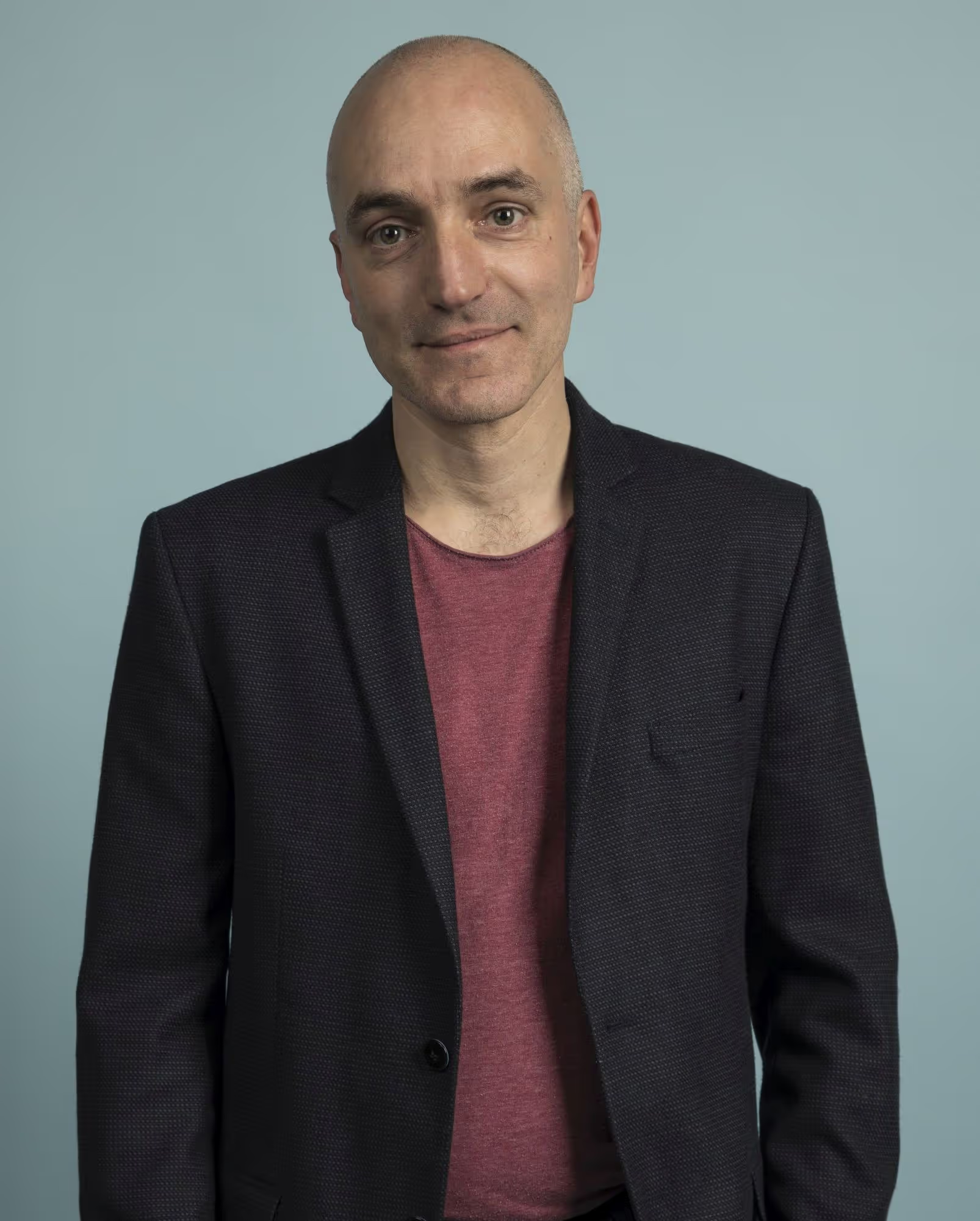
Sebastian Vaida
I’ve always loved photography, even if it sounds like a cliche. The first photos I took, I did without knowing how to do that, without paying any attention to framing, subject or composition. After a while, I began to understand what is happening in the space between me as a photographer and the subject I was photographing. And many years later, I also understood why I love to photograph. To communicate. A message, a concept, an emotion.
like to explore
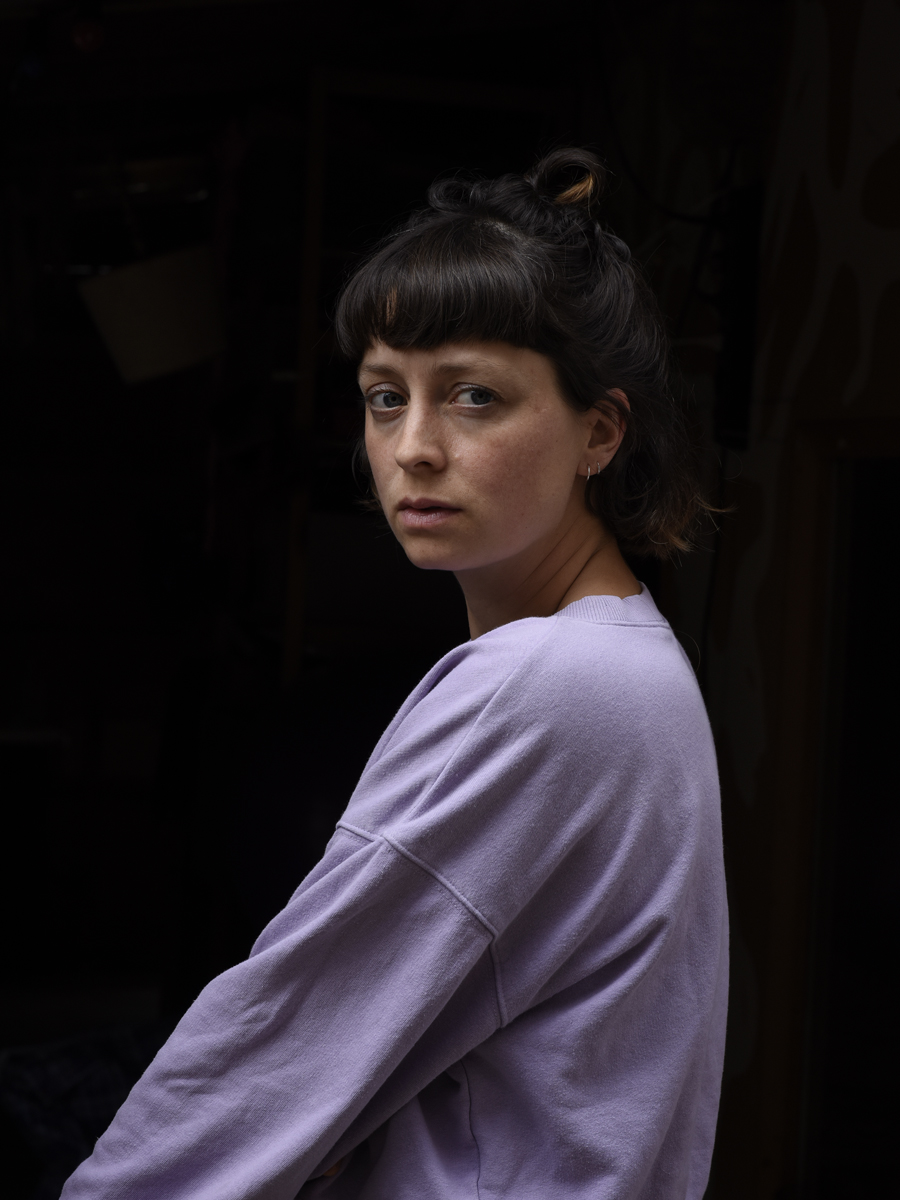
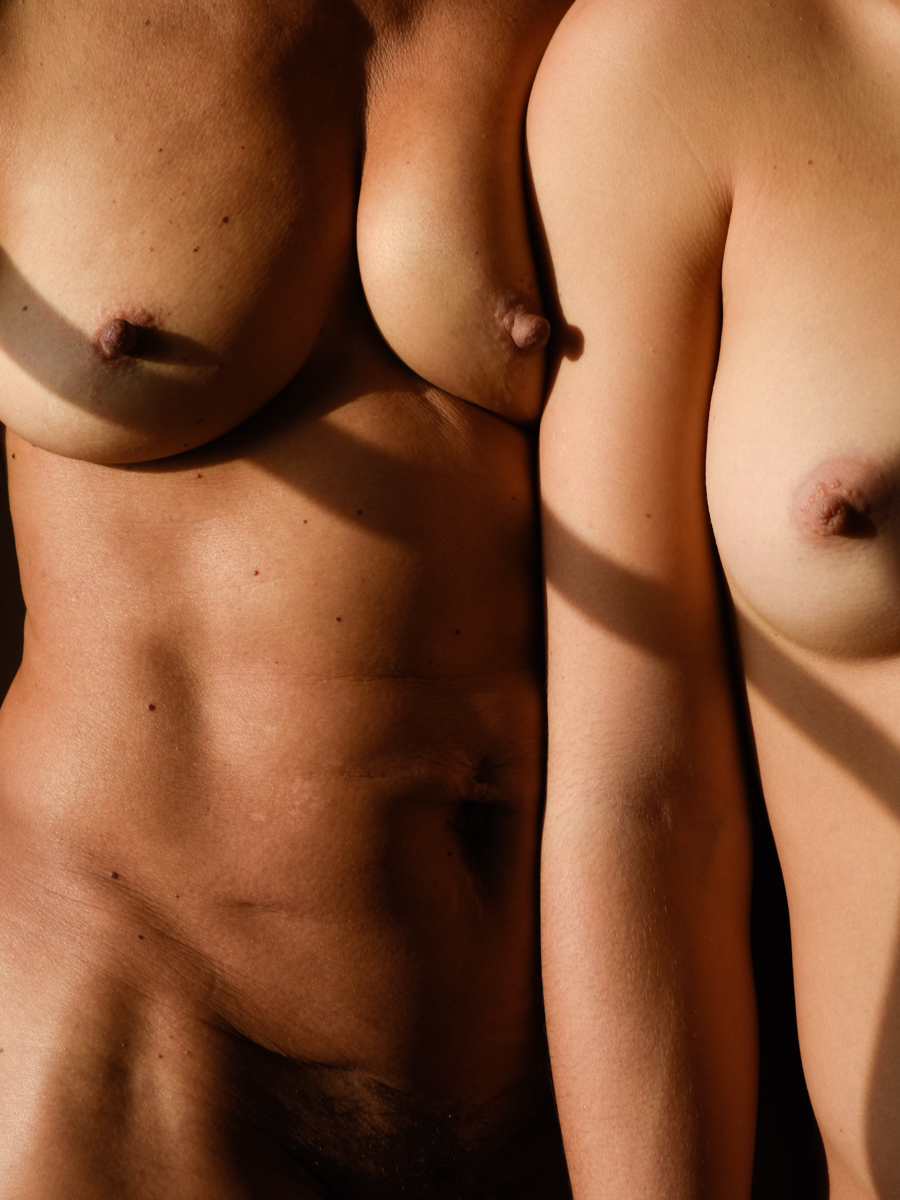
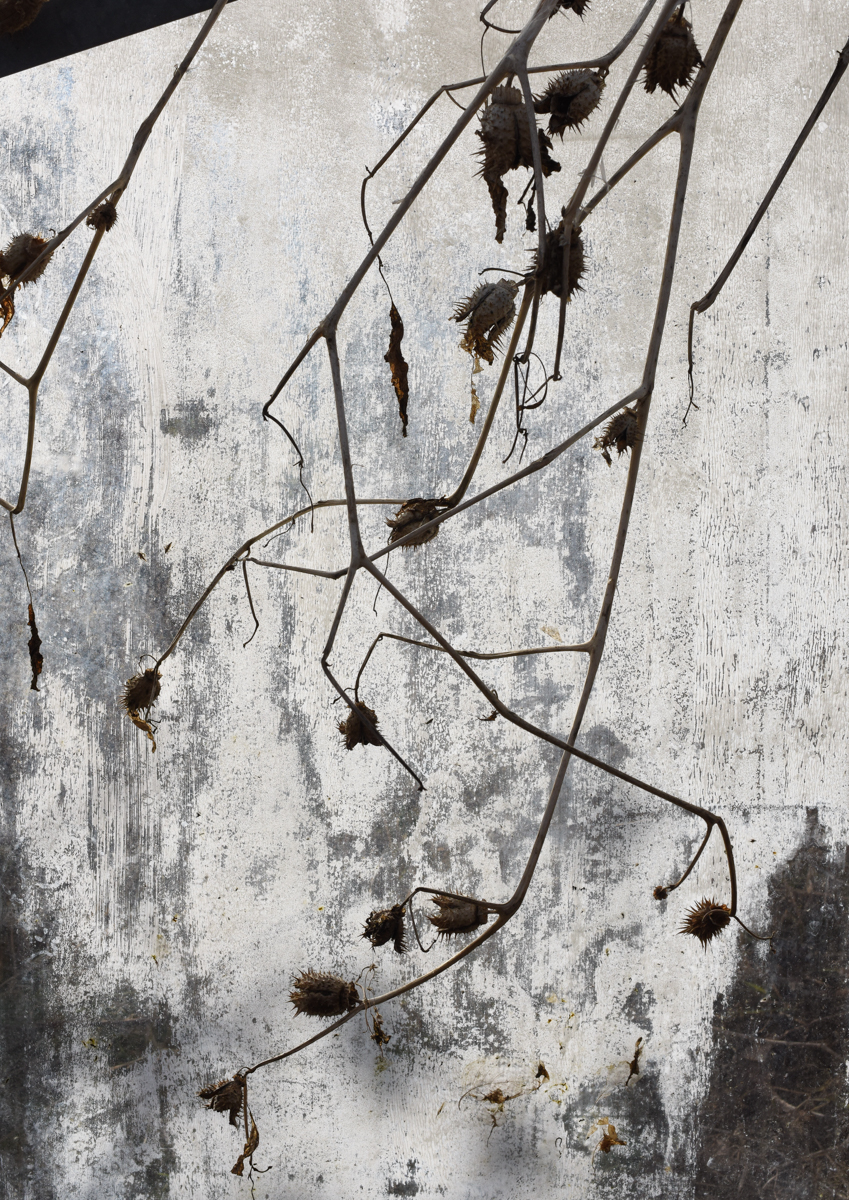
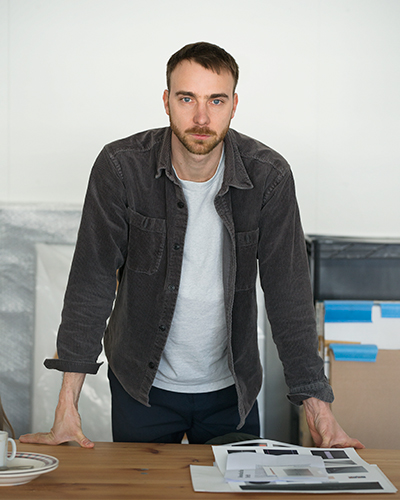
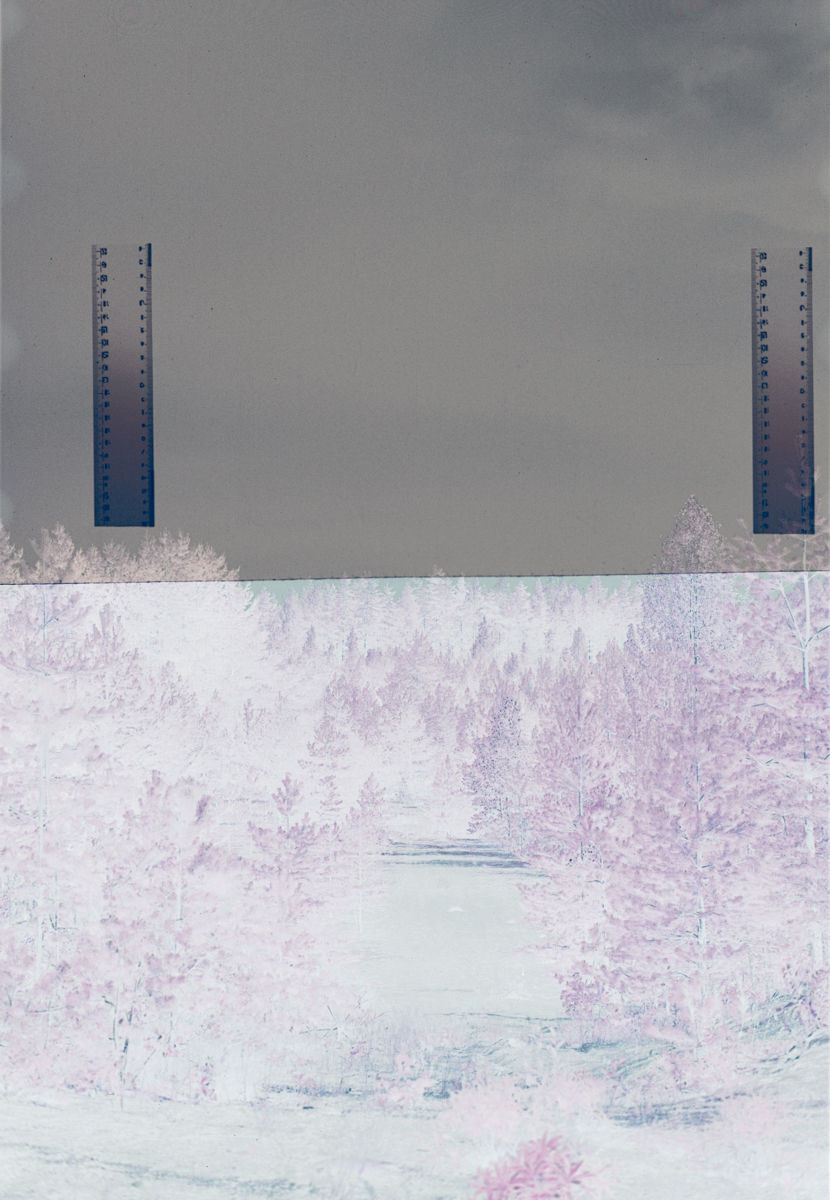
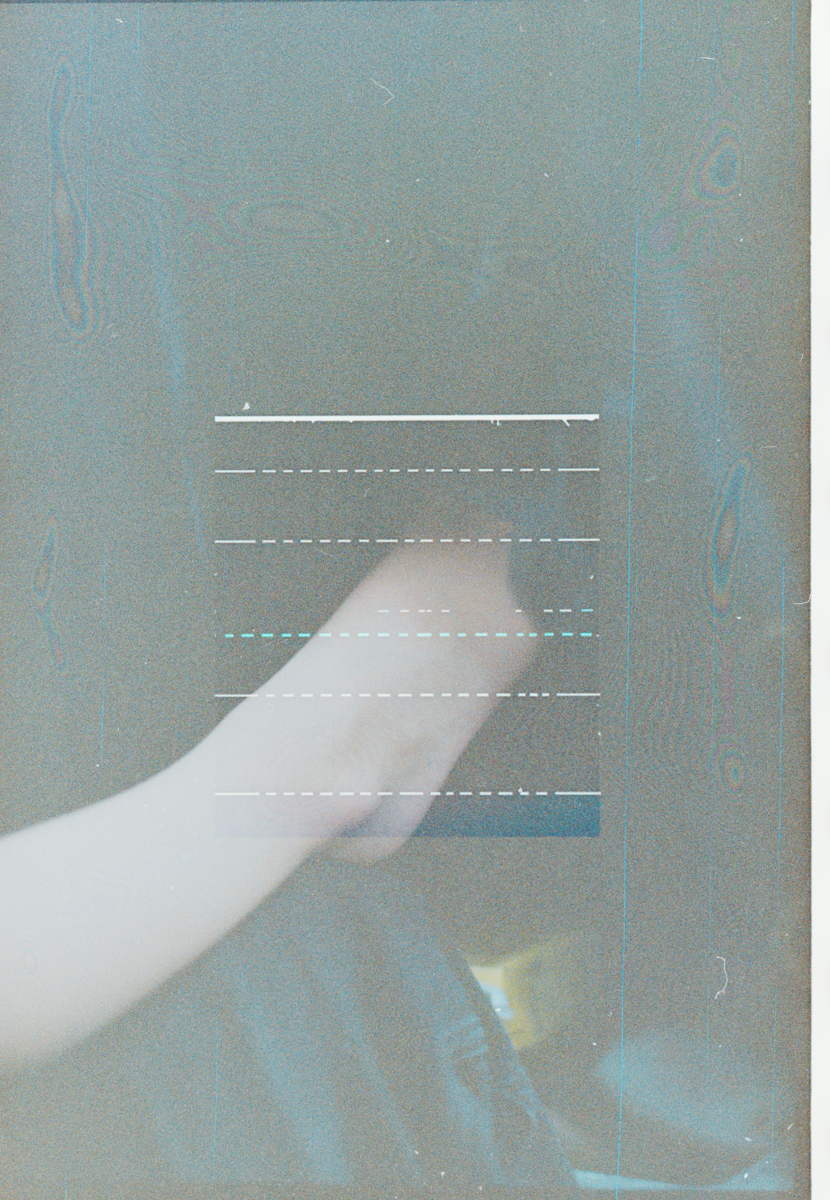
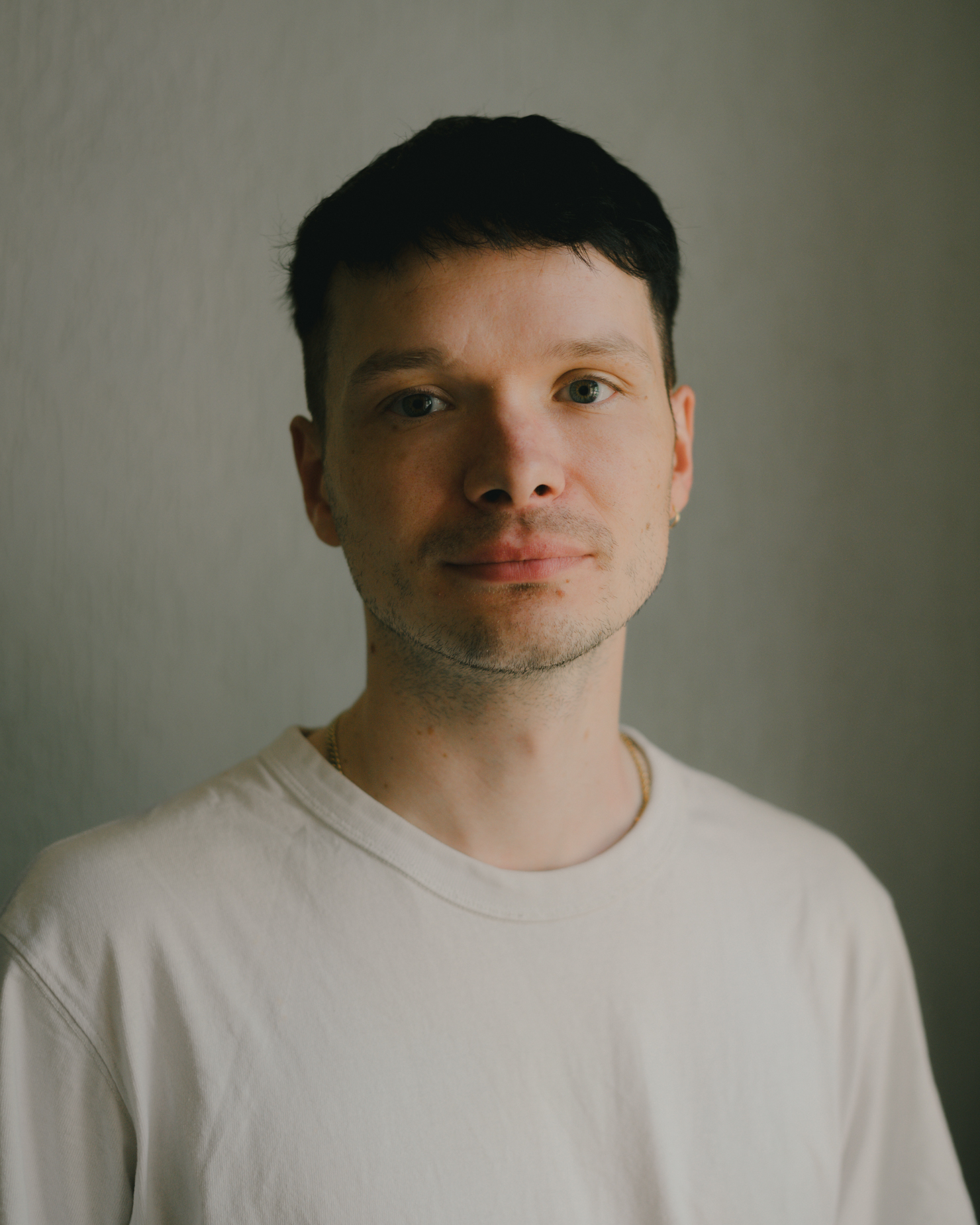

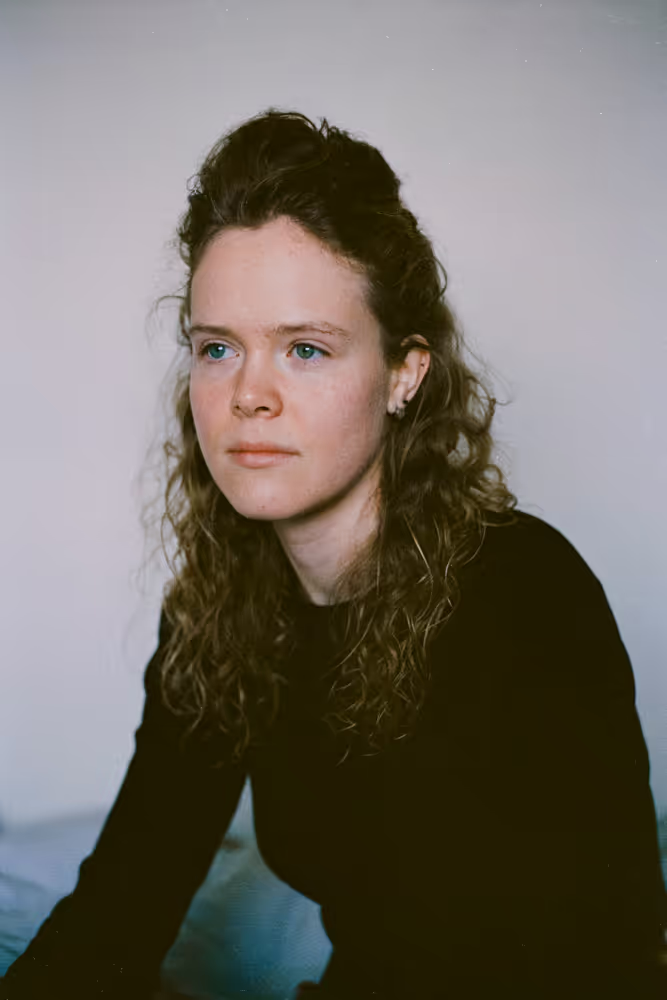
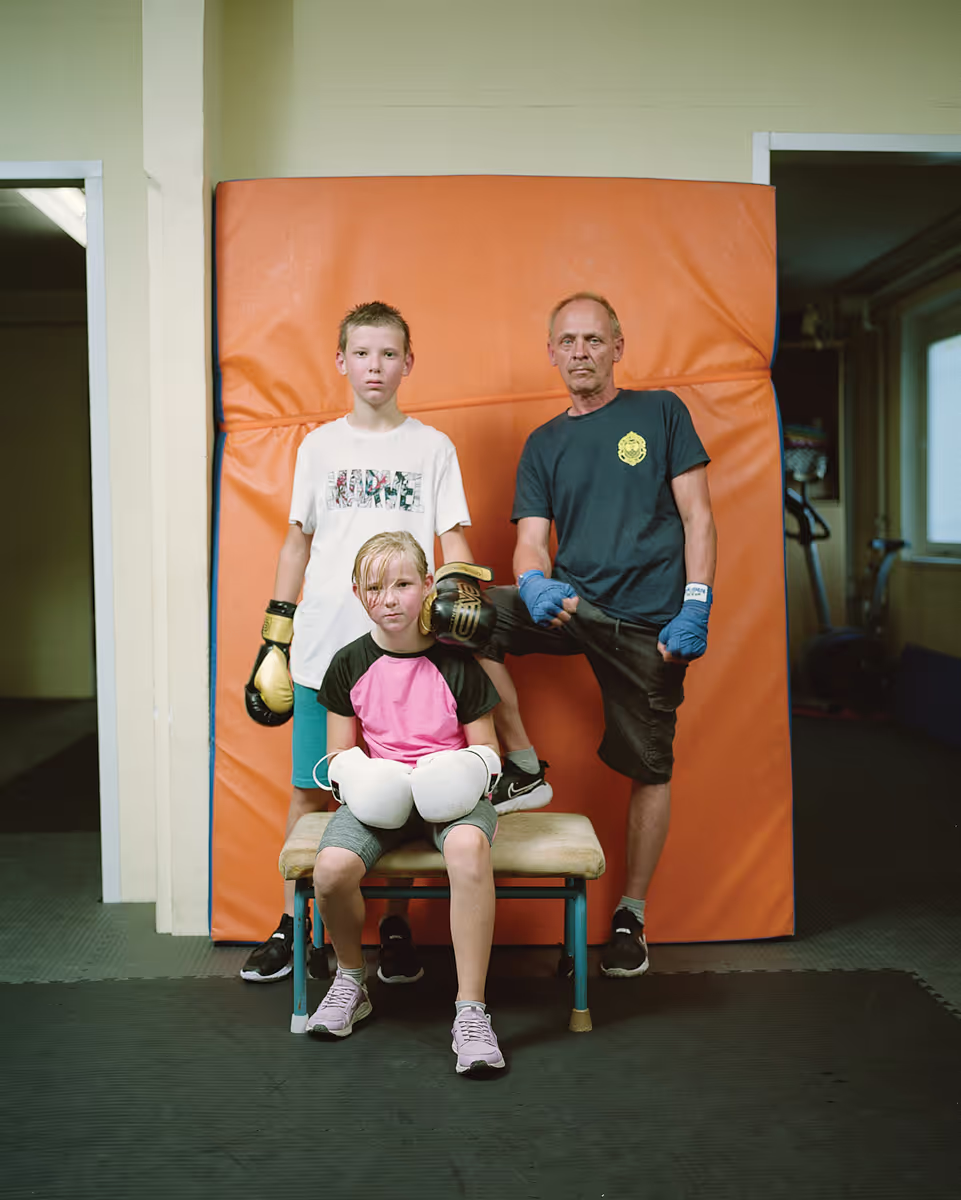
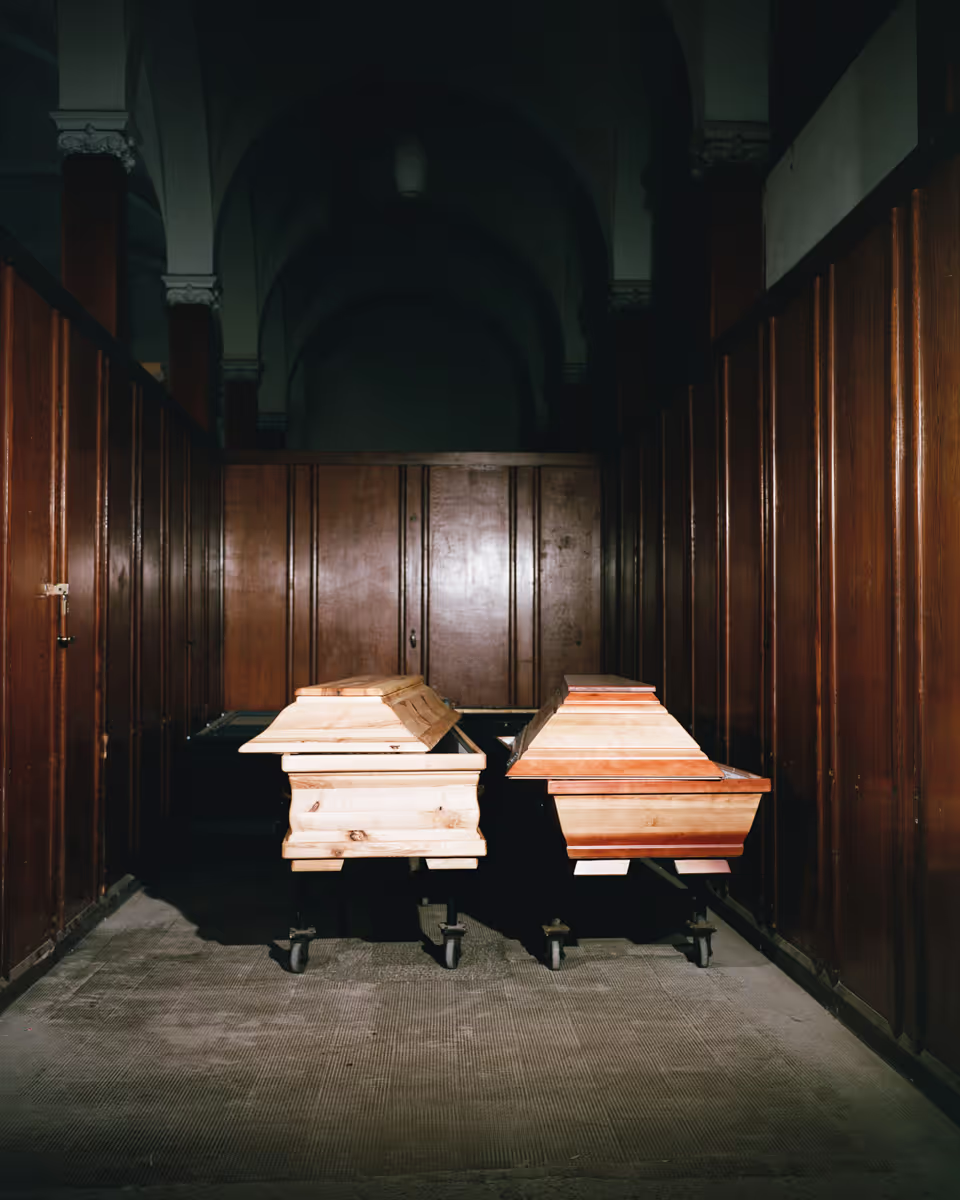
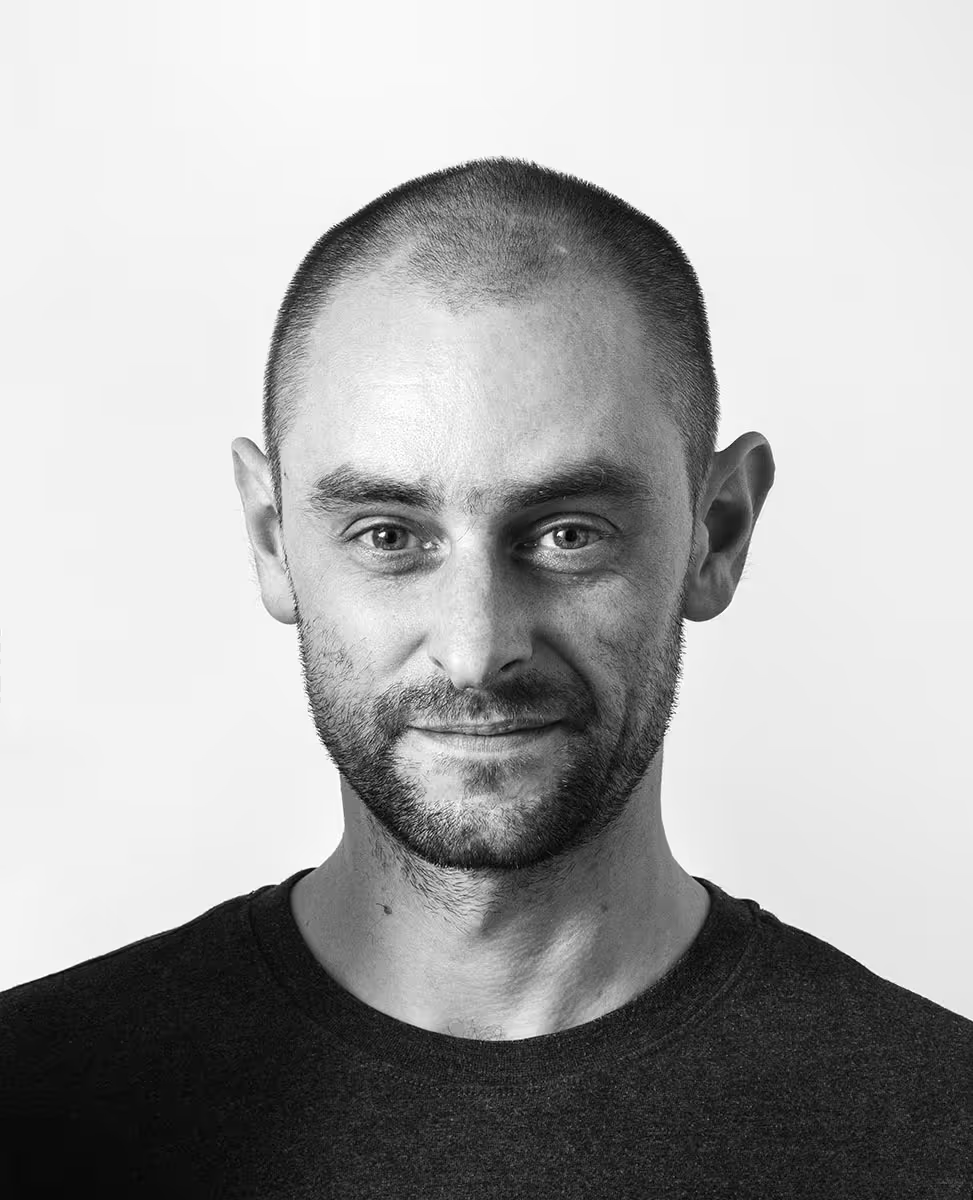
Michal Sita (1985) is a photographer and curator. Graduate of photography at the ITF in Opava and anthropology at the Adam Mickiewicz University in Poznań, where he is concluding doctoral research on social uses of the past in contemporary Poland. Interested in social memory and research strategies of photography. Curator of an interdisciplinary analysis of Wiesław Rakowski’s interwar zoological photographs, curator and producer of a series of exhibitions (including Małgorzata Lebda and Rafał Siderski, Mayumi Suzuki, Jan Kurek, Martin Parr and Rimaldas Vikšraitis, Sputnik Photos, among others), and photobook festivals. Co-author of “Củ Chi Tunnels Restoration Report” (Photographic Publication of the Year 2020 – Łódź, PL), a book relating to the activities of the Polish-Vietnamese architectural heritage conservation mission. Author of “History of Poland” vol. 1 and 2 — publications commenting on anthropological research carried out in Murowana Goślina among volunteers staging a large-scale historical pageant. Author of critical texts on photography. Lecturer at the Magdalena Abakanowicz University of Arts in Poznań.
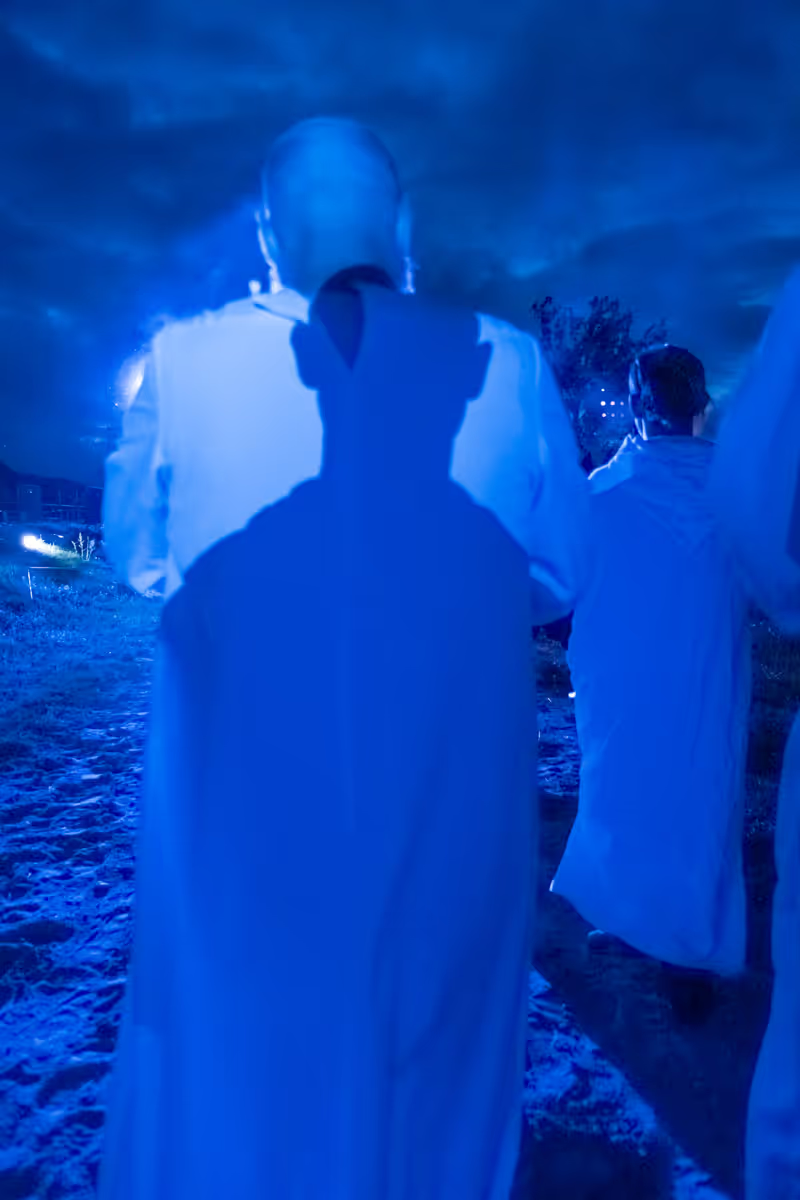
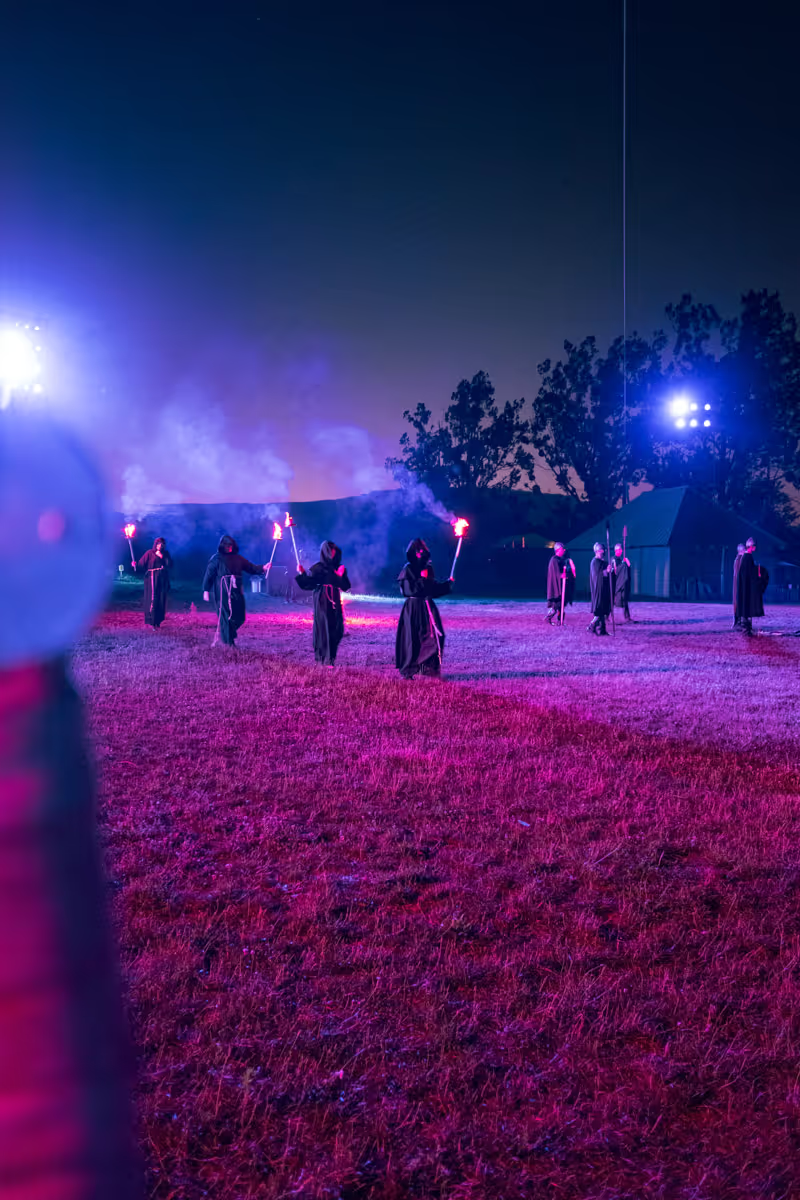

I'm a Norwegian-Vietnamese designer and artist based between Oslo and Berlin. Born in the Bidong refugee camp in Malaysia and raised on Norway's west coast, my background drives my research into migration, diaspora stories, and multicultural identity.
Much of Vietnamese refugee history remains clouded in post-war trauma and politically charged narratives. My work seeks to make sense of our position as displaced individuals in the Western world and examines diasporic existence beyond simply digesting the past. I wish to envision what our identity looks like in the future.
Through field and archival research interpreted with a poetic lens, I create what I call poetic essays: exhibitions and projects that seamlessly intertwine poetry, photography, sound, video, and installation. My asymmetrical approach allows elements to inspire each other non-hierarchically. The work explores contradictions between perception and reality, truth and staging, filling historical and memory voids by creating plausible simulacra.
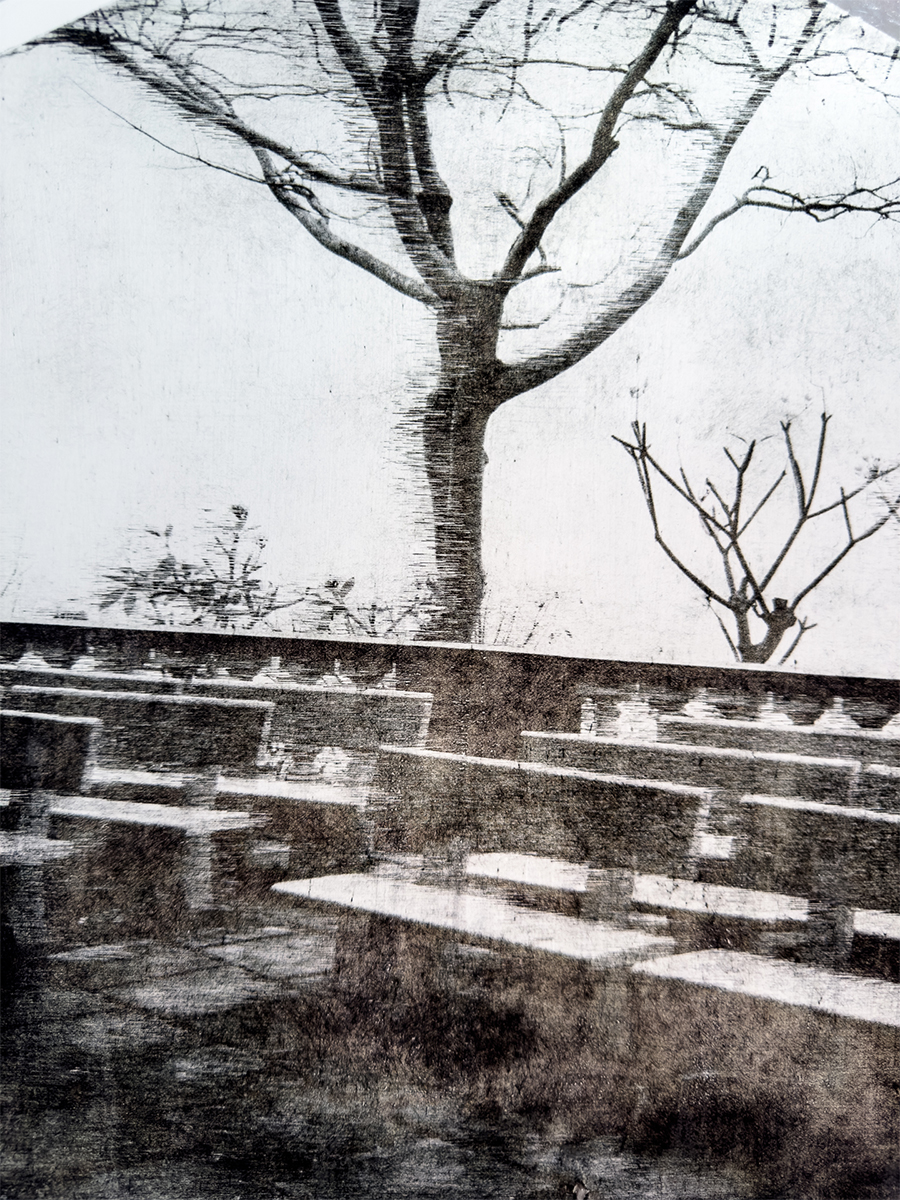
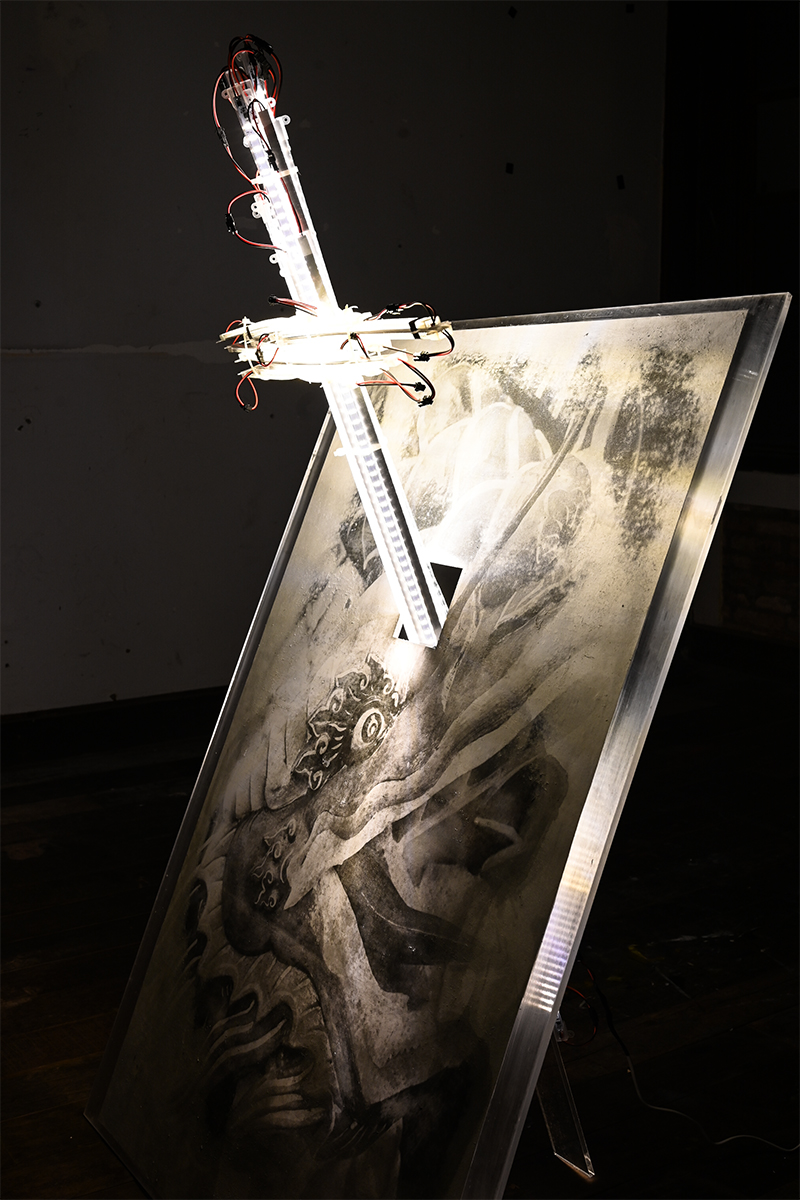
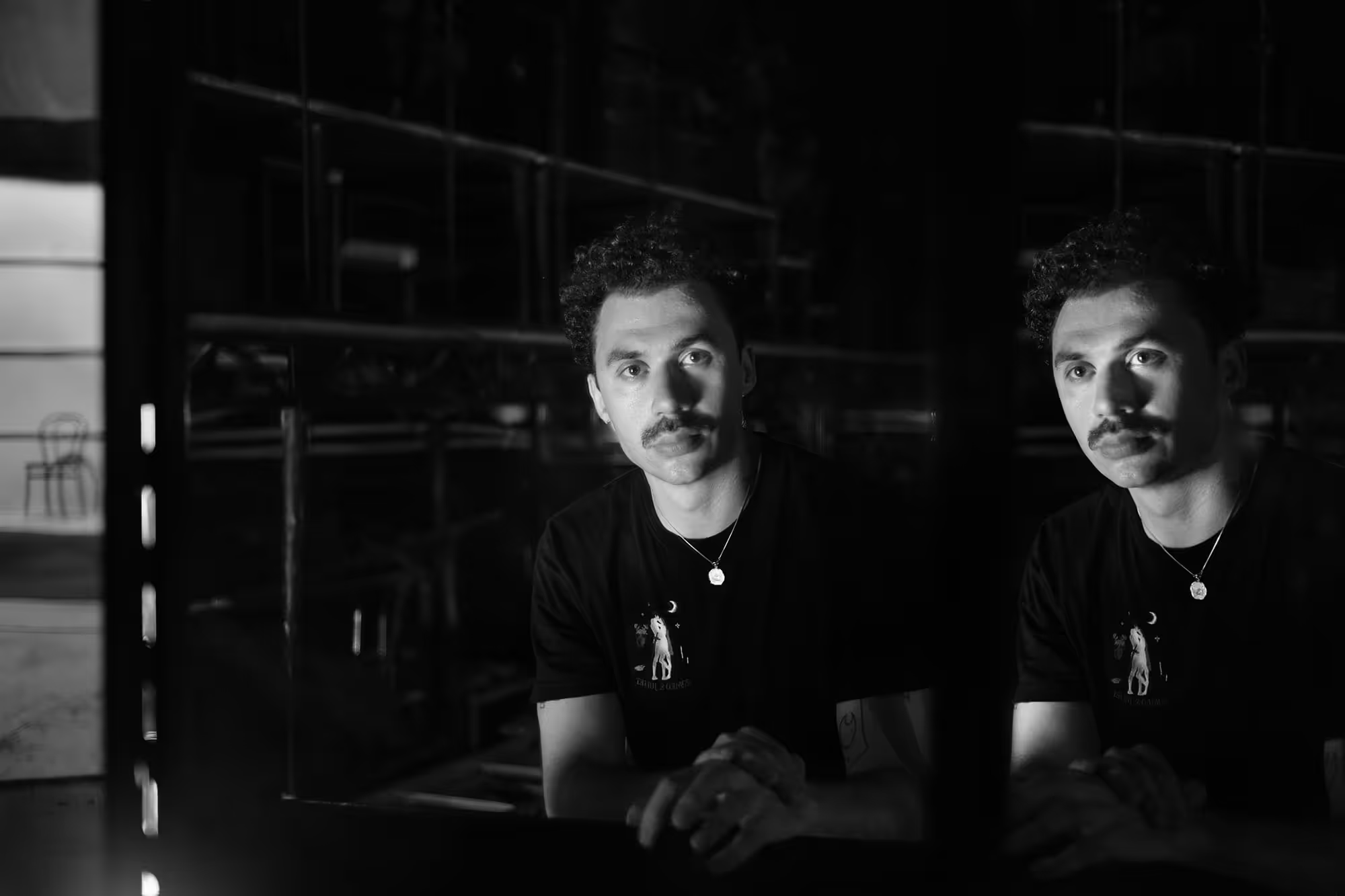
Adi Tudose (b. 1987, Bucharest) is an artist-photographer based in Budapest. After completing his studies at The National University of Theatre and Film, he further expanded his artistic vision through experiences in Milano. He is pursuing an MA in Photography at Moholy-Nagy University of Art and Design, where his practice continues evolving. For him, the camera is far more than a tool—it is a medium through which he connects with the world around him. The streets become dynamic, ever-changing spaces where unpredictable encounters unfold. Immersing himself fully in these environments, Tudose approaches his subjects with empathy and sensitivity, capturing their lives with care and revealing emotional depth and vulnerability.
Tudose can transform fleeting, transient moments into cohesive compositions, bringing order and harmony to the everyday. Through this process, he taps into the subconscious, offering viewers a sense of unity within the chaos. His seamless blending of form and content sets him apart, creating simple yet mysterious representations. His work is characterized by cohesive framing, a rich interplay of diverse elements, and tuned figure-to-ground relationships. Tudose’s work offers an invitation to reflect on what photography can reveal about the human condition. Each frame carries layers of emotional and sociological insight, capturing the essence of his subjects while creating space for the viewer to connect with them on a personal level. Each photograph becomes more than a visual representation; it transforms into a deeply felt emotional experience.
Empathy and vulnerability lie at the core of Tudose’s creative process, enabling him to form deeper connections with his subjects and uncover meaningful relationships that might otherwise remain hidden. His work seeks to evoke genuine emotions, delving into themes of social and gender representation while fostering a sense of belonging. In doing so, he transforms emotional disconnection into moments of peace and truth.
As an artist, Tudose is committed to long-term projects that tell meaningful stories, ones that challenge him to confront fear, embrace vulnerability, and transform his personal experiences into shared human truths. His photography doesn’t just document—it transcends, offering symbols of connection and hope in a chaotic world.
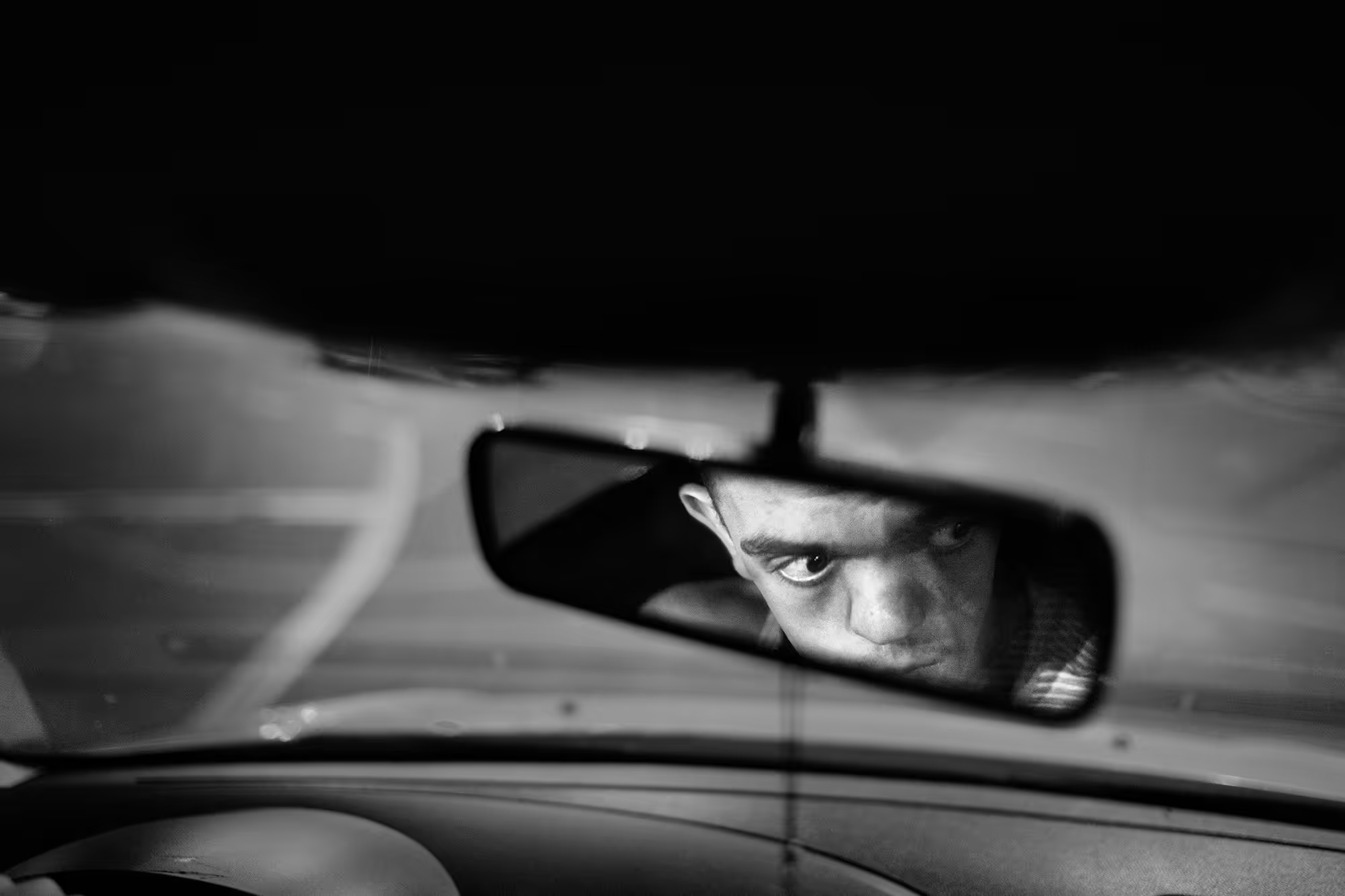
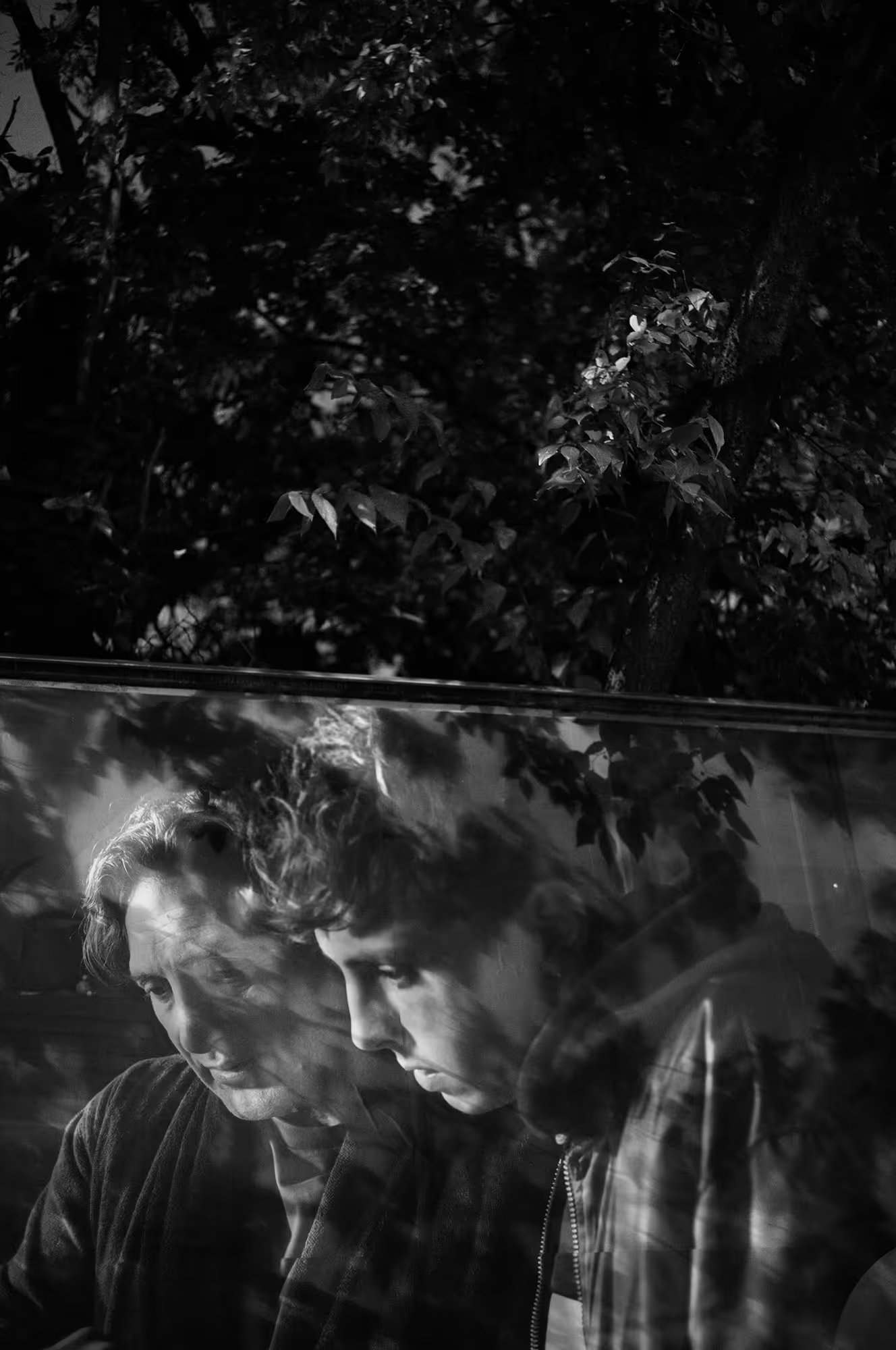
Daria is a lens-based artist currently living and working between Kyiv and Paris. Originally from Odesa, Ukraine, Daria came to France to pursue an M.A. in Photography & Video at École Nationale Supérieure des Arts Décoratifs of Paris, graduating in 2023.
In her artistic practice, Daria explores the connections between past and present, focusing primarily on the youth and cultural, social and political contexts in which young people live.
Her work was exhibited across Europe and the U.S., including La Villette (Paris), Open Eye Gallery (Liverpool), Hangar (Brussels), Mystetskiy Arsenal (Kyiv), The Gallery at Dobbin Mews (New York). Daria is a finalist of the 39th Hyères festival (2024), Palm* Phot Prize (2022) and a recipient of Beyond the silence grant by Magnum Photos & Odesa Photo Days (2024), as well as a grant for contemporary documentary photography from CNAP.
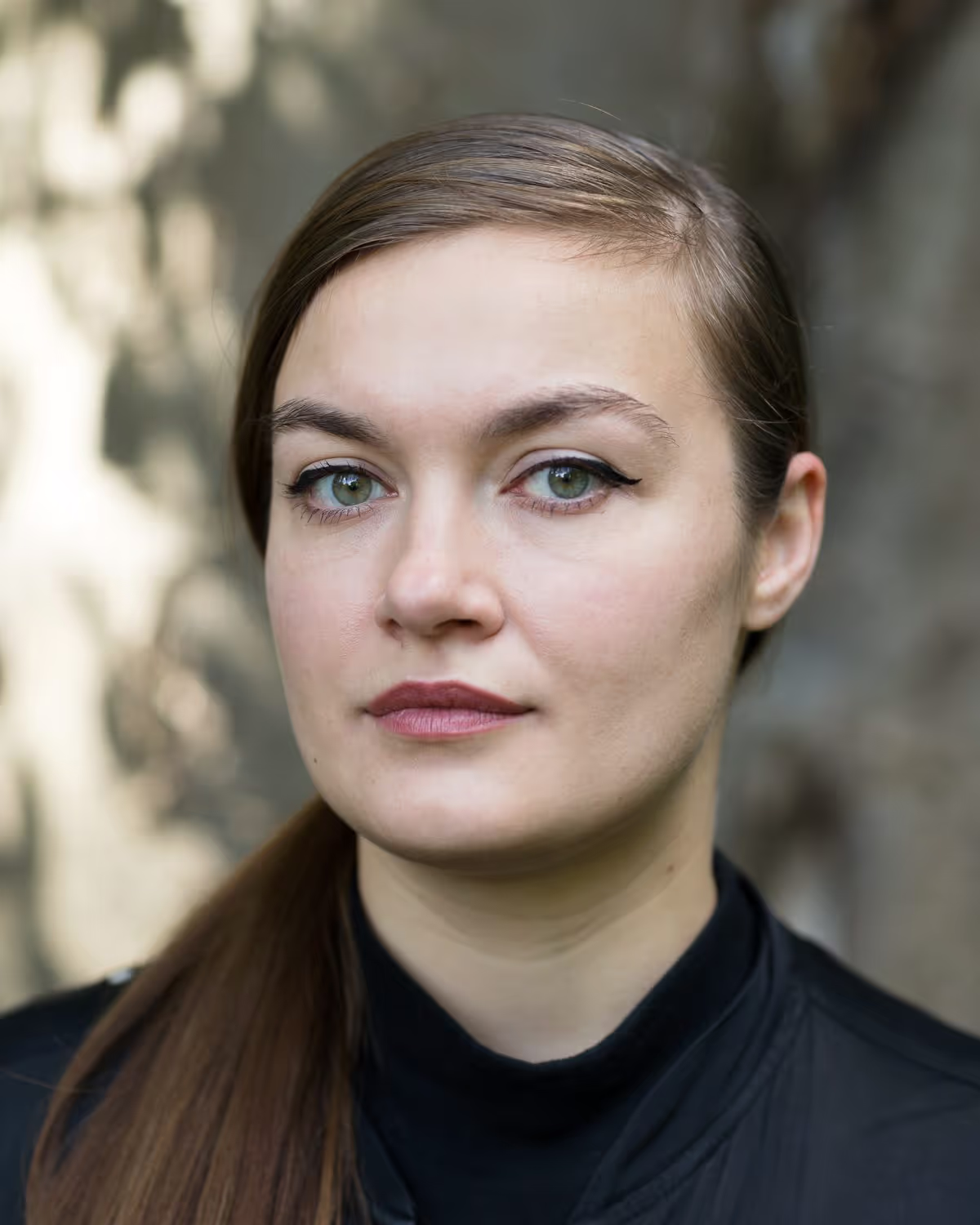
Julia Gelezova is a Cultural Producer and Curator, specialising in contemporary lens-based practices. She is General and Project Manager for PhotoIreland, producing events throughout the year like the annual PhotoIreland Festival and Critical Academy, while collaborating on ambitious projects like Creative Europe Photography Platforms—Parallel and Futures. Julia is co-editor of OVER Journal: The Critical Journal of Photography and Visual Culture for the 21st Century. In 2024, she has founded vicinities.network - a peer network for Visual Arts curators and professionals based in Ireland.
She has ample experience in producing exhibitions and events, including curatorial work and project management, has vast and successful experience in personal and collective application writing for bodies like the Arts Council of Ireland and local councils. She has participated in portfolio reviews, acted as visiting lecturer, and also worked in an editorial capacity and translation for artists and other arts professionals, including work for The Routledge Guide to Photography and Visual Culture. Most recently, she curated the 2021 edition of PhotoIreland Festival and was the Centre Culturel Irlandais cultural producer resident 2022. She is a member of the AICA International Association of Art Critics.

Danaé Panchaud is a Swiss exhibition curator, museologist and lecturer specialising in photography. She has been the director of the Centre de la photographie Genève since 2022, after serving from 2018 to 2021 as director and curator of the Photoforum Pasquart in Biel, Switzerland. She trained in photography at the Vevey School of Photography before completing a bachelor’s degree in visual arts with a specialisation in curatorial practices at Geneva University of Art and Design. She later studied museology at Birkbeck, University of London, earning a master’s degree in 2017. She has held positions in several Swiss institutions in the fields of contemporary art, design and science, including the Centre d’Art Contemporain Genève, where she was a research associate from 2007 to 2012, the Gallery SAKS in Geneva in 2012-2013, the Fondation Verdan in Lausanne as scientific collaborator, and the mudac in Lausanne, where she was in charge of the public relations from 2012 to 2017. As a free-lance curator, she has curated exhibitions for several Swiss and international museums, independent spaces and galleries since 2012. She regularly writes texts for monographs of contemporary artists, exhibition catalogues, and thematic publications such as Flora Photographica, co-authored with William Ewing and published by Thames & Hudson in 2022. She was a lecturer at the Vevey School of Photography from 2014 to 2018, and regularly lectures at art and photography schools in Switzerland. In 2023, she joined the teaching faculty of the CAS in Theory and History of Photography at University of Zurich.
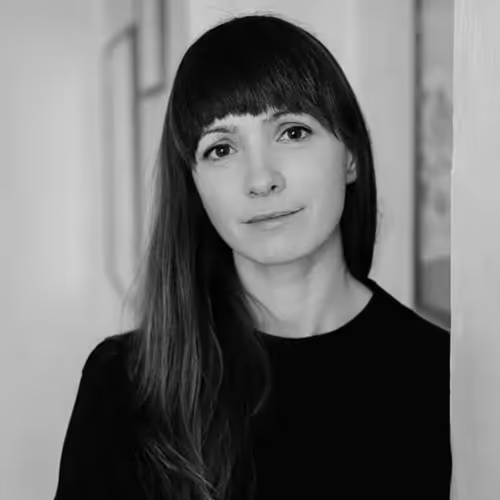
Iveta Gabaliņa (1979) is a curator, artist and educator. She has studied photography at the studio of Andrejs Grants, at Bournemouth Art Institute, and in the MA programme at Alto University in Helsinki. Her work has been exhibited in Latvia and internationally, including at C/O (Berlin, Germany), GESTE (Paris), and Williams Tower Gallery (Houston, USA). Gabaliņa has participated in photography festivals in Singapore, Hanover, and elsewhere. Her work is included in the collections of the Victoria & Albert Museum, Geste Paris, and the Deutsche Börse Art Collection.
Since 2008 she has been part of ISSP team, responsible for numerous educational and curatorial projects. In 2018 she founded ISSP Gallery - an exhibition space dedicated to contemporary photography.
By signing up, you'll join our community of artists and professionals committed to contemporary photography.