Triennial of Photography | Deichtorhallen

Member from 2018. Located in Hamburg, Germany

Triennial of Photography | Deichtorhallen

Member from 2018.Located in Hamburg, Germany

The Triennial of Photography Hamburg is an internationally renowned photo festival that takes place every three years in collaboration with major museums, exhibition spaces, and cultural institutions. Initiated in 1999 by collector and photographer F.C. Gundlach, the festival has evolved over the years to become one of the most significant photography events in Germany, enjoying international acclaim. Under a common theme, conceptualized by varying artistic leadership, numerous photo exhibitions across Hamburg shed light on highly relevant societal and photographic discourses. The 9th Triennial of Photography Hamburg (June 4 – September 27, 2026) is dedicated to the theme "Alliance Infinity Love – In the Face of the Other" and is curated by Prof. Dr. Mark Sealy OBE. The London-based curator, author, and director of Autograph ABP has dedicated his career to decolonizing the Western gaze and amplifying marginalized voices in international photography. The Triennial is accompanied by an international, interdisciplinary symposium on November 7–8, 2025, specialized discussions, lectures, portfolio reviews, and an international conference in the lead-up to and during the festival period.

Nominations

2026

With what happened and never happened, Amelie Sachs engages in a sensitive and layered examination of the long-silenced practice of forced adoption in the former GDR. Developed in close collaboration with photographer Paulina Metzscher as well as author and filmmaker Eva Gemmer, the project combines documentary photography, archival material, and text to explore themes of loss, memory, and absence. By making visible histories that remain unresolved, the work traces fragmented family narratives and their emotional scars within society. Amelie Sachs’ feminist and collaborative approach demonstrates how ethical documentary practice can create space for reckoning and new ways of imagining justice. (Cale Garrido, Curator 9th Triennial of Photography Hamburg 2026)

‍

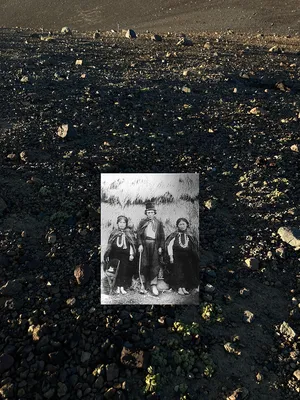
Anna Perepechai’s work emerges from lived experience, shaped by migration, displacement, and the forced departure from home due to war, as exemplified by the context of Ukraine. Through an intimate and attentive gaze, she reflects on loss, memory, and shifting senses of belonging.

Working across lens-based and cameraless photography, installation, and sculpture, Perepechai expands photography beyond its traditional limits, treating it as a tactile and embodied process. Her practice incorporates everyday objects, objets trouvés, and soil as both subject and material, allowing traces of land, history, and personal experience to enter the image itself. Attentive to the enduring effects of colonial and imperial violence on landscapes, bodies, and objects, her work considers photography as a site where personal and political histories converge.

Through this materially expanded approach, Perepechai creates immersive works in which photography unfolds as a tactile and embodied language, carrying memory, emotion, and lived experience. (Cale Garrido, Curator 9th Triennial & Bettina Freimann, Project Director 9th Triennial)

‍

A witty and subversive energy flows through the intermedial spatial installations of Aslı Özdemir, which interweave photographic and bodily memory. Across different series, Özdemir develops a coded play of historical references drawn from art history, personal family archives, and the performative appropriation and reconfiguration of class codes. Her practice is playful, conceptual, critical, and performative. Working with remote control and set-like arrangements, the artist stages relationships and acts between observation and performance. The daily is pictured as scenes of embodied history, re-enactments hint at the transgenerational transmission of experience, as Özdemir explores habitus through continuity, repetition, and rupture. (Nadine Isabelle Henrich, Curator, House of Photography at Deichtorhallen Hamburg)

‍

The artistic practice of Kang Kaiwen focuses on the formats and paradigms of the moving image. Her research-based approach is highly experimental, engaging with the medium itself in order to explore its “ecological” existence.Through an investigation of modes, qualities, and processes of relation—between humans and the natural world, and between humans and the cosmos—Kang draws on mythologies and legends from both China and the West, extending them into post-human paradigms that speculate on possible futures within and beyond the Anthropocene.Her distinctive storytelling merges multiple temporal and spatial contexts—spanning different time zones, languages, cultural backgrounds, and belief systems—to create visually striking moving-image works. By layering myths, natural environments, atmospheric conditions, and shifting spatial and temporal frameworks, she develops a unique visual language rooted in cinematic and photographic aesthetics.In doing so, Kang establishes an innovative trans-cultural visual practice that connects Eastern and Western cultures, cosmologies, and belief systems, bridging ancestral knowledge with speculative thinking and post-human perspectives on humanity’s relationship to the world. (Bettina Freimann, Project Director 9th Triennial)

‍

Vanessa Amoah Opoku's photographic and mixed-media works combine to create a material and organic atmosphere in which to bring personal, cultural, and political histories into visibility. There is across her work a turbulent sense of rupture and dis-ease. Yet, at the same time, a sense of wanting to unpack the baggage of colonial heritage is present through the sharing of hybrid frames of memory and technology. Here, old industrial worlds collide with forensic digital processes, the outcome of which weaves back and forth to make new hauntologies of cultural and familial knowledge. The cold lens of applied technologies joined to the fabric of the autobiographical tension of life opens space for a praxis that expands the horizon and evolutionary possibilities of lens-based work.  (Mark Sealy, Artistic Director 9th Triennial)

‍

The members of the jury:

Mark Sealy (Artistic Director 9th Triennial of Photography Hamburg 2026)

Cale Garrido (Curator 9th Triennial)

Bettina Freimann (Project Director 9th Triennial)

Nadine Isabelle Henrich (Curator, House of Photography at Deichtorhallen Hamburg)
2025

Florian Gatzweiler offers a sensitive exploration of the invisible mechanisms of power and masculinity within the prison system. Created in collaborative dialogue with inmates, his work Räume, die challenges existing structures and opens new perspectives on social hierarchies and violence. With remarkable visual and conceptual clarity, the portrait series makes societal orders visible and fosters critical reflection on masculinity. After graduating from Ostkreuzschule für Fotografie in Berlin in 2024, this opportunity will reinforce Florian in taking the next step in his artistic journey and further develop his practice through the exchange with other experts and artists. (Cale Garrido, Curator 9th Triennial of Photography Hamburg)

‍

Julius Schien’s project Rechtes Land builds a comprehensive documentation of the devastating impact of right-wing violence across Germany. As the work grows, it becomes an urgent index and a mirror of race-based crime across the state, from which we must learn and reflect. His photographs, depicting the ordinary settings where these heinous acts occur, serve as a stark reminder of the disturbingly commonplace nature of murder when fueled by the normalization of racism in the national psyche. If photography has a vital role, it is indeed to make sure we remember all those whose lives are wrecked by intolerance, hatred, and violence. (Mark Sealy, Artistic Director 9th Triennial of Photography Hamburg)

‍

The intimate portraits and landscape shots of Ksenia Ivanova’s series Between the Trees of the South Caucasus convey a sense of time frozen in place – even beyond the moment of capture. Stunningly beautiful and profoundly clear, her pictures are at the same time highly relevant: the series concludes with images of people in Georgia protesting in the streets against the new pro-Russian government. Against the backdrop of the war in Ukraine, the series raises fundamental questions about the future of regions and the consequences for those who live there. It is precisely these parallels that make Ksenia Ivanova’s documentary photography so significant. (Stephanie Bunk, Curator, Freundeskreis des Hauses der Photographie)

‍

In My Fascist Grandpa, Laura Fiorio explores aphasia—the inability to speak about one’s own dark past—particularly in relation to colonial and imperial histories. By intertwining personal archive material with collected images from open calls and projecting them onto monumental heritage sites like Borgo Rizza, she bridges private, untold narratives with institutionalized history. Her work exposes violent pasts, challenges power structures, and brings hidden stories into the public realm. Through collaboration with communities, she fosters knowledge exchange between the powerful and the marginalized, making a vital contribution to contemporary and historical discourse. (Bettina Freimann, Project Director 9th Triennial of Photography Hamburg)

‍

‍Roxana Rios explores gender identity as a performative act, in which bodily presence and photographic self-representation are shaped in non-conforming and subversive ways. Moving beyond binary roles and refusing objectifying gazes, the portrayed individuals in the ongoing portrait series FIGURE, FORM claim space to shape both themselves and their image on their own terms. Contributing to queer narratives within photographic historiography, the project seeks to reclaim selfhood, the body, and representation as acts of empowerment. The series serves as an invitation and a reference framework, envisioning bodily representations that exist outside societally and algorithmically conditioned visual regimes. (Nadine Isabelle Henrich, Curator House of Photography at Deichtorhallen Hamburg)
‍

Selection committee:

Mark Sealy (Artistic Director 9th Triennial of Photography Hamburg 2026, Director Autograph BP)

Cale Garrido (Curator 9th Triennial of Photography Hamburg 2026)

Bettina Freimann (Project Director 9th Triennial of Photography Hamburg 2026)

Nadine Isabelle Henrich (Curator, House of Photography at Deichtorhallen Hamburg)
Stephanie Bunk (Freundeskreis des Hauses der Photographie Hamburg)
2024

Donja Nasseri explores museum spaces and liberates secured objects from display cases by taking 3D scans of them. For her project, she will focus on the example of the figure of the ancient Egyptian king Tutankhamun, addressing questions of reparation and appropriation in the context of the restitution debate.

‍

Malte Uchtmann, will use AI to work on an ‘Atlas of Impossibilities’, reflecting on the construction of knowledge through images. He investigates the visual transformation of assumptions, policies and worldviews into knowledge within encyclopaedias across different historical periods and geographical regions.

‍

Verdiana Albano explores her own fragmented and mystery-laden Afro-European history in a photographic process that moves between staging and documentation. Employing the Stasi files belonging to her parents, alongside personal and institutional image archives, she delves into the implications of being born within the framework of the erstwhile German Democratic Republic (GDR).

‍

Agata Szymanska-Medina scrutinises the contemporary challenge of a global freshwater crisis unfolding in Chile through her photographic work – a crisis which poses a threat to humanity at large. Employing a nuanced narrative approach in her documentary photography, incorporating texts, archival material, video and sound, the photographer unveils the actors entangled in this conflict and the motivations driving them.

‍

Through a synthesis of documentation, essay, and portraiture, Lea Greub delves into the intricate dynamics of the ‘business of love’. Her exploration navigates the interplay between love, financial considerations and societal expectations within relationships, particularly in venues like wedding fairs and single-date trips, where these connections are both forged and exhibited.

2023

Returning time and again to the rural areas and subcultures of her childhood in southern Bavaria, Anna Aicher embarks on photographic examinations of the concepts of home and tradition. In projects such as Like Father, Like Son, she creates calm, concentrated images and enters into an intensive dialogue with her protagonists so that a special intimacy becomes visible.

‍

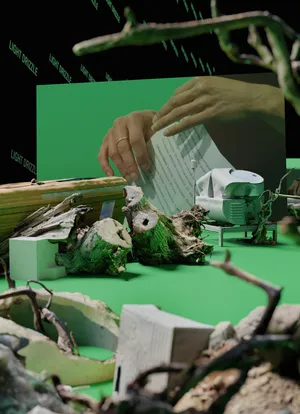
Nominated by Sithara Pathirana, Project Manager for Triennial Expanded, Maximilian Glas explores the human encounter with nature in his project Weather Constructions. In an almost humorous way, he questions speculative processes of science by also undermining the project's own validity through the display of errors. What is special about Weather Constructions is that it is highly scientific while at the same time an experience for the senses.

‍

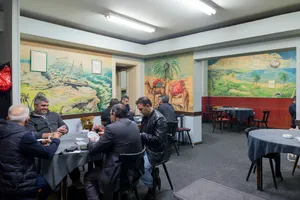
Nominated by photographer and lecturer André Lützen, Altay Tuz explores the question of integration and identity in Turkish cultural clubs and cafés in Hamburg and Berlin in his project Members Only. Using his camera to gain access to these spaces, Tuz makes images of full of information, details and signs, ultimately making visible the symbiosis of tradition and the present.

‍

Nominated by Ingo Taubhorn, Chief-Curator House of Photography/Deichtorhallen Hamburg, Simon Grunert's photographic practice is rooted in a documentary approach, but plays with its boundaries. In series including Senne 1 & 2, he often uses specific geographical settings as the basis for his stories but then adds pseudo-scientific or fictional elements, reducing his original intention of conveying a sense of place to the abstract.

‍

Nominated by photographer and lecturer Linn Schröder, Julia Gaes is fascinated by bodies. Over several summers she accompanied burlesque performers and drag queens for her Polaroid work WIGS & GLOVES, reflecting a queer space that allows freedom beyond binary thinking worlds. With humour, eroticism, irony and tragedy, the performances in Gaes’ pictures are political and queerfeminist – subversive moments showing an incredible diversity.

2022

Daniel Chatard deals with the power dynamics and effects of lignite extraction in the Rhineland, examining the decades-long influence that energy company RWE has had on villages threatened by these industries.

‍

Natalia Kepesz moved to Germany from Poland twenty years ago. She photographed Polish military camps for children, questioning why people in her country of birth love to play war and romanticise it so much in the process.

‍

Josh Kern uses photography to tell stories that are full of drama, looking for hidden hooks to give his work a starting point. His selected project is about the positive relationship he shares with his girlfriend Asli – a topic he chose when wondering if so much positivity is healthy.

‍

Angelina Vernetti sees her photo project EVERY BODY as a utopian narrative of realisable ideals of beauty, whilst SMILE EFFEKT examines the socio-cultural status of the birth control pill in Germany.

‍

Tamara Eckhardt’s projects deal mainly with marginalised social groups – with a particular focus on documenting adolescence. She strives to shed light on her protagonists, whom she follows for months in the making of a project.

2021

The curatorial team of the 8th Triennale has selected five emerging Futures artists in the field of photography who have particularly caught their eye:

‍

What is Hien Hoang’s recipe? For me, it’s the mix of ingredients: Using still-life photography, surrealism and performance, she addresses clichés and prejudices about Asia. Her photos are bursting with exotic beauty, but a closer look reveals abysses that shake up ways of seeing and thinking. (nominated by Stephanie Bunk)
‍

Engaging flows of history and social relation, Euridice Kala deploys the photographic image as a central means of meaning-making. Her artistic practice mines the fraught memories of the Atlantic slave trade and colonial-era Mozambique through the form of installations, performances, and publications. She is invested in the capacity of the archive to generate conceptual possibilities, and pursues these avenues from a Black feminist African perspective. (nominated by Oluremi C. Onabanjo)

‍

Marco Kesseler is a UK-based British photographer with an interest in portrai- ture and the social stories of food security and agricultural infrastructures. Kesseler has a profoundly tender presence as a photographer. From his quiet portraits of daily life in Belarus in the run up the 2015 presidential election to his recent series on the role of seasonal work in the UK largely fulfilled by migrant workers whose labour is likely to be unprotected by Brexit legislation, the quiet resolve of Kesseler’s photographs resist dominant narratives of place, nationhood and nativist independence. (nominated by Gabriella Beckhurst)

‍

Johanna Terhechte is exceptionally curious about the world and driven to undertake challenges. She is a thoughtful artist and a compassionate human being, two underrated character traits in artists. (nominated by Rasha Salti)

‍

Laura Van Severen is a Belgian photographer based between Barcelona and Ghent. She is a promising talent who has, in her latest projects, taken a thorough look at the transformation of landscape and environment. Strata (2020) is an investigation of the effect of landfill and waste management, having traveled to Spain, Belgium, Romania, Portugal and the Netherlands. In this series, Laura maps a representative selection of altered ecosystems that are the pure consequence of our abusive system of consumption. With aesthetic sensibility, she blends artistic and journalistic approaches, pointing at harsh realities of our times with poetic means. With this nomination, I’d like to reinforce her courage working on complex, research-based photographic projects, as well as supporting her persistent aspiration to reconnect us with nature and with each other through diverse exhibition formats. (nominated by Cale Garrido)