
PhotoIreland

Member from 2018. Located in Dublin, Ireland

PhotoIreland

Member from 2018.Located in Dublin, Ireland

Since 2010, PhotoIreland has been an arts organisation supporting photography and the visual arts, dedicated to stimulating a critical dialogue around photography in Ireland and to internationally promoting the work of Irish-based artists. PhotoIreland is a key constituent of the arts and culture sector in Ireland, working to ensure local audiences benefit from a healthy arts ecosystem and providing frequent professional development opportunities to artists. Best known for its annual event in Dublin, the PhotoIreland Festival, the organisation enjoys today a diverse portfolio of projects that range from events such as print and book fairs to running a charismatic art bookshop in buzzing Temple Bar, producing the photography publication OVER Journal, running artists’ residencies, and much more. Beyond Ireland, the organisation has developed constructive channels with a strong network of organisations worldwide, most relevantly through Creative Europe co-funded platforms such as FUTURES. In July 2025, PhotoIreland has launched the International Centre for the Image–a groundbreaking cultural institution in Dublin’s Docklands.

Nominations

2026

The artists navigate a variety of concerns and topics, from the personal to the universal, asking pertinent and at times uncomfortable but urgent questions, bringing contemporary issues to the fore.

‍

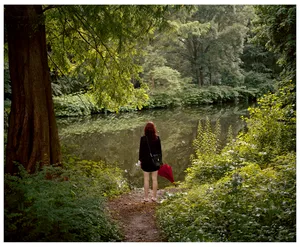
Originally from Egypt, Eslam Abd El Salam is an artist based in Belfast, Northern Ireland, whose gentle but powerful work focuses on walking as a pedagogical practice. Through an intuitive visual language, Eslam's practice centres around motion and nature, while raising conversations around belonging.

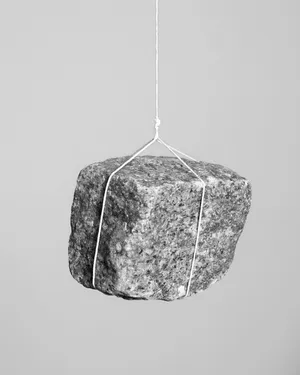
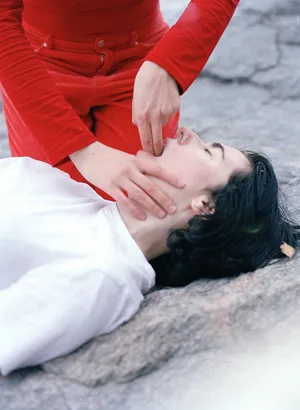
Exploring similar topics around belonging and identity, Polish artist Izabela Szczutkowska, practicing and residing in Ireland, works with darkroom processes and collage. Using the recurring motifs of a body and a stone, combining analogue photography and collage, the work explores states of becoming shaped by time, environment, and uncertainty.

Asking pertinent questions, Wales artist Jack Moyse presents us with the lived disabled experience, providing insight into those marginalised in the UK. All the while, he proposes photography as a liberatory tool, using his practice to confront the oppressive systems and intrusive bureaucracy.

Irish artist Thérèse Anna Rafter investigates how Western visual culture represents the living world, particularly through institutional and museum contexts. Her work draws on institutional displays and photographic traditions to examine how relationships between humans, animals, and land are defined and upheld.

Varvara Uhlik is a Ukranian artists based in London. Uhlik amalgamates archival materials with contemporary imagery, highlighting the fragility of memory and tension with the digital. In her projects, Uhlik explores themes around Slavic and post-Soviet visuals and identities.

‍

The artists this year represent the wealth of diversity and traditions in contemporary realities across Europe, strengthening and shaping new forms of creative expression.

‍

Members of the jury:

Eamonn Doyle, Artist (Ireland)

Siân Addicott, Director, Ffotogallery (Wales)

Vivienne Gamble, Director, Stills Centre for Photography (Edinburgh)
2025

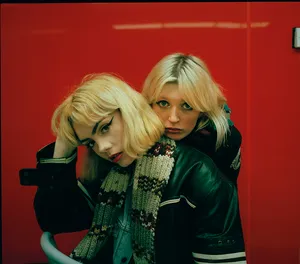
For the 8th FUTURES Talent Call for artists, PhotoIreland assembled a jury to select 5 artists from all the submissions received, composed by Ciara Hickey (PS2, Belfast), Julia Bunnemann (Photoworks, Brighton) and Mariama Attah (Deutsche Börse Photography Foundation, London), alongside PhotoIreland’s Julia Gelezova and Ángel Luis González.
‍

The jury selected the artists on the strength of their practice and the projects submitted, as much as having considered the benefit of the opportunity that joining the FUTURES platform represents in their career.

The artists selected were Henri Kisielewski, Nazlı Yıldırım, Shane Hynan, Tudor Rhys, and Zoe Hamill. Together, they represent a rich and diverse set of practices and topics of interest, investigating ideas around identity intertwined with politics, economical development, ecological stresses, community and spirituality, as much as beliefs. Their backgrounds are just as diverse, mirroring the wealth of cultures and traditions in contemporary societies across Europe and certainly in our region.

‍

Through their work, they advance relevant and urgent conversations that will excite the FUTURES platform, bringing into the European emerging photography scene universal concerns and very personal approaches.

‍

Selection Committee

‍

Ángel Luis González and Julia Gelezova, PhotoIreland

Ciara Hickey

Julia Bunnemann

Mariama Attah

2024

Recent graduate Berta Mars presents her latest work The Loudest Silence – a nostalgic look back at the artist’s childhood memories while also reflecting on a slower way of life exemplified in the represented place. While the topic may not be loudly political, it remains current. The jury praised Mars’ composition in the images, but also the “raw emotional intensity” of them.

‍

Leon Nevill Gallagher explores the lacuna that exists between people influenced by our relationship with the online. Informed by his experience of temporary separation from his girlfriend, he proposes a narrative by visualising the emotions around the spaces created between loved ones in times of distance and reliance on online communication.

‍

Debbie Castro conveys memory loss through the family story of her father and his dementia through the sensitive and considerate editing and narration of his personal family photographs and archives. Her work talks about mental health, especially in the case of the project Age is a Privilege, Unless You Forget!, which reflects on her personal experience of the effects of Alzheimer's on a loved one.

‍

Similar to Castro’s work, Sarah Navan’s ongoing project Care in Progress serves as a cathartic practice to understand a mental state of being – in this case examining her own experience with bipolar disorder. With Care in Progress, she shifts the lens back onto herself and her everyday life as she learns to live anew following her diagnosis.

‍

Also using his everyday life but with a very different approach is Chris Finnegan with his project The Grammar of Home. At times collaborating with his child to present ideas around the definition of a ‘home’, Finnegan critically interrogates ideas of home-making, childhood and the domestic sublime.

2023

Using traditional and sustainable photographic printing techniques, Aindreas Scholz highlights issues of the climate crisis, focusing particularly on the effects of human activity. In The Vanishing Point, for instance, Scholz addresses plants that risk vanishing from extinction by experimenting with unfixed lumen prints. His practice is informed by historical and legendary texts and tales, and by referring to these narratives, he weaves engaging storytelling into visually enticing pieces.

‍

Recent graduate Emilia Rigaud presents her ongoing work Fluid. Her at times ghostly and otherworldly creations serve as a sensitive visual account of her investigation into ‘hydrofeminism’ and our connection to water. Alluding to environmental concerns, Rigaud underlines that caring for water is caring for us. Her visual style presents work that occupies a dimension between the seemingly mythical, editorial, and at times documentary traditions too.

‍

Making work inspired by highly personal circumstances, Phelim Hoey and Ryan Allen both address experiences relating to multiple sclerosis (MS), albeit adopting different approaches. Phelim Hoey – whom PhotoIreland has followed excitedly since his nomination to its triennial talent programme in 2019 – investigates the condition from direct experience, utilising multidisciplinary methods to expose the precariousness and unpredictability of his own body, reclaiming control and confidence over himself in the process.

‍

Ryan Allen, meanwhile, is a new graduate, selected for PhotoIreland’s 2022 RADAR Graduate Residency. There is a lot of potential and determination in Allen’s work, and we feel he represents a movement towards the personal with a compassionate and empathetic tone. In his selected project, FathoM, Allen provides a visual response to his fears over the body’s transience, having witnessed the process of MS in his mother.

‍

Also on the path of care, Niamh Barry is a photographer engaging with queer communities in Ireland through her personal projects in a warm and tender manner. We were first introduced to Barry’s work through No Queer Apologies – a project tinged with gentleness while also calling for solidarity and action – and it immediately captivated our attention. Her latest project, brought to FUTURES, Now and Forever, Interpersonally Queer, presents tender images which highlight the chosen families that are so important within the queer community.

2022

Emma O’Brien is an artist with whom we became well acquainted during her participation in PhotoIreland’s Professional Development Programme. We consider thisnomination an organic next step in her progression as a professional artist. Her work The Holding Place considers the politics of motherhood and domestic labour, exposing patriarchal systems still present within home environments.

‍

Patrick O’Byrne is an emerging artist whose practice, though quiet on first sight, lingers and grows louder within, engrossing the viewer in its multi-layered narratives. In I’ll be damned, O’Byrne looks at the history of his father growing up against the backdrop of Catholicism and alcoholism in Ireland, interrogating subjects of masculinity and sexual identity.

‍

Through the stories and histories of Irish women, artist Pauline Rowan collaborates with a small community of people as they continue to care for a convent and gardensite marked for demolition. Under a Vaulted Sky uses photography, the artist’s own performative response, and collage work to talk about land control and concepts of home and belonging.

‍

Ronan McCall is better known for his commercial photographic work, but we feel his personal practice deserves further attention. McCall is a film photographer, processing and printing his own work. He creates indelible imagery of cinematic landscapes and extraordinary portraits, proffering alternative narratives of reality whilst commenting on pertinent issues.

‍

Through playful approaches, Cian Burke investigates the role of imagination in scientific systems and methods of work. His project, I fear that the magic has left thisplace, takes a Swedish government manual – titled ‘If Crisis or War Comes’ – as a departure point for meditations on home, the future, threat and protection.

2021

Looking at the universal through the personal are Clare Lyons and Aoife Herrity. Aoife’s practice is well grounded in her academic research, producing work that is calm and reflexive, and oftentimes understated. Rather than illustrating the complexities that memory and its failings conjure in the personal and the familial, with its altered or suppressed narratives, her work provides us with a series of unsettling scenes. Expertly produced, purposely hypersharp, and exuding a tedious grey, the images present a collection of tableaux without characters, depicting a troubling reality somewhere between nostalgia and memory.

‍

Similar in topic, but with a very different visual language, Clare Lyons speaks of personal experience and trauma, and there is a sense of experimentation where the photographic fails to deliver. It is in this experimentation where she succeeds in her explorations, playing with low-fi printing and against the grain of the sharp and accurate, as much as with folding the resulting images to provide objects with obscure narratives. Such devices contribute to her conversation on such difficult topics, ambiguous and hard to unfold.

‍

Audrey Gillespie’s practice brings together a diversity of media such as analogue photography, painting and printmaking, conversing around universal themes. Drawn from personal experience or direct account, they reflect the concerns of young minds around personal identity, sexuality, and the anxiety of contemporary generations. Her work is set in the context of Northern Ireland — seeped in a heavy and traumatic political history with ongoing conflicts of belonging amongst the youth.

‍

These three artists manage to preserve the tension of such circumstances, but in doing so the viewer discovers sublime notes of everyday life, hidden between these persistent concerns. Meanwhile, Jialin Long and Mark Duffy look at the relationship between individuals and the state.

‍

Jialin Long, though only a recent graduate, has already established a name for herself in Ireland, notably through her graduate project Red Illuminates, exploring the concept of culture in socialist countries and how state loyalty is cultivated. Using multimedia approaches and strategies, she explores social and political issues, but also personal issues such as belonging and cultural traditions, in order to propose alternative positions.

‍

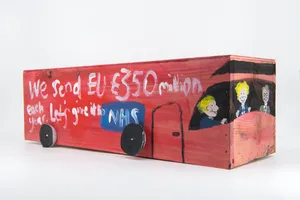
Mark Duffy has distilled over his last projects a distinct style, somewhere between satire and documentary, where humour serves as a catalyst for a poignant conversation around key political issues. Having moved to London and while working at the House of Commons as a photographer, his life and practice suffered a dramatic turn when his unflattering images of politicians became the focus of attention of the Parliament media team, followed by a random house raid and other pressure strategies from the UK government. Leaving the position and continuing with his practice beyond this incident, Duffy engages with current affairs, such as Brexit, with his characteristic approach.