

Lyoh
Varvara Uhlik
Lyoh
Nominated by PhotoIreland, 2026
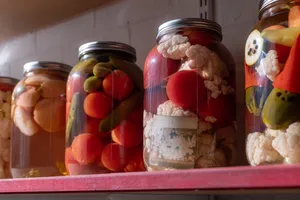
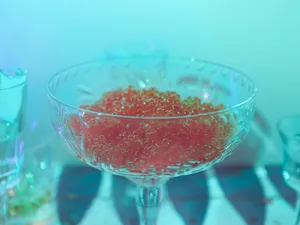
My grandmother’s root cellar was lined with shelves of jars filled with pickled fruits and vegetables - a common sight in (post)Soviet Ukraine, where scarcity made preservation a necessity. Drawing on this domestic ritual, the work reflects on the desire to preserve sustenance as well as sentiment. By sealing family photographs from holidays in Crimea and school days in Dnipro together with seasonal vegetables, the piece transforms a familiar act of preservation into a metaphor for memory itself. The jars become vessels of nostalgia and impermanence, embodying the desire to preserve and to savour what will be gone.
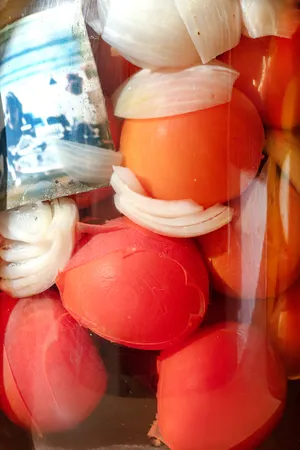
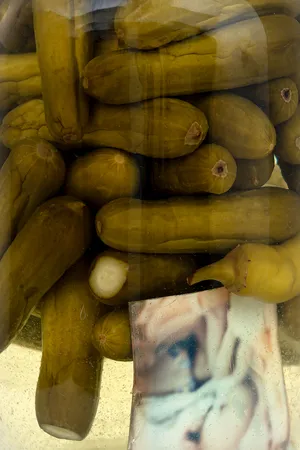
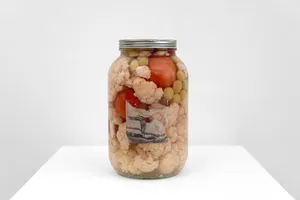
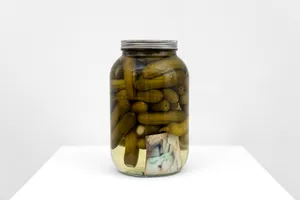
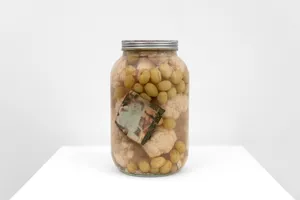
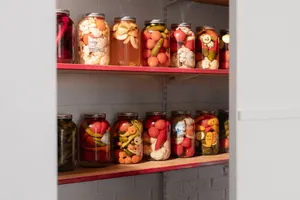
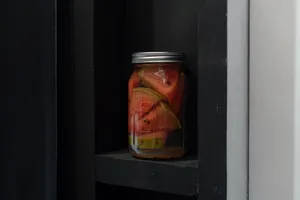
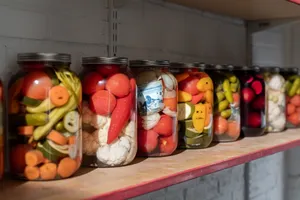
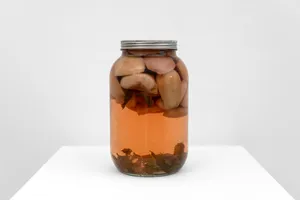
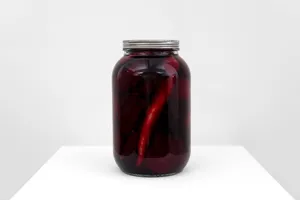
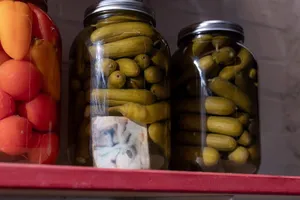
Lyoh is the Ukrainian word for Root Cellar.
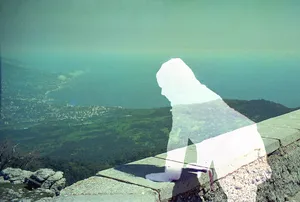
Sanatorium Crimea
Varvara Uhlik
Sanatorium Crimea
Nominated by PhotoIreland, 2026
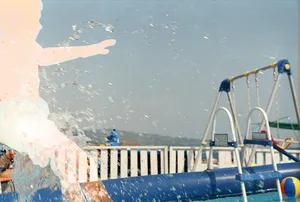
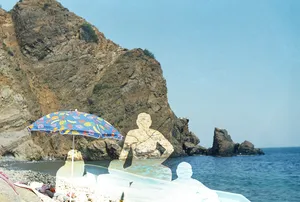
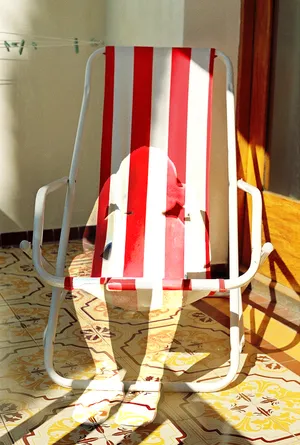
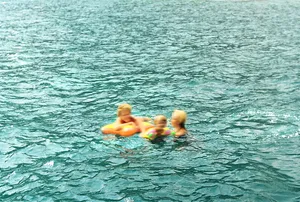
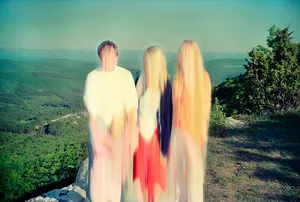
In this body of work, Uhlik digitally alters analogue photographs from her family's own archive of holiday imagery. The original analogue photographs were taken at a Soviet military resort, which continues to be operated by Russia today, on the Crimean Peninsula. Uhlik's aunt worked at the resort, which allowed her family access to this site and where she would spend Summer holidays as a child. Uhlik alters these images to remove the human figures, leaving just a crude outline as human presence is dissolved from the work. Ghost-like figures posing in gardens, sitting in deck chairs, or caught unawares at the beach make reference to notions of access and the fragility of memory. No longer able to visit a site of her childhood following the occupation of Crimea from 2014, the photographs act as vestiges of place for the artist, but also as exposures into a hidden world. Through removing the figures from her images, Uhlik engages with ideas of photographic manipulation, a prevalent and state sanctioned practice in Soviet history, to reveal how both collective and personal memories can be constructed through the medium of photography. In an age where photographs increasingly act as placeholders for memory and experience, Uhlik's work lays bare the fragility of this approach. – Text by Huxley-Parlour.

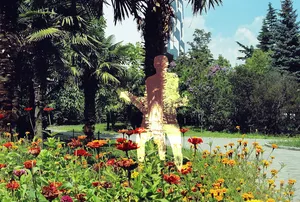
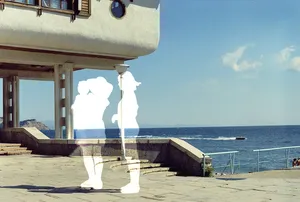
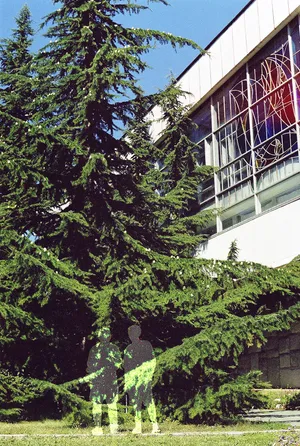
Sonechko, Yak Ty? (Sunshine, How Are You?)
Varvara Uhlik
Sonechko, Yak Ty? (Sunshine, How Are You?)
Nominated by PhotoIreland, 2026
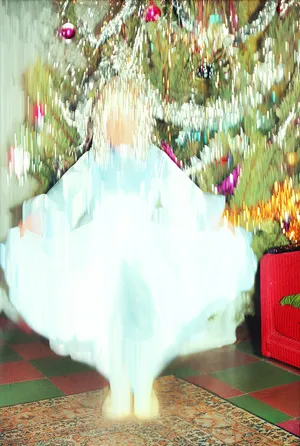
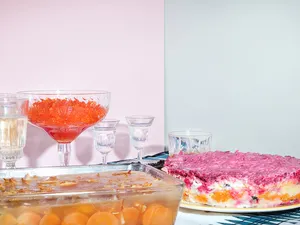
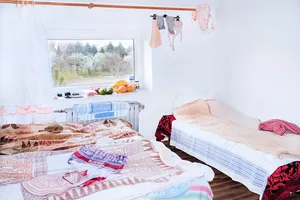
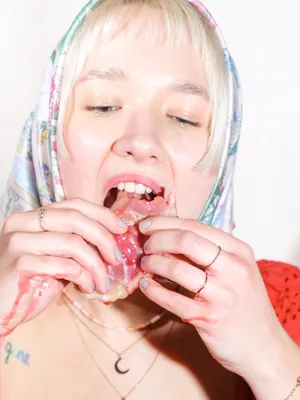
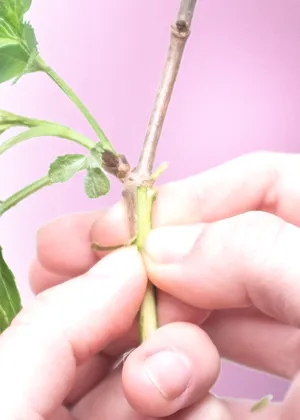
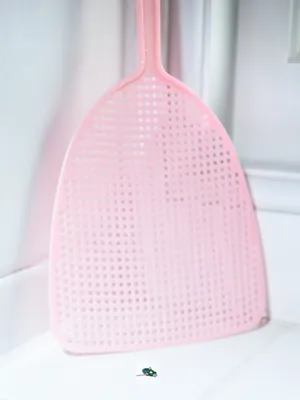
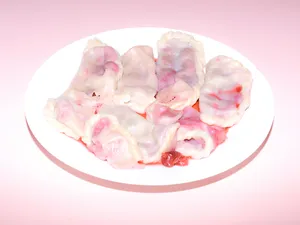
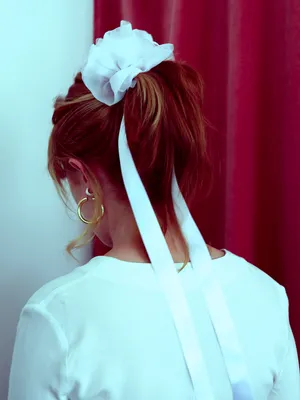
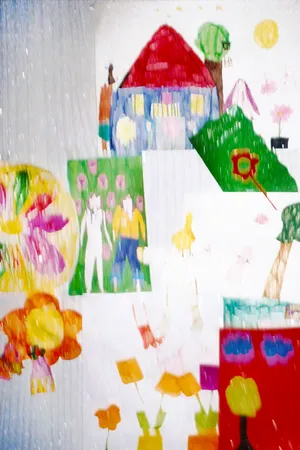
"Sonechko, Yak Ty? (Sunshine, How Are You?)" is an exploration of childhood memories and the enduring impact of the Soviet era on one's sense of identity. Born in eastern Ukraine, five years after the collapse of the Soviet Union, I was often told I was fortunate to have missed the hardships of Soviet rule. However, as I grew older, I began grappling with a profound sense of disorientation and uncertainty about my identity, akin to the elusive sense of self experienced by a Soviet citizen. Caught between the remnants of Soviet influence and my own evolving sense of self, this project represents my process of emotional and cultural renewal in the face of a lingering past. My childhood was a blend of joy and discipline, moments of climbing trees and enjoying my mother’s sour cherry varenyky intertwined with the strict, lingering structures of Soviet values. The weight of this past, still carried by my family, teachers, and community, shaped my early years. Despite the Soviet Union’s dissolution, the oppressive influence of our neighbour endures, now magnified by the war that has forced me away from my family and home. Through newly staged photography and digitally manipulated family archives, I de-construct and re-construct fragments of my past, re-contextualising them as I redefine my identity, femininity, and cultural heritage. Each image serves as a piece in the puzzle of my self-discovery, reflecting on how memories shape and transform our understanding of who we are. This series explores how memories are preserved, distorted, and altered over time, serving both as an introspective reflection and as a portrayal of a generation coming of age in the post-Soviet world. While addressing generational traumas, it also reclaims Ukrainian identity from the shadows of Russian colonialism by admitting the beloved, yet Russified childhood.
Play Ground
Varvara Uhlik
Play Ground
Nominated by PhotoIreland, 2026
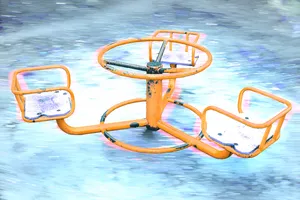
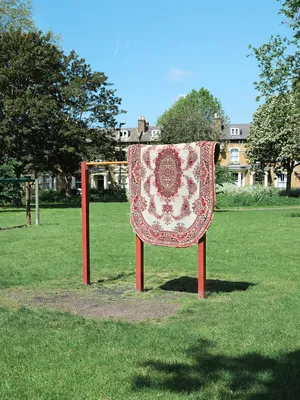
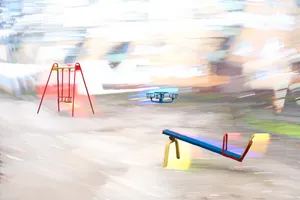
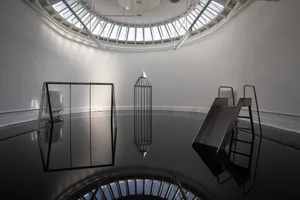
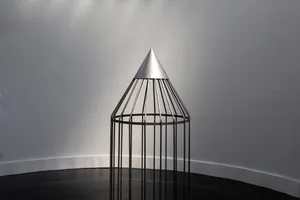
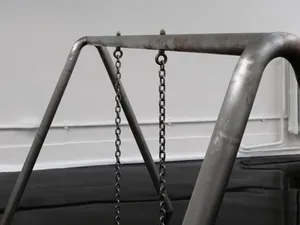
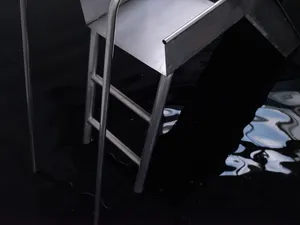
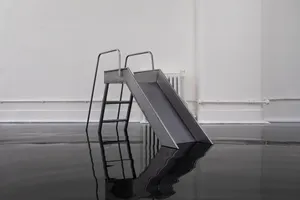
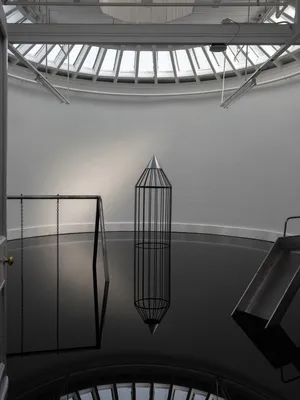
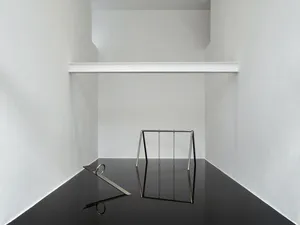
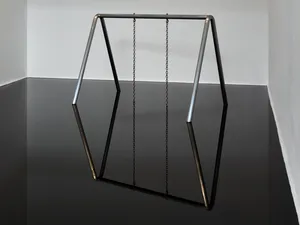
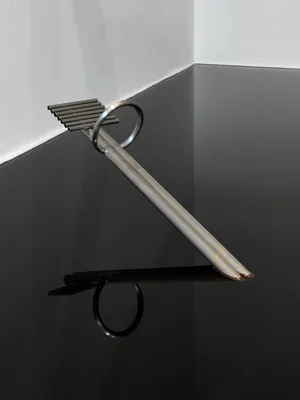
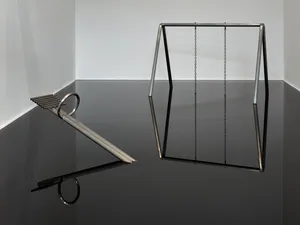
Play Ground installation reconstructs the architecture of my post-Soviet childhood. Three steel sculptures (a swing, a slide, and a rocket) are drawn from memory and archival references, modelled on the standardised playgrounds common across Ukraine and the former USSR. They reveal how ideology embeds itself in everyday forms, shaping imagination and identity, enforcing control, and leaving lasting trauma. Stripped of function and set in an environment that feels suspended, the sculptures sit between ruin and monument, nostalgia and unease. What once stood for innocence now feels shaped by violence, a quiet echo of systems that have not disappeared but only shifted. The work extends this outward, reading Ukraine itself as a political playground: a territory caught between empires for much of its history, and today positioned within global negotiations, extractive deals, and mineral trades. Play becomes a way of seeing how childhood, nationhood, and agency are shaped by forces far beyond them. I have built only the top halves of the three sculptures, so they appear submerged, never revealing their full structure, never letting you see their end or their root. Steel also ties the work to the industrial materials still produced in Ukraine today, and in my hometown of Dnipro in particular. The installation occupied the second floor of a 19th-century building, where the room was temporarily flooded with black water, turning the playground into a hauntingly infinite landscape.
Varvara Uhlik
Varvara Uhlik (b.1997, Ukraine) is a London-based visual artist who explores themes of Slavic culture and identity, with a focus on the post-Soviet era’s impact on her generation.
Working across photography, installation, and video, Varvara often reworks archival materials, bringing them into dialogue with contemporary narratives and newly produced work. Through this process, she examines the tension between past and present, reality and its digital afterlife, foregrounding the impermanence of our surroundings and the fragility of memory.
In 2026 Varvara was named a Foam Talent Runner-up by Foam Fotografiemuseum Amsterdam and nominated as a FUTURES Photography Talent by PhotoIreland. The year before she was selected for New Contemporaries, in a cohort The Telegraph described as 'the artists shaping the future of British art', and in 2024 she was named one of the British Journal of Photography's 'Ones to Watch'. She has been a member of the Royal Society of Sculptors since 2025, having received its Gilbert Bayes Award.
Her work has been exhibited internationally, including at South London Gallery (2026); Huxley-Parlour, London (2026); The Sunday Painter, London (2025); Artphilein Foundation, Switzerland (2026); Palmer Gallery, London (2025); Photo Élysée Museum, Switzerland (2025); European Photography Month in Tokyo, Japan (2025); and MIA Milan Photo Fair (2024, 2025). It has featured in publications including The Guardian, Beaux Arts Magazine, Foam Magazine, Wallpaper, Vanity Fair Italia, and the Riga Photography Biennial 2025, among others.
ProfessionPhotographer, Visual Artist, Researcher
IdentityWoman
LocationUkraine, United Kingdom, Northern Europe, Eastern Europe
PracticeVideo, Installation, Archives, Multidisciplinary, Architecture, Conceptual, Mixed Media, Still Life, Portrait
TopicsIdentity, Politics, Post-photography, Post-memory, Family, Colonialism, Migration, Technology
Born in1997
CityLondon
CountryUnited Kingdom
Nominated byPhotoIreland
Year2026
Close

Address
Isaac Titsinghkade 6A-B
1018 CA Amsterdam
The Netherlands
Address
Isaac Titsinghkade 6A-B
1018 CA Amsterdam
The Netherlands
© 2026 FUTURES Foundation
© 2026 FUTURES Foundation
Close