ISSP

Member from 2022. Located in Riga, Latvia

ISSP

Member from 2022.Located in Riga, Latvia

ISSP is a platform for contemporary photography, art and education. Since its establishment in 2006, ISSP has annually organised the International Summer School of Photography, initiated local and international education and exchange programmes, produced exhibitions, publications and events, and, most importantly, gathered a thriving community of artists in Latvia and abroad. The ISSP School offers practice-based educational programmes, masterclasses and mentoring programmes for photographers and artists in Latvia. Since 2021, the ISSP Youth School offers photography and visual literacy education activities for teenagers. The ISSP Gallery, opened in 2018, is the central exhibition and events space for contemporary photography in Riga, Latvia, hosting exhibitions by local and international artists and an extensive public programme. Since 2019, ISSP is exploring the connections between art and society and supporting emergent socially engaged art practices in Latvia - projects in this area include mentorship programmes, summer schools, workshops and discussion series for artists and culture workers focus on various aspects of art and society. ISSP is an active member of the Association of Contemporary Culture NGOs in Latvia, an umbrella organization with the aim of improving the environment for cultural NGOs and promoting contemporary culture practices in Latvia.

Nominations

2026

Across these works, photography unfolds not as a decisive capture of a moment, but as a prolonged engagement with memory – sometimes personal, sometimes collective – where meaning accumulates gradually. Whether through years-long observation of sisterhood, the slow rhythm of embroidery, or meticulously staged interventions in public space, each artist reflects on how images are shaped by time, and how time, in turn, is inscribed into images.

‍In Diana Tamane’s Half-Love, a relationship of care is built and maintained through photography. Over several years, the project follows the gradual maturing of her half-sister Elina, photographed once a year in the greenhouse of their family home in Varzas. The greenhouse operates both as an improvised studio and as a symbolic space of nurture and protection. For Tamane, the act of photographing is inseparable from spending time together; it allows her to revisit her own childhood while observing Elina’s coming-of-age. The project unfolds as both a long-term portrait and a love letter, an image-based relationship sustained through continuity and mutual commitment.

‍

A different articulation of time and memory emerges in Triin Kerge’s embroidered photographic works. In Scenes From a Lost Family Album and the ongoing project Threads of the Canals, photography is slowed down through the tactile, repetitive act of stitching. Kerge works with absence, lost family photographs, fading architectural surfaces, and fleeting reflections, transforming fragile memories into material presence. Each stitch bridges past and present, translating the immediacy of the photographic image into a durational process of repair and contemplation. In Scenes From a Lost Family Album, embroidery becomes a way to mourn and reconstruct what can no longer be fully retrieved, while Threads of the Canals extends this approach to place, treating Venice as a living archive marked by erosion, resilience, and impermanence. Across both projects, memory is neither fixed nor complete, but continuously reworked through labour, touch, and time.

‍

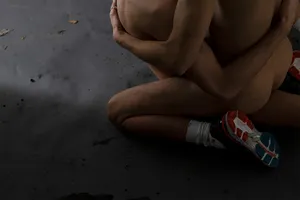
Filips Šmits’ Let’s Get Sun-Kissed approaches slowness through the politics of bodily presence in urban space. Composed of staged interventions across post-Soviet environments, the project explores acts of rest – sunbathing, lying down, pausing – as subtle disruptions within spaces designed for movement, surveillance, and efficiency. A body at rest in the “wrong” place becomes an interruption, raising questions about visibility, entitlement, and behavioural norms in public space. Through these carefully staged moments, the city is reframed as an emotionally charged landscape where pleasure and stillness momentarily resist the logic of productivity.

‍Together, these three practices propose photography as a medium of duration rather than immediacy. Time is not compressed into a decisive moment but stretched, layered, and inhabited through care, labour, repetition, and embodied presence.

‍

2025

In her project Pupa, Ieva Maslinskaite explores photography as a medium in flux, mirroring the transformative state an insect undergoes in its pupal stage. By allowing bacteria and fungi to colonize large-format film negatives depicting highly controlled Dutch landscapes, Maslinskaite challenges conventional, anthropocentric hierarchies of image-making. In doing so, she shifts photography’s purpose from a fixed representation to a site of ecological habitation and ongoing metamorphosis.

‍

Rūta Kalmuka’s Dzen revives an ancient Latvian spring solstice ritual, once practiced by the Livs, involving the symbolic banishment of evil spirits and the calling of light. Her method—using a large-format camera and direct positive prints on photo paper and fabric—constitutes a contemporary ritual of its own. By integrating ancestral folklore with a reflective creative process, Kalmuka underscores ritual’s capacity to heal and renew both cultural identity and personal well-being.

‍

In Visvaldas Morkevicius’s I Want to Tell You Something, grief is articulated as a non-linear, endlessly revisited terrain. Morkevicius integrates archival photographs, images of everyday objects, and repeated scanning and printing to construct a visual echo of loss. This approach emphasizes the fragility of memory while advancing toward acceptance, becoming, in essence, a farewell letter to a former self.

‍

Across these three works, a unifying thread is the emphasis on transformation—both of the photographic medium and of personal or communal experience. Maslinskaite’s bacterial interventions on large-format negatives invite an ecological metamorphosis that challenges anthropocentric control; Kalmuka’s revival of an ancient ritual foregrounds the cyclical interplay of darkness and light as a means of cultural and personal renewal; and Morkevicius’s layered images of grief chart a non-linear passage toward acceptance and self-redefinition. While each artist addresses distinct subject matter—ranging from environmental processes to ancestral folklore and the fragile terrain of memory—they converge in using photography as a space of transition, reflection, and continuous becoming, revealing how images can evolve with the very conditions that shape them.

‍

The selecting committee consists of:

Iveta Gabaliņa | ISSP Curator/Co – Founder

Julija Berkoviča | ISSP Director/Co – Founder

Kulla Laas | Director of Tallinn Photomonth

Ieva Meilute-Svinkūniene | Curator

2024

The materiality of the medium and its relation to the digital realm are themes present in work by Agate Tūna, Gedvile Tamosinaite and Ruudu Ulas. Another trajectory – artistic explorations as an inner resilience towards forces of power and war – are the main focus in the documentary photo series of both Klaus Leo Richter and Katya Lesiv. The social, economical and ecological aspects of today's reality place artists in a challenging position and the projects we have selected this year mirror these concerns and reflections, mining both the rise of digital realities and the context of war against which many of their lives unfold. We believe these five artists will contribute positively to the FUTURES artistic community with the diversity of their approaches, demonstrating the role of the artist in a changing and challenging world.

2023

Cloe Jancis is Tallin-based artist who works primarily with photography, video and installation. Using her own body within staged photographs, Jancis reenacts a range of daily roles of women, highlighting their physical and mental manifestations. With an often playful approach, she questions the line between the autobiographical and fictional.

‍

Informed by her own personal experience of displacement and migration upon returning to Lithuania after 17 years living abroad, Ieva Baltaduonyte's work engages with issues relating to migratory culture and its potential traumas. By using photography for both personal expression and to foster a critical dialogue with contemporary society, Ieva is preoccupied with encouraging a deeper engagement with cross-cultural dialogue.

‍

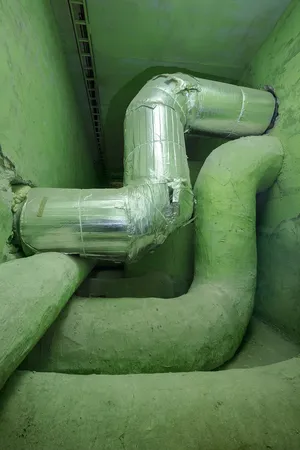
Most often recognised as a masterful portrait photographer, Reinis Hofmanis’s series Room No. 13 reveals a portrait of humanity through images of empty public building interiors instead. In his images, the utility infrastructure has become a unique metaphor for the relationship between humans and their surroundings, revealing something of our desire to adapt, improve and, ultimately, give meaning to space.

‍

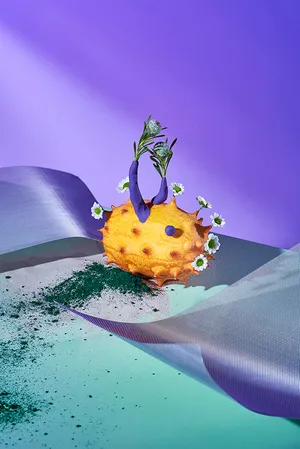
Zane Priede examines the relationship between humans and nature through masterfully crafted still life photography. By utilising everyday objects, she creates imaginary and surreal images which reveal her deep fascination with architecture, design and biology. Her recent work Continuous Gardens explores a fictional potential future for plant life, and raises questions about how human intervention may impact its evolution.

‍

Jurģis Peters is interested in visual explorations of the impact and consequences of various phenomena caused by advances in technology, with a particular focus on Artificial Intelligence (AI) both as a medium and a conceptual basis. Believing that the future is of AI and human co-creation, Peters uses these new technological possibilities as tools for visual storytelling and speculation regarding future scenarios.

2022

The selection of artists - comprising Kristina Õllek, Kristīne Krauze-Slucka, Sergey Melnitchenko, Vika Eksta and Konstantin Zhukov - encompasses diverse approaches to the medium of photography in terms of form and technique. Their practice ranges from documentary to camera-less photography, though they share a passion for exploring relevant social themes; the selected projects mirror the social, economical and ecological phenomena to which we are all subjected today. We firmly believe that these artists will contribute to the artistic community of FUTURES with the rich diversity of their approaches.