

Kliudžiau
Kliudžiau
Nominated by ISSP, 2024
I got it. The spinning camera zooming out in circles above an avatar lying on the cold virtual
ground. Reload.
I got it. Empty streets of another doomsday city seen from a window of an Internet café. And glitching dripping icicles from gutters, turning into fuzzy stray dogs as they fall down.
I got it. Growing up as much in computer games as in your house, your room, your bed.
I got it. A glistening arrow held in suspense versus a corrupt 3D-printing file for a neopuukko that freezes every printer mid-job.
I got it. So young yet so shrivelled!
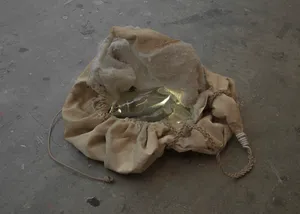
Liar of the knife, mixed media object, 2022 (in collaboration with Karolina Janulevičiūtė).
The bag is made from rust-stained cotton twill fabric, padded with natural silk cocoon fiber wool and lined with botanical ink dyed cotton satin fabric. The handle is found wooden branch, sculpted with air-dry terracotta color clay, wrapped by a white elastic cord. Another handle is created by coating fabric with a PVC tube hiding a trapped dried spider inside. The bag embraces 3D printed karambit knife in a manner of a soft and warm lair.
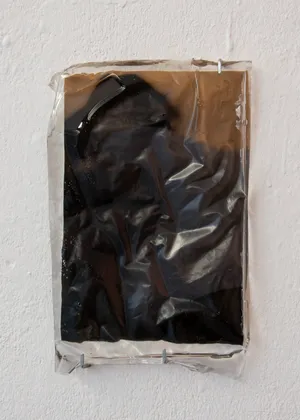
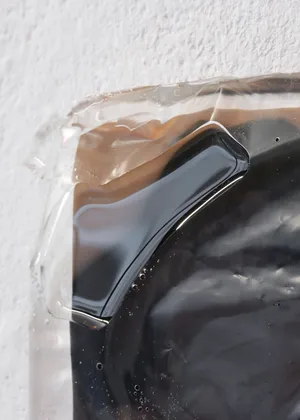
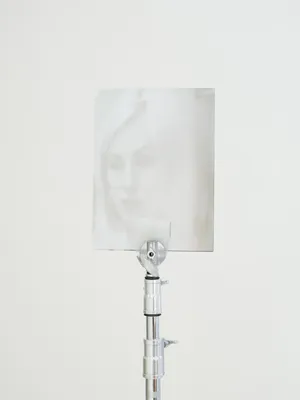
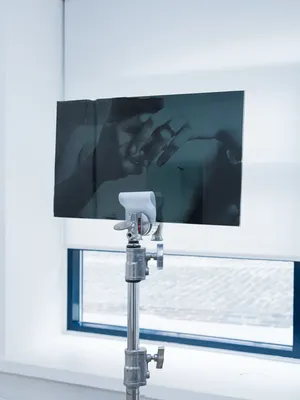
Antanukas, 2022
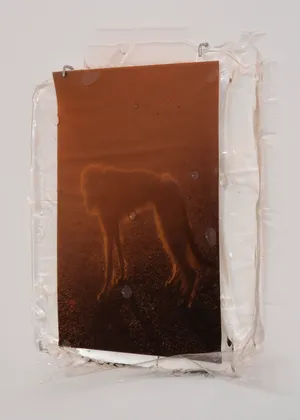
Digital C-print immersed in clear epoxy resin covered in melted plastic wrap, 20x30cm.
Renee, 2022
Digital C-print immersed in clear epoxy resin covered in melted plastic wrap, 36x41cm.
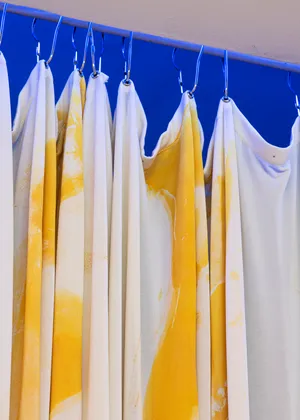
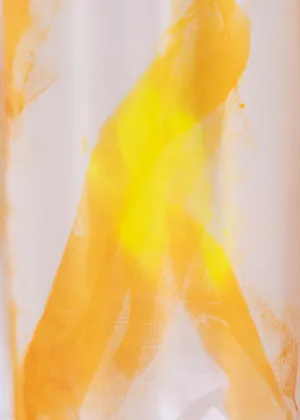
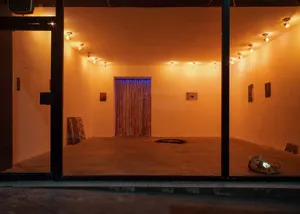
Thermochromic curtain (3-pieces 150x250cm), 2022 (in collaboration with Karolina Janulevičiūtė)
The curtain is made from sand-colored knitted viscose fabric with a free-hand silkscreen printed pattern of white and thermosensitive orange ink, which brightens to neon yellow by touch or elevated room temperature.
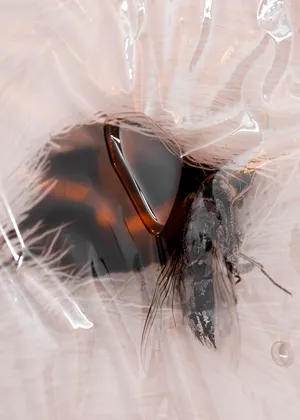
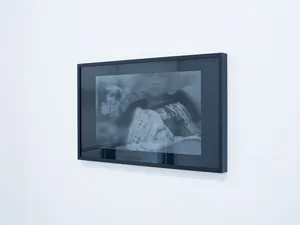
The Eye, 2022
Digital C-print immersed in clear epoxy resin covered in melted plastic wrap, 43x56cm.
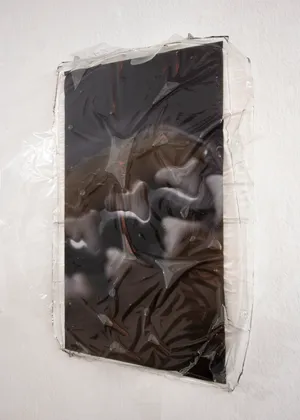
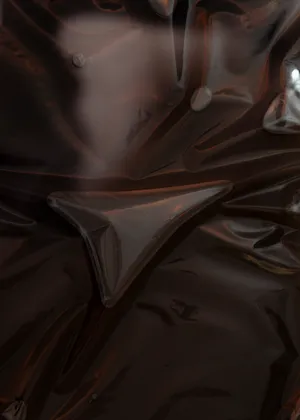
Teeth, 2022
Digital C-print immersed in clear epoxy resin covered in melted plastic wrap, 43x61cm.
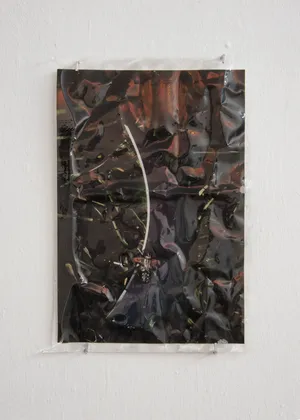
The Fly, 2022
Digital C-print immersed in clear epoxy resin covered in melted plastic wrap, 28x44cm.
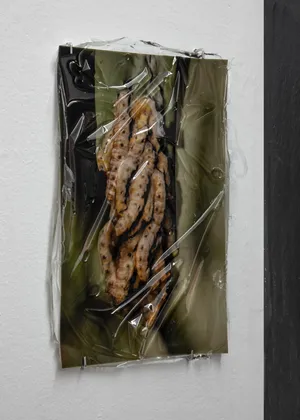
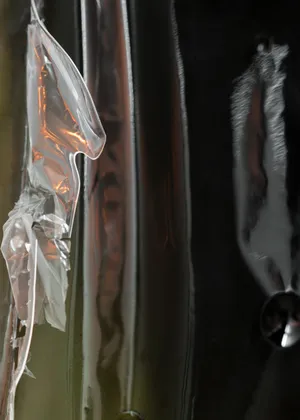
Larvae, 2022
Digital C-print immersed in clear epoxy resin covered in melted plastic wrap, 26x42cm.
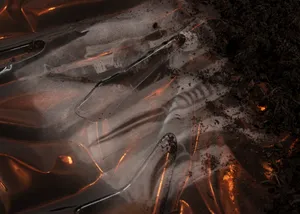
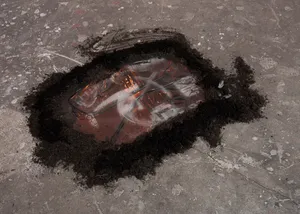
Sekretas, 2022 (in collaboration with Rūta Vėbraitė)
archival gicleé print on Photo Rag 305 gsm paper submerged in a puddle of epoxy resin and black soil. The illustration is inspired by drawings of a young boy that unintentionally, if not subconsciously replicate the digital user interfaces of video games.
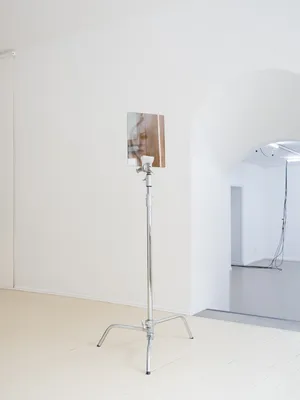
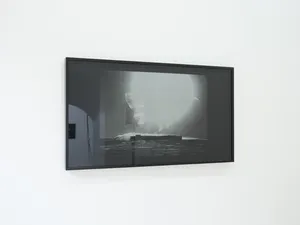
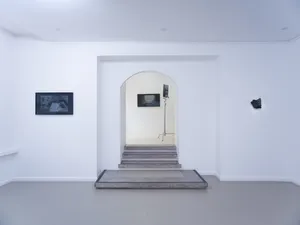
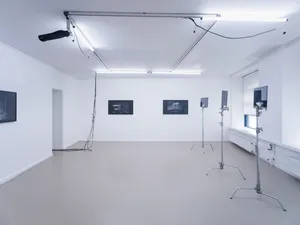
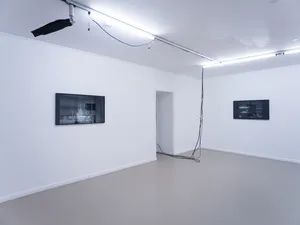
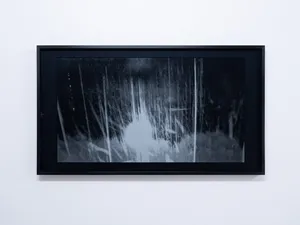
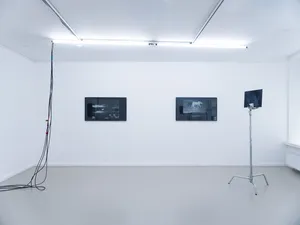
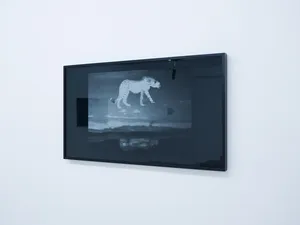
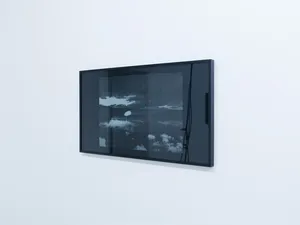
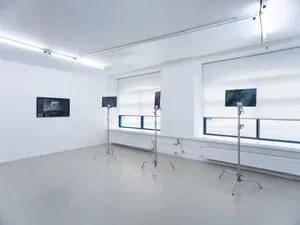
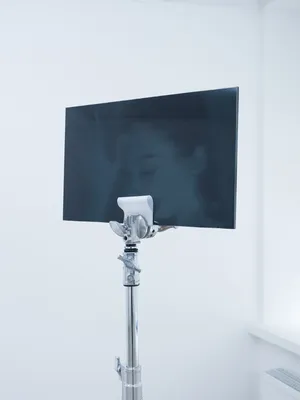
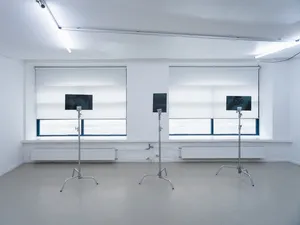
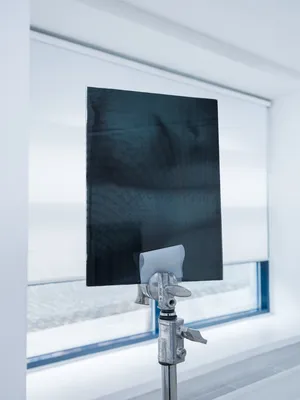
Screen Works
Screen Works
Nominated by ISSP, 2024

Isaac Titsinghkade 6A-B
1018 CA Amsterdam
The Netherlands
Isaac Titsinghkade 6A-B
1018 CA Amsterdam
The Netherlands
© 2026 FUTURES Foundation
© 2026 FUTURES Foundation