Artist
Rafael Roncato
Tropical Trauma Misery Tour
A Knife All Blade / The Façade
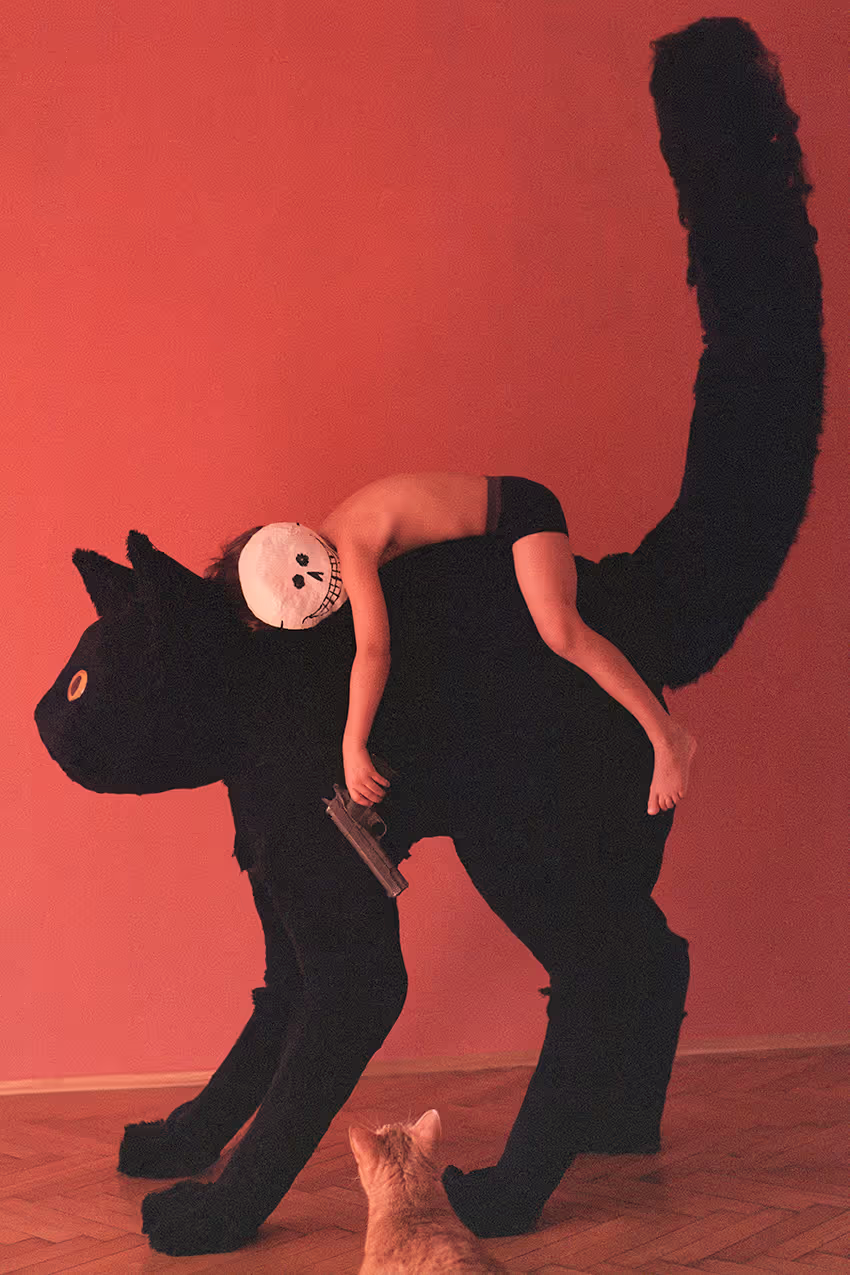
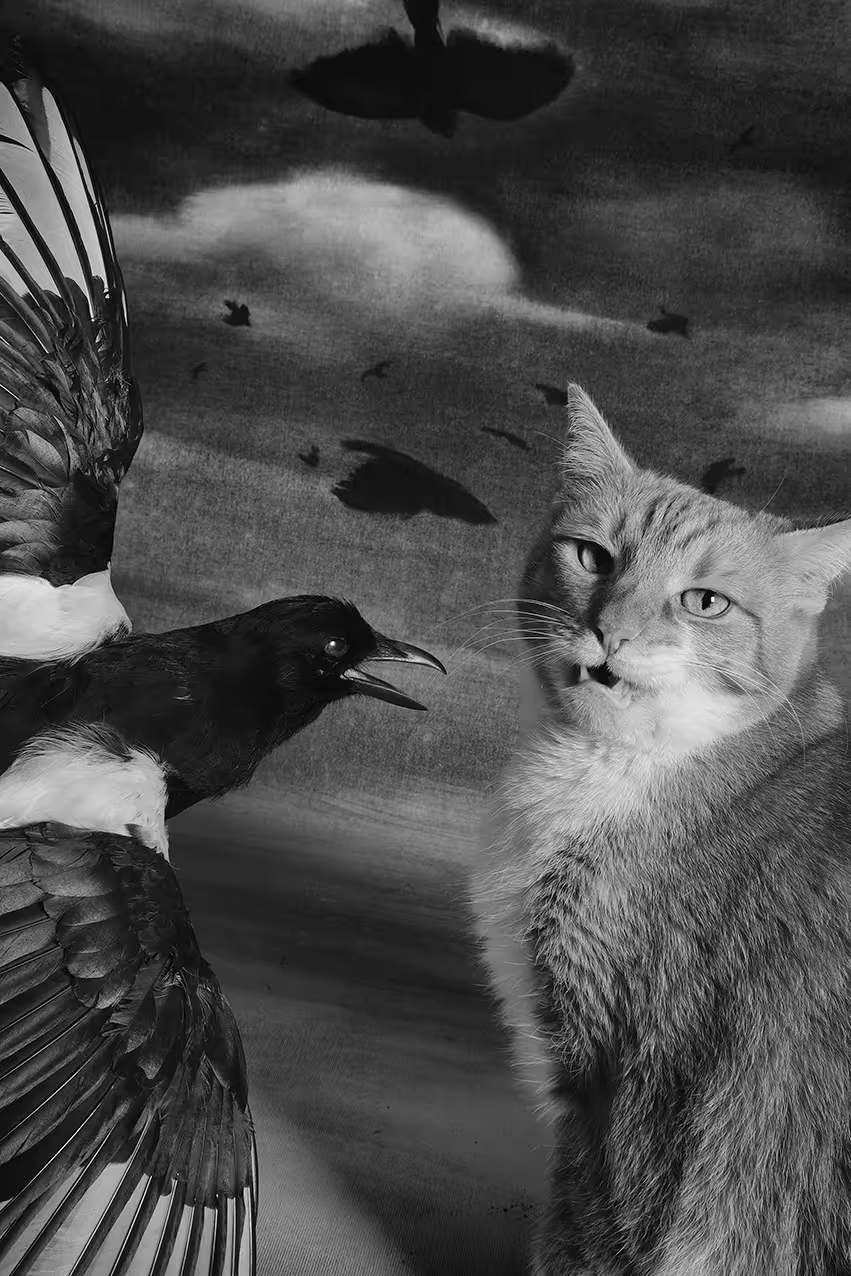
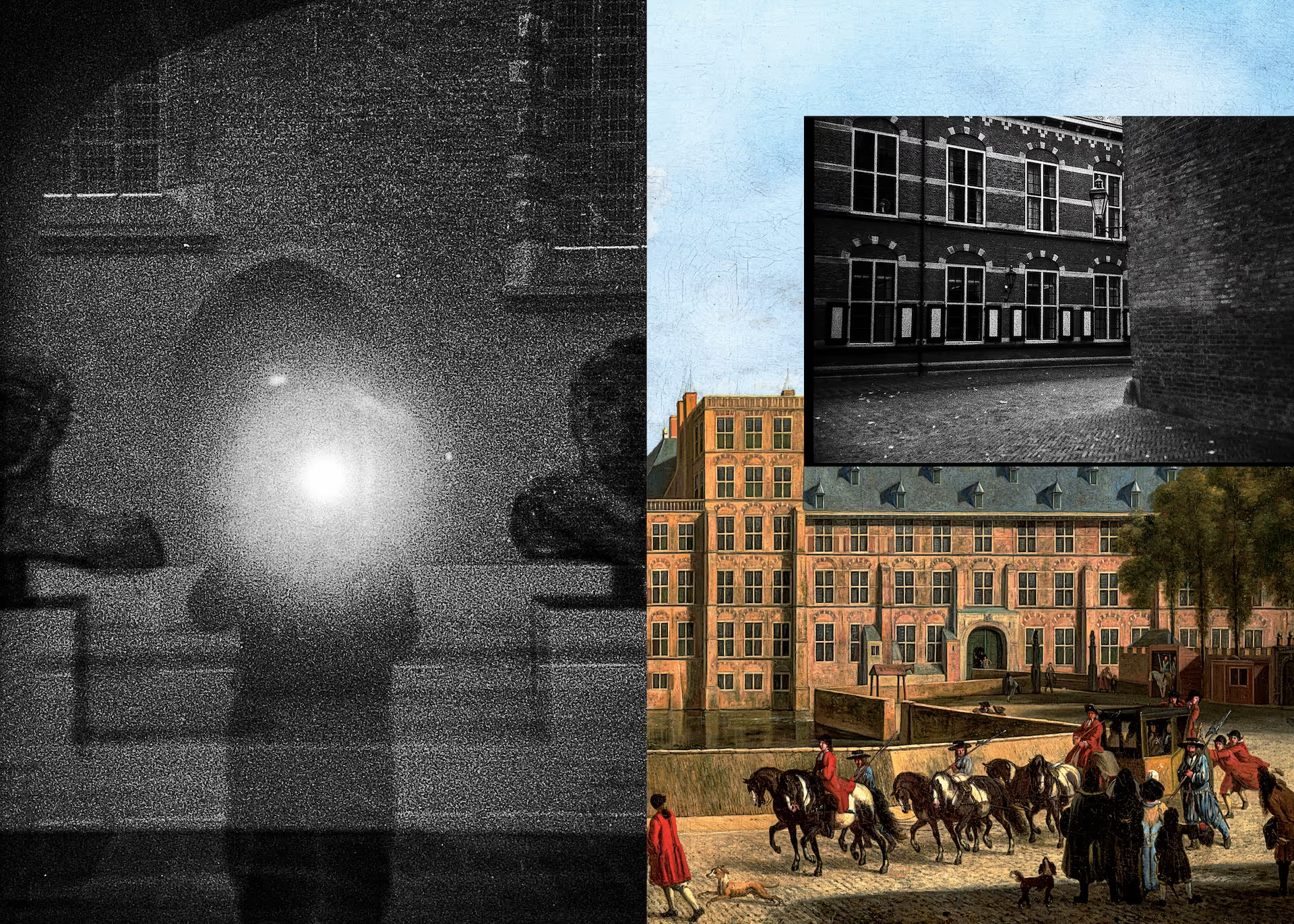
Drawing from collections at the Nationaal Archief, Mauritshuis, and Rijksmuseum, Roncato reappropriates paintings, maps, and documents originally produced during the Dutch Golden Age to frame Brazil as exotic, fertile, and conquerable. Commissioned under the governance of John Maurice of Nassau-Siegen and authored by figures such as Frans Post and Albert Eckhout, these images are treated as aesthetic instruments of empire. Through collage, juxtaposition, and a combination of analogue and digital photography, Roncato fractures these historical narratives and inserts them into present-day scenes of The Hague and Amsterdam, revealing symbolic sites, overlooked details, and everyday façades where colonial traces continue to surface.
The work connects past propaganda to the present city, questioning how visual power operates through framing, omission, and repetition. Inspired by João Cabral de Melo Neto’s poem Uma faca só lâmina (“A knife all blade”), the project understands each image as a “cut”: a blade without a handle, evoking fixed ideas that wound by insisting on singular, unresolved truths.
The project extends into "The Façade" (2025), a publication created in collaboration with researcher Carolina Monteiro and designer Alex Gyurkovicz. Bringing together archival material, historical paintings, contemporary photography, and critical essays, the book does not function as a conclusion but as a critical assemblage, allowing images and texts to confront one another and expose the mechanisms through which colonial narratives are constructed, maintained, and circulated.
We congratulate the selected artists on their nominations.
We carefully reviewed all submitted materials from the shortlisted artists. Our evaluation considered both the artists’ overall practice—its urgency, innovation, uniqueness, and trajectory of development—and a recent project highlighted in their application.
We assessed the social and cultural relevance of the work, its political dimensions as embedded in everyday relations and infrastructures, the articulation of artistic language and voice, research-based and conceptual approaches, and a critical awareness of the photographic medium. We also considered the potential of the work to expand into installation or spatial presentation.
Additionally, we reflected on the momentum of each practice and what joining the FUTURES platform at this particular moment in 2026 could bring. For some artists, this aligned with a newly released project that could be shared with the community of artists and members; for others, with a clearly articulated motivation or proposal.
While not decisive, we also noted the relevance of combined practices, such as curatorial or educational work, and considered how each artist would contribute to the FUTURES community. Finally, we sought a balance of perspectives and stories, and the conversations these practices would bring forward. We want to highlight additionally that the selection includes artists with both formal art education backgrounds and self-taught paths.
In total, we discussed 18 applications, all of which were very strong. The selection process offered an opportunity to engage deeply with the practices of many remarkable artists. Artists who were not nominated this year will automatically remain on the shortlist for FOTODOK’s next nomination cycle. We wish them continued success in their work and in future nominations.”
FOTODOK’s nomination followed a two-step process, beginning with internal nominations by FOTODOK team members, who compiled a shortlist of artists. The final selection was then made by an external jury consisting of Astrid Hulsmann, curator at BredaPhoto (Breda), Guinevere Ras, curator at the Nederlands Fotomuseum (Rotterdam), and Tom Viaene, coordinator of the Trigger - a publication for reflection on photography (FOMU - Museum of Photography, Antwerp), with Daria Tuminas, artistic advisor and curator at FOTODOK, being the secretary of the process.


Faces%252520of%252520Predictions_003.avif)