
Void

Member from 2021. Located in Athens, Greece

Void

Member from 2021.Located in Athens, Greece

Void is an art-house publisher dedicated to uncompromising, boundary-pushing photography books that blend innovative design, unique narratives, and a hands-on approach, supporting both emerging and established artists.

Nominations

2026

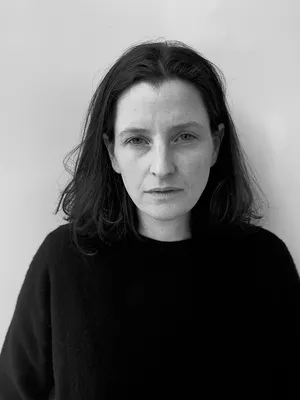
Francesca Giaitzoglou-Watkinson

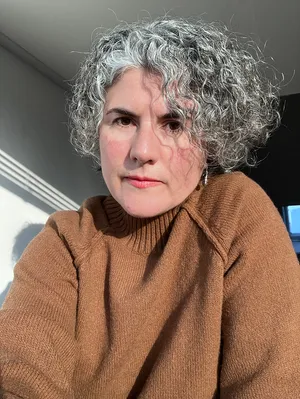
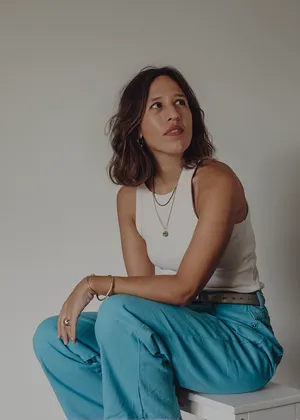
Void selected Francesca Giaitzoglou-Watkinson for her use of photography as an in-between space of encounter: between the self and the other, the image and the memory, the vulnerability and care. Across long-term, research-led projects, she treats photography as a psychological terrain, where identity, gender, belonging, and trauma are processed through her intimacy. Also very distinguishes her work is her capacity to intertwine her own experiences with a broader cultural framework. Allowing personal histories to resonate beyond the self without losing their intimacy. Her practice proposes photography as a tool for self-understanding and transformation, and a form of accepting healing.

‍

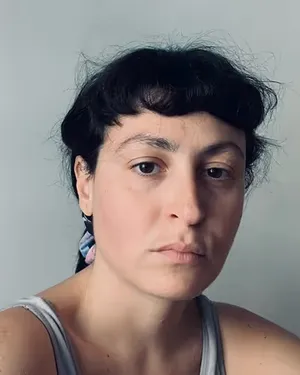
Hristina Tasheva

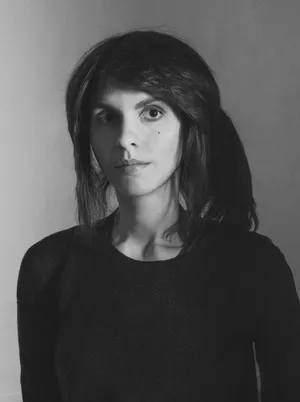
Hristina Tasheva was selected for her rigorous approach to photography. Using it as a tool for thinking through history instead of trying to illustrate it. Her long-term, research-driven practice moves between personal position and collective memory. We also highlight her plurality: working across photography, archival material, text, and performative gestures. Grounded in lived experience while aware of Europe’s fractured historical landscape, her practice navigates proximity and distance, care and critique. The understanding of historical complexity, combined with her research-based approach, aligns with Futures’ commitment to artists who engage photography as a critical and reflective medium within contemporary realities.

‍

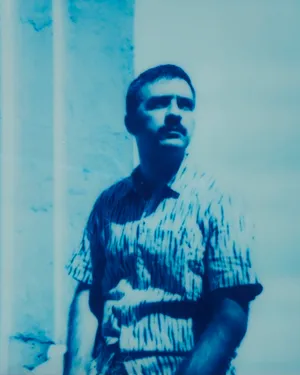
Odysseas Tsompanoglou

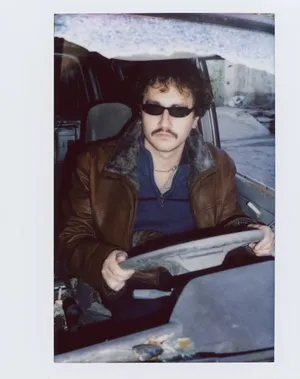
Odysseas Tsompanoglou was selected for his searching engagement with photography as a space for reflection. His practice moves between document and fiction, questioning how truth is constructed and experienced in a time shaped by mediation, instability, and perception. Working with loss, melancholy, and the possibility of collective healing, Odysseas incorporate in his practice his experience with Obsessive-Compulsive Disorder, by applying strict technical constraints to his practice, using photography as a therapeutic tool to metabolise the instability of time and perception.

‍

Members of the jury:

Myrto Steirou — Editor and Founder of Void

Kata Geibl — Photographer and Professor in the Moholy-Nagy University of Art and Design BA and MA program

Maria Sturm — Photographer and teacher at HBK Braunschweig
2025

Katerina Angelopoulou

Greek artist, based in Athens (GR)

Void selected Katerina Angelopoulou for the way she explores the gaps in history—stories that remain untold, unwritten, or forgotten. Her work focuses on the contrasts that shape Greece today: between past and present, personal and political, official history and lived experience. Through photography and text, she pieces together these fragmented narratives, questioning how the past continues to shape the present. We appreciate her thoughtful and research-driven approach, as well as her ability to turn complex historical themes into visually striking and engaging work. As a publisher, we also value her interest in pushing the boundaries of storytelling. Futures offers her the space to develop these ideas further, connecting her practice with a wider artistic community and new ways of sharing her work beyond Greece.

‍

Katerina Moschou

Greek artist, based in Athens (GR)

What drew Void to Katerina Moschou’s work is her ability to capture the ephemeral nature of everyday life—those fleeting, often overlooked gestures that shape our social fabric. Her interdisciplinary approach, blending photography with sculpture and engraving, expands the language of the image beyond the purely visual, creating a tactile and sensorial experience. We are particularly interested in how her practice engages with materiality and traces of interaction, resonating with contemporary discussions on presence, memory, and perception. Having already published her first photobook, Moschou has begun navigating the challenges of bringing photographic work into book form—something central to Void’s own practice as a publisher. Her sensitivity to how images function in different contexts, and her commitment to keeping narratives open-ended, align with our approach to bookmaking. Her ability to translate these nuances into evocative visual storytelling makes her a natural choice for Futures.

‍

Mari Kolcheva

Bulgarian visual artist, born in Sofia (BG) and based between Sofia (BG) and The Hague (NL)

Void selected Mari Kolcheva for her nuanced approach to documentary photography, which engages with complex narratives at the intersection of history, psychology, and science. Her work challenges rigid frameworks that define deviations—whether in nature, health, or identity—questioning who sets the standards and why. As a Bulgarian artist working between Sofia and The Hague, she brings a perspective shaped by multiple cultural contexts, adding depth to her explorations of personal and collective histories. We appreciate her commitment to pushing the boundaries of photography, using the medium as a tool for deeper inquiry rather than mere representation. Her involvement in The Balcony, an artist-run space supporting emerging talents, also aligns with Void’s dedication to fostering new voices. Futures provides her with the ideal platform to further develop her practice, connect with a wider international audience, and continue challenging conventional narratives through photography.

‍

The selecting committee consists of:

Eleni Mouzakiti | Artistic Director of the Photopolis International Photography Festival in Agrinio and Gallery Director at the House of Lucie Athens

Elpiniki Meintani | Photography Curator at the National Gallery – Alexandros Soutsos Museum

Myrto Steirou | Publisher, Editor, and Educator; Artistic Director at Void and co-founder of Carnivora

2024

Void nominates Ilias Lois based on his significant contributions to the Greek photography scene. Typically involves long-term series, his work experimenting with the interplay of different photographic genres, mixing quasi-documentary strategies and staged photography. His particular interest in sequencing and non-linear forms of narration aligns with our appreciation for editing and bookmaking.

‍

Based in Sweden, Greek artist Katerina Tsakiri explores the female identity in Western culture, specifically concentrating on the female body. This is evident in her project The Smiley Cut – a visual chronicle of her journey through cancer treatment.

‍

Klavdia Balampanidou explores themes of personal and collective identity, belonging and mental health. Void is captivated by her compelling work in progress, which portrays young individuals detached from urban environments. The dramatic nocturnal ambience of her work, juxtaposed with the use of harsh flashlight, creates a cinematic atmosphere that aesthetically resonates with our own themes of interest.

‍

Louiza Vradi engages with mediums including photography, video, new media, textile, painting and installation, and her subtle interplay between reality and fiction, particularly in social documentary practices, resonates deeply with Void's interests. Beyond her artistic pursuits, Vradi has served as an art educator and therapist, offering support for mental and psycho-social challenges and further informing her work.

‍

Tony Dočekal is visual artist propelled by the pursuit of connection and the ever-shifting nature of identity. Void first came across Dočekal through her project The Color of Money and Trees which provides a poignant narrative that unfolds as a speculative road movie, blurring the line between reality and imagination. Captivated by the project, we are now in the process of creating her first monograph.

2023

Ania Vouloudi is a photographer, video artist and poet currently living in Thessaloniki, Greece. In her art, she uses analogue mediums, findings and chronicles of her life to create docufiction stories. Ania ́s photographs deal with apparent banality and daily routine. Having a low-fi and unpretentiousness approach that captivates us. Ania has experimented a lot with zine making, which we highly appreciate in her practice.

‍

Elena Helfrecht is a German visual artist based in Bavaria. Having a dark and eerie aesthetic, Elena navigates universes that we consider in resonance with Void’s practices: the threshold of fiction and reality, the exploration of existentialism through mortality, trauma, memory and post-memory.

‍

Eva Vei is a Greek visual artist whose work mainly revolves around the notion of communication and intimacy within everyday human interaction. She is interested in exploring issues of identity, belonging and human connections in modern societies while challenging the boundaries of the photographic medium. Void believes that her work, yet still unpublished, perfectly suits the book form, due to her ability in creating non-linear visual narratives, and her search for new methodologies of documentary photography and storytelling.

‍

Maria Siorba is a Greek visual artist based in Athens, with an educational background in Communication, Graphic design and Fine Arts. Her subtle approach tointimacy and human emotions is what sparked Void’s curiosity about Siorba’s work. Probably one of the most important contemporary subjects, “empathy” is a highlight of Siorba’s artistic exploration. Communicating, and miscommunicating. The difficulties humans encounter in expressing themselves. She examines the role that personality, mental state, emotional intelligence and cultural context play and how all these functions under the use of the constantly-evolving, technological tools ofcommunication.

‍

Vic Bakin is a self-educated Ukrainian photographer. Rooted in Kyiv, Ukraine, Bakin explores different local communities such as queer and fashion scenes,rave and music culture and closed communities such as student dorms. Recently, due to the ongoing circumstances, his focus shifted to the themes of war in Ukraine. Void’s interest in personal diaries finds a great place in Bakin’s body of work — which explores his identity through analogue photography.

2022

We first met Greek photographer and architect Stefania Orfanidou at a bookmaking workshop. Her delicate compositions and intriguing images play like music when laid out on pages.

‍

Meanwhile, Ioanna Sakellaraki is another talented Greek artist with whom we’ve been familiar for some time. Her first monograph, The Truth is in the Soil, deals with personal issues, mourning and Greek society: subjects that are close to our hearts.

‍

Another of our nominees is Czech photographer Josef Janošík, whose dark body of work resonates greatly with Void’s aesthetic interests. In his work, Janošík returns to half-forgotten childhood memories, and to the places where his childhood was spent.

‍

Greek artist Dafni Melidou has a similar sense of creativity and experimentation in her work. Though currently unpublished, a number of her series – like The fossils, the ashes and other remains of existence – have the right ingredients for an intriguing photobook.

‍

Beyond our base in Athens, Void also operates a small branch in Reykjavík, Iceland. With this in mind, we were keen to showcase a local artist; Þórsteinn Svanhildarson caught our attention with his touching portraiture of local youths, as well as with his beautiful book production.

2021

Bebe Blanco Agterberg, a Dutch visual-storyteller working with photography, has a body of work that perfectly fits the book form. In 2019, Bebe took part in a Void’s activity that paired photographers and designers to make a zine in a day. Her politicized work stands out as strong and appealing. Her dealings with the Post-truth Era make the work relevant to our contemporary days.

‍

Tereza Kozinc, who we first met in a book-making workshop, has a deeply personal, experimental work. Part of her practice is transforming it into zines and artist books.Exploring the notions of ‘home’, Kozinc has an appealing diaristic approach that obscures the limits of reality and fiction. Joselito Verschaeve’s photography is technically meticulous. His editing process is very well-thought-out. He carefully plays with simple and banal subjects, elevating and re-signifying them. We were lucky enough to have Joselito as a trainee at Void in Athens. During his stay in Greece, he developed hand-to-hand with Void’s editor Myrto Steirou his forthcoming debut book that will be soon published by Void.

‍

The subjectivity of the British photographer Emily Graham’s practice is what initially dragged Void’s attention. Her work leaves space for the audience’s interpretation, with rich and complex metaphorical potential. Her project ‘The Blindest Man’ is a captivating story about a real, unsolved treasure-hunting mystery. Open to interpretation and bringing much more questions than answers, ‘The Blindest Man’ will be Graham’s first book, to be published by Void in 2022.

‍

Rocco Venezia is an Italian visual artist working mainly with photography. The subject of his works originates from a personal interest in literature as well as a certain awareness of European political and economic situations. Matters well-developed in his first book, ‘Nekyia’ (Witty Books).

‍

Our selected talents of 2021 have, if not all, most of the attributes we look for in our books: well-defined personal approach to photography; a work open to interpretation, raising more questions than answers; and a creative blur of the frontiers between reality and fiction.

‍

Being an independent publishing house, Void wishes to give voice to artists with bodies of work that might struggle to find venue elsewhere, that being due to the nature of their (dark) subjects, the experimental approach to their practice, or even the artist’s career moment. With this in mind, Void is extremely proud of fostering the photographer’s debut books.