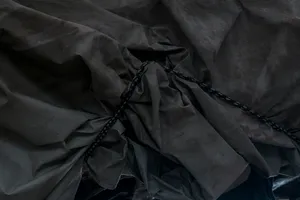
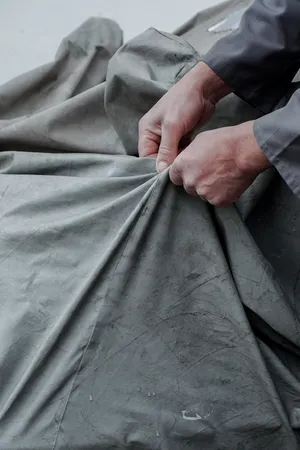
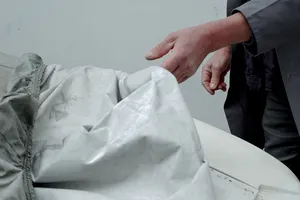
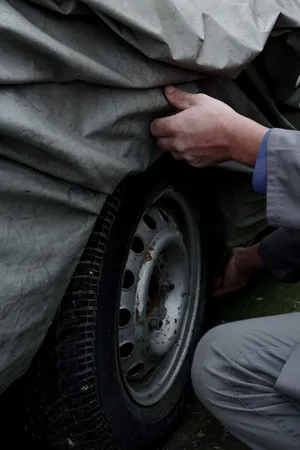
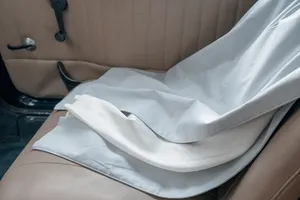
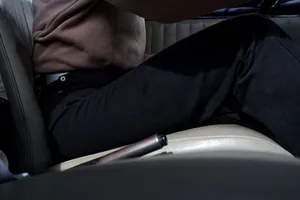
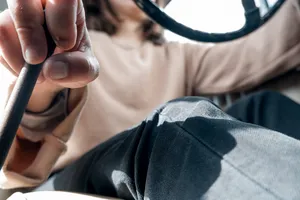
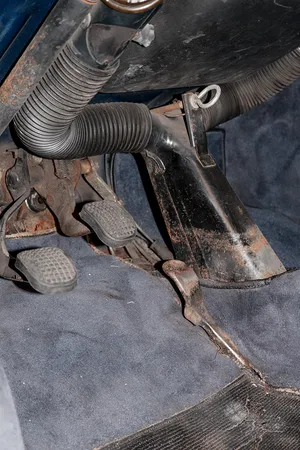
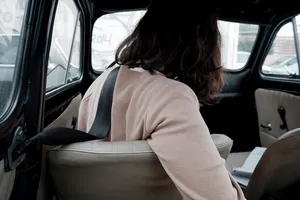
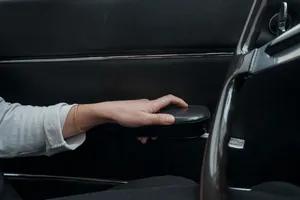
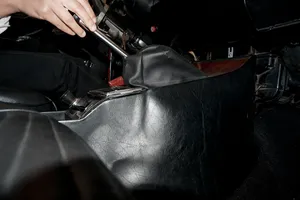
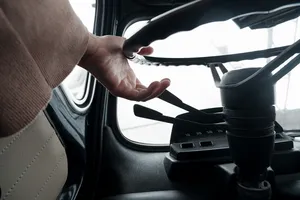
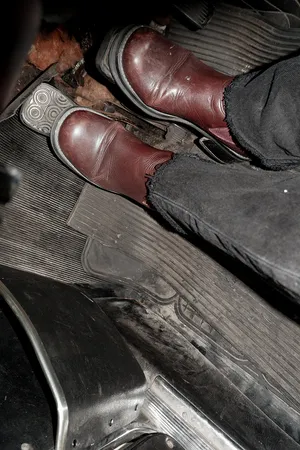
There are stories other than the triumphant victories of Le Mans racers. Or there could be no such stories in that sense.There is meaning beyond victories and losses. 24 hours of racing sound exhilarating but how about 365 days of driving? One’s driving routine could hold enough value to do away with heroes. "How to Drive" unfolds as Katerina immerses herself in her father’s car workshop, reclaiming a space both familiar and distant. What begins as an exploration of an environment historically coded as male transforms into a study of movement, routine, and bodily perception. The world of cars has long been synonymous with speed, mastery, and technological precision. But How to Drive turns attention to another kind of driving—one that is tactile, rhythmic, and deeply embodied. Katerina documents herself in motion, observing the interplay between body and machine, where every grip of the steering wheel, every press of the pedal, becomes part of an unconscious choreography. Over time, this process evolves into a ritual, an intimate performance unfolding within the car’s enclosed space. The project shifts the focus from grand narratives to unnoticed gestures, from the stories we are told to the intelligence of the body itself. It echoes Ursula Le Guin’s Carrier Bag Theory, embracing untold, unheroic narratives—often linked to women’s experiences. In this way, the car is no longer just a means of movement but a vessel for memory, materiality, and self-exploration.
Katerina Moschou
Katerina Moschou moves fluidly between sculpture and photography, with printmaking and painting forming the core of her practice. Her multidisciplinary approach allows her to transfer characteristics from one medium to another, shaping an evolving artistic language. Obse