
Photo Elysée

Member from 2023. Located in Lausanne, Switzerland

Photo Elysée

Member from 2023.Located in Lausanne, Switzerland

Photo Elysée is one of the most important museums entirely dedicated to the photographic medium, with collections of more than 1,200,000 phototypes covering the entire field of photography, from the 1840s until today. Each year, we produce demanding exhibitions, distribute reference editorial content, conceive innovative events and offer events open to all. Since its creation in 1985, Photo Elysée has been questioning the permanent reinvention of the medium through the great figures who have marked its history by imagining new ways of seeing or making people see, while revealing in a privileged way the emerging photography which, through unseen views, bears witness to the world of today and prefigures that of tomorrow.

Nominations

2026

Both articulate practices in which the image functions as a contested site: a field of tension between memory and erasure, between private and shared narratives, between material density and perceptual surface.

‍

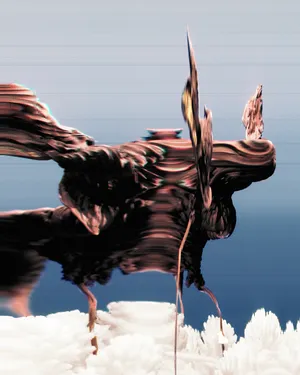
Johanna Hullár’s work departs from perceptual slippage—the cognitive impulse to recognize forms within forms—and unfolds as an inquiry into how images produce meaning through projection and association. She stages encounters between still and moving images, activating zones where the real and the speculative interpenetrate. Objects, synthetic materials, and organic matter coexist within installations that speculate on possible futures and on the entanglement of human-made and natural agencies. Inflected by a subtly humorous and distinctly feminine perspective, her installations construct immersive environments in which sculptural arrangements encased in ice remain in a state of suspended transformation. Melting becomes both process and metaphor: a choreography of appearance and disappearance that foregrounds impermanence as a material condition.‍

Santiago Martinez, by contrast, interrogates the apparatus itself. Working at the limits of DIY lens-based devices, he develops photographic systems that displace conventional hierarchies between reproduction and production. His recent projects operate through a hybrid protocol combining large-format optics, mirrors, and a laser printer, effectively reprogramming a machine of duplication into an image-generating device. The resulting works foreground the frictions, distortions, and temporalities embedded within the apparatus. As a photographer formed in the wake of digital dematerialization, Martinez reclaims the mechanical and the tactile as critical positions, insisting on photography’s haptic and processual dimensions.

‍Across their distinct methodologies, Hullár and Martinez mobilize abstraction and the sublime not as aesthetic categories, but as operative strategies—modes of resistance within a culture structured by acceleration and obsolescence. Through processes of metamorphosis, material instability, and technical détournement, they re-situate photography as an expanded field: a space where image-making becomes an embodied negotiation with matter, time, and perception.

‍In addition to their participation in FUTURES in 2026, both artists have been selected by Photo Elysée for a residency at the Fondation Fiminco in Paris, culminating in an exhibition in fall 2026.

‍

The members of the jury:

Nathalie Herschdorfer - Director at Photo ElyséeManuel Sigrist - Curator, Head of exhibitions and programmes at Photo ElyséeHannah Pröbsting - Curator, Exhibitions Department at Photo ElyséeSarah Bourget - Scientific Collaborator, Exhibitions Department at Photo ElyséeJulie Dayer - Exhibition manager, Exhibitions Department at Photo ElyséeLydia Dorner - Exhibition manager, Exhibitions Department at Photo Elysée
2025

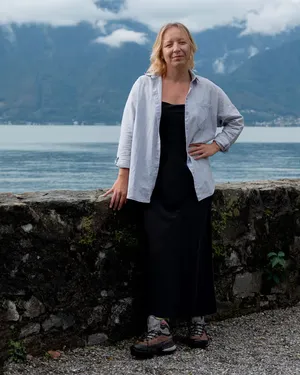
Zoé Aubry's work is bold, confrontational and unapologetically militant. While her photography is deeply rooted in feminist issues, such as denouncing feminicide and systemic violence against women, her practice extends beyond these themes to explore broader questions of resistance to systems of power and digital oppression. Aubry asks how individuals and communities can challenge and subvert these structures, particularly in an era dominated by technological control and surveillance. Her anti-capitalist stance is reflected not only in her imagery, but also in her approach to art as a tool for redistribution and solidarity. In her latest project, she sells her prints to raise funds, which she then redistributes to support organisations in Lebanon, transforming her art into a direct act of activism and solidarity.

‍

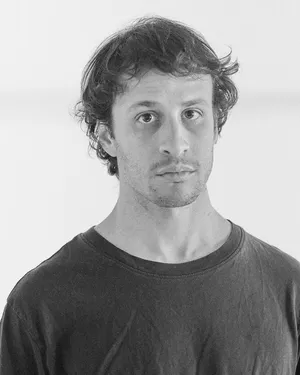
In contrast, Younès Klouche takes a more subtle and reflective approach. His work explores the intricate connections between the past and the present, weaving together powerful symbols and analogue narratives that invite the viewer to engage in a more contemplative way. Klouche's photography is suggestive rather than explicit, leaving room for interpretation and personal reflection. His photo book Panamera (Poursuite, 2023) exemplifies this approach, blending historical references with contemporary issues to create a layered and evocative visual language. In this way, Klouche encourages the audience to draw their own connections and meanings, fostering a deeper engagement with the stories he tells.

‍

Photo Elysée has taken a particular interest in the publication of both artists' photobooks - #Ingrid (RVB Books, 2023) by Zoé Aubry and Panamera by Younès Klouche - recognising them as significant contributions to the field of contemporary photography. The Museum is committed to supporting these two artists in their ongoing endeavours, highlighting the importance of their work in shaping conversations about social justice, historical memory and the role of art in activism.In presenting Aubry and Klouche, Photo Elysée not only celebrates their individual talents, but also underscores the diversity of approaches within socially engaged photography. Their inclusion in FUTURES 2025 underlines the museum's commitment to supporting artists who use photography to question, challenge and inspire.

‍

Photo Elysée's 2025 nominations were curated by:

Nathalie Herschdorfer, DirectorManuel Sigrist, Curator, Head of exhibitions and programmesSarah Bourget, Scientific Collaborator, Exhibitions DepartmentJulie Dayer, Scientific Collaborator and digital project manager , Exhibitions DepartmentLydia Dorner, Scientific Collaborator and Prix Elysée Manager, Exhibitions DepartmentHannah Pröbsting, Scientific Collaborator, Exhibitions Department

2024

The two artists selected by Photo Elysée for FUTURES in 2024 are Olga Cafiero and Thaddé Comar. Both studied in Lausanne and have been followed by the museum since their early works. Both break with conventional representations to explore our relationship to history and memory through powerful visual approaches.

‍

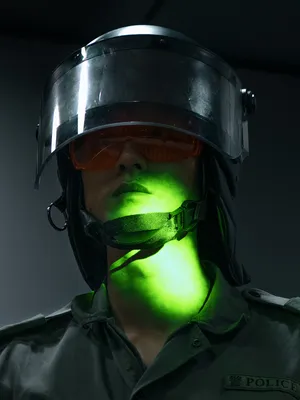
In Flora Neocomensis, Olga Cafiero explores a specific regional heritage (the Canton of Neuchâtel in Switzerland) by investigating its relationship with its flora. She creates an herbarium that combines botany, scientific imagery and history. She condenses visual languages and approaches to nature in a new poetic and meticulous inventory of a living heritage. Thaddé Comar focuses on the link between images and information in a context of resistance. Can we still trust images? In How was your dream?, he aims to deliver a new perspective on the 2019 revolts in Hong Kong and provides a strictly visual testimony.

‍

Both Cafiero and Comar share a common practice which takes its meaning through hanging and editing, where images find a shape through matter and textures. They stand at fertile crossroads between various visual approaches and synthesise them, with the intention of bringing new perspectives to the viewer.

2023

Tamara Janes's series Copyright Swap from 2023 represents her latest body of work. The series is part of a long research process based on the legendary New York Public Library Picture Collection, which Janes consulted extensively during an artistic residency in 2018. Open to the public since 1915, it is a collection of over 1.2 million images clipped from books, magazines or newspapers since the dawn of photographic imagery and filed under some 12,000 keywords.

Only a small proportion of these are available digitally. It serves her as a kind of image mine, as raw material that she later arranges, edits, recontextualises and modifies according to her interests. One of these interests is the question of image appropriation and its legal consequences. In Copyright Swap, Janes explores this with a lawyer in a kind of dialogue performance. She documents both the process of versioning the images, which are increasingly edited by the artist on the basis of the legal opinions she receives from the lawyer. The final results, presented as works, integrate the legal commentary, which explores and defines the moment when copyright passes from the original author to the author who has appropriated the image.

The NYPL Picture Collection project as a whole is a way for Janes to explore not only copyright issues, but also the ways in which images change meaning as they are sent out as vessels into the seas and clouds of digital networks, recombined with other image forms such as GIFs, and reinterpreted by non-human agencies such as image recognition algorithms. All of these phenomena are central to current artistic and theoretical engagements with visual cultures. Tamara Janes approaches these questions with a highly original mix that synthesises high-brow source material as well as so-called poor-image genres in a way that is at once deeply engaging and exposing visual culture banalities in highly amusing ways.

‍

Florian Amoser's work addresses the history of perception and perspective. In his working method, the phase of research and development - usually considered merely 'preparatory' - is in fact the 'decisive moment' for his photographic practice. His work reflects the contemporary condition of the computational image by exploring the recursive feedback loops of physical and digital realities. As Amoser himself states: "his photographs testify to a material dissolution of the environment in which physical reality begins to imitate a digital reality". To achieve this, Amoser takes on multiple roles: artist, engineer, coder, curator, scenographer and theorist.

For Amoser, it is necessary not only to rethink the role of the apparatus in his practice, but also, as in the case of his ongoing project splicer, to actually rebuild its hardware and software from scratch in the manner of his artistic "wetware" persona. This represents a new form of photographic materialism that does not fetishise the object character of the photographic print, but rather challenges and circumvents long-standing Western traditions and conventions, such as the concept of linear perspective. By constructing his own tools, a process that has taken him years to develop, he is on the verge of literally engineering new forms of pictorial category. As Amoser notes: "An image sampled on the Splicer is the record of a coordinated dance of a sample in front of the camera module. It's a reconstruction and remix of a three-dimensional object, lending its appearance and texture to create new visual matter. An image made with splicer can be infinite, can begin where it ends, and can be abstract yet concrete".

So this ongoing project splicer should also be understood as a political statement. It proposes, in a very concrete and practical way, how to begin to move beyond the impasse of technological determinism. A social, cultural and material reality that has become dominated by a quasi-feudal oligopoly of tech companies for whom networked images and computational photographic practices are part of a larger attention economy strategy that seeks to maximise capital gains and market share. In a sense, Amoser proposes to unlearn photography, allowing the viewer to dispense, at least partially and temporarily, with the dominant dispositive or technological framing of the image in contemporary visual culture.