
Fotogalleriet

Member from 2022. Located in Oslo, Norway

Fotogalleriet

Member from 2022.Located in Oslo, Norway

Fotogalleriet is a publicly funded foundation located in the center of Oslo and the oldest institution for photography as a critical art practice in the Nordic region. Founded in 1977 by a group of cultural workers for hothousing cutting-edge photographic practices, Fotogalleriet has since been dedicated to exhibiting local and international art practices, and analysing the rapidly expanding nature of a field unrestricted by technological and aesthetic shifts. Through its commitment to research and engagement with artists, Fotogalleriet is a leading institution within the field of image making. The Norwegian Royal Ministry of Culture provides Fotogalleriet’s principal operating support; additional operational funding comes from the Norwegian Photographic Fund (Nofofo), and in part, from the Oslo Municipality.

Nominations

2026

The selection was conducted through a structured committee process, bringing together both external expertise and internal perspective. Fotogalleriet appointed curator, film and media Researcher and co-founder of Films from the South festival Hilde Herming, and GT Nergaard, photographer, educator and principal at the Norwegian School of Photography. They were joined by Fotogalleriet's own Mikhela Greiner, photographer and project manager, and Dev Dhunsi, communications coordinator, photographer and FUTURES Alum.

‍Each member independently nominated a shortlist of artists, after which the panel convened to evaluate candidates and reached a unanimous final selection. The four nominated artists represent a breadth of approaches to photography and expanded image-making, united by a shared commitment to rigorous research, community engagement, and the interrogation of identity, memory, materiality and form.

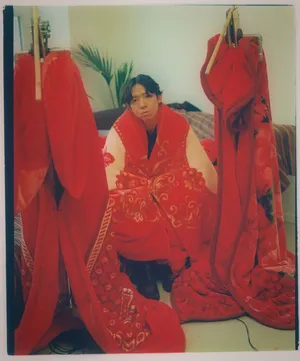
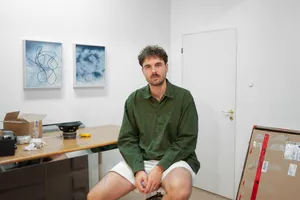
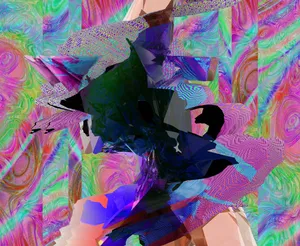
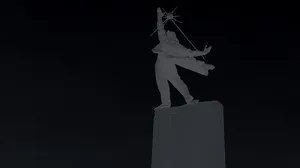
‍Duy Nguyen's practice moves fluidly between photography, sculpture, installation, and writing, grounded in thorough field and archival research. His work explores the intersections of identity, migration, culture, and materiality, bringing three-dimensional and textual elements into conversation with the photographic image to create layered, cross-disciplinary bodies of work.

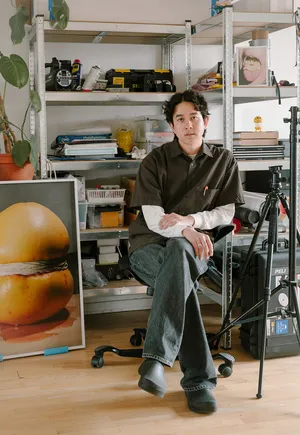
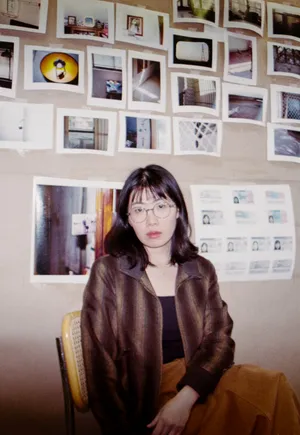
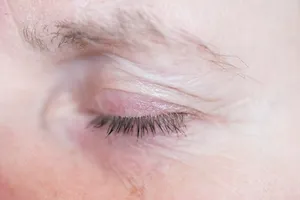
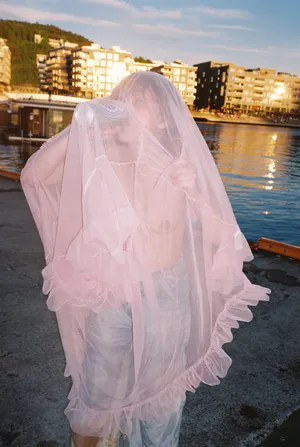
‍Minh Ngoc Nguyen works primarily with staged still-life photography, approaching the medium as both a visual practice and a cultural system. Their work examines how images produce, circulate, and stabilise meaning around identity, desire, and representation, interrogating the conventions and ideological underpinnings of photographic imagery itself.

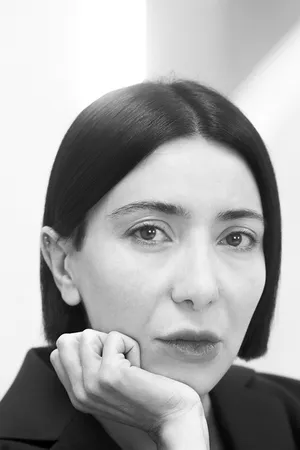
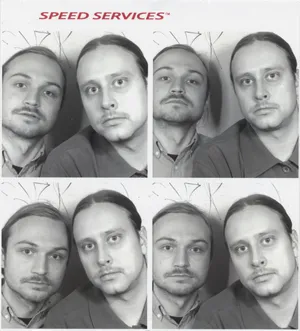
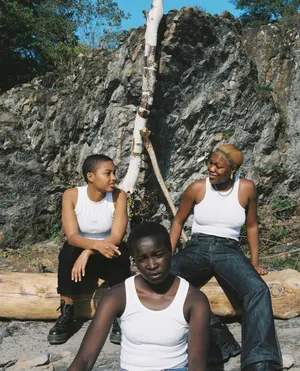
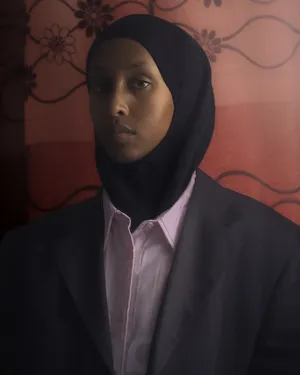
‍Ikram Abdulkadir's practice is rooted in the documentary tradition, focusing on family and individuals within familiar urban and domestic settings. Through poetic portraiture and delicate observation, her work explores themes of care, community, and belonging with sensitivity and quiet precision.

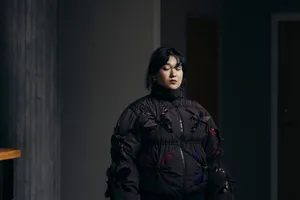
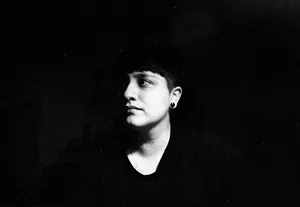
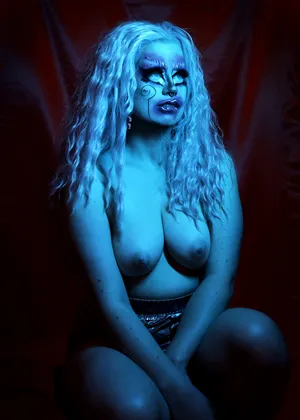
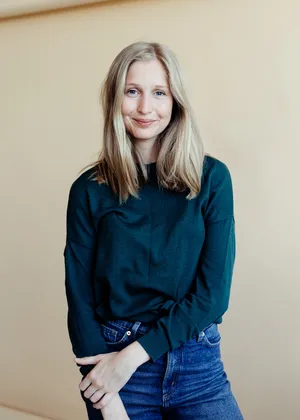
‍Signe Luksengard works across photography, installation, and writing, drawing on a background in both documentary photography and material-based art. Her work examines how emotional experience, labour, and inherited expectations shape the body and leave physical and sensory traces over time, investigating how history, care, and responsibility are carried, both individually and across generations, creating spaces for reflection where presence, vulnerability, and memory can coexist.

‍The nominated artists were distinguished by the technical and conceptual rigour of their practices, and each reflect Fotogalleriet's commitment to supporting artists who engage deeply with their communities and whose work contributes meaningfully the expanding possibilities of photography as a medium. Fotogalleriet looks forward to supporting their participation in FUTURES 2026 and to the contribution each will make to the network.

‍

Members of the jury:

‍

Hilde Herming - Researcher and curator with a background in film and media studies.

GT Nergaard - Artist born and living in Norway with 30 years of experience as a professional photographer.

Dev Dhunsi - Norwegian–Indian artist. Dev is the Communications Coordinator at Fotogalleriet, as well as a FUTURES alum.

Mikhela Greiner - Norwegian-Canadian visual artist and cultural worker. Mikhela is the project manager and exhibition producer at Fotogalleriet.
‍

2025

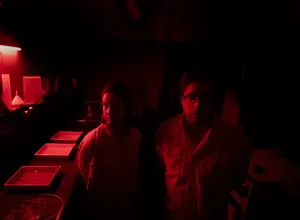
Through explorative materializations of their artform from Joanna Chia-yu Lin's soft photographic sculptures; to Jošt Dolinšek's site specific photographies printed with fine sand on black surfaces; to aluminum explosives of clandestine devices of the dark room by Nazanin Raissi; and Louise Sinaga Helmfrid's astute portrayals, they invoke undercurrent positionalities within photographic art and visual culture production.

‍

For the second year, Fotogalleriet has engaged curators, writers, researchers from the whole Nordic region as jury constituted by Curator at Röda Sten Konsthall Amila Puzić; Liisa-Ravna Rinborg, writer, researcher and curator currently situated at The Munch Museum; Samuel Girma, a curator, activist and cultural producer from Malmø; Nkule Mabaso, Director of Fotogalleriet and Miki Gebrelul, Curator and Head of Exhibitions at Fotogalleriet.
2024

Artist duo Bela:Hagren has extensively explored traditional photography in its multi-layered past, from the technologization of the medium for the sake of science to its more creative uses. Bela:Hagren often address the complexity of storytelling of photographic history, which can’t be reduced only to images, because it is embedded in the cultural context, circulation, and economic infrastructure of the given time. More recently, they have been working on a project about the monopoly of manufacturing paper in the Eastern bloc and the toxic residue left behind by photographic production.

‍

Joel Karppanen is a self-taught artist working with experimental photography to address class and labor issues and explore the deviousness of a hierarchical economy with issues of privilege, provenance, and access. In his most known work, Beyond Pitkäsilta (Metropolis) (2021–2023), he has worked with “donating” time, which is about putting himself to service or replace someone and giving them time so that they could have the same access or opportunities as himself for a limited period. In that specific work, he addresses how art is still for the few.

‍

Nayara Leite is an artist and an advocator for the LBGTQI+ community across both Norway and Brazil. In her project In Search of Rainbows (2022) Leite explores the different flags displayed in the north of Brazil. While a growing number of Brazilian flags favored under the then-president Jair Messias Bolsonaro led to notions of nationalism, persecution, and homophobia, the number of pride flags on display had almost vanished, symbolizing growing discrimination for non-normalized individuals.

‍

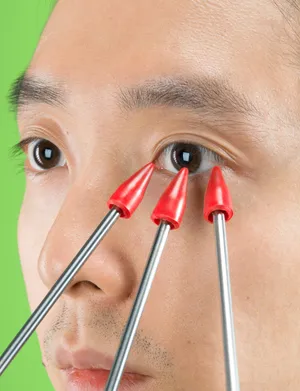
Sheung Yiu is a visual artist and a researcher focusing on how image sensitivity is increasing the complexity of algorithms but also bringing back old tropes of eugenics and phrenology, reactivating traumas of a colonial past based on provenance of geographies, genders, and other made-up exclusionary politics. (Inter)Faces of Predictions, or How To Read a Face (2023 - ongoing), is one such work where Yiu plays with these AI machines and their “learnings” to visualize their discriminative and presumptive politics.

‍

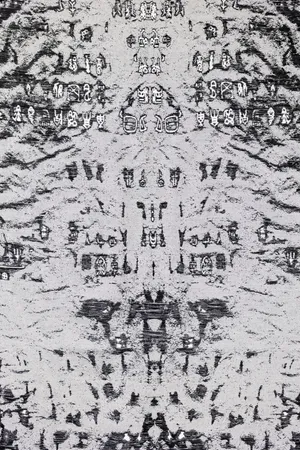
Yujie Zhou is an artist who works with expanded photography, publishing, textiles, and performativity to contest censorship. They have worked on legibility and illegibility as forms of protest through language. Panoptic Segmentation (2021-ongoing) parallels the 18th-century disciplinary system, the panopticon, invented to make bodies more docile in prison surveillance system, and a similar system adopted in computation to break down objects into stratified readable components.

2023

The work of Dev Dhunsi is inspired by the migratory movement of his family from South Asia. His photo-installation Ankhon Dekhi (2022) touches upon the complexity of society with its many -scapes (landscape, soundscape, mediascape) and the materiality of his photographic approach spans different media from textile to sculptural installation. As a subject with a complex historiography and layered diasporic knowledge, he focuses on the sociological character of photography.

‍

Paulina Tamara's commitment to photography as a means of representation is manifold. Her work comprises longstanding work with youth, exploring what they're coming to know in expressing their sexuality and gender freely. In Undress, looking at a queer woman undressing (2021), Tamara invited 15 people to watch her undressing while took pictures of the session with a trigger – an exercise in looking when both taking and giving complete control over the image.

‍

Naina Helén Jåma is a photographer working for influential Norwegian newspapers and magazines. She started her career as a South Sámi mediator in Jåhkåmåhkke at the Ájtte Museum at 13, and continues to maintain a close relationship with traditional Sámi arts. In her project Vætnoe (2018–),  Jåma speaks about traditional forms in living matter in Sámi people's livelihood, and how these forms and shapes continue to be part of the technological availability of today.

‍

Ilavenil Vasuky Jayapalan is a dissenting multidisciplinary artist. As a child of the Tamil Tigers ,and the subject of echoes of the traumatic effects of civil war, he ponders a postcolonial take on propaganda. Among the works Jayapalan has shared for FUTURES is Hello freeends 4.1 (2022), a self-portrait crafted through AI manipulation, based on what a South Asian person looks like to a machine when fed bits of information.

‍

Bobby Yu Shuk Pui grounds her work in the queer and genderless exploration of body politics, with a critical perspective on the social norms and constructs dictating reproduction and beautification – pushed to the forefront of the capitalist agenda in Asia, where Pui began her work. In the ongoing Genetic Salon (2020–), Put presents a web of video clips, exhibitions, and other material, leading the audience into a seductive imagination of the future.