Edit profile
The

Artist

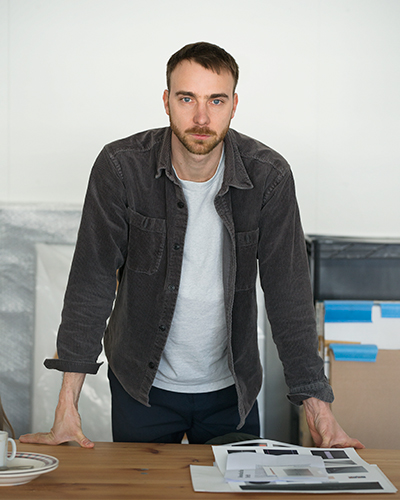
Sebastian Stadler

Lives and Works in
Zurich
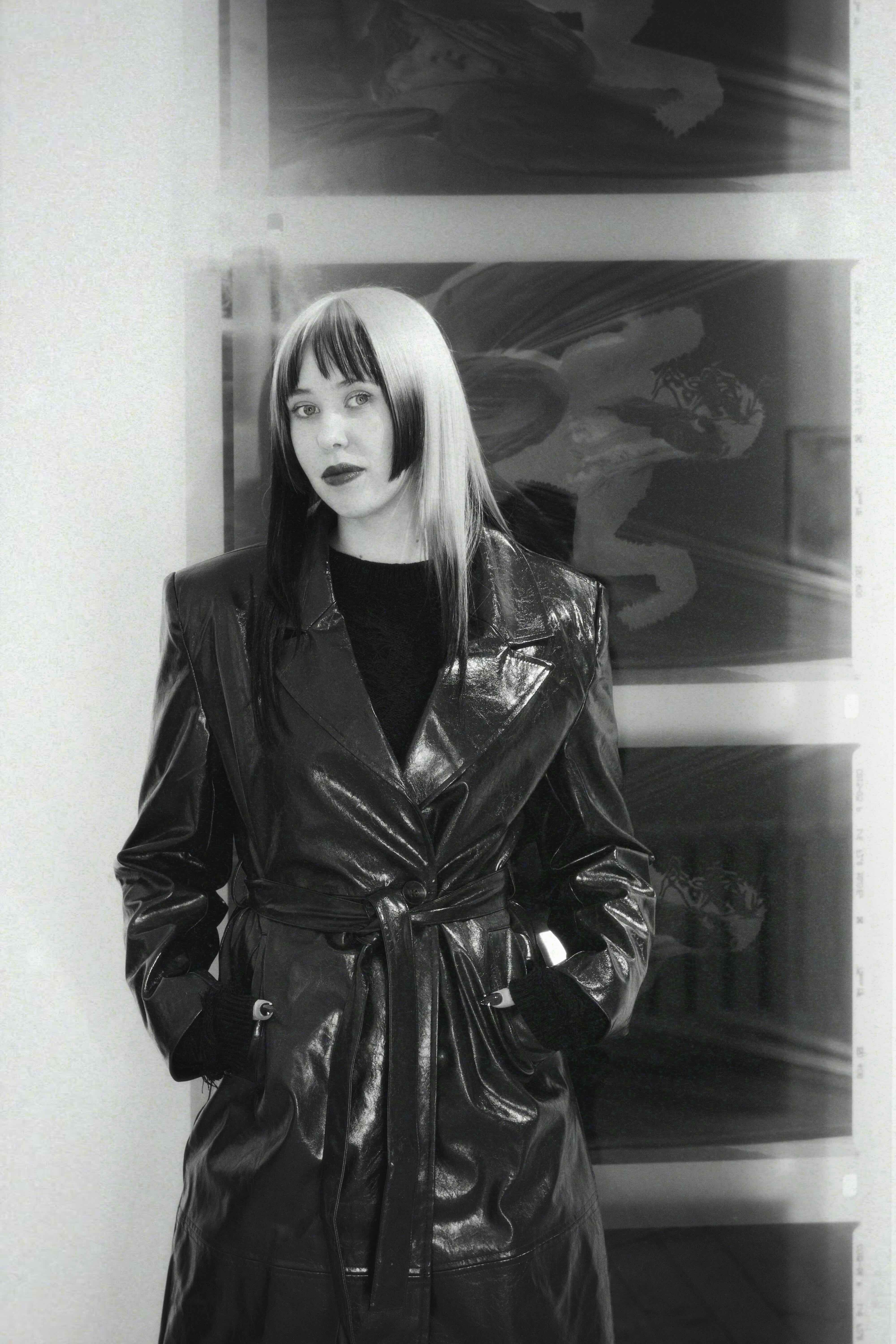
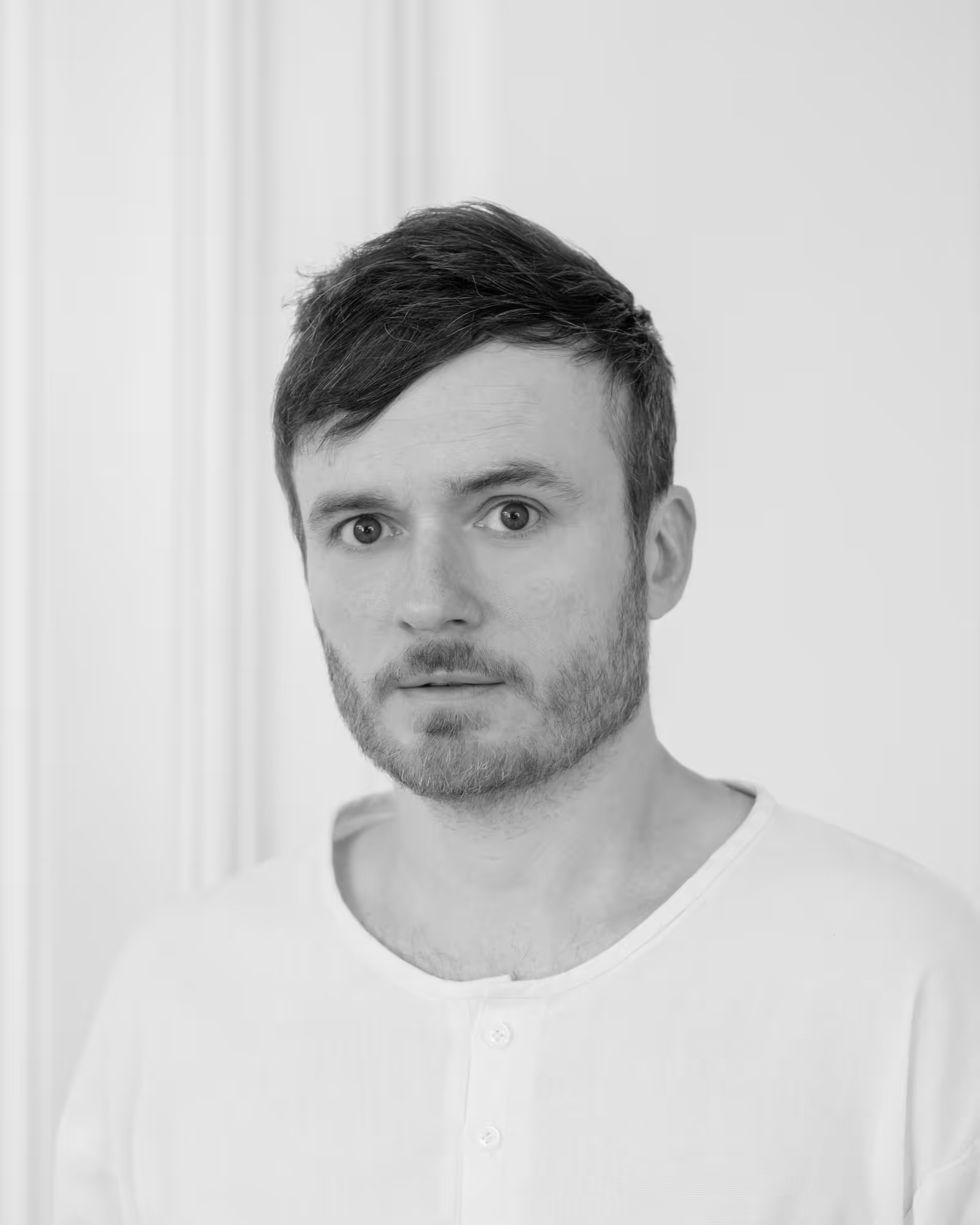
Sebastian Stadler is a Swiss-Finnish artist based in Zurich, Switzerland who works with photography, video and text. He studied photography at the Zurich University of the Arts (ZHdK) and the Lausanne University of the Arts (ECAL). His work has been exhibited in national and international exhibitions, including at Kunstmuseum Liechtenstein, Photoforum Pasquart, Kunstmuseum Thurgau, Kunsthaus Baselland, Centre de la photographie Genève, Haus Konstruktiv Zürich, Kunstmuseum St. Gallen and the gallery Heinzer Reszler in Lausanne. In 2013, Sebastian Stadler received the Swiss Art Award, and in 2019 the Manor Art Prize St. Gallen. In 2021, his first monograph, A Close Up of a Large Rock, I Think, was published by Kodoji Press and was selected as one of the Most Beautiful Swiss Books. His work is part of several important public and private art collections, including Vontobel Art Collection, UBS Kulturstiftung, Maus Frères SA Collection, Geneva, Kunstmuseum St. Gallen, Kanton Zürich, Kanton Thurgau, Kanton St. Gallen and Julius Bär Art Collection.
Projects
2025

New Archeologies

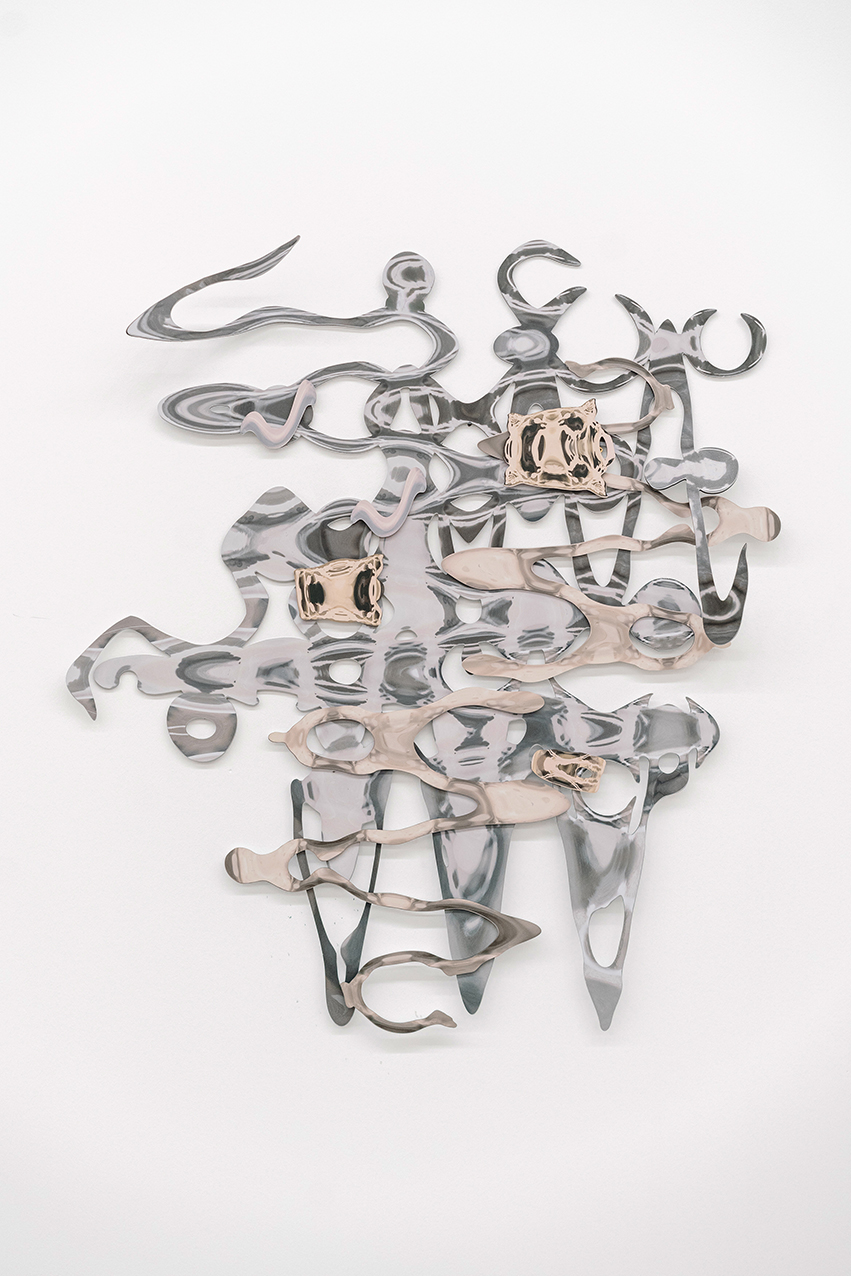
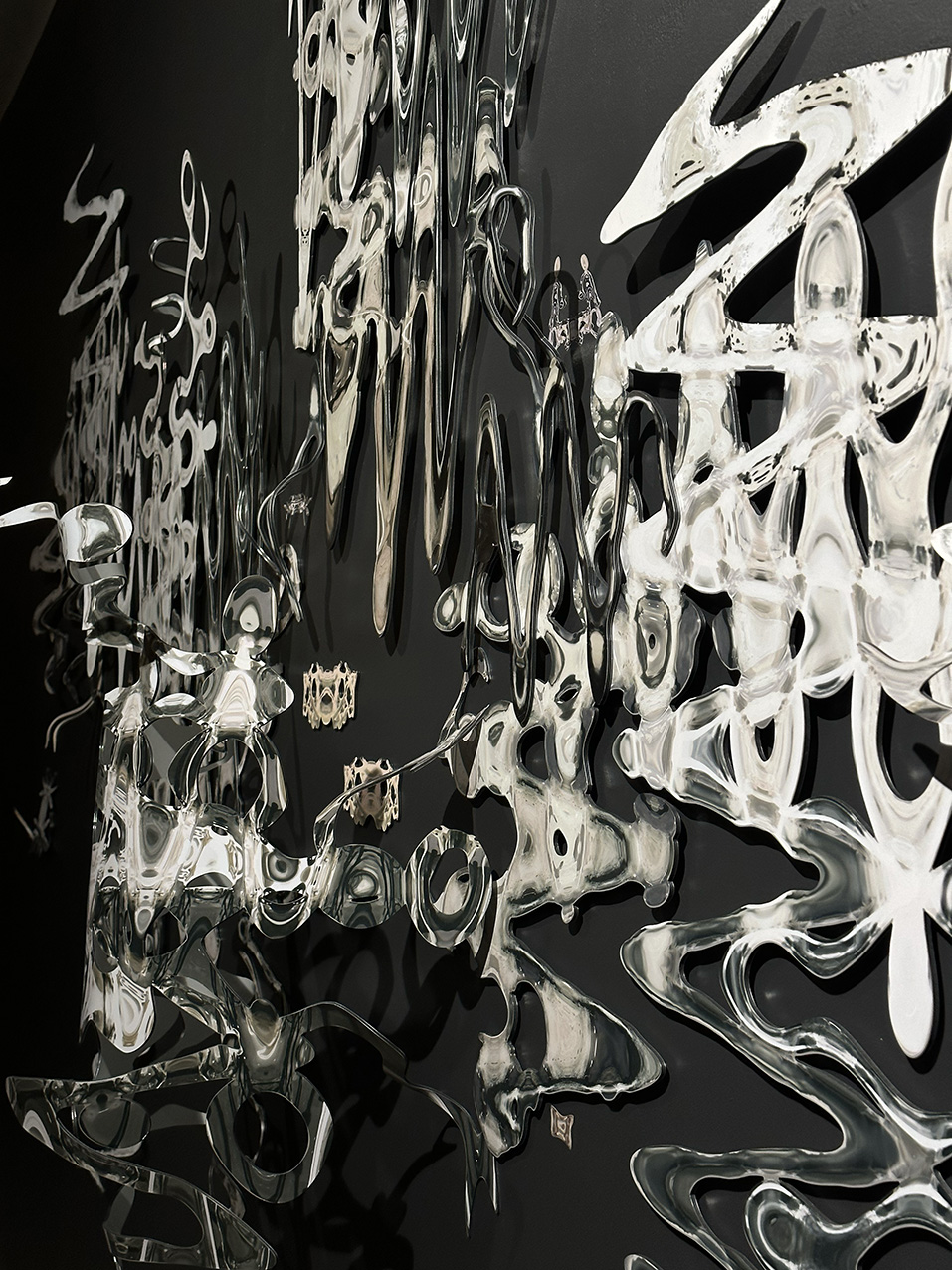
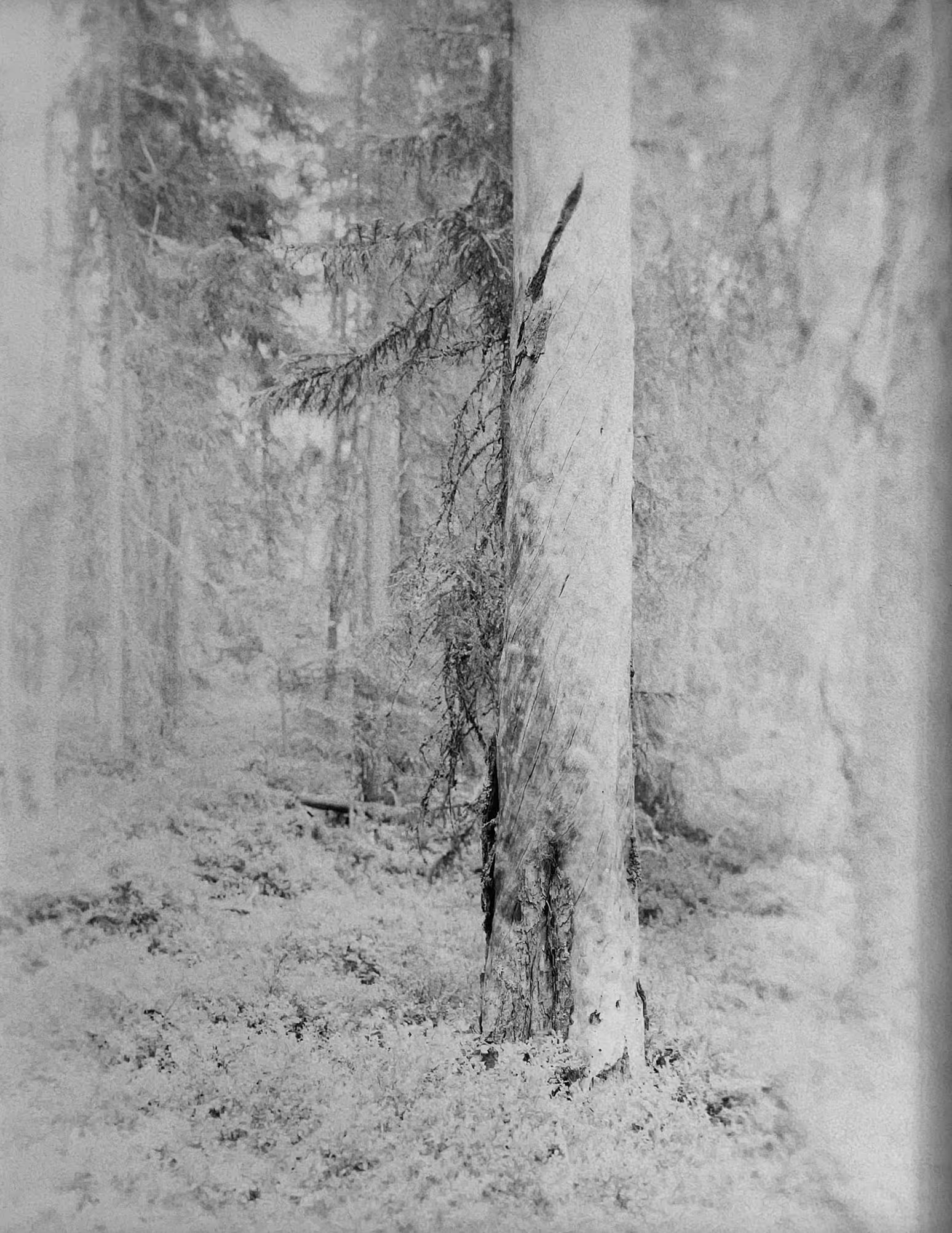
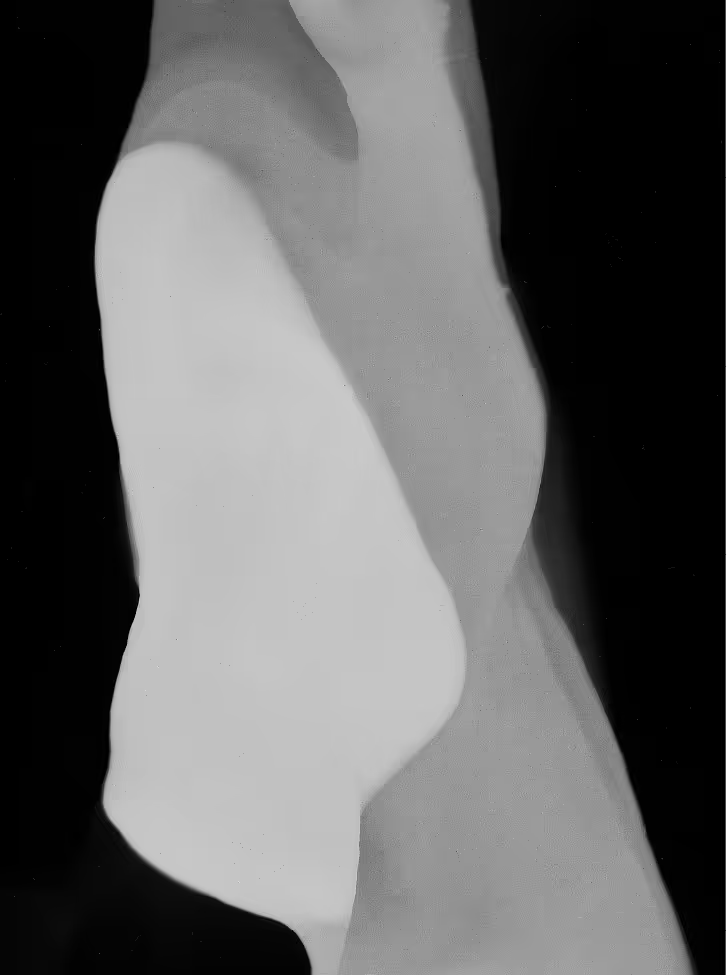
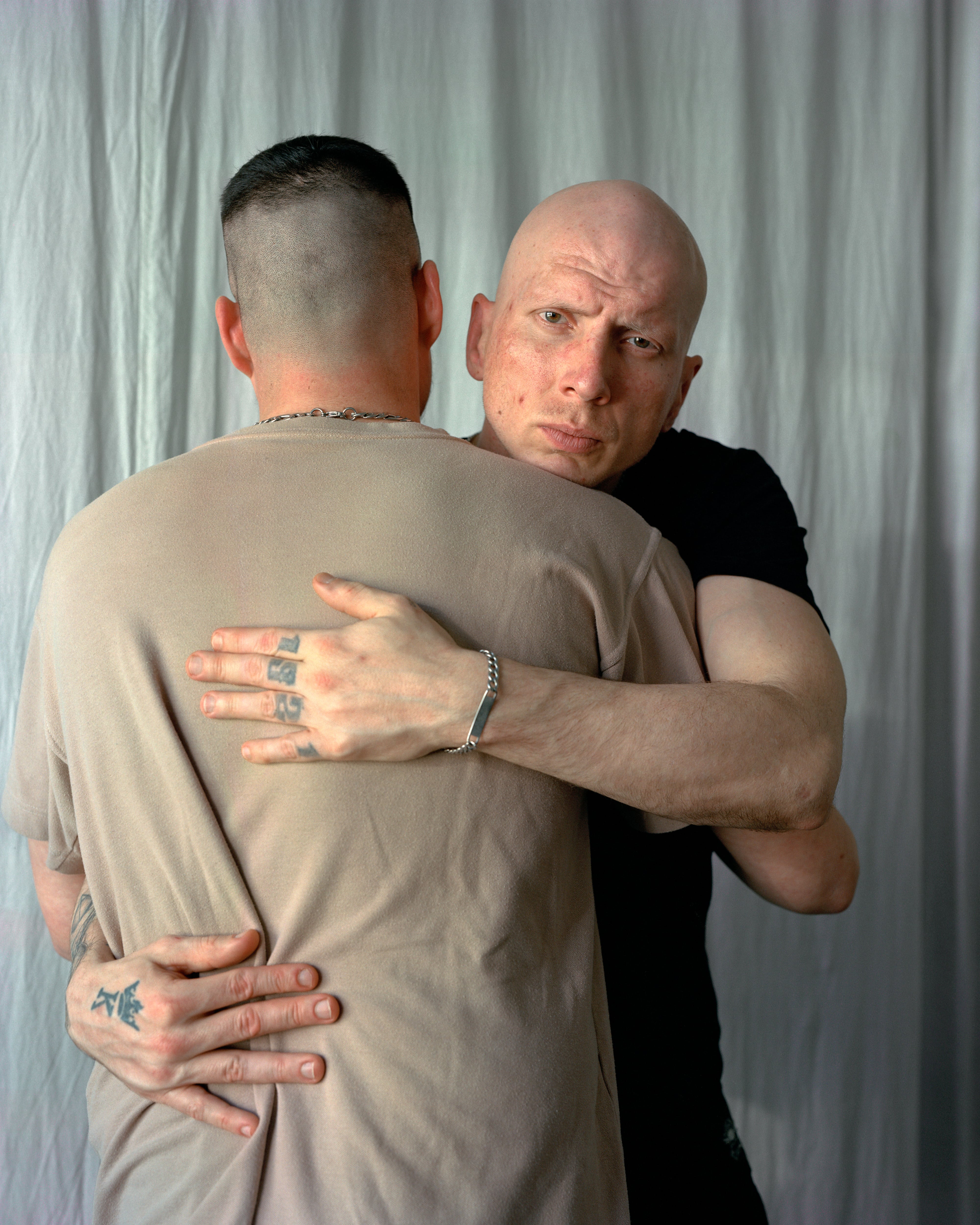
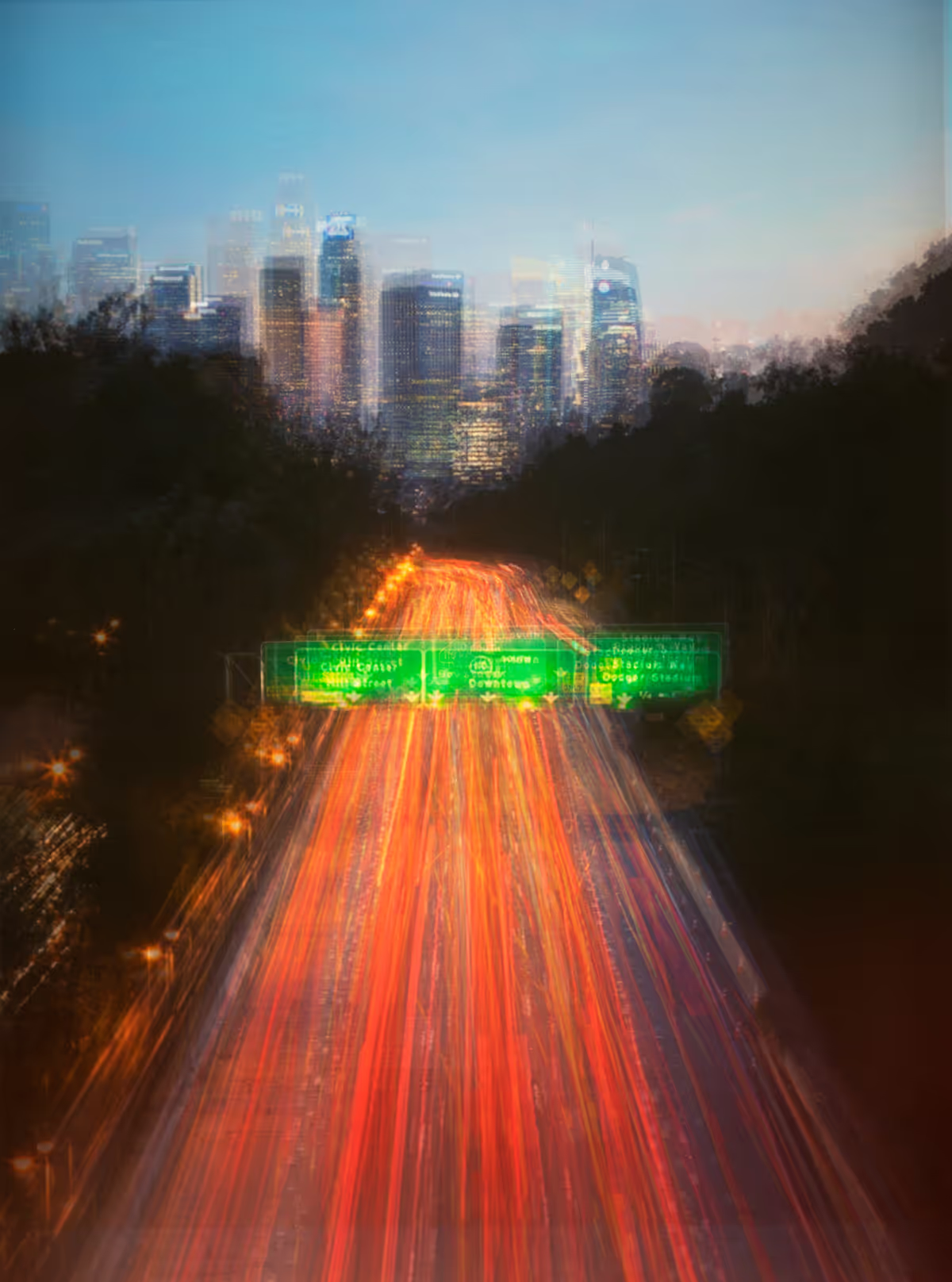
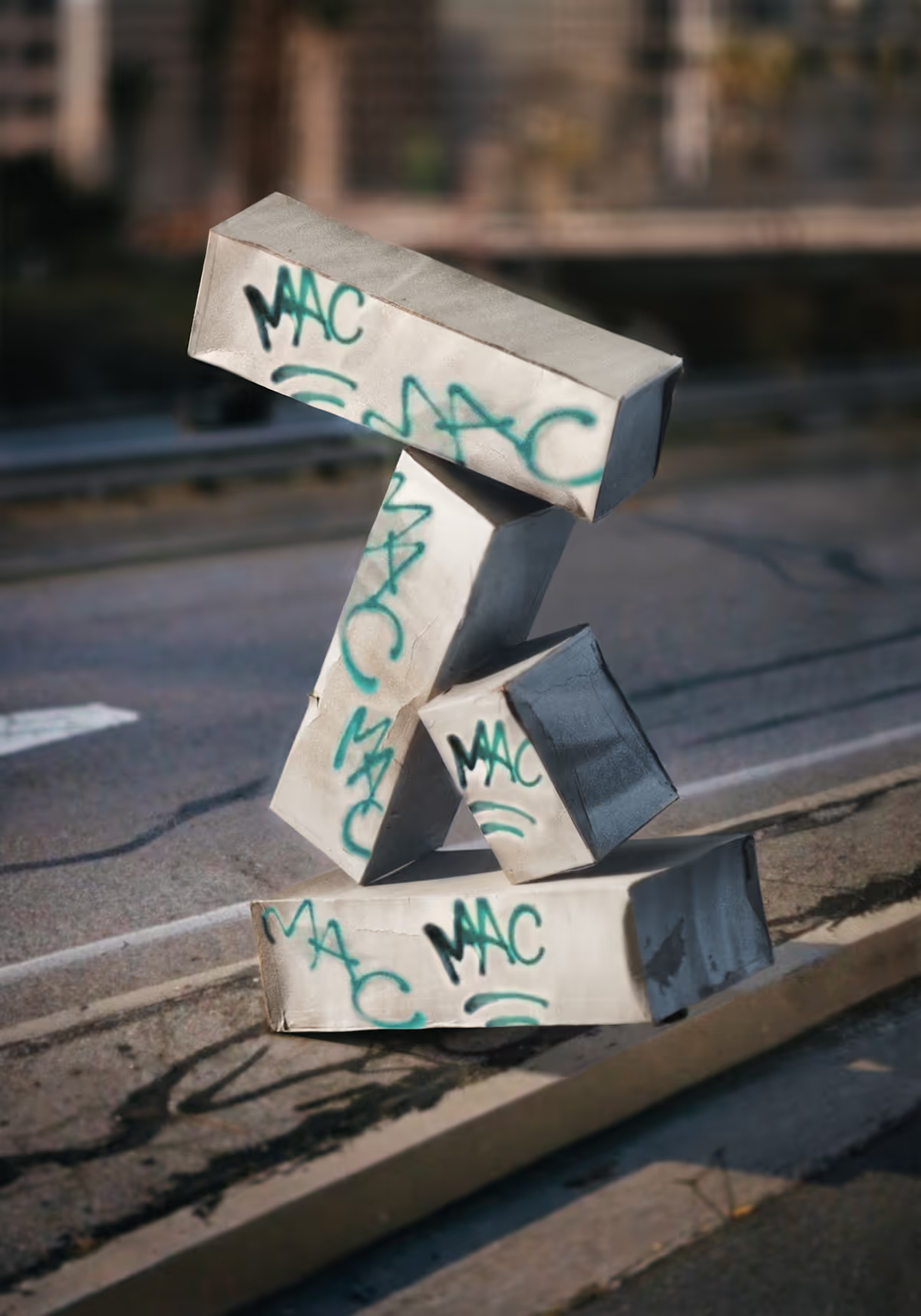
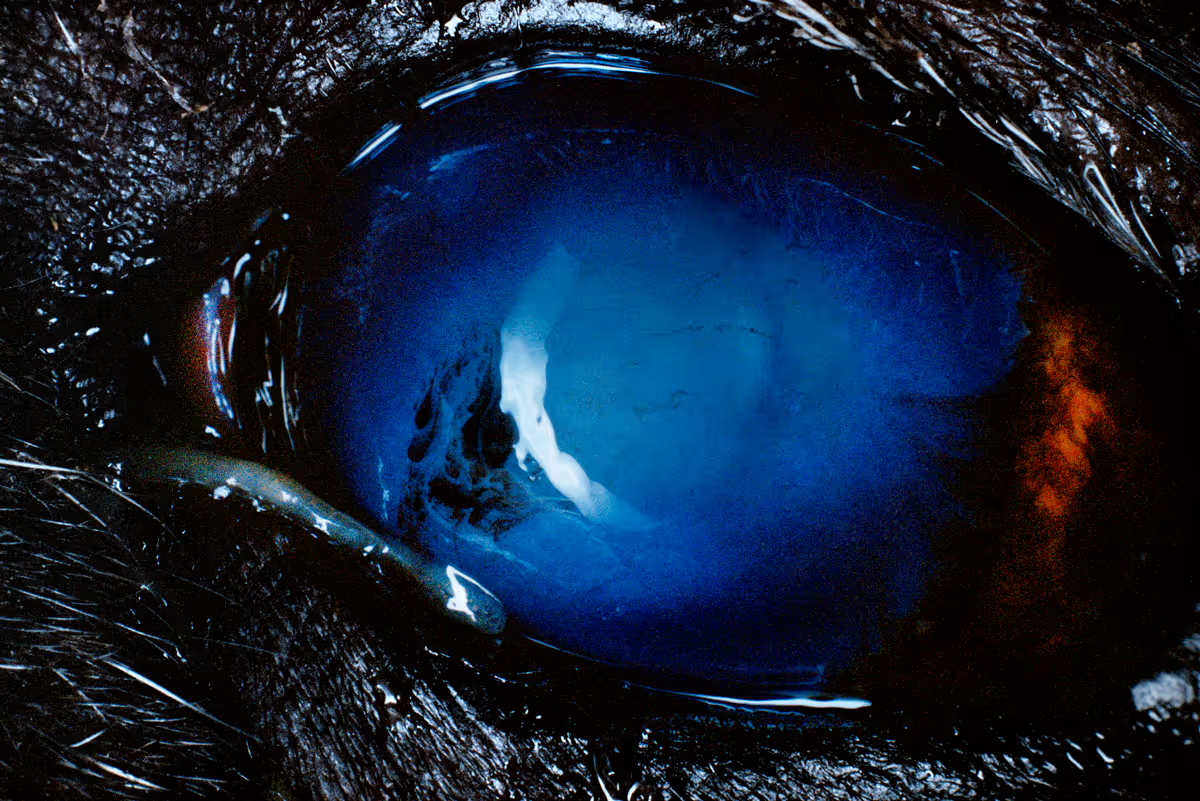
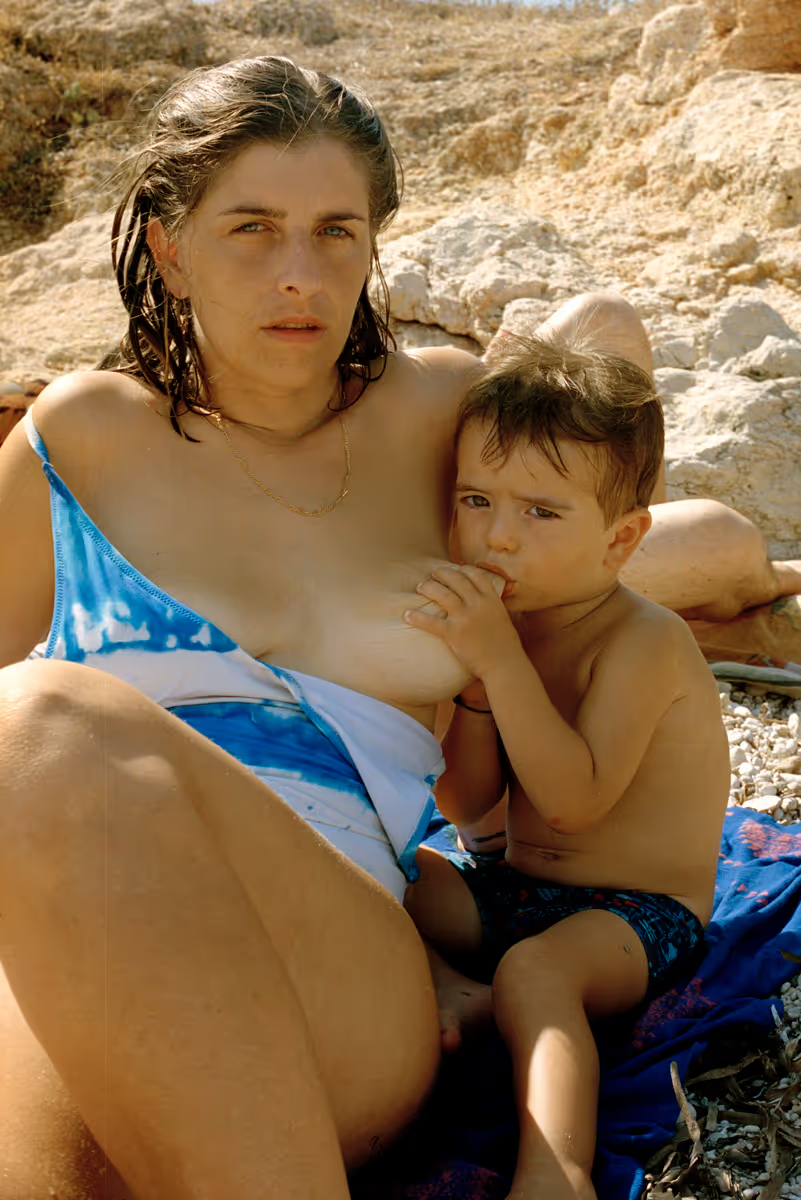
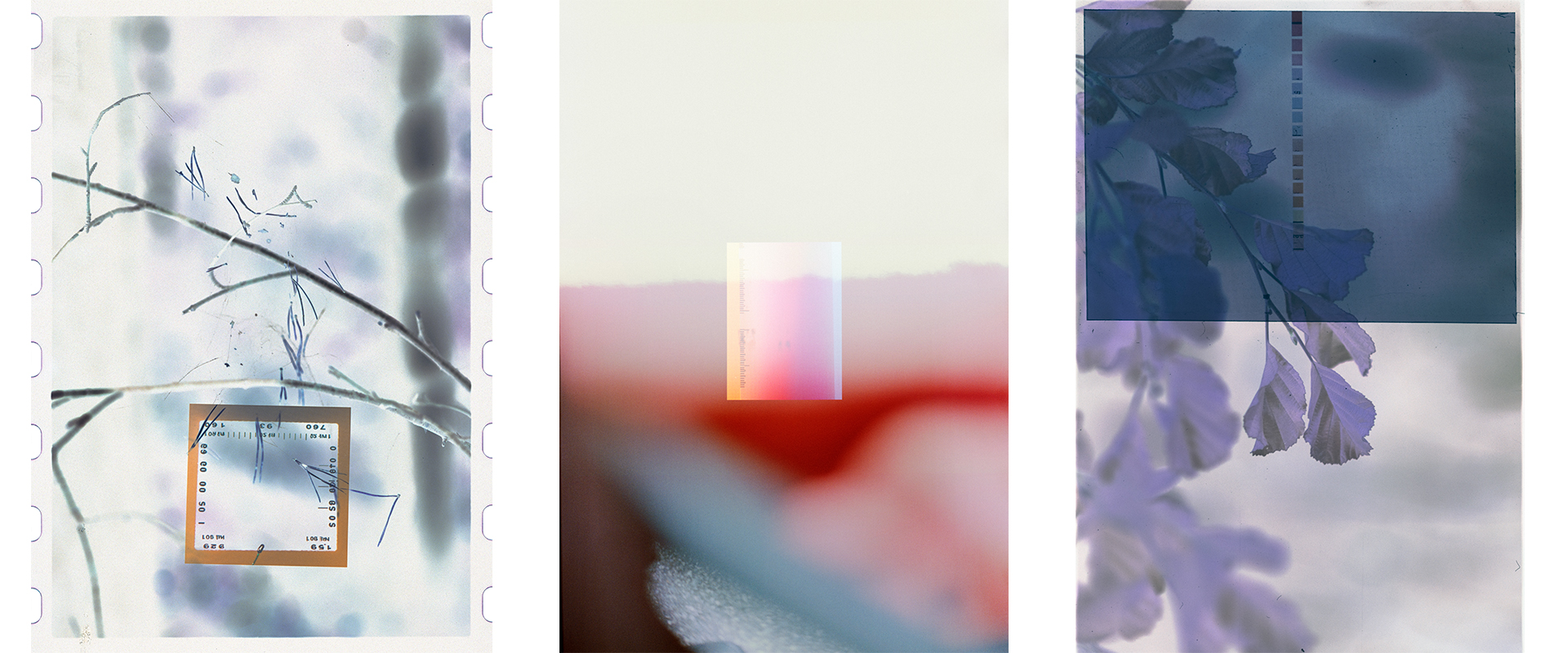
In his work New Archeologies, Sebastian Stadler uses a generative model to create images of measuring charts, color scales, and reference grids: tools used in reproduction photography – or for scientific purposes – to represent something measurable in an image. At first glance, these generated and represented tools appear usable, but in their concrete application, they prove obsolete. They escape any real function, as they do not exist in this form in reality. The AI uses symbols and codes from the corresponding image database and recomposes them. Through the techniques of double exposure and collages on negative and positive film, these become part of photographs taken with the camera. In this context, the instruments reflect not only the rational perception of reality, but also the desire for control, salvation and clarity in a chaotic world. 'The world is number': this idea runs through the project as a fundamental motif and refers to the link between abstraction and deep understanding. Opposite this, we perhaps find the motif of organic nature and the desire for an undefined place of origin. The frames of New Archeologies are made of welded and polished aluminium parts and glass. The frames were developed and produced by the artist for this series.
Sebastian Stadler
was nominated by
Centre de la photographie Genève
in
2026
Show all projects
Each year every member of the FUTURES European Photography Platform nominates a set of artists and projects to become part of the FUTURES network.

Marco Frauchiger and Sebastian Stadler have been selected by Centre de la photographie Genève (CPG) for their projects researching, and experimenting with, the significations and significance of photography, two nominations that resonate with the bicentennial of photography celebrated in 2026–2027. Through complex and layered processes, their respective work explores, questions, challenges and pushes to their limits, equally visually and conceptually, the ways in which we rely on photography to make sense of the world, of history, and of our place within the world. 

While Marco Frauchiger and Sebastian Stadler have been exhibited internationally in recent years, CPG aims with their nomination to FUTURES to bring an increased visibility to their work at the international level, and hopes that new opportunities to develop and circulate their work will arise from their integration in the network.

Marco Frauchiger presents The War Movie, an imageless video listing all wars that happened since the industrialisation of warfare and up to October 2025, and Camera Obscura Type III, for which he built a large format camera from aircraft debris collected in Laos, which he then used to photograph crash sites in Laos from the Secret War (1964–1973) as well as the Swiss industrial sites where the aircraft had been produced. 

Sebastian Stadler presents New Archeologies, a series exploring our desire for control and clarity and echoing how photography has been harnessed to observe and measure the world, through double exposure where AI-generated charts, scales and grids are superimposed on negative images of nature and human forms. 

Newsletter