Edit profile
The

Artist

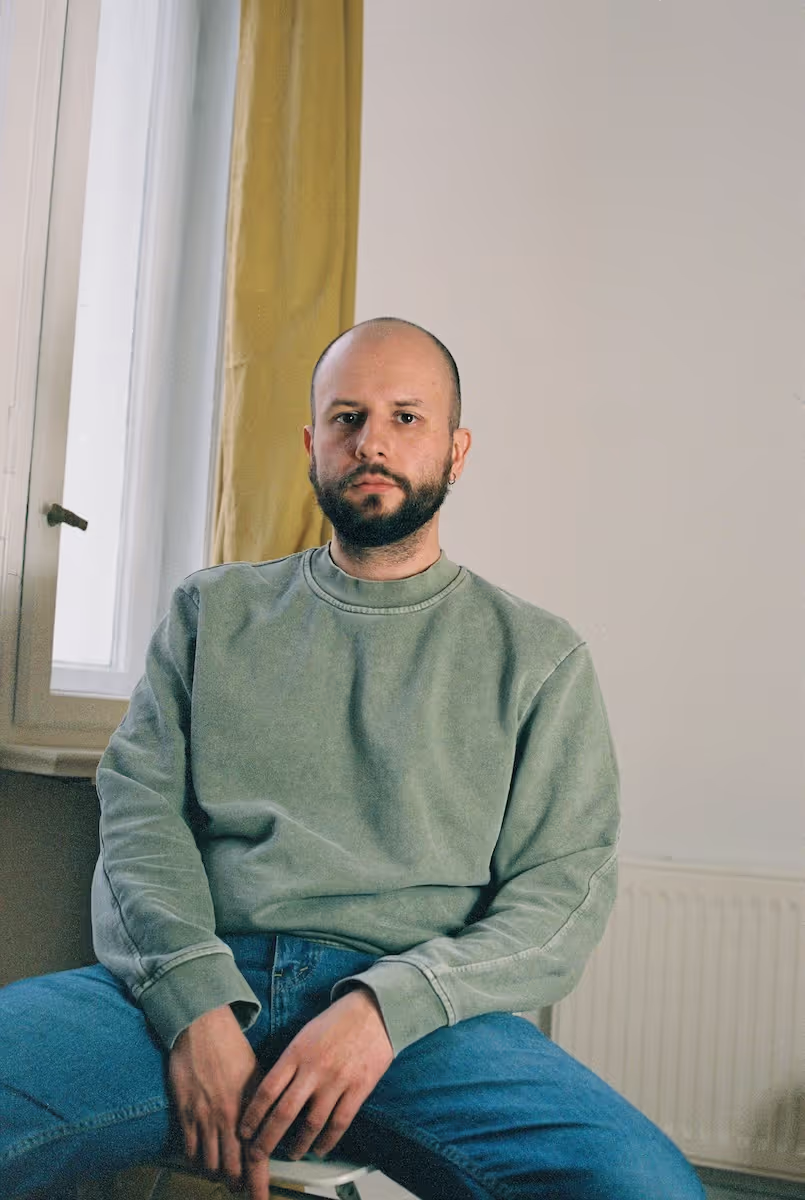
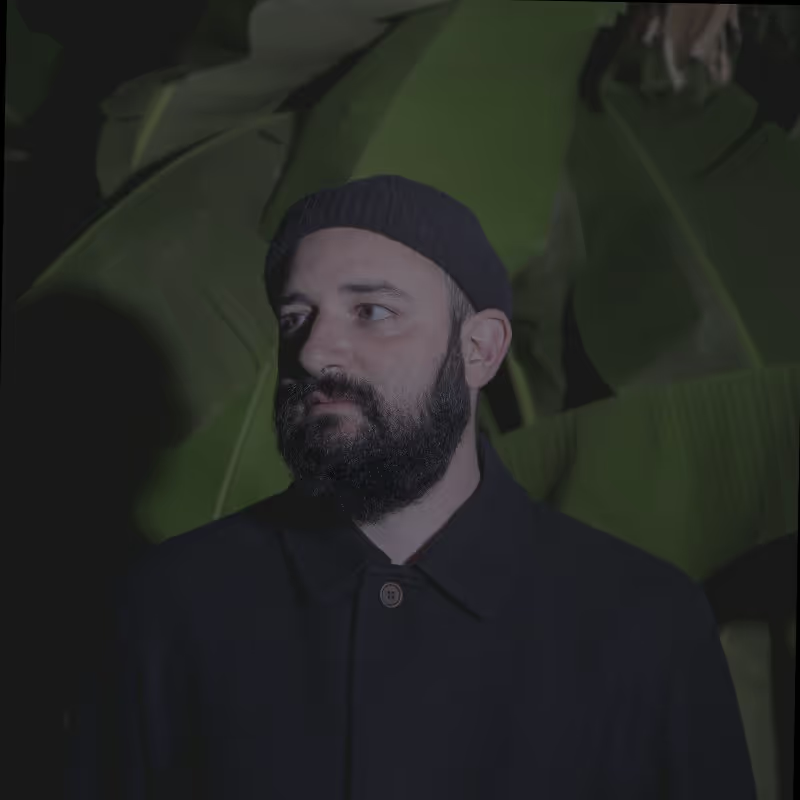
Filippo Barbero

Lives and Works in
Florence
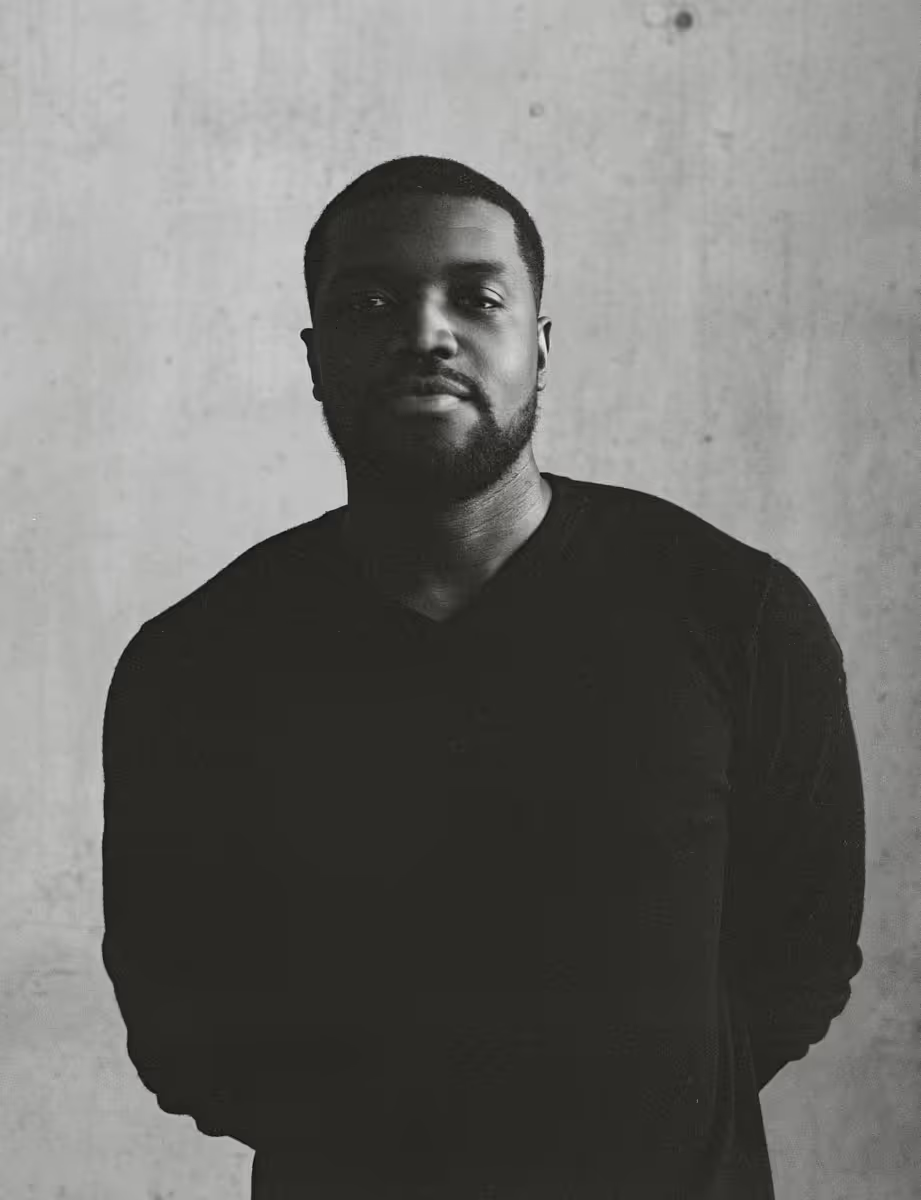
Filippo Barbero (b. 1992) is a Florence-based photographer represented by American agent Charles Guice. His practice focuses on long-term projects shaped by an intimate and personal visual research, exploring themes such as memory, sense of belonging, and the concept of place. He is the author of the monograph Borderland, published in April 2025 by Witty Books, with a text by Aaron Schuman. The book is included in major permanent collections, including the library of the Museum of Modern Art in New York and the Getty Research Institute in Los Angeles. Barbero’s work has been exhibited widely in museums, galleries, institutions, and festivals across Europe and the United States. These include OMNE at Officine Fotografiche (Rome), SCAD (Atlanta), Filter Photo (Chicago), La Kunsthalle Mulhouse and PEP (Mulhouse), Paratissima Art Gallery for Liquida Photo Festival (Turin), the Ogden Museum for PhotoNOLA (New Orleans), Fonderia 20.9 (Verona), the Center For Fine Art Photo, Pinakothek der Moderne and ZIRKA Space (Munich), 254Forest (Brussels), Haute Photographie (Rotterdam and Amsterdam), BASE Milano for PhotoVogue Festival and Verzasca Photo Festival (Switzerland). He has received numerous awards and recognitions, including LensCulture Favorite Photobooks 2025, Penumbra Foundation, Center Forward of Center For Fine Art Photo, Urbanautica Institute Awards, Critical Mass by Photolucida, Lucie Foundation, Intarget Photolux Award, Italian Panorama of PhotoVogue by Vogue Italia. In 2026, he is among five artists nominated by Camera Torino for the FUTURES Foundation. Additional highlights include selections for Dear Dave Magazine Fellowships, an artist residency in Cervia, a special edition with Micamera, participation in Der Grief’s Guest Room, and the OMNE “LAND” residency. His work has been published in numerous international magazines, including The New Yorker, EE72, PhotoVogue and more.
Projects
2025

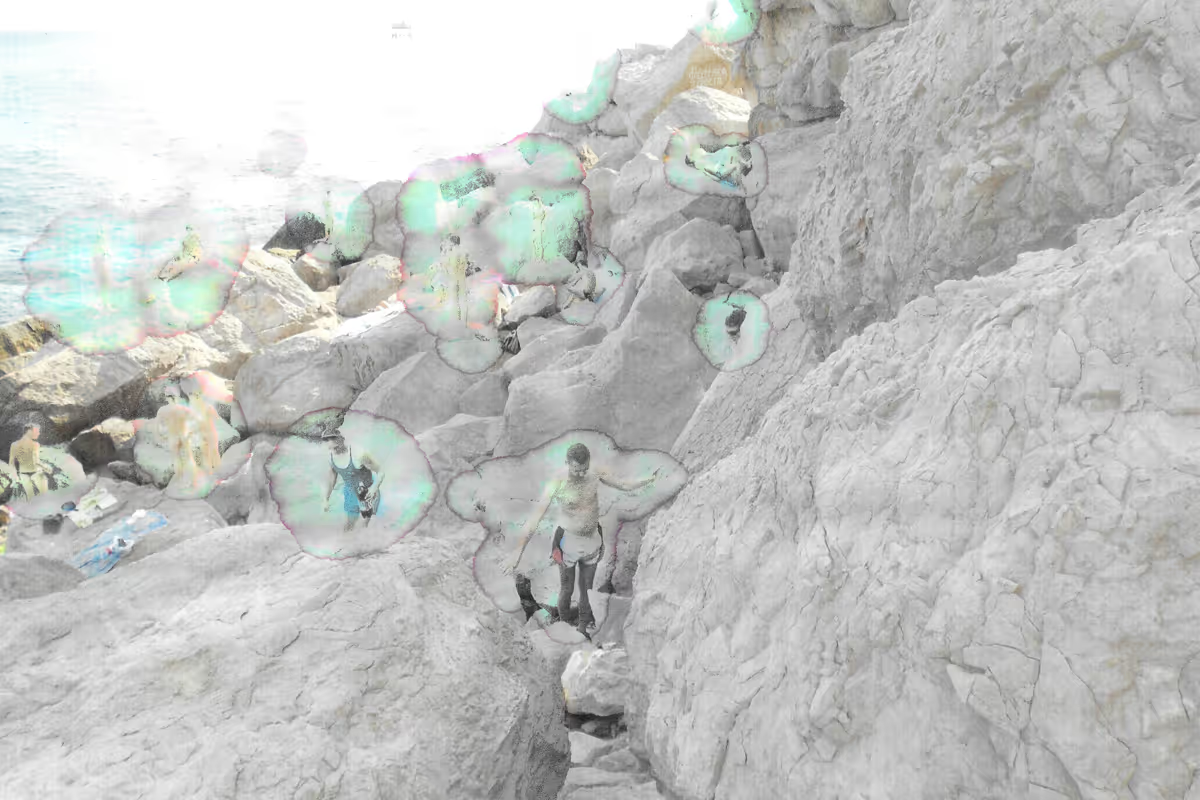
Borderland

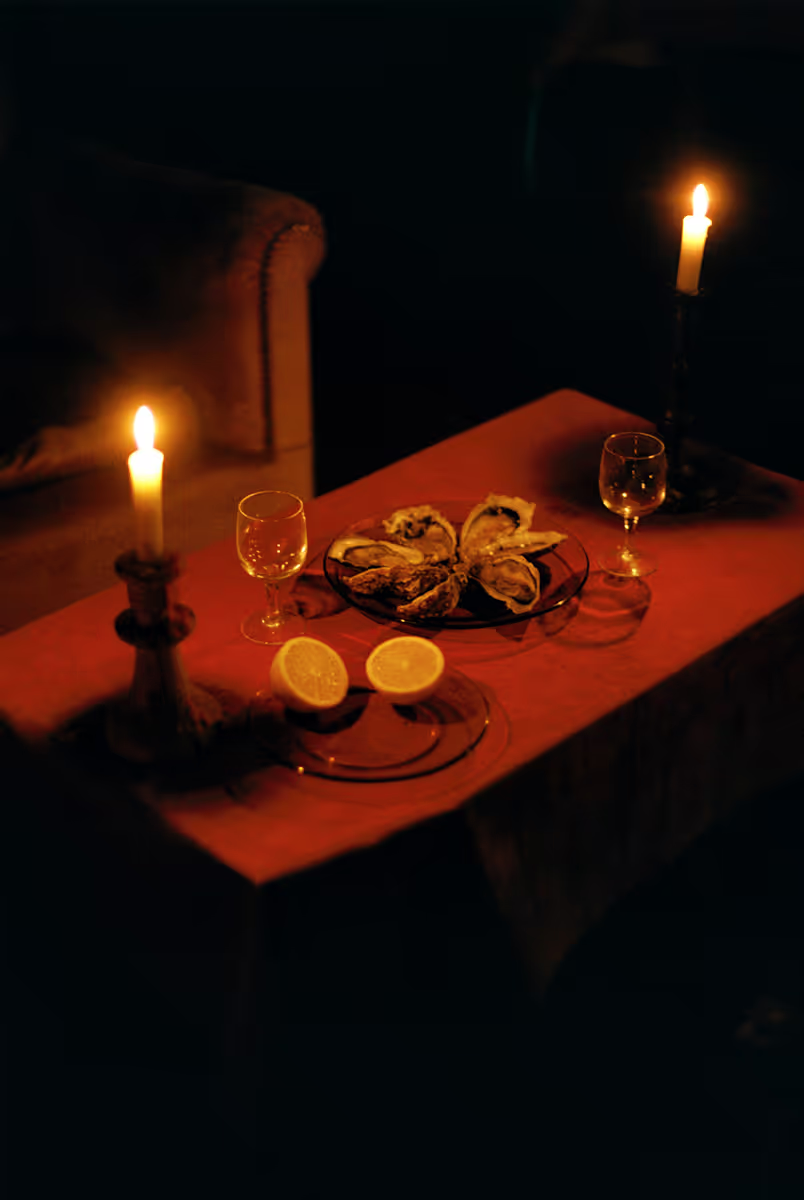
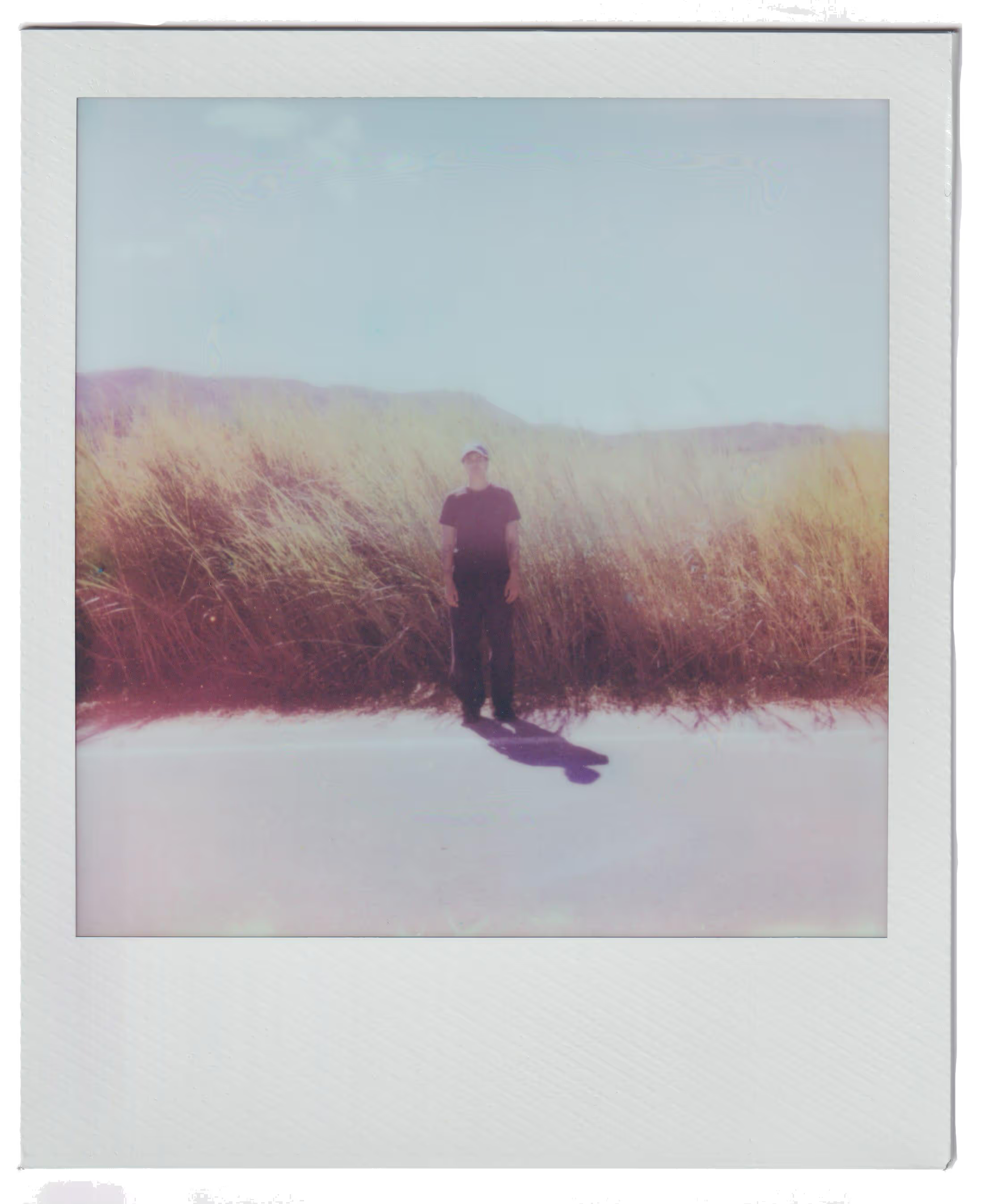
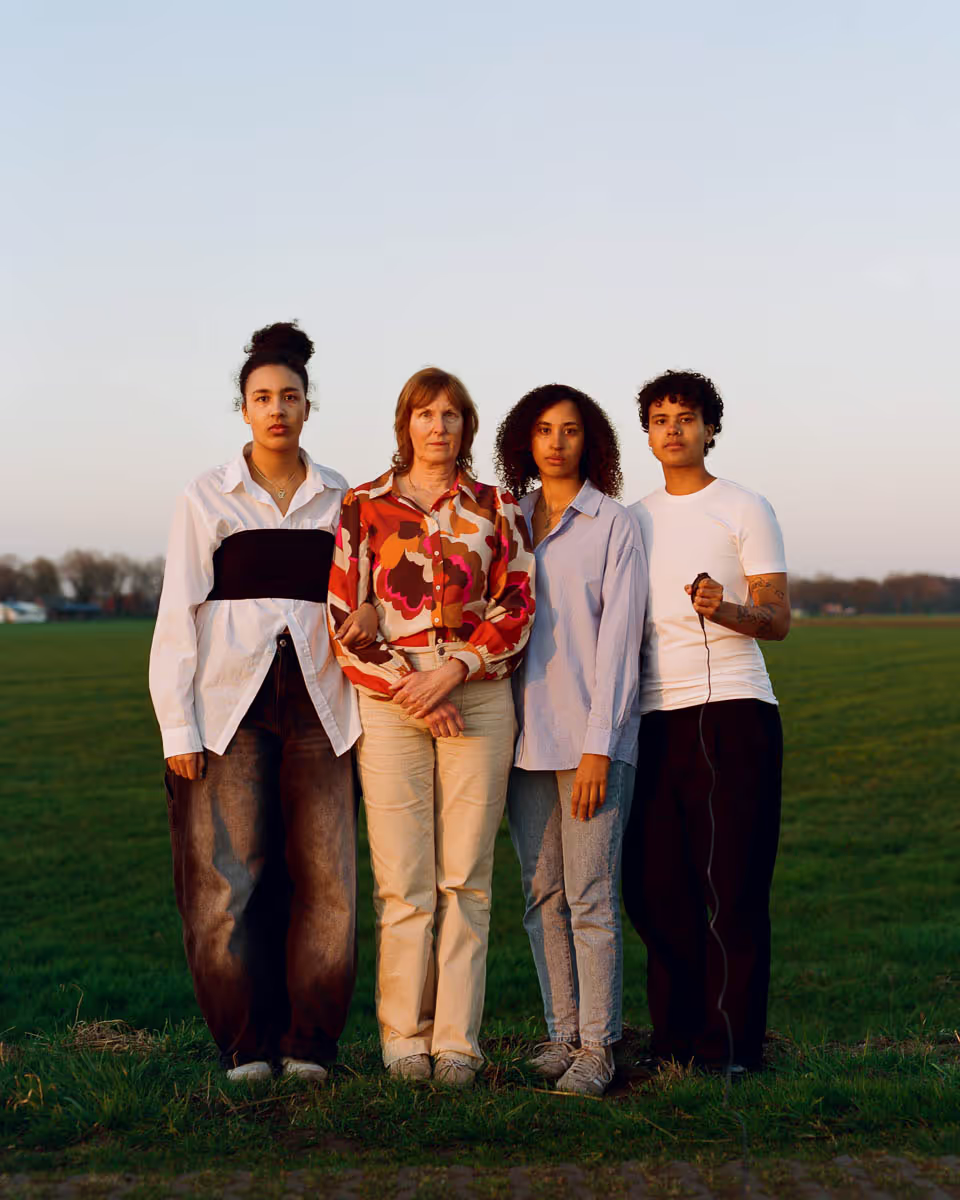
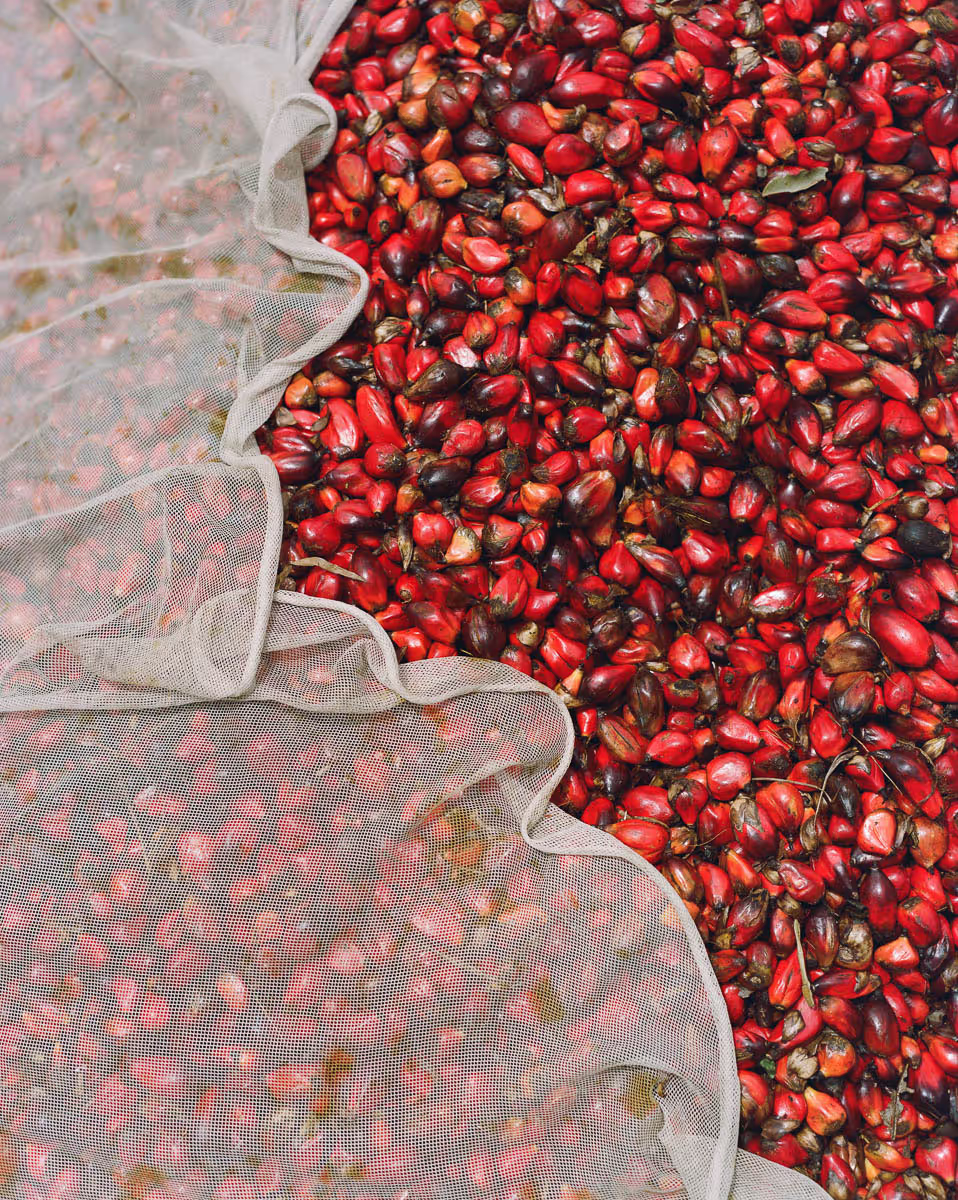
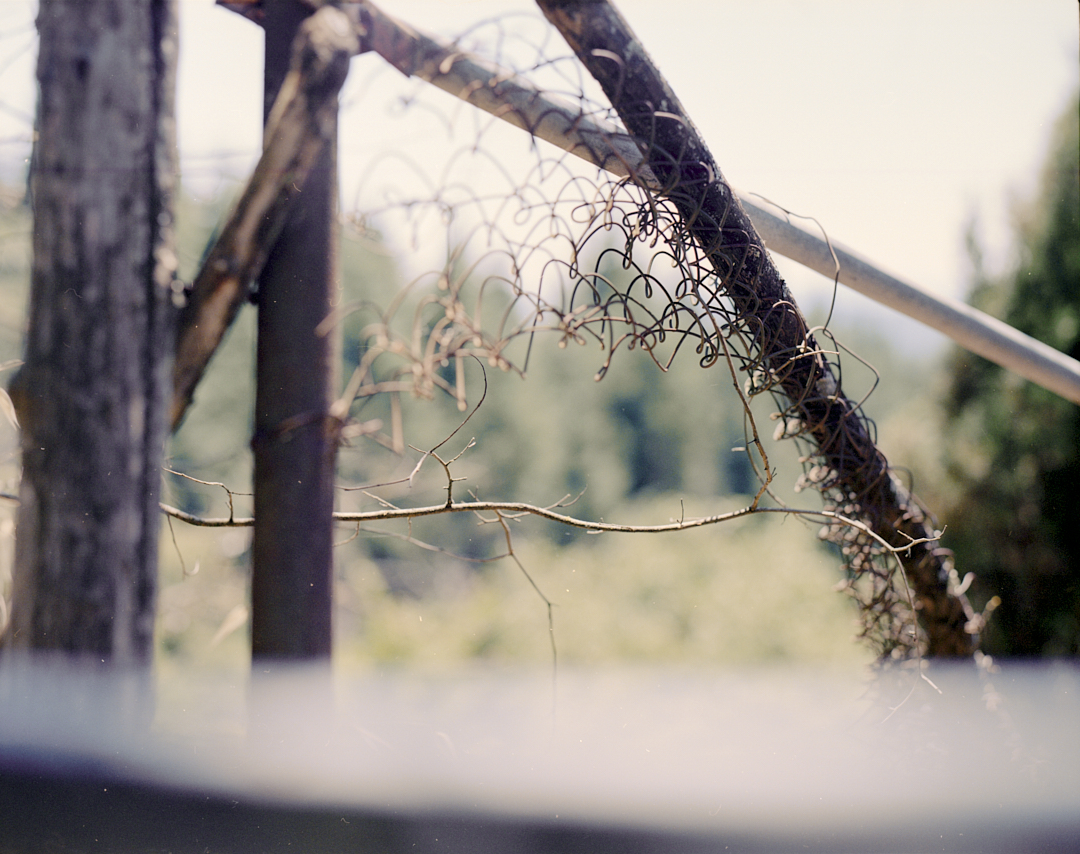
Borderland represents an intimate research in a familiar place where I grew up since my tender years. Here I would find refuge in my grandparents’ house and feel a strong love coming from them, nature and all the living creatures in the land – those silent hills where I felt free to express myself. To me everything is bordered in this rural village on Tuscan-Emilian Apennines, and it is this dimension of indefiniteness that pushes me to a relentless pursuit for the traces of a time that I have not lived enough or that I have lived too much. My past blends with my present and suggests my future steps. I do not know whether I should listen to it or let myself be carried away by the fresh wind – the same one that accompanied me and my grandfather and our conversations about existentialism during hot summer nights, while marvelling at the beauty of the constellation, lying downhill on a wet meadow. Everything that surrounds me wants to get close to me, just like then, rethinking the legacy of a relationship created in time: with this aim, begins a process of interpreting reality without a celebratory, symbolist or documentary intent. Rather, it turns out to be an evolution aimed at a deep redemption of my past and present being, producing at the same time an emotional tension that, just as on an extremity, hovers between joy and pain. In such research, which aims to establish a continuous dialogue between memory, reality and dream, I try to retrace over time fragments of an existence regarding family, growth and belonging.
Filippo Barbero
was nominated by
CAMERA Centro Italiano per la Fotografia
in
2026
Show all projects
Each year every member of the FUTURES European Photography Platform nominates a set of artists and projects to become part of the FUTURES network.

At a time in history when images are overproduced and overconsumed, these artists share the ability to slow down the gaze, construct complex narratives, and redefine the relationship between document and imagination.

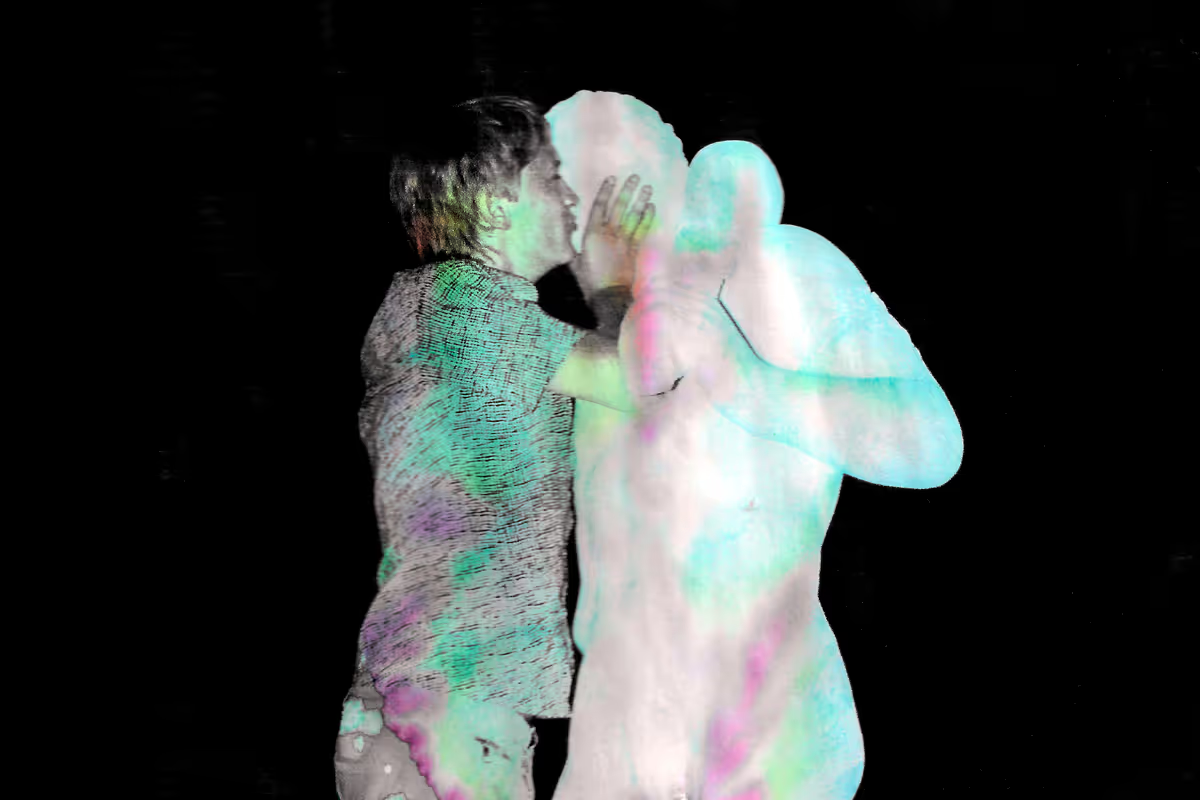
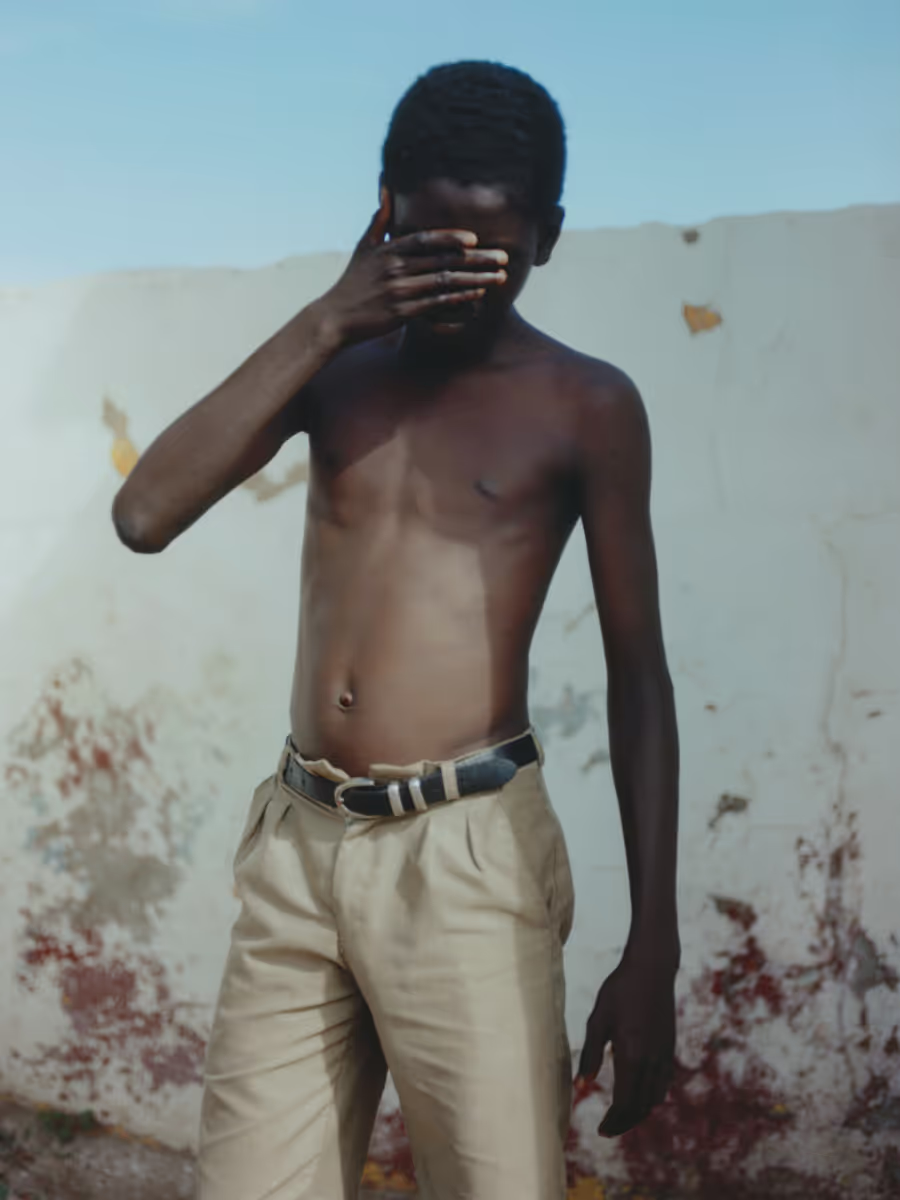
Filippo Barbero's practice is part of a tradition of investigating subjectivity using photography as a device for knowledge. His attention to detail in bodies and the environment highlights a constant emotional tension where the everyday becomes political and the smallest gesture acquires collective resonance. 

Davide Degano offers a radical reflection on the representation of Italian identity: his photographs deconstruct the environmental, social, and cultural heritage—as well as the colonial legacy—and, through the filter of the younger generations, convey the complexity of the evolution of the boot-shaped country.

Giulia Gatti's work explores the theme of femininity in the communities inhabiting the Isthmus of Tehuantepec in Mexico, a place known through stereotypical depictions in travel literature from the last century. The narrative of everyday life as a symbolic experience shows an alliance between human and non-human bodies, spaces, and customs, thus deconstructing the invention of tradition.

Sofia Gastaldo's sociological view of customs and traditions in urban centers goes beyond the logic of traditional documentary, transforming the image into a space for collaboration and conscious staging. Her subjects emerge from the darkness, while the strong visual impact of color contrasts reveals the sculptural character of bodies and objects in the definition of forms. 

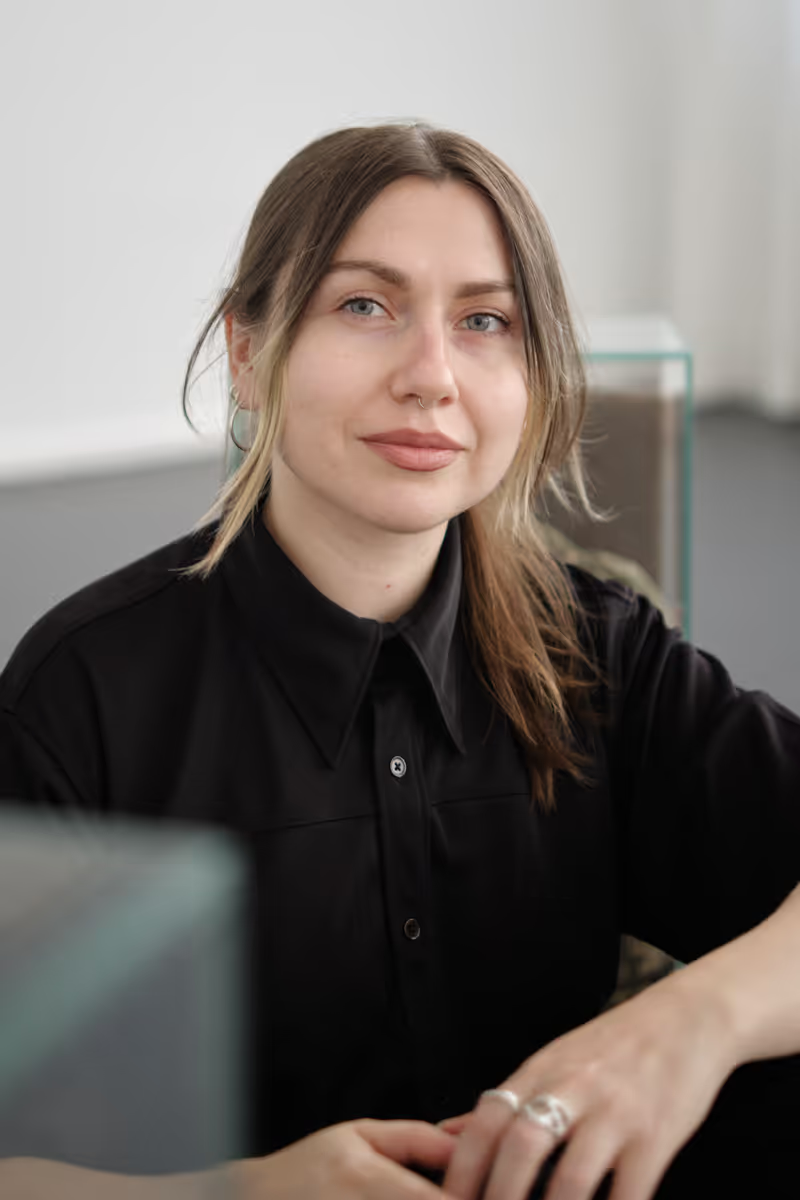
Federica Sasso's visual research addresses a narrative dimension that intertwines documentary photography with algorithmic recognition programs, video, and installation. Her investigation of social dynamics in the technological age enhances the quality of photography as a tool for research, critical revelation, and public activation. 

Together, these artists construct a landscape in which photography is no longer just representation, but process, research, relationship, and responsibility. Their selection does not respond to generational or geographical criteria, but to a common tension towards linguistic innovation and ethical commitment.

List of curators:

Giangavino Pazzola – Curator of contemporary and research programs at CAMERA

François Hebel – Director at CAMERA

Nominators:

Daniele De Luigi – curator Fondazione AGO Modena

Giuseppe Oliverio – director PHMuseum Bologna

Newsletter