The FUTURES
Residency Program
The FUTURES Residency Program provides emerging artists with time, space, and resources to develop new work, emphasizing artistic process and research, while offering opportunities to push the boundaries of their practice and engage with contemporary themes.

residency theme
how it works
program
At the beginning of 2025, FUTURES introduced a Research Residency Program across three locations: FUTURES Hub in Amsterdam, Capa Center in Budapest, and ISSP in Riga. Selected from a pool of nominated FUTURES artists, participants are chosen by a diverse panel of experts. Open to all artists nominated in previous years, the program aims to foster production, exchange, and meaningful artistic growth. Applicants are evaluated based on their artistic practice and the quality and relevance of a residency project developed specifically for their time with FUTURES.
- Professional Mentorship: Residents receive tailored mentorship from experts relevant to their project, offering guidance and support throughout the residency.
- Public Engagement and International Exposure: Each residency concludes with a public event, and the artist's work is promoted through communication channels of FUTURES.
- Fair and Inclusive Working Environment: The residency ensures fair pay, safe working conditions, and a commitment to inclusivity.
- Access to the FUTURES local network and introduction to Amsterdam art and contemporary culture scene.
from the residents
- Residents are encouraged to maintain a Visual Diary, posting weekly updates about their creative process on FUTURES’ social platforms. This offers an inside look at the artist’s journey.
- A Video Portrait is created during the residency, offering a personal insight into the artist and their practice. This video is shared through FUTURES’ platforms, extending its reach.
- A public-facing event, such as an open studio, workshop, exhibition or artist talk, is an essential component. This event offers residents a chance to share their work and process with the local community. This will also be live-streamed, allowing international audiences to engage with the residency's work.
- Interview with a local writer about the artist's creative process during their residency. This written interview will be featured on the FUTURES website, offering further insight into their work and artistic journey.
residency locations
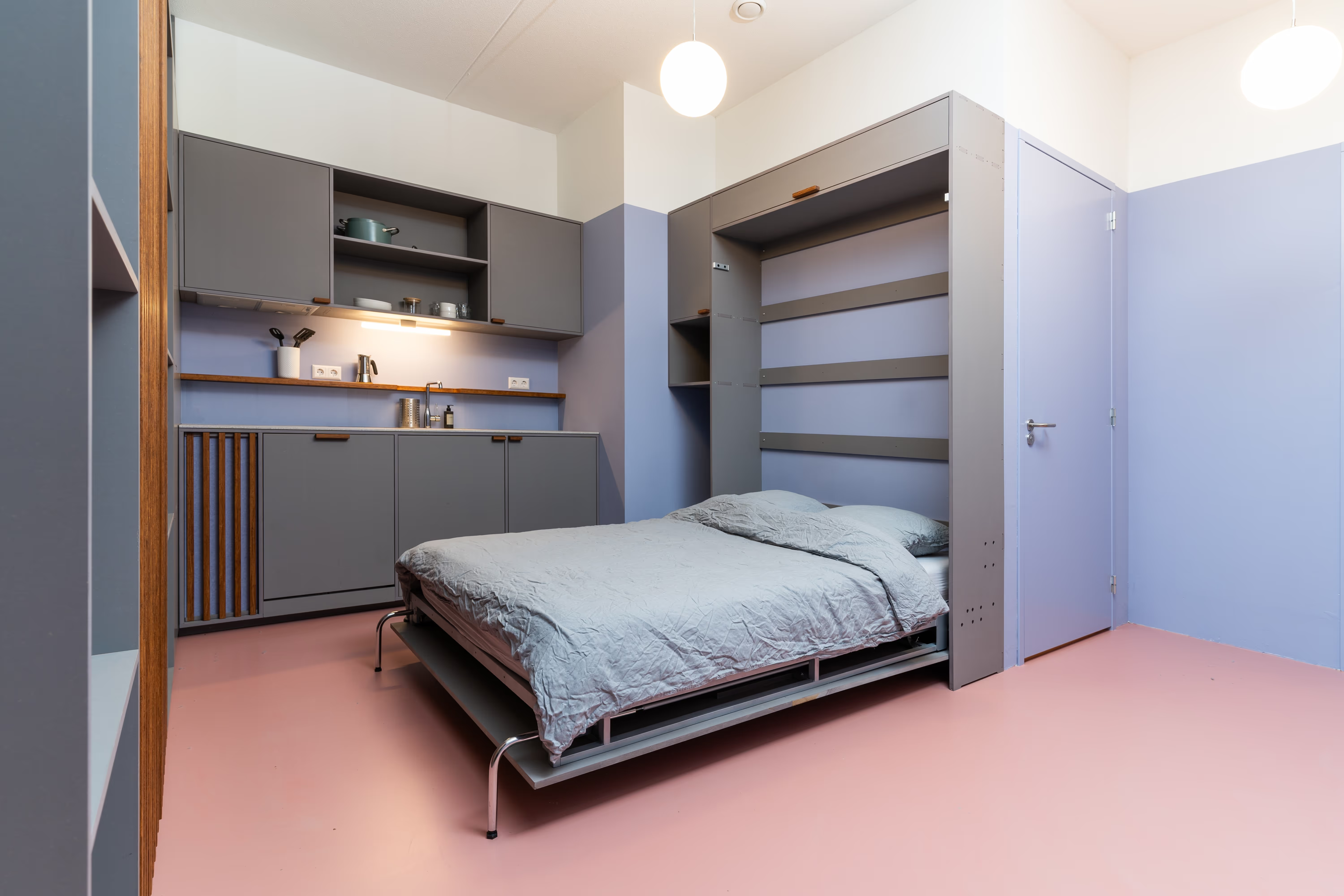
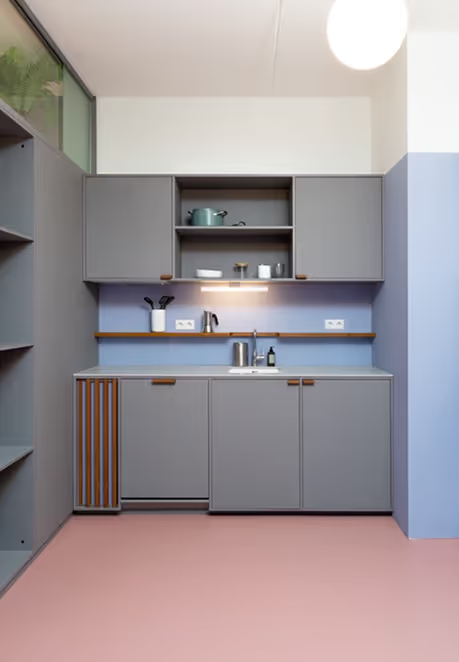
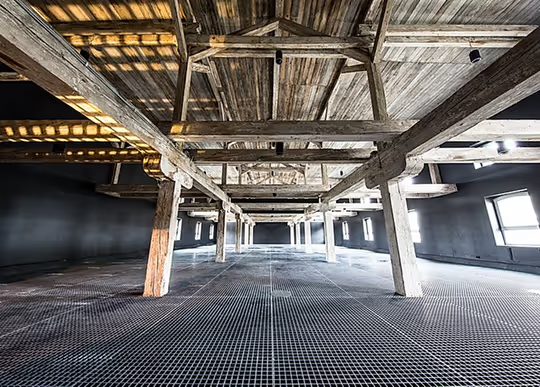
Futures Hub, Amsterdam: In 2023, FUTURES launched its first residency program at the FUTURES Hub, a vibrant space in Amsterdam that serves as the platform’s global headquarters and flexible exhibition venue. Situated on a former industrial site, the Hub offers a fully equipped live-work environment, including an atelier, furnished apartment, and event space. It welcomes artists from diverse regions and cultural backgrounds for both short- and long-term stays.
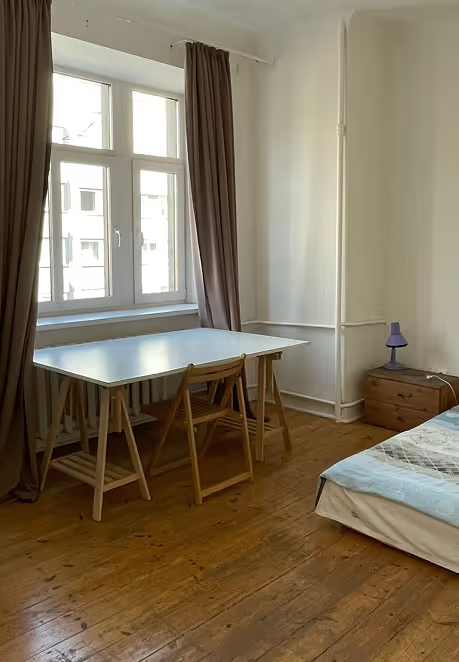
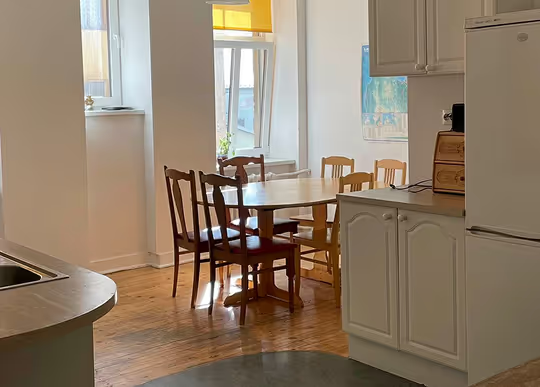
ISSP, Riga: The resident will be housed at the ISSP Riga Residency apartment in the city centre, shared with other two artists. The accommodation offers comfortable conditions for living and working - a separate bedroom with a working space, spacious shared living room and a fully equipped kitchen. The resident will have access to ISSP office facilities including use of printer, scanner, ISSP photography library and studio lights.
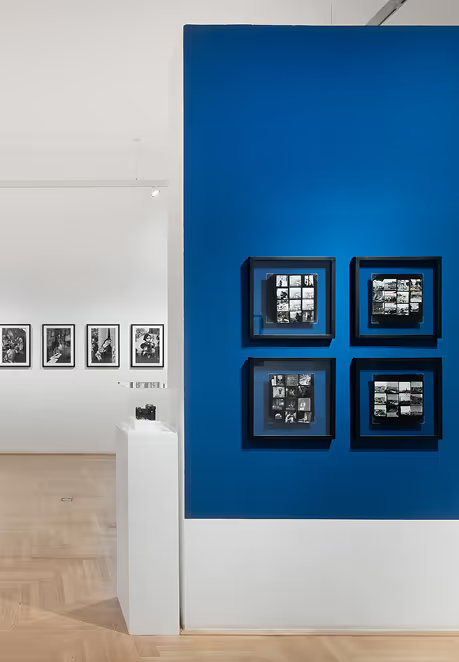
Capa Center, Budapest: The Capa Center residency program offers all entering participants a fully furnished private room within a communal apartment located on the Art Quarter Budapest premises, a studio space catering to the project’s requirements within its 400 m2 shared studio in the coolest postindustrial area of Budapest. Capa Center provides varied services to integrate the residents into the local art scene and contribute in establishing professional connections that best support their work and career. In addition, the residency will offer the possibility to organise a presentation at the Capa Centre in downtown Budapest, and use the Capa Centre's office facilities, including the printer and scanner.
Residency Archive

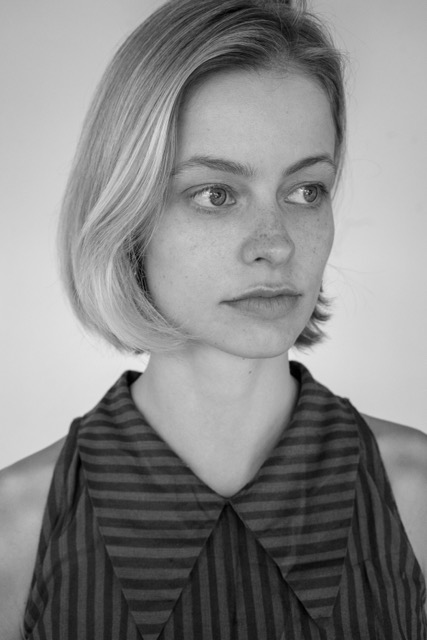
Mirielle Rohr (b. Berlin) is a visual artist and photographer based between Paris and Berlin. She graduated from ECAL’s Master in Photography (Lausanne) in 2025. Through analogue photography, ceramics, sculpture, and AI-generated imagery, she examines the aesthetics and emotional economies of digital culture, how bodies, desire, and identity are mediated, performed, and consumed. Her works often combines tactile processes with synthetic image-making to produce psychologically charged narratives.
Her work has been published in the British Journal of Photography, Der Greif, Schema Magazine, SLEEK, and Fisheye Magazine, among many more. She was a finalist for the Picto Fashion Photography Award (2024) and presented her work at Paris Photo (Carte Blanche Étudiante, 2025) last year. In March 2026 she will exhibit at PhotoVogue Festival, is shortlisted for Un/Fund & Residency.

from the
residency
Ignacio Navas (b. 1989 Tudela, lives and works in Madrid) creates computational, generative and interactive projects based on photographic image to research how dominant structures—political, economic, or social—are made present and shape our everyday affairs. With this approach, Ignacio explores the possibilities that emerging technologies, computing, and new media offer to the photographic medium.
His recent work has received support from several grants and institutions, including the Visual Arts Creation Fellowship (Community of Madrid, 2024) and the Plastic and Visual Arts Fellowship (Government of Navarra, 2024). His images and interactive installations have also been part of initiatives such as Plat(t)form at Fotomuseum Winterthur (Switzerland, 2024), the Photoworks Digital Programme (UK, 2023), the Return2Ithaca Residency (Greece, 2023), and the FUTURES European Photography Platform (Netherlands, 2022).
Ignacio believes that contemporary creation cannot be understood without actively engaging in its own management. This conviction drives him to lead collective initiatives such as La Embajada (2024–), a platform to showcase projects created within the Spanish territorial context in the unofficial circuit of the Rencontres d’Arles festival, or El Local (2023–), an independent space for contemporary photography in Madrid.
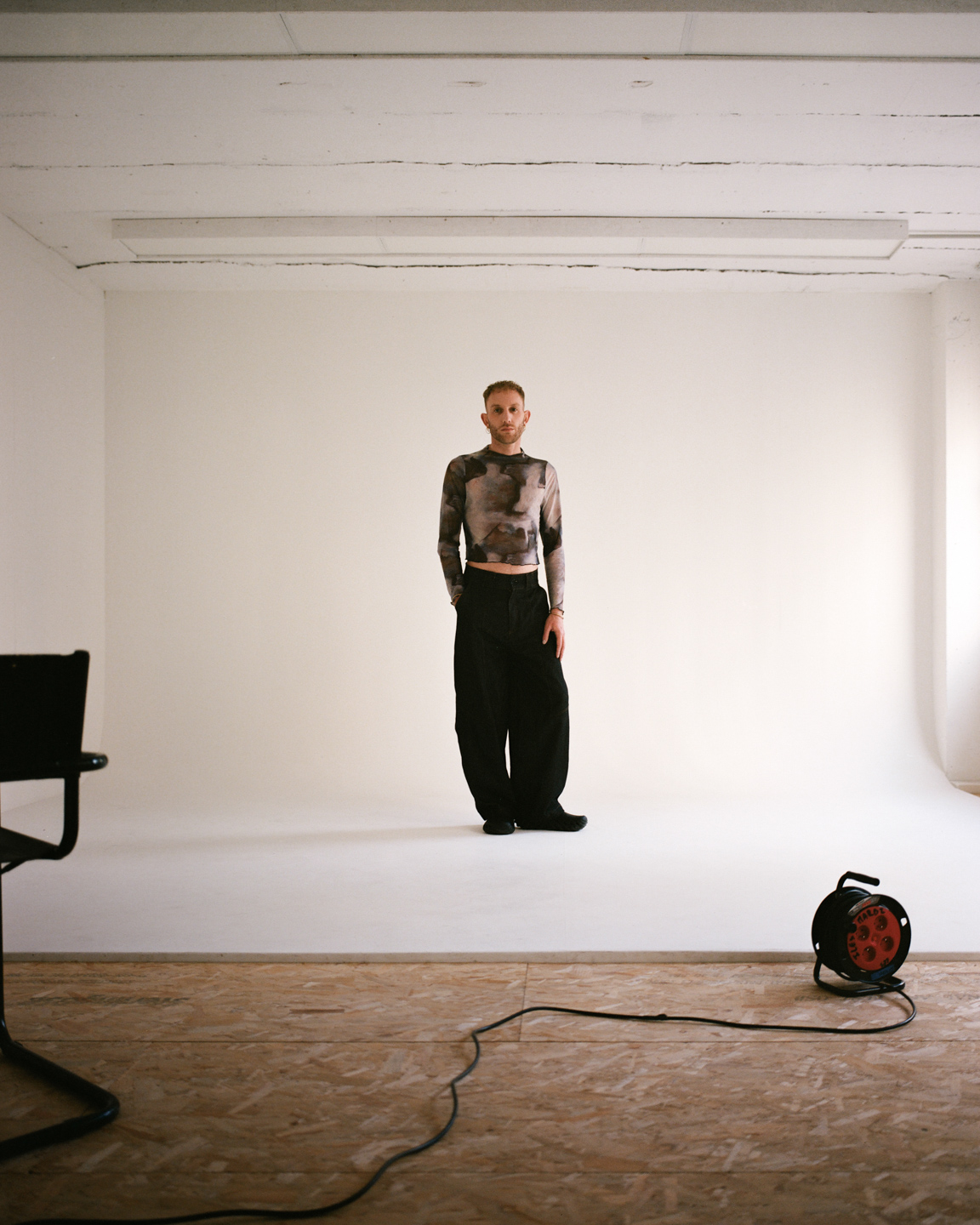
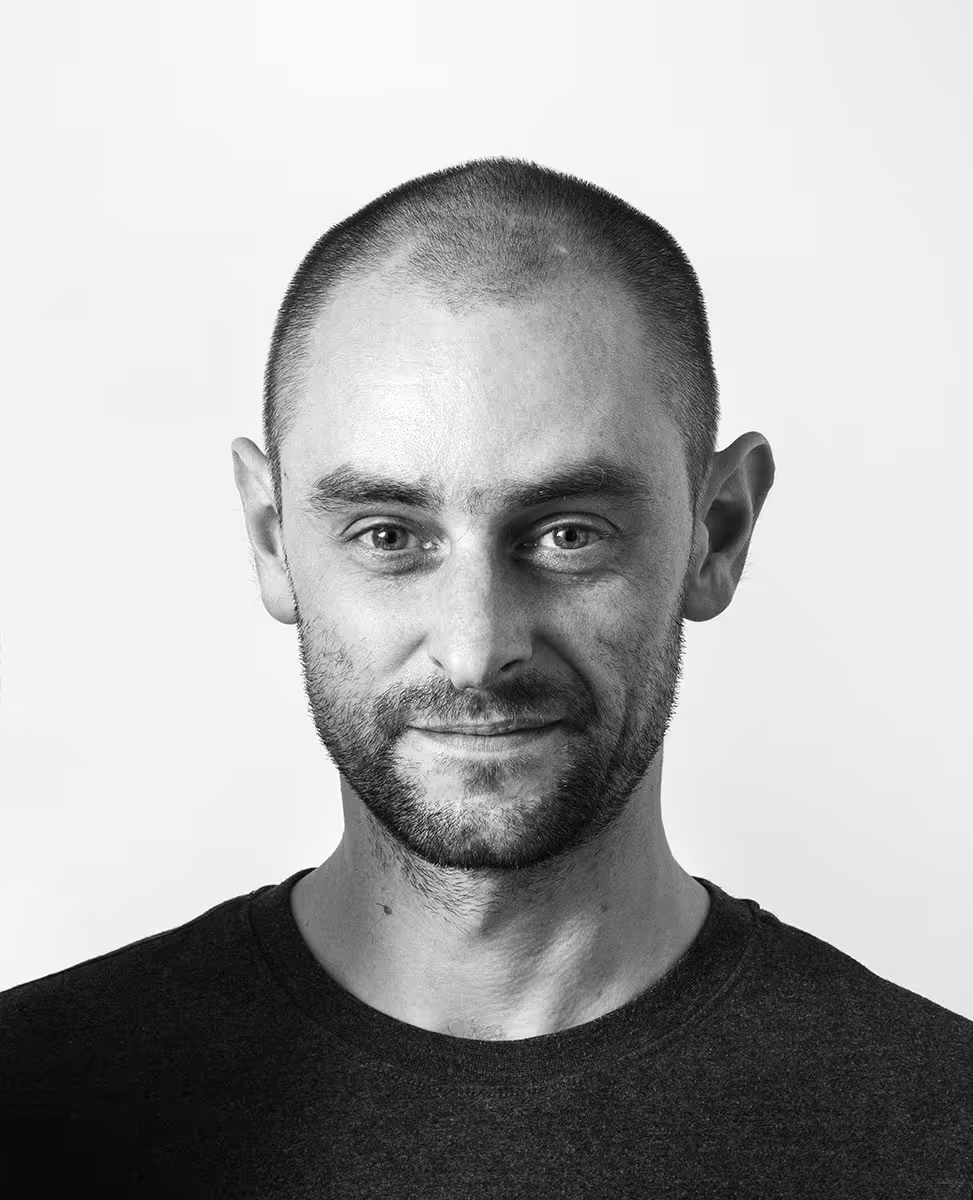
Michal Sita (1985) is a photographer and curator. Graduate of photography at the ITF in Opava and anthropology at the Adam Mickiewicz University in Poznań, where he is concluding doctoral research on social uses of the past in contemporary Poland. Interested in social memory and research strategies of photography. Curator of an interdisciplinary analysis of Wiesław Rakowski’s interwar zoological photographs, curator and producer of a series of exhibitions (including Małgorzata Lebda and Rafał Siderski, Mayumi Suzuki, Jan Kurek, Martin Parr and Rimaldas Vikšraitis, Sputnik Photos, among others), and photobook festivals. Co-author of “Củ Chi Tunnels Restoration Report” (Photographic Publication of the Year 2020 – Łódź, PL), a book relating to the activities of the Polish-Vietnamese architectural heritage conservation mission. Author of “History of Poland” vol. 1 and 2 — publications commenting on anthropological research carried out in Murowana Goślina among volunteers staging a large-scale historical pageant. Author of critical texts on photography. Lecturer at the Magdalena Abakanowicz University of Arts in Poznań.

Olena Morozova is a visual artist from Kyiv, Ukraine. She is interested in themes of spirituality, sexuality, gender identity, stereotypes, psychological and mental disorder, family relationships. "Photography is my passion, lifestyle, philosophy, way of thinking, seeing, understanding the world around me and my inner world, searching for my reflections, feelings and emotions, self-development and movement forward” - she explains. Olena has been engaged in photography since 2015. Her teachers were: Alexander Yakimchuk, Dimitri Bogachuk, Vladimir Seleznev, Viktoria Sorochinski, Sergey Melnichenko and others. Her works were presented in Finnish Museum of Photography (2022), Odesa Photo Days (2021), Photo Kiev Fair (2019, 2020).
UNSTATED is a Zürich–based practice that merges the physical and digital worlds through innovative strategy and design.
We are committed to creating work that adapts to our changing environment.

Yu Shuk Pui Bobby (b. 1994) is a visual artist based between Hong Kong and Oslo. With a collaborative approach to her practice, her work conjures the physical, tangible and affective phenomena associated with biotechnology through combinations of video, text, installation, sculpture, and performance. She often uses speculative fiction to tackle questions of human genetic engineering, reconfiguring perceptions of gender, body and historical discourses of identity. Bobby holds a BA from Hong Kong Baptist University and an MFA from Oslo National Academy of Fine Art. Her works have been in Hong Kong, Norway, Japan, China, Iceland and the USA.

Laure Winants is a researcher and field-based visual artist (BE, FR). Winants set up her artist’s studio in the heart of the Arctic ice pack. Embarked on a four-month polar expedition, she joined a team of multidisciplinary researchers to understand the evolution of this vast territory, where man is only a tiny part of life. Immersed in this white desert, she uses techniques developed specifically to capture the optical and luminous phenomena unique to the region. Using environmental sensors, the interaction of matter itself has become the creator of the work, putting human intervention to one side. Laure Winants makes this data tangible and emotionally perceptible, highlighting the interdependence of ecosystems and creating encounters in more-than-human temporalities. In this way, the artist creates a dialogue between art, the natural sciences, and technology.
Laure has exhibited her work internationally in Berlin (DE), Reykjavik (IS), Brussels (BE), Paris (FR), and soon in Stockholm (SE), Luxembourg (LU), and Osaka (JP). Her work has entered the collection of several foundations, such as the Fondation des Arts du Luxembourg and the Palais de Liège (BE).
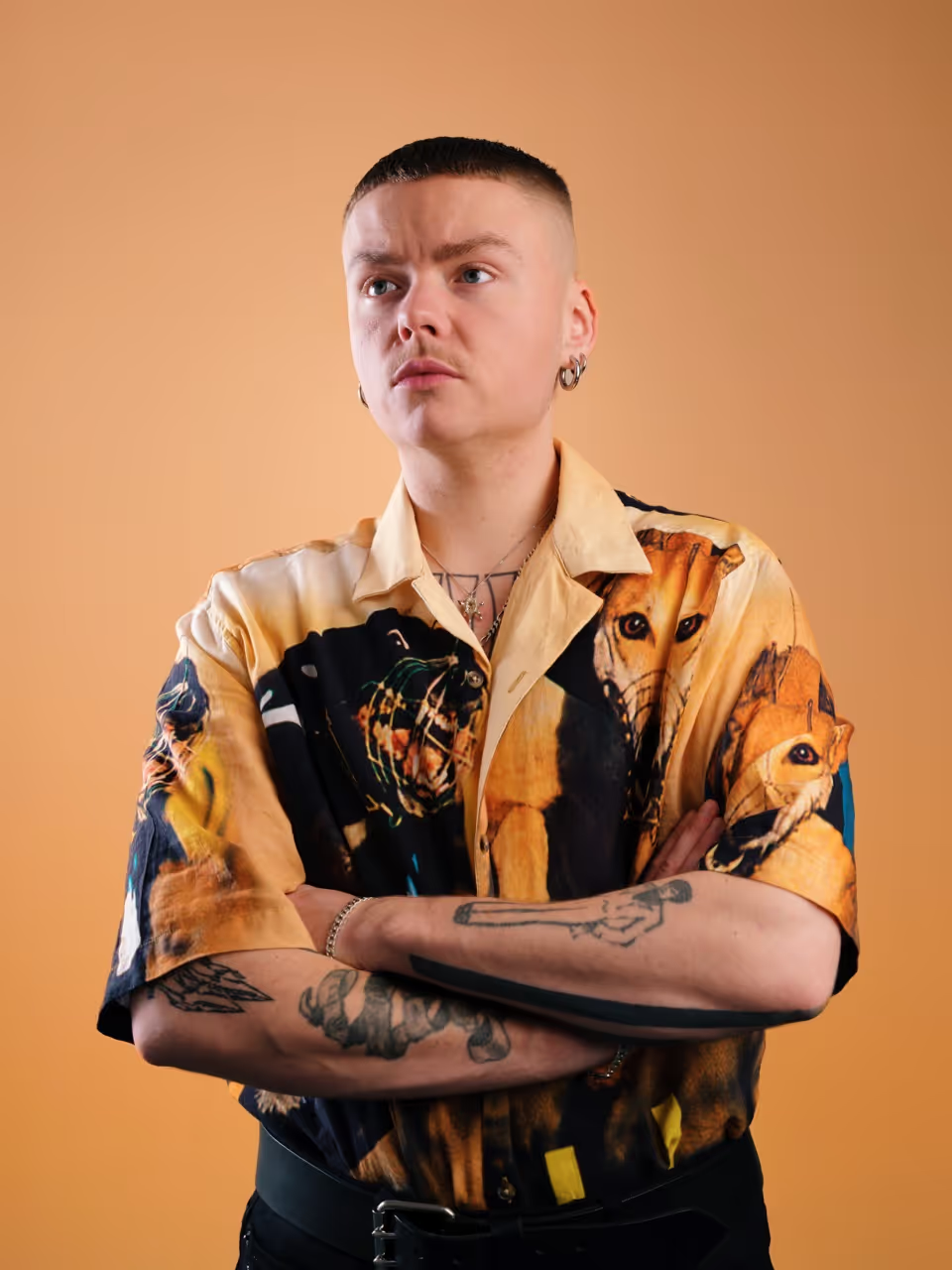
Julius Thissen (1993, the Netherlands) lives and works in Arnhem, NL. Their work investigates themes of community and representation, masculinity, sports, and competition. Originating from their background as a performance artist, Thissen's photographic practice aims to create narratives that explore the fine line between performing and failing. These themes are closely tied to contemporary performance-driven culture and the influence of societal expectations on behavior. Their work is deeply rooted in personal experiences as a genderqueer and transmasculine individual. Thissen strongly opposes the restrictive and often binary narratives imposed on transgender and queer individuals.
Thissen has been nominated for the Hendrik Valk Prize, Arnhemse Nieuwe, and the Warsteiner Blooom Awards. In 2023, they received the Artist Basis Fund and, more recently, a Mondriaan Fund Artist Project Grant for their new project Bones of Graphene, Skin of Kevlar.

Tim Rod is a Swiss artist based in Bern, Switzerland. He studied art education at HKB – Bern University of Applied Sciences (BA, 2018), art history at Bern University (Minor, 2019), photography at Vevey School of Photography (CEPV, ES diploma, 2021) and is currently pursuing a master’s degree in Contemporary Arts Practice at HKB – Bern University of Applied Sciences. His work often explores issues related to exile and habitat, rootlessness and rootedness, as well as memory, identity, belonging and travelling. His own roots and family history are one of the central elements of his practice and his research, alongside collective visual culture. While his practice remains strongly rooted in photography, his works often expand into site-specific multimedia installations. His work has been exhibited since 2018 in Switzerland and internationally since 2021. Recent exhibitions include "L’Été sans fin" (Festival Images, Vevey, 2020), "Genesis" (Hackney Downs Studios, London, 2021), Charta Bookfestival (Rome, 2021), Photobook Award Encontros Da Imagem (Braga, Portugal, 2021), and the European Photobook Month (Hongkong, 2022). He has been nominated or shortlisted to several major Swiss and international awards. His project "Don’t forget the Knifish" was awarded the special mention of the near.prize 2021. The same year, he won the vfg Young Talent Award for Photography with the project "À demain inshallah".

Thana Faroq is a Yemeni photographer and educator based in the Netherlands. She works with photography, texts, sound, and the physicality of the image itself, as a way to respond to the changes that have been shaping and defining her life, and sense of belonging both in Yemen and the Netherlands. Thana's positioning as a photographer is informed by her reflections on her subject matter, tuning in to other people’s lived experiences with which she continually grows familiar. She also increasingly seeks her own story in the frame. Thana was a recipient of the 2018 inaugural Open Society Foundation Fellowship Grant and Exhibition and the 2019 Arab Documentary Fund supported by the Prince Claus Fund and Magnum Foundation and Zenith magazine reporting grant. In 2020, she published her first book, I don't Recognize Me in the Shadows The book was shortlisted for the Lucie Photobook Prize 2021, and it has also been listed as one of the Interesting Artist & Photographic Books for 2021 by the PhotoBook Journal. Thana received her BA in Government and International Relations from Clark University, and an MA in Photography and Society at The Royal Academy of Art, The Hague.

Yu Shuk Pui Bobby (b. 1994) is a visual artist based between Hong Kong and Oslo. With a collaborative approach to her practice, her work conjures the physical, tangible and affective phenomena associated with biotechnology through combinations of video, text, installation, sculpture, and performance. She often uses speculative fiction to tackle questions of human genetic engineering, reconfiguring perceptions of gender, body and historical discourses of identity. Bobby holds a BA from Hong Kong Baptist University and an MFA from Oslo National Academy of Fine Art. Her works have been in Hong Kong, Norway, Japan, China, Iceland and the USA.

Valeria Cherchi (b.1986) is an Italian photographer. She was born and raised in Sardinia, Italy. Her practice focuses on projects regarding social and cultural issues. Her research is driven by the need of exploring topics such as time, memories and history connected to her personal experience. She is interested in true and tangible character-driven stories, often told by combining photography and text. In 2018, Valeria was one the named in ‘British Journal of Photography’s Ones to Watch.
Mirielle Rohr (b. Berlin) is a visual artist and photographer based between Paris and Berlin. She graduated from ECAL’s Master in Photography (Lausanne) in 2025. Through analogue photography, ceramics, sculpture, and AI-generated imagery, she examines the aesthetics and emotional economies of digital culture, how bodies, desire, and identity are mediated, performed, and consumed. Her works often combines tactile processes with synthetic image-making to produce psychologically charged narratives.
Her work has been published in the British Journal of Photography, Der Greif, Schema Magazine, SLEEK, and Fisheye Magazine, among many more. She was a finalist for the Picto Fashion Photography Award (2024) and presented her work at Paris Photo (Carte Blanche Étudiante, 2025) last year. In March 2026 she will exhibit at PhotoVogue Festival, is shortlisted for Un/Fund & Residency.