

Urgent Paradise
Tim Rod
Urgent Paradise
Nominated by Centre de la photographie Genève, 2024
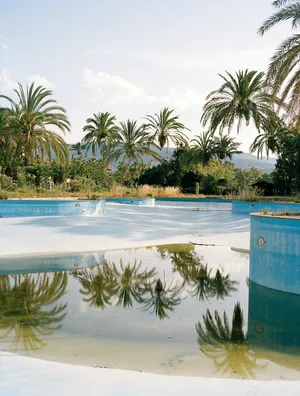
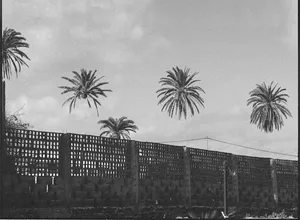
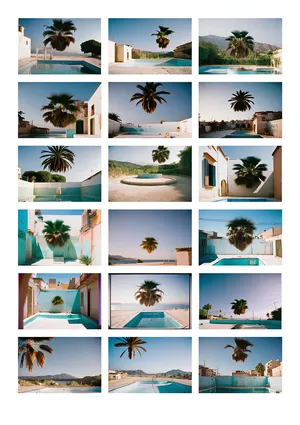
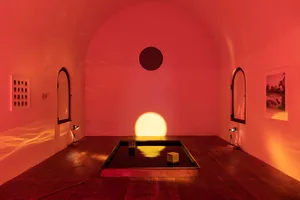
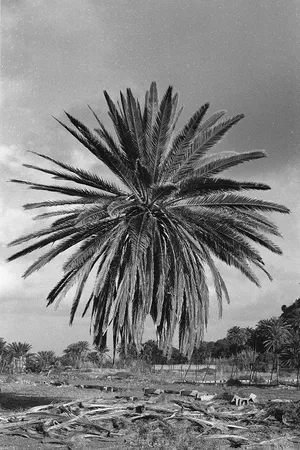
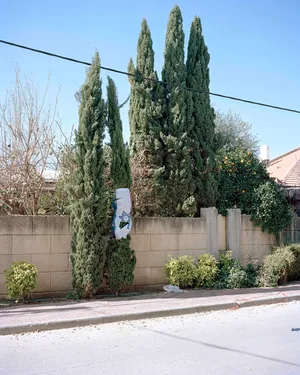
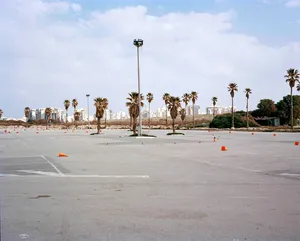
"Urgent Paradise" is a visual research on the symbolic and cultural meaning of the palm tree in the Western collective imagination, in particular around tourism and escapism, made in collaboration with computational biologist Lucien Hinderling. For this project, Tim Rod combines different types of images, from analogue black and white photographs and street views taken during his own trips, to digitally manipulated and AI-generated images. The generated images, where trunkless palm trees are often seen floating in the sky or hovering over cityscapes, offer a dreamy but incisive metaphor of how the palm tree has become a ubiquitous symbol of the tropics and a promise of leisurely existence. In our imagination, it is indeed no longer tethered to the often harsher realities of the territories it grows in. In exhibitions, "Urgent Paradise", is often staged as site-specific installations where the simplest elements (red and yellow light, the outline of a trunkless palm tree) are used to bathe the visitors in an artificial tropical sunset.
Don’t forget the Knifish
Tim Rod
Don’t forget the Knifish
Nominated by Centre de la photographie Genève, 2024
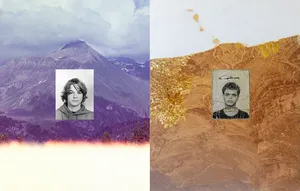
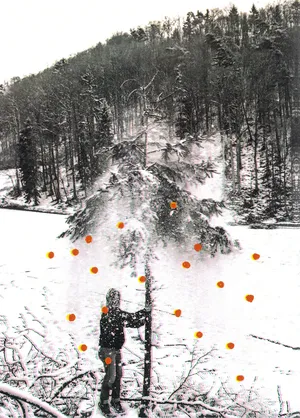
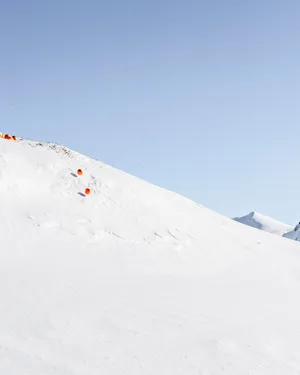
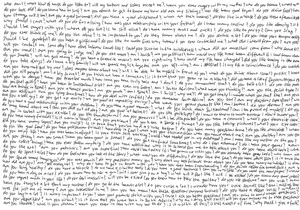
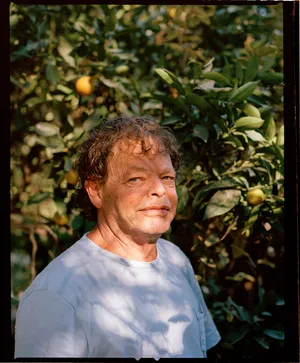
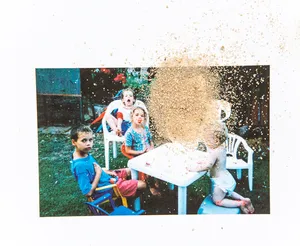
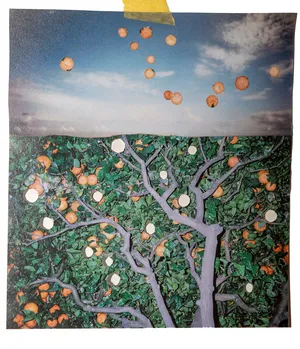
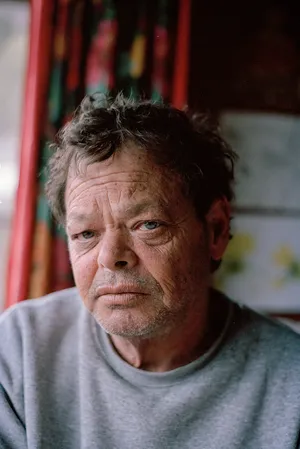
"Don’t forget the Knifish" is an intimate narrative about Tim Rod’s complicated and fragmented relationship with his father. When he was twelve, he learned about the existence of his biological father, triggering strong emotions and deeply challenging his identity and sense of self. Fourteen years later, at age twenty-six, he was able to meet his father for the first time, in Israel. He harnessed photography equally as a means of protection and a way to mediate his emotional responses, and as a tool to make sense of this experience and craft a narrative reclaiming and reconstructing his memory and his own history. Working with different types of photographs – personal archives, portraits and street views, as well as staged, collaged or generated images – Tim Rod attempts to find coherence and meaning from a divided personal reality and a family history that relies as much on his imagination as on personal recollections from his family members. The gaps and the forged connections between different realities are highlighted in images that bring together the Jaffa oranges of his father’s home city and the firs and snowy mountains of Switzerland, or confront the faces of the father and the son. They translate the timidity, apprehensions and hesitations, but also the tenderness between a parent and a child who are getting to know each other in an emotionally fraught context.
Tell me about your Future, I Show you my Past
Tim Rod
Tell me about your Future, I Show you my Past
Nominated by Centre de la photographie Genève, 2024
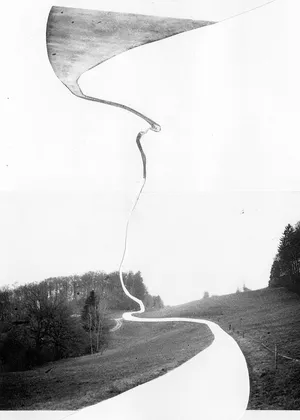
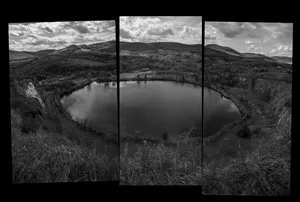
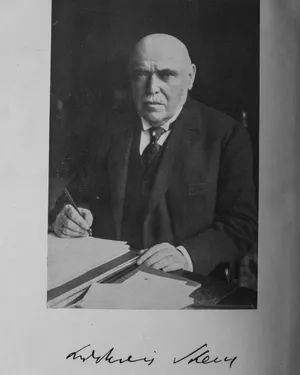
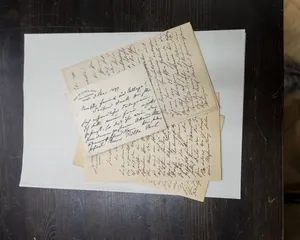
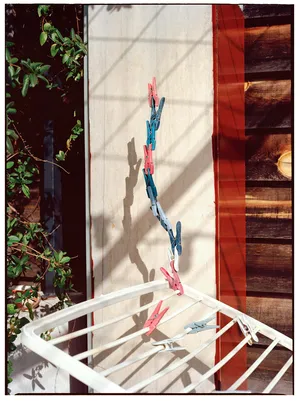
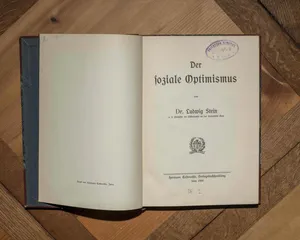
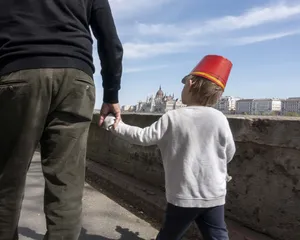
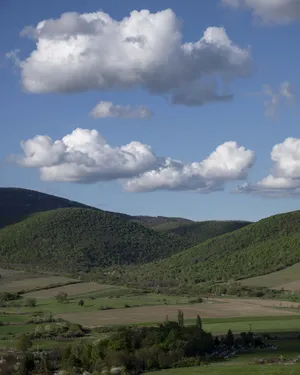
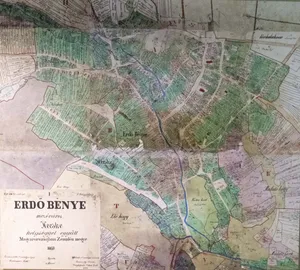
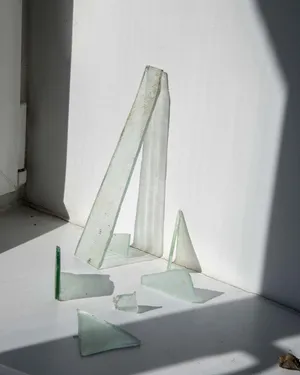
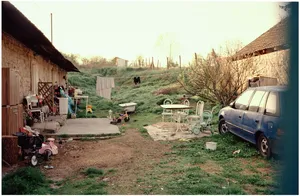
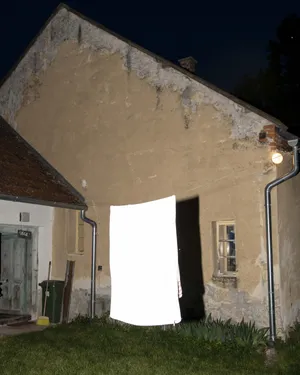
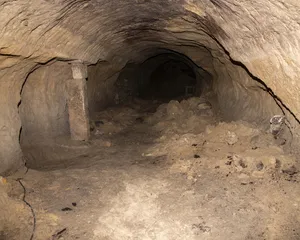
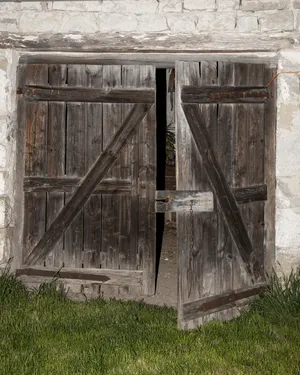
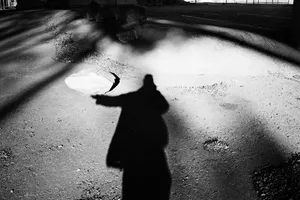
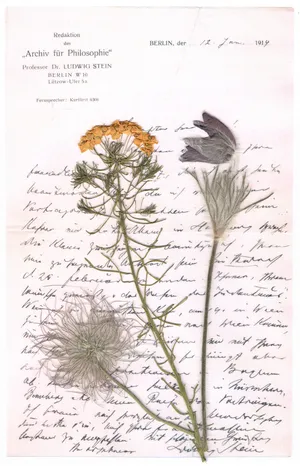
Photography, which guarantees irreplaceable uniqueness and unrepeatable singularity, preserves its subject by simultaneously removing it from the order of time, thus imbuing it with a sense of loss and inaccessibility. How, if at all, can someone’s presence be conveyed through absences? Are the spirit of a place, the landscapes and objects seen in the images capable of hauntingly (re)ferring to a past that can only be guessed at but is completely elusive? What do the findings of field surveys and archive data reveal about a person? How can a portrait be drawn or redrawn from these traces? "Tell me about your Future, I Show you my Past" addresses these questions related to memory, identity, and personal family history, among others. Tim Rod’s compilation is primarily an attempt to rearrange and present, through various photo documentations, photo collages, and collections of objects, the fragments of memory that refer to his late great-great-grandfather, Ludwig Stein (1859–1930), who was born in Erdőbénye and raised in the surrounding area. Although Stein spent most of his life abroad, as a Hungarian Jewish philosopher he remained closely connected to Hungary, and his ideas on improving society and his diplomatic activities were entirely devoted to serving his former homeland and the Jewish people. The artist began his efforts in this direction, that is, dealing with his great-great-grandfather’s past, during this year’s Robert Capa Contemporary Photography Center FUTURES – European Photography Platform residency program , which was based on site visits and archival research. The last exhibition was the first stage of this ongoing project, which primarily demonstrates that memory based on testimonies and counter-signatures is inherently and continuously permeated by imagination, and that evocation or recollection is the only authentic form of restoring and recovering a lost or inaccessible past, a prerequisite for our understanding of ourselves and the world.
through the wormhole and back
Tim Rod
through the wormhole and back
Nominated by Centre de la photographie Genève, 2024
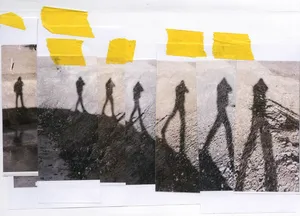
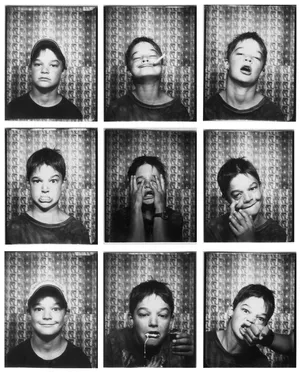
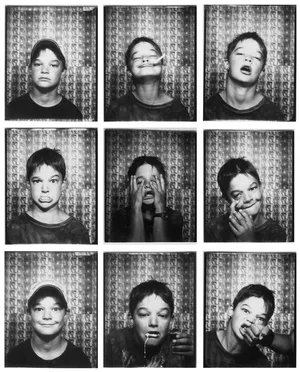
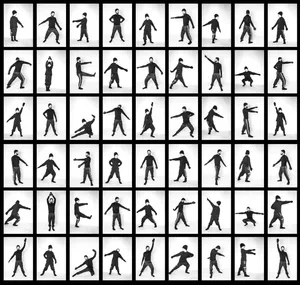
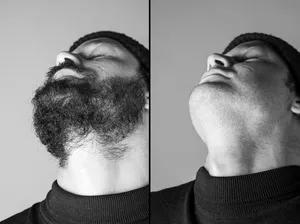
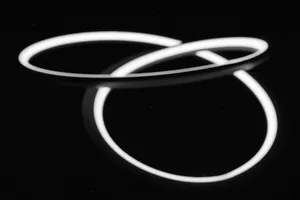
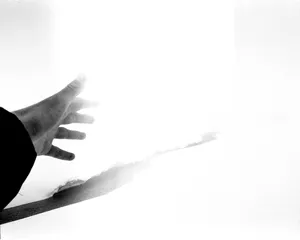
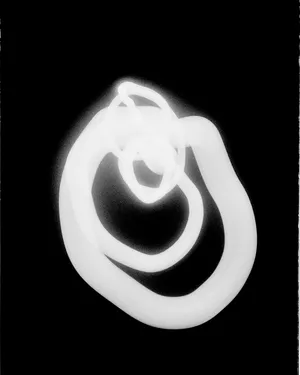
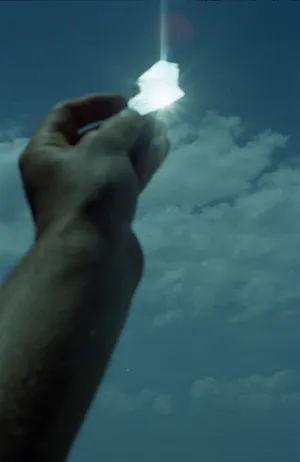
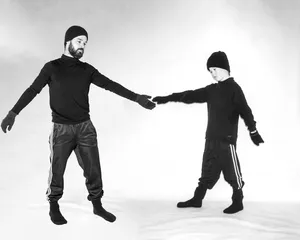
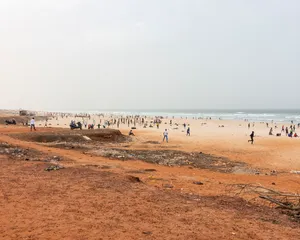
Sometimes I wish I could travel back in time and confront myself face to face. There is no relationship more intimate, conflicted, and enduring than the one we have with ourselves. We move through time accompanied by our own presence like a shadow, unavoidable and constantly speaking to us. My work begins from this sense of temporal dissonance, the friction between who I was, who I am, and who I imagine myself to be. For me, happiness is often entangled with regret. Past decisions, memories, and unrealised possibilities remain present, resurfacing in quiet and unexpected ways. These presences are not fixed. They shift, fade, and reappear, shaping how I inhabit the present. I often question the choices I have made and sometimes find myself resisting who I have become. In therapy I was encouraged to reconnect with my inner child and approach myself with patience and compassion. That relationship with oneself is foundational. This is where photography enters. It becomes a way of seeing with fresh, unfiltered eyes. A tool that not only frames what I observe but also allows me to approach myself and the past with curiosity instead of criticism. Photography may be the most accessible form of time travel we have. We freeze a moment and call it forever, even though this promise is an illusion. The image persists while the emotion fades and memory slowly changes. According to theoretical physics, time travel may be possible via a wormhole. I do not claim to understand the math. This is not a scientific model but a visual one. A mind game, or perhaps a soft science fiction metaphor for healing. By imagining time travel as a way to revisit and visually reframe the past, photography becomes a space where past and present briefly overlap and where memory, self image, and imagination meet.


à demain inshallah
Tim Rod
à demain inshallah
Nominated by Centre de la photographie Genève, 2024
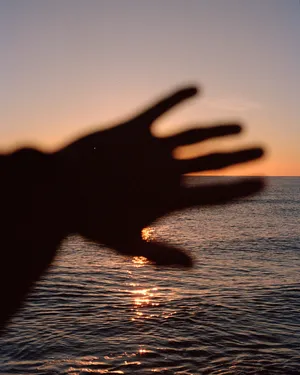
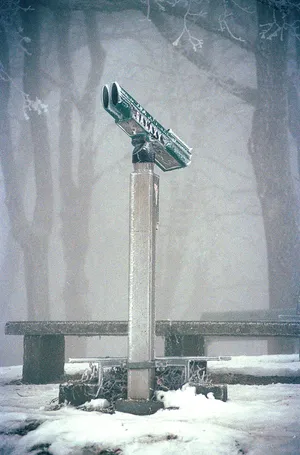
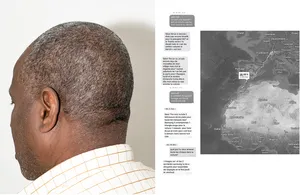
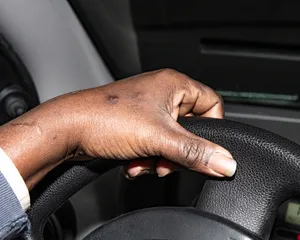
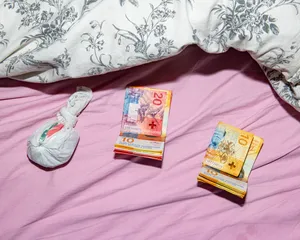
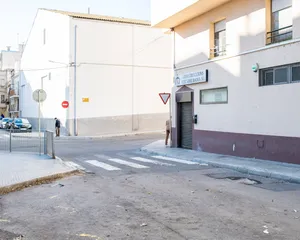
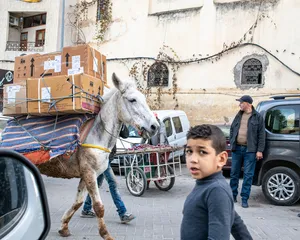
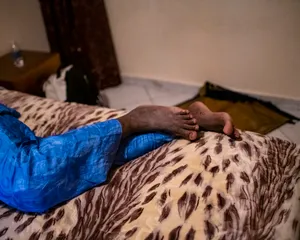
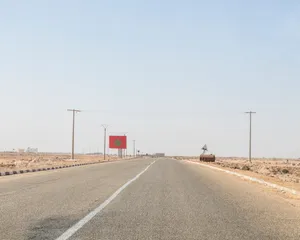
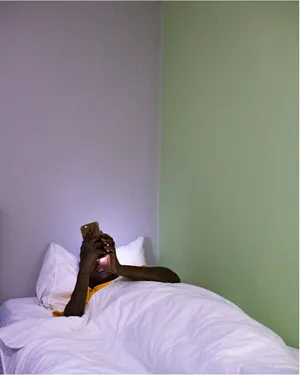
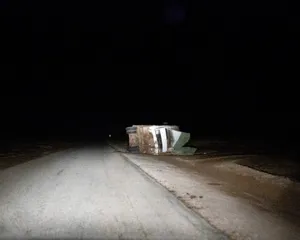
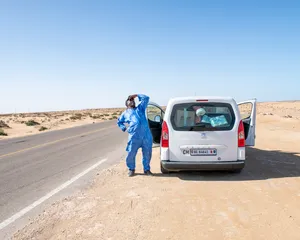
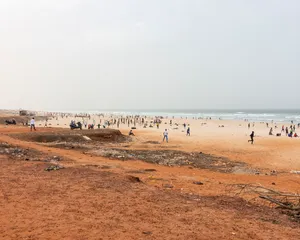
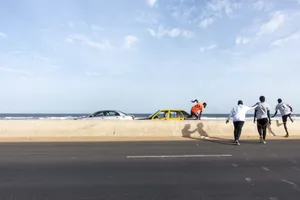
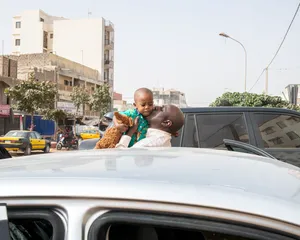
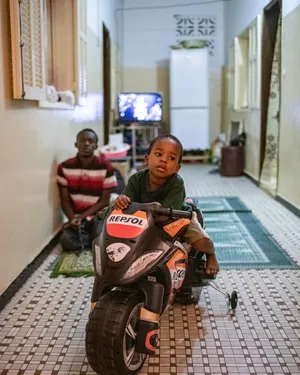
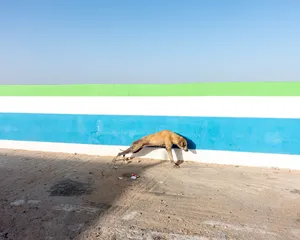
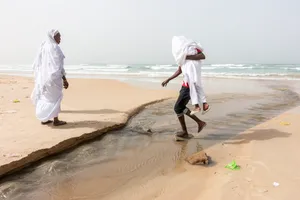
Born in 1971 in Senegal, Edi Fuema (invented name) made his journey to Europe 17 years ago. After living in Spain for ten years with his brother, where he obtained a residence permit, he arrived in Switzerland in 2012. For the past nine years he has been earning his living by collecting deposits on bottles and cups at parties and festivals in and around Bern. In the Bernese alternative scene, Edi is always welcome; he is well known here. People like him spend their lives under the society's radar and have neither the reputation nor the financial means to rent a permanent home.Nevertheless, he finds temporary places to stay, like squats or shared apartments. A few months after my first contact with him, I found out that he was looking for a family car with lots of storage space and this piqued my curiosity; what did he have in mind? He had a lot of things he wanted to bring back to Dakar for his family and friends; bicycles, TVs, microwaves, etc., and that‘s why he was looking for a car. Surprised, I listened to him telling me that he had already made about ten trips to his native country, as if the Senegalese capital was in the suburbs of Geneva! While this seemed to be a normal project for Edi, I was fascinated by the idea of covering this vast geographical and cultural distance by land and I proposed him to make a documentary about his journey. My motivation for making this photographic reportage is based on the fundamental question of origin, identity and rootedness of beings. His destiny Edi shares with a large group of people who, in the hope of better economic opportunities - especially to support their family back home - have gone into exile to earn a living as "migrant workers". Through this project, I try to sensitize a wide public to this individual destiny, which is representative for many others.To protect Edi and not expose him, he will remain anonymous in this story.

Tim Rod
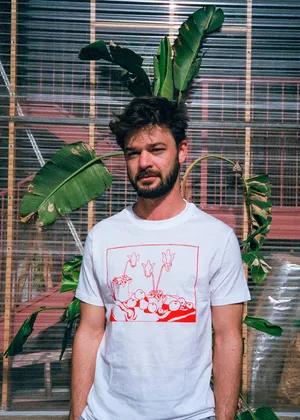
Tim Rod, born 1992, is a Swiss artist based in Bern, Switzerland. He studied photography at CEPV – Vevey School of Photography (ES diploma, 2021) and holds a Master in Contemporary Arts Practice HKB – Bern University of Applied Sciences. His work often explores issues related to exile and habitat, rootlessness and rootedness, as well as memory, identity, belonging and travelling. His own roots and family history are one of the central elements of his practice and his research, alongside collective visual culture. While his practice remains strongly rooted in photography, his works often expand into site-specific multimedia installations.
ProfessionPhotographer, Visual Artist
IdentityMan
LocationSwitzerland, Western Europe
PracticeInstallation, Mixed Media, Conceptual, Documentary, Portrait, Archives, Black and White, Multidisciplinary
TopicsIdentity, Post-memory, Family, Artificial Intelligence
CityBern, Switzerland
Nominated byCentre de la photographie Genève
Year2024
Close

Address
Isaac Titsinghkade 6A-B
1018 CA Amsterdam
The Netherlands
Address
Isaac Titsinghkade 6A-B
1018 CA Amsterdam
The Netherlands
© 2026 FUTURES Foundation
© 2026 FUTURES Foundation
Close