Photoforum Pasquart

Member from 2023. Located in Biel/Bienne, Switzerland

Photoforum Pasquart

Member from 2023.Located in Biel/Bienne, Switzerland

Photoforum Pasquart is dedicated to showcasing emerging and mid-career artists who work with photography in all its evolving forms – from classic prints to installations, video, and digital experiments. We collaborate closely with artists to develop their first solo exhibitions, test new ideas, or rethink how photography can be experienced. Founded in 1984, we have been actively supporting and shaping the Swiss photography scene for over 40 years. We believe in the power of photography to reflect and question society – and in the importance of dialogue between artists, audiences, and the world around us. Our exhibitions are part of a larger conversation. We see ourselves as a public forum: connecting local and international voices, encouraging debate, and fostering visual literacy through mediation and educational formats for all ages. Photoforum is an independent, non-profit association. Our work is made possible by a strong network of members, a volunteer board, and many partners who share our values. We are supported by the City of Biel, the Canton of Bern, and surrounding municipalities through a service agreement for institutions with a supraregional impact. We are part of Pasquart, a cultural center that brings together several organizations under one roof in Biel/Bienne: Kunsthaus Biel / Centre d’art Bienne (KBCB), Filmpodium Biel/Bienne, Kunstverein Biel / Société des Beaux-Arts Bienne, and Espace Libre.

Nominations

2026

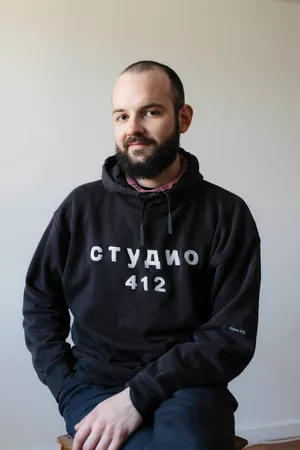
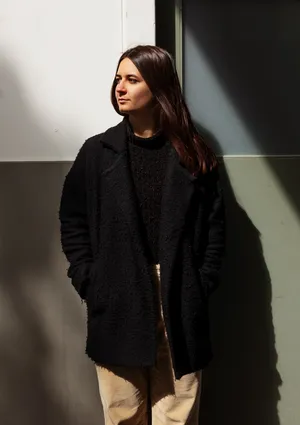
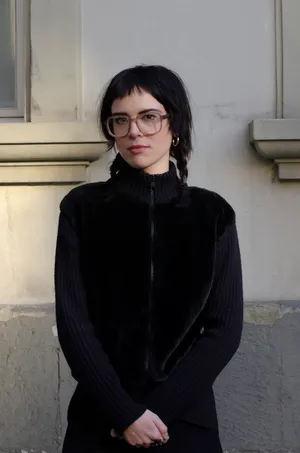
Olga Bushkova and Julian Stettler approach the medium as a space of ongoing attention — to relationships, to systems, to the limits of what images can and cannot show.

‍

Olga Bushkova's project «Photo at 12» begins with a simple gesture: every day, she and her father exchange a photograph. He lives in Rostov-on-Don, 3000 kilometres away. What started as a private ritual has grown into an extensive archive of two lives unfolding in parallel — fragments of routine, of weather, of ordinary moments that quietly accumulate meaning. Bushkova treats this archive not as something finished, but as material that continues to breathe. She returns to it, reorganises it, reads it differently over time. In doing so, she reveals something important: that intimate images are never only personal. They carry traces of the world around them — political, social, geographical. Her work raises real questions about what it means to communicate across distance, and what care looks like when it takes the form of a daily image. Her engagement with the photobook further grounds her practice in a tradition of sustained, embodied storytelling.

‍

Julian Stettler's work starts from a different kind of distance — not geographical, but conceptual. His projects explore what lies at the edges of human perception: environments we cannot fully grasp, systems too large or abstract to see whole. In «Bis hierher und nicht weiter», he examines how Western culture draws the boundary between the human and the natural world, and what gets lost in that division. His ongoing project «Ist das, was ist?» moves further into uncertain territory, combining photography with scientific, essayistic and poetic texts to approach questions that no single medium could answer alone. Stettler uses the photobook as a format that can hold this complexity — not to explain, but to approximate. His work sits at the intersection of ecology, knowledge and responsibility, asking what photography can honestly claim to show.

‍

Together, these two practices reflect what Photoforum Pasquart looks for in artists working today: a willingness to stay with a question rather than resolve it, and an understanding that photography is not just a way of seeing — but a way of thinking.

‍

Selection committee:

Amelie Schüle, Director & Curator Photoforum Pasquart
2025

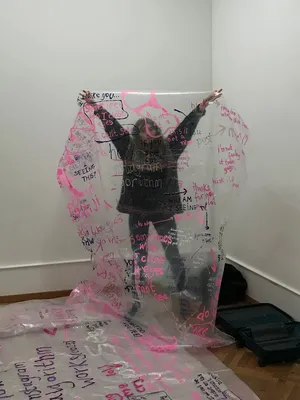
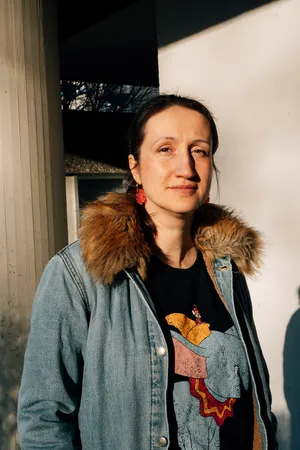
Laura Paloma: Expanding Photography Beyond the ImageLaura Paloma challenges the conventions of photography, embracing a post-photographic, mixed-media approach where text, low-tech visuals, and conceptual depth intertwine. Her work operates at the intersection of photography, writing, and installation, constructing intricate narratives that question perception and image-making itself. Paloma’s unique practice resists categorization, revealing a deep engagement with materiality, language, and the politics of representation. By pushing the medium to its conceptual limits, she redefines what photography can be in the digital and post-digital era.

‍

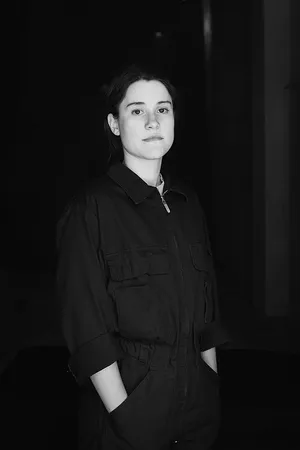
Aline Bovard Rudaz: Reconstructing Histories Through ImagesIn contrast, Aline Bovard’s work is deeply rooted in research and archival material, offering a layered investigation into forgotten histories. Her project “Cherche RADIUMINEUSE” exemplifies her method—combining photography, found images, and scientific records to reconstruct narratives from the past. Bovard’s meticulous process of gathering and reinterpreting visual evidence creates a bridge between historical events and contemporary concerns. Her practice demonstrates how photography, when interwoven with historical inquiry, can serve as both a tool for storytelling and a means of re-examining cultural memory.

‍

‍Why These Artists? Both Laura Paloma and Aline Bovard Rudaz challenge traditional photographic practices by integrating research, text, and alternative visual strategies. Their work expands the dialogue on contemporary photography, demonstrating how the medium can be both an artistic and intellectual tool. Through vastly different approaches, they offer fresh perspectives on storytelling, memory, and visual culture.

‍

The artists has been nominated by Amelie Schüle, Director of Photoforum Pasquart.

2024

Bühler's artistic narrative trascends the traditional realms of art, merging her roles as artist, photographer and sound researcher. Emphasising the creative process over the final product, Bühler's approach to photography and music is both exploratory and deeply personal, involving intense research and engagement with the subject. Rooted in a desire to dismantle rigid structures her art transcends mere visual experience, becoming a catalyst for personal and sociatel change and inviting viewers to engage in a dialogue.

‍

Gollin's work is characterised by a keen sensitivity to history and narrative layers, often involving meticulously collecting material - photographs, video, interviews, texts, objects - which she assembles into thought-provoking narratives. Her use of analogue techniques like scanning, printing, cutting and collaging creates multilayered works that are visually striking and content-rich. Her work invites viewers on a journey through time, exploring our shared history's mystical origins and reflecting on narrative power in shaping our world understanding.

2023

With an alchemical touch, Piaget seeks to transform the ordinary into the extraordinary, to breathe life into the intangible, and to capture the fleeting essence of life itself. His lens becomes a bridge between dreams and reality, beckoning viewers to question what is truly there. In selecting Piaget for our talent programme, we recognize his unique position at the intersection of humanity and technology, dreams and reality. His art invites us to reexamine our digital existence and savour the fragile instants that often slip through the crevices of our fast-paced lives.

‍

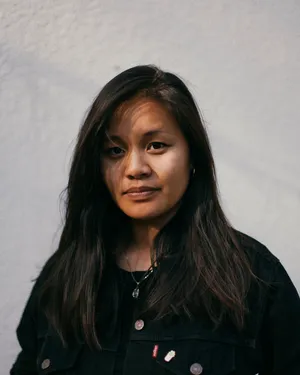
Thi My Lien Nguyen’s artistic practice delves deep into the complexities of belonging, diasporic realities, and post-migrant stories, transcending geographical boundaries and fostering a profound understanding of human identity. Her approach expands beyond traditional photography, incorporating multimedia elements, community-based work, and immersive installations to create a multisensory experience for viewers. This evolution of her practice promises to deepen our emotional connection and understanding of the complex themes she explores.

‍