

Everything Goes Dark a Little Further Down
Matthieu Croizier
Everything Goes Dark a Little Further Down
Nominated by British Journal of Photography, 2021
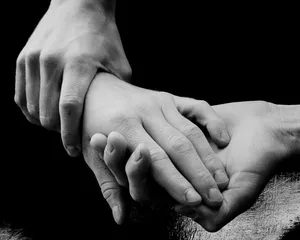
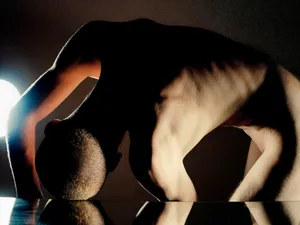
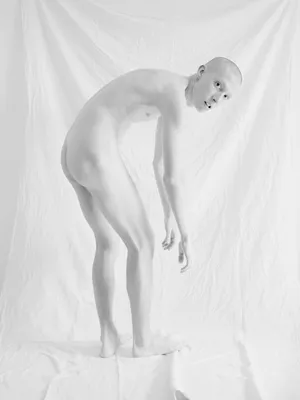
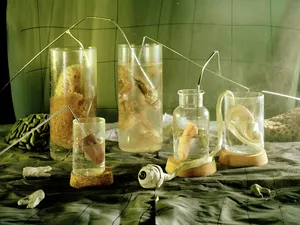
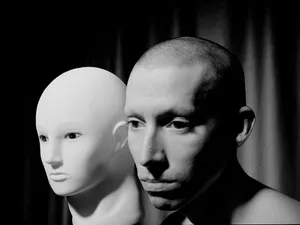
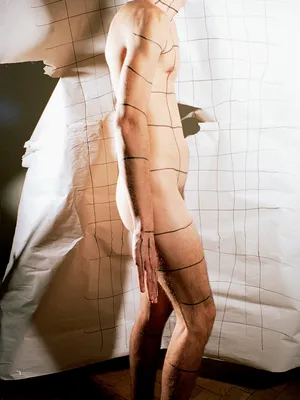
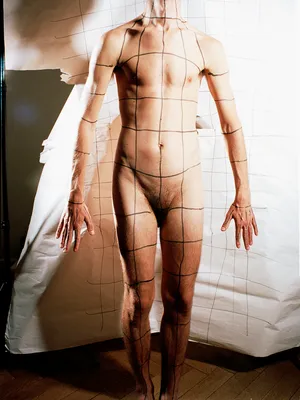
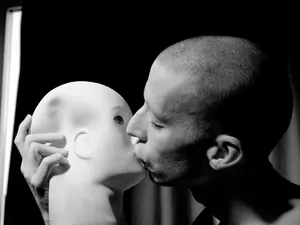
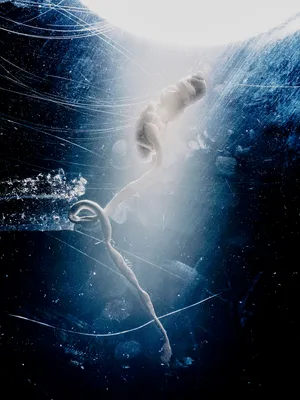
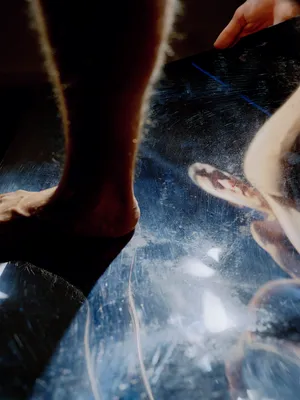
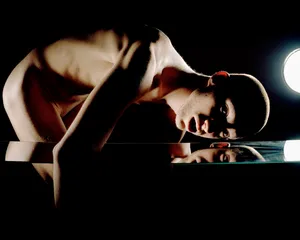
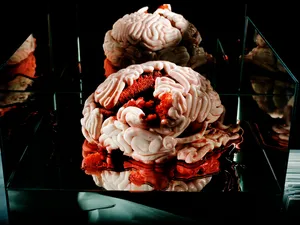
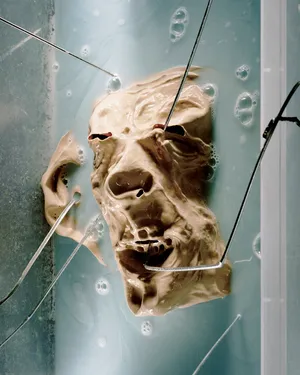
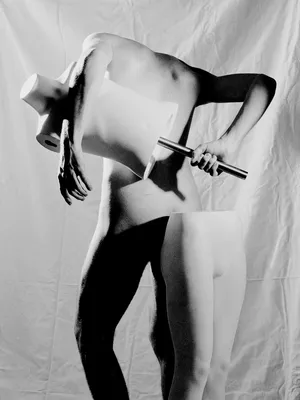
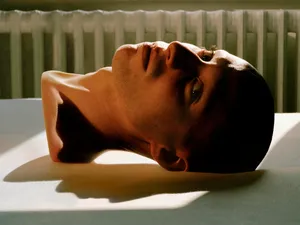
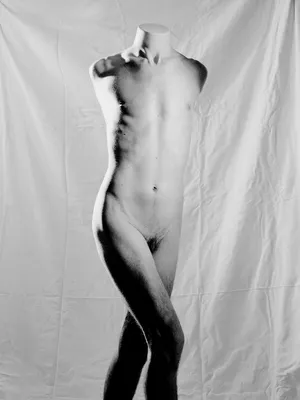
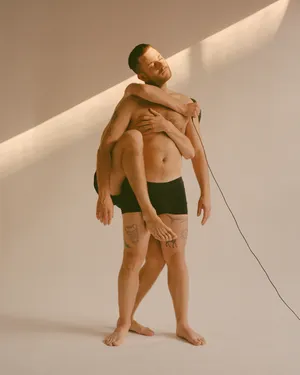
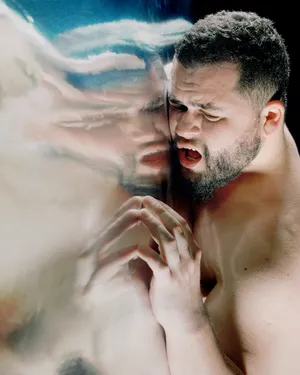
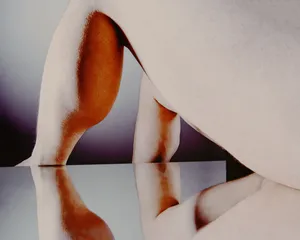
“ The images in Everything goes dark a little further down are weird and playfully, deliberately perverse. An array of body parts are seen in fragments throughout – torsos appear without arms, feet crush heads, bodies contort, faces melt, brains explode. In one self-portrait, the artist has manipulated the photograph to make his head appear severed but alive, his eyes still alert and staring into the lens. In another, he holds a mannequin, kissing it, and in it that act creates his own, disturbed version of a mirror image – one side flesh and blood, the other just soulless plastic. Elsewhere, Croizier draws a grid across his body in thick, black marker, echoing pictures from the medical and pseudo-scientific archives he spent time devouring for research. “The body is primordial in this work,” he says. “Our own body is the most ordinary thing to each of us, and yet the most secret. Bodies are beautiful, unique and political. In reference to anatomical iconography, I try to deconstruct normative representations of the body, with a view of asking questions such as ‘to what extent is a body a body?’ and ‘how can it free itself from the norms that constrain it?’”
“To me,” he muses, “this work is a celebration of the renunciation of being normal.” It’s a project for anyone who's ever had the guts to truly, monstrously, fabulously, be themselves.
Extract from a text written by Joanna L. Cressell, published in Lens Culture, August 2021
That Moment When You Can See The Crack In The World
Matthieu Croizier
That Moment When You Can See The Crack In The World
Nominated by British Journal of Photography, 2021
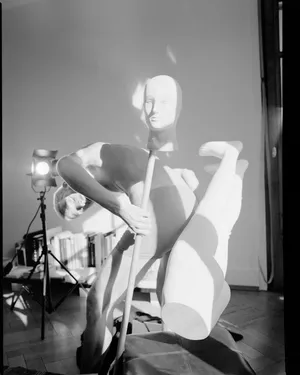
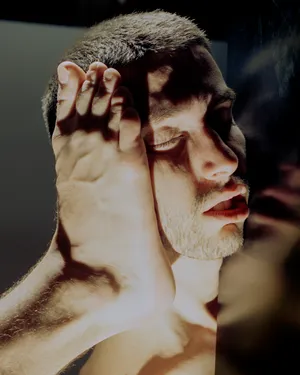
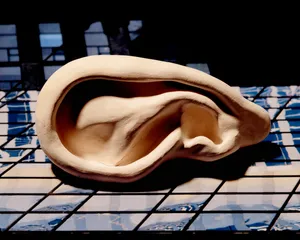
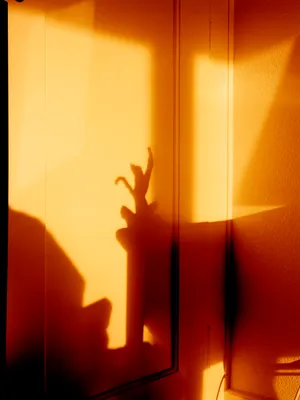
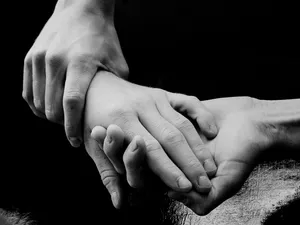
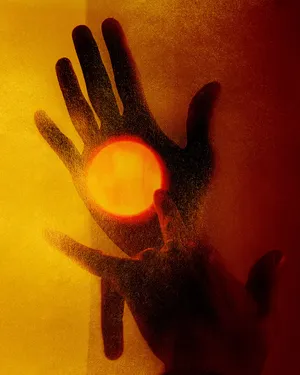
“‘A love letter to the abnormal, a farewell to the norm’, Matthieu Croizier’s work sets bodies free from the way they are supposed to look like. He tilts and twists paradigms to shape a world where the horizon’s line isn’t straight, and flesh is not condemned to order. The words ‘beauty’ and ‘ugliness’ cease to mean much, monstrosity is reclaimed as tender and spectacular, queerness is a magical and constant act of mutation. If the images that we are used to seeing define the things we’re able to imagine, That Moment Where You Can See The Crack In The World suddenly expands the coordinates of what we feel is possible. Reality has opened up, free and in flux.”
Text by PhMuseum’s visual editor Camilla Marrese
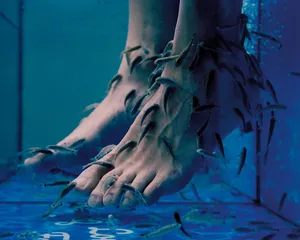
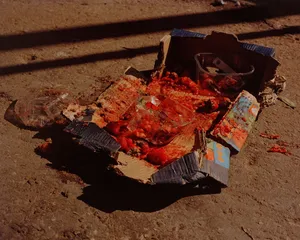
In my work, I generally seek to evoke the tension between opposing notions, such as beauty and ugliness, fascination and repulsion, the ordinary and the spectacular... "That moment when you can see the crack in the world" is an ongoing personal project on which I have been working for a year. Using the body as a raw material - my own or that of people close to me - I try to create the spectacular from the simple things around me.
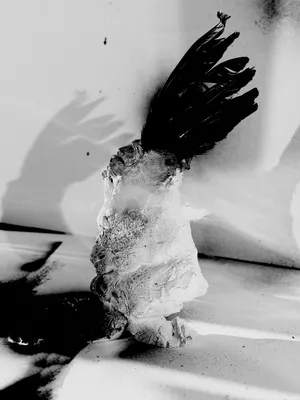
The photographs depict an extraordinary act of metamorphosis, where fragments are melded together to create something new. Reality is being reshaped, and things are not condemned to be as they have been defined.
What is beautiful, what is ugly? For me, beauty is queer. It's something we can't grasp, in constant mutation, something magical we can't pin down. It is bizarre, confusing, ugly, fabulous, fascinating and yet sometimes considered repulsive. Fascinating, the reappropriation of certain stigmatising terms such as "freak", "queer" or "faggot", as a form of resistance, is what inspires and nourishes my work, through which I decide to reclaim my own monstrosity. Like a love letter to the abnormal, a farewell to the norm.


We Are All Gay Cyborgs
Matthieu Croizier
We Are All Gay Cyborgs
Nominated by British Journal of Photography, 2021
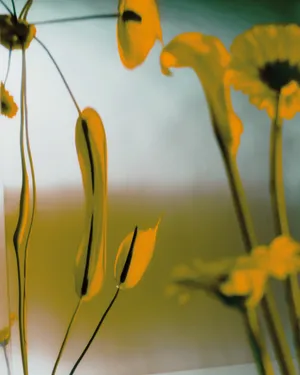
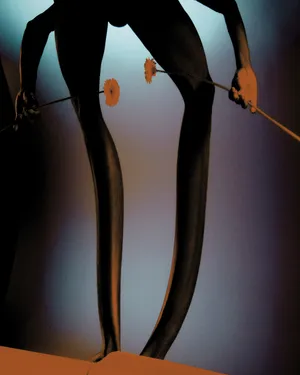
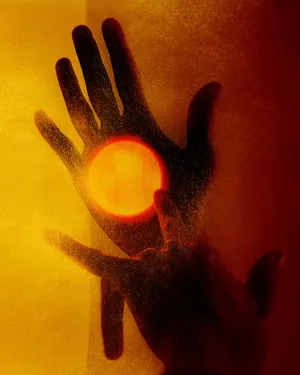
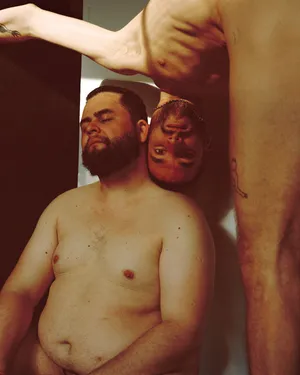
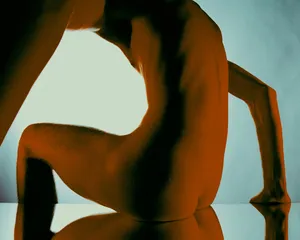
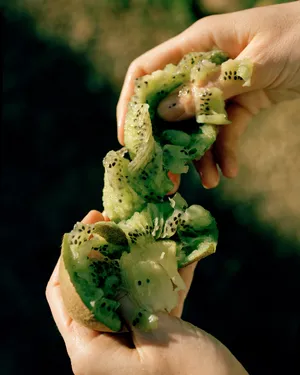
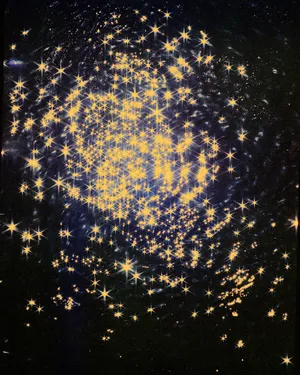
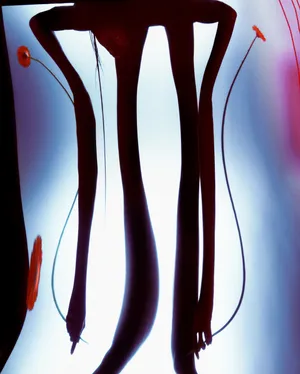
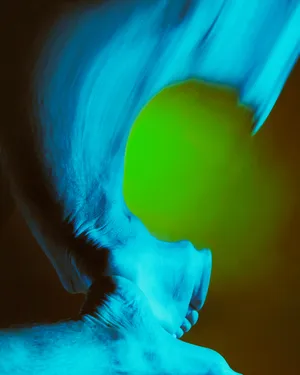
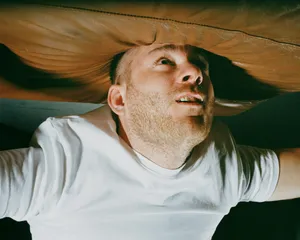
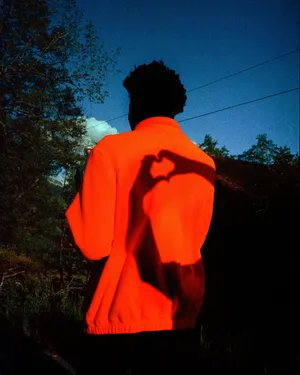
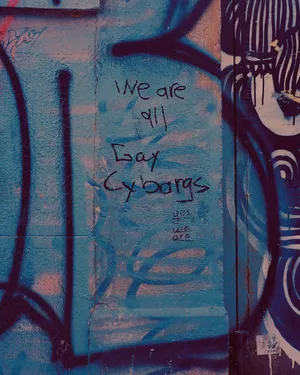
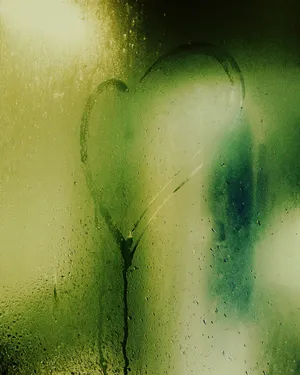
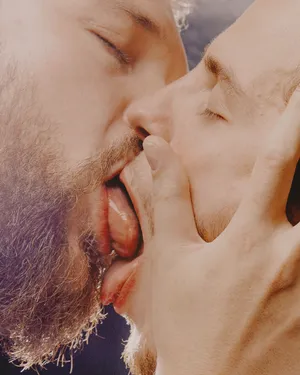
"The photographs of Matthieu Croizier portray desire, love, and excessive bodies on the verge of monstrosity. His self-portraits and photographs of partners examine various aspects of sexuality, presented here as an experimental vehicle of self-discovery and liberation. Particularly important is a detachment from traditional ideas concerning roles and beauty, which the artist's work seeks to question and to deconstruct. The series We Are All Gay Cyborgs (2024) is dedicated to various aspects of queer eroticism and uses elements from pop and subculture to depict new forms of desire and powerlessness.
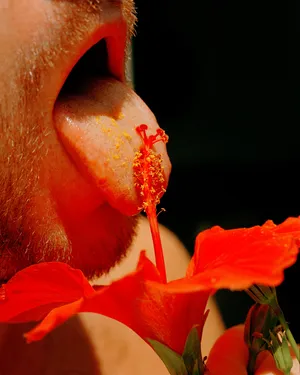
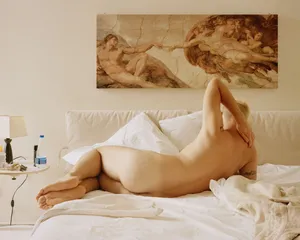
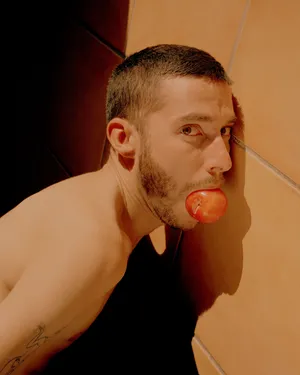
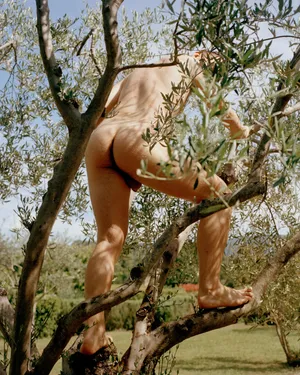
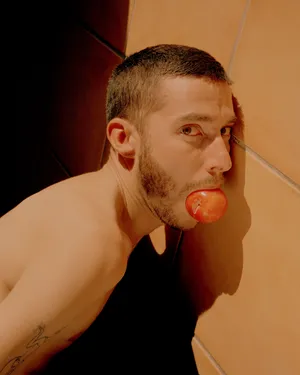
Individual body parts are often the focus of the intensely colourful images and lend a physical dimension to the act of viewing: a tongue touches a flower stem, a mouth closes over a plump fruit, a naked lover turns his back to the camera. Croizier breaks with the ordinary clichés and traditional roles of gay culture by staging hairy, deformed, full-figured bodies as erotic and autonomous. Queer desire is not portrayed in a fetishised way, but rather brought into focus with lust and playfulness."
Text written by Jana Johanna Haeckel for the exhition Love, Maybe – Intimacy and Desire in Contemporary Art at Alexander Tutsek Stiftung, Munich.
Matthieu Croizier
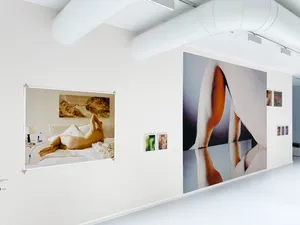
Matthieu Croizier (b. 1994) is a Franco-Swiss photographer working between Lausanne and Paris. His work focuses on the intimate, queer issues, portraiture and the representation of the human body. Using fragments of reality that he decontextualises, he attempts to create new stories, like parallel realities in which things and bodies are no longer condemned to be as they are defined.
In 2021 he was named British Journal of Photography's Ones to Watch 2021, and selected among the Futures Talents 2021. Also a laureate of Paris Photo's Carte Blanche Students 2020. He recently exhibited at institutions such as Kunsthalle Trier, the Centre d’Art Contemporain Yverdon-les-Bains, and the Swiss Design Awards 2023. His work has been featured in numerous group shows and festivals including in Athens, Milan, Paris, London, Braga, and Guadalajara. In March 2024, he published his first book, "Everything goes dark a little further down" with Mörel Books. Beyond his personal projects, he undertakes commissions for clients comprising M le Monde, Esquire Italy, Zeit Magazine, Art Basel, On Running, Salomon, and Les Inrockuptibles.
ProfessionPhotographer
IdentityMan
LocationSwitzerland, France, Western Europe
PracticePortrait
TopicsIntimacy, Body, LGBTQIA+
CityLausanne/Paris
Nominated byBritish Journal of Photography
Year2021
Close

Address
Isaac Titsinghkade 6A-B
1018 CA Amsterdam
The Netherlands
Address
Isaac Titsinghkade 6A-B
1018 CA Amsterdam
The Netherlands
© 2026 FUTURES Foundation
© 2026 FUTURES Foundation
Close