
Fotograf Zone

Member from 2022. Located in Prague, Czech Republic

Fotograf Zone

Member from 2022.Located in Prague, Czech Republic

Fotograf Zone is an art organisation that runs an online magazine, exhibitions in its own gallery space, a festival of contemporary photography, and educational activities in the field of photography and related disciplines. At the cutting edge of contemporary image production, Fotograf Zone addresses pressing social issues through photography and moving images, offering insightful commentaries and critical perspectives to today’s challenges. By emphasizing visual literacy, we aim to make these issues more accessible and encourage critical thinking about photography’s role in society. As one of the leading institutions dedicated to contemporary photography in Central Europe, Fotograf Zone not only provides a space for the development of new approaches in the medium, but also fosters a dynamic community of creators and enthusiasts around its platform.

Nominations

2026

The selection process builds on the long-term collaboration between artists and the Fotograf Zone platform and Fotografmagazine. Publishing and exhibition activities thus function as a natural filter through which talents from the Czech Republic are further selected for the FUTURES platform. The nominations are decided by the Fotograf Zone programme board consisting of Markéta Kinterová, Světlana Malina, Barbora Vanická Čápová, and Viktorie Vítů.

The four projects move along the boundary between personal experience and attentive observation of the world, where intimate encounters intersect with broader social and environmental questions. The artists work with photography, installation, and moving image as means that allow perception to slow down, reality to fragment, and meanings to be reassembled. A shared emphasis lies on process, openness, and the acceptance of unresolved questions.

‍

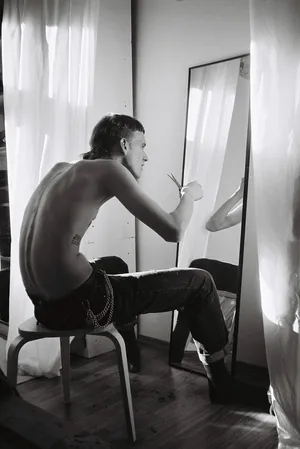
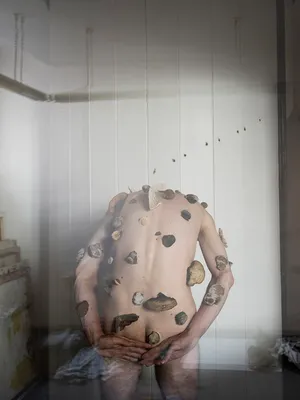
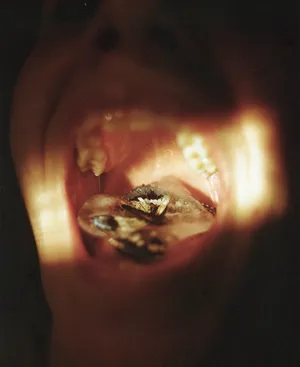
In Fracture of the Sun, Ondřej Kubeš explores the body, memory, and self-perception through light as a formative force. Fragmented corporeality, nudity, and solitude are interwoven with archival materials and family memory, revealing how social norms shape personal experience. A leather cord threading through the installation becomes a metaphor for systems that simultaneously bind and restrict. Questions of queerness are not articulated explicitly but are rather lived through, as if they were a process the artist primarily observes within himself, allowing only partial insight into his inner world.

‍

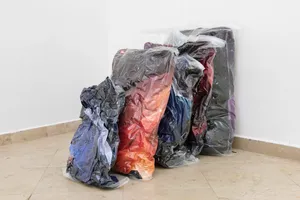
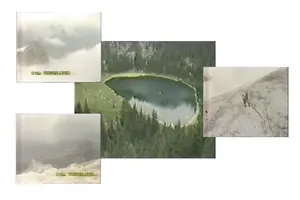
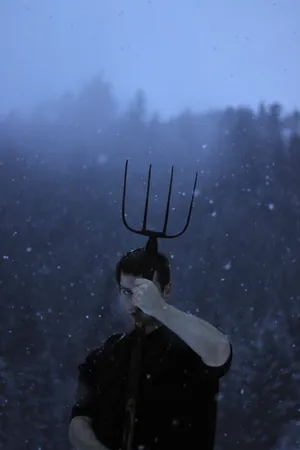
Jakub Tulinger has long focused on landscape in its various forms, whether natural or urban, and experiments with 3D video and laser scanning technologies. In Extension, peeling walls are transformed into detailed micro-landscapes that carry traces of time and spatial memory. His broader practice combines documentary observation and field research with virtual environments, most notably in the video essay Sorry I am late, I was dealing with something in the valley (Assembly of things). Recurring motifs of travel, arrival, and departure, as well as a long-term engagement with the tourist landscape of Králický Sněžník, reveal his layered approach that blends personal experience, found material, and subtle irony.

‍

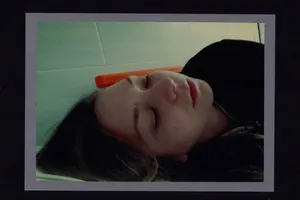
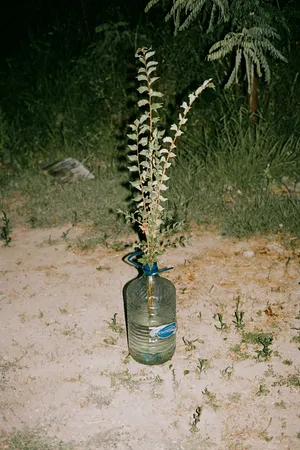
Miriam Pružincová’s cycle Everyday is the most beautiful offers a fragile, poetic record of family life during a period of emotional and generational reckoning. Through intimate bodily fragments and domestic scenes, she addresses separation anxiety, mental health, and the search for safety, suggesting that the path to understanding oneself is never straightforward, but unfolds through constant transformation, searching, and rediscovering meaning in small, seemingly banal situations of daily life and through an emphasis on presence.

‍

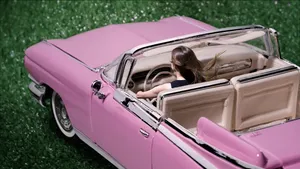
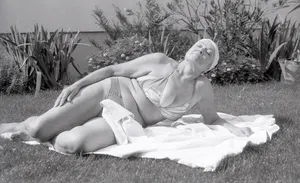
In Maybe, Happiness Is…, Linda Zhengová returns to one of the most universal yet most difficult questions: what happiness actually means. The work draws on personal experience from a relationship-wise complicated period marked by change, relocations, and turbulence, in which people come and go and certainties fall apart. Working between documentary and staging, and returning to analogue photography as a means of slowing down, she questions authenticity, memory, and the possibility of capturing fleeting moments of human closeness.

‍

Together, these projects form a diverse picture of contemporary artistic practice in which personal experience becomes a starting point for broader reflections on the world, relationships, and the environments we inhabit. They collectively show that attentiveness and openness to process can lead to forms that are not closed statements, but invitations to a careful and slow reading of reality.

‍

Markéta Kinterová

2025

Observing oneself, one's identity, and asking existential questions—this often happens in moments of searching, doubting, or in situations filled with pain and difficult introspection, which are key for many artists. A prominent theme in Dorota Franková's work States is gender and queer identity, as well as psychological states, which run through her pieces. Her self-portraits capture moments of emotional tension as she explores the transformations of the mind, moods, and the states between them. Her experiences in psychiatric clinics or working in a hospice, where she daily encountered death, are reflected in her work with extraordinary intensity—sometimes expressively, sometimes in quiet hints. As if one could not be separated from the other, as if all her experiences complemented each other and, in the end, formed one fascinating whole.

‍

Varvara Gorbunova, in her series On Womanhood, gives us a glimpse into the intimate space of her own family and its female members. The cycle On Womanhood is a sensitive probe into moments and relationships in the context of shared free time, and household chores, but also the fragility of the moment, bodily closeness, and subtle references to spiritual life. In the project Coming Home, she also follows her personal experience related to that strange feeling of returning home after a long time. From the photographs, it is clear that this is a delicate and personal topic, set in a kind of nostalgic summer atmosphere, yet tinged with a certain sense of poignancy.

‍

The surfaces of things can captivate us with their diversity—they are fascinating by their structure and the complexity of the relationships they create. But what do they reveal about what lies beneath them? Can we find hidden patterns in their arrangement, or do they only captivate us with their aesthetic value? Does their structure carry a message about the content they conceal, or does it stand alone as an autonomous layer of meaning? Lukáš Opekar, through his experience in graphic design and image generation, approaches these questions with a distinctive creative freedom. His innovative approach, transcending genre and boundaries between different media, opens up space for exploring intersections between different fields, offering a unique view of the relationship between surface and content. In the series Imprint, he examines new angles on seemingly mundane details through technologies that allow us to view the surfaces of things differently. His images, primarily composed of 360° panoramic views of tree trunks, reveal natural structures in a new light. The resulting shots uncover the micro-landscapes of these weathered surfaces and bring an unexpected aesthetic—a unique reflection of the passage of time and the variability of space. On the other hand, the project Blue Hideouts is a documentary series of images strictly focused on the use of construction tarps with their typically striking blue color, which captures attention in the public space. Originally practical, their use becomes, through the artist’s perspective, an image deeply embedded in the aesthetics of the environment.

‍

Archives, whether family, institutional, or online content, hold many perspectives and possibilities. A glimpse into their selected fragments prompts us to reflect on the relationship between the external and internal, structure and content, and finally between the real and the imaginary. Viktoriia Tymonova is a talented artist captivated by the belief in supernatural phenomena. Through her journalistic practice and study of Ukrainian historical sources, she has long deepened her knowledge in this area, which she transforms into photographs and inventive installations. Her work I Witnessed Her Transforming Rain draws on ethnographic texts, family stories, witch trial reconstructions, and experiments with materials such as clay, wax, glass, and herbs. The project focuses on re-evaluating and recreating forgotten traditions that form an uninterrupted line of witchcraft in Ukrainian culture up to the present day. The artist draws inspiration for her project from her fascination with this theme, which she sees as a source of power, confidence, and control, but also as a field of fear, anxiety, and excitement. In her project We Want to Know the Truth, she investigates mysterious phenomena associated with the myth of ball lightning. The purpose of her work is to play with the absurdity of these stories, which connect unexplained phenomena with secret laboratories, classified technologies, and mysterious deaths.

‍

All of these projects unsettle us, force us to doubt, and search for hidden meaning where at first glance not everything is immediately obvious. Art here is not just about depicting the world, but about deciphering it, discovering invisible layers, and opening up space for uncertainties that challenge us to reconsider our ideas about reality.

‍

Markéta Kinterová
‍

The internal expert committee consists of Markéta Kinterová, Světlana Malina and Barbora Vanická Čápová.

2024

In Oskar Helcel's Under Construction, the artist works to investigate a complex of commercial and office buildings in the centre of Prague designed by Zara Hadid. The complex is surrounded by a number of controversies concerning the investor's link to corruption, so Helce summons the figure of Hadid as a mysterious guide from the world of the dead, who, through a kind of biblical commentary, posits disturbing questions about power.

‍

Space, time and the banality of everyday life are pervading motifs in Ines Karčáková's work. In Dancing Makes You As Happy As a 2073.35 Euro Pay Rise, the artist seeks to uncover the motivations associated with the previously idealistic vision of conquering the moon, which are now having a very concrete impact on consumer life on Earth, from scratch-resistant glass to GPS.

‍

Karina Golisová provides insight into the structures of everyday life and relationships. Her project, Like everyone else, I have to be somewhere too, delves into the concept of anchoring oneself within the intricate fabric of community life. It explores the affirmation of existence and identity within the complex interplay of shared experiences.

‍

Barbora Bačová gives a glimpse into her intimate life through her project I am gonna live my life, and conceives working with photography much more as a process than focusing on a specific or ‘successful’ result. Many of the images could conventionally be considered unsuccessful, which appeals to the artist, and she finds her signature in this approach.

‍

The exploration of the culture surrounding the body and its definition of the ideal form is a central theme in Nadia Markiewicz's work. In her installation DRIVE-THRU, she combines objects, photography and video to address the fundamental question of what it means to fit or not fit in with the normative formula given by society.

2023

Michaela Nagyidaiová is a Slovak photographer whose work analyses the thorny path of transformation of Central and Eastern Europe from communism to capitalism, as well as roots and the migration of individuals. Her project Moulding is an exploration of how the current circumstances in countries that were formerly part of the ‘Eastern Bloc’ affect individuals, topography, and ideologies – and how political apparatuses ‘mould’ the layers of everyday lives in different forms.

‍

As a second generation Vietnamese living in Czech Republic, identity is a key motive to the artist Hiep Duong Chi too. His series That time I wished I was a white butterfly deals with the symbols associated with Vietnamese culture, and how they are tested in new environments. By removing them from their original contexts, these motifs take on different meanings, pointing to the many perspectives through which they can be viewed.

‍

Veronika Čechmánková explores the changes of symbols and traditions over time, their transformations, and possible meanings for the present. In the series Flowers are not to be picked. Flowers are to be admired, she juxtaposes the exploitation of the fashion industry with the world of flowers, ultimately highlighting how the floral aesthetic has become a spectacle of lifestyle and entertainment far removed from the natural world.

‍

In the series See how these memories affect your water, Michał Patycki sets out to find specific situations and moods associated with intimate mental and physical experiences. In his photographs, seemingly unrelated entities intersect in compositions both melancholic and mysterious often with a slightly unsettling edge. The links implied are fragile, suggesting a mutual intimacy that holds them together, just for a while.

‍

In the precise search for authentic and novel themes, Noémi Szécsi is consistent and exceptional. She focuses on specific groups of people who can be seen as teetering on a certain edge of a society; employees of a funeral home, far-right protesters or women intensely involved in the practice of magic. The latter, under the title it cannot rain forever, is what Noémi has been working on between Hungary and Netherland for the last two years.