Copenhagen Photo Festival

Member from 2021. Located in Copenhagen, Denmark

Copenhagen Photo Festival

Member from 2021.Located in Copenhagen, Denmark

Copenhagen Photo Festival is a non for profit organisation and the largest festival for photography in the Nordic countries. The festival has existed since 2010 and today it is also a year round platform that works to shine light on camera and lens based art via events, exhibitions, digital formats and cross collaborations. Through our activities we aim to create community around photography by inspiring, exchanging and advocating for the relevance of photography in an ever-evolving world. Each year in June our endeavours all come together for the festival celebration of photography with exhibitions, networking activities, talks, parties and events at our festival centre as well as with our many festival partners across the region. Copenhagen Photo Festival curates and hosts a number of exhibitions at the festival centre. The festival has an unorthodox and experimental approach to exhibition making and strives to engage with its surroundings over the short festival period – and always with an ambition to uphold a sustainable exhibition practice. Since 2016 the headliners of the festival centre have been selected through an open call and our programme committee selects between 3 to 6 solo artists each year. Several hundred apply to our open call to exhibit during the festival each year. Parallel to the festival’s own activities, the festival presents a partner programme around the city and collaborates with both emerging and established venues that participate with exhibitions, events, talks and more. In recent years the festival has engaged in creating more networking opportunities, support and activities for emerging and established artists and curators from the Nordic countries and abroad with engagement in the FUTURES Photography Platform as well as organising seminars, workshops, photo print and photo book markets. This all aligns with Copenhagen Photo Festival's strategic pursuit over the next years, which aims to create space for dialogue and connections between photography, people and the surrounding environment and society.

Nominations

2026

CPF was looking for talents residing in Denmark, Faroe Islands, Finland, Greenland,  Iceland or Sweden for at least 12 months, who were under 40 (born in 1986 or later), and who were either educated within the field of photography/art, or whose CV’s presented a continual professional experience within the last 3 years.

‍

CPF received a total of 56 applications from Denmark, Finland, Iceland and Sweden (based on an outreach to the entire Nordic region except Norway). 35 applicants were women, 17 men and 4 identified as Other. All submissions were considered by the festival’s program committee, which consists of the following members: Patricia Breinholm Bertram, Curator and Head of Communications at Martin Asbæk Gallery, Stinus Duch, publisher and founder of Disko Bay Books, Søren Pagter, head of Photo Journalism at the Danish School of Media and Journalism/DMJX, and Maja Dyrehauge Gregersen, Managing Director of Copenhagen Photo Festival.

‍

The programme committee prioritized diversity in genres and methods, a geographical spread in the final selection and not least the development potential and future perspectives based on the submitted projects.

The collaboration between these artists within the Festival enriches the scene of European emerging photography with their individual perspectives and innovative approaches.

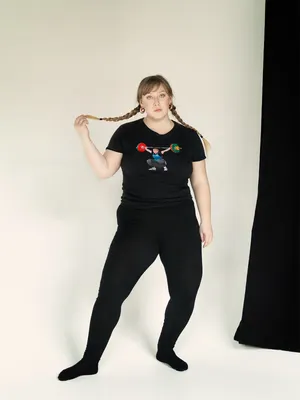
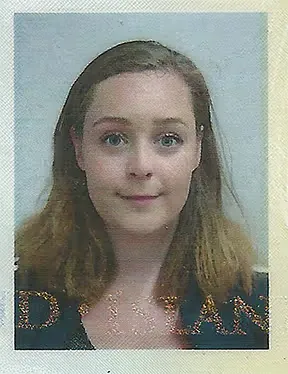
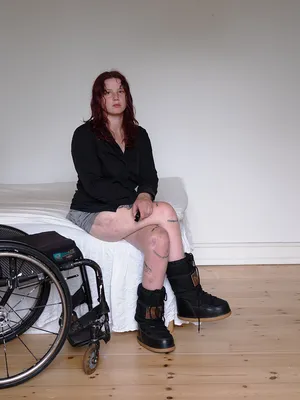
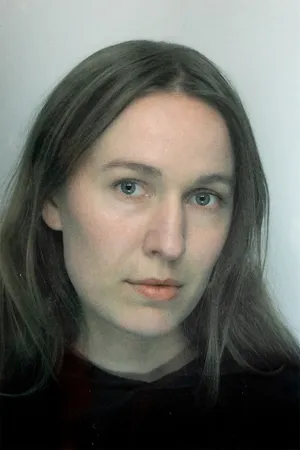
For 2026, the selected talents are Icelandic but Denmark-based María Kristín Antonsdóttir, Finnish Mari Mäntynen, Danish but Norway-based LouLou Buxbom, and Danish-American Liv Latricia Label.

‍

Icelandic-born, Denmark-based artist María Kristín Antonsdóttir (b. 1990) explores how images shape identity, memory, and the stories we inherit. Since moving from Iceland to Denmark, she has worked with her family photographs and her father’s home videos, physically manipulating them to examine both the power and the fragility of the photographic archive. Through these alterations, Antonsdóttir reveals how images anchor our sense of self while simultaneously restricting it, exposing the tension between belonging, family bonds, and the desire to challenge fixed narratives within family photographs and personal archives. Influenced by hydrofeminism, her practice has recently expanded from the intimate family album to broader institutional archives, including historical police photography. By confronting these systems of visual classification, Antonsdóttir highlights how images have been used to define, control, and categorize bodies. Her work brings forward the fluidity of identity and the active role we play in shaping our own realities, inviting viewers to reflect on the invisible structures embedded within photographic memory.

‍

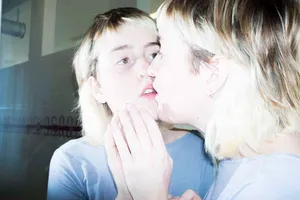
Finnish artist Mari Mäntynen (b. 1997) works with photography, video, and performance to explore how people meet, interact, and understand one another. Often appearing in her own works, she constructs participatory situations that bring everyday tensions and social expectations to the surface. Through collaboration, play, and subtle provocation, Mäntynen challenges both herself and her participants to move at the edges of social norms and personal comfort. Her ongoing series Stranger (2022-) centres on first encounters. Each photograph is taken during Mäntynen’s initial meeting with a new person, resulting in an image co-created through negotiation: How do we position ourselves? Can we touch? What can we do together? The subject decides how they appear, while the shared experience and the conversations that follow reveal the unspoken rules that shape social behaviour. By treating the photographic act as a performative process, Mäntynen creates moments of friction that question assumptions, unsettle familiar roles, and open space for new forms of connection.

‍

Danish artist LouLou Buxbom (b. 1995) uses experimental film to explore family dynamics, social heritage, and the formation of identity. Working with intimate and often self-exposing encounters, she examines how class, behaviour, attachment, and upbringing shape relationships and the ways we understand ourselves. Vulnerability and embarrassment become artistic tools, allowing Buxbom to push at emotional thresholds and reveal the subtle forces that define family structures. Her documentary series Too Stupid to Die on a Wednesday portrays her mother and three siblings, offering an unfiltered, multi-generational portrait. Each film captures a different family member’s life: an uncle living on the margins of society, a mother navigating isolation in Cuba, a planned seafaring journey, and an aunt redefining her mid-life circumstances. Through these portraits, Buxbom studies those who shaped her, using their stories as a mirror for her own identity. By prioritising intimacy over the camera itself, she creates works that question how background and inherited narratives continue to influence presence, relationships, and self-understanding.

‍

Danish-American photographer Liv Latricia Habel (b. 1996) creates a visual diary that centres Black interiority, everyday life, and the emotional landscapes of afrodiasporic individuals. Raised between Copenhagen and Hamburg with African American heritage, she uses her camera to connect with, archive, and affirm Black existence. Her ongoing project Belonging follows her reconnection with her paternal family in and around Philadelphia, where self-portraits, family photographs, and moving images intertwine. Beginning with meeting her relatives for the first time in 2017, Label documents new relationships, the joy of belonging, and the grief of a past that cannot be reclaimed. By juxtaposing archival images from the United States with photographs from her upbringing in Denmark and Germany, she reflects on lineage, home, and American sociologist W.E.B. Du Bois' notion of double consciousness. At the same time, she points to the history of how racialised communities have been pictured, while insisting on spaces where Black life can appear closest to its authentic self.
2025

Frida Jersø

Through her project ‘Frida Forever’, young Danish photographer Frida Lisa Carstensen Jersø (b. 1997) explores the living state of being sick while being young. In 2012, the photographer went into an accident that broke her back and left her paralyzed. During her numerous stays in the hospital, Jersø photographed herself. Through intimate images, the artist documented a life of illness in contrast with the vibrant youthful life beyond the hospital walls. Jersø uses her visual apparatus to reveal deeply personal experiences of embracing the vulnerability of the body with a sharp gaze into her own body and the condition of being physically confined. The project thus grants the viewer  access to a world and a process that are otherwise hidden behind the hospital curtains. Jersø’s images unveil a state of transition from youth to adulthood in sharp duality of freedom and the limitations caused by diseases, leading the viewer to ruminating on the impermanence of “being healthy”.

‍

Andreas Hopfgarten

Andreas Hopfgarten (b. 1987) is a German visual artist and photographer based in Reykjavik, Iceland. Hopfgarten’s project „Where there is a will…“ sets its focus on the town of Espelkamp, once a World War II refugee camp and later transformed into a modern settlement for displaced populations in northern Germany. As our gaze is directed to enigmatic objects, spaces and situations in the images, we can almost picture the artist walking, seeing and encountering in his environment. „Where there is a will…“ offers a different perspective on the history of Germany through zooming in on the evolving story of town Espelkamp. With a research-based approach, Hopfgarten uses the medium of photography to provoke our thoughts on memory, identity, and the cultural forces that shape them.

‍

Marcus Gustafsson ‍

Marcus Gustafsson (b. 1990, Sweden) works primarily with analogue photography. In his deeply personal project ‘Filling in the Gaps’, the artist meditates on memory, family history and human connection. Here we see the photographer’s own photos intertwined with archival family photos with traces of manipulation of painting, taping and drawing that transform photographic processes into intimate acts of reclamation and sites of inquiry through seemingly naive gestures. This exchange being his own photos and the archival sends us a visual nonverbal journey where we instinctively try to fill the gap between the past and present, the child and the grown-up, trauma and reflection. We encounter an emotionally charged photography project on coming to terms with one’s own past, as we are confronted with the artist’s, and perhaps even our own, attempts to reconcile.

‍

Maria Høy Hansen ‍

Danish photographer Maria Høy Hansen’s (b. 1995) work often revolves around people who live on the periphery of the society, self-chosen or not. The project ‘Hidden Away’ captures daily lives of patients in ‘Centrul de plasament Bădiceni’, one of the remaining ‘temporary homes’ for people with disabilities in Moldova. Through strong visuals that portray the people and environment inside the institution, the project allows the viewer to access the psychological and physical conditions of the people in Bădiceni. Hansen’s images call for sympathies and bear witness to the agony of the community, along with its long endurance of violence, negligence and cruel living conditions.

‍

The festival’s program committee consists of the following members:

Patricia Breinholm Bertram | Curator and Head of Communications at Martin Asbæk Gallery

Stinus Duch | Publisher and Founder of Disko Bay Books

Søren Pagter | Head of Photo Journalism at the Danish School of Media and Journalism/DMJX

Maja Dyrehauge Gregersen | Managing Director of Copenhagen Photo Festival

2024

Barbara Marstrand (b. 1994) has been selected for her project Still Life of Teenagers which playfully portrays the lives of Danish youth. Approaching photography with a curiosity about different groups of people, Marstrand offers a unique insight into different life experiences, combining her artistic practice and keen eye with sociological methods.

‍

Emma Sarpaniemi (b.1993), based in Helsinki, has been selected for her project Two Ways to Carry a Cauliflower because of her refreshingly unique, satiric and at the same time intimate way of exploring identity. Through both performative and satirical self portraits, Sarpaniemi challenges traditional femininity and gender roles.

‍

Frederik Danielsen (b. 1995) has been selected for his work revolving around the myths of the Danish island Als, where the artist himself grew up. Danielsen evokes the viewer's curiosity for these local places and their stories by applying a photographic approach that combines documentary photography and conceptual art, using both his own photographs as well as found material from local archives.

‍

Jenni Toivonen (b. 1993) based in Helsinki, has been selected for her project Are We There - a performative journey to the old village Penedo where her grandparents were set to build an utopian community in the tropics. As it unfolds, the project becomes an investigation into migration, memory and history.

‍

Mathias Eis (b. 1995) has been selected for his long-term project Are we nearly there yet?, which explores life at the 148 rest stops along the Danish highway. Although most Danish people have visited at least one of these stops, few attach any value to them, so Eis transforms these otherwise bland locations into places worth seeing.

2023

Swedish Susanne Fagerlund (b. 1969) completed her MFA at Valand Academy in 2021, but nevertheless brings a lot of artistic experience with her. Fagerlund is selected for Futures 2023 on the basis of her unique artistic expression as well as her both sculptural and interdisciplinary work with the photographic medium, which i.a. uses natural history research, artificial intelligence and glitch feminism as a prism for her work. With The Doppelgänger Series – Mourning for what is being lost, Fagerlund tackles our relationship and belonging to nature. She has an intriguing utopian approach to AI as a tool to create a new visual archive, a ‘digital ecosystem’ of past and speculative future images of plants and species. An integration of AI which is interesting to discuss and unfold in the context of FUTURES.

‍

The Danish photo-based artist Sofie Flinth (b.1996), educated at the Gerrit Rietveld Academie, has been selected on the basis of her portraits, which place themselves in the tension between staging and realism. In the project A Million Dollar View, Sofie Flinth explores the vanity of an elderly woman and the perception she has of herself. Flinth's portraits are completely devoid of the sensitivity that is often seen in documentary portraits, but acquire an almost advertising-like aesthetic through her work with themes such as nostalgia and vanity. Her photographic expression can be described as consequent, radical and relevant, and it also emphasizes the humor that her work contains. Sofie Flinth is an exciting example of a Danish artist who is exploring and expanding what portrait photography can and should be.

‍

Danish photojournalist Mikkel Hørlyck (b. 1990) is a classic documentary photographer who works with social issues. In the long term project Jørgen, a Mystery, his intimate and personal story becomes universal and relevant through the drug addict Jørgen's fight for life, his love for his fellow men and his continuing dreams. All told sublimely through recognizable everyday situations, which can only be portrayed by a photographer who really takes an interest in his protagonist and decides to spend a long time on his photography. Mikkel Hørlyck's photography has an exceptionally distinct expression, which invites the viewers into the story and inevitably engages them. An expression that deserves greater international response with Futures. Hørlyck uses his talent to put global issues, social injustice on the agenda. From intimate projects like Jørgen or the Moldovan orphan children in The Neglected to the most recent project The Mercilessness Of The Sea which is part of his long term work on refugees.

‍

Italian visual artist Giulia Mangione (b.1987) is based in Oslo and has resided in the Nordics for several years. With a MA at Bergen Arts Academy and studies in Advanced Visual Storytelling at the School of Media and Journalism in Aarhus, she has a well founded, broad and still curious approach to photography. She adds her feminine touch to the usually masculine genre of photographic road trip. In her project The Fall she manages to portray the prepper culture in a way that is both documentary and surreal at the same time. Each photograph stands as an individual work, and in the context it becomes an exciting, and complete visual style.

‍

Norwegian Jonas Yang Tislevoll (b. 1993) educated from Bilder Nordic School of Photography in 2021 has presented a personal project with a highly relevant subject matter by “Take care of yourself son, your mom loves you”. Dealing with matters such as identity, belonging and  women’s rights and adoption in South Korea he is contributing to an important and underlit agenda. His work dares to give space to few but meaningful details, leaving the audience with an atmosphere of an undefined static tension. An atmosphere which is underlined but the sometimes radical cropping The project presents a strong complementary interaction between the long texts and the images which is a strength and a potential Tislevoll could challenge on an international scale through FUTURES’.

2022

Iben Gad's work deals with identity and personal stories - though based in the documentary field, she has a remarkably quirky take on the discipline which deserves a certain attention. Her project about bullying, To the Unpopular Girls, shows personal courage and a refreshing multimedia approach to photojournalism.

‍

Inuuteq Storch, based in Sisimiut, Greenland, makes work about his homeland that radiates a sensitivity to identity, human relations and belonging. His poetic imagery offers an uncensored portrait of a culture which for many centuries has been dominated by outsiders' perspective.

‍

Luna Scales stands out for her persistent and kaleidoscopic investigation of the human body through photography and video performance. She is occupied with the codex between the viewer and the objectified body - and how language and the gaze become the defining measurement for perfection and beauty.

‍

Oscar Scott Carl, a recent graduate of Photojournalism, is already a convincing visual storyteller. The core of his photographic practice is to engulf himself in long-term projects which reflect upon social injustice and transition in human relations.

‍

Tina Bek's personal practice is complemented by commissions for the fashion industry: a combination that lends her the ability to create harmonic compositions. However beautiful, the beauty she conveys is often dislocated, forcing viewers' to recalibrate their expectations.

2021

We selected five talents based on applications from seven of the Nordic countries and autonomies:

‍

Io Sivertsen (b. 1994, Norway) graduated from The Royal Academy of Art in The Hague, and is attending the Masters programme at the Norwegian Film Academy in Oslo. In her work, she explores the boundary between truth and fiction. Using reality as a starting point, her image-making anchors the subject matter in her own personal perspective.

‍

Depicted themes include climate change, internet culture and sexuality. Nanna Navntoft (b. 1988, based in Denmark) graduated in 2020 from the Danish School of Media and Journalism. As part of her education, she worked at the Danish newspaper Dagbladet Politiken before continuing her studies at The Royal Academy of Art in The Hague. Her work deals with social topics and mental health, which she mainly explores through intimate portraiture.

‍

Essi Maaria Orpana (b. 1988, based in Finland) studied a BA in Visual Arts from Turku University of Applied Science Art Academy as well as Fine Arts at the Universidad Politécnica de Valencia, Spain. In 2021, she will graduate with an MA in Photography at Aalto University, School of Arts. Characteristic to her practice is to perform for, or with, the camera. In this way her artistic approach is personal, flavored with an uncanny twist.

‍

Hrafn Jónsson (Krummi) (b. 1990, based in Iceland) graduated from Ljósmyndaskólinn – The School of Photography, Reykjavik in 2021. Krummi was a teenager when he became disabled. Through his relationship with the photographic medium, he has come to see that whether he is able, less able, more able or disable, he is always, in some way, able. By adhering to the seemingly simple and straightforward medium most of us engage with every day, Krummi is able to push himself forward and engage with his environment.

‍

Lars Dyrendom (b. 1981, based in Sweden) graduated in 2020 from The MFA programme in Photography, Valand Academy University of Gothenburg. His artistic practice revolves around photographic archives and collections. A returning theme in his works is how humans as groups behave and act in relation to their surroundings and environment.

‍

Each of the talents’ works were showcased in tailormade pavilions during CPF in June 2021, designed and built by Bachelor students from the Institute of Architecture and Design, Royal Danish Academy, in dialogue with the five talents. A fruitful and challenging collaboration which sought to merge photography and architecture and play with the perspective.

‍

Copenhagen Photo Festival was launched in 2010 and has become the largest Nordic festival of its kind with exhibitions spread all over galleries, museums and art institutions in Copenhagen and southern Sweden.