The
Artist
Thérèse Anna Rafter
Lives and Works in
Ireland
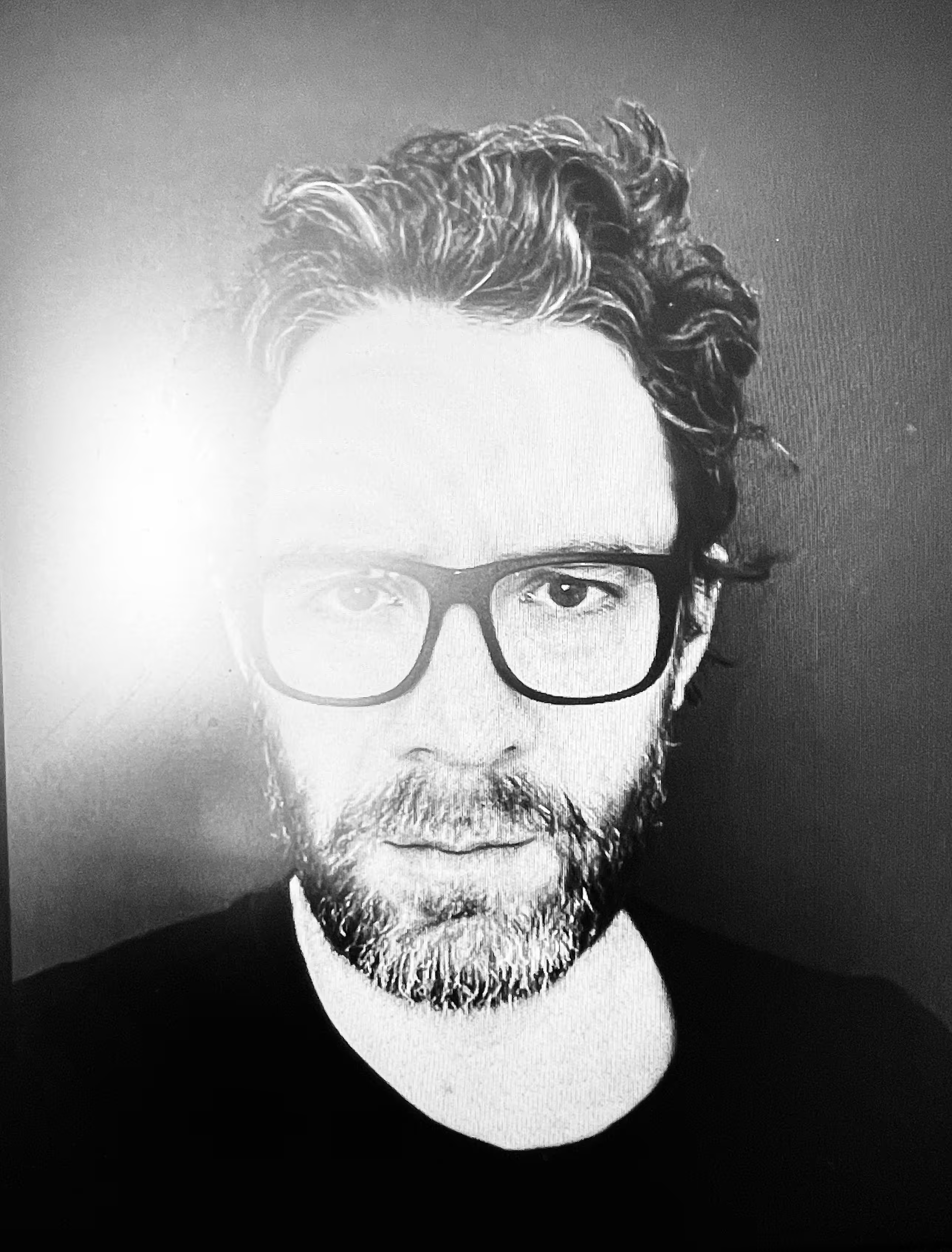
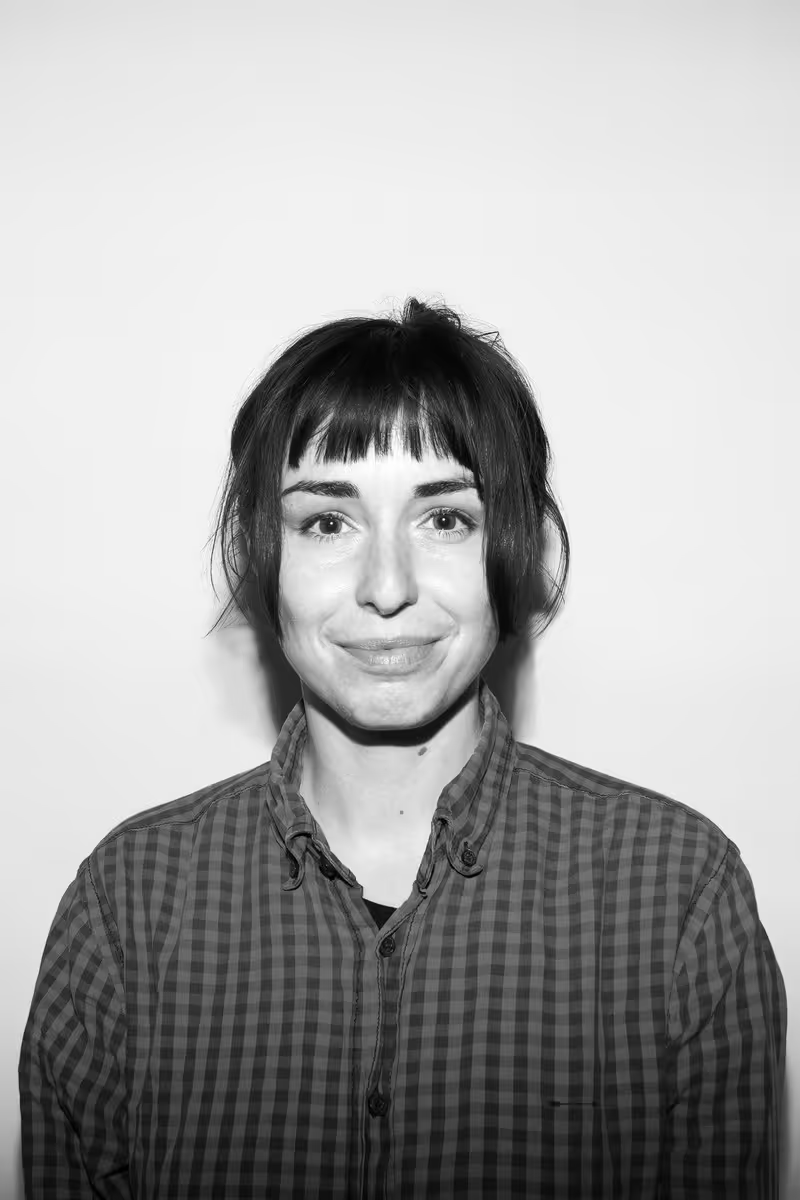
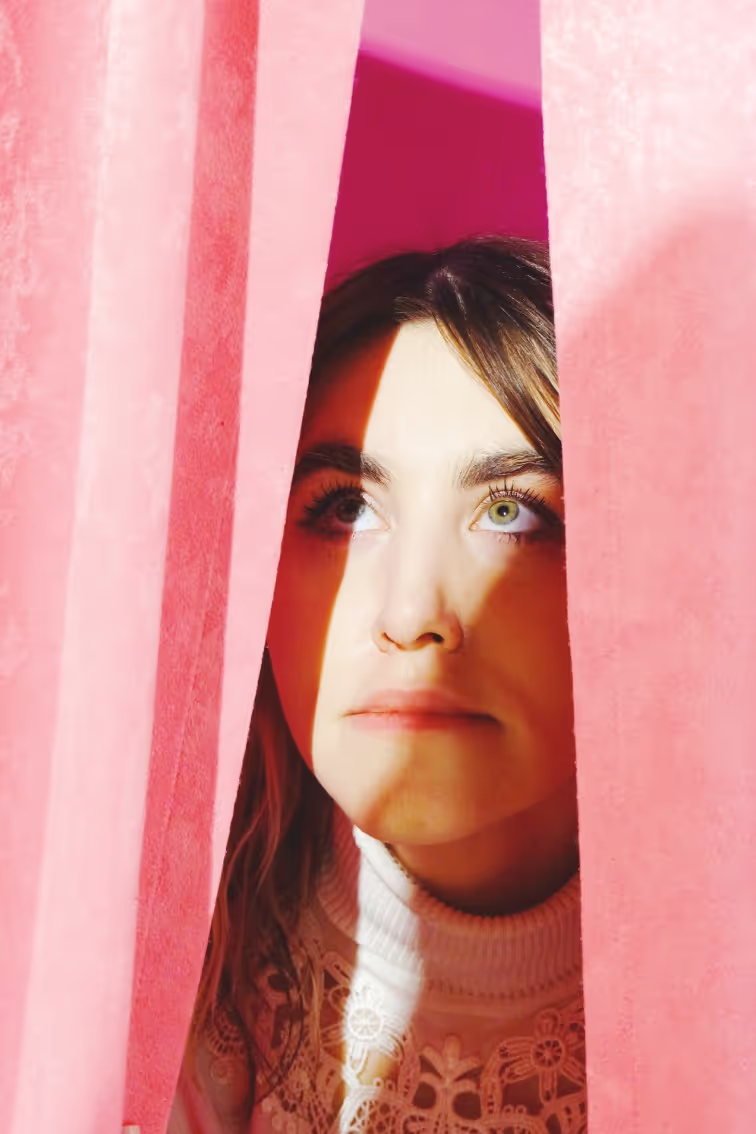
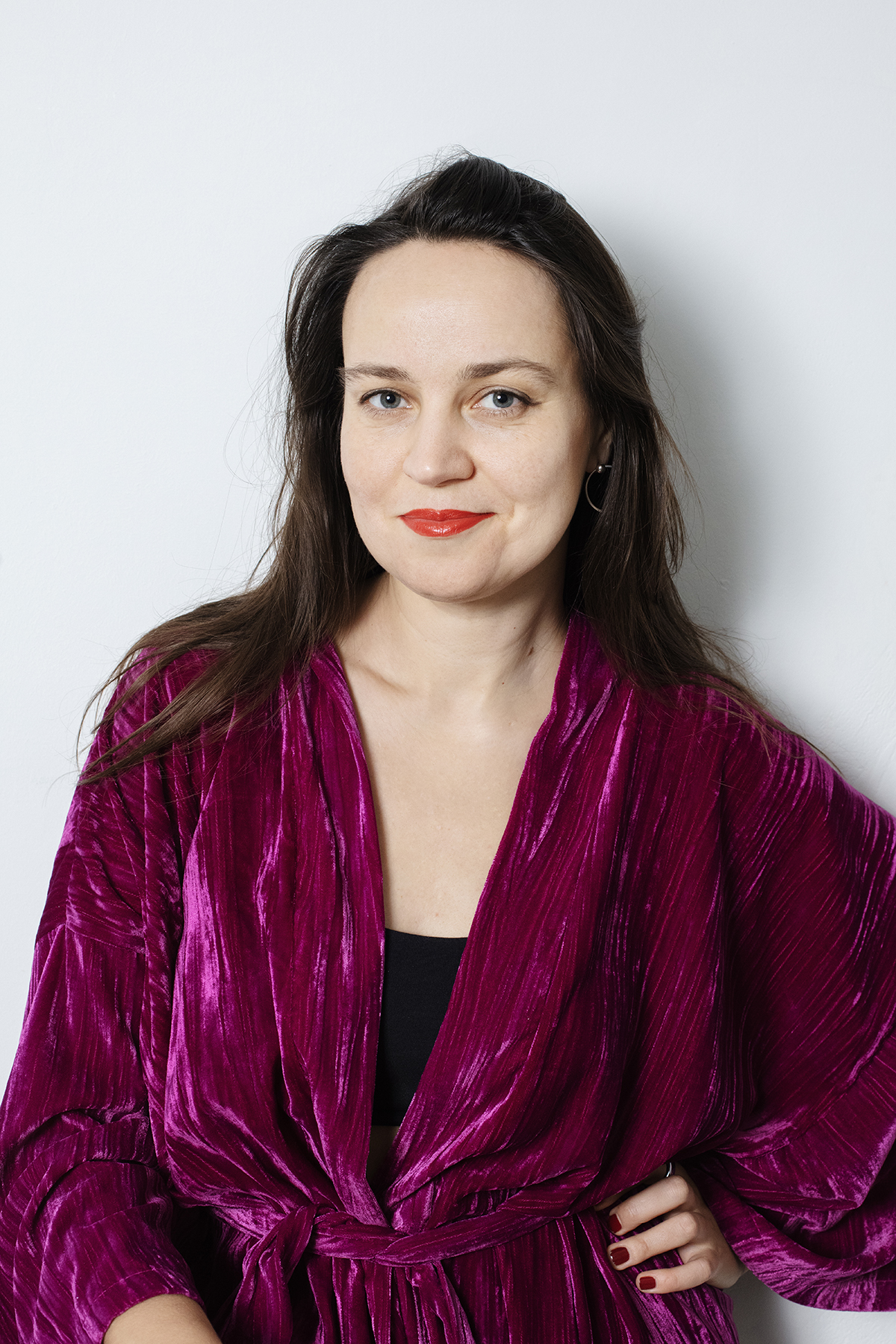
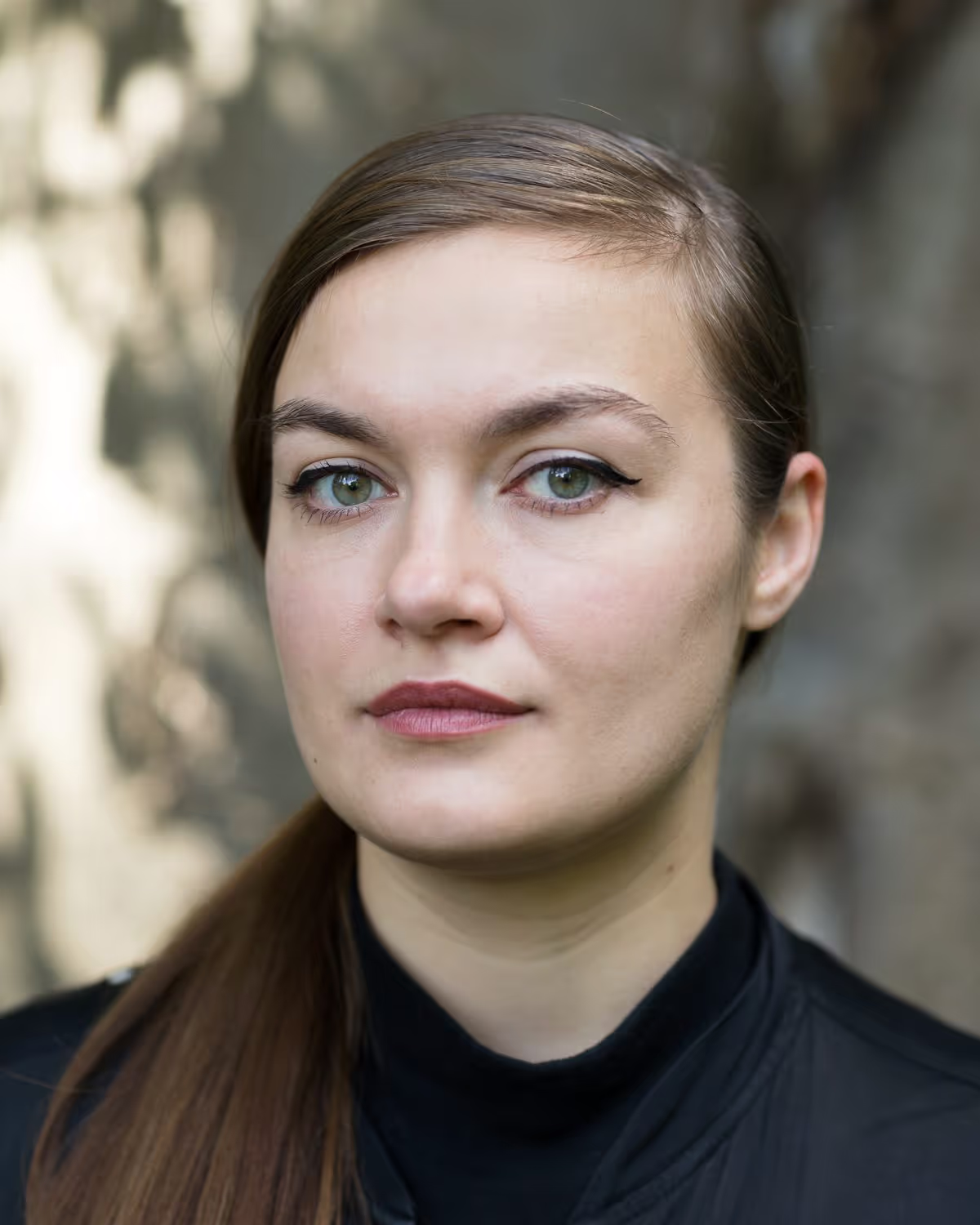
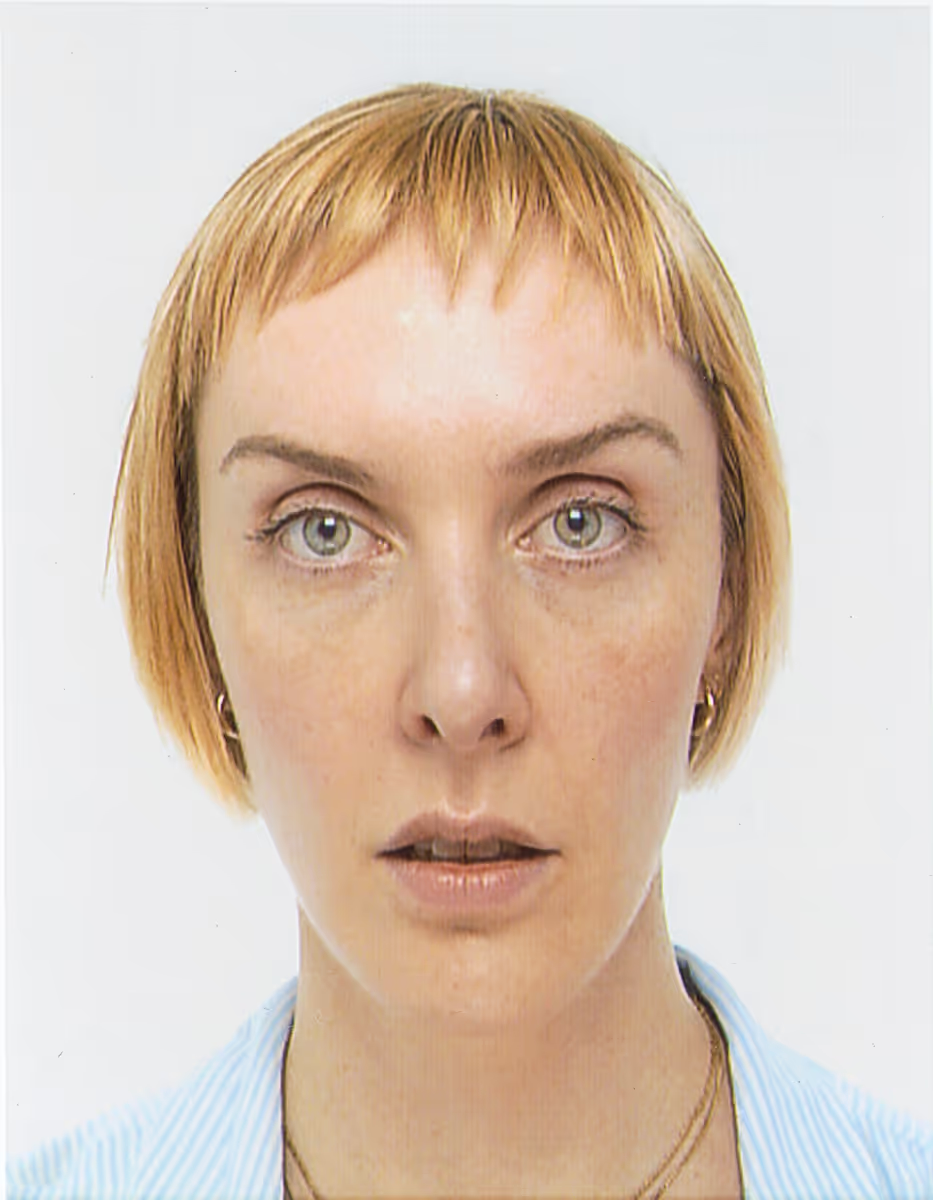
Thérèse Anna Rafter (b. 1989, Dublin, Ireland) is an artist and researcher working
across photography and installation. Her practice investigates how the living world
is mediated within Western visual culture, with particular attention to institutional
modes of representation and display. Engaging critically with the legacies of natural
history, museum practices, and photographic visual regimes, Rafter’s work explores
the boundaries through which human–animal–land relations are constructed and
maintained.
Characterised by a measured tension between restraint and sensitivity, her work is
articulated through a rigorous analogue approach to material, form, and production.
By foregrounding processes of framing, preservation, and visibility, Rafter
challenges anthropocentric ways of seeing and considers how knowledge of
nonhuman life is produced and encountered.
Rafter holds a BA in Photography and completed an MA in Visual Arts in 2024. She
is currently undertaking a research Master’s at Sint Lucas School of Arts, Antwerp,
Belgium.
Projects
2021
Tremor
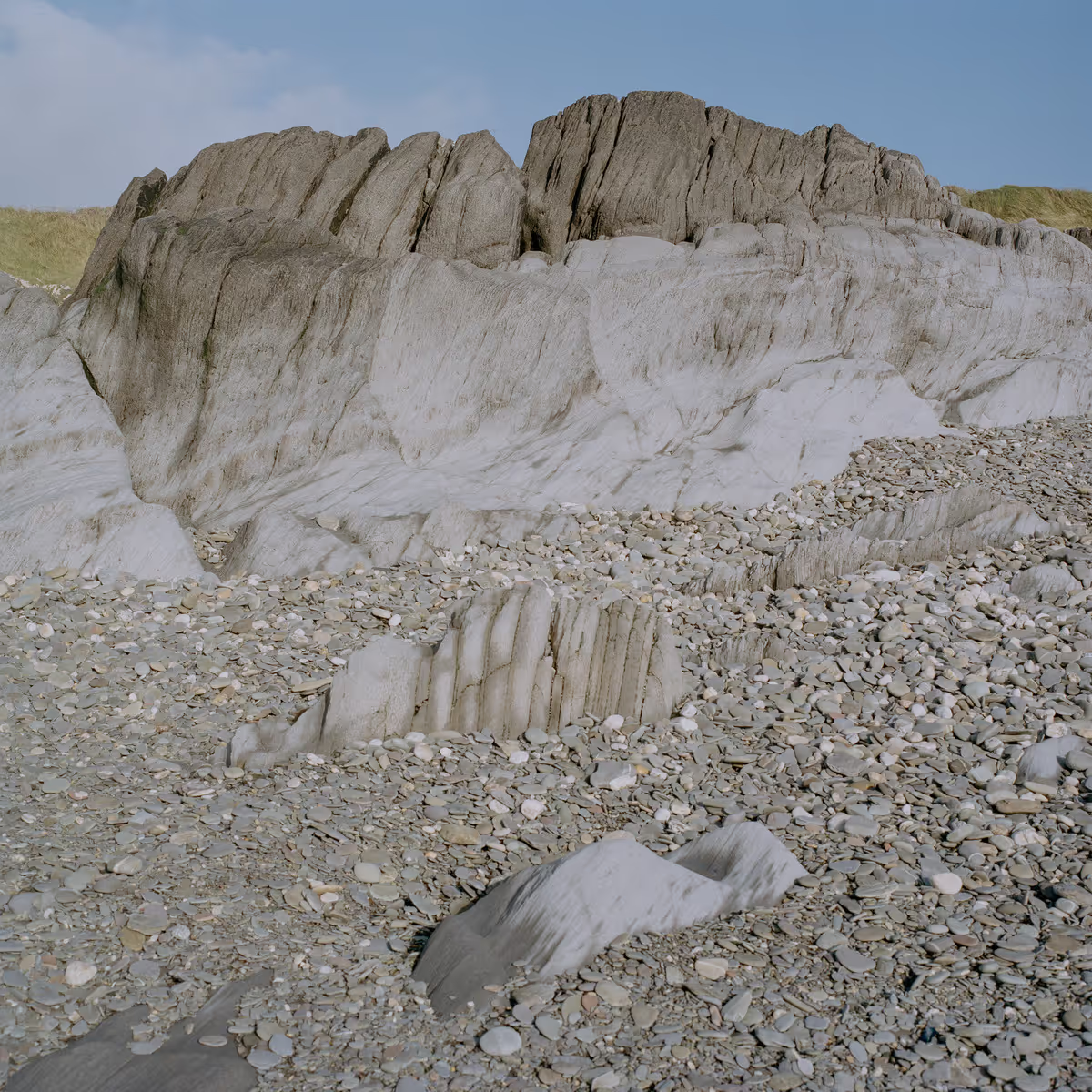
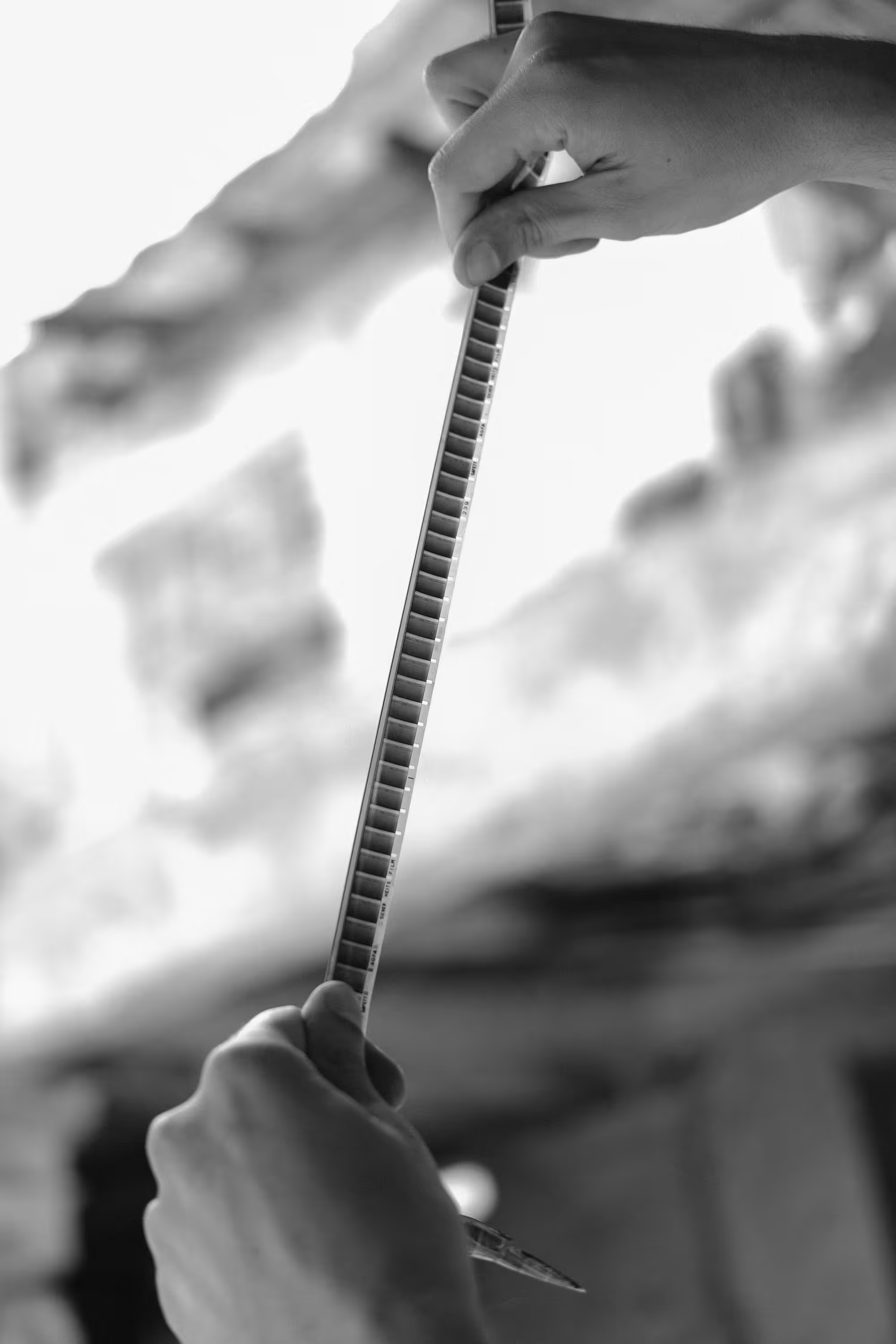
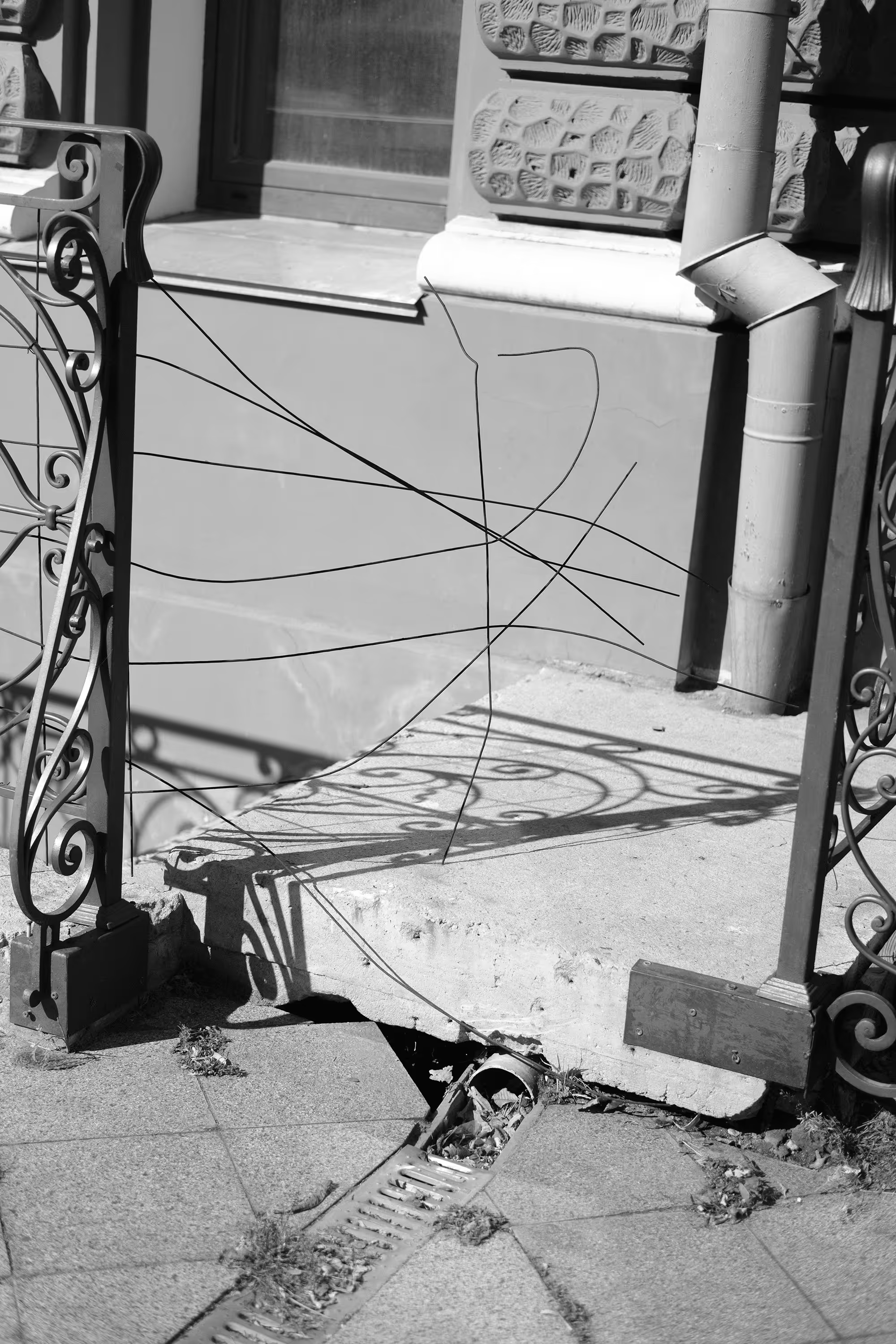
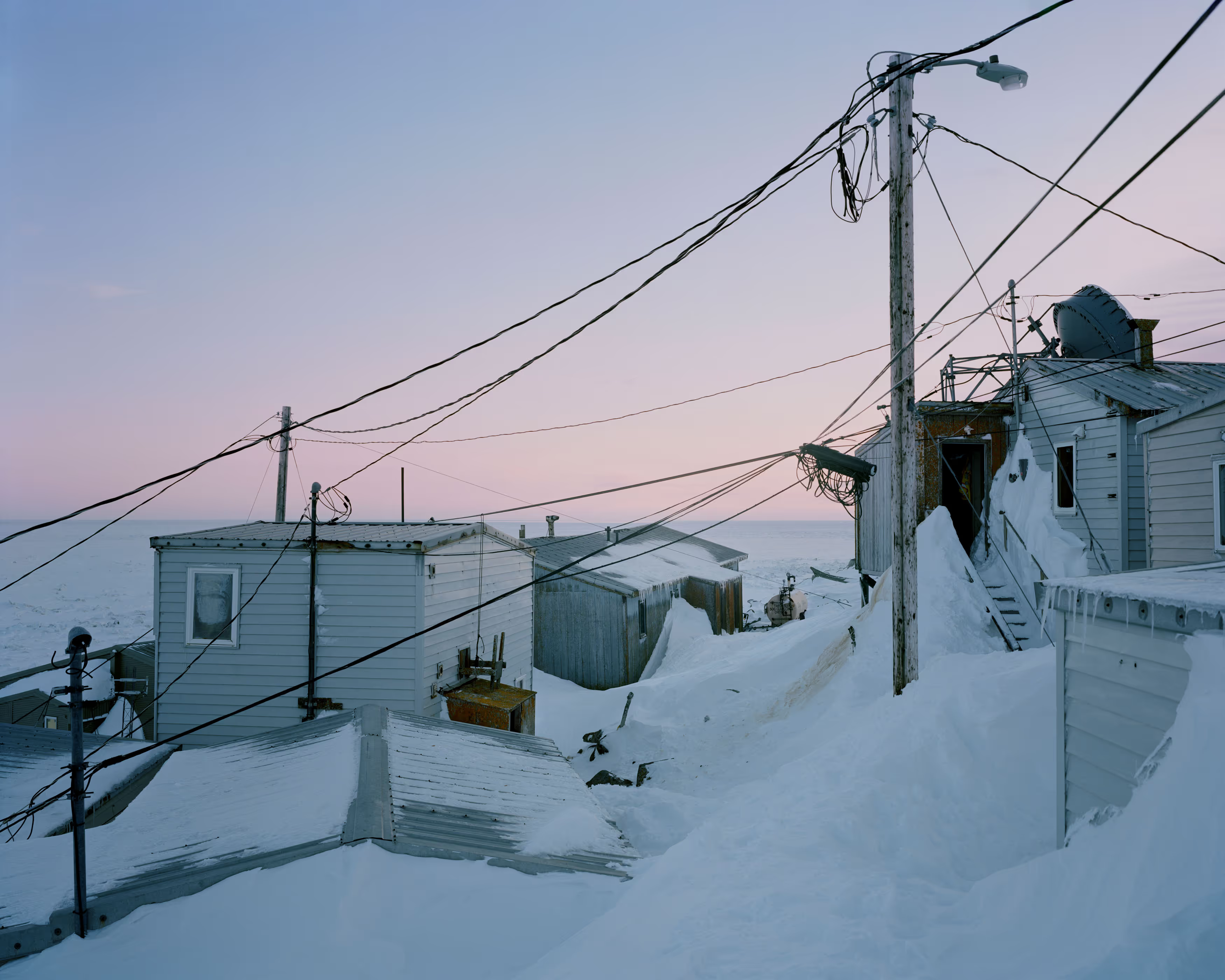
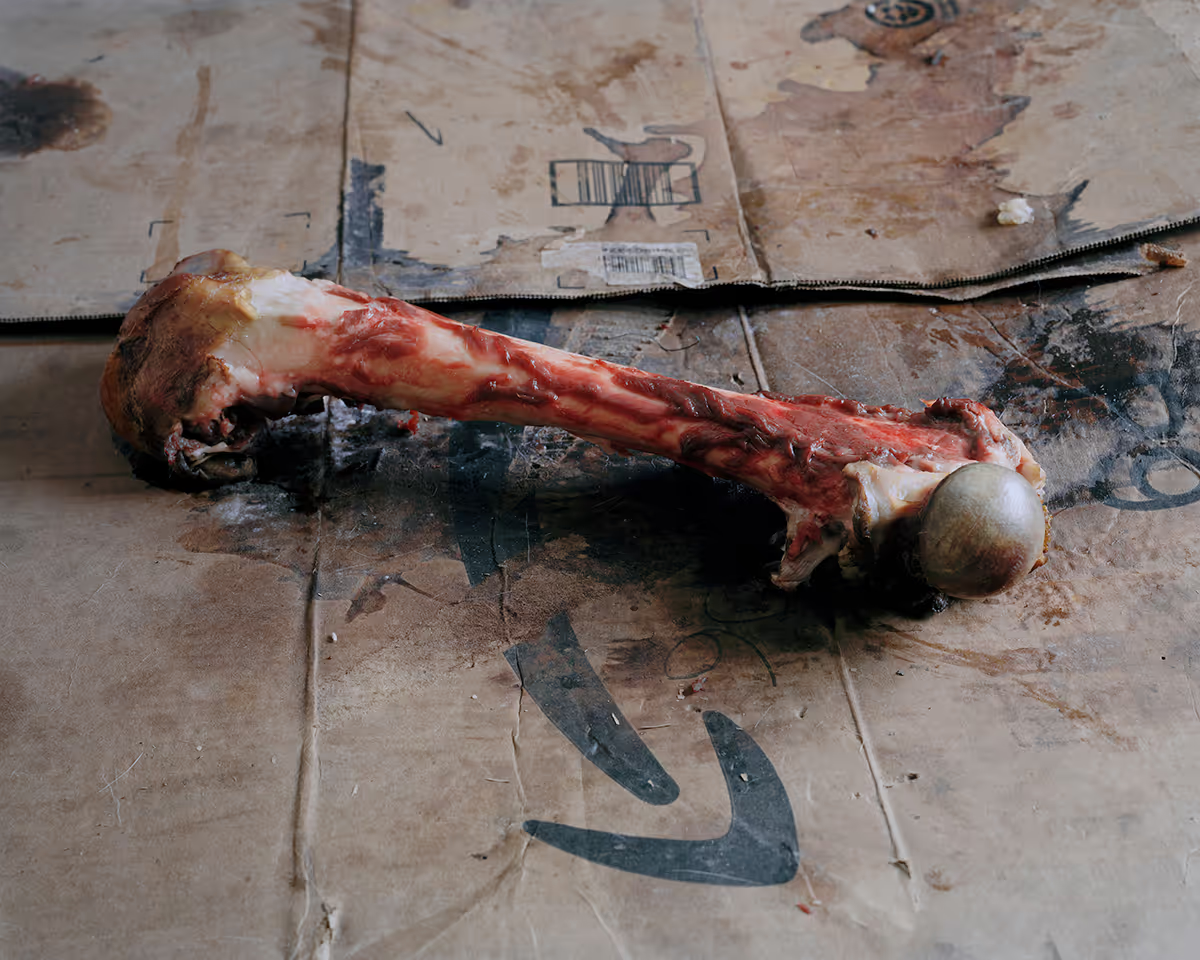
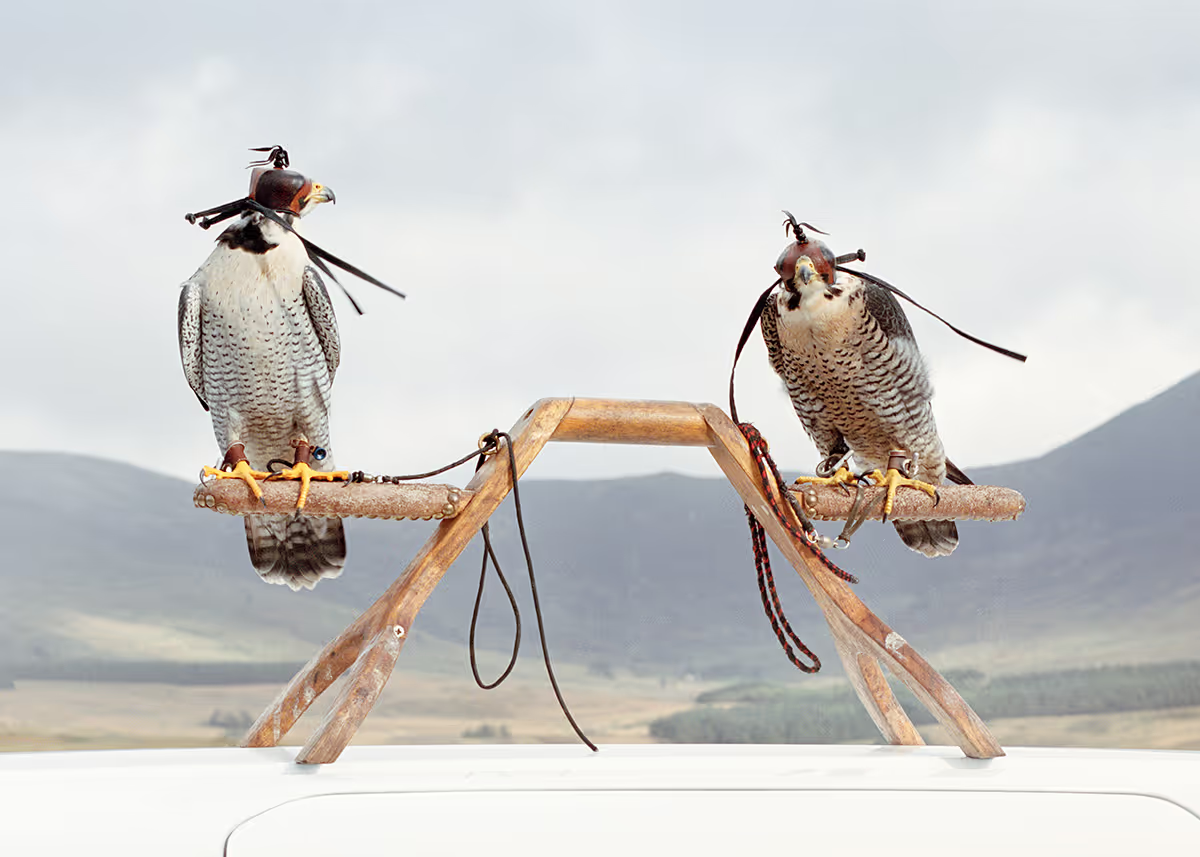
Developed between Ireland and Belgium, Tremor investigates the intimate dynamics of falconry—an ancient practice shaping distinctive relationships between humans and birds of prey. Rafter’s focus extends beyond falconry itself, examining the cultural frameworks through which the natural world is collectively perceived. The project’s title is drawn from J.A. Baker’s The Peregrine (1967), in which he writes: “I came late to the love of birds. For years I saw them only as a tremor at the edge of vision.”
Throughout these images, a visual strategy of abstraction is adopted—the work is deliberately situated nowhere. While subtle references to the Irish landscape emerge, the birds remain geographically untethered. This ambiguity foregrounds the unknowability of the natural world: the bird is rarely fully revealed, almost never entirely present on the page. The presence of the falconer is suggested only through discreet human traces— metal anklets, handmade hoods, telemetry trackers. Inverted images further destabilise orientation, shifting the experience from passive aesthetic observation to a more critical mode of looking.
Temporality is central to the work, which functions as a kind of time capsule, inviting viewers into a world that is slowly disappearing. Language is deployed as a strategic tool: an index anchors the images, offering historical and critical insights and inviting the reader to assemble meaning through fragmentary clues. This layered presentation functions like a puzzle, resisting passive consumption and foregrounding the research dimension of the work.
Thérèse Anna Rafter
was nominated by
PhotoIreland
in
Show all projects
Each year every member of the FUTURES European Photography Platform nominates a set of artists and projects to become part of the FUTURES network.
Related artists
More artists that you might
like to explore
All artistslike to explore

João Bragança Gil (Lisbon, 1989) is an artist, based in Lisbon, Portugal. Attended the Painting course at the Faculty of Fine Arts of Lisbon between 2008 and 2010; Graduated in Industrial Design in 2013 from Escola Superior de Artes e Design. In 2014, Bragança Gil moved to London, graduating in MA Industrial Design at Central Saint Martins UAL in 2016. In 2019 Bragança Gil, moved to Lisbon, and started practicing fine arts full-time. Currently he’s pursuing a Media Arts PhD at Faculty of Fine Arts of Lisbon.Recent exhibitions include “Drop me in the river, Dip me in the water!” (2021) at Galeria Pedro Cera; “The sun, the oldest, the sheep, as the origin (on and on) and the klecks klecks” (2021), by Sismógrafo at Casa das Artes, Porto; “CODA” (2022) at Buraco, Lisbon, “Uncertain Strata” at EGEU; “Estudo do Meio”, Carpintarias de S. Lázaro; “Midnight Sun”, Mono. Recidency at Arquipélago — Centro de Artes Contemporâneas, São Miguel, with FetArt (France) and CiCLO (Portugal). In 2023, Bragança Gil presented “Artificial Paradises” (2023) a solo exhibition at the National Museum of Science and Natural History, resulting from more than two years of research.In 2024, participated in the group exhibition “Entre Margens” curated by João Pinharanda and the group show “Passages” at Galeria Encounter; and the solo exhibition “Trouble in Paradise” at (Projectspace) at the Encounter and Jahn und Jahn Gallery, in Lisbon.


Mikkel Hørlyck (b. 1990) is an independent photojournalist and visual artist based in Copenhagen, Denmark. Once a student at Fatamorgana The Danish School of Art Photography, he holds a BA in Photojournalism from the Danish School of Media and Journalism. Hørlyck’s career began as a photojournalist intern at Politiken, a Danish daily broadsheet. His work has since been recognised by a series of prizes – including Danish Picture Of The Year, Vilnius Photo Circle and World Report Award. In 2019, Hørlyck was named Discovery Of The Year at The Lucie Awards in New York.


Constantin Schlachter’s research takes place through an exploration of interior and exterior landscapes. Nature, the invisible and matter are dominant entities in his work. His experimental approach to the techniques he employs aims to put a less anthropocentric world into perspective, and to re-enchant nature. This mysterious entity that takes hold of each viewer in its own way, because it’s eloquent for everyone, but never entirely translatable.
Through different media linked to photography, he questions matter and its synesthetic power. By inverting the scales, colours and textures of the elements presented, he induces a confusion of senses in the viewer, revealing deeper ones. His images invite us to let go, to enter a contemplative state in which we can project our emotions.
His cosmic and telluric images, in which matter plays a predominant role, merge the microcosm and the macrocosm. In the course of his work, the artist increasingly seeks to erase his own presence to highlight that of his subject.
Constantin Schlachter was born in Altkirch in 1992 and graduated from Les Gobelins in 2014. He lives and works in Paris.


María Kristín Antonsdsdóttir is a visual artist from Iceland, living in Møn, Denmark (b.1990). She recently graduated with an MFA from Funen Art Academy and has her studio praxis located at Borre, Denmark. Antonsdóttir has recently received The Danish Arts Foundation's working grant for visual artists, alongside participating in various exhibitions, such as Kunstnernes Efterårsudstilling at Den Frie Udstillingsbygning, with a solo exhibition at The Icelandic Embassy in Copenhagen and Ung Dansk Fotografi at Fotografisk Center. She recently participated at Residency Varmahlíð in Iceland, working and exhibiting at LÁ Art Museum (Listasafn Árnesinga).
In her praxis, she works interdisciplinary, with a great interest in how images play a role in shaping identity. Manipulation is a vital part of the way she works - a method of altering the material, which becomes a central role in the reading of her works. For the last 8 years, she’s been working with old family photographs and videos from her own family, creating a body of works centering around the theme of family bonds, childhood, origins and identity, as well as the fundamental existential questions of what makes us who we are.


Varvara Uhlik (b.1997, Ukraine) is a London-based visual artist who explores themes of Slavic culture and identity, with a focus on the post-Soviet era’s impact on her generation.
Working across photography, installation, and video, Varvara often reworks archival materials, bringing them into dialogue with contemporary narratives and newly produced work. Through this process, she examines the tension between past and present, reality and its digital afterlife, foregrounding the impermanence of our surroundings and the fragility of memory.
In 2024, the British Journal of Photography recognised Varvara as a Ones to Watch artist. Her work has been exhibited internationally, including at The Sunday Painter, London; Photo Élysée Museum, Switzerland; European Photography Month, Tokyo; MIA Milan Photo Fair, Italy; Encontros da Imagem, Portugal; and Liquida Photofestival, Italy. Her work has appeared in publications such as The Guardian, Beaux Arts Magazine, Photoworks, Riga Photography Biennial 2025, Der Greif, and LensCulture, among others.


Miriam Pružincová, also known as MIMI, is a Slovak photographer, filmmaker, and visual artist. She is currently studying for her master’s degree at the Academy of Arts, Architecture and Design in Prague, in the Photography II studio led by Alena Kotzmannová.
In her practice, she works primarily with analogue photography and video, a documentary approach, and her personal archive. Since 2019, she has been systematically collecting fragments of everyday life, which she subsequently connects into carefully composed pairs, diptychs, and visual sequences, thus creating series or an endless, unnamed body of work that is simply about life as such. Through the deliberate connecting and assembling of photographs in installations, as well as the intentional completion of series through newly made images, she disrupts the boundary between chance and staging within documentary practice. She understands photography as a form of play and a tool for storytelling — a visual poem or narrative.
At first glance, her work may appear delicate, yet it carries irony, paradox, and intense intimacy. From environmental themes and stories of people searching for their identity, the artist gradually moves toward more personal subjects that address safe spaces and generational anxieties. Her practice also engages with memory, corporeality, mental health, trauma, the relationship to nature, and the natural presence of death in life. Her work has been exhibited, among others, in Prague, Munich, London, Berlin, Milan, Tokyo, and Slovakia.


Raisan Hameed (*1991) is an Iraqi-German multimedia artist based in Leipzig. He is currently a Meisterschüler with Prof. Tina Bara at the Hochschule für Grafik und Buchkunst in Leipzig, after completing his Diploma in Photography. His work has been featured in various international exhibitions, including the Prix Photoforum Biel, Bundeskunsthalle Bonn and the Carte Blanche Exhibition in Paris.
Hameed's practice is defined by a subtle and metaphorical visual language, profoundly impacted by his personal experiences of loss, trauma, and displacement. At the heart of his work is the transformation of intimate visual memories into universal narratives, as exemplified in one of his most acclaimed projects, Zer-Störung. Recontextualizing damaged family photographs that bear the scars of his hometown, Mosul, Hameed explores the destruction inflicted upon his family while reflecting on human themes of resilience and survival.

Born in 1991, I grew up in Nancy in north-eastern France.
Since 2011, I have been living and working in Brussels. I have a bachelor's degree in photography from ESA Le 75 and a master's degree from the Royal Academy of Fine Arts in Antwerp (Belgium).
My practice focuses on landscape and questions revolving around its use, exploitation and representation. Through my projects, I attempt to reflect on our relationship with what we call nature and to offer a different understanding of it.
In Brussels, in 2020, I co-founded the collective La Nombreuse, composed of eight photographers and an art historian. We opened a multifaceted space, part studio, part exhibition space, conference venue, workshop space, etc.
The monograph Charbon blanc was published in October 2021 by Le Bec en l'air. Since 2017, my work has been exhibited at various festivals and galleries in France and Belgium in particular.
My practice focuses on landscape and questions revolving around its use, exploitation and representation. Through my projects, I attempt to reflect on our relationship with what we call nature and to offer a different understanding of it.
In Brussels, in 2020, I co-founded the collective La Nombreuse, composed of eight photographers and an art historian. We opened a multifaceted space, part studio, part exhibition space, conference venue, workshop space, etc.
The monograph Charbon blanc was published in October 2021 by Le Bec en l'air. Since 2017, my work has been exhibited at various festivals and galleries in France and Belgium in particular.


Loulou Buxbom is a Danish artist and filmmaker. She works with moving images, as they allow her to rediscover reality and push the boundaries of the embarrassing. She uses film as a tool to critique and engage with sociological issues within family dynamics and social heritage. To understand how our backgrounds influence our presence and relationship with others, she questions her own identity through personal experiences and familial relationships. Through relatable and self-exposing works she encourages dialogue about class, culture, behaviour, and attachments.
In addition to her master’s degree from the Art Academy in Bergen, she holds a BFA from the Art Academy in Tromsø. Buxbom has participated in numerous exhibitions and screenings, e.g. The Spring Exhibition at Kunsthal Charlottenborg (Copenhagen), Bergen Kunsthall (Bergen), Tromsø Center for Contemporary Art (Tromsø), FetFilm (Stockholm), Flat Earth Film Festival (Iceland), Galleri Knipsu (Bergen), and The Artist’s Easter Exhibition (Århus).


Ondřej Kubeš (* 1999) is a Czech visual artist working primarily with documentary and staged photography, installation, drawing and performance. His intimate, poetic archive-based artworks examine topics of personal memory, identity, affection, trauma, queerness and family relations. Kubeš’s work has been exhibited in the Czech Republic, Germany, Italy and Belgium. He completed his master's degree at the Academy of Arts, Architecture and Design in Prague at the Photography II. studio led by Alena Kotzmannová.


Related professionals
Other professionals that might be interesting
All professionals
Emese Bíborka Szakács studied at the Institute of Communication and Media Studies at Pázmány Péter Catholic University. She is currently pursuing a degree in Art History at the University of Pécs.
Her interests focus on the past and present of experimental photography, as well as the cultural role of new media. As a staff member of the Robert Capa Contemporary Photography Center, she is involved in organizing international exhibitions and professional programs. She also works as a curator and writer within the frameworks of the Studio of Young Photographers (FFS) and the Studio of Young Artists’ Association (FKSE), contributing to the professional development and realization of several exhibitions in recent years.

Descriptiondd112333

Salvatore Vitale (b. 1986, Palermo, Italy) is a Swiss-based artist, director, and professor whose work explores the complexity of contemporary societies. Using expanded and speculative storytelling through mixed media techniques, he focuses on the politics of systems that regulate modernity and the impact of technological transformations.
Vitale is the Artistic Director of EXPOSED Torino Foto Festival and FUTURES Photography, both international platforms dedicated to contemporary photography. He also serves as a Professor at Lucerne University of Applied Sciences and Arts, where he leads the Transmedia Storytelling Programme. Previously, he was the co-founder and editor-in-chief of YET magazine, an international photography publication.
Vitale’s work has received international awards. It is featured in several public and private collections and has been widely exhibited in museums and at festivals worldwide.

Emese Mucsi is a Hungarian-born curator, and art critic. Emese curates exhibitions where photography is interpreted in the context of contemporary art and works with artists who have an expanded idea of photography and produce photo-based works. Her projects bring together artists and photographers with photojournalists, writers, editors, and other thinkers to experiment with new approaches to photography. She graduated from the Faculty of Contemporary Art Theory and Curatorial Studies at the Hungarian University of Fine Arts in 2013, and from the Faculty of Hungarian Literature and Linguistics at the University of Szeged in 2017. She is a member of the curators’ collective BÜRO imaginaire since 2012. Since 2013, she ran projects as a freelance curator. From 2014 to 2018, she was the Editor-in-Chief of Artmagazin Online. Emese is a curator of the Robert Capa Contemporary Photography Center, Budapest since 2018. She is the member of Global Photographies Network since 2020. She founded DOXA exhibition space and editorial den in 2022. She is doing her PhD in the Film, Media, and Contemporary Culture PhD program at Eötvös Loránd University. Emese is a guest lecturer at the Moholy-Nagy University of Art and Design (2023) and the University of Szeged (2024).

Ángel Luis González Fernández is a designer, artist, and curator supporting engaging visual arts practices, winner of Business to Arts David Manley Emerging Entrepreneur Awards 2011.
His work manifests through PhotoIreland, which he founded in 2010 to stimulate a critical dialogue on Photography. He devises curatorial projects placing conversations in the public realm around visual culture, critical thinking. These include events (PhotoIreland Festival, Halftone Print Fair, arts residency How to Flatten a Mountain, and New Irish Works), a cultural hub (The Library Project: Ireland’s Art bookshop, host to a unique resource library of photobooks and a productive arts programme), publishing projects that distribute inexpensive access to local practices, research projects (Critical Academy: examining contemporary art practices). He works collaboratively with a growing network of organisations, noticeably through ambitious Creative Europe partnerships.
During the Summer 2020 lockdown he launched the critical publication OVER Journal, now distributed globally. He received the Arts Council of Ireland’s Visual Arts Bursary to deepen research on the broad historical and specific artistic context of Photography in Ireland, to curate an ambitious survey exhibition in PhotoIreland Festival 2022 and to publish a series of publications on the matter. He regularly contributes to publications such as the forthcoming The Routledge Companion to Global Photographies, edited by Lucy Soutter, Duncan Wooldridge.
See some of his Graphic and Web Design work in the 100 Design Archive.

Julia Gelezova is a Cultural Producer and Curator, specialising in contemporary lens-based practices. She is General and Project Manager for PhotoIreland, producing events throughout the year like the annual PhotoIreland Festival and Critical Academy, while collaborating on ambitious projects like Creative Europe Photography Platforms—Parallel and Futures. Julia is co-editor of OVER Journal: The Critical Journal of Photography and Visual Culture for the 21st Century. In 2024, she has founded vicinities.network - a peer network for Visual Arts curators and professionals based in Ireland.
She has ample experience in producing exhibitions and events, including curatorial work and project management, has vast and successful experience in personal and collective application writing for bodies like the Arts Council of Ireland and local councils. She has participated in portfolio reviews, acted as visiting lecturer, and also worked in an editorial capacity and translation for artists and other arts professionals, including work for The Routledge Guide to Photography and Visual Culture. Most recently, she curated the 2021 edition of PhotoIreland Festival and was the Centre Culturel Irlandais cultural producer resident 2022. She is a member of the AICA International Association of Art Critics.

Iveta Gabaliņa (1979) is a curator, artist and educator. She has studied photography at the studio of Andrejs Grants, at Bournemouth Art Institute, and in the MA programme at Alto University in Helsinki. Her work has been exhibited in Latvia and internationally, including at C/O (Berlin, Germany), GESTE (Paris), and Williams Tower Gallery (Houston, USA). Gabaliņa has participated in photography festivals in Singapore, Hanover, and elsewhere. Her work is included in the collections of the Victoria & Albert Museum, Geste Paris, and the Deutsche Börse Art Collection.
Since 2008 she has been part of ISSP team, responsible for numerous educational and curatorial projects. In 2018 she founded ISSP Gallery - an exhibition space dedicated to contemporary photography.

I’ve always loved photography, even if it sounds like a cliche. The first photos I took, I did without knowing how to do that, without paying any attention to framing, subject or composition. After a while, I began to understand what is happening in the space between me as a photographer and the subject I was photographing. And many years later, I also understood why I love to photograph. To communicate. A message, a concept, an emotion.
Newsletter
Want to stay up to date with the latest news and events of FUTURES?
Each month we share articles and interviews, upcoming Open Studios and educational opportunities.
By signing up, you'll join our community of artists and professionals committed to contemporary photography.
Thank you! Your submission has been received!
Oops! Something went wrong while submitting the form.