Edit profile
The

Artist

Nominated in
2026
By
Fotograf Zone
Lives and Works in
Prague
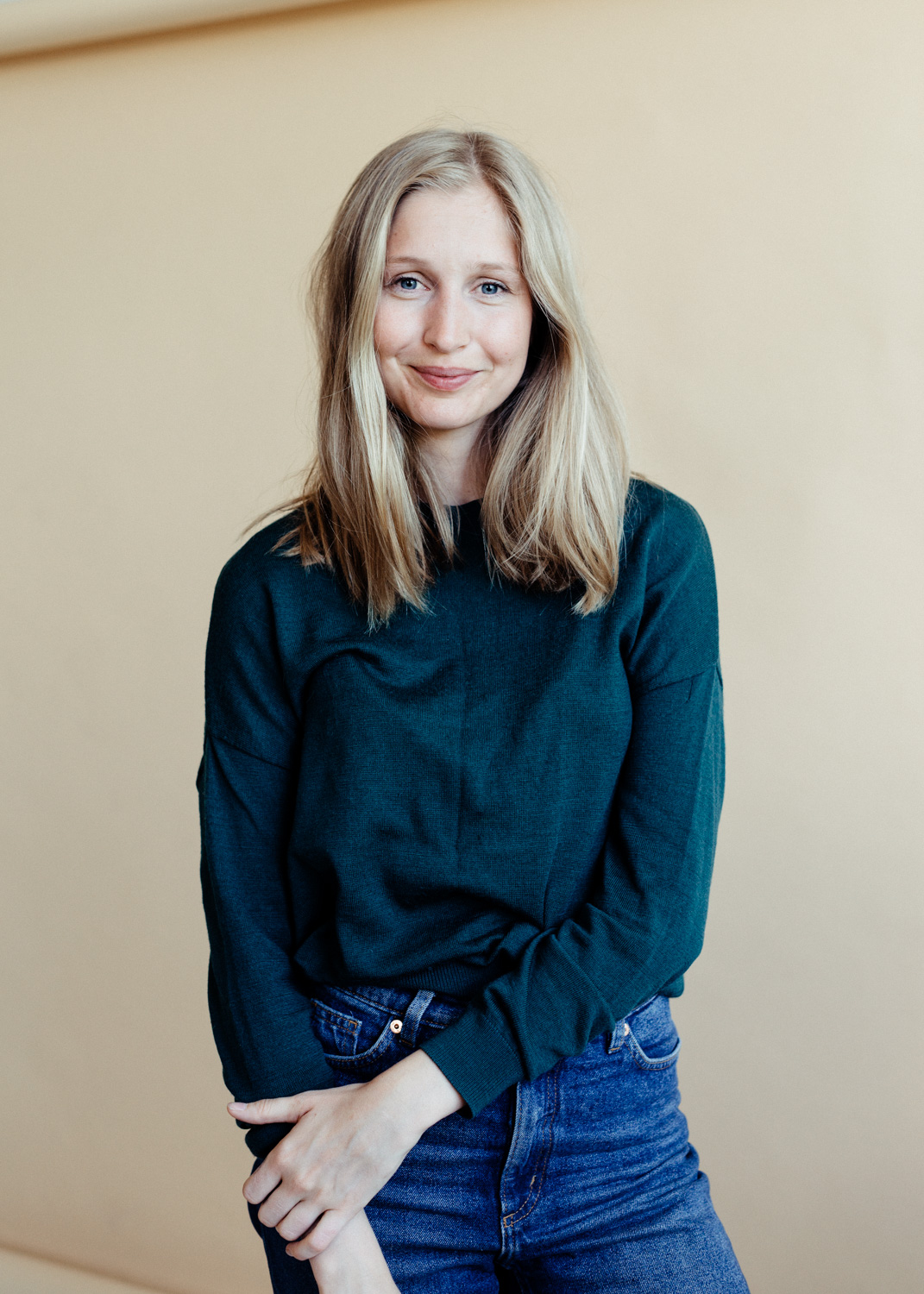
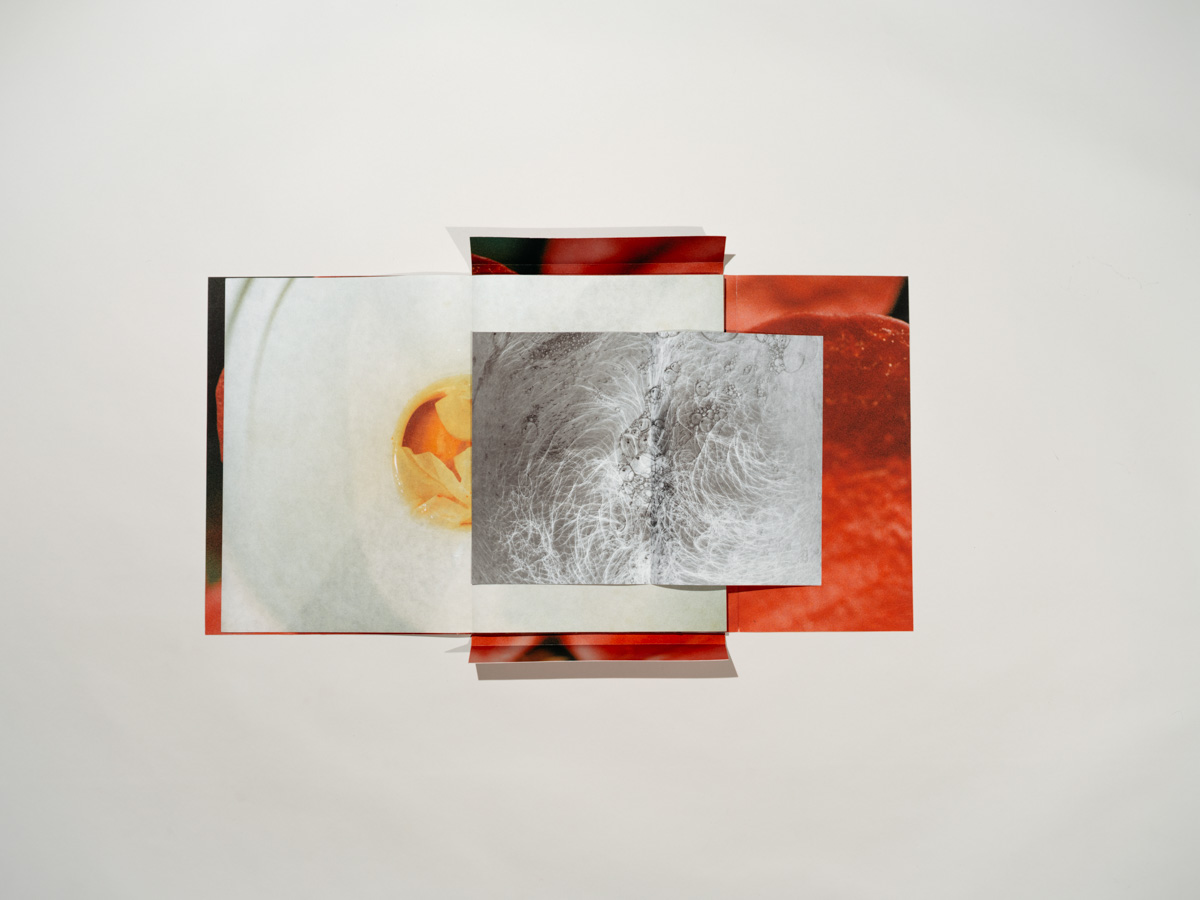
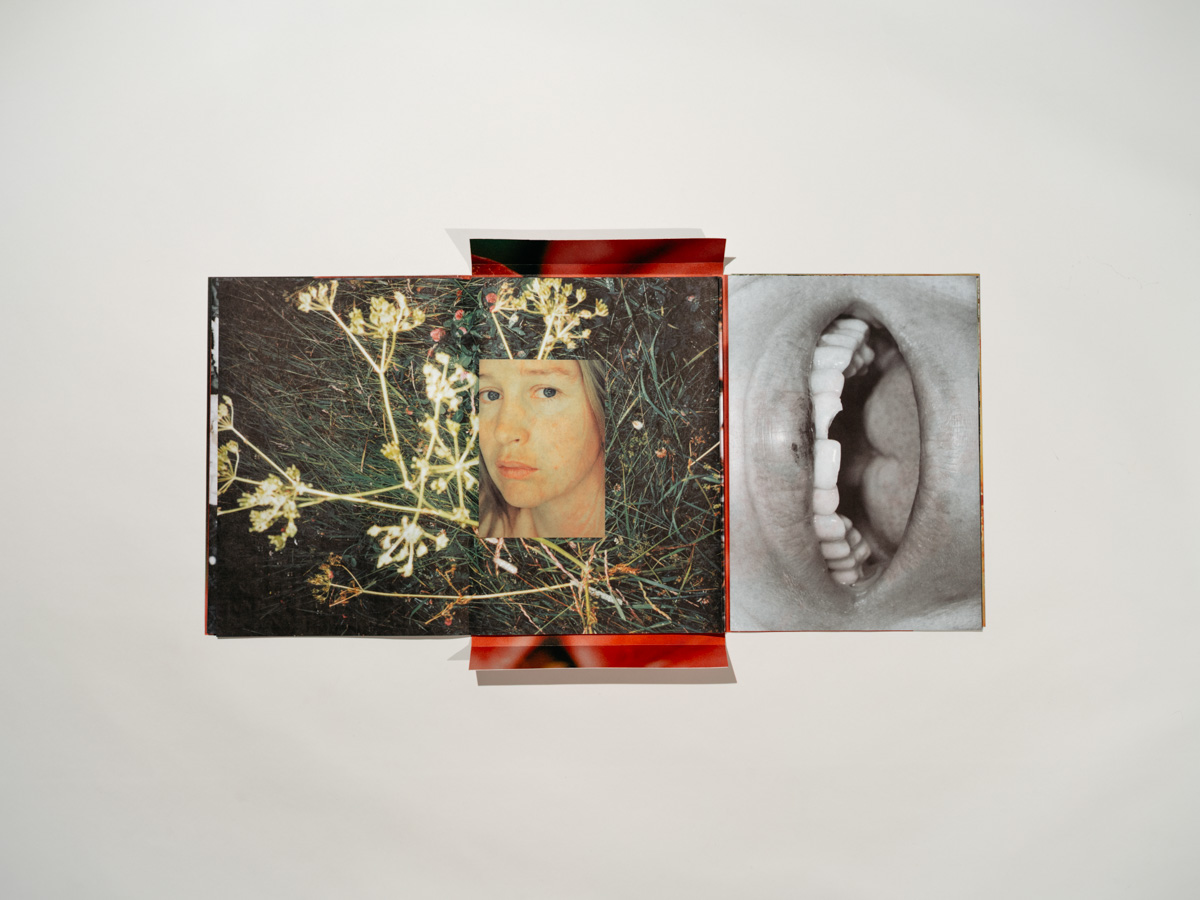
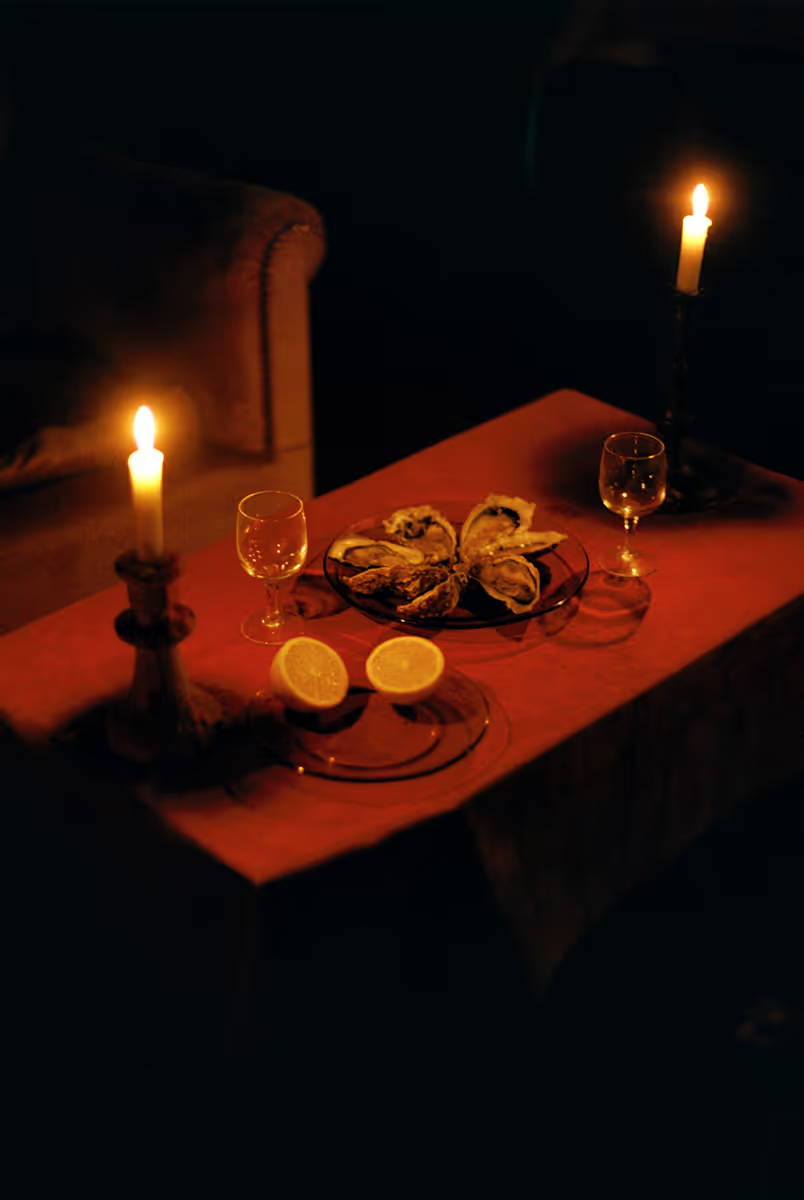
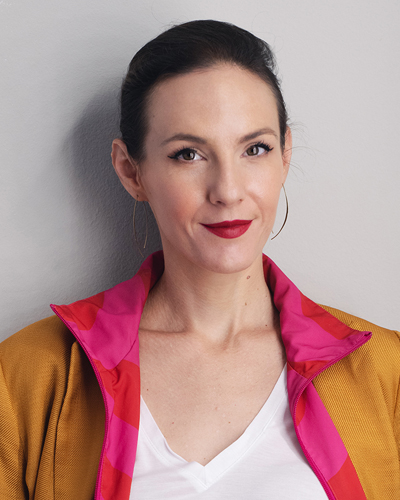
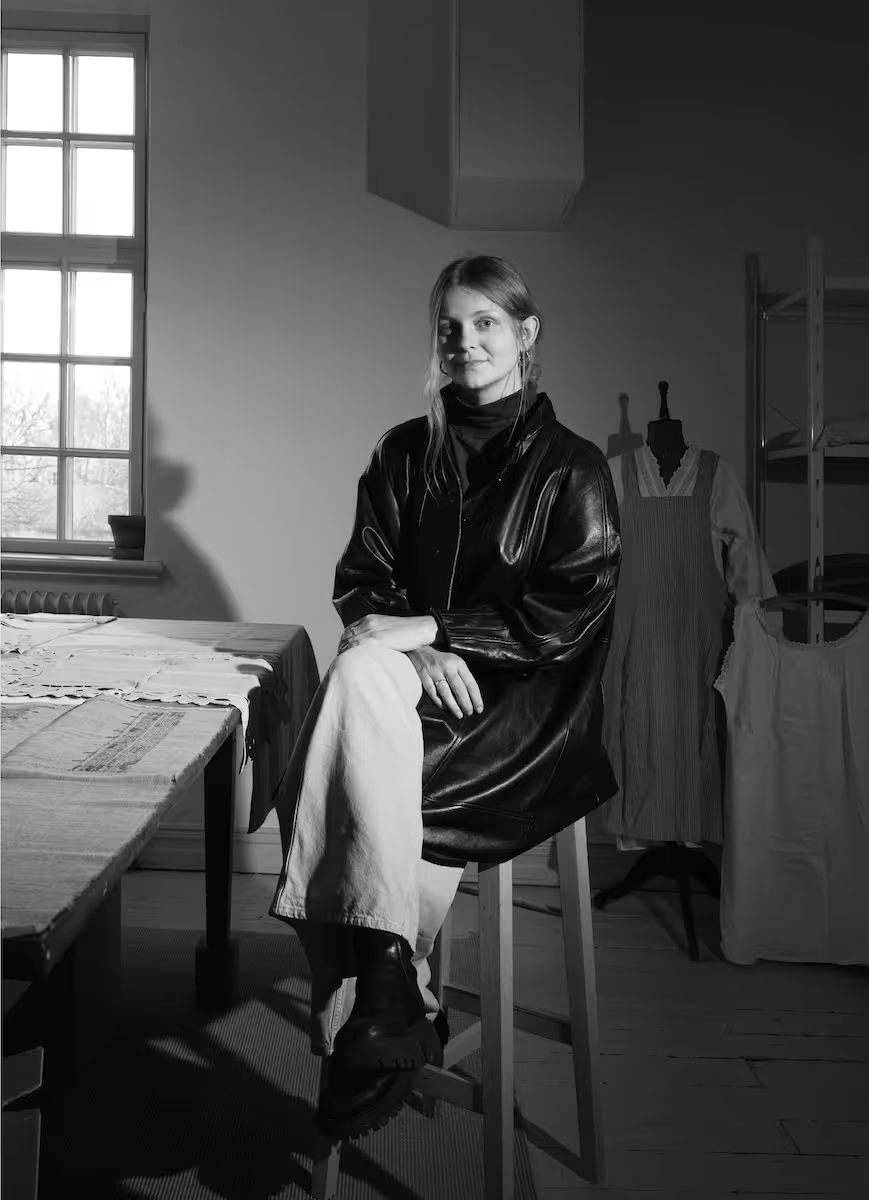
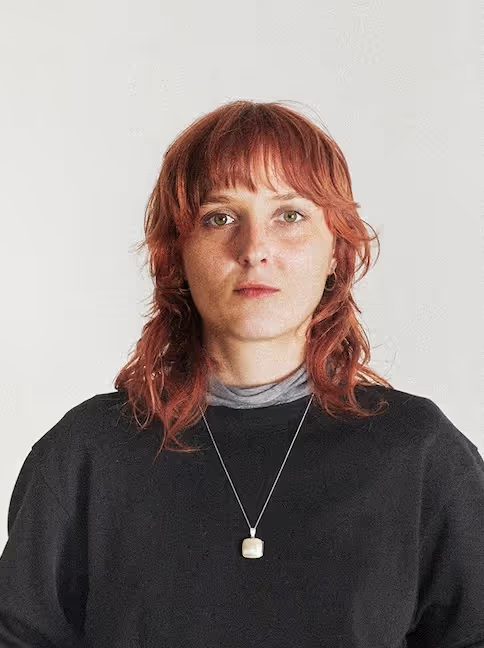
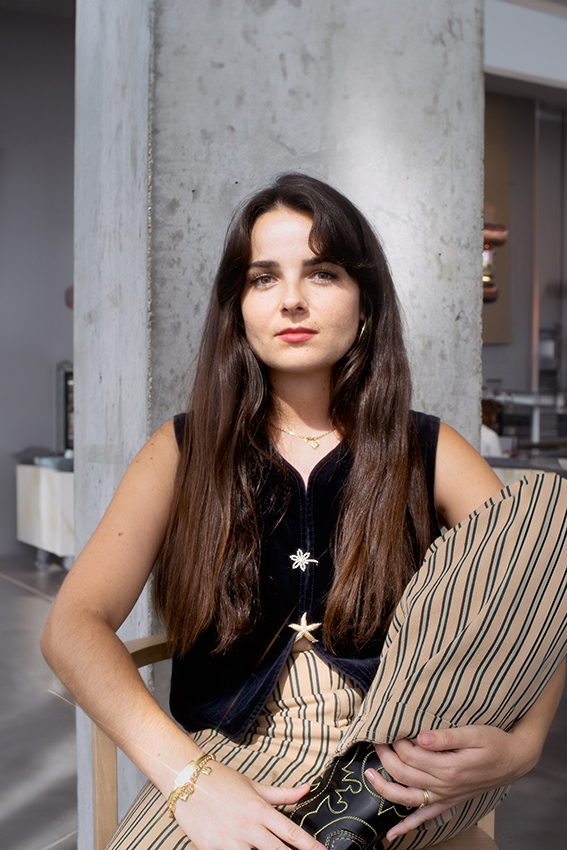
Miriam Pružincová, also known as MIMI, is a Slovak photographer, filmmaker, and visual artist. She is currently studying for her master’s degree at the Academy of Arts, Architecture and Design in Prague, in the Photography II studio led by Alena Kotzmannová. In her practice, she works primarily with analogue photography and video, a documentary approach, and her personal archive. Since 2019, she has been systematically collecting fragments of everyday life, which she subsequently connects into carefully composed pairs, diptychs, and visual sequences, thus creating series or an endless, unnamed body of work that is simply about life as such. Through the deliberate connecting and assembling of photographs in installations, as well as the intentional completion of series through newly made images, she disrupts the boundary between chance and staging within documentary practice. She understands photography as a form of play and a tool for storytelling — a visual poem or narrative. At first glance, her work may appear delicate, yet it carries irony, paradox, and intense intimacy. From environmental themes and stories of people searching for their identity, the artist gradually moves toward more personal subjects that address safe spaces and generational anxieties. Her practice also engages with memory, corporeality, mental health, trauma, the relationship to nature, and the natural presence of death in life. Her work has been exhibited, among others, in Prague, Munich, London, Berlin, Milan, Tokyo, and Slovakia.
Projects
2025

Everyday is the most beautiful

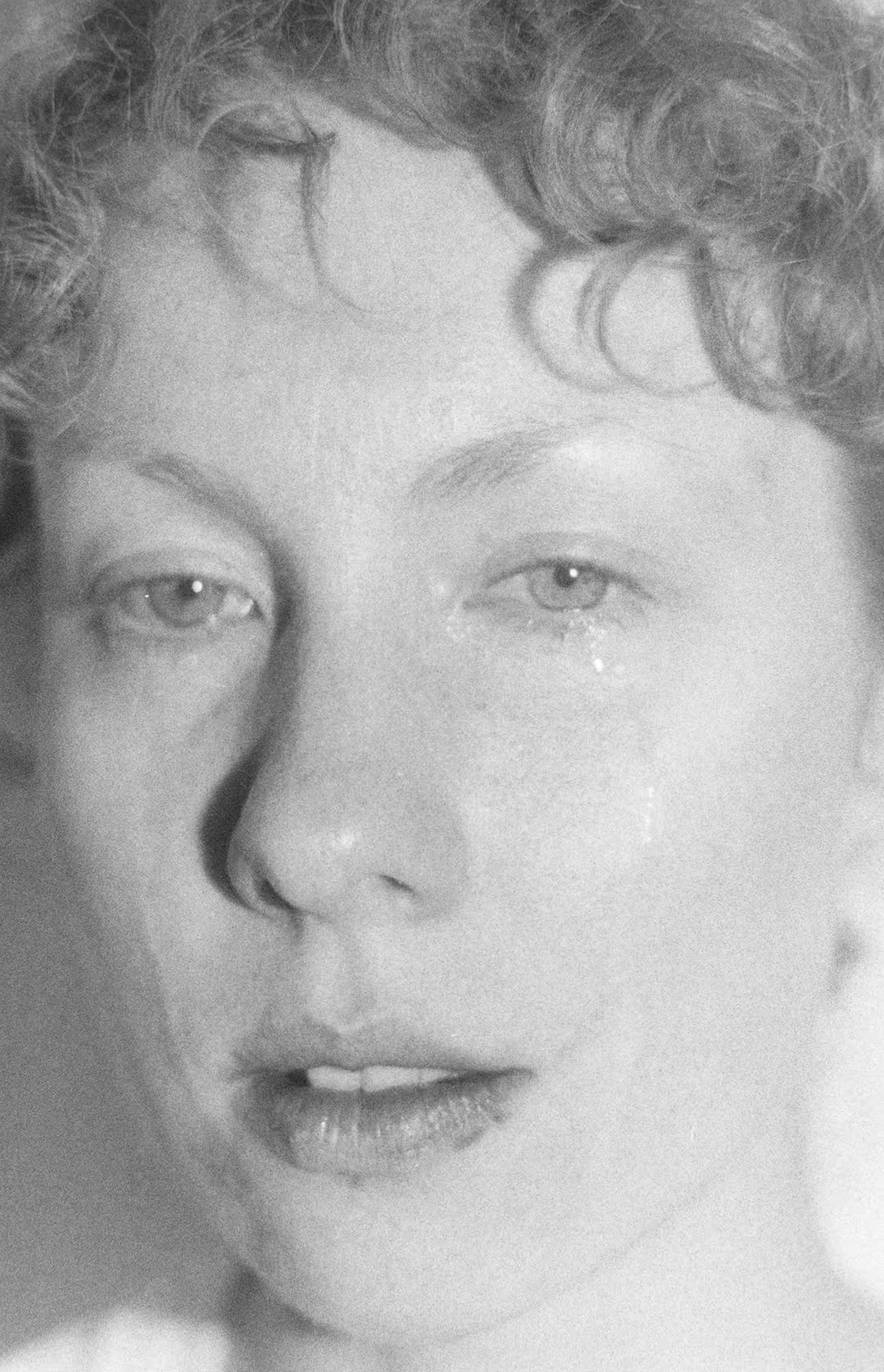
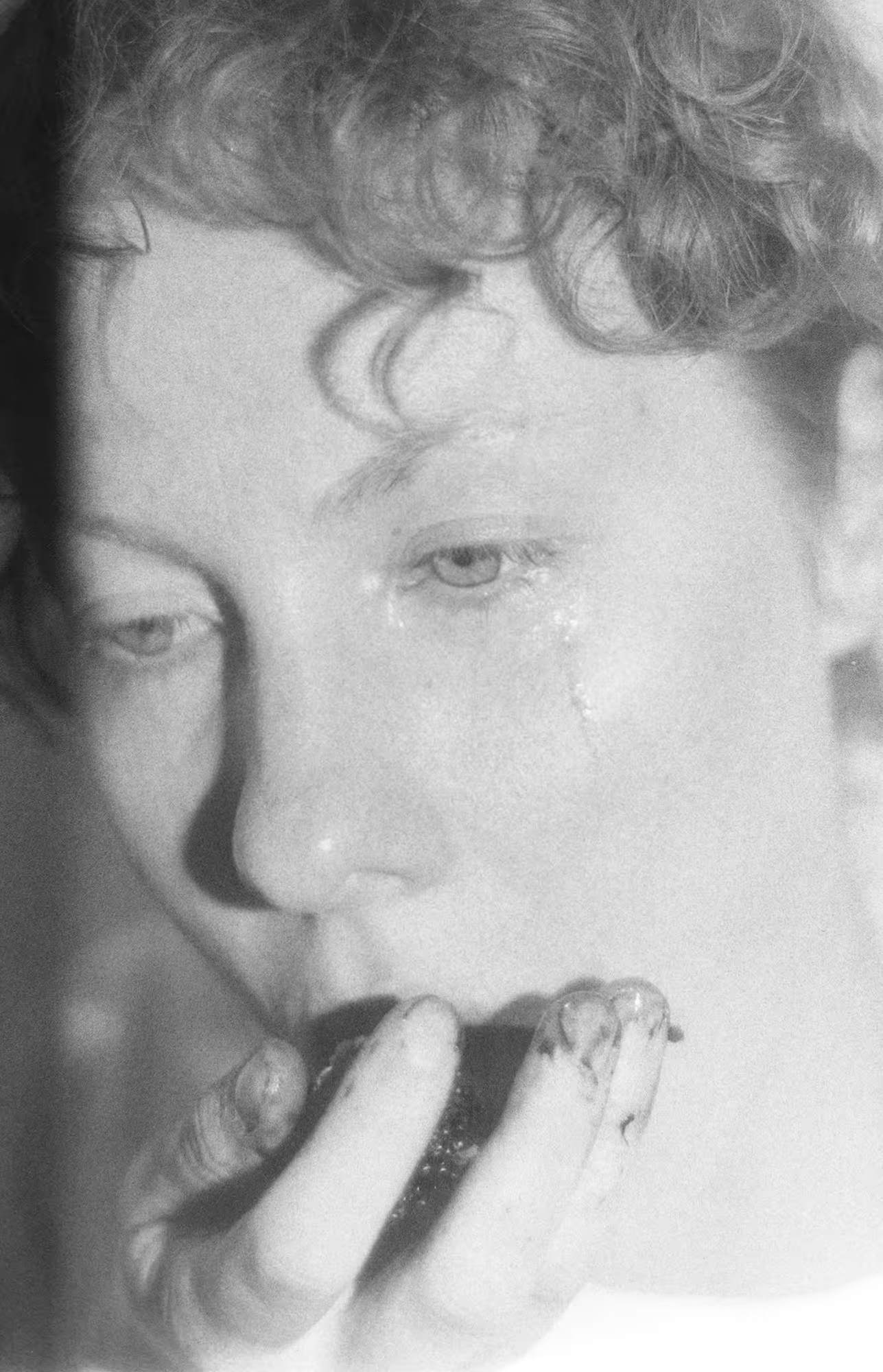
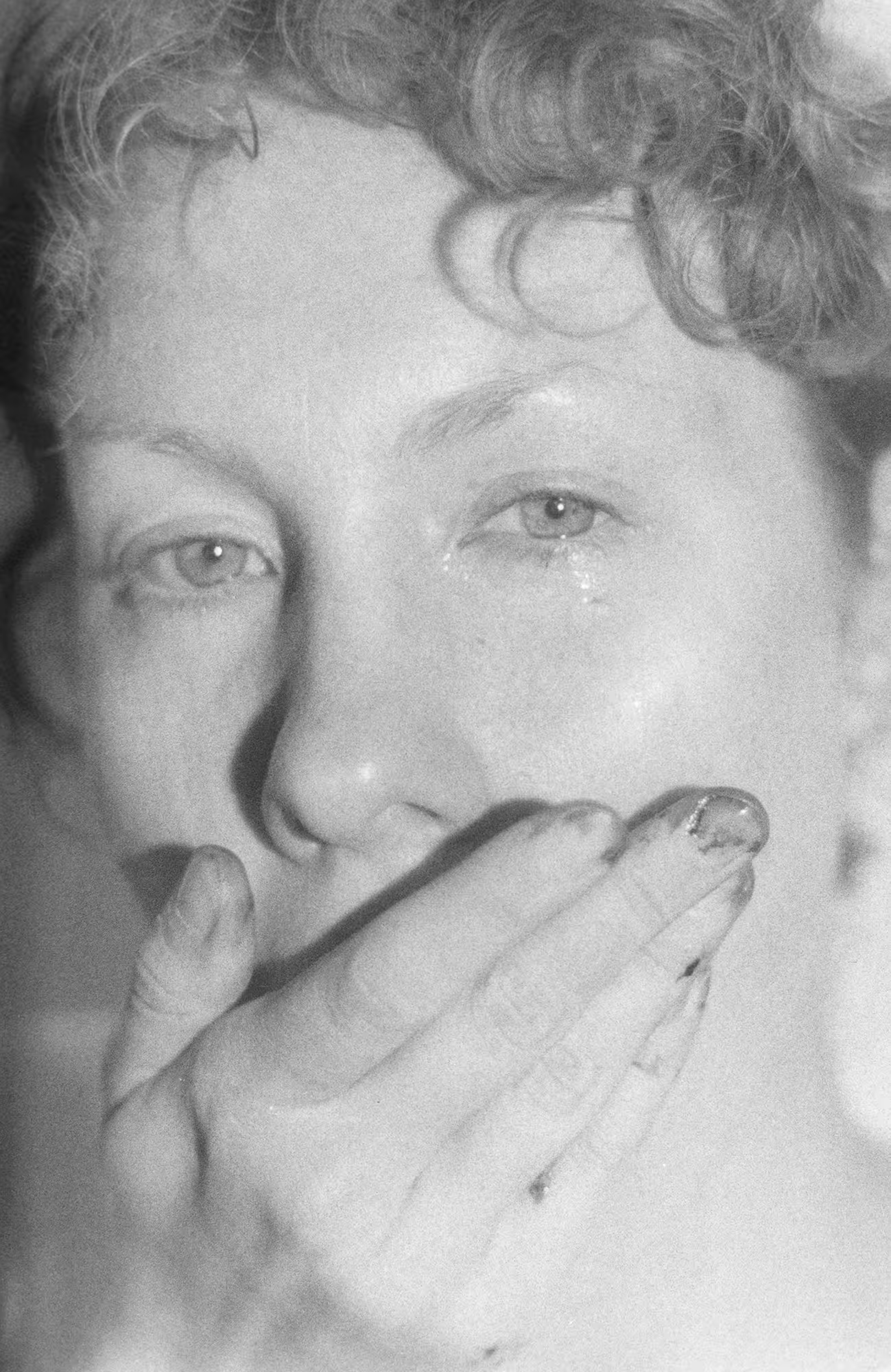
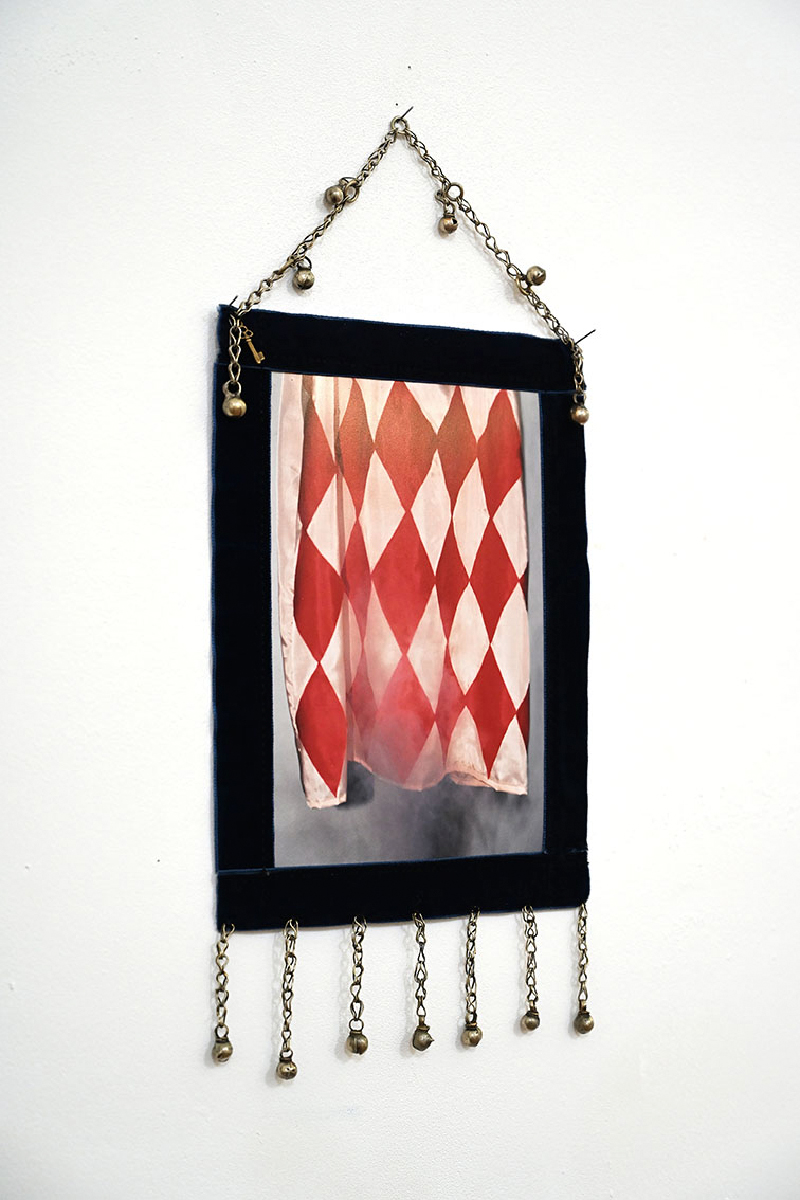
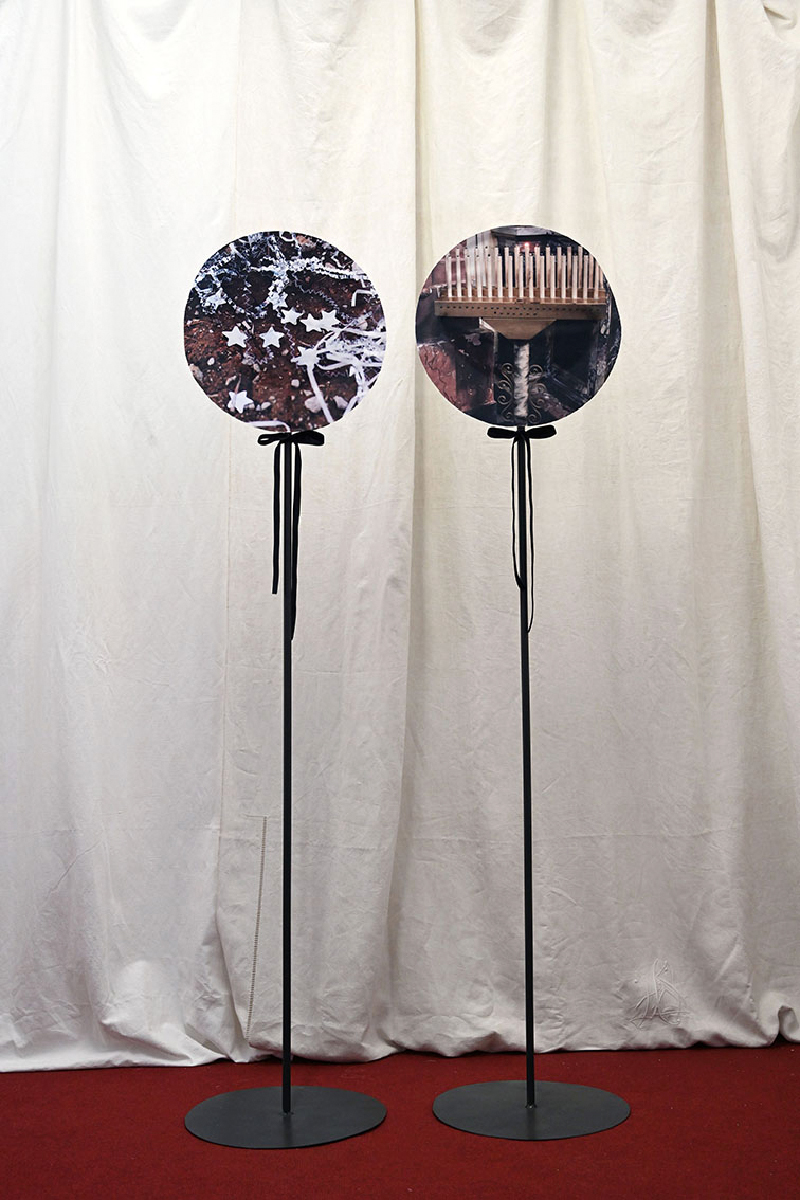
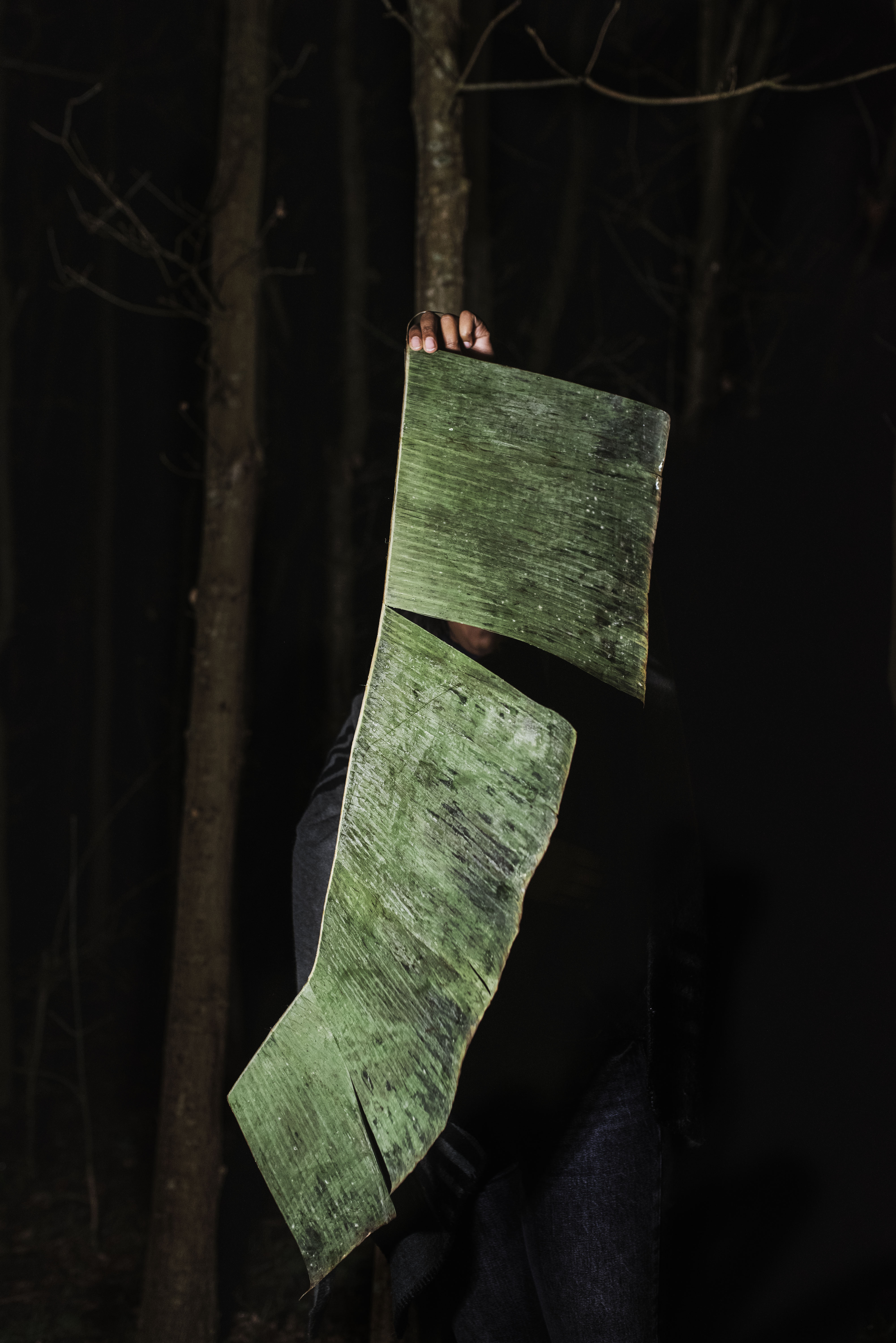
In the project Every Day Is the Most Beautiful, I documented my mother through video and photography as she relearns how to ride a bicycle after thirty years. Through this, she attempts to regain endorphins and to reduce the fears, anxieties, and depression connected to the difficult information that my father has stage-four cancer. At the same time, through photography, I tell a story about courage and the effort to overcome the constant safety of one’s home and to learn to step outside alone again. For a long time, my mother fulfilled the role of a traditional woman who stayed at home and took care of the children and the household. Having raised four children, she became accustomed to this role, which gradually led her to close herself off at home and stop taking care of herself as well. After losing the stability represented by her husband, the challenge of going outside on her own became even more difficult. However, it was the only remedy for the depression and separation anxiety she developed. She needed to move and to regain her sense of flow. The sentence “Every day is the most beautiful,” which was written on a board in the installation, may at first sound naive and overly simple. However, the repeated reminder that each day can be the most beautiful teaches us to notice small moments that contribute to our psychological well-being and mental health. This positive statement, like a motivational symbol or image, can function as a daily reminder to pay attention to simple joys. The heart symbol, which I often use in the project, functions for me as a bearer of nostalgia and continuity. As a child, I gave my mother a piece of paper covered with hearts, where the greater the number of hearts, the stronger the value of the message. Over the course of its long history, the heart symbol has become highly commercialized through romantic illustrations and Valentine’s cards. For me, however, this seemingly kitschy symbol still represents a nostalgic memory and a form of connection that can provide psychological support and evoke a sense of safety. Another element of the installation consists of wooden frames inspired by a picture of two dolphins from our bathroom and by my mother’s old quote about love, decorated with a heart pattern. The hand-carved pattern in the wooden frames emphasizes a sense of nostalgia and home, recalling folk furniture. In addition to separation anxiety, fear of loneliness, and questions of a safe space, the work also addresses the importance of flow in our lives and the act of reminding ourselves of simple “truths.” Because every day is the most beautiful.
Miriam Pružincová
was nominated by
Fotograf Zone
in
2026
Show all projects
Each year every member of the FUTURES European Photography Platform nominates a set of artists and projects to become part of the FUTURES network.

The selection process builds on the long-term collaboration between artists and the Fotograf Zone platform and Fotografmagazine. Publishing and exhibition activities thus function as a natural filter through which talents from the Czech Republic are further selected for the FUTURES platform. The nominations are decided by the Fotograf Zone programme board consisting of Markéta Kinterová, Světlana Malina, Barbora Vanická Čápová, and Viktorie Vítů.

The four projects move along the boundary between personal experience and attentive observation of the world, where intimate encounters intersect with broader social and environmental questions. The artists work with photography, installation, and moving image as means that allow perception to slow down, reality to fragment, and meanings to be reassembled. A shared emphasis lies on process, openness, and the acceptance of unresolved questions.

In Fracture of the Sun, Ondřej Kubeš explores the body, memory, and self-perception through light as a formative force. Fragmented corporeality, nudity, and solitude are interwoven with archival materials and family memory, revealing how social norms shape personal experience. A leather cord threading through the installation becomes a metaphor for systems that simultaneously bind and restrict. Questions of queerness are not articulated explicitly but are rather lived through, as if they were a process the artist primarily observes within himself, allowing only partial insight into his inner world.

Jakub Tulinger has long focused on landscape in its various forms, whether natural or urban, and experiments with 3D video and laser scanning technologies. In Extension, peeling walls are transformed into detailed micro-landscapes that carry traces of time and spatial memory. His broader practice combines documentary observation and field research with virtual environments, most notably in the video essay Sorry I am late, I was dealing with something in the valley (Assembly of things). Recurring motifs of travel, arrival, and departure, as well as a long-term engagement with the tourist landscape of Králický Sněžník, reveal his layered approach that blends personal experience, found material, and subtle irony.

Miriam Pružincová’s cycle Everyday is the most beautiful offers a fragile, poetic record of family life during a period of emotional and generational reckoning. Through intimate bodily fragments and domestic scenes, she addresses separation anxiety, mental health, and the search for safety, suggesting that the path to understanding oneself is never straightforward, but unfolds through constant transformation, searching, and rediscovering meaning in small, seemingly banal situations of daily life and through an emphasis on presence. 

In Maybe, Happiness Is…, Linda Zhengová returns to one of the most universal yet most difficult questions: what happiness actually means. The work draws on personal experience from a relationship-wise complicated period marked by change, relocations, and turbulence, in which people come and go and certainties fall apart. Working between documentary and staging, and returning to analogue photography as a means of slowing down, she questions authenticity, memory, and the possibility of capturing fleeting moments of human closeness.

Together, these projects form a diverse picture of contemporary artistic practice in which personal experience becomes a starting point for broader reflections on the world, relationships, and the environments we inhabit. They collectively show that attentiveness and openness to process can lead to forms that are not closed statements, but invitations to a careful and slow reading of reality. 

Markéta Kinterová
Newsletter