Edit profile
The

Artist

Lives and Works in
Bern
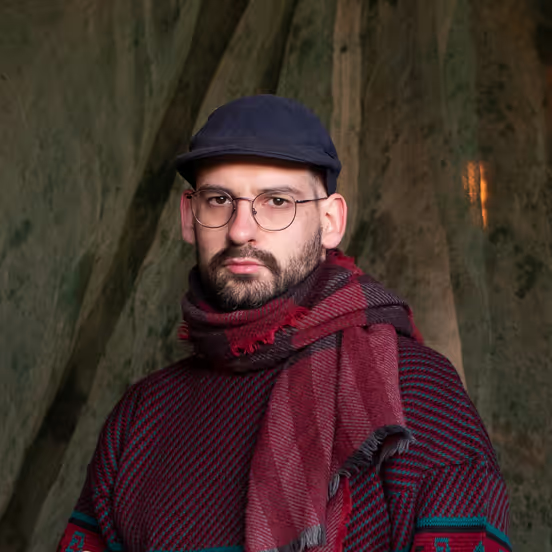
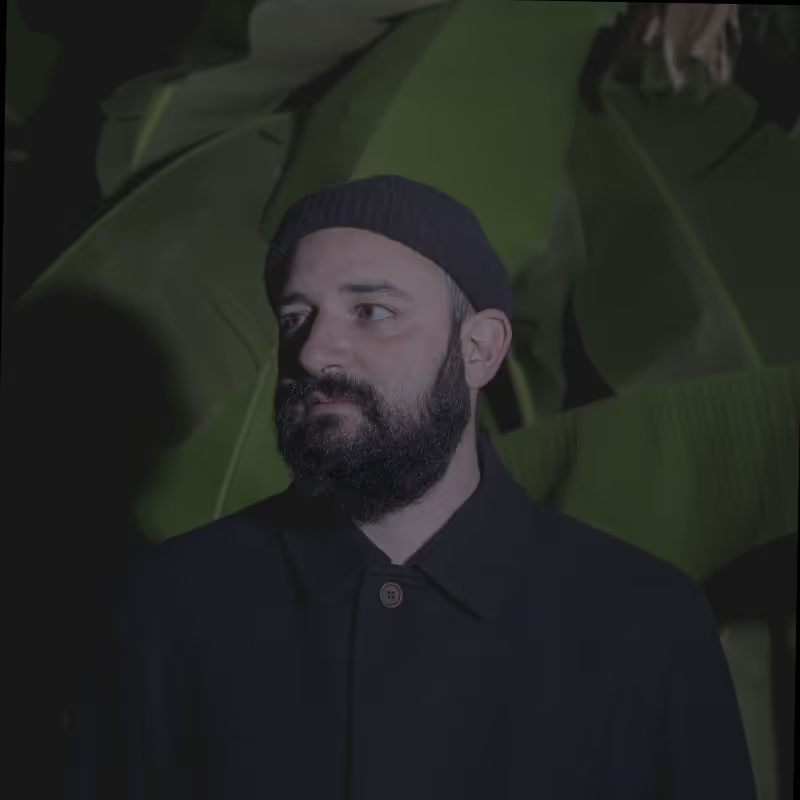
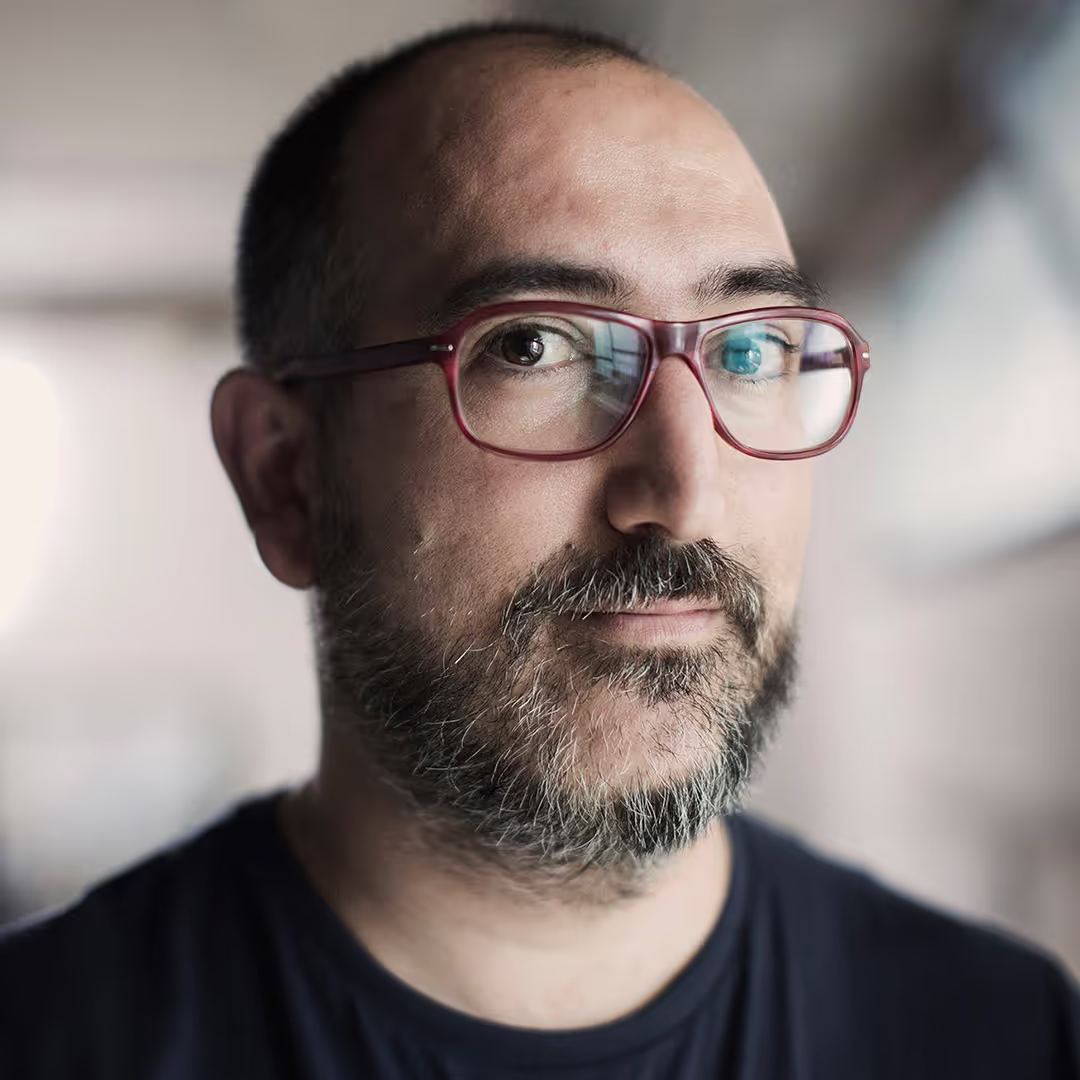
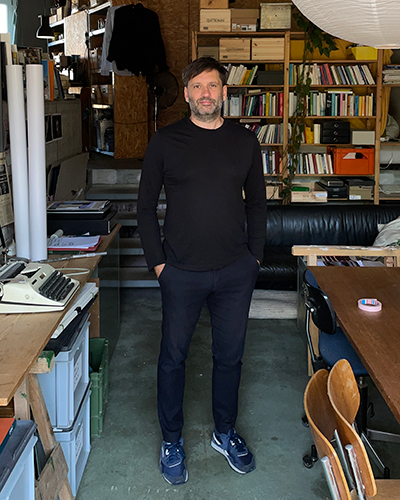
Marco Frauchiger is an artist living and working in Bern, Switzerland. Working primarily with photography and video, his artistic practice investigates image politics and the material conditions of image production, particularly in relation to Switzerland’s global entanglements. Since 2009, he has been working independently on documentary and conceptual projects. He developed his photographic practice through independent study. From 2004 to 2005, he was a member of the group of self-taught photographers GaF in Bern. In 2013, a grant enabled him to undertake an extended working stay in Laos, where he developed a new body of work and collaborated with NGOs. In 2014, he attended a one-year masterclass in Vienna, followed by further education programs and workshops in photography. From 2018 to 2020, he completed the Master in Contemporary Art Practice (CAP) at the Bern University of the Arts (HKB). In spring 2025, he completed the CAS Theory and History of Photography at the University of Zurich. His work has been exhibited nationally and internationally in institutions including Fotomuseum Winterthur (2026), Kornhausforum (2026), Bieler Fototage (2025), Musée d’art de Pully (2023), Noorderlicht International Photography Festival (2021), or Kunstmuseum Thun (2020). In 2022, he was awarded the Prix Photoforum for his work How to dismantle a bomb. Marco Frauchiger is a member of NEAR – Swiss Photographers, the Pool Collective, Visarte Switzerland, and serves on the board of Visarte Ateliers Bern.
Projects
2025

The War Movie

The War Movie is an image-less video that presents a complete list of all wars since the industrialization of warfare, beginning with the American Civil War of 1861 and continuing up to October 2025, formatted in the style of end credits. The soundtrack consists of a heavily distorted version of the U.S. national anthem, The Star-Spangled Banner. The work references, among other things, key questions in image politics: how violence and war can be represented without reproducing them. Link: https://vimeo.com/1073660729 Video (digital master version, TV edition, 4:3 format, on analog CRT TV), 720×576px, b/w, sound, 2025, 68 min.
2024

Camera Obscura Type III

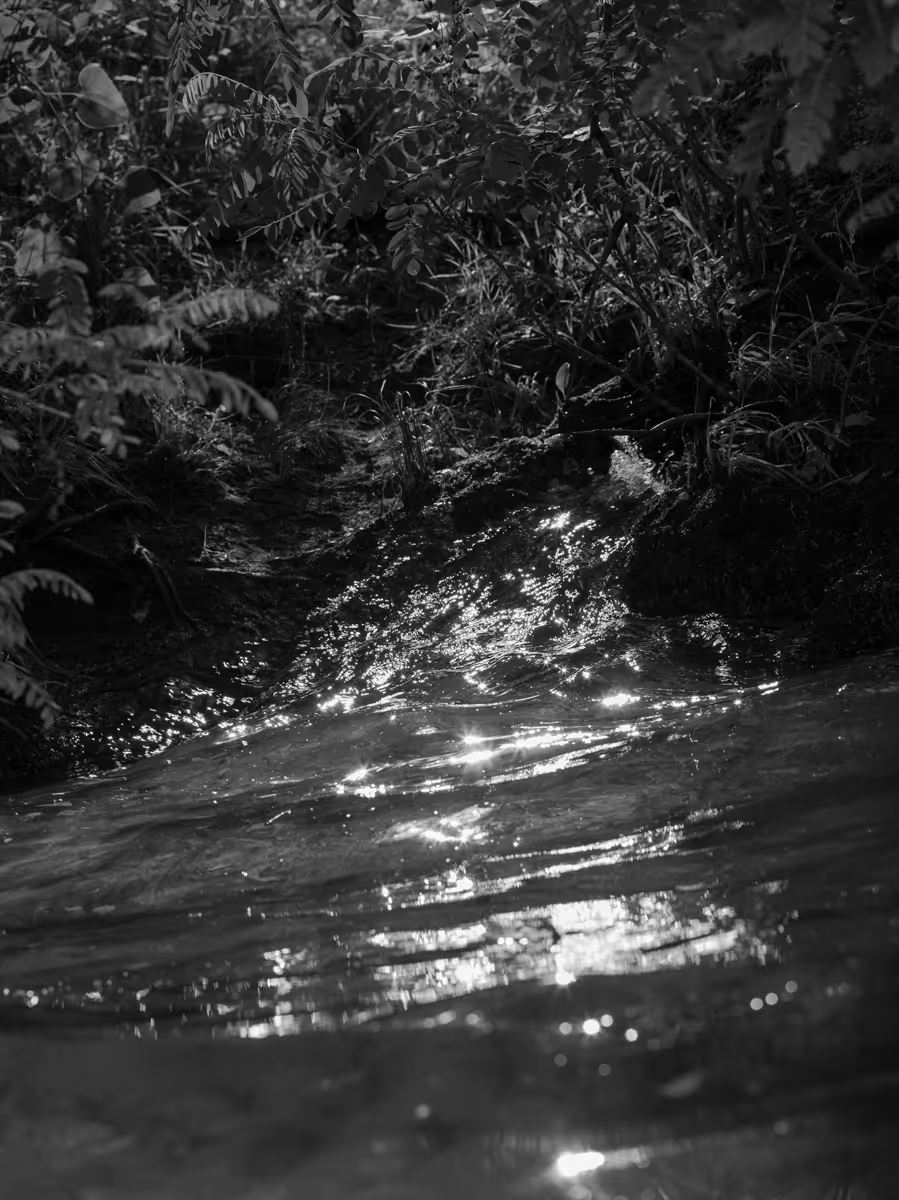
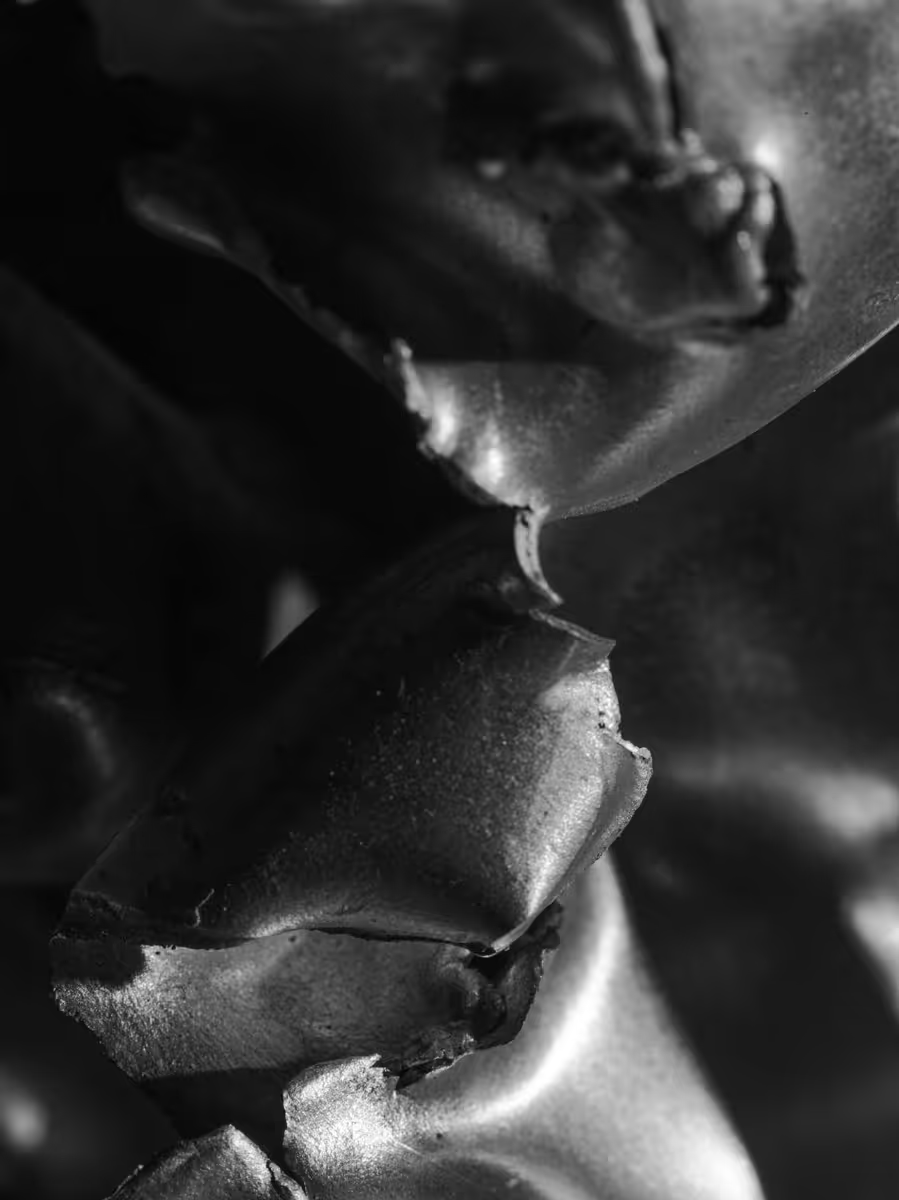
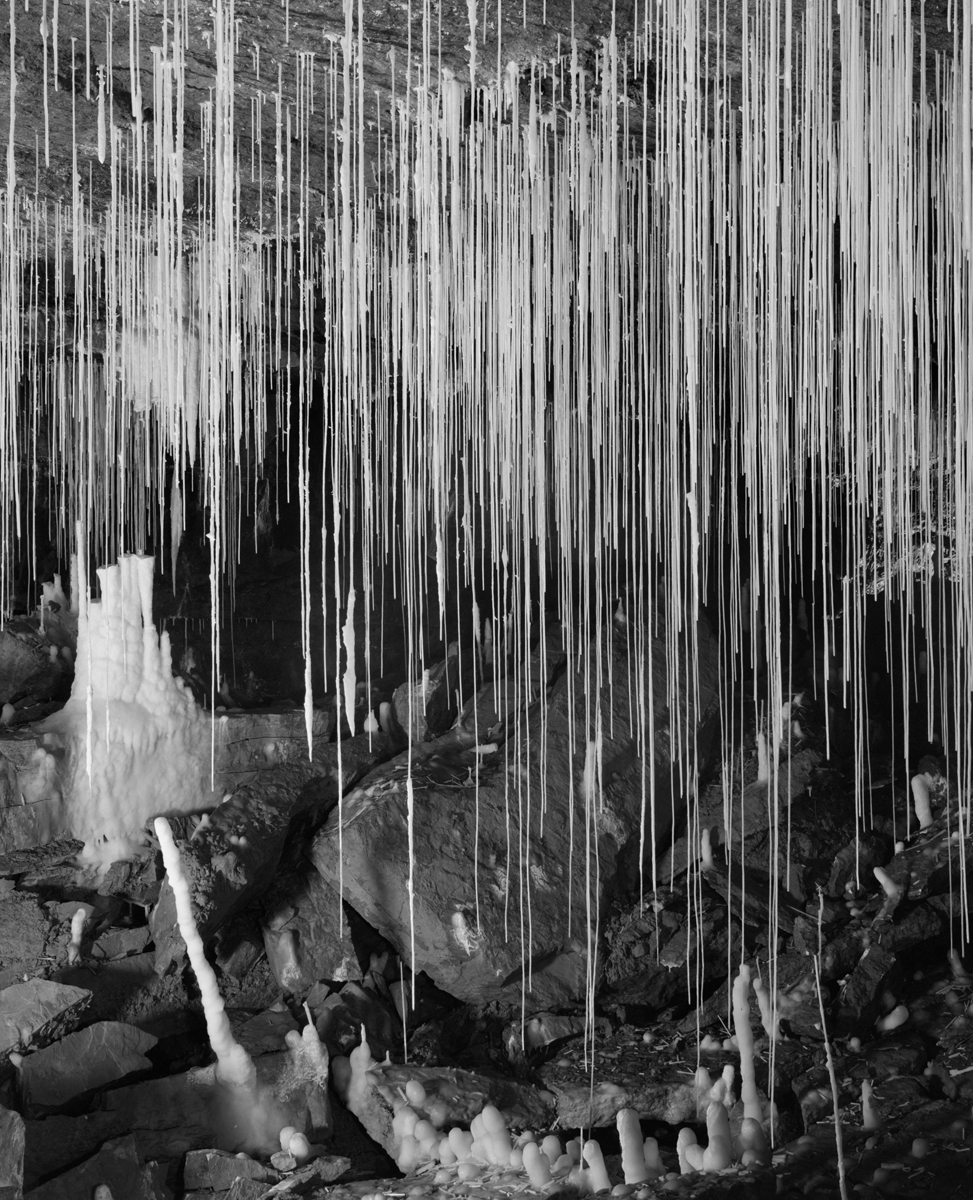
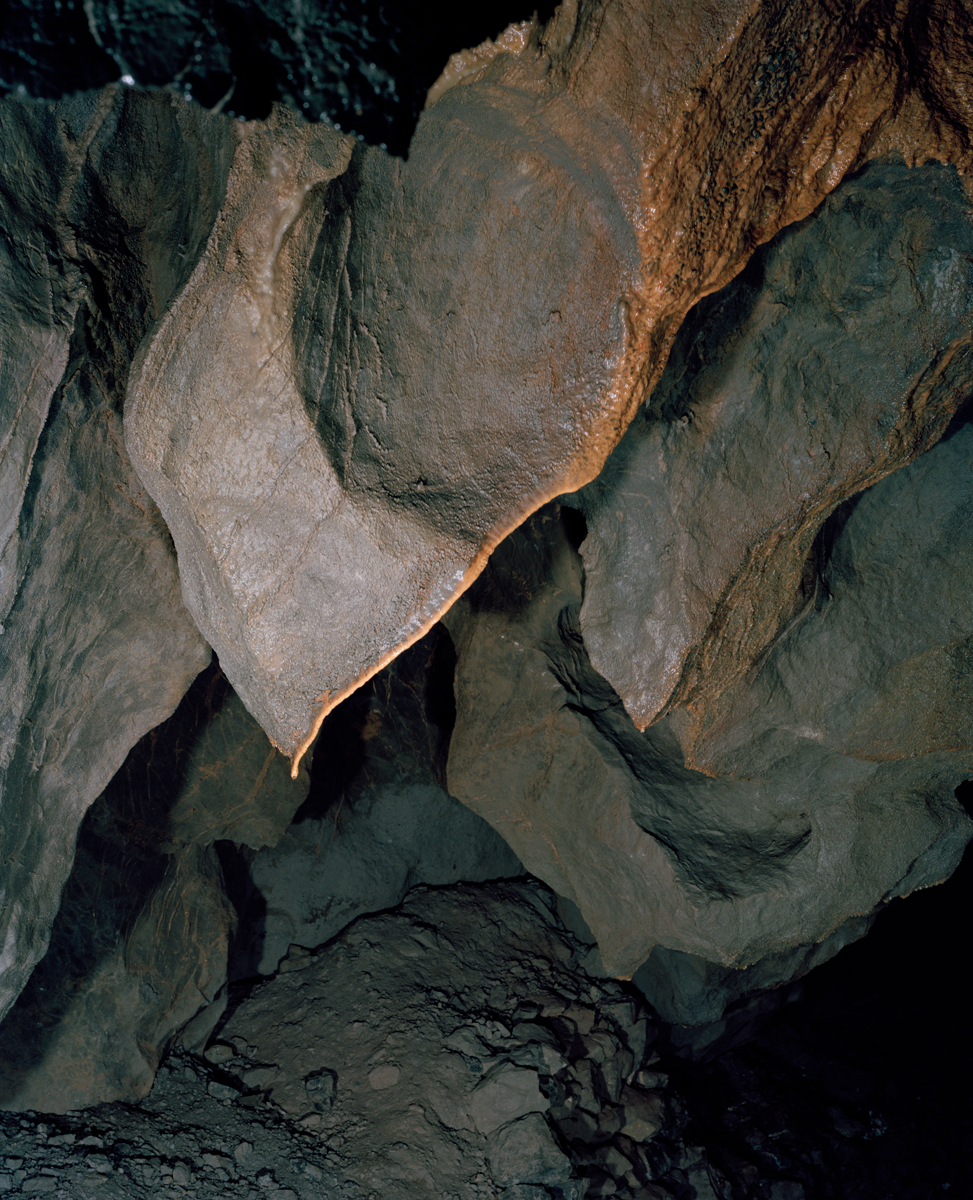
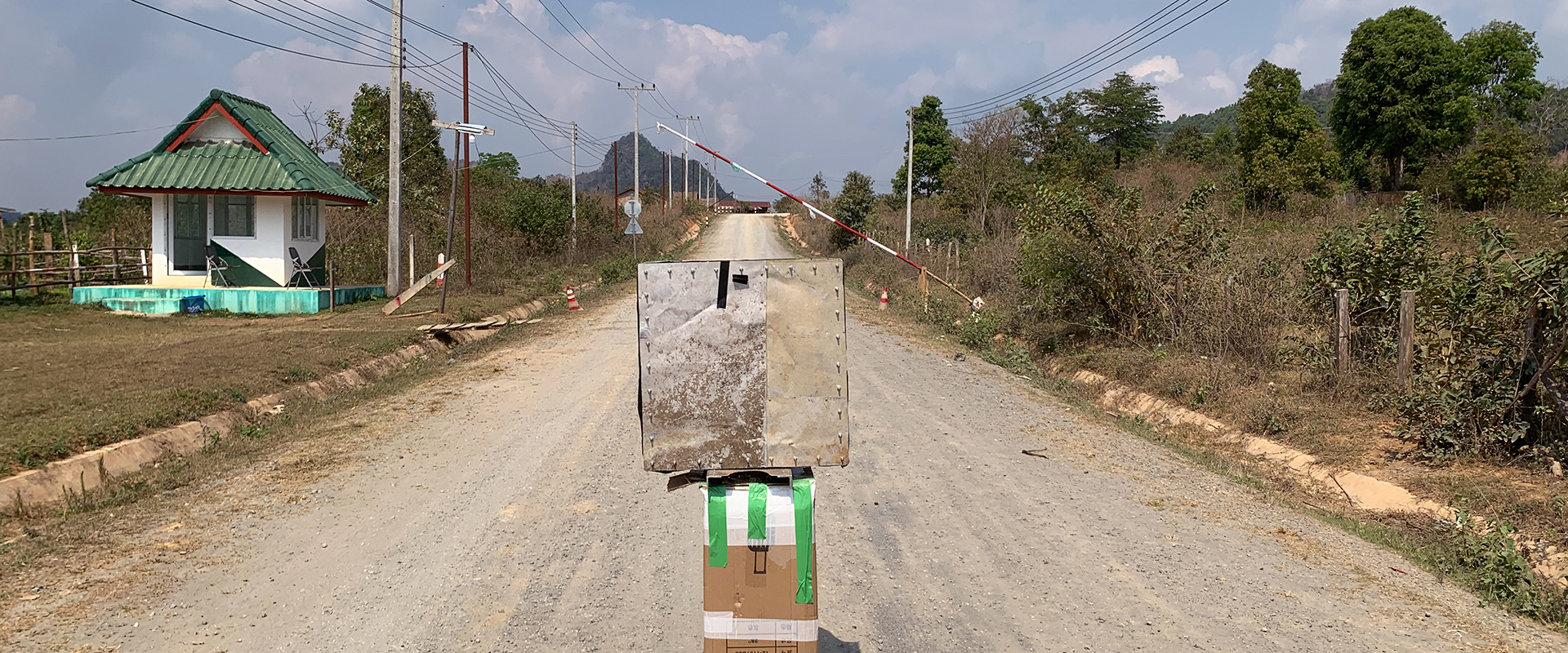
‘This project investigates Switzerland’s entanglement in global conflict, questioning the narrative of neutrality as political and temporal distance. During the Cold War, Swiss-manufactured aircraft, the Pilatus PC-6 Porter, were used by CIA-operated airlines in the Secret War in Laos, a country officially recognised as neutral under the Geneva Convention. While Switzerland did not declare war, its industry profited from geopolitical struggle shaped by anti-communist ideology and economic interest. In Laos, I encountered a local practice of transforming war debris into everyday tools. This gesture of reuse became the starting point of my work. Adopting this practice, I began constructing functional cameras from aircraft wreckage and related materials found in Laos. Over six years of field research and archival investigation, I collected fragments, documents, images, found footage and war debris connected to these aircraft. From this material, I built a large-format camera obscura. With it, I photographed crash sites and scarred landscapes in Laos before returning the camera to Switzerland to photograph its industrial place of origin. Central to the project is the gesture: searching, assembling, returning, and photographing its place of production. The camera becomes a speculative apparatus that re-enters the archive and activates what cannot be fully recorded. The provenance of some fragments cannot be completely verified – reflecting the fractured nature of war archives and the instability of historical traceability. The work unfolds as an incomplete archive, where objects, images, found footage, documents, newspaper articles and gesture form a circular movement between production and destruction, past and present.’ https://vimeo.com/1034559140
2025

The War Movie

The War Movie is an image-less video that presents a complete list of all wars since the industrialization of warfare, beginning with the American Civil War of 1861 and continuing up to October 2025, formatted in the style of end credits. The soundtrack consists of a heavily distorted version of the U.S. national anthem, The Star-Spangled Banner. The work references, among other things, key questions in image politics: how violence and war can be represented without reproducing them. Link: https://vimeo.com/1073660729 Video (digital master version, TV edition, 4:3 format, on analog CRT TV), 720×576px, b/w, sound, 2025, 68 min.
Marco Frauchiger
was nominated by
Centre de la photographie Genève
in
2026
Show all projects
Each year every member of the FUTURES European Photography Platform nominates a set of artists and projects to become part of the FUTURES network.

Marco Frauchiger and Sebastian Stadler have been selected by Centre de la photographie Genève (CPG) for their projects researching, and experimenting with, the significations and significance of photography, two nominations that resonate with the bicentennial of photography celebrated in 2026–2027. Through complex and layered processes, their respective work explores, questions, challenges and pushes to their limits, equally visually and conceptually, the ways in which we rely on photography to make sense of the world, of history, and of our place within the world. 

While Marco Frauchiger and Sebastian Stadler have been exhibited internationally in recent years, CPG aims with their nomination to FUTURES to bring an increased visibility to their work at the international level, and hopes that new opportunities to develop and circulate their work will arise from their integration in the network.

Marco Frauchiger presents The War Movie, an imageless video listing all wars that happened since the industrialisation of warfare and up to October 2025, and Camera Obscura Type III, for which he built a large format camera from aircraft debris collected in Laos, which he then used to photograph crash sites in Laos from the Secret War (1964–1973) as well as the Swiss industrial sites where the aircraft had been produced. 

Sebastian Stadler presents New Archeologies, a series exploring our desire for control and clarity and echoing how photography has been harnessed to observe and measure the world, through double exposure where AI-generated charts, scales and grids are superimposed on negative images of nature and human forms. 
Newsletter