The FUTURES
Residency Program
The FUTURES Residency Program provides emerging artists with time, space, and resources to develop new work, emphasizing artistic process and research, while offering opportunities to push the boundaries of their practice and engage with contemporary themes.

residency theme
how it works
program
At the beginning of 2025, FUTURES introduced a Research Residency Program across three locations: FUTURES Hub in Amsterdam, Capa Center in Budapest, and ISSP in Riga. Selected from a pool of nominated FUTURES artists, participants are chosen by a diverse panel of experts. Open to all artists nominated in previous years, the program aims to foster production, exchange, and meaningful artistic growth. Applicants are evaluated based on their artistic practice and the quality and relevance of a residency project developed specifically for their time with FUTURES.
- Professional Mentorship: Residents receive tailored mentorship from experts relevant to their project, offering guidance and support throughout the residency.
- Public Engagement and International Exposure: Each residency concludes with a public event, and the artist's work is promoted through communication channels of FUTURES.
- Fair and Inclusive Working Environment: The residency ensures fair pay, safe working conditions, and a commitment to inclusivity.
- Access to the FUTURES local network and introduction to Amsterdam art and contemporary culture scene.
from the residents
- Residents are encouraged to maintain a Visual Diary, posting weekly updates about their creative process on FUTURES’ social platforms. This offers an inside look at the artist’s journey.
- A Video Portrait is created during the residency, offering a personal insight into the artist and their practice. This video is shared through FUTURES’ platforms, extending its reach.
- A public-facing event, such as an open studio, workshop, exhibition or artist talk, is an essential component. This event offers residents a chance to share their work and process with the local community. This will also be live-streamed, allowing international audiences to engage with the residency's work.
- Interview with a local writer about the artist's creative process during their residency. This written interview will be featured on the FUTURES website, offering further insight into their work and artistic journey.
residency locations
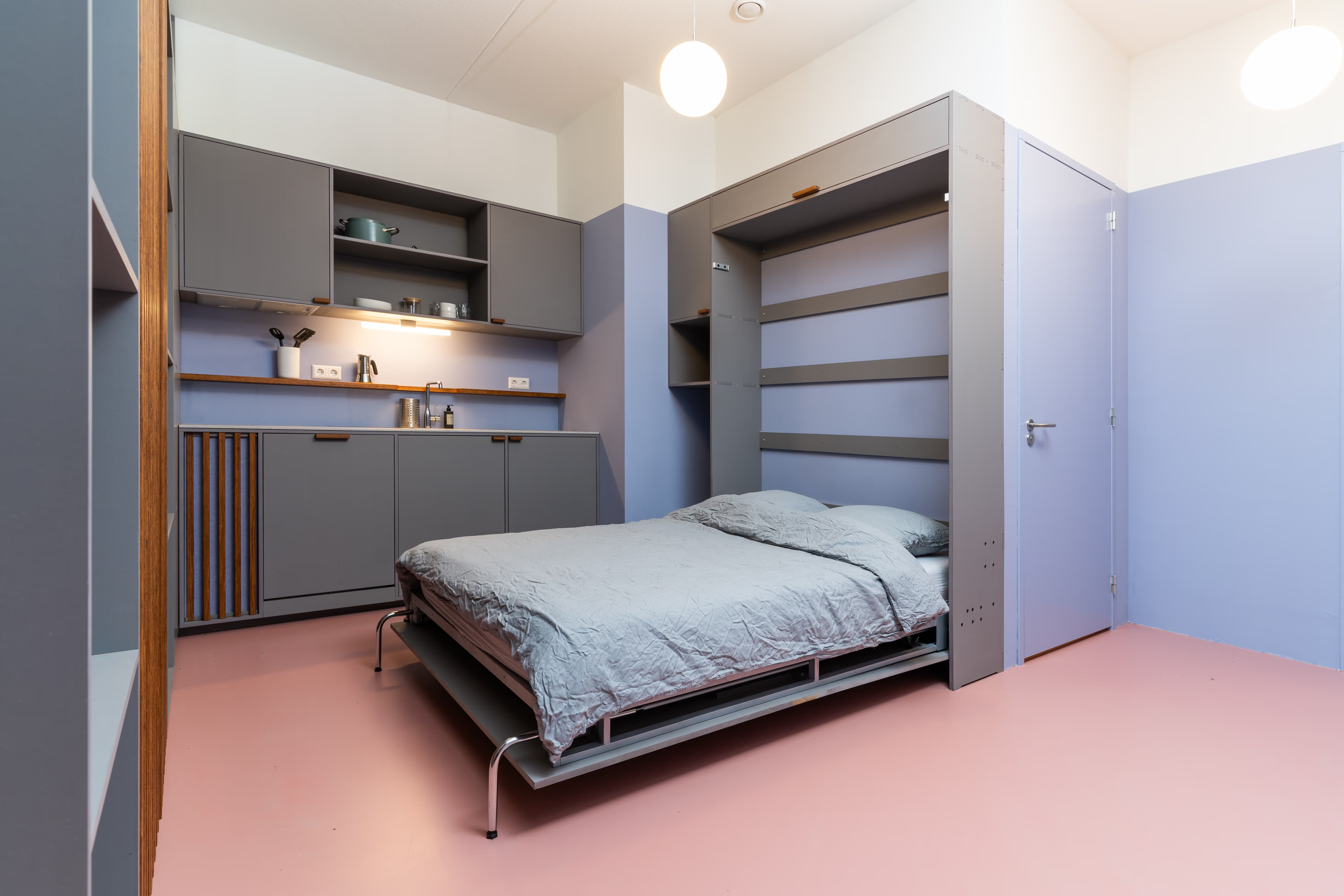
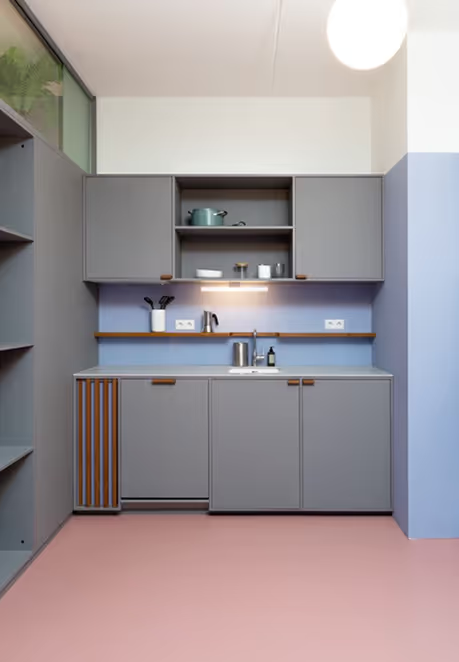
Futures Hub, Amsterdam: In 2023, FUTURES launched its first residency program at the FUTURES Hub, a vibrant space in Amsterdam that serves as the platform’s global headquarters and flexible exhibition venue. Situated on a former industrial site, the Hub offers a fully equipped live-work environment, including an atelier, furnished apartment, and event space. It welcomes artists from diverse regions and cultural backgrounds for both short- and long-term stays.
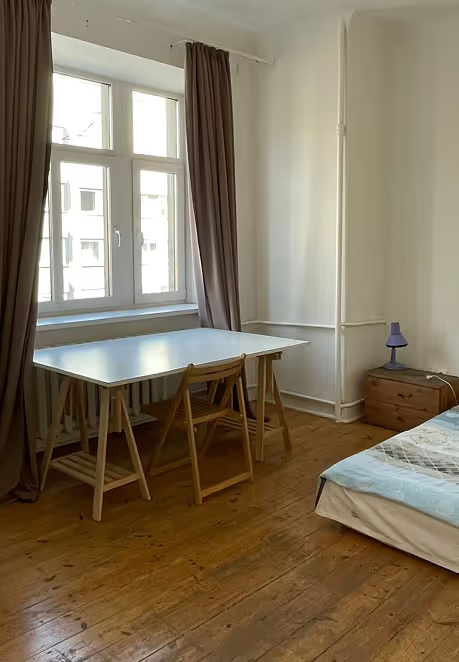
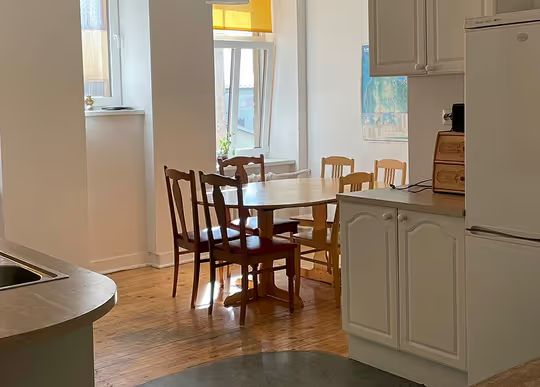
ISSP, Riga: The resident will be housed at the ISSP Riga Residency apartment in the city centre, shared with other two artists. The accommodation offers comfortable conditions for living and working - a separate bedroom with a working space, spacious shared living room and a fully equipped kitchen. The resident will have access to ISSP office facilities including use of printer, scanner, ISSP photography library and studio lights.
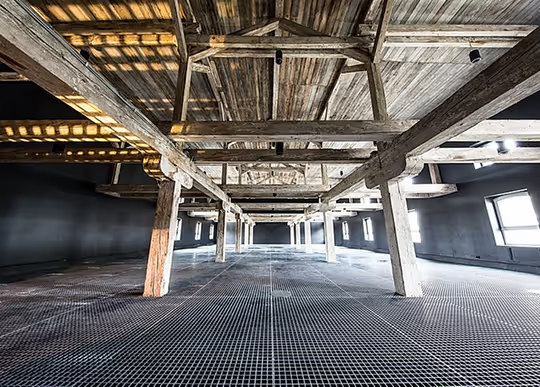
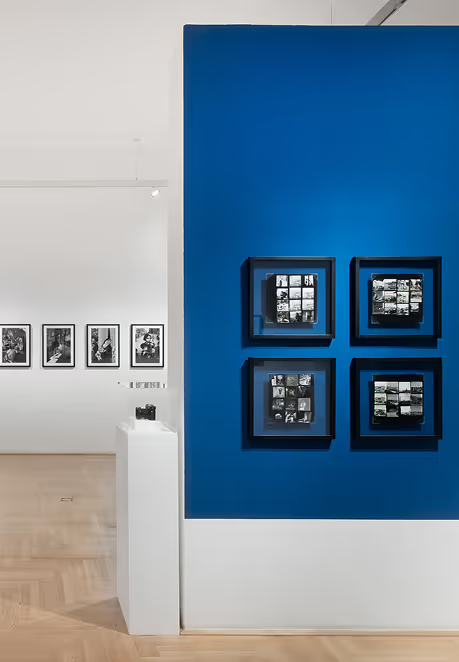
Capa Center, Budapest: The Capa Center residency program offers all entering participants a fully furnished private room within a communal apartment located on the Art Quarter Budapest premises, a studio space catering to the project’s requirements within its 400 m2 shared studio in the coolest postindustrial area of Budapest. Capa Center provides varied services to integrate the residents into the local art scene and contribute in establishing professional connections that best support their work and career. In addition, the residency will offer the possibility to organise a presentation at the Capa Centre in downtown Budapest, and use the Capa Centre's office facilities, including the printer and scanner.
Residency Archive
Michiel De Cleene was born in Ghent, Belgium, in 1988. The artist currently lives and works in Ghent.
M.D.C. always starts a conversation about Reference Guide with the last photo in the book, and this time is no exception. He took the photograph in question in the Teylers Museum in Haarlem, the Netherlands.
He enjoys telling the story of the Würzburger Lügensteine, a collection of 18th-century fake fossils — known in English as Beringer’s Lying Stones — of which some can be found at the abovementioned museum. In 2017, H.V., who was in charge of managing the science collection, gave M.D.C. and L.K. a guided tour of the museum and told them of all kinds of curiosities to be found there, including the famous Lügensteine. In the early 18th century, two palaeontologists were keen to play a trick on an arrogant colleague, a certain Johann Beringer. They buried a large part of around 2,000 fake fossils — featuring suns, stars, snails, shells and even Hebrew inscriptions — and sent a beautiful young woman, who pretended to be a doctorate student, to visit Beringer with the rest of the stones. He fell into the trap and went in search of the fossils. He found them, believed the hand of God to be the only explanation for these — what were referred to back then as — ”figure stones”, and wrote a scientific article about them.
Things ended badly for everyone. Beringer realised too late that he had been tricked. He took his colleagues to court and won the case; however, his own name will always be associated with the Lügensteine. M.D.C. grins as he tells the story but is no longer sure whether the young lady’s role in it is true.
We read about the entries in Reference Guide at the back of the publication: “The collection demonstrates a surprisingly high interest in characters and phenomena along the sidelines of these episodes and displays a severe tendency to digress”. A few days later, L.K. calls H.V. just to check the story of the Würzburger Lügensteine. It was most likely two small boys who first brought the stones to Johann Beringer.
- Text by Lars Kwakkenbos (.TIFF)
Bogdan Shirokov is a photographer based in Moscow. The main topic of his visual research is contemporary masculinity and the way it manifests in Russian society, especially among the youth generation.
He is committed to capturing the inner world of his subjects as well as creating a recognisable visual language to reflect softness, power and vulnerability. Bodgan's work has been featured in international publications such as 032c, I-D, Highsnobiety and Vogue and exhibited in numerous galleries in Moscow.
Olena Morozova is a visual artist from Kyiv, Ukraine. She is interested in themes of spirituality, sexuality, gender identity, stereotypes, psychological and mental disorder, family relationships. "Photography is my passion, lifestyle, philosophy, way of thinking, seeing, understanding the world around me and my inner world, searching for my reflections, feelings and emotions, self-development and movement forward” - she explains. Olena has been engaged in photography since 2015. Her teachers were: Alexander Yakimchuk, Dimitri Bogachuk, Vladimir Seleznev, Viktoria Sorochinski, Sergey Melnichenko and others. Her works were presented in Finnish Museum of Photography (2022), Odesa Photo Days (2021), Photo Kiev Fair (2019, 2020).
Patrycja Wojtas (b. 1990) is a photographer, visual artist. Graduated from the Leon Schiller National Higher School of Film, Television and Theathre in Łódź (diploma in Photography). She got the Ministry of Culture scholarship in 2017, within which she carried out the cycle Kruszywo/Debris, as well as a project of her photobook. She cooperated with the Archeology of Photography Foundation, e.g. preparing publications Emulsja and LUX, as well as during archival and research queries. She presented her works during group and individual exhibitions, among others, within the activity of the curatorial collective Lajt in Szczecin (Cache, 2017) and the TIFFFestival in Wrocław (Debris, 2018). She participated in FOMU Photobook Workshop in Antwerp and published her works in such magazines as Der Greif, Yet Magazine, FotoRoom, Zwykłe Życie.
Her art practice focuses on the relationship between the human being and the landscape. She tracks the history of the ways of space use, of the actions and transformations that leave a series of dispersed marks behind. Including archival materials in her practice, she reveals the changeability of the space in time and constructs a visual essay about memory.
Aline Bovard Rudaz is a Swiss photographer based in Geneva. She studied photography at the CEPV (Centre d’enseignement professionnel de Vevey). Through her artistic practice, she sees images as witnesses capable of conveying the concerns of her generation. For her, photography is a sensitive means of tackling the social, intimate and taboo issues of our society. She is particularly interested in forgotten histories, especially those relating to women's lives.
Kateryna Snizhko was born in Ukraine in 1984. She holds a Master of Law from the National Law Academy in Ukraine (2006) and a Bachelor of Fine Arts from the Gerrit Rietveld Academie (2016). Since 2012 she leaves and works in Amsterdam.
For the past 6 years, Snizhko participated in several group exhibitions, festivals and international fairs in The Netherlands, Japan, Ukraine, Austria and Czech Republic. Her installation “TINI” was awarded the Best Artwork Award and Public's Prize at Smart Illumination 2016, Yokohama, Japan, Honorable Mention and Public's Prize of Steenbergen Stipendium 2016, The Netherlands.
Bulgarian artist and director George Stamenov examines the immersive possibilities of story telling by challenging the dogmas of contemporary film making. His short films carry a unique aesthetic that is derived from Eastern Europe.
Raised in Sofia, Bulgaria and trained as a painter from an early age, his work arises from an early fascination with the Renaissance and Medieval eras. Stamenov utilizes computer graphic imagery as his primary medium, often to render the uncanny side of a simple event or a movement in a composition, exaggerating its insignificance in an extraordinary manner.
George Stamenov was born in 1988 and lives and works in London, United Kingdom. He completed undergraduate studies at Willem De Kooning Academie and postgraduate studies at the Royal College of Art. His work was featured in The Bloomberg New Contemporaries for two consecutive years (2018, 2019); NOT A LIVE SHOW Bonington Gallery, Nottingham (2018); Working Projects - Inhabiting the Dome at Whiteleys Shopping Center (2018); Water Tower Festival Bulgaria (2012).
I'm Sebastian Steveniers, 37-year-old Belgian documentary photographer, who works for the Belgian newspaper De Standaard as a photojournalist, making portraits and stories on a daily base. I also work on different long-term documentary projects.
I started off with photography on a late age, because I have a history of pro-basketball player. I decided to go back and study after I quit basketball. After a stop at RITS Drama school in Brussels I started to study photography at the Royal Academy of Fine Arts (KASK) in Ghent where I got my bachelor in Photography.
I have an undeniable curiosity and hunger for both small and large, well-known and less well-known stories. I use my camera as a key to enter a world or to make any contact. It gives me a fly on the wall feeling, with which I can experience a tranche de vie for a while. I always try to approach my subject as objectively as possible and let my eye do the work.
Photography helps me to understand certain facets of life in a better way.
I've always been attracted to uncommon subjects and stories, which aren't mainstream and easy to approach.
Sara Scanderebech (b. 1985) is a Milan-based photographer and visual artist. She studied Visual Arts at the Brera Academy of Fine Arts before beginning her career as a photographer at Galleria Carla Sozzani. Her work moves between art, fashion and design, involving close collaboration with a range of artists, brands and magazines. For Scanderebech, photography is a medium for investigating reality and creating new imaginaries. In her projects – which have been exhibited in a range of galleries and festivals – details of plants, animals, objects and bodies become new metaphors and contemporary symbols. Since 2017, Scanderebech has managed the bookshop at Paradise: a Marsèll concept store based in Milan.
Anna Gajewszky (1997, Budapest) is a photographer based in Budapest. She has recently graduated from the photography masterclass of Moholy-Nagy University of Arts and Design.
Her work is mainly characterized by its intimate exploration of personal issues, with a focus on the intricate quality of human relationships. She examines connections people form with each other, their families, their past, their own bodies, animals, and within a larger aspect the land.
The use of self portraits underline that her work is rooted in her personal life, however the images transcend personal narrative to engage with broader themes such as womanhood, family connections, generations, and countryside, rural customs, rituals. Her images are mostly staged but they often stay on the ground of reality creating a duality of fiction and truth that is central to her projects. This approach allows her to explore and communicate complex aspects of human experience.
Her work was exhibited both in Budapest and internationally, she was published in the 2021 edition of Blurring the Lines, she received the National Higher Education Excellence scholarship, her book was shown at Polycopies 2023, she was finalist at the Paris Photo Carte Blanche Students, she was an exhibitor at the 2024 Breda Photo Festival and was presented at UNSEEN Amsterdam, by Tobe Gallery in 2024 fall.
Karolina Ćwik is visual artist based in Poland. Her projects are like intimate diaries, in which she documents her experience of being a mother and an artist.
She is a student of the Institute of Creative Photography in Opava (the Czech Republic), winner of the PDN Emerging Photographer, last year's laureate of the Konrad Pustoła's Remembrance Scholarship, winner of the Sputnik Photos Project titled "As you can see". Her works have been published e.g. in The Calvert Journal, Culture.pl, FK magazine.
If Hélène Bellenger's work could be associated with a single tool, it would not be a camera, but one of those fine, precise instruments of the forensic scientist, so diligent is the artist in dissecting the workings of an imagery of perfect beauty and its artificial paradises. Preferring the act of collecting and transforming to that of shooting, she approaches images that are inert and out of use. For the Dazzled project, she collected a series of faces on the internet that had been obliterated by a flash of light - the now famous form of the selfie with the flash in the mirror - forming a kind of digital sun that contaminates the image and prevents the portrait. Another collection is that of advertisements for anxiolytics and antidepressants taken from specialist magazines, which she assembles into a frieze to display the litany of tense faces and slogans in the form of injunctions to happiness. Earlier, in Right color, she diverted a collection of magazines, posters and photograms from reels of films featuring actresses from the 1920s to the 1950s, reviving the make-up that was applied to them to reconstruct their faces and modify their plasticity for the black-and-white screen of the time. With her recent Bianco ordinario, her torsos of Apollo and busts of Venus, she continues her archaeology of the canons of beauty. Through a play of superimposed forms and supports, she links the geological time of the Carrara marble quarries, its extraction in Antiquity for sculpture, and today's massive extraction of marble powder to whiten the packaging of our cosmetics and cleaning products. The ensemble consists of a collection of unfolded packaging cartons on which the artist prints images of antique busts and quarry landscapes. In turn, the images themselves will be extracted from their support by the acidity of the marble powder contained in the cardboard, washing them ‘whiter than white’. The history and fortunes of the Western concept of whiteness are at the heart of the work the artist is currently developing in the Mediterranean basin.Hélène Bellenger (1989) lives and works between Marseille and Paris. After studying law and art history, she specialised in photography and graduated from the École Nationale Supérieure de la Photographie d'Arles in 2016. Bianco Ordinario was supported by Aide à la Création 2021 from the Drac PACA and produced at the Centre Photographique Ile-de-France as part of the 2022-2023 research and post-production residency.The artist would like to thank Isabelle Carta, Roland Carta, Centre Photographique d'Ile-de-France, Nathalie Giraudeau, galerie Marguerite Milin and Francesco Bi
Adél Koleszár (1986) is originally from Hungary, where she graduated with a Masters in Fine Art Photography at the Moholy-Nagy University of Fine and Applied Arts, after receiving a BA degree in Social Sciences in Budapest. In the past years she has been working and living in Mexico, where she works with the aim of completing her visual research on human violence. In 2013 she arrived to the country thanks to a Mexican Governmental Artist Residency Program, in 2014 her project on contemporary religions in Mexico was selected as finalist by Magnum Photos & Ideastap Photography Award, in 2015 she was the winner of the Budapest Portfolio Prize, in 2016-17 receiver of the Pécsi József Scholarship which supports the work of young Hungarian photographers. Between march and may of 2016 she taught locals in several cities along the US/Mexican border as part of a self initiated, open and free to everyone workshop project, Vision del Norte, with the aim to teach the participants how to use the visual language of photography to express their thoughts about the reality they are living in, and share it with a wider public in a form of a book which compiled the vision of each participants. The same year she was the solo exhibitor of the Discovery Show section of the Fotofestiwal Lodz, and her book „New Routes of Faith” was shortlisted on the Unseen Photography Dummy Award. Her work was exhibited and published widely in her country and internationally, amongst in Berlin, Mexico City, New York, Arles, Vienna, and featured on Foam Spotlight, Vice Mexico, Fotografia Magazine, Der Grief. Currently she keeps working on new projects, as well as continues the investigation on the alternative religious forms in Mexico.
The focus of my work in the past years has been human violence and poverty: how its constant reception can restructure the society and the self. I live and work in Mexico with the aim of completing my visual research on this topic, where I look for cultural movements, group activities, individual destinies which exist as consequence of the persistent violence and repress. My goal is to be engaged from an intimate closeness in order to witness, capture the essence of these realities, emotionally, mentally strongly involve the viewer into the topics I'm working with, to give the audience another perspective on the reasons why their lifestyle may often appear to be controversial and condemned, where I believe the key always lies in a brutal social and political system. I aim to give voice and visibility for people who are social outcasts, victims of injustice, showing contemporary social conflicts in a different context and narrative other than the newspapers. The photograph's focal point is a physical remnant of violence – a scar, a bruise, or a symbolic conduit, landscape – while the non-physical remnants of aggression are left to the viewer to interpret through a gaze, expression or pose and in physical space accompanied with text, interviews, even sound, so the story can become a whole, questioning faith, the nature of human and it's behavior.
More: http://koladel.org/
Ulla Deventer, born 1984 in Germany, holds a Master of Fine Arts and is an international working artist and research candidate at the Koninklijke Academie voor Schone Kunsten Antwerp.
Since 2019, she became part of TIME-LABS: Cuba Photography Missions, a research project in Havana, Cuba, supported by VLIR-UOS Belgium and in collaboration with European and Cuban photographers and the Instituto Superior de Arte Havana.
Her work has been exhibited internationally and has been supported by several scholarships and awards. It has been selected for the “Ones to Watch” by the BJP, as well as for the .tiff talents by the Fotomuseum Antwerp. She studied at the Hochschule für Bildende Künste Hamburg, the Ecole Nationale des Beaux Arts de Lyon and the Royal Academy of Fine Arts Antwerp.
In her works, Deventer questions the interdependencies of women on social norms. She explores the female body, ideas of beauty, taboos, and sexuality. Recently, she has been involved in international research on sex work, based in Brussels, Athens, Paris and Accra.
Throughout my practical and theoretical based art, I work across mediums, with a focus on photography. I explore forms of the female body, ideas of beauty, desires, taboos and sexuality. Subsequently, I analyze the interdependencies of women on social norms. I am interested in how society shapes norms that influence the representation and perception of women and how the female body can be used as a tool of power.
Sex workers are sensitive observers of our society, especially about what we do not dare to see. Thus, I consider this work a reflection on society as a whole. Sex is at first place about pleasure, desire and lust, addiction and ecstasy. At the same time, it is about power, about hierarchies, about interrelationships of men and women. It appears that the female body becomes a political weapon. How we live and talk about sex says much about our taboos and fantasies and finally how society is created by a world that exists by judging the unknown instead of listening to each other.
I am grateful for every single conversation and the time I could spend with the women who became part of this work. I cannot express in words how much they taught me about life, about our society and finally about myself.
I did not believe how much we have in common. I found my soulmates in these women who are not only crucial for the existence of this body of work, but close friends that I don ‘t want to miss anymore.
With this work I share some personal insights that truly are my own observations and therefor fully subjective on this topic. It is a collection of images and notes from women I admire and who I met in Brussels, Athens, Paris and Accra.
Ann Vincent was born in Ostend, Belgium, in 1994. She is based in Ghent.
“Can a cardboard disc be mistaken for the moon? Could a streak of paint be perceived as a beam of light?” In her series Light of Other Days, Ann Vincent experiments, fails, plays around and messes with our perception of reality. We are confronted with familiar scenes that we often fail to notice: a puddle of water, a sunbeam on the pavement… In Light of Other Days, Ann Vincent sets out to recreate these fleeting moments in her studio and capture them in photographs. The appearance of a rock in the sand is replicated using industrial chemical components. Each image is painstakingly produced, the result of a tireless pursuit of the right materials, lighting conditions and framing. The process is chaotic but the final image seemingly perfect. Bringing the work to the exhibition space, Vincent continues her game: she cleverly places the photographs in unexpected corners, behind a staircase or floating in front of a window. The photographs become sculptural and encourage the viewer to move around and discover what lies beyond the image.
Ann Vincent plays a trick on us, and in doing so, touches upon one of photography’s most fundamental properties: its disturbing relationship with reality. This body of work is an illusion, disclosing its poetic magic only to the attentive viewer.
Kristof Thomas’ (b. 1995, Belgium) work is radical and ruthless. Harsh colors, crisp images, manipulated to the unrecognizable. The visitor steps into montages of food and electrical wires, in unnaturally bright colors, chemically screaming, often digitally smeared and strongly edited. All indexical references are chopped and deconstructed, the work is much less about consumption than it is about the process. Not a traditional process, such as the analogue, which possesses the magical power of unpredictability. On the contrary, Thomas is in full control, he lets the beast sweat till it is down. He is not into magic but into sorcery. He creates artificial images, with no interest in reality as it manifests itself. His work is a confrontation with loops, errors and distortions that do not cause the system to fail but make it more flexible. He experiments, doubts his surroundings and tries out all his devices. He releases his work on paper, cardboard, sloppy, framed, sculptural, flat, on the floor, on the wall. Pushes out his uncertainty with cheeky confidence and leaves us guessing. Until we surrender and spin around the room.
Kristof Thomas received in 2019 a Bachelor’s degree in Photography from KASK The Royal academy of Fine arts Ghent, followed by a Visual Arts Master’s degree in 2022.
Ire Lenes (1981) is a documentary photographer from Madrid, where she lives and works. She has a Master's degree in International Relations in the Diplomatic School of the Ministry of Foreign Affairs of Spain (2008) and a Bachelor's degree in Sociology in the Complutense University of Madrid (2005), and specialization in Human Ecology. She initiated studies of photography on her own until entering the International School of Alcobendas PhotoEspaña PIC.A from 2013 to 2020, where she gained the Certificate in Advanced Study in Documentary Photography, Contemporary Landscape Photography and in Video Capture and Editing.
In 2017 she obtained the PhotoEspaña scholarship to study the Master's Degree in photography "Theories and artistic projects". Ire Lenes attented workshops and seminars of Antoine D’ Agata, Philip-Lorca diCorcia, Roger Ballen, Eugenio Recuenco and Joan Fontcuberta.
Ire lenes has won several awards such as Ciudad de Alcalá, the DKV scholarship at the Photography and Journalism Seminar in Albarracín, lX3 Prix de la Photographie Paris or Julia Margaret Cameron among others. She has been selected to participate in festivals such as PhotoEspaña or Transeuropa Discovery Week. Her work Archipelagos has been exposed as a solo exhibition in several galleries in Spain and has been published in book format within the Kursala collection of Cádiz, which was recently exhibited at the ¡Hola! event in Taipei, Taiwan.
Currently her work is part of various public and private collections and she has given talks at PiC.A PhotoEspaña, Real Sociedad Fotográfica of Madrid and at the Infotografos conference in Alicante.
In 2017, her personal connection with Lithuania led her to embark on a long-term project, the analysis of ethnic minorities in the Baltic States and the understanding of the particular situation in each country, a trilogy approached from a sociological perspective and materialized through visual narrative.

Mirielle Rohr (b. Berlin) is a visual artist and photographer based between Paris and Berlin. She graduated from ECAL’s Master in Photography (Lausanne) in 2025. Through analogue photography, ceramics, sculpture, and AI-generated imagery, she examines the aesthetics and emotional economies of digital culture, how bodies, desire, and identity are mediated, performed, and consumed. Her works often combines tactile processes with synthetic image-making to produce psychologically charged narratives.
Her work has been published in the British Journal of Photography, Der Greif, Schema Magazine, SLEEK, and Fisheye Magazine, among many more. She was a finalist for the Picto Fashion Photography Award (2024) and presented her work at Paris Photo (Carte Blanche Étudiante, 2025) last year. In March 2026 she will exhibit at PhotoVogue Festival, is shortlisted for Un/Fund & Residency.
from the
residency
Ignacio Navas (b. 1989 Tudela, lives and works in Madrid) creates computational, generative and interactive projects based on photographic image to research how dominant structures—political, economic, or social—are made present and shape our everyday affairs. With this approach, Ignacio explores the possibilities that emerging technologies, computing, and new media offer to the photographic medium.
His recent work has received support from several grants and institutions, including the Visual Arts Creation Fellowship (Community of Madrid, 2024) and the Plastic and Visual Arts Fellowship (Government of Navarra, 2024). His images and interactive installations have also been part of initiatives such as Plat(t)form at Fotomuseum Winterthur (Switzerland, 2024), the Photoworks Digital Programme (UK, 2023), the Return2Ithaca Residency (Greece, 2023), and the FUTURES European Photography Platform (Netherlands, 2022).
Ignacio believes that contemporary creation cannot be understood without actively engaging in its own management. This conviction drives him to lead collective initiatives such as La Embajada (2024–), a platform to showcase projects created within the Spanish territorial context in the unofficial circuit of the Rencontres d’Arles festival, or El Local (2023–), an independent space for contemporary photography in Madrid.
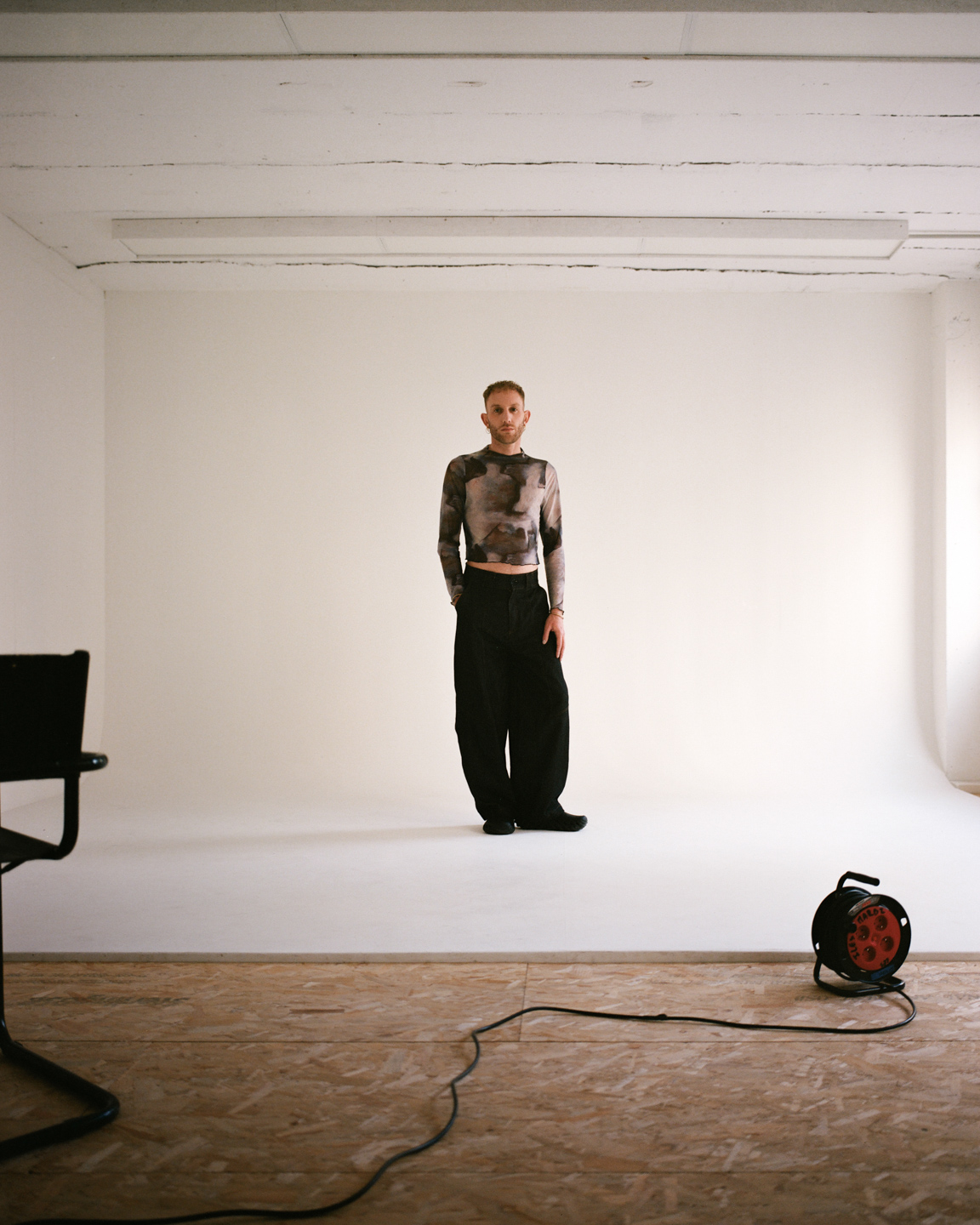
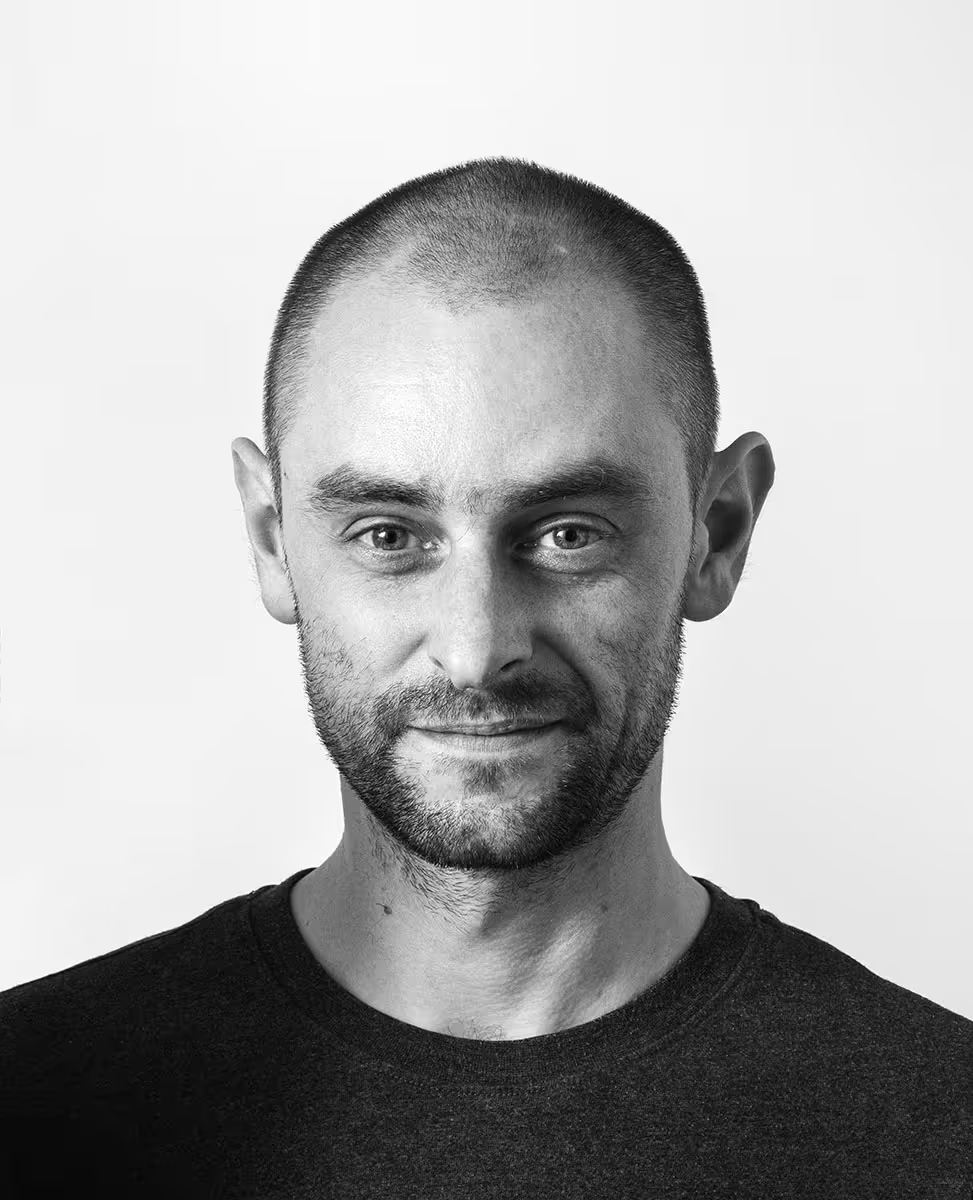
Michal Sita (1985) is a photographer and curator. Graduate of photography at the ITF in Opava and anthropology at the Adam Mickiewicz University in Poznań, where he is concluding doctoral research on social uses of the past in contemporary Poland. Interested in social memory and research strategies of photography. Curator of an interdisciplinary analysis of Wiesław Rakowski’s interwar zoological photographs, curator and producer of a series of exhibitions (including Małgorzata Lebda and Rafał Siderski, Mayumi Suzuki, Jan Kurek, Martin Parr and Rimaldas Vikšraitis, Sputnik Photos, among others), and photobook festivals. Co-author of “Củ Chi Tunnels Restoration Report” (Photographic Publication of the Year 2020 – Łódź, PL), a book relating to the activities of the Polish-Vietnamese architectural heritage conservation mission. Author of “History of Poland” vol. 1 and 2 — publications commenting on anthropological research carried out in Murowana Goślina among volunteers staging a large-scale historical pageant. Author of critical texts on photography. Lecturer at the Magdalena Abakanowicz University of Arts in Poznań.

Olena Morozova is a visual artist from Kyiv, Ukraine. She is interested in themes of spirituality, sexuality, gender identity, stereotypes, psychological and mental disorder, family relationships. "Photography is my passion, lifestyle, philosophy, way of thinking, seeing, understanding the world around me and my inner world, searching for my reflections, feelings and emotions, self-development and movement forward” - she explains. Olena has been engaged in photography since 2015. Her teachers were: Alexander Yakimchuk, Dimitri Bogachuk, Vladimir Seleznev, Viktoria Sorochinski, Sergey Melnichenko and others. Her works were presented in Finnish Museum of Photography (2022), Odesa Photo Days (2021), Photo Kiev Fair (2019, 2020).
UNSTATED is a Zürich–based practice that merges the physical and digital worlds through innovative strategy and design.
We are committed to creating work that adapts to our changing environment.

Yu Shuk Pui Bobby (b. 1994) is a visual artist based between Hong Kong and Oslo. With a collaborative approach to her practice, her work conjures the physical, tangible and affective phenomena associated with biotechnology through combinations of video, text, installation, sculpture, and performance. She often uses speculative fiction to tackle questions of human genetic engineering, reconfiguring perceptions of gender, body and historical discourses of identity. Bobby holds a BA from Hong Kong Baptist University and an MFA from Oslo National Academy of Fine Art. Her works have been in Hong Kong, Norway, Japan, China, Iceland and the USA.

Laure Winants is a researcher and field-based visual artist (BE, FR). Winants set up her artist’s studio in the heart of the Arctic ice pack. Embarked on a four-month polar expedition, she joined a team of multidisciplinary researchers to understand the evolution of this vast territory, where man is only a tiny part of life. Immersed in this white desert, she uses techniques developed specifically to capture the optical and luminous phenomena unique to the region. Using environmental sensors, the interaction of matter itself has become the creator of the work, putting human intervention to one side. Laure Winants makes this data tangible and emotionally perceptible, highlighting the interdependence of ecosystems and creating encounters in more-than-human temporalities. In this way, the artist creates a dialogue between art, the natural sciences, and technology.
Laure has exhibited her work internationally in Berlin (DE), Reykjavik (IS), Brussels (BE), Paris (FR), and soon in Stockholm (SE), Luxembourg (LU), and Osaka (JP). Her work has entered the collection of several foundations, such as the Fondation des Arts du Luxembourg and the Palais de Liège (BE).
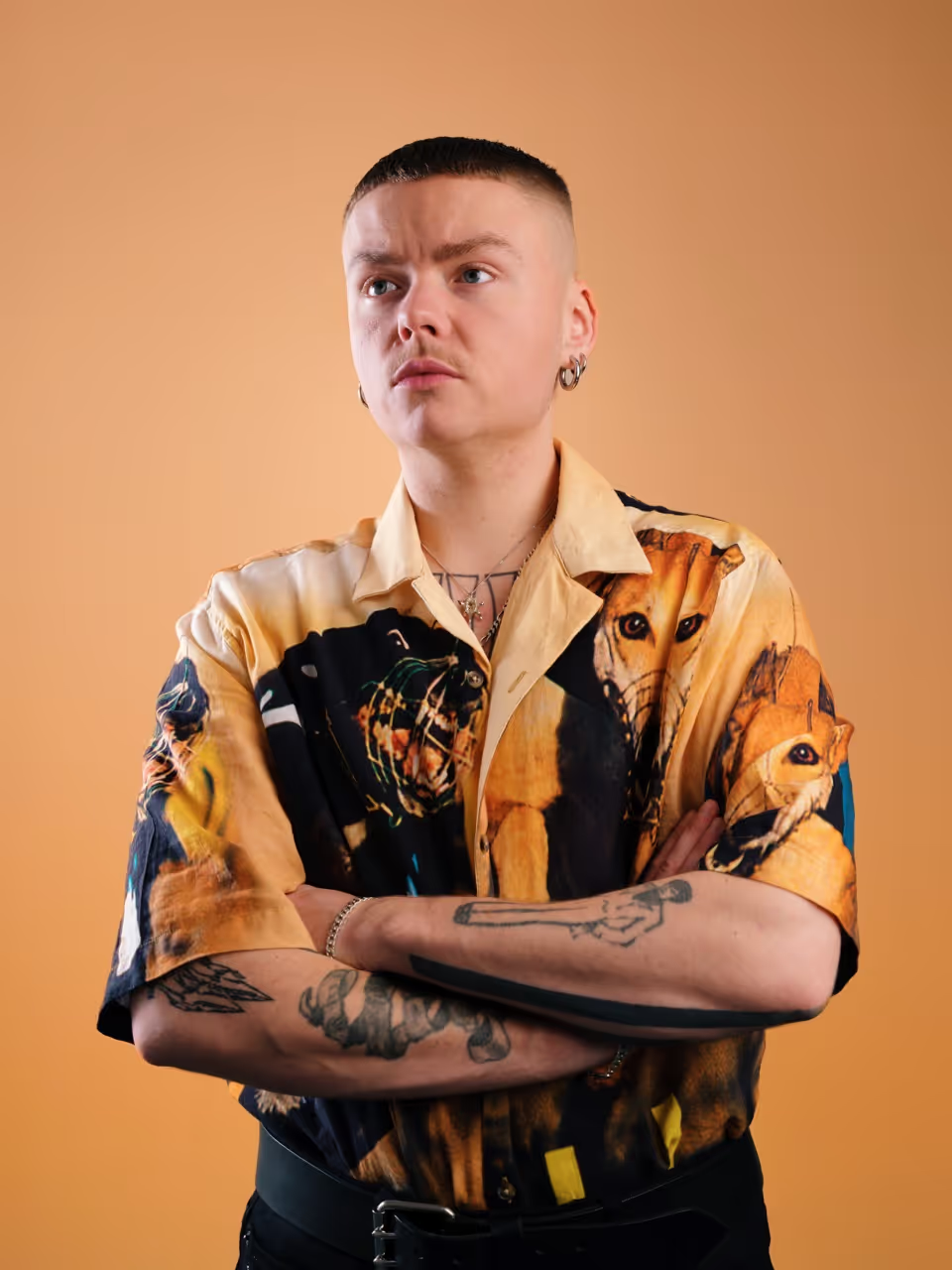
Julius Thissen (1993, the Netherlands) lives and works in Arnhem, NL. Their work investigates themes of community and representation, masculinity, sports, and competition. Originating from their background as a performance artist, Thissen's photographic practice aims to create narratives that explore the fine line between performing and failing. These themes are closely tied to contemporary performance-driven culture and the influence of societal expectations on behavior. Their work is deeply rooted in personal experiences as a genderqueer and transmasculine individual. Thissen strongly opposes the restrictive and often binary narratives imposed on transgender and queer individuals.
Thissen has been nominated for the Hendrik Valk Prize, Arnhemse Nieuwe, and the Warsteiner Blooom Awards. In 2023, they received the Artist Basis Fund and, more recently, a Mondriaan Fund Artist Project Grant for their new project Bones of Graphene, Skin of Kevlar.

Tim Rod is a Swiss artist based in Bern, Switzerland. He studied art education at HKB – Bern University of Applied Sciences (BA, 2018), art history at Bern University (Minor, 2019), photography at Vevey School of Photography (CEPV, ES diploma, 2021) and is currently pursuing a master’s degree in Contemporary Arts Practice at HKB – Bern University of Applied Sciences. His work often explores issues related to exile and habitat, rootlessness and rootedness, as well as memory, identity, belonging and travelling. His own roots and family history are one of the central elements of his practice and his research, alongside collective visual culture. While his practice remains strongly rooted in photography, his works often expand into site-specific multimedia installations. His work has been exhibited since 2018 in Switzerland and internationally since 2021. Recent exhibitions include "L’Été sans fin" (Festival Images, Vevey, 2020), "Genesis" (Hackney Downs Studios, London, 2021), Charta Bookfestival (Rome, 2021), Photobook Award Encontros Da Imagem (Braga, Portugal, 2021), and the European Photobook Month (Hongkong, 2022). He has been nominated or shortlisted to several major Swiss and international awards. His project "Don’t forget the Knifish" was awarded the special mention of the near.prize 2021. The same year, he won the vfg Young Talent Award for Photography with the project "À demain inshallah".

Thana Faroq is a Yemeni photographer and educator based in the Netherlands. She works with photography, texts, sound, and the physicality of the image itself, as a way to respond to the changes that have been shaping and defining her life, and sense of belonging both in Yemen and the Netherlands. Thana's positioning as a photographer is informed by her reflections on her subject matter, tuning in to other people’s lived experiences with which she continually grows familiar. She also increasingly seeks her own story in the frame. Thana was a recipient of the 2018 inaugural Open Society Foundation Fellowship Grant and Exhibition and the 2019 Arab Documentary Fund supported by the Prince Claus Fund and Magnum Foundation and Zenith magazine reporting grant. In 2020, she published her first book, I don't Recognize Me in the Shadows The book was shortlisted for the Lucie Photobook Prize 2021, and it has also been listed as one of the Interesting Artist & Photographic Books for 2021 by the PhotoBook Journal. Thana received her BA in Government and International Relations from Clark University, and an MA in Photography and Society at The Royal Academy of Art, The Hague.

Yu Shuk Pui Bobby (b. 1994) is a visual artist based between Hong Kong and Oslo. With a collaborative approach to her practice, her work conjures the physical, tangible and affective phenomena associated with biotechnology through combinations of video, text, installation, sculpture, and performance. She often uses speculative fiction to tackle questions of human genetic engineering, reconfiguring perceptions of gender, body and historical discourses of identity. Bobby holds a BA from Hong Kong Baptist University and an MFA from Oslo National Academy of Fine Art. Her works have been in Hong Kong, Norway, Japan, China, Iceland and the USA.

Valeria Cherchi (b.1986) is an Italian photographer. She was born and raised in Sardinia, Italy. Her practice focuses on projects regarding social and cultural issues. Her research is driven by the need of exploring topics such as time, memories and history connected to her personal experience. She is interested in true and tangible character-driven stories, often told by combining photography and text. In 2018, Valeria was one the named in ‘British Journal of Photography’s Ones to Watch.

Mirielle Rohr (b. Berlin) is a visual artist and photographer based between Paris and Berlin. She graduated from ECAL’s Master in Photography (Lausanne) in 2025. Through analogue photography, ceramics, sculpture, and AI-generated imagery, she examines the aesthetics and emotional economies of digital culture, how bodies, desire, and identity are mediated, performed, and consumed. Her works often combines tactile processes with synthetic image-making to produce psychologically charged narratives.
Her work has been published in the British Journal of Photography, Der Greif, Schema Magazine, SLEEK, and Fisheye Magazine, among many more. She was a finalist for the Picto Fashion Photography Award (2024) and presented her work at Paris Photo (Carte Blanche Étudiante, 2025) last year. In March 2026 she will exhibit at PhotoVogue Festival, is shortlisted for Un/Fund & Residency.