Artist
Francisco Menezes
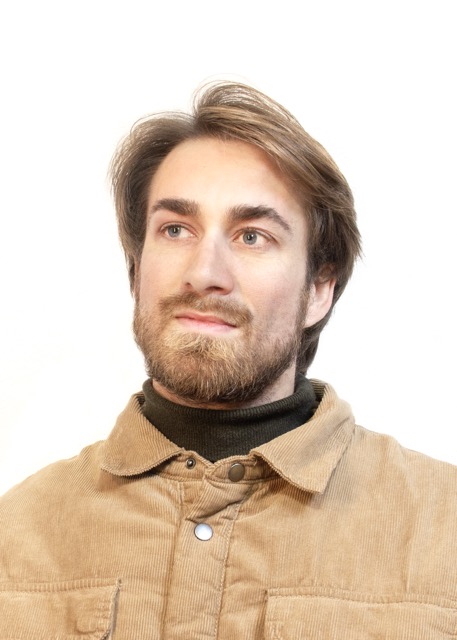
Francisco Menezes (b. 1993) is a multidisciplinary artist based in Lisbon, Portugal. He studied photography at Ar.Co, completed his studies at the Faculty of Fine Arts of Lisbon and attended the Maumaus Independent Study Programme. Comprising installation and photography, Menezes’ practice interrogates objecthood alongside the original notion of the ‘absolute’ — from ab (off) + solver (to loosen) — or as philosopher Hent De Vries puts it, ‘that which tends to loosen its ties to existing contexts’. This serves as an entrance point to poke at our current systems of emplacement of the Capitalocene age. It’s the detours around this very emplacement occurring between the delocalized and the hyperlocalized that constitute his body of work. Selected exhibitions in the past include the ‘Paula Rego Prize’ at CHPR (2017, 2018), ‘Lovers’ and ‘Our Slice of Time’ at Zaratan (2022), ‘Paródia Cega’ (2024) at Museu Bordalo Pinheiro, ‘Poetics of Approximation’ at Budapest Galéria (2025), among others. In 2025, Menezes was awarded the Lisbon City Council Grant for an artistic exchange in Budapest. He is currently part of the applied research group ‘Organismo’ from Museo Thyssen-Bornemisza/TBA21.
A Claim for All Emplacements
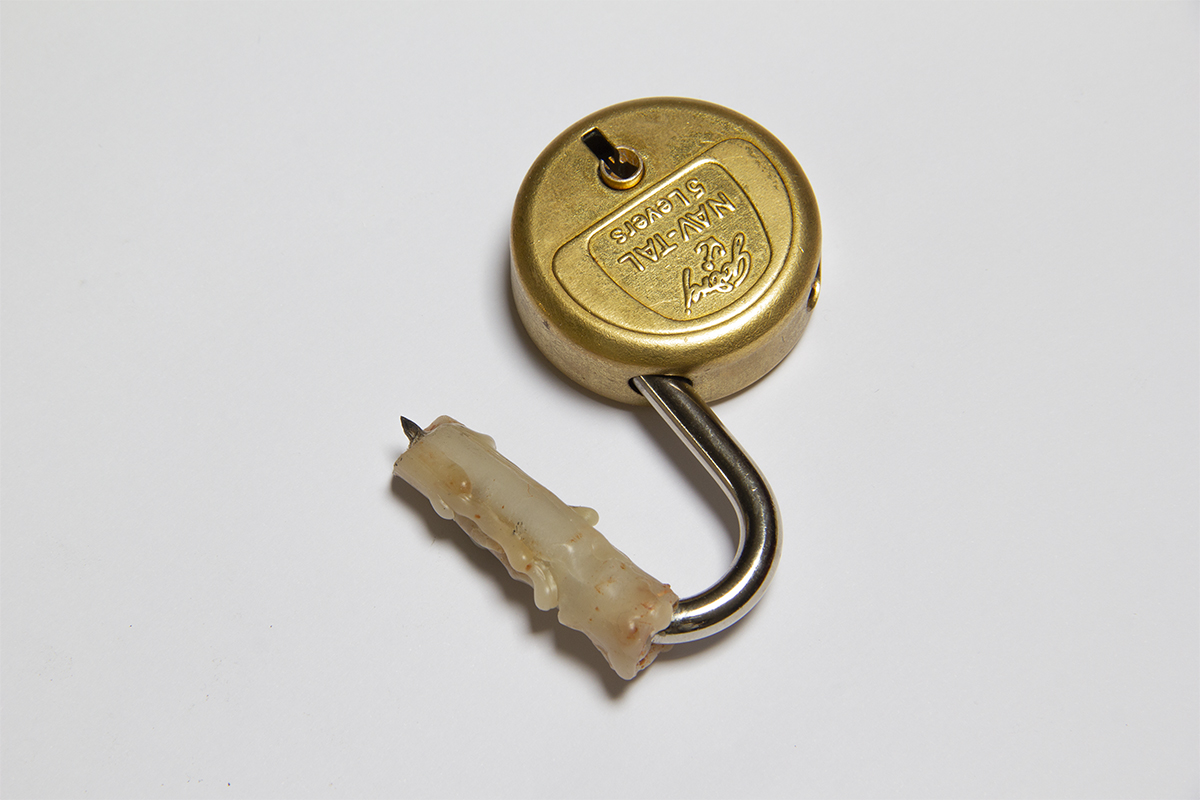
‘A Claim for All Emplacements’ is a long-running investigation that sits at the juncture between photography and objecthood. This project is informed by the portrayal that Baudrillard makes of things, namely that everything that cannot be invested in human relations is invested in objects. Rewriting a history of thingness from the point of view of objects as agents and actants might lead to an understanding of the shift from technical objects to transformative ones. At the same time, accepting that the camera only captures surface and not space also means arriving at an impasse. The mismatch in question then takes place between the infrastructure, the material conditions, and the superstructure, the domain of representation. Through existing or made-up artifacts and repurposed relations, we see here objects acting out this minimal difference. Still, at the heart of this project one question remains: to what extent will objects go to assess their own determination in a time so prone to accumulation and accommodation like our current Capitalocene era?
Coming from distinct cultural backgrounds and artistic trajectories, the selected artists develop independent practices within the expanded field of photography and moving image. Their work engages critically with contemporary conditions shaped by visibility, displacement, materiality and power, addressing social, political and affective dimensions of the present. Through diverse methodologies, including documentary and archival strategies, performative gestures and image appropriation, these practices question how reality is constructed, mediated and inhabited, forming a constellation that foregrounds ethical positions of looking and reflects on the role of images in shaping our relationship with the contemporary world.
Eunice Pais develops a practice that brings together photography, video, sound and material processes as forms of listening and relation, operating in contexts where ecology, memory and labour intersect. Working across liminal spaces between archive and lived experience, her work resists closed narratives and extractive modes of representation, proposing an ethics of care through gestures of containment, opacity and material transformation.
Francisco Menezes works across photography, installation and sculpture to question the role of objects in the material and symbolic organization of the contemporary world. Situated between representation and presence, his practice exposes mechanisms of accumulation and fixation, using minimal formal operations to reveal the invisible infrastructures that shape everyday life.
Guillermo Vidal develops a photographic practice rooted in experiences of social invisibility, working in close relation with contexts marked by precarity and structural absence. Rejecting both spectacle and distance, his images operate at the threshold of visibility, proposing a sustained ethics of looking grounded in proximity, presence and continuity.
Jungeun Lee explores experiences of displacement, care and unstable belonging, using photography in dialogue with performance and gesture. Her work brings together intimate and structural dimensions, family, domestic labour, migration and cultural inheritance, to trace processes of transformation and silent resistance, where the body becomes a site of memory and care.
Maria Peixoto Martins interrogates surveillance as a defining condition of contemporary life, working with appropriated and degraded images captured in contexts of control. Through irony and discomfort, her practice exposes the normalization of the vigilant gaze and places the viewer in an ambivalent position, revealing systems in which continuous exposure has become the norm.
Members of the jury:
Jayne Dyer - co-artistic director of the Bienal Fotografia do Porto
Virgílio Ferreira - founder and art director of the Photography Platform Ci.CLO and of the Bienal Fotografia do Porto
Vera Carmo - independent curator, lecturer and researcher