The FUTURES
Residency Program
The FUTURES Residency Program provides emerging artists with time, space, and resources to develop new work, emphasizing artistic process and research, while offering opportunities to push the boundaries of their practice and engage with contemporary themes.

residency theme
how it works
program
At the beginning of 2025, FUTURES introduced a Research Residency Program across three locations: FUTURES Hub in Amsterdam, Capa Center in Budapest, and ISSP in Riga. Selected from a pool of nominated FUTURES artists, participants are chosen by a diverse panel of experts. Open to all artists nominated in previous years, the program aims to foster production, exchange, and meaningful artistic growth. Applicants are evaluated based on their artistic practice and the quality and relevance of a residency project developed specifically for their time with FUTURES.
- Professional Mentorship: Residents receive tailored mentorship from experts relevant to their project, offering guidance and support throughout the residency.
- Public Engagement and International Exposure: Each residency concludes with a public event, and the artist's work is promoted through communication channels of FUTURES.
- Fair and Inclusive Working Environment: The residency ensures fair pay, safe working conditions, and a commitment to inclusivity.
- Access to the FUTURES local network and introduction to Amsterdam art and contemporary culture scene.
from the residents
- Residents are encouraged to maintain a Visual Diary, posting weekly updates about their creative process on FUTURES’ social platforms. This offers an inside look at the artist’s journey.
- A Video Portrait is created during the residency, offering a personal insight into the artist and their practice. This video is shared through FUTURES’ platforms, extending its reach.
- A public-facing event, such as an open studio, workshop, exhibition or artist talk, is an essential component. This event offers residents a chance to share their work and process with the local community. This will also be live-streamed, allowing international audiences to engage with the residency's work.
- Interview with a local writer about the artist's creative process during their residency. This written interview will be featured on the FUTURES website, offering further insight into their work and artistic journey.
residency locations
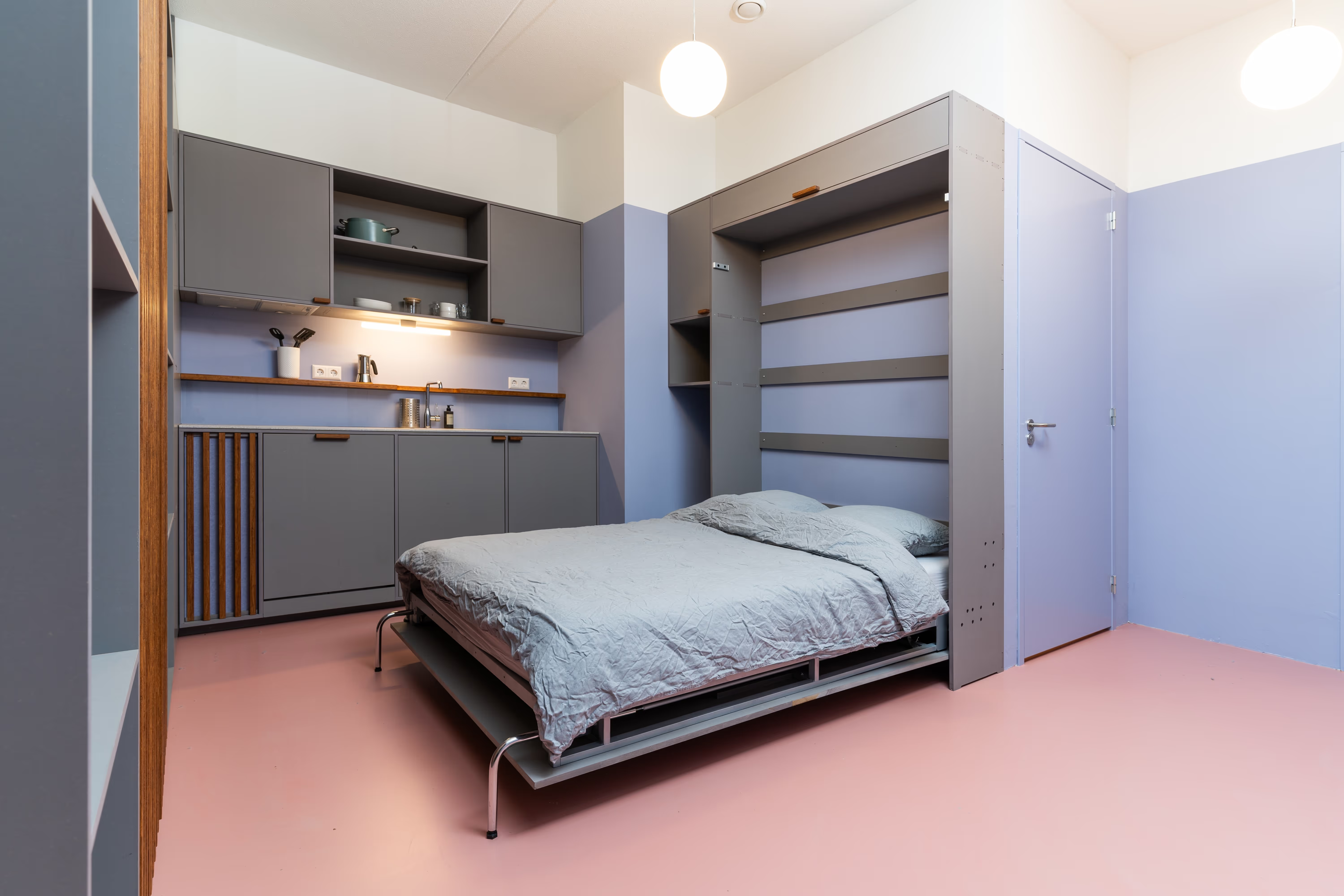
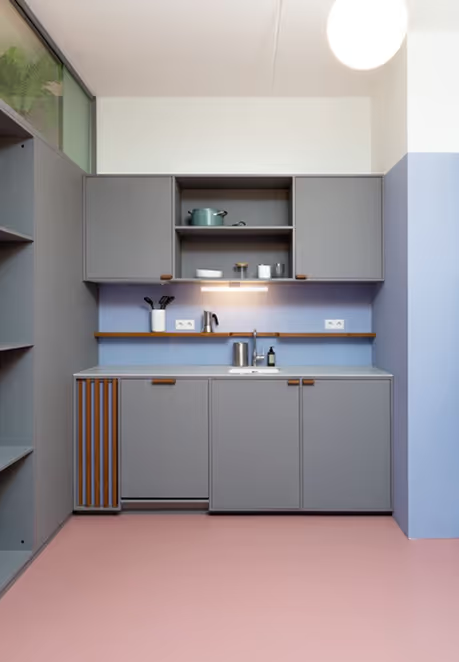
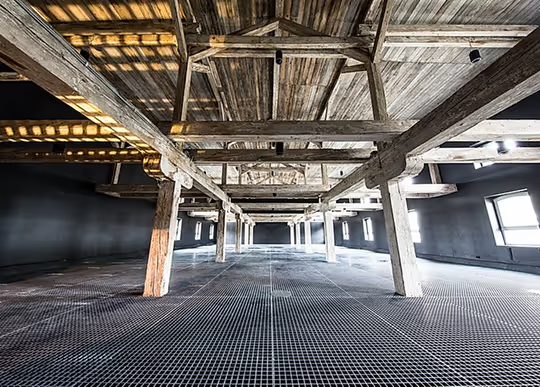
Futures Hub, Amsterdam: In 2023, FUTURES launched its first residency program at the FUTURES Hub, a vibrant space in Amsterdam that serves as the platform’s global headquarters and flexible exhibition venue. Situated on a former industrial site, the Hub offers a fully equipped live-work environment, including an atelier, furnished apartment, and event space. It welcomes artists from diverse regions and cultural backgrounds for both short- and long-term stays.
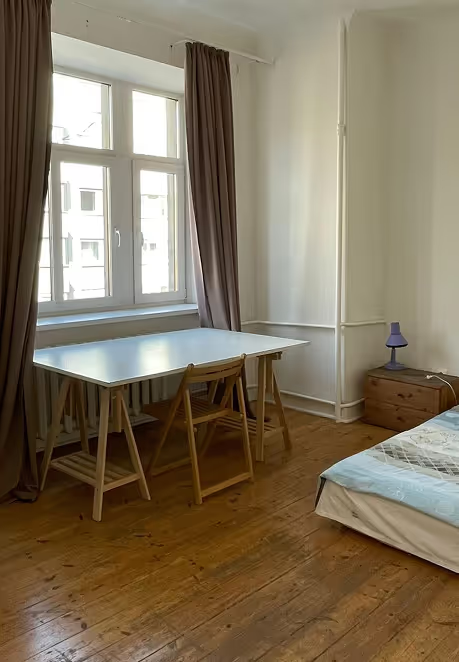
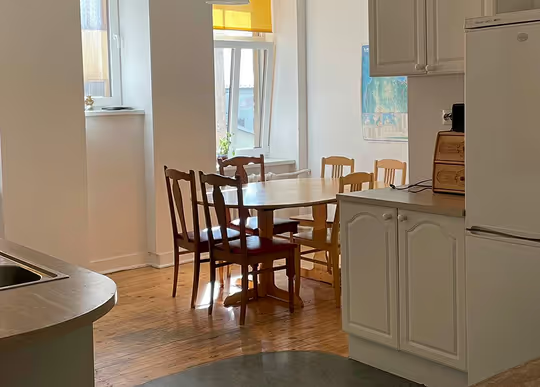
ISSP, Riga: The resident will be housed at the ISSP Riga Residency apartment in the city centre, shared with other two artists. The accommodation offers comfortable conditions for living and working - a separate bedroom with a working space, spacious shared living room and a fully equipped kitchen. The resident will have access to ISSP office facilities including use of printer, scanner, ISSP photography library and studio lights.
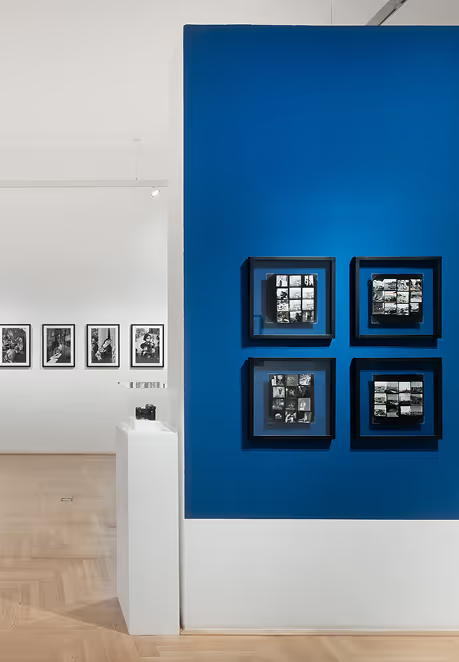
Capa Center, Budapest: The Capa Center residency program offers all entering participants a fully furnished private room within a communal apartment located on the Art Quarter Budapest premises, a studio space catering to the project’s requirements within its 400 m2 shared studio in the coolest postindustrial area of Budapest. Capa Center provides varied services to integrate the residents into the local art scene and contribute in establishing professional connections that best support their work and career. In addition, the residency will offer the possibility to organise a presentation at the Capa Centre in downtown Budapest, and use the Capa Centre's office facilities, including the printer and scanner.
Residency Archive
Allyssa Heuze (b. 1994) is a graduate of the École de l’image des Gobelins. She has exhibited as part of the festival Circulation(s) her series OÏ at the gallery Madé (2018) and she took part in the group exhibition CO-OP at the fair Unseen Amterdam (2017).
Browsing through Allyssa Heuze’s photographs is, one rapidly remarks, like taking one path and unexpectedly finding oneself on another. A slide leads us to a pair of buttocks encircled by a hoop, a baseball player hits a home run which leads us to two small breasts drawn by the shadowed outline of two plump apples, and even to those gazed upon by another young man, his head submerged beneath a t-shirt. References to play punctuate Allyssa Heuze’s labyrinthine journey between her images: ball games, gymnastics, role play. This photographer’s preferred terrain is the studio, where she seems to take pleasure in constructing her dramas and her absurd scenarios. Herein this white cube willingly yields, where one may make believe that the real, the duration of the photographic shot, has no hold. She invites her friends within, a banana and doughnuts, an erupting volcano, and an aeroplane vulva in an inventory that is all the more burlesque as it is presented through a precise, almost clinical, photographic vocabulary. A balanced light, controlled reflections, a careful composition: together they hold all of the attributes of a style with a perfect appearance that this photographer – who certainly knows all of its rules – takes pleasure in making slip.
Nominated for Futures by FOMU, Thomas Nolf (1986) was born in Kortrijk, Belgium. He is currently based in Brussels.
The work of Thomas Nolf examines the ways in which national myths are formed, instrumentalised and frequently suppressed. Confounding fiction and documentary, fabled event and scientific enigma, his work looks into how nation-building ideology influences modes of storytelling, and vice versa. Nolf handles his subjects with a close appreciation of narrative and its ambiguous relationship with veracity and considers the ways in which heritage and eroded beliefs can be re-established and repurposed.
For his long-term project Peculiar Artefacts in Bosnia and Herzegovina - an imaginary exhibition, for example, Nolf’s point of departure was the so-called “Bosnian pyramids” and other disputed historical sites and artefacts, including stone spheres and medieval monuments. Juxtaposing his own documentary work with kitschy acrylic paintings of dream-like, bucolic landscapes and an assortment of found photographic footage —including shots of a triangular mountain looming over a scenic village and a shepherd carrying a sheep on his back — Nolf keeps adding elements to our already confused reading of the phenomenon, its emergence and reception. By doing so, he revives the public controversy over the existence of an ancient civilisation in the region.
Drawing on the mythological dimension of the triangle-shaped hills, Nolf proposed an exhibition that would exploit the stories and objects surrounding the “Bosnian pyramids” to the National Museum of Bosnia and Herzegovina, which, in 2012, had temporarily closed its doors due to a lack of state funds. If myths and legends have proven to be valuable assets in branding a particular place as a unique tourist experience, its effectiveness in generating local informal economies might as well be explored.
Even if Nolf’s project-based practice is driven by a pragmatic desire to formulate alternatives to the status quo, he poetically engages with particular sites and times, carefully tending to a range of subjects — from the promise of a desirable ancient past to the current funding realities devastating cultural institutions in post-war Bosnia-Herzegovina — while, at the same time commenting on photography's rhetorical qualities and its — at times deceptive — relationship to representation and truth-telling.
Text by Laura Herman
Ioanna Sakellaraki (b.1989) is a Greek visual artist and researcher. Her work investigates the relationship between collective cultural memory and fiction. Drawing emphasis on the photographic object, process and encounter, she explores the boundaries of a primitive, yet futuristic vision of places and people. She was recently awarded a Doctoral Scholarship for undertaking her PhD in Art after graduating from an MA Photography from the Royal College of Art. She is the recipient of The Royal Photographic Society Bursary Award 2018 and was named Student Photographer of the Year by Sony World Photography Awards 2020. In 2019, she was awarded with the Reminders Photography Stronghold Grant in Tokyo and the International Photography Grant Creative Prize. Nominations include: the Inge Morath Award by Magnum Foundation in USA, the Prix HSBC, the Prix Levallois and the Prix Voies Off in France. Her work has been exhibited internationally in art festivals and galleries with a recent solo show at the European Month of Photography in Berlin. Her projects have been featured in magazines such as The New Yorker and journals including The Guardian and Deutsche Welle. Her first monograph ‘The Truth is in the Soil’ is published by GOST Books.
Yu Shuk Pui Bobby (b. 1994) is a visual artist based between Hong Kong and Oslo. With a collaborative approach to her practice, her work conjures the physical, tangible and affective phenomena associated with biotechnology through combinations of video, text, installation, sculpture, and performance. She often uses speculative fiction to tackle questions of human genetic engineering, reconfiguring perceptions of gender, body and historical discourses of identity. Bobby holds a BA from Hong Kong Baptist University and an MFA from Oslo National Academy of Fine Art. Her works have been in Hong Kong, Norway, Japan, China, Iceland and the USA.
Léonie Pondevie's photographic form is composite, arranged by the aggregation of clues: contemporary shots, collected archive images and shared personal documents sit side by side on the wall like evidence of an ongoing investigation into complex and evolving realities. In Un point bleu pâle, Léonie Pondevie contemplates the sky and observes the weather. In the same way that her father would obsessively record rainfall levels and temperatures in small notebooks, she assembles particle images, waiting to be analysed. She subjects these images to a kind of poetic decantation: her father's notebooks and his measurements from another age, archive images of the village where he was born, press cuttings from the 1970s, the clouds in front of us at sea, a hand caressing an antediluvian granite and raindrops on the hood of a relative. The stratospheric and the extremely close, immensity and intimacy, impassive geological time and climatic urgency, it's all there, under the same sky. Placing her observation post at the heart of her family history, Léonie Pondevie eludes the Manichean demonstration: the photographic project, though wide-ranging, does not claim to elucidate anything, but sets itself up as a humble hypothesis. What Un point bleu pâle portrays is the act of human experience; not the thing, the climate, but the ways in which we take it into consideration, from the observer who guesses at its insignificance and modestly records the life of the clouds in little notebooks to the way they are boxed up by geo-engineers, neo-demiurges. From these decanted images, the reflection of a distant land, with which we have lost contact, rises. The simultaneous and paradoxical measure of our insignificance and ourpower to cause harm.
Léonie Pondevie (1996) graduated from the École européenne supérieure d'art de Bretagne in Lorient in 2020. She is a member of the Collectif Nouveau Document and is based in Lorient.
Trained as a speech therapist and a self-taught photographer, Aurélie Scouarnec (1990) has recently exhibited her series Anaon as part of Itinéraires des photographes voyageurs, Espace Saint-Rémi, Bordeaux (2018), at the Rencontres photographiques du Xe arrondissement de Paris (2017), and the Nuits photographiques de Pierrevert (2017).
Aurélie Scouarnec created her series, Anaon, in the monts d’Arrée, in the Finistère region of Brittany. It is a delicate exploration on what she calls “the margins of the visible” in this legendary land. Inspired by the texts of Anatole Le Braz and François-Marie Luzel, she undertook a photographic investigation, in search of the rites and ancient tales amongst this rocky mountain range. Gateway to hell, according to some beliefs, here she crosses the phantom presence of several animals, called psychopomps, in charge of escorting souls in the kingdom of the dead. In other places, she plays with the syncretism particular to this hilly land and combines in a single stroke veiled female silhouettes – immediately associated with Christianity – and monumental woodland silhouettes, places of pagan worship. The abyssal green of moss and the deep black of the night are at times awoken by the cry of the moon and the animals perhaps surprised by the movement of these heavy fabrics. Stories read, heard, relics of ancient rites and forms of contemporary druidism, all are invited here to take their place in this phantasmagoric narrative which Aurélie Scouarnec constructs, photograph after photograph.
Fred Mungo (b. 1994) is an Italian photographer and visual artist, currently based between London and Bologna. Born in Rieti, she first moved to London in 2013 to study. Mungo holds a BA in Fashion Photography from London College of Fashion (University of the Arts of London), and an MA in Photography and Urban Cultures from Goldsmiths University. Her artistic research sits within the framework of visual sociology.
Lesia Vasylchenko (b. 1990 Ukraine, based in Oslo, Norway) is an artist and curator. Her work with installations, moving images and photography raises questions around temporality, history and memorialising. Vasylchenko is a co-curator of the artist-run gallery space Podium and a founder of STRUKTURA. Time, a cross-disciplinary initiative for research and practice within the framework of visual arts, media archaeology, literature, and philosophy. She holds a degree in Journalism from the Taras Shevchenko National University of Kyiv and Fine Arts from Oslo National Academy of the Arts. Her works have been shown among others at Louvre Museum, Paris; Haus der Kulturen der Welt, Berlin; Haugar Art Museum, Tønsberg; Tenthaus Gallery, Oslo; The Wrong New Digital Art Biennale.
Kata Geibl (1989, Budapest) is a photographer living and working in The Hague. Her work is mainly focused on global issues, capitalism, the Anthropocene, and the ambiguities of the photographic medium.
She is currently working on her new series titled There is Nothing New Under the Sun. The series deals with the rampant individualism that underpins our contemporary social, political, and economic system, and in particular, the environmental impact that it has. By juxtaposing the melting glaciers of Dachstein, animals under human control, almost Greek god-like athletes a narrative of our new age unfolds through the images.
Her previous work entitled Sisyphus received international attention, was exhibited at UNSEEN Amsterdam which was followed by her first solo show in Budapest. She received the emerging talent Paris Photo Carte Blanche Award for the series and in the same year she was nominated for Palm* Photo Prize.
In 2019, she received the József Pécsi Photography Scholarship and was a talent for Futures Platform nominated by Capa Center Budapest.
In 2020 she is a Grand Prix Finalist at Fotofestiwal Lodz, won the PHmuseum Vogue Italia Prize and is shortlisted for Palm* Photo Prize.
More: www.katageibl.com
Angelina Vernetti (* 1993 in Lüneburg, DE) lives and works as a freelance photographer in Berlin. Her focus is on portraiture, fashion and art. She works e.g. in editorial for magazines like Der SPIEGEL and GEO Magazine, photographs commissioned art for architectural firms or teaches fashion photography at the Burg Giebichenstein Kunsthochschule Halle. For documentary long term projects Angelina researches and photographs socially relevant but underrepresented topics.
For example, her works tell of the socio-cultural effects of the birth control pill (SMILE EFFEKT, 2020) and of beauty ideals and their consequences (EVERY BODY, 2022). In 2020 she graduated with a bachelor's degree in documentary photography at the University of Applied Sciences and Arts Hannover.
Nominated for Futures by FOMU, Maria Baoli (b. 1984) is a Spanish artist, who lives and works in Brussels, Belgium.
In Maria Baoli’s series, linearity is constantly broken up. The stories she tells are diffracted; space and time overlap; images are shot through with cracks and scratches like broken mirrors. Although it is clear that the photographer is attached to human situations, to stories and environments charged with life and memories, these devices make us focus on the stylistic elements of the images and stimulate an open and complex interpretation of them. This is particularly true for one of her most recent projects, Chez moi loin de chez moi [At Home Far Away From Home], which explores the Maison Africaine in Brussels, a community home for students.
Maria Baoli’s images are balanced between the depth of their intention (archive, memory, time, love, dreams, etc.) and the surface. This plays a primordial role and in so doing forms a highly personal (and unique) response from the artist to the contemporary use of the snapshot.
Through an uninhibited use of flash, which flattens shadows and adds drama to the composition even in the most mundane and stripped-down environments; through her preference for the close-up or dense landscapes that block the horizon; through the frontality of her perspective; through her use of collage, which disrupts the documentary by introducing a fascinating graphic dimension, Maria Baoli relies on the figures of discontinuity that she turns into loyal servants of reality.
Text by Anne-Françoise Lesuisse
We are the Brave Boy Studio, independent film production company founded in 2019 by Jan Kazimierz Barnas and Wojciech Kamerys in Lodz, Poland. We provide comprehensive film production, from the script to post-production. We have worked with artists and labels from France, Czech Republic, Israel, Bosnia, Kazakhstan, Estonia and Russia, among others. We also produce our own films. What we care about above all are valuable productions. Film is our whole life.
Jan Kazimierz Barnaś – born in Sandomierz on September 12, 1991; currently permanently connected with Lodz. Student at the Faculty of Visual Arts of the Academy of Fine Arts in lodz in the specialty of Photography and Multimedia. In his works, he often takes up the subject of the destruction of the image, his main interest is film and video art. As the FILMMAKER on his account, he has several etudes, video-arts, animations, music videos and feature films.
Wojciech Kamerys – born in 1994, student of the faculty of Photography and Multimedia Communication at the Academy of Fine Arts in lodz. Practice based on photography, combined with other media. Participant of several exhibition in Lodz, Gdynia and Bydgoszcz. Cooperation with Academy of Music in Lodz, and The National Film, Television and Theatre School of Lodz and MS1 in Lodz. Theme of works based in relation between human and architecture, funcion of light and shadow in a classic silver photography.
Ines Karčáková (*1993) is multimedia artist from Slovakia, based in Prague, Czech Republic. Her interest is in topics such as light, time, space, and disturbance of their mutual interrelationships.
She reflects on the qualities of the medium of photography through video installations in the space, which are often covered by appropriated visual material, in the long term. She is primarily interested in the changing specificity of photography - its original uniqueness is rapidly changing and today we can speak of it in terms of instability, ambiguity and untrustworthiness.
Recently, she has primarily focused on research in astrophotography, among on cosmic microwave background, or on the boundary between the rough telescope record and the aestheticized photography serving to popularize astronomy itself. Now, she is forming an arc over the schematic and romanticized visions of cosmic distances, coming back to much more terrestrial problems. Her current themes are the misbalance between the pace of technological development and its actual understanding, or the consequences of long-term neglect of environmental problems. She had several exhibitions in Slovakia, Czech Republic, but also abroad - for example in Budapest, New York or Düsseldorf.
Julie Glassberg was born and raised in Paris, France. After studying graphic design for four years, she decided to make her passion for photography become her life and moved to NY. Her interests are primarily based on the diversity of world cultures, subcultures, underground scenes as well as the misfits of society. Photography is like a passport to enter worlds that she would never be able to see otherwise.
She regularly collaborates with The New York Times, and from late 2011 to 2015, the Metropolitan section of the paper assigns her, with staff reporter Corey Kilgannon, to photograph the portraits of the weekly column Character Study.
After spending close to 7 years in New York City, she lived in Tokyo, Japan for a year, where she met local artists and experimented more with photography and collaborations. She recently completed a 6 months residency program in Shanghai at the Swatch Art Peace Hotel and lives in Paris at the moment.
Her work has appeared in publications such as The New York Times, The New York Times Magazine, Le Monde, The International NYT, El País Semanal, ESPN mag, Neon mag, Stern View, L'Equipe mag, Polka, among others.
She has been awarded a Lucie Scholarship Emerging Grant, a Getty Images Grant for Editorial Photography, a POYi Award of Excellence, an Art Directors Club Young Gun award, an IPA award and her first book was recently shortlisted by Paris Photo / Aperture.
If Hélène Bellenger's work could be associated with a single tool, it would not be a camera, but one of those fine, precise instruments of the forensic scientist, so diligent is the artist in dissecting the workings of an imagery of perfect beauty and its artificial paradises. Preferring the act of collecting and transforming to that of shooting, she approaches images that are inert and out of use. For the Dazzled project, she collected a series of faces on the internet that had been obliterated by a flash of light - the now famous form of the selfie with the flash in the mirror - forming a kind of digital sun that contaminates the image and prevents the portrait. Another collection is that of advertisements for anxiolytics and antidepressants taken from specialist magazines, which she assembles into a frieze to display the litany of tense faces and slogans in the form of injunctions to happiness. Earlier, in Right color, she diverted a collection of magazines, posters and photograms from reels of films featuring actresses from the 1920s to the 1950s, reviving the make-up that was applied to them to reconstruct their faces and modify their plasticity for the black-and-white screen of the time. With her recent Bianco ordinario, her torsos of Apollo and busts of Venus, she continues her archaeology of the canons of beauty. Through a play of superimposed forms and supports, she links the geological time of the Carrara marble quarries, its extraction in Antiquity for sculpture, and today's massive extraction of marble powder to whiten the packaging of our cosmetics and cleaning products. The ensemble consists of a collection of unfolded packaging cartons on which the artist prints images of antique busts and quarry landscapes. In turn, the images themselves will be extracted from their support by the acidity of the marble powder contained in the cardboard, washing them ‘whiter than white’. The history and fortunes of the Western concept of whiteness are at the heart of the work the artist is currently developing in the Mediterranean basin.Hélène Bellenger (1989) lives and works between Marseille and Paris. After studying law and art history, she specialised in photography and graduated from the École Nationale Supérieure de la Photographie d'Arles in 2016. Bianco Ordinario was supported by Aide à la Création 2021 from the Drac PACA and produced at the Centre Photographique Ile-de-France as part of the 2022-2023 research and post-production residency.The artist would like to thank Isabelle Carta, Roland Carta, Centre Photographique d'Ile-de-France, Nathalie Giraudeau, galerie Marguerite Milin and Francesco Bi
Dorottya Vékony is an interdisciplinary artist living and working in Budapest, Hungary. Her main field of interest keeps revisiting the theme of the body, whether it is our own or others’, or a collective body consciousness. The body images appearing in her works are primary reflections of our relation to the world, the environment and ourselves, forming a map that carries our history, the traces of our age and our personal stories.
Her aim is to make the spectator observe and to be observed at the same time. While we watch others, we are being watched too. The desire of observing one another, of having insight into the lives of others posits a system of norms based on which we define ourselves compared to others. We want to confirm that we have similar problems as others, that we are better than or just as good as they are. In other words, that we only deviate from the average on an average scale.
Her works explore how we can describe our body in the most objective manner possible, to represent it without any intimacy whatsoever. Looking at these so-called anti-intimate states, the works examine all the subtle and complex relationships our physical extension forms with our environment, and how social expectations shape our appearance. Personal stories and critical observations regarding the body are represented along with abstract objects and intertwined sculptural bodies. Her fundamental medium is photography that she often combines with other disciplines, such as objects, photobooks or video.
Lea Greub was born on January 7, 1998 in Düsseldorf, lives in Berlin and works across Europe. As a photojournalist she deals with socio-cultural issues, discriminated minorities and European politics. The principle of her work is to meet people at eye level and to portray them with dignity. In doing so, she is guided by humanistic values. In recent years, she has traveled abroad a lot to work on photo reportages and multimedia projects. Her work has already been published in renowned media such as ZEIT ONLINE, SZ-Magazin, Fluter, Stern and Monopol.
Inês Quente (1992, Avintes, Portugal) is a visual artist who lives and works between Vila Nova de Gaia and Porto.
She has a master's degree in Documentary Filmmaking from the University for the Creative Arts (UK, 2017) and a degree in Fine Arts from the Faculty of Fine Arts of the University of Porto (PT, 2015).
She was a grantee of the Culture Moves Europe (2024), a program funded by the European Union and the Goethe Institut.
Her practice navigates themes of ecology, memory and transformation.
She showcases her work regularly since 2013, both nationally and internationally, such as her latest individual site-specific installation For Every Light Its Place, at Gallerí Úthverfa, in the city of Ísafjörður (ISK, 2024).
She took part in the ArtsIceland international artistic residency (ISK, 2023 and 2024) and Grão research and artistic residency (PT, 2023).
Pleun Gremmen (NL, 1992) is an artist and designer researching ways to create narratives through a variety of media reflecting mainly on internet subculture and politics while pushing the boundaries of her practice.
She graduated in 2018 from the Piet Zwart Institute in Rotterdam (Master Media Design, Experimental Publishing), and in 2014 from ArtEZ Institute of the Arts in Arnhem (Bachelor Graphic Design). Since graduating in Arnhem she has been freelancing as an artist, designer and researcher and has been connecting and collaborating with artists and institutions in Rotterdam.
The work “Alt Reality Lexicon” (2018) explores the language neologisms of the Alt-right and Manosphere subcultures, acting as a translator between realms of reality. The performance installation “R.E.S.T”(2017) explores contemporary physical and digital expressions of escapism in a politically turbulent time.
Laura Fiorio is an artist working with photography, performance and relational practices. Her projects interact with archival objects, questioning the power dynamics embedded in the editing process of creating memories, their political use and their critical and transformative potential. In her practice, she facilitates collaborative narratives by addressing the entanglement between intimate and institutional histories and fosters discussion on heritage. She holds a BA in Performing Visual Arts (Venice), an MA in Art and Social Work (Berlin) and a Postgraduate Degree in Decolonizing Architecture (Stockholm). Her work was internationally exhibited and produced independently or in collaboration with institutions, including Biennale, Sale Docks (Venice/IT), CeCuT (Tijuana/MX), Shanti Road (Bangalore/IN), Festival International de Fotografia (Valparaiso/CL), ECCHR and House of the Cultures of the World (Berlin/DE). Furthermore, she has been working on social projects in prisons, refugee shelters and with homeless people in Mexico, Italy and Germany.
Nina Hansch is a photographer who works in classical photojournalism. Her documentary works are characterized by their nuances and a cinematic quality in her visual language. At the same time, she succeeds in emphasizing the socio-political relevance of her stories and in exploring their visual complexity.
"I am always curious about the facets and details of life and humanity. And often ask myself questions like: What are the decisions and circumstances that consequently made us who we are today?", explains the artist.
Mous Lamrabat is a photographer, born in the north of Morocco. As a young child, his family moved to Belgium where he grew up.
After finishing his studies as an interior architect, he was eager to learn to work the camera. In an auto-didactic way, he developed his own unique vision on fashion photography and later on managed to fuse his moroccan roots, tradition and culture with the western world he grew up with. The last years his Moroccan DNA is flowing more and more through his veins and his works. The urge to show this rich moroccan heritage through an artistic eye is present in everything he portraits and the inspiration he gets from his motherland is endless.

Yu Shuk Pui Bobby (b. 1994) is a visual artist based between Hong Kong and Oslo. With a collaborative approach to her practice, her work conjures the physical, tangible and affective phenomena associated with biotechnology through combinations of video, text, installation, sculpture, and performance. She often uses speculative fiction to tackle questions of human genetic engineering, reconfiguring perceptions of gender, body and historical discourses of identity. Bobby holds a BA from Hong Kong Baptist University and an MFA from Oslo National Academy of Fine Art. Her works have been in Hong Kong, Norway, Japan, China, Iceland and the USA.
from the
residency

Ugo Woatzi was born in France, in 1991. Nominated for Futures by FOMU, he lives and works in Brussels and in Johannesburg.
Ugo Woatzi’s photographs reference real and imagined spaces caught between the worlds of freedom and constraint. He reveals and yet conceals, as a chameleon changes colour to blend in and survive. Ugo’s collaborative process is a reflection of the desires and struggles of his community. Together they create a more sensitive and accepting world, one that both escapes from and confronts the harsh realities of divisive heteronormative structures. The images, tender yet defiant, transmute feelings of love and of conflict, a relatable and universal sense of longing. His sensuous, quietly intimate gaze taps into subtler aspects of human desire — and yet these seemingly accessible emotions are simultaneously blocked in an act of obfuscation. His concealment of faces and identities evokes the fear, censorship and stifling experienced by queer communities across the globe.
Ugo invites us to consider and celebrate a range of masculinities, performative bodies, psyches, and experiences, as he explores the idea of “visibility” as one fraught with both fear and excitement. This duality is embodied powerfully in Ugo’s work, which is both a performance and a lived reality, the speaking of truths and the creating of fictions. That is the nature of photography: to create new worlds from fragments of previous ones. It is in this new world, in the sensitivity of Ugo’s gaze, that we finally access a space of acceptance.
- Text by Michelle Harris (.TIFF)


Olena Morozova is a visual artist from Kyiv, Ukraine. She is interested in themes of spirituality, sexuality, gender identity, stereotypes, psychological and mental disorder, family relationships. "Photography is my passion, lifestyle, philosophy, way of thinking, seeing, understanding the world around me and my inner world, searching for my reflections, feelings and emotions, self-development and movement forward” - she explains. Olena has been engaged in photography since 2015. Her teachers were: Alexander Yakimchuk, Dimitri Bogachuk, Vladimir Seleznev, Viktoria Sorochinski, Sergey Melnichenko and others. Her works were presented in Finnish Museum of Photography (2022), Odesa Photo Days (2021), Photo Kiev Fair (2019, 2020).
Yu Shuk Pui Bobby (b. 1994) is a visual artist based between Hong Kong and Oslo. With a collaborative approach to her practice, her work conjures the physical, tangible and affective phenomena associated with biotechnology through combinations of video, text, installation, sculpture, and performance. She often uses speculative fiction to tackle questions of human genetic engineering, reconfiguring perceptions of gender, body and historical discourses of identity. Bobby holds a BA from Hong Kong Baptist University and an MFA from Oslo National Academy of Fine Art. Her works have been in Hong Kong, Norway, Japan, China, Iceland and the USA.

Laure Winants is a researcher and field-based visual artist (BE, FR). Winants set up her artist’s studio in the heart of the Arctic ice pack. Embarked on a four-month polar expedition, she joined a team of multidisciplinary researchers to understand the evolution of this vast territory, where man is only a tiny part of life. Immersed in this white desert, she uses techniques developed specifically to capture the optical and luminous phenomena unique to the region. Using environmental sensors, the interaction of matter itself has become the creator of the work, putting human intervention to one side. Laure Winants makes this data tangible and emotionally perceptible, highlighting the interdependence of ecosystems and creating encounters in more-than-human temporalities. In this way, the artist creates a dialogue between art, the natural sciences, and technology.
Laure has exhibited her work internationally in Berlin (DE), Reykjavik (IS), Brussels (BE), Paris (FR), and soon in Stockholm (SE), Luxembourg (LU), and Osaka (JP). Her work has entered the collection of several foundations, such as the Fondation des Arts du Luxembourg and the Palais de Liège (BE).
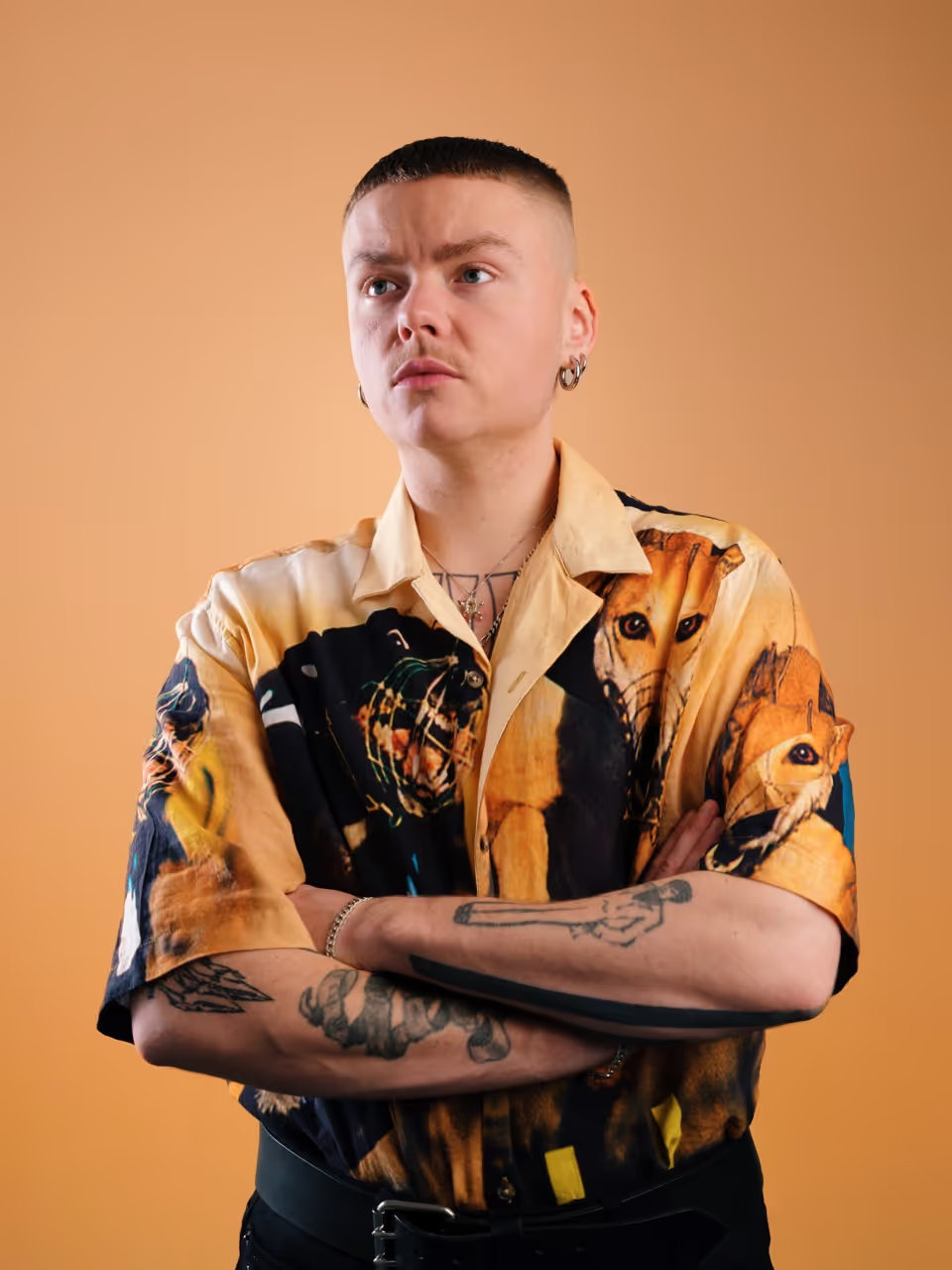
Julius Thissen (1993, the Netherlands) lives and works in Arnhem, NL. Their work investigates themes of community and representation, masculinity, sports, and competition. Originating from their background as a performance artist, Thissen's photographic practice aims to create narratives that explore the fine line between performing and failing. These themes are closely tied to contemporary performance-driven culture and the influence of societal expectations on behavior. Their work is deeply rooted in personal experiences as a genderqueer and transmasculine individual. Thissen strongly opposes the restrictive and often binary narratives imposed on transgender and queer individuals.
Thissen has been nominated for the Hendrik Valk Prize, Arnhemse Nieuwe, and the Warsteiner Blooom Awards. In 2023, they received the Artist Basis Fund and, more recently, a Mondriaan Fund Artist Project Grant for their new project Bones of Graphene, Skin of Kevlar.

Tim Rod is a Swiss artist based in Bern, Switzerland. He studied art education at HKB – Bern University of Applied Sciences (BA, 2018), art history at Bern University (Minor, 2019), photography at Vevey School of Photography (CEPV, ES diploma, 2021) and is currently pursuing a master’s degree in Contemporary Arts Practice at HKB – Bern University of Applied Sciences.
His work often explores issues related to exile and habitat, rootlessness and rootedness, as well as memory, identity, belonging and travelling. His own roots and family history are one of the central elements of his practice and his research, alongside collective visual culture. While his practice remains strongly rooted in photography, his works often expand into site-specific multimedia installations. His work has been exhibited since 2018 in Switzerland and internationally since 2021. Recent exhibitions include "L’Été sans fin" (Festival Images, Vevey, 2020), "Genesis" (Hackney Downs Studios, London, 2021), Charta Bookfestival (Rome, 2021), Photobook Award Encontros Da Imagem (Braga, Portugal, 2021), and the European Photobook Month (Hongkong, 2022). He has been nominated or shortlisted to several major Swiss and international awards. His project "Don’t forget the Knifish" was awarded the special mention of the near.prize 2021. The same year, he won the vfg Young Talent Award for Photography with the project "À demain inshallah".

Thana Faroq is a Yemeni photographer and educator based in the Netherlands. She works with photography, texts, sound, and the physicality of the image itself, as a way to respond to the changes that have been shaping and defining her life, and sense of belonging both in Yemen and the Netherlands. Thana's positioning as a photographer is informed by her reflections on her subject matter, tuning in to other people’s lived experiences with which she continually grows familiar. She also increasingly seeks her own story in the frame. Thana was a recipient of the 2018 inaugural Open Society Foundation Fellowship Grant and Exhibition and the 2019 Arab Documentary Fund supported by the Prince Claus Fund and Magnum Foundation and Zenith magazine reporting grant. In 2020, she published her first book, I don't Recognize Me in the Shadows The book was shortlisted for the Lucie Photobook Prize 2021, and it has also been listed as one of the Interesting Artist & Photographic Books for 2021 by the PhotoBook Journal. Thana received her BA in Government and International Relations from Clark University, and an MA in Photography and Society at The Royal Academy of Art, The Hague.

Yu Shuk Pui Bobby (b. 1994) is a visual artist based between Hong Kong and Oslo. With a collaborative approach to her practice, her work conjures the physical, tangible and affective phenomena associated with biotechnology through combinations of video, text, installation, sculpture, and performance. She often uses speculative fiction to tackle questions of human genetic engineering, reconfiguring perceptions of gender, body and historical discourses of identity. Bobby holds a BA from Hong Kong Baptist University and an MFA from Oslo National Academy of Fine Art. Her works have been in Hong Kong, Norway, Japan, China, Iceland and the USA.